

Eco-friendly cleaning products sold in Malta must meet EU Ecolabel standards to carry a verified sustainability label, ensuring they biodegrade safely, contain no harmful phosphates or chlorine, and perform as well as conventional alternatives. For a small island where two-thirds of tap water comes from energy-intensive desalination and groundwater faces nitrate contamination from agriculture, what you pour down the drain matters more here than almost anywhere in Europe.
Malta’s shift toward sustainable cleaning is accelerating. The EU Ecolabel programme has reached over 109,000 certified products across the European Economic Area as of September 2025, with hard surface cleaning products among the fastest-growing categories. Locally, more Maltese households are choosing plant-based formulas and refillable systems — not because of marketing trends, but because the island’s environmental constraints make green cleaning a practical necessity.
This guide covers everything you need to make informed choices: how eco-friendly products actually work, which certifications to trust, where to buy verified products in Malta, and when professional green cleaning services make more sense than doing it yourself.
Why does eco-friendly cleaning matter more in Malta than most countries?
Malta has no rivers, no lakes, and some of the most water-stressed conditions in Europe. Every chemical that goes down a Maltese drain enters either an overburdened wastewater system or filters toward groundwater reserves already polluted by agricultural nitrates and saltwater intrusion. For an island of just over 500,000 people surrounded by Mediterranean marine habitats, conventional cleaning chemicals pose outsized environmental risks.
The Water Services Corporation supplies roughly 66% of Malta’s tap water from four reverse osmosis desalination plants, with the remaining 34% drawn from groundwater boreholes. That groundwater is already under pressure — nearly 50% of sources are affected by over-abstraction, and a significant number suffer from seawater intrusion. Adding phosphate-laden detergents and chlorine-based cleaners to this equation worsens contamination in an already fragile system.
Malta’s water hardness compounds the problem. Average total hardness runs around 200–350 mg/L of calcium carbonate, with northern districts like Mosta, Qormi, Birkirkara, and Mġarr recording even higher levels. Hard water reduces the effectiveness of conventional detergents, meaning households use more product to achieve the same result — increasing both cost and chemical runoff. Eco-friendly formulas designed for hard water conditions can break this cycle.
Three environmental factors make green cleaning particularly relevant for Maltese homes:
- Indoor air quality in compact apartments. Malta’s housing density means smaller, less ventilated spaces where volatile organic compounds (VOCs) from conventional cleaners concentrate faster. Plant-based products with low or zero VOC emissions reduce respiratory irritation, especially during humid months (October–February) when windows stay closed.
- Salt air and limestone surfaces. Coastal properties in Sliema, St Julian’s, Bugibba, and Marsascala face salt spray buildup that requires frequent cleaning. Globigerina limestone — the golden stone used in most Maltese buildings — is porous and acid-sensitive, meaning harsh chemical cleaners can etch and permanently damage surfaces. pH-neutral eco products protect limestone while removing salt residue safely.
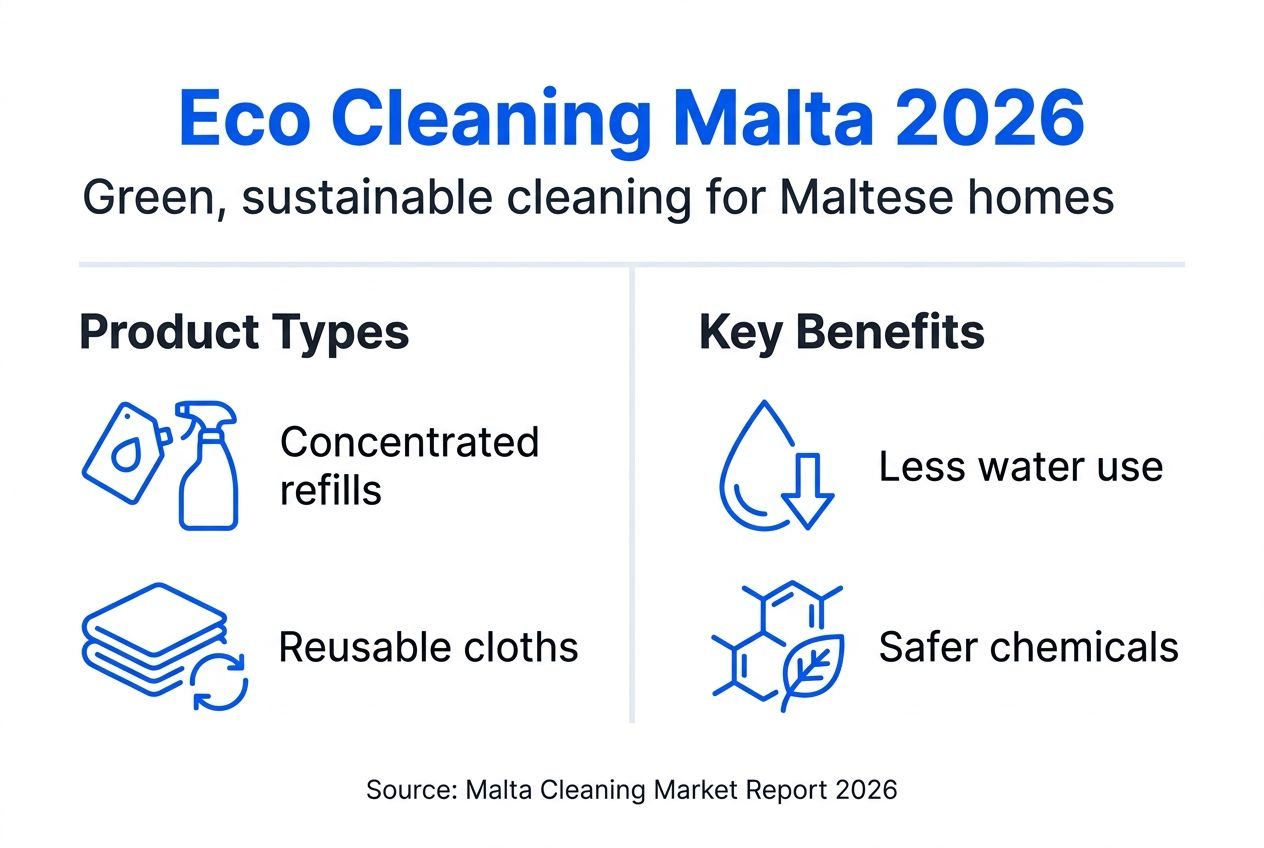
- Plastic waste on a land-limited island. Malta generates among the highest per-capita waste volumes in the EU, with limited landfill capacity. Concentrated and refillable eco cleaning products reduce single-use plastic consumption by up to 80%, directly addressing one of the island’s most pressing waste challenges.
How do eco-friendly cleaning products actually work?
Plant-based surfactants derived from coconut, corn, or citrus oils are the active ingredients in most eco-friendly cleaners. These compounds lift dirt and grease from surfaces by reducing water’s surface tension — the same mechanism conventional detergents use — but they biodegrade into harmless components within days rather than persisting in waterways for months.
The key difference between eco and conventional products lies not in cleaning power during use, but in what happens afterward. Petroleum-derived surfactants in standard cleaners break down slowly and can accumulate in aquatic ecosystems. Plant-based alternatives decompose rapidly, which matters enormously for Malta’s limited groundwater reserves and surrounding Mediterranean waters.
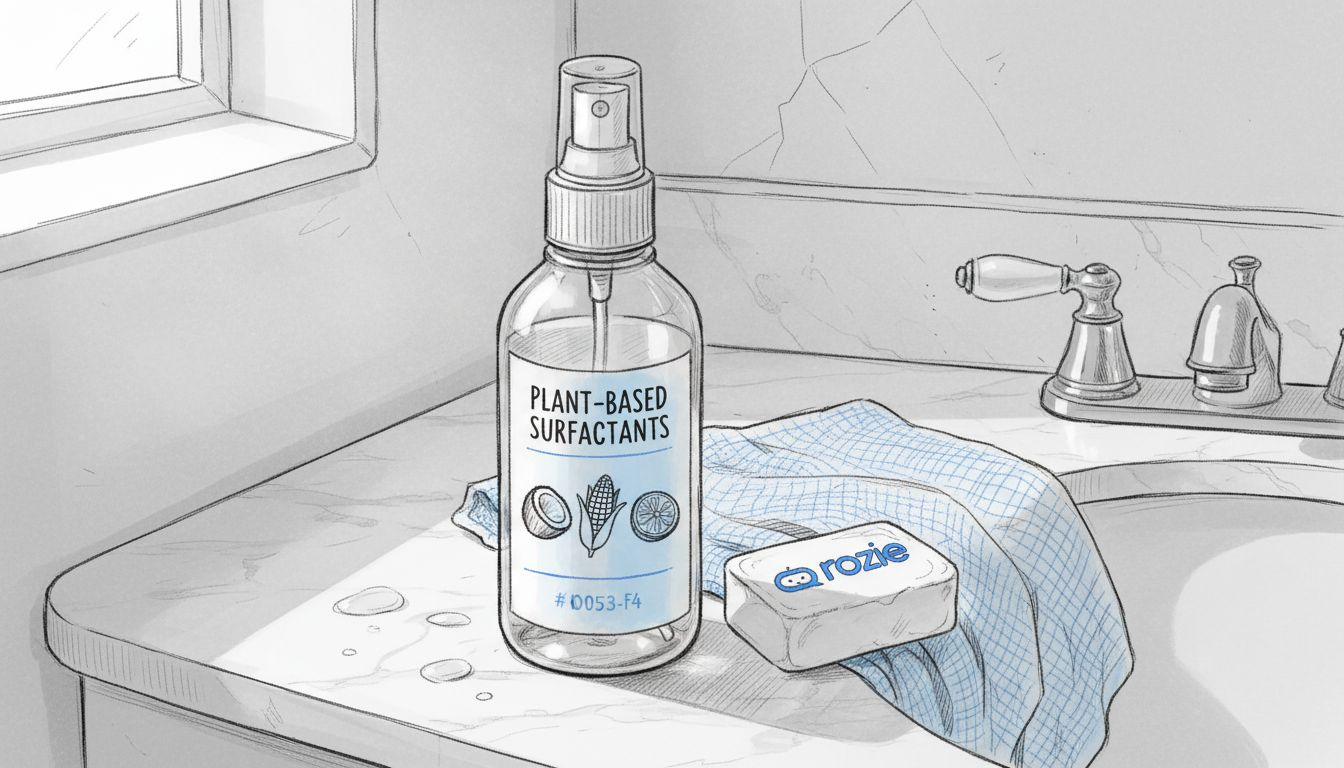
Modern eco formulas use several mechanisms to match conventional cleaning performance:
| Cleaning mechanism | How it works | Best for |
|---|---|---|
| Plant-based surfactants | Reduce water surface tension to lift grease and grime | Kitchen surfaces, stovetops, general cleaning |
| Enzyme-based formulas | Break down organic matter (proteins, starches, fats) at a molecular level | Bathroom grime, food stains, pet messes |
| Citric acid | Dissolves mineral deposits and limescale through chelation | Malta’s hard water limescale on taps, showerheads, kettles |
| Probiotic cleaners | Beneficial bacteria consume organic waste and prevent biofilm formation | Drains, toilets, persistent odours in humid conditions |
| Oxygen-based bleach (sodium percarbonate) | Releases hydrogen peroxide when dissolved, whitening without chlorine | Grout, tile, laundry brightening |
Enzyme-based products deserve special attention for Malta. They excel at breaking down organic stains that conventional cleaners struggle with — particularly useful in bathrooms where high humidity (60–80% year-round) encourages mould and organic buildup. Unlike bleach, enzymes don’t produce toxic fumes in poorly ventilated Maltese apartments.
Which certifications actually guarantee a product is eco-friendly?
The EU Ecolabel is the most rigorous and widely recognised sustainability certification for cleaning products sold in Malta. Awarded only after independent third-party assessment, it evaluates products across their entire lifecycle — from raw material sourcing and manufacturing processes to cleaning performance, health safety, and packaging waste. A product carrying the EU Ecolabel flower symbol has met strict criteria for biodegradability, aquatic toxicity limits, restricted hazardous substances, and proven cleaning efficacy.
As of September 2025, hard surface cleaning products account for 13% of all EU Ecolabel licences and 8% of certified products — making it one of the scheme’s most active categories. The programme continues to grow, with licence awards reaching their highest levels ever recorded. For Maltese consumers, this means a widening selection of certified options on local shelves.
Beyond the EU Ecolabel, several other certifications appear on products available in Malta:
| Certification | What it verifies | Trustworthiness |
|---|---|---|
| EU Ecolabel | Full lifecycle environmental impact, performance, safety | Gold standard — independent, EU-regulated |
| Nordic Swan | Environmental criteria similar to EU Ecolabel, Nordic focus | High — recognised across Europe |
| Ecocert | Organic and natural ingredient content | High — independent French certification body |
| “Biodegradable” label (no certification) | Varies — no standardised criteria | Low — often self-declared marketing claim |
| “Natural” label (no certification) | Varies — no legal definition for cleaning products | Low — does not guarantee safety or environmental benefit |
The critical distinction is between third-party certified labels and self-declared marketing claims. “Natural,” “green,” or “eco” on packaging means nothing without independent verification. Malta’s Competition and Consumer Affairs Authority (MCCAA) can penalise businesses for misleading environmental claims under EU consumer protection rules, but enforcement depends on complaints. Your best protection is checking for the EU Ecolabel flower or equivalent third-party certification.
Where can you buy verified eco-friendly cleaning products in Malta?
EU Ecolabel certified cleaning products are now stocked in most major Maltese retailers, including PAVI, Smart Supermarket, and larger supermarket chains. Brands like Ecover, Frosch, and Method are the most widely available, typically found in the cleaning products aisle alongside conventional alternatives at a 15–30% price premium.
For a wider selection and refill options, specialist stores offer more choice:
- Core Green (Santa Venera) — Malta’s dedicated zero-waste and eco store, offering refill stations for cleaning products, concentrated formulas, and plastic-free alternatives.
- Homemate — stocks a growing range of eco-friendly household products including cleaning supplies.
- Online retailers — concentrated eco cleaning products ship easily to Malta from EU-based suppliers, often at lower prices than local retail.
For Malta’s hard water specifically, look for products containing citric acid or specifically formulated for high-calcium water. Standard eco cleaners designed for soft water regions may underperform on Maltese limescale. Citric acid-based descalers (available in powder form from most supermarkets at €2–4 per pack) are the most effective eco-friendly solution for kettle, showerhead, and tap limescale removal.
Do eco-friendly cleaners actually work as well as conventional products?
Yes — EU Ecolabel certified products must pass the same cleaning performance tests as conventional alternatives before certification is granted. Independent testing confirms that plant-based surfactants match petroleum-derived compounds for grease removal, general surface cleaning, and bathroom sanitation. The notion that “green means weak” is outdated by at least a decade.
Where eco products genuinely differ is in specific niche tasks:
| Task | Eco product performance | Notes for Malta |
|---|---|---|
| General surface cleaning | Equal to conventional | Works well on tile, granite, and sealed limestone |
| Heavy grease removal | Equal — enzyme-based products may outperform | Citrus-based degreasers effective for Mediterranean cooking oils |
| Heavy limescale removal | Slightly slower with citric acid vs hydrochloric acid | Allow 15–20 min contact time; repeat for heavy Malta limescale buildup |
| Mould removal | Vinegar/hydrogen peroxide effective for surface mould | For deep mould in humid Maltese bathrooms, professional treatment may be needed |
| Limestone floor cleaning | Superior — pH-neutral formulas protect porous stone | Conventional acidic cleaners damage globigerina limestone permanently |
The one area requiring adjustment is limescale. Malta’s hard water (200–350 mg/L CaCO₃) creates heavier mineral deposits than most European countries. Eco-friendly citric acid descalers work effectively but need longer contact time — typically 15–20 minutes compared to 5 minutes for hydrochloric acid products. The trade-off is zero toxic fumes and no damage to surfaces or plumbing.
Malta-specific tip: Never use vinegar or acidic cleaners (eco or conventional) on unsealed globigerina limestone floors or walls. The acid etches the stone permanently. Use only pH-neutral soap solutions — castile soap diluted in warm water (1 tablespoon per litre) is the safest and most effective eco option for Malta’s traditional limestone surfaces.
How much do eco-friendly cleaning products cost in Malta?
Eco-friendly cleaning products in Malta typically cost 15–30% more per unit than conventional equivalents at point of purchase. A 750ml bottle of EU Ecolabel all-purpose cleaner runs €3.50–5.50 at PAVI or Smart Supermarket, compared to €2.50–3.50 for a conventional spray. However, the real cost comparison is more nuanced.
Concentrated eco formulas change the equation significantly. A single €8–12 concentrated refill bottle produces 3–5 bottles of ready-to-use cleaner, bringing the per-use cost below conventional products. Refill pouches (available at Core Green and increasingly at larger supermarkets) reduce costs further while eliminating plastic waste.
For Maltese households, the hidden cost savings include:
- Fewer products needed. Multi-surface eco cleaners replace 3–4 specialised conventional products. One pH-neutral all-purpose cleaner handles counters, tiles, and limestone safely.
- Reduced appliance damage. Hard water limescale shortens the lifespan of water heaters, dishwashers, and washing machines. Regular citric acid descaling (€2–4 per treatment) is gentler on seals and components than aggressive chemical descalers.
- Lower health costs. Reduced VOC exposure means fewer respiratory issues, particularly relevant in Malta’s compact, less ventilated apartments.
Practical eco-cleaning strategies for Malta’s climate and conditions
Malta’s Mediterranean climate creates cleaning challenges that generic eco guides written for northern European markets don’t address. High humidity, salt air exposure, Saharan dust events, and hard water limescale all require adapted approaches.
How should you handle humidity and mould prevention?
Malta’s relative humidity averages 60–80% year-round, peaking between October and February. This creates ideal conditions for mould growth, particularly in bathrooms, kitchens, and ground-floor apartments with limited ventilation. Prevention is more effective (and more eco-friendly) than treatment.
After every shower, run the bathroom fan for at least 10 minutes and wipe tile surfaces with a dry microfiber cloth. This simple habit prevents most mould growth without any cleaning products at all. For existing surface mould, spray undiluted white vinegar, leave for 30 minutes, then scrub with a stiff brush. Hydrogen peroxide (3% solution, available at pharmacies for under €3) handles more stubborn spots.
What works for salt air and coastal cleaning?
Properties in Sliema, St Julian’s, Bugibba, Marsascala, and other coastal localities face salt spray deposits on windows, balcony railings, and exterior surfaces. Salt residue attracts moisture and accelerates corrosion on metal fixtures.
A simple vinegar-water solution (50/50 mix) removes salt deposits from glass effectively — clean windows on overcast days to prevent streaking from rapid evaporation. For metal fixtures, wipe with a damp microfiber cloth weekly to prevent salt buildup, followed by a thin layer of natural beeswax polish on brass and copper fittings.
How do you tackle Saharan dust events?
Several times a year, scirocco winds carry fine Saharan dust across Malta, coating outdoor surfaces and infiltrating through windows. This ultra-fine dust settles everywhere and requires gentle removal — aggressive scrubbing pushes abrasive particles into surface finishes.
Dampen a microfiber cloth and wipe surfaces gently rather than dry-dusting, which scratches. For outdoor terraces and balconies, a light spray with water and a soft broom is more effective than pressure washing, which can damage grout and limestone.
Water conservation while cleaning
Given Malta’s water scarcity, eco cleaning should also mean water-efficient cleaning. Microfiber cloths are the single most impactful tool — they capture dirt and bacteria with minimal moisture, reducing water use by up to 90% compared to traditional cloth-and-bucket methods. Use spray bottles for targeted application rather than buckets. Run dishwashers and washing machines only on full loads using eco-mode settings.
When should you hire a professional eco cleaning service instead of doing it yourself?
DIY eco cleaning handles routine maintenance effectively — weekly dusting, surface wiping, and bathroom upkeep don’t require professional intervention. But several scenarios in Malta make professional green cleaning services the smarter choice:
- Deep cleaning before or after a tenancy. End-of-lease cleaning in Malta needs to meet landlord standards to recover your deposit. Professional cleaners bring commercial-grade eco equipment and know which products are safe for limestone, tile, and delicate surfaces.
- Post-renovation or post-construction cleanup. Construction dust from Maltese limestone is extremely fine and requires HEPA filtration equipment that most households don’t own.
- Persistent mould in high-humidity properties. Surface mould responds to DIY vinegar treatment, but deep mould in grout, behind tiles, or in wall cavities needs professional extraction and treatment.
- Regular maintenance for busy households. If your schedule doesn’t allow consistent weekly cleaning, fortnightly professional service maintains standards more effectively than sporadic deep cleans.
- Short-let and Airbnb turnovers. Malta’s growing short-let market requires fast, thorough cleaning between guests. Professional cleaners equipped with eco products ensure consistent quality without you keeping a stockpile of supplies.
When booking a professional eco cleaning service, verify what “eco-friendly” actually means. Ask which specific products they use, whether those products carry EU Ecolabel or equivalent certification, and whether they bring their own supplies or use yours. Vague claims of being “green” without specifics are a red flag.
Rozie connects you with verified cleaners in Malta who list their service details upfront. You can see transparent pricing before booking, communicate cleaning preferences (including eco product requests) through in-app chat, and rely on 7-day payment protection if the service doesn’t meet your expectations. For recurring eco cleaning, building a relationship with a specific cleaner through the platform means they learn your home’s needs — which surfaces need pH-neutral treatment, where mould tends to return, and which rooms need extra attention during humid months.
How to build a complete eco cleaning kit for a Maltese home
A well-chosen eco cleaning kit for Malta needs fewer products than most people think. The goal is versatility — multi-surface formulas that handle the island’s specific challenges without requiring a cupboard full of specialised bottles.
| Product | Use | Approximate cost in Malta |
|---|---|---|
| EU Ecolabel all-purpose spray | Counters, tiles, appliance exteriors, general surfaces | €3.50–5.50 |
| Citric acid powder | Limescale removal from kettles, taps, showerheads | €2–4 per pack |
| Castile soap (liquid) | Limestone floor mopping, delicate surface cleaning | €8–15 per 500ml (lasts months) |
| White vinegar | Glass cleaning, salt residue removal, mild disinfection | €1–2 per litre |
| Oxygen-based bleach powder | Grout whitening, laundry brightening, stain removal | €4–7 per box |
| Microfiber cloths (set of 5–10) | All surfaces — replaces paper towels and disposable wipes | €5–12 per set |
| Spray bottle (refillable) | Diluting concentrates, DIY vinegar solutions | €2–3 |
Total startup cost: approximately €25–45. This kit handles 90% of household cleaning tasks in a Maltese home and lasts 2–3 months before refills are needed. Compare this with a conventional cleaning cupboard of 6–8 specialised products totalling €30–50 that generates significantly more plastic waste.
Storage tip: Keep concentrated eco products in a cool, dark cupboard — Malta’s summer heat (35°C+) can degrade some plant-based formulas faster than expected. Label diluted solutions with the date and ratio so nothing goes to waste.
What common myths about eco cleaning should you ignore?
Three persistent misconceptions prevent Maltese households from switching to sustainable cleaning. Each is contradicted by current evidence.
Myth 1: Eco cleaners don’t clean as well as conventional products
EU Ecolabel certification requires products to pass the same standardised cleaning performance tests as conventional alternatives. Plant-based surfactants match synthetic compounds for grease removal and general cleaning. Enzyme-based eco products actually outperform conventional cleaners on organic stains like food residue and bathroom grime, because enzymes break down organic matter at a molecular level rather than simply lifting it from surfaces.
Myth 2: Eco-friendly cleaning is too expensive
At point of purchase, eco products cost 15–30% more. But concentrated formulas deliver more cleaning per euro, multi-surface products replace multiple specialised bottles, and reduced appliance damage from gentler descaling extends the life of water heaters and dishwashers — a significant saving in Malta where hard water shortens appliance lifespans dramatically. One local plumber’s observation that Malta’s water is “toxic to washing machines and dishwashers” underscores how much conventional harsh chemicals compound hard water damage.
Myth 3: “Natural” always means safe and eco-friendly
“Natural” has no regulated definition for cleaning products. Essential oils, often marketed as natural cleaning ingredients, can trigger allergic reactions and are toxic to cats and some dog breeds. Tea tree oil and eucalyptus oil — popular in DIY cleaning recipes — are harmful to pets even in small concentrations. Always choose products with third-party certification over vague “natural” marketing claims, and check ingredient lists if you have pets or household members with sensitivities.
Frequently asked questions about eco-friendly cleaning in Malta
What is the best eco-friendly descaler for Malta’s hard water?
Citric acid powder dissolved in warm water is the most effective eco-friendly descaler for Malta’s hard water (200–350 mg/L CaCO₃). Use 2 tablespoons per litre of warm water, apply to limescale deposits, and leave for 15–20 minutes before rinsing. It costs €2–4 per pack from any Malta supermarket and works on kettles, taps, showerheads, and coffee machines without damaging seals or surfaces.
Are eco-friendly cleaning products safe for Malta’s limestone surfaces?
pH-neutral eco products are the safest option for globigerina limestone floors and walls. Castile soap diluted in warm water (1 tablespoon per litre) cleans effectively without etching the porous stone. Never use vinegar, citric acid, or any acidic cleaner on unsealed limestone — acids cause permanent damage. This makes eco-friendly, pH-neutral formulas actually safer for Maltese homes than many conventional cleaners.
Where can I refill eco cleaning products in Malta?
Core Green in Santa Venera offers refill stations for a range of eco cleaning products, eliminating single-use plastic entirely. Some larger supermarkets are beginning to stock concentrated refill pouches from brands like Ecover and Method. Online EU retailers also ship concentrated eco formulas to Malta, though shipping costs may apply.
Can I request eco-friendly products when booking a cleaner through Rozie?
Yes. Rozie’s in-app chat lets you communicate specific preferences — including eco-friendly product requests — directly with your cleaner before the appointment. You can also provide your own eco cleaning products for the cleaner to use if you prefer specific brands or formulas.
How do I know if a cleaning product’s “eco-friendly” claim is genuine?
Look for the EU Ecolabel flower symbol — this is the only EU-regulated, independently verified sustainability certification for cleaning products. Claims like “natural,” “green,” “eco,” or “biodegradable” without third-party certification are unregulated marketing terms. Malta’s MCCAA can investigate misleading environmental claims, but your best protection is checking for recognised certification logos.
Is eco-friendly cleaning effective against mould in Malta’s humid climate?
White vinegar and hydrogen peroxide (3% solution) effectively kill surface mould without producing the toxic chlorine fumes that bleach releases in poorly ventilated spaces. For prevention, running bathroom fans for 10 minutes after showers and wiping surfaces dry is more effective than any cleaning product. Deep mould embedded in grout or behind tiles may require professional treatment.
Do concentrated eco products save money compared to ready-to-use bottles?
Yes. A single concentrated refill (€8–12) typically produces 3–5 bottles of ready-to-use cleaner, bringing the cost per bottle to €1.60–4.00 — often cheaper than conventional ready-to-use products while generating 80% less plastic waste. They’re also lighter and smaller, making them practical for Malta’s compact apartment storage.
Ready to make the switch? Download Rozie to find verified cleaners in Malta who can bring professional-grade eco cleaning to your home — with transparent pricing, 7-day payment protection, and the flexibility to book around your schedule.