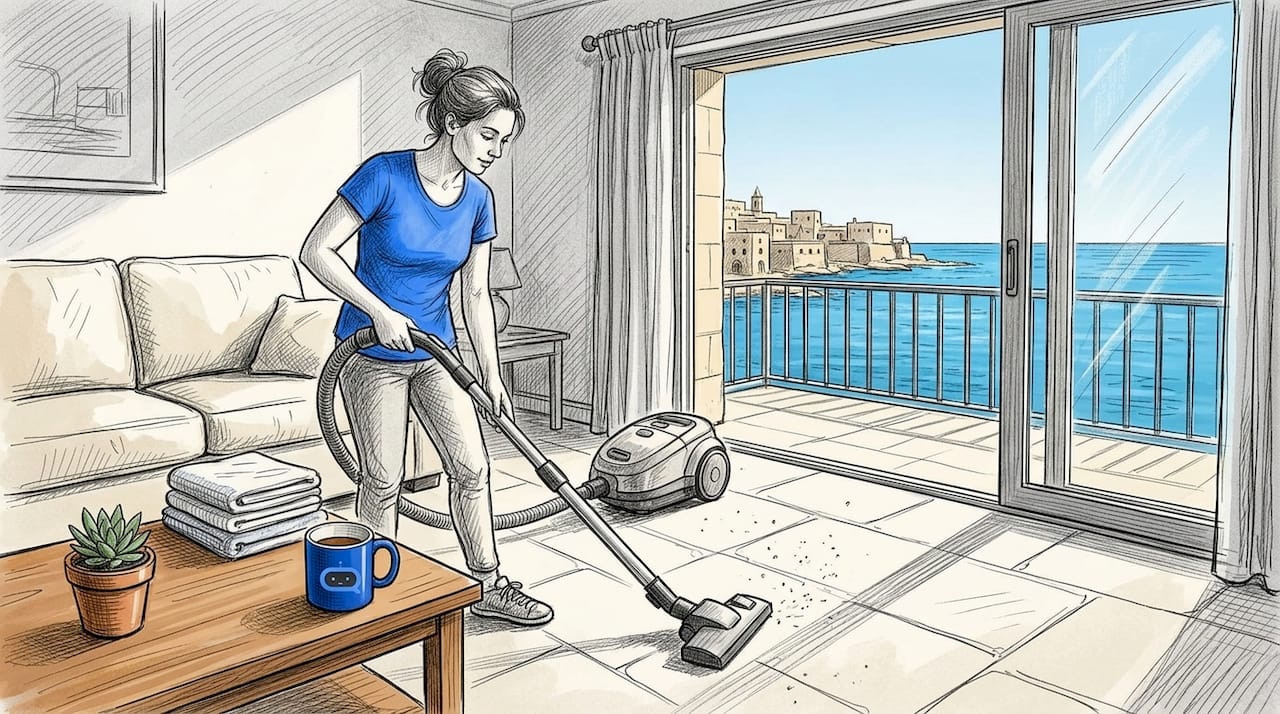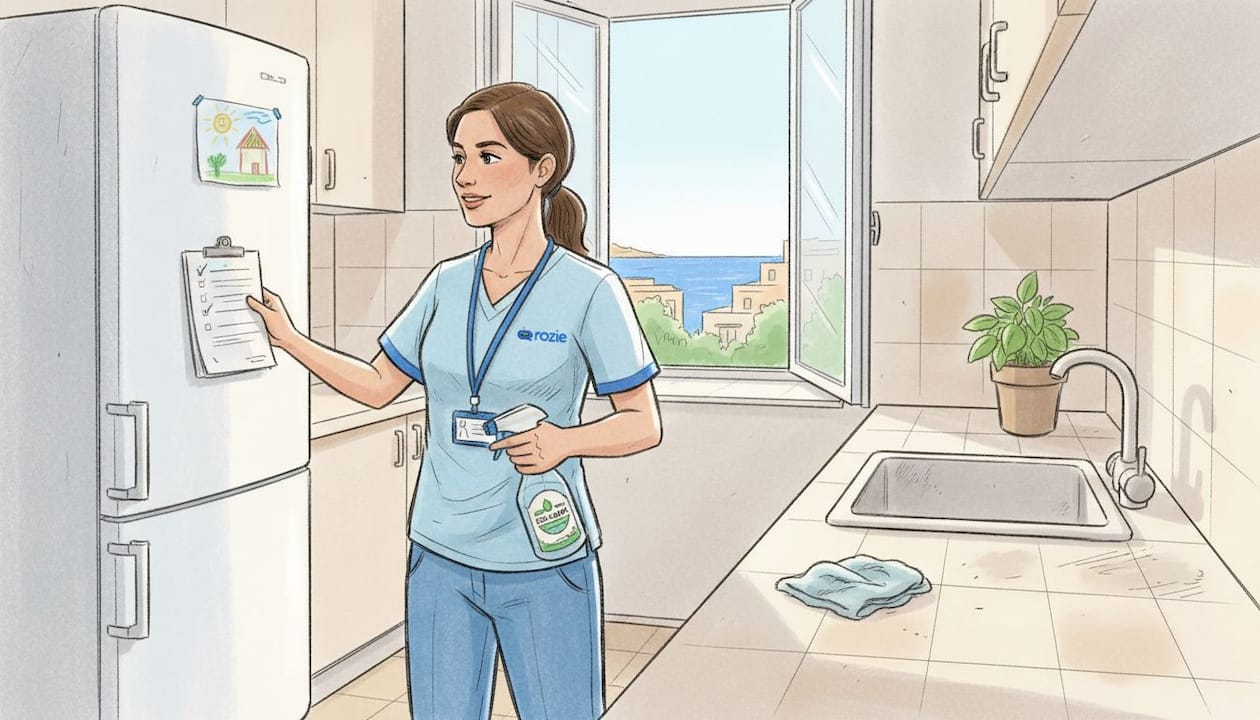


Keeping a holiday home guest-ready in Malta is a different challenge than maintaining a regular residence. Salt air coats windows within days of cleaning, hard water leaves limescale on every fixture, and humidity levels between 60–85% encourage mold growth even in summer. Add tight Airbnb turnovers and the fact that many owners manage their Malta property from abroad, and you need a cleaning system — not just a cleaner.
This guide covers everything holiday home owners need: realistic pricing, a room-by-room checklist built for Malta’s climate, turnover timelines, and how to find verified cleaners you can trust with your keys when you’re not on the island.
Table of Contents
- What Does Holiday Home Cleaning Cost in Malta?
- Why Malta Holiday Homes Need Different Cleaning
- Room-by-Room Cleaning Checklist for Malta Rentals
- How Often Should You Clean a Holiday Home in Malta?
- How to Manage Cleaning When You Don’t Live in Malta
- How to Find Verified Holiday Home Cleaners in Malta
- How to Prepare Your Property for Cleaning Day
- Quality Control: Inspecting the Clean Remotely
- Frequently Asked Questions
What Does Holiday Home Cleaning Cost in Malta?
A standard turnover clean for a 1–2 bedroom holiday apartment in Malta costs between €55 and €95 in 2026. Deep cleans run €100–€180 depending on property size, condition, and extras like oven or fridge cleaning. Independent cleaners typically charge €12–€18 per hour, while agencies range from €15–€25 per hour.
These figures reflect the Malta market specifically — not EU averages. Several factors push holiday home cleaning costs higher than regular residential rates. Turnover cleans operate on tighter schedules (often same-day between check-out and check-in), require linen changes, and demand a hotel-standard finish that passes guest scrutiny and Airbnb review culture.
Here’s what you should budget for based on property size:
| Property Type | Standard Turnover Clean | Deep Clean | Common Extras |
|---|---|---|---|
| Studio / 1-bed apartment | €55–€75 | €100–€130 | Window cleaning +€15, oven +€15 |
| 2-bed apartment | €75–€95 | €130–€160 | Balcony/terrace +€15–€25 |
| 3-bed apartment or townhouse | €95–€130 | €150–€200 | Full deep kitchen +€25–€35 |
| Villa with pool area | €130–€180+ | €200–€300+ | Pool deck cleaning +€30–€50 |
Prices in high-demand coastal areas like Sliema, St Julian’s, and Bugibba tend to run 10–20% above the island average. This reflects both higher parking costs for cleaners and the premium rental market in those locations. For Gozo properties, expect slightly lower rates but factor in fewer available cleaners and longer travel times.
A useful benchmark: if you’re running a short-let business, cleaning costs typically consume 8–12% of your gross rental income. Rozie’s cleaning cost calculator lets you estimate costs based on your specific property and extras before committing to a booking.
Why Malta Holiday Homes Need Different Cleaning
Malta’s climate creates four specific cleaning challenges that don’t exist in most European holiday rental markets. Understanding these is the difference between a 4-star and a 5-star review.
Salt Air and Mineral Deposits
Malta’s coastal properties — and that includes most holiday rentals in Sliema, St Julian’s, Bugibba, and Mellieħa — face constant salt spray exposure. Salt particles settle on windows, mirrors, metal fixtures, and electronics, creating a white residue that standard glass cleaners can’t remove. The Gregale and scirocco winds drive salt spray up to 5km inland, meaning even Mosta and Birkirkara properties aren’t immune.
For holiday homes, this means windows need cleaning before every guest arrival during summer months. A 50/50 white vinegar and water solution (vinegar is €1–€2 per litre at PAVI or Smart Supermarket) works better than commercial glass cleaners for salt removal. Professional cleaners familiar with Malta know to check external window tracks, where salt crystallises and can jam aluminium frames.
Hard Water Limescale
Malta’s tap water measures 350–600 parts per million (PPM) mineral content — among the highest in Europe. This leaves heavy limescale deposits on shower screens, taps, and toilet bowls between guest stays. For holiday homes that sit empty between bookings, limescale hardens and becomes significantly harder to remove.
Guests notice limescale instantly, and it’s one of the most common complaints in Malta Airbnb reviews. Cillit Bang or a white vinegar soak (leave on fixtures for 15–20 minutes) handles mild buildup. Severe cases need professional descaling — include this as an extra when booking your cleaner.
Humidity and Mold Risk
Average relative humidity in Malta hovers near 75% year-round, with coastal areas like Marsaskala and Marsaxlokk regularly hitting 85–95% during summer. October through February is the worst period, when bathrooms and north-facing bedrooms in older Maltese buildings develop mold quickly — sometimes within weeks of the last clean.
Holiday homes that sit unoccupied between bookings are especially vulnerable. Without regular airflow, mold colonies establish in shower corners, behind wardrobes pushed against limestone walls, and around window seals. A good turnover cleaner should check these spots and apply hydrogen peroxide treatment preventatively, not just reactively.
Limestone Dust and Construction Dust
Malta’s traditional globigerina limestone is beautiful but generates fine dust constantly — from the building itself and from the seemingly endless construction happening across the island. This dust combines with humidity and salt to form a sticky film on surfaces that regular dry-dusting just smears around.
Damp microfibre cloths are essential, not optional. And critically: never use acidic cleaners (vinegar, lemon) on limestone floors or walls. The acid permanently etches the stone. pH-neutral cleaners like Lithofin KF or Fila Cleaner PRO (available at local tile shops, €15–€19 per litre) are safe for the globigerina limestone you’ll find in most Malta properties.
Room-by-Room Cleaning Checklist for Malta Rentals
This checklist is specifically adapted for Malta’s conditions. Standard international holiday rental checklists miss the island-specific items that make the difference between a clean property and a guest-ready property.
Kitchen
- Wipe all surfaces with damp microfibre cloth (not dry — captures Malta’s sticky dust)
- Descale kettle, coffee machine, and taps (hard water deposits build up between stays)
- Clean inside fridge and freezer — check for previous guest items left behind
- Degrease hob, extractor hood, and oven interior (book oven clean as extra for deep cleans)
- Check and clean behind small appliances where cockroaches shelter in warm months
- Run dishwasher empty with descaling tablet if present
- Mop floors with pH-neutral cleaner (not vinegar on limestone tiles)
- Restock essentials: dish soap, sponge, bin bags, kitchen roll per your guest welcome kit
Bathroom(s)
- Descale shower screen, taps, and showerhead — Malta’s hard water deposits are the #1 guest complaint
- Scrub grout lines (humidity means grout darkens faster than in dry climates)
- Check for mold behind toilet, under sink, and around window seals — treat with hydrogen peroxide
- Clean mirror and glass — use vinegar solution for salt-affected bathrooms
- Replace hand towels, bath towels, and bath mat with fresh laundered sets
- Check ventilation fan works — crucial in Malta’s humidity
- Restock: toilet paper, hand soap, shampoo/conditioner per your listing standards
Bedrooms
- Strip and remake beds with fresh, ironed linen (hotel-fold pillowcases for visual impression)
- Vacuum mattress — dust mites thrive in Malta’s humidity
- Dust all surfaces including headboard, nightstands, and wardrobe tops with damp cloth
- Check under beds and behind furniture for forgotten guest items
- Open wardrobes to air out — musty wardrobe smell is common in unoccupied Maltese properties
- Check for and treat any damp spots on walls, especially north-facing rooms
Living Areas
- Dust all surfaces including TV screen, shelving, decorative items
- Vacuum sofas and cushions — check between cushions for debris and lost items
- Clean windows inside — salt film accumulates even on inland properties
- Mop tile/stone floors with appropriate pH-neutral product
- Clean air conditioning unit filters (essential in Malta — dirty AC filters cause musty smells and allergens)
- Reset TV, WiFi router if needed, check all remotes have working batteries
Outdoor Spaces (Terrace/Balcony/Roof)
- Sweep and mop terrace or balcony floors — salt and dust accumulate rapidly
- Wipe outdoor furniture and railings (salt corrosion check on metal pieces)
- Clean exterior windows accessible from balcony
- Remove any debris from drains — blocked drains cause flooding in Malta’s intense autumn rainstorms
- Check and clean BBQ if provided
Final Walk-Through
- Test all lights, AC, hot water — confirm everything works before guest arrival
- Set AC to welcome temperature (26°C in summer) 30 minutes before check-in
- Place welcome information pack, keys, and any welcome amenities
- Take timestamped photos of each room as documentation
- Lock any owner’s storage areas
How Often Should You Clean a Holiday Home in Malta?
Cleaning frequency for Malta holiday homes depends on your booking pattern and property location. Coastal properties need more frequent attention than inland ones, and high-season summer months require stricter schedules than the quieter winter period.
| Booking Pattern | Cleaning Type | Additional Maintenance |
|---|---|---|
| Weekly Airbnb turnovers (peak season) | Express turnover clean after every departure | Deep clean every 4th turnover; monthly window clean |
| Bi-weekly bookings | Standard clean between guests | Deep clean monthly; check for mold bi-weekly |
| Monthly or occasional rentals | Deep clean before each guest arrival | Quarterly maintenance clean; annual spring deep clean |
| Property unoccupied 2+ months | Deep clean before reopening | Monthly ventilation visit; check for mold, leaks, pests |
A critical detail many owners miss: unoccupied properties in Malta deteriorate faster than occupied ones. Without regular airflow and human activity, humidity takes over. Mold establishes in bathrooms, musty smells develop in closed wardrobes, and dust + salt film hardens on surfaces. If your holiday home sits empty for more than 6 weeks, schedule a maintenance visit — even just 30 minutes of opening windows, running taps, and flushing toilets prevents the worst of it.
For Airbnb hosts running weekly turnovers during Malta’s peak season (June–September), same-day changeovers are the standard. A typical timeline: guest checks out at 10:00 or 11:00, cleaner arrives within 30 minutes, completes turnover in 2–3 hours for a 2-bedroom apartment, and next guest checks in at 15:00 or 16:00. Building in a buffer matters — Malta traffic and parking in Sliema or Valletta can cost your cleaner 20–30 minutes.
How to Manage Cleaning When You Don’t Live in Malta
Many Malta holiday home owners are based in the UK, Italy, Germany, or Scandinavia and manage their properties remotely. This adds a layer of complexity — you can’t do a post-clean walkthrough yourself, and you’re relying entirely on your cleaner’s standards.
Here’s how experienced remote owners handle it:
Build a visual standard. Create a photo reference pack showing exactly how each room should look when guest-ready. Include details: how towels should be folded, where welcome items go, how beds should be made. Share this with your cleaner as a digital reference document. Most professional cleaners appreciate the clarity rather than guessing what you expect.
Request post-clean photos. Ask your cleaner to send timestamped photos of every room after each clean. This takes them 2 minutes and gives you verification plus documentation if any disputes arise. Apps like Rozie include in-app chat where cleaners can send photos directly.
Have a local backup contact. Whether it’s a neighbour, property manager, or friend in Malta — someone who can check the property if your cleaner reports an issue (burst pipe, broken AC, pest problem) saves you from expensive emergency calls.
Schedule recurring bookings, not one-offs. A cleaner who knows your property and cleans it regularly will maintain better standards than a different person each time. They’ll notice when the shower seal is starting to mold, when the AC filter needs replacing, or when limescale is building up faster than usual. Consistency builds quality.
Stock supplies in advance. Leave a clearly labelled supply cupboard with cleaning products, spare linens, toiletries, and replacement items (light bulbs, batteries, bin bags). Restock remotely by ordering from Malta online stores for delivery, or arrange with your cleaner to pick up supplies and add the cost to your next booking.
How to Find Verified Holiday Home Cleaners in Malta
Finding a reliable cleaner in Malta who understands holiday rental standards — not just residential cleaning — is the single biggest operational challenge for property owners. Regular house cleaning and turnover cleaning are different skills. A turnover cleaner needs to work to a checklist, handle laundry logistics, restock supplies, and deliver hotel-standard results on a tight schedule.
There are three main ways to find cleaners in Malta:
Marketplace apps like Rozie.app connect you with verified, background-checked cleaners who show their availability, ratings, and pricing upfront. You can compare multiple cleaners, read reviews from other holiday home owners, and book directly. The advantage here is verification — every cleaner on Rozie has passed screening — plus payment protection (7-day guarantee) and a digital trail of communication and bookings.
Direct hire through Facebook groups or word-of-mouth is common in Malta’s expat community. Groups like “Expats in Malta” or “Malta Property Owners” regularly have cleaner recommendations. The upside is personal referrals; the downside is no verification, no payment protection, and no recourse if things go wrong.
Property management companies handle everything including cleaning, but charge 15–25% of rental revenue. For owners with multiple properties or very high-value listings, this can be worthwhile. For a single holiday apartment, the management fee usually exceeds the cost of booking cleaners directly.
When evaluating any cleaner for holiday home work, ask these specific questions:
- Do you have experience with short-let turnovers, or only residential cleaning?
- Can you handle same-day turnovers (check-out to check-in within 4–5 hours)?
- Do you bring your own supplies, or do I need to provide them?
- Are you familiar with Malta-specific issues like limescale, salt residue, and mold prevention?
- Can you send post-clean photos after each visit?
- What’s your cancellation/rescheduling policy?
Rozie.app simplifies this vetting process — cleaner profiles show verification status, service specialisations, customer ratings, and real reviews from other property owners. You can message cleaners directly through the app to discuss your specific requirements before booking, and the platform’s 7-day payment protection means you only pay when you’re satisfied with the result.
How to Prepare Your Property for Cleaning Day
Proper preparation cuts cleaning time by 20–30% and ensures the cleaner focuses on actual cleaning rather than tidying up. For holiday homes, preparation is especially important because the cleaner may be working without you present.
Clear access. Ensure the cleaner can get into the property — leave key in a lockbox, arrange building access codes, or coordinate with your property management. In Malta, many apartment blocks have intercom systems that need a resident to buzz visitors in. Solve this before the first clean, not on the day.
Provide a cleaning brief. A one-page document (printed and left in the property, plus a digital copy) covering: which cleaning products to use on which surfaces (critical for limestone floors), where supplies are stored, any fragile or off-limits items, how to operate the washing machine for linen, and your checklist priorities.
Stock appropriate products for Malta surfaces:
| Surface | Recommended Product | What to Avoid |
|---|---|---|
| Limestone floors/walls | pH-neutral stone cleaner (Lithofin, Fila) | Vinegar, lemon, any acidic cleaner |
| Bathroom fixtures (limescale) | Cillit Bang, white vinegar soak | Abrasive scourers on chrome |
| Windows (salt residue) | 50/50 vinegar-water solution | Ammonia-based cleaners on tinted glass |
| Wooden furniture | Damp microfibre + furniture polish | Excess water (humidity warps wood) |
| AC unit filters | Warm soapy water rinse, air dry | Chemical sprays inside the unit |
Secure valuables and personal items. Lock any owner’s belongings, documents, or high-value items in a designated cupboard or room. This protects you and removes any awkwardness for the cleaner.
Confirm the booking 24 hours in advance. A quick message confirming time, access details, and any specific requests (e.g., “extra attention on bathroom grout this visit” or “new guests arriving with a baby — please ensure floor is extra clean”) prevents miscommunication.
Quality Control: Inspecting the Clean Remotely
For remote owners, verifying cleaning quality without being physically present requires a system rather than trust alone. The best approach combines photo documentation, guest feedback loops, and periodic in-person spot checks.
Post-clean photo protocol. Ask your cleaner to photograph each room after finishing — kitchen, bathroom(s), bedrooms, living area, and any outdoor spaces. Include close-ups of common problem areas: shower screen (limescale check), toilet bowl, kitchen hob, and oven door. Photos take 2 minutes and give you clear evidence of work done.
Through Rozie.app, you can communicate directly with your cleaner via in-app chat, making photo sharing and feedback straightforward. The platform’s 7-day payment protection also means funds are held until you confirm you’re satisfied — a significant advantage for remote owners who can’t inspect same-day.
Guest feedback loop. Include a question in your check-in or check-out message asking guests to rate cleanliness specifically. Airbnb’s own rating system weights cleanliness heavily — it’s one of five separate rating categories and directly impacts your Superhost status. A consistent 4.8+ cleanliness score means your cleaning process is working.
Quarterly in-person inspection. If you visit Malta periodically, schedule one visit to coincide with a cleaning appointment. Arrive unannounced 30 minutes after the cleaner finishes to see the real standard. Check the areas that photos miss: smell the property (musty or fresh?), run your hand along surfaces (dusty or clean?), and check inside the oven and behind furniture.
Document and adjust. If you notice recurring issues — limescale building up, grout staying dirty, mold returning in the same spot — communicate clearly with your cleaner and update your cleaning brief. Some issues in Malta require specific solutions: persistent mold behind a wardrobe might need the wardrobe moved 5cm from the wall to allow airflow, not just more frequent scrubbing.
The best holiday home cleaning setup is proactive, not reactive. Regular maintenance cleans prevent the deep-seated grime that causes bad reviews and expensive remediation.
Book Verified Holiday Home Cleaners in Malta
Managing a holiday home in Malta comes with unique challenges — salt corrosion, hard water, humidity, and the pressure of guest turnovers on tight schedules. The right cleaning partner understands these local conditions and delivers consistent results whether you’re on the island or managing remotely from abroad.
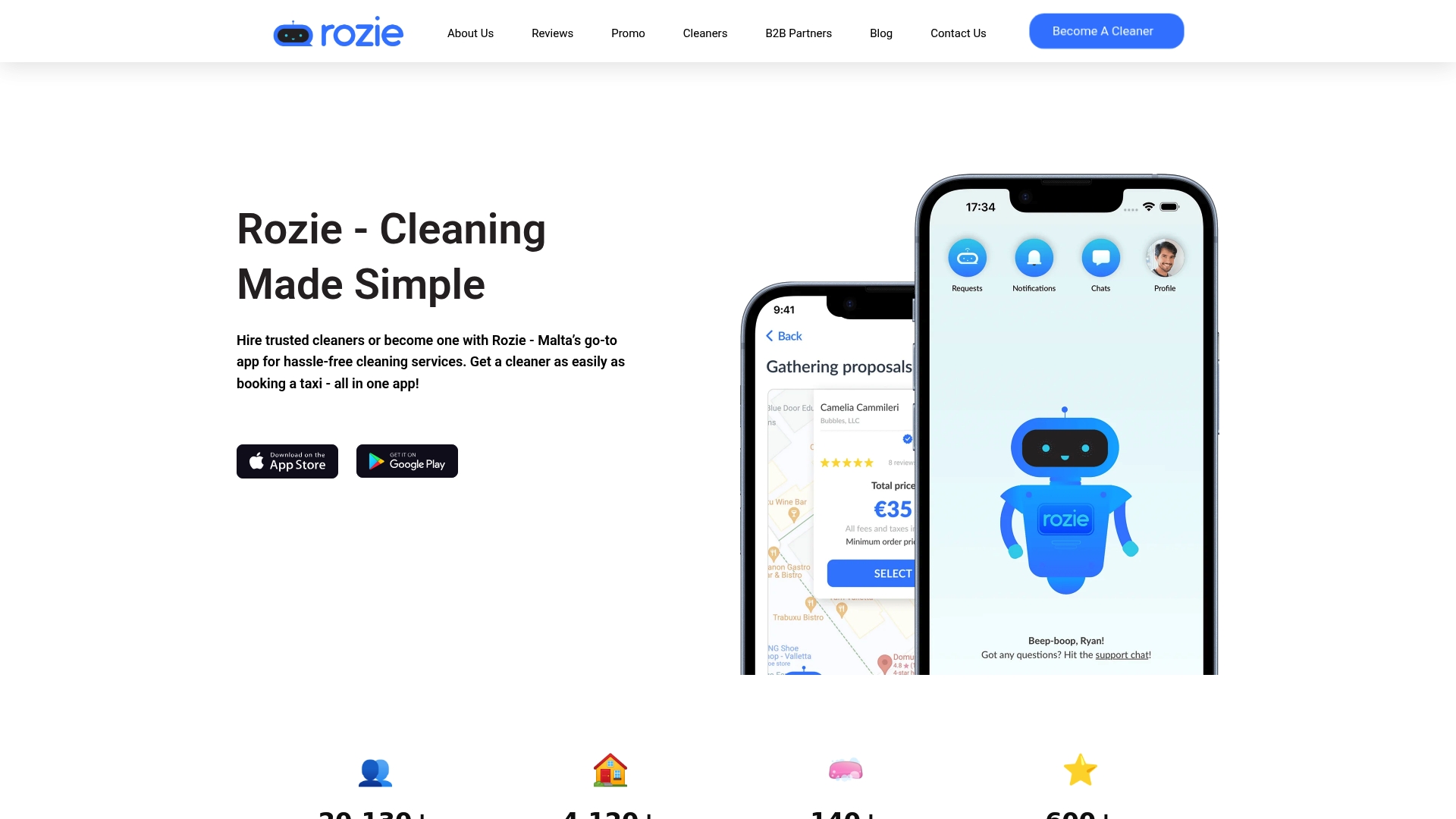
Rozie.app connects you with verified cleaners who know Malta’s properties. Compare profiles, read reviews from other holiday home owners, see transparent pricing before you book, and communicate directly through the app. With 7-day payment protection and 22,700+ users across Malta, it’s the fastest way to secure reliable cleaning for your rental property.
Download Rozie and book your first holiday home clean today. Browse more guides and tips in our Cleaning in Malta archive.
Frequently Asked Questions
How much does holiday home cleaning cost in Malta?
A standard turnover clean for a 1–2 bedroom holiday apartment in Malta costs €55–€95 in 2026. Deep cleans range from €100–€180 depending on size and extras. Independent cleaners charge €12–€18 per hour, while agencies charge €15–€25 per hour. Coastal areas like Sliema tend to be 10–20% above average.
How do I clean limescale from Malta’s hard water?
Malta’s tap water measures 350–600 PPM mineral content, causing heavy limescale buildup. White vinegar soaked on fixtures for 15–20 minutes handles mild deposits. For severe cases, use Cillit Bang Power Cleaner (available at Smart Supermarket for around €5.45). Descale kettles and shower heads between every guest stay.
How often should I clean a holiday home between guests?
Clean after every guest departure, regardless of booking frequency. For weekly turnovers, do an express clean each time plus a deep clean every fourth turnover. Properties that sit unoccupied for more than 6 weeks need a ventilation and maintenance visit to prevent mold and musty smells from Malta’s humidity.
Can I manage holiday home cleaning remotely from abroad?
Yes — many Malta holiday home owners manage cleaning remotely. Create a photo reference pack for standards, request post-clean photos from your cleaner, and use an app like Rozie for direct communication and payment protection. Have a local backup contact for emergencies and stock supplies in advance.
What cleaning products should I avoid on Malta limestone floors?
Never use acidic cleaners — vinegar, lemon juice, or citric acid solutions — on Malta’s globigerina limestone. Acid permanently etches and discolours the stone. Use only pH-neutral stone cleaners such as Lithofin KF Intensive Cleaner (€18.95/litre) or Fila Cleaner PRO (€15.50/litre), available at Malta tile and building supply shops.
How do I prevent mold in a Malta holiday home?
Malta’s 60–85% humidity makes mold prevention critical, especially October through February. Ensure bathrooms have working ventilation fans, keep wardrobes 5cm from walls for airflow, and schedule monthly ventilation visits for unoccupied properties. Treat visible mold early with hydrogen peroxide — bleach kills surface mold but doesn’t prevent regrowth on porous limestone.
What’s the best way to handle same-day Airbnb turnovers in Malta?
Allow a minimum 4–5 hour window between check-out (10:00–11:00) and check-in (15:00–16:00). Book your cleaner to arrive within 30 minutes of departure. A 2-bedroom apartment takes 2–3 hours for a thorough turnover clean. Build in buffer time for Malta traffic and parking, especially in Sliema, St Julian’s, and Valletta.
Recommended
- Holiday Home Cleaning Steps for a Spotless Stay | Rozie – Malta’s Best Cleaning Services
- Domestic Cleaning Malta: Safe, Verified Solutions for Expats | Rozie – Malta’s Best Cleaning Services
- Short-Let Cleaning in Malta Guide. CHECKLIST
- Home Cleaning Malta: Verified Help for Busy Lives | Rozie – Malta’s Best Cleaning Services
- Staging Your Home for Sale: Step-by-Step Success Guide