

Malta packs 7,000 years of history, 300+ days of sunshine, and over 120 dive sites into just 316 km² — making it one of the most activity-dense destinations in the Mediterranean. Whether you’re a new expat figuring out weekends, a long-term resident running out of ideas, or a visitor with five days to fill, this guide covers what’s genuinely worth your time in 2026: from the unmissable landmarks and hidden local favourites to seasonal events, practical food picks, and the outdoor adventures that make island life here unlike anywhere else in Europe.
Contents
- What are the must-see historic sites in Malta?
- What are the best beaches and outdoor activities?
- What food and drink experiences should you try?
- What festivals and events are happening in Malta in 2026?
- What nightlife and entertainment does Malta offer?
- What are Malta’s best-kept secrets?
- How do you get around Malta?
- What practical tips do residents and visitors need?
- Frequently Asked Questions About Things to Do in Malta
What are the must-see historic sites in Malta?
Malta has more UNESCO World Heritage Sites per square kilometre than any other country, including megalithic temples older than the Egyptian pyramids, a fortified capital built by the Knights of St John, and a 5,500-year-old underground burial complex that limits visitors to 80 per day. The density of history here means you can walk from a Neolithic temple to a Baroque cathedral in under an hour.
Valletta — Europe’s smallest capital with the most personality
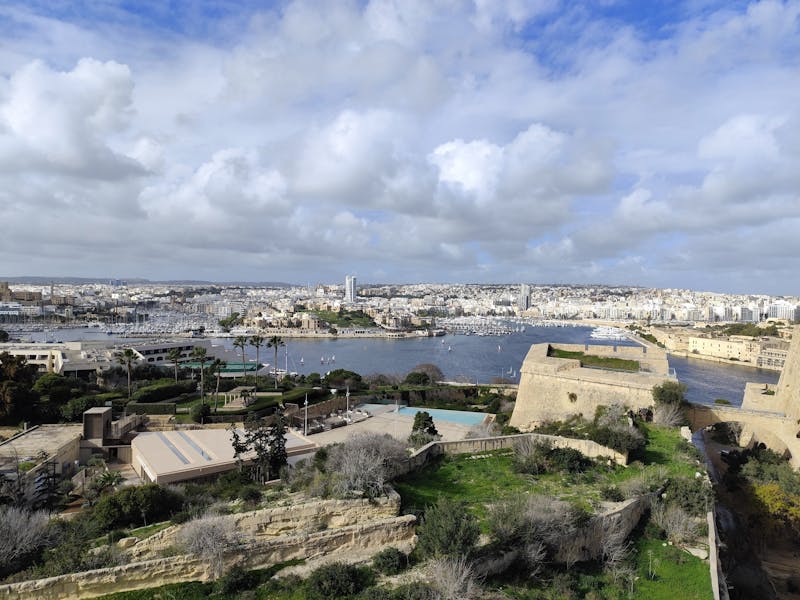
Valletta is a UNESCO World Heritage Site in its entirety — not just individual buildings, but the whole fortified peninsula. Start at the Upper Barrakka Gardens for panoramic views across the Grand Harbour toward the Three Cities. The noon cannon salute from the Saluting Battery below fires daily and is free to watch. From there, walk down to St John’s Co-Cathedral, where the interior is covered floor-to-ceiling in gilt, marble, and Caravaggio paintings — it’s widely considered one of the most ornate church interiors in Europe. Entry costs €15 for adults.
For a deeper dive, the Lascaris War Rooms beneath the bastions served as Malta’s secret WWII operations centre, coordinating the island’s air defence during 3,340 bombing raids. A guided tour (€16) takes you through the underground plotting rooms where officers tracked enemy aircraft in real time. Republic Street is the main pedestrian artery — wander off it into Strait Street for craft cocktail bars and live jazz in what was once the island’s red-light district during British rule.
Mdina — the Silent City
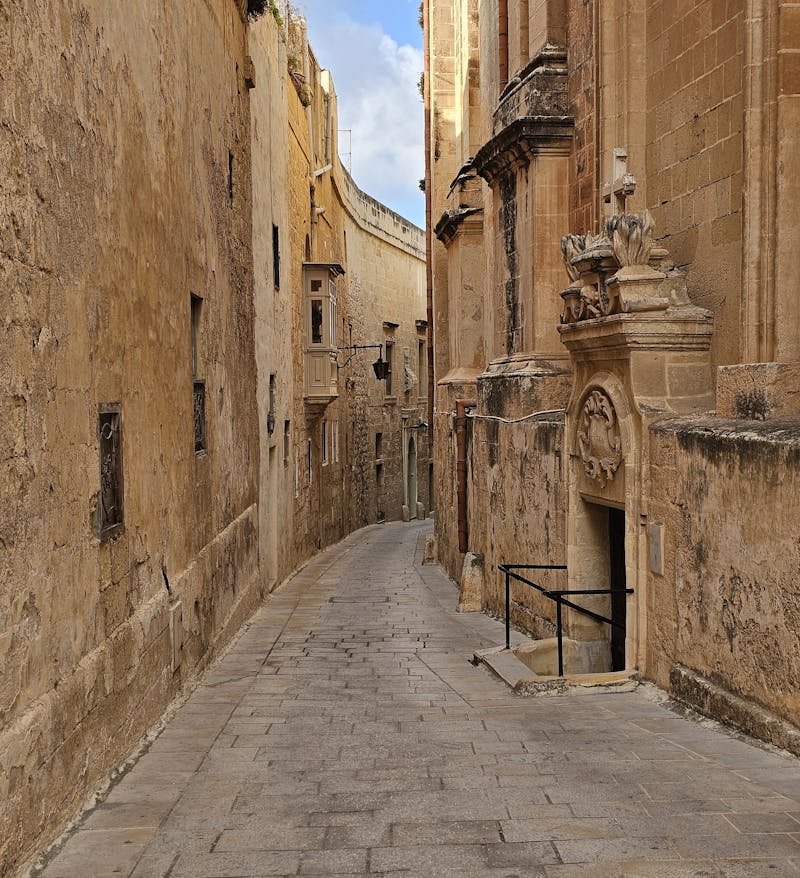
Malta’s original capital sits on a fortified hilltop in the island’s centre and still feels like stepping into a medieval film set — which it literally was for Game of Thrones (Season 1). The narrow limestone lanes are largely car-free, and on a quiet weekday morning you’ll hear little beyond your own footsteps. Visit St Paul’s Cathedral for its Baroque interior and inlaid marble floors, then grab the best chocolate cake on the island at Fontanella Tea Garden on the north bastion wall, which comes with a panoramic countryside view.
Just outside Mdina’s gates, the town of Rabat holds St Paul’s Catacombs — an extensive network of underground burial chambers dating to the 3rd century. Entry is €6 and the site takes about 45 minutes to explore.
Need a hand keeping the house tidy while you explore the island? Rozie.app connects you with verified cleaners across Malta — book in minutes and come home to a spotless apartment.
Megalithic temples — older than Stonehenge
The Ħaġar Qim and Mnajdra temple complexes near Qrendi were built between 3,600 and 3,200 BC, making them among the oldest freestanding structures on Earth. A combined ticket (€10) covers both sites plus a visitor centre. The Mnajdra temples align with the sun on each equinox and solstice — Heritage Malta runs special access events on those dates. On Gozo, the Ġgantija temples are equally impressive and typically less crowded.
The Ħal Saflieni Hypogeum in Paola is a subterranean prehistoric temple and burial complex carved into rock across three levels. Only 80 visitors are allowed per day, so book weeks in advance at Heritage Malta’s website. Tickets cost €40 for adults — steep, but there is genuinely nothing else like it anywhere in the world.
What are the best beaches and outdoor activities in Malta?
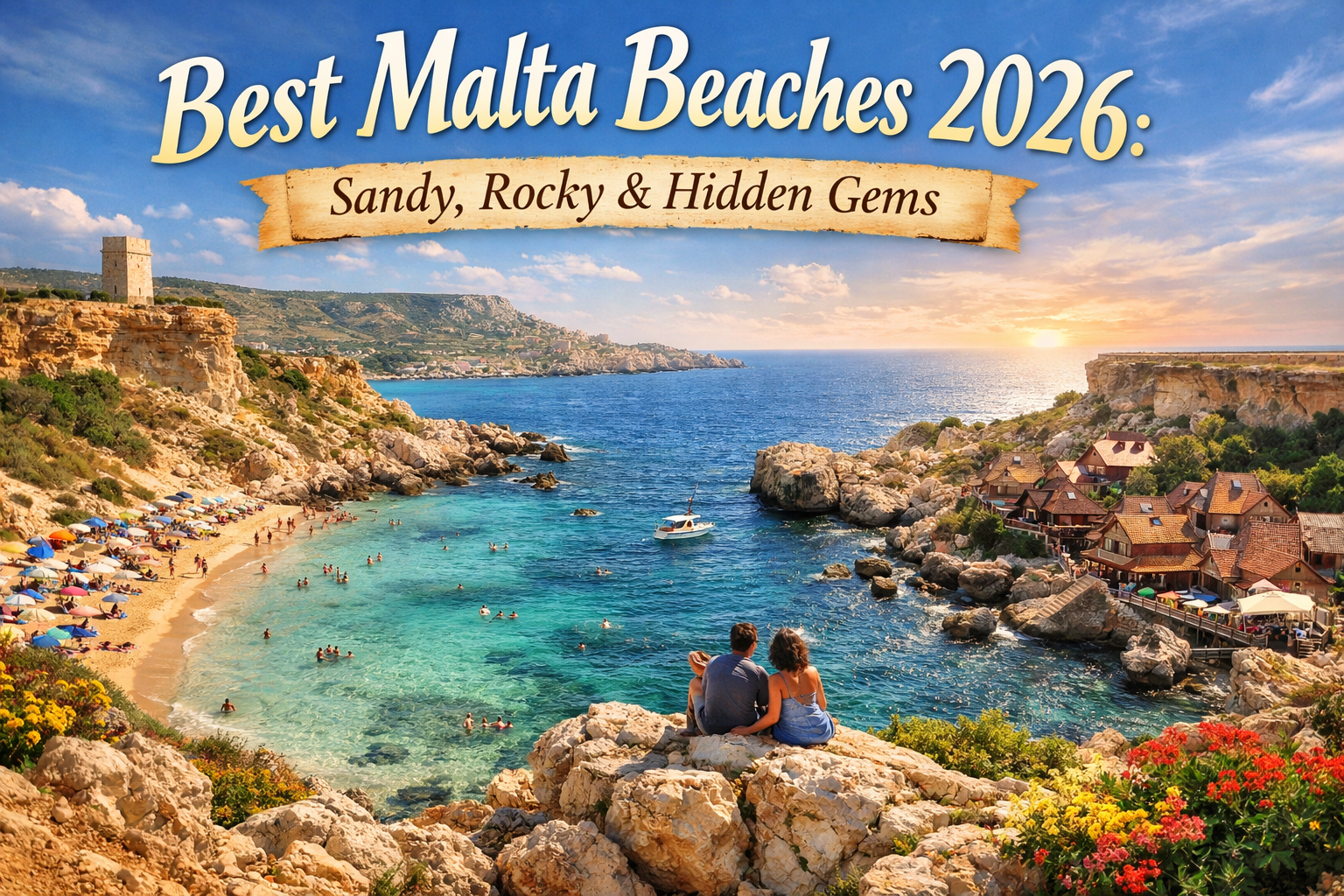
Malta’s coastline is mostly rocky, but the island has several standout sandy beaches, dozens of natural swimming spots carved into limestone, and some of the clearest diving water in the Mediterranean with visibility regularly exceeding 30 metres. The best beaches are on the northwest coast of Malta and across Gozo and Comino.
Best sandy beaches
Golden Bay is the most popular and accessible sandy beach on the main island, with sun lounger rentals (€10–15/day), a beach bar, and water sports. It gets packed in July and August — arrive before 10am for a decent spot. Għajn Tuffieħa (Riviera Beach) is a five-minute walk from Golden Bay but requires descending roughly 200 steps, which keeps the crowds thinner. The red sand set against green cliffs makes it arguably the most scenic beach in Malta.
Mellieħa Bay is the longest sandy beach and best for families — the water is shallow for a long stretch, making it ideal for small children. Over on Comino, the Blue Lagoon delivers the turquoise water you’ve seen in every Malta postcard. Ferry from Ċirkewwa or Marfa Bay costs around €13 return. Arrive on the first boat (around 9am) to enjoy it before the crowds descend. By midday in summer, it’s standing room only.
Diving and snorkelling
Malta has over 120 catalogued dive sites and several deliberately scuttled wrecks, including the Um El Faroud near Wied iż-Żurrieq and the P29 patrol boat off Ċirkewwa. Water temperature ranges from 15°C in February to 28°C in August. A single guided dive typically costs €40–60, with full PADI Open Water certification courses running €350–450. The Malta Tourism Authority lists approved dive centres across all three islands.
For snorkellers, Ħondoq ir-Rummien on Gozo and St Peter’s Pool near Marsaxlokk offer clear water and easy entry from flat rocks.
Hiking and coastal walks
Malta isn’t a hiking destination in the Alpine sense, but the coastal walks are genuinely rewarding. The Dingli Cliffs trail along Malta’s highest point (253 metres) offers dramatic sea views and minimal crowds. On Gozo, the path from Xlendi Bay to Dwejra passes salt pans that have been harvested since Roman times. Spring (March–April) is the best season for walking — the landscape is green, wildflowers are out, and temperatures hover around 18–22°C before the summer heat arrives.
What food and drink experiences should you try?
Maltese cuisine blends Sicilian, North African, and British influences into something distinctly its own — heavy on rabbit, fresh seafood, seasonal vegetables, and baked goods that cost almost nothing. A proper food exploration is one of the most rewarding things you can do on the island, especially if you venture beyond the tourist-facing restaurants in Sliema and St Julian’s.
Must-try dishes
Pastizzi are the unofficial national snack: flaky diamond-shaped pastries filled with ricotta (pastizzi tal-irkotta) or mushy peas (pastizzi tal-piżelli). They cost €0.50–0.80 each and are available at pastizzeriji across the island. Crystal Palace in Rabat and Maxim’s in Ħamrun are local favourites. Fenkata (rabbit stew) is the traditional Maltese celebration dish — slow-cooked with garlic, wine, and herbs. Try it at a family-run restaurant in the countryside rather than a harbour-front tourist spot.
Ftira is Gozo’s answer to pizza: a ring-shaped sourdough flatbread topped with tomatoes, capers, olives, and local sheep’s cheese (ġbejniet). Mekren’s Bakery in Victoria, Gozo, bakes what many consider the definitive version. Lampuki (mahi-mahi) season runs September through November — this is when every restaurant worth its salt features it pan-fried, baked in a pie, or served with capers and olives.
The Marsaxlokk Sunday fish market
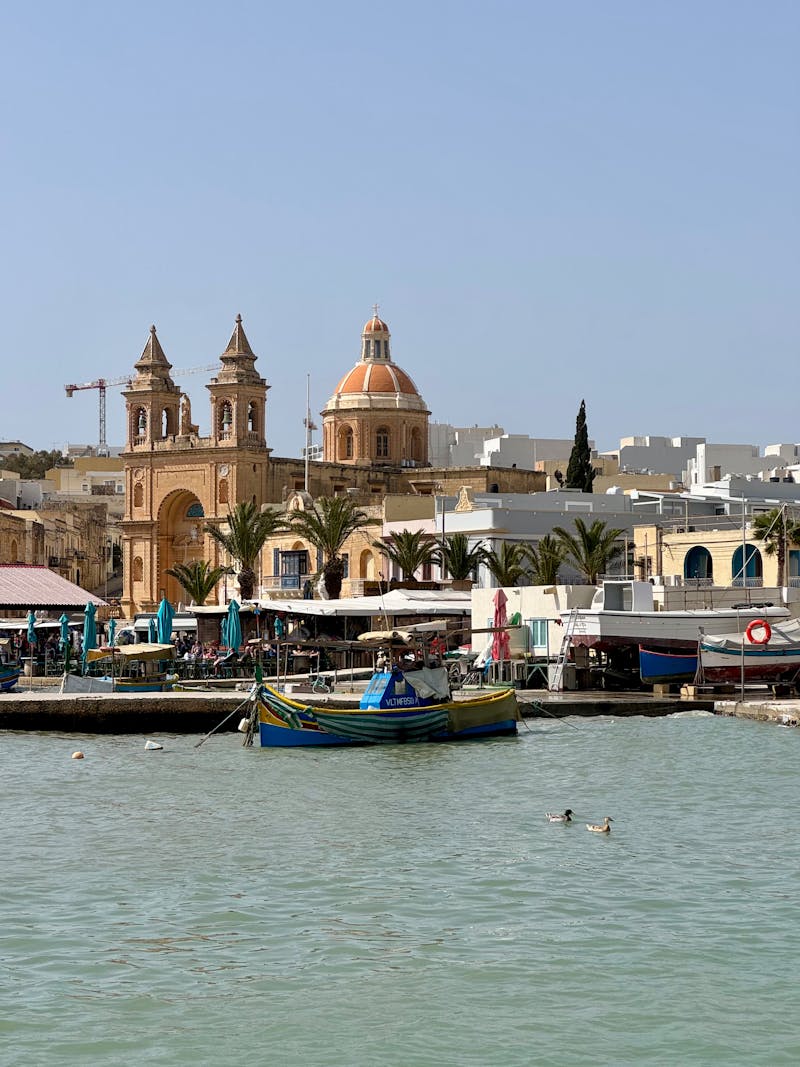
Every Sunday morning, the waterfront at Marsaxlokk transforms into a sprawling open-air market centred on the day’s catch, sold directly off the colourful luzzu boats. Get there by 8am for the best selection. Stay for lunch at one of the harbourside restaurants — the swordfish and octopus are as fresh as it gets. The village itself, with its painted boats and low-rise limestone buildings, is one of the most photogenic spots in Malta regardless of the market.
Wine and craft beer
Malta has two indigenous grape varieties — Ġellewża (red) and Girgentina (white) — and several small wineries producing surprisingly good wines. Meridiana and Marsovin offer vineyard tours and tastings for €15–25. For beer, Lord Chambray on Gozo is the standout craft brewery, with a taproom in Għajnsielem and bottles available at bars island-wide. Cisk is the mass-market local lager and perfectly fine cold on a hot day.
Malta packs more worthwhile experiences into 316 km² than countries ten times its size. The combination of 7,000 years of history, 300+ days of sunshine, world-class diving, and a food scene that punches well above its weight makes it one of the Mediterranean’s most underrated destinations for both visitors and long-term residents.
What festivals and events are happening in Malta in 2026?
Malta hosts a packed calendar of festivals, religious celebrations, and music events throughout the year — some dating back centuries, others launched in the last decade. Planning around these events can transform a standard visit into something memorable, and for residents, they’re the rhythm of island life.
Winter and spring (January–April)
The Valletta Baroque Festival (January) fills the capital’s historic venues — including the Teatro Manoel, one of Europe’s oldest working theatres — with world-class Baroque performances. Malta Carnival (February, typically the week before Lent) brings massive floats, masked parades, and street parties to Valletta and other towns. For something edgier, catch the ferry to Nadur in Gozo for the Spontaneous Carnival — darker, more chaotic, and a genuine local experience.
The Malta International Fireworks Festival (late April) showcases the island’s centuries-old pyrotechnic tradition over the Grand Harbour. Free to watch from the bastions. In April, the Festa Frawli (Strawberry Festival) in Mġarr celebrates the local strawberry harvest with food stalls, fresh produce, and surprisingly good atmosphere.
Summer (May–September)
Isle of MTV (June/July) in Floriana’s Il-Fosos Square is one of Europe’s largest free music festivals — past headliners have included major international acts, and tens of thousands attend. Registration for free tickets opens weeks before. The village festas are the highlight of Maltese summer: nearly every town and village celebrates its patron saint with week-long festivities including band marches, fireworks, food stalls, and street decorations. There are roughly 60+ festas between June and September — you can’t miss them; you’ll hear the fireworks from kilometres away.
Glitch Festival at Gianpula Village is Malta’s premier electronic music festival, drawing underground DJs from across Europe. The Farsons Beer Festival (July) at Ta’ Qali is a free 10-day event with live music and 50+ beers — one of the most popular casual events on the island.
Autumn and year-round
Notte Bianca (October) sees Valletta’s museums, palaces, and galleries throw open their doors for free from dusk until late, with street performances and art installations throughout the capital. Birgufest transforms the medieval streets of Vittoriosa with thousands of candles — atmospheric and genuinely beautiful.
What nightlife and entertainment does Malta offer?
Malta’s nightlife scene ranges from world-class club nights drawing international DJs to low-key wine bars in 400-year-old Valletta townhouses. The centre of gravity depends on what you’re looking for — Paceville for volume and energy, Valletta for sophistication, and scattered beach clubs for daytime-to-evening vibes.
Paceville — the main event
Paceville in St Julian’s is Malta’s clubbing district: a compact grid of streets packed with bars, clubs, and fast-food joints. Sky Club is the flagship venue — a large-capacity techno space with serious production values. Havana offers hip-hop, reggae, and throwback rooms. The area skews young (18–25) and gets chaotic on weekend nights, but it’s undeniably the island’s nightlife epicentre. Most clubs have no cover charge before midnight.
Valletta after dark
Strait Street (Triq id-Dejqa) has been revitalised from its former reputation as the British sailors’ red-light strip into a string of atmospheric bars and live music venues. Wild Honey is a cosy spot with an excellent craft beer selection. 67 Kapitali is family-run with Lord Chambray on draught. Café Society on the stepped street near St John’s Co-Cathedral has live music on Tuesdays and does a mean frosé. For cocktails with a harbour view, Bridge Bar at the Upper Barrakka end is hard to beat.
Beach clubs and daytime parties
Café del Mar and Bora Bora in Qawra run pool parties and sunset sessions through the summer months. Infinity by Hugo’s in St Julian’s sits right on the waterfront. For something more laid-back, the beach bars at Golden Bay serve drinks with sand between your toes.
What are Malta’s best-kept secrets?
The most rewarding Malta experiences are the ones that don’t appear on the first page of every guidebook. These spots are known to residents but rarely make the tourist trail — which is precisely what makes them worth seeking out.
The Three Cities
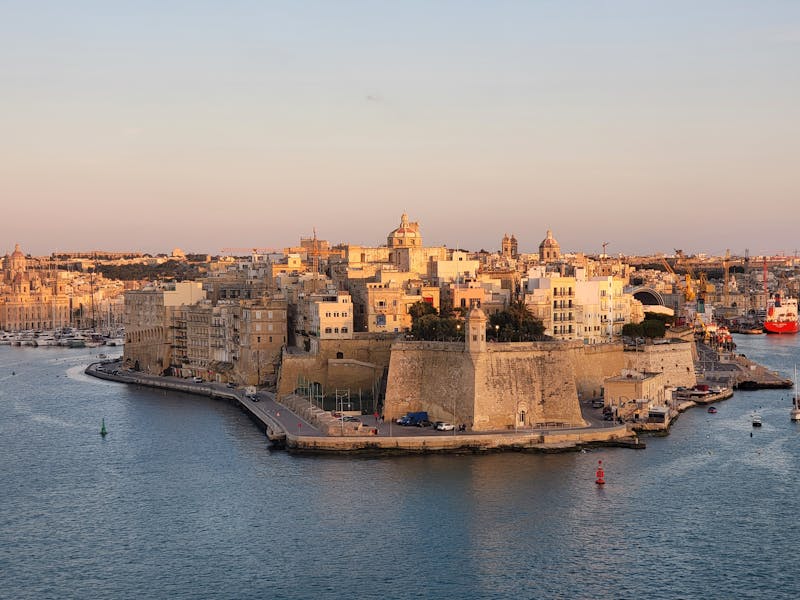
Vittoriosa (Birgu), Senglea (Isla), and Cospicua (Bormla) sit directly across the Grand Harbour from Valletta and predate the capital by centuries. The Knights of St John were based here before building Valletta. The streets are quieter, the architecture just as impressive, and the harbourside views looking back at Valletta are arguably better than anything in the capital itself. Take the traditional dgħajsa water taxi across the harbour for €2. Fort St Angelo at the tip of Birgu’s peninsula is open for visits and offers commanding views. Grab pastizzi from Café Birgi — a tiny, no-frills spot that locals swear by.
Ghasri Valley, Gozo
A narrow winding valley carved into Gozo’s north coast that opens into a secluded natural swimming pool with crystal-clear water and a tiny pebble beach. Getting there requires a short hike down from the road above. It’s rarely crowded even in summer and feels like discovering your own private inlet.
Below Valletta’s bastions
Most visitors stay on top of Valletta’s walls. But stairs near Fort St Elmo lead down below the bastions to a quiet quayside with fishermen’s shacks and boathouses. It’s one of the most peaceful spots on the island — directly beneath thousands of tourists, yet completely empty. Perfect for a walk or a moment of solitude when the cruise ships are in port.
Ta’ Qali Crafts Village
Built on a WWII airfield, this collection of workshops in converted Nissen huts is where local artisans produce handmade Maltese lace, filigree silver jewellery, hand-blown glass, and ceramics. It’s not glamorous from the outside, but the craftsmanship inside is genuine and the prices are fair. Mdina Glass has a workshop here where you can watch glassblowers at work.
How do you get around Malta?
Malta is 27 km long and 14.5 km wide, so distances are short — but traffic congestion, especially between Sliema, St Julian’s, and Valletta during rush hours, can make short drives feel much longer. The public bus network is the most reliable budget option, while ride-hailing apps and car rentals suit different needs.
Public transport
Malta Public Transport (Tallinja) runs buses to virtually every town and village from the central hub at Valletta Bus Terminus. A Tallinja card costs €15 for 12 single journeys or €21 for unlimited weekly travel — both are excellent value. The number 41/42 buses to Ċirkewwa (for Gozo ferry) and 81 to Golden Bay are among the most useful routes. Google Maps provides reasonably accurate real-time bus tracking. Buses run less frequently after 11pm and on Sundays.
Gozo ferry
The Gozo Channel ferry from Ċirkewwa to Mġarr (Gozo) takes 25 minutes and costs €4.65 return for adults. You pay on the return journey only. In summer, the fast ferry service from Valletta to Mġarr (45 minutes) adds a more direct option from the capital. Either way, a day trip to Gozo is one of the best things you can do in Malta — the pace of life is slower, the landscape greener, and the food arguably better.
Driving, taxis, and ride-hailing
Car rental runs €15–30/day from local agencies. Drive on the left (British colonial legacy). Parking in Sliema, St Julian’s, and Valletta ranges from difficult to impossible — park-and-ride facilities at Floriana serve Valletta well. Bolt is the main ride-hailing app and widely used; rides within the urban core cost €5–12.
What practical tips do residents and visitors need?
A few pieces of local knowledge make Malta significantly easier and more enjoyable, whether you’re here for a week or a year.
Seasonal planning
| Season | Weather | Best for | Watch out for |
|---|---|---|---|
| Spring (Mar–May) | 18–25°C, green landscape | Hiking, sightseeing, pre-Easter festas | Easter closures, some beach facilities not yet open |
| Summer (Jun–Sep) | 30–38°C, no rain | Beaches, boat trips, festivals, nightlife | Extreme heat in July–August, overcrowded beaches, Saharan dust events (il-qilla) |
| Autumn (Oct–Nov) | 20–26°C, first rains | Diving, cultural events (Notte Bianca, Birgufest), pleasant temperatures | Humidity rising (60–80%), occasional storms |
| Winter (Dec–Feb) | 12–17°C, rainy spells | Museums, Valletta exploring, Baroque Festival, Carnival | Short daylight hours, some outdoor attractions closed, peak humidity (up to 95%) |
Money and costs
Malta uses the euro. A restaurant meal for two with wine costs €40–70 at a mid-range spot. Coffee is €1.50–3.00. A pastizzi is under €1. Museum entry averages €6–15. Budget travellers can do a satisfying day out for €30–40 excluding accommodation. Professional home cleaning runs €10–25 per hour depending on the service type. Credit cards are accepted almost everywhere, though some village pastizzeriji and market stalls are cash-only.
Keeping your home sorted while you’re out exploring
Malta’s climate creates unique household challenges — humidity drives mould growth (especially October through February), hard water at 200–600 PPM leaves limescale on everything, and Saharan dust events coat balconies and windows several times a year. If you’d rather spend weekends exploring the island than scrubbing limescale off shower screens, Rozie.app lets you book verified cleaners with transparent pricing and 7-day payment protection. It takes about two minutes, and you can add extras like oven or window cleaning when the il-qilla dust has done its worst. For a full breakdown of what cleaning costs on the island, see the guide to affordable cleaning in Malta. If you’re new to the island, our complete guide to daily life in Malta covers everything from residency to banking.
Language
Maltese (Malti) is the national language, but virtually everyone speaks English fluently — it’s co-official and used in business, education, and government. Italian is widely understood by older generations. You won’t have communication issues in English anywhere on the island.
Safety
Malta is one of the safest countries in Europe. Violent crime is extremely rare. The main practical risks are sunburn (the UV index reaches 10–11 in summer), dehydration, and jellyfish stings in late summer. Petty theft is uncommon but not unheard of in Paceville on weekend nights — normal urban precautions apply.
For more guides on life in Malta — from home maintenance tips to finding the best gym — explore the blog for practical, locally-researched advice.
Ready to spend more time exploring Malta and less time cleaning? Over 22,700 people across the island already use an app to book verified cleaners in minutes. Here’s how the whole process works — from opening the app to confirming your booking:

Frequently Asked Questions About Things to Do in Malta
How many days do you need in Malta?
Five to seven days covers the main highlights comfortably — two days for Valletta and the Three Cities, one day for Mdina and Rabat, one day on Gozo, one beach/Comino day, and one or two days for diving, temples, or exploring specific interests. Residents discover new spots for years.
What is the best month to visit Malta?
May and October offer the ideal balance: warm enough for swimming (22–26°C), fewer crowds than peak summer, lower accommodation prices, and comfortable temperatures for sightseeing. September is also excellent, with warm sea temperatures and lampuki season in full swing.
Is Malta expensive to visit?
Malta is mid-range by European standards — cheaper than most of Western Europe but more expensive than Eastern Europe. Budget travellers can manage on €50–80/day (hostel, bus pass, street food), while mid-range visitors spending €120–180/day eat well and see everything. Accommodation is the biggest variable — Sliema and St Julian’s command premiums 15–20% above the island average.
Can you swim in Malta year-round?
Technically yes, though sea temperature drops to 15–16°C in January–February, which most people find too cold without a wetsuit. Comfortable open-water swimming runs May through November. Some locals swim year-round at spots like Sliema’s rocky shoreline.
What should you avoid in Malta?
Avoid driving into Valletta (use the park-and-ride at Floriana instead). Skip Paceville if loud clubs aren’t your scene. Don’t visit Comino’s Blue Lagoon at midday in August unless you enjoy being packed shoulder-to-shoulder. And never clean globigerina limestone — Malta’s signature building stone — with vinegar or acidic products. It’s pH-sensitive and will etch permanently. Use pH-neutral cleaners like Lithofin or HG instead.
What are the best free things to do in Malta?
Upper Barrakka Gardens and the noon cannon salute, walking Valletta’s streets and Strait Street, the Marsaxlokk Sunday market (browsing is free), swimming at any public beach or rocky inlet, watching village festa fireworks, hiking the Dingli Cliffs, and exploring the Three Cities. Malta offers a surprising amount of genuinely free, high-quality experiences.
What apps are useful for getting around Malta?
The Tallinja app for bus schedules and Tallinja card top-ups, Bolt for ride-hailing, Google Maps for navigation and real-time bus tracking, and Rozie for booking home cleaning if you’re a resident or long-stay visitor who wants a tidy place to come back to after a day exploring. The eCabs app is another taxi option with pre-set fares.