


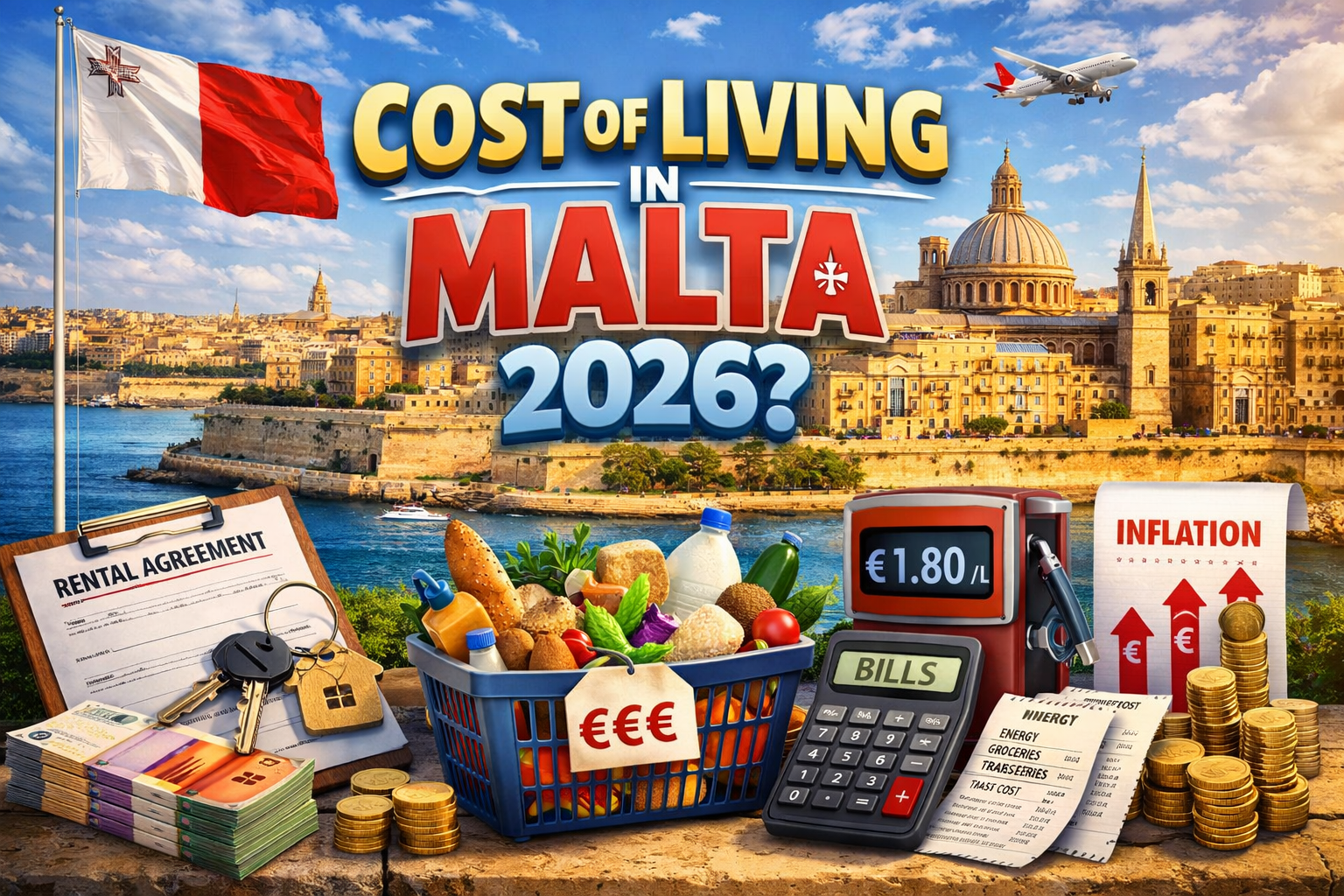
A single professional renting a one-bedroom apartment in Malta spends €1,400–1,900 per month in 2026. A couple sharing a two-bedroom should budget €2,200–2,800. These figures come from lived experience, not Numbeo averages — and they include €200–400 in recurring costs that most published guides leave out entirely.
Hard water that destroys appliances within two years. Car insurance premiums that rival Scandinavia. Humidity so persistent that mold remediation becomes a line item in your budget. These are the costs that surface after your third or fourth month on the island, long after you’ve signed the lease and committed.
This guide covers the standard categories — rent, food, transport, utilities — because you need those benchmarks. But it goes further, breaking down the hidden expenses that catch even experienced expats off guard. Every figure is a specific euro amount, because “affordable” and “reasonable” tell you nothing when you’re trying to plan a move.
What does rent really cost in Malta in 2026?
A one-bedroom apartment in Malta averages €900 per month nationally, but the real range is enormous: €700 in Birkirkara to €1,500 in a seafront Sliema apartment. Where you choose to live determines roughly 40% of your total monthly budget, and the premium areas command 25–40% more than the national average.
Rental growth has slowed from the 6.8% spike in 2024 to around 3–5% in early 2026, but prices remain firmly above pre-pandemic levels. Over 70,000 active rental contracts are registered with the Malta Housing Authority, with more than 90% of tenants being foreign workers. Demand from the iGaming, fintech, and remote-work sectors keeps pressure on the most popular localities.
Rent by area: what you’ll actually pay
| Area | 1-Bed Apartment | 2-Bed Apartment | Best For |
|---|---|---|---|
| Sliema / St Julian’s | €1,000–1,500 | €1,600–2,500 | Expat social life, seafront, walkability |
| Valletta | €1,150–1,600 | €1,800–3,000 | Culture, history, harbour views |
| Gżira / Msida | €900–1,300 | €1,400–2,000 | Central, near University of Malta |
| Birkirkara / Mosta / Qormi | €700–1,000 | €1,000–1,500 | Families, value, local feel |
| St Paul’s Bay / Buġibba | €650–950 | €900–1,300 | Budget-friendly, tourist area |
| Gozo (Victoria / Marsalforn) | €500–700 | €700–1,000 | Cheapest option, slower pace |
The hidden rental costs nobody mentions
The monthly rent is only the starting figure. Agent fees typically run half a month’s to one full month’s rent, payable upfront. Most landlords require a one-month security deposit, and disputes over deposit returns at the end of tenancy are common — particularly when landlords claim cleaning or damage deductions. Budget an additional €50–100 per month if you factor in the amortised cost of agent fees and the realistic risk of losing part of your deposit.
Nearly all rental apartments in the Sliema–St Julian’s corridor come furnished, which is built into the price. If you rent unfurnished in Birkirkara or Mosta, expect to spend €1,500–3,000 upfront on basic furniture and appliances. Location also carries hidden costs: parking in Sliema can add €80–120 per month for a garage space, while living in a car-dependent area like Marsaskala means higher fuel costs to reach work in the central business districts.
How much should you budget for groceries and eating out?
A single person doing a weekly grocery shop at Lidl spends €40–60. Mid-range shopping at PAVI or Smart Supermarket runs €60–90 per week. Malta imports over 80% of its consumer goods, and that import dependency adds a noticeable markup on everything from breakfast cereal to cleaning products compared to mainland Southern Europe.
Lidl offers the best overall prices with mostly Italian own-brand products and runs Monday discounts. PAVI in Qormi has one of the widest selections on the island, and the Sunday open-air markets in Marsaxlokk (fish) and village vans throughout the island offer fresh produce at near-wholesale prices — a tub of strawberries costs €1.00–1.50 from a village van compared to €3.00 or more in Sliema.
Eating out and delivery costs
Eating out in Malta ranges from genuinely cheap to surprisingly expensive, depending on where and what. A pastizz at a traditional pastizzeria like Is-Serkin in Rabat costs €0.50. A sit-down lunch at a casual spot runs €10–15. A dinner at a mid-range restaurant in Sliema or Valletta costs €25–40 per person, and a bottle of wine at a restaurant adds €18–25.
Delivery apps are popular: Bolt Food is the most widely used with €1–3 delivery fees, while Wolt often offers free delivery on larger orders. Average takeaway delivery costs €8–15 per person including the delivery fee. If you order delivery twice a week, that adds €70–130 per month — a cost that creeps up fast and often goes untracked.
What are the real transport costs in Malta?
A monthly Tallinja bus card costs just €26, making it one of the cheapest public transport systems in Europe. But most working professionals in Malta end up buying or leasing a car within their first six months, because bus routes outside the main Sliema–Valletta–Buġibba corridors are unreliable, and travel times between towns that are only 10 km apart can stretch to 45 minutes or more.
This is where budgets unravel. Car insurance in Malta is substantially more expensive than most expats expect. A comprehensive policy for an adult driver with no local claims history costs €400–800 per year; for a driver under 30, it can reach €1,200 or more. Malta recorded over 16,000 road accidents in 2023 alone — roughly 45 per day — and that claims frequency pushes premiums up across the board. Fuel sits at approximately €1.55–1.70 per litre, and the annual road licence adds €50–180 depending on engine size.
If you’re importing a car from another EU country, the Vehicle Registration Tax (VRT) is an additional lump sum that varies by vehicle but typically costs €1,000–3,000. Many expats find it cheaper to buy a second-hand car locally.
Car vs Bolt vs bus: a real comparison
A short Bolt ride within the Sliema–St Julian’s area costs €5–8. A ride from Sliema to the airport runs €18–25. If you take 15–20 Bolt rides per month (a moderate amount for someone without a car), that totals €100–180 per month. Owning a small car costs roughly €250–400 per month all-in when you factor insurance, fuel, maintenance, and parking. The bus pass at €26 per month is unbeatable on price, but if your commute involves transfers or non-central routes, you’ll find yourself supplementing with Bolt rides regardless.
How much are utilities and internet in Malta?
Basic monthly utilities for a one-bedroom apartment — electricity via Enemalta, water via ARMS Ltd — cost €80–150 per month on average. But averages are misleading in Malta because of extreme seasonal swings.
Most apartments have no central air conditioning and no central heating. In summer (June–September), portable or split AC units run almost continuously, and electricity bills can spike to €150–250 per month for a one-bedroom. In winter (November–February), space heaters fill the gap, pushing bills to €100–160. The shoulder months of April–May and October are the cheapest, often €60–80.
Internet is reliable and reasonably priced. GO, Melita, and Epic all offer fibre broadband packages from €25–50 per month depending on speed tier. Mobile plans with generous data cost €15–35 per month. One practical tip: most landlords include internet in the rent for furnished apartments in central areas, so check before you sign up for a separate plan.
What home maintenance costs does nobody tell you about?
Malta’s climate and water supply create a set of recurring household costs that virtually no cost-of-living guide mentions. Budget €80–150 per month for home maintenance and cleaning combined — a figure that catches most new arrivals completely off guard.
Malta’s water supply measures 200–600 PPM calcium carbonate depending on locality, making it among the hardest in Europe. That mineral content destroys kettles within 6–12 months, shortens washing machine lifespans to 3–5 years instead of the typical 8–10, and coats showerheads with limescale that needs regular descaling. Products like HG and Lithofin (available at PAVI and Smart Supermarket) cost €6–12 per bottle, and you’ll go through them regularly. Fitting a basic water softener or filter costs €150–400 upfront and saves money in the long run on appliance replacement.
Humidity, mold, and salt air
Year-round humidity of 60–95% (peaking October through February) means mold is a reality, not a risk. Many expats discover black mold in their bathroom, wardrobe backs, or under-sink areas during their first Maltese winter. Prevention means running dehumidifiers (€150–250 to buy, plus electricity costs) and treating affected areas. Professional mold remediation can cost €200–500 for a single room if it’s left unchecked.
In seafront areas like Sliema, St Julian’s, and Buġibba, salt air deposits on windows, balcony railings, and metal fittings accelerate corrosion and require more frequent cleaning. Add the periodic Saharan dust events — known locally as il-qilla — that coat balconies, outdoor furniture, and cars with fine red dust several times per year, and you start to understand why cleaning and maintenance aren’t optional expenses here.
Professional cleaning and regular maintenance
Many expats and busy professionals in Malta treat professional cleaning as a regular household expense rather than a luxury. Bi-weekly general cleaning through Rozie typically costs €50–80 per month, depending on apartment size and service scope. Compared to the cost of losing a security deposit over end-of-tenancy cleaning disputes — which can run €300–600 — regular upkeep pays for itself.
Other recurring maintenance costs include: AC servicing at €50–80 per unit per year (essential to keep units efficient and mold-free), water heater maintenance at €40–60 per year, and occasional repainting of walls damaged by humidity at €200–400 per room. If your apartment has traditional globigerina limestone floors, you’ll need pH-neutral cleaning products instead of standard floor cleaner — vinegar damages limestone — and these specialty products cost €8–15 per bottle.
How much does healthcare cost in Malta?
Public healthcare in Malta is free for EU citizens with a valid EHIC card and for anyone employed locally and paying National Insurance contributions. Mater Dei Hospital handles most acute care, and a network of government health centres covers primary care.
The practical reality: the public system works well for emergencies and serious conditions, but waiting times for non-urgent referrals and specialist appointments can stretch to weeks or months. This is why many expats opt for private health insurance, which costs €100–200 per month depending on coverage level and age. A private GP consultation costs €40–70, specialist visits run €80–150, and prescription medications are generally affordable — most common prescriptions cost under €20.
Many employers in Malta’s iGaming, financial services, and tech sectors include private health insurance in their benefits package. If you’re evaluating a job offer, check whether health coverage is included — it can save you €1,200–2,400 per year.
What about the social life and lifestyle budget?
Malta’s social scene is active and relatively affordable by Western European standards. A cappuccino at a café costs €1.50–2.50. A Cisk beer at a bar runs €3–5. A glass of local wine is €4–6. But these small costs compound quickly in a culture where socialising revolves around eating out, weekend escapes, and seasonal events.
A typical month for a socially active single professional in Malta might look like this: weekend dinners out (€100–160), after-work drinks once a week (€50–80), a Gozo day trip with the Ċirkewwa ferry (€4.65 return per person as a foot passenger, plus €30–50 for food and transport on the island), and one or two cultural events or activities (€20–50). Gym memberships cost €30–60 per month, with premium clubs closer to €80–100.
Festa season — the string of village patron saint festivals running from May through September — is one of Malta’s best free cultural experiences, though you’ll inevitably spend on food stalls and drinks. Beach clubs in summer charge €15–30 for a sunbed, and the better ones along Sliema’s seafront promenade add up if you visit weekly.
Budget €150–350 per month for social life and lifestyle depending on how actively you participate. This is the category that surprises people most, not because any single cost is high, but because the frequency adds up.
The complete monthly budget: what you actually need
A single professional living comfortably in Malta in 2026 should budget €1,600–1,900 per month. A tight budget is possible at €1,200–1,400, but that means sharing an apartment, cooking most meals at home, and relying on the bus. A generous budget that includes a car, regular dining out, and a premium location reaches €2,200–2,600.
| Expense Category | Tight (Single) | Comfortable (Single) | Generous (Single) |
|---|---|---|---|
| Rent (1-bed) | €650–750 | €900–1,100 | €1,200–1,500 |
| Groceries | €180–220 | €250–320 | €350–450 |
| Eating out / Delivery | €40–60 | €100–180 | €200–350 |
| Transport (bus/car/Bolt) | €26–50 | €100–200 | €300–450 |
| Utilities (electricity, water) | €60–80 | €80–150 | €100–200 |
| Internet & Mobile | €30–40 | €40–60 | €50–70 |
| Home maintenance & cleaning | €20–40 | €60–100 | €100–150 |
| Healthcare (private insurance or out-of-pocket) | €0–50 | €100–150 | €150–200 |
| Social life & Lifestyle | €50–80 | €150–250 | €250–400 |
| Total | €1,056–1,370 | €1,780–2,510 | €2,700–3,770 |
For a couple sharing a two-bedroom apartment, multiply the shared costs (rent, utilities, internet) by roughly 1.3–1.5x rather than doubling them. Budget €2,200–2,800 per month for a comfortable couple lifestyle, or €3,200–4,200 for generous living.
What hidden costs catch expats off guard in Malta?
Beyond the major categories above, several costs repeatedly surprise people in their first year on the island.
Deposit disputes. Malta has no well-established deposit protection scheme comparable to the UK or Ireland. Landlords commonly withhold €200–600 for cleaning or minor damage at end of tenancy, and challenging these deductions is difficult without documentation. Photograph everything when you move in, and keep your apartment well maintained throughout your stay.
Appliance replacement from hard water. Kettles last 6–12 months. Iron steam generators clog. Washing machines and dishwashers have measurably shorter lifespans. Budget €100–200 per year for replacing or repairing water-damaged small appliances.
The import island tax. Because Malta imports the vast majority of consumer goods, you’ll pay 10–25% more for household items, electronics, and furniture than you would on the European mainland. Ordering from Amazon.de or Amazon.it is common, but shipping adds €5–15 per order, and larger items incur steep delivery surcharges.
Bank and transfer fees. If your salary is paid from outside Malta, international bank transfers incur fees of €5–25 per transaction depending on your bank. Services like Wise or Revolut significantly reduce this cost but aren’t always accepted by landlords or local businesses for direct debits.
Tipping. Malta has no strong tipping culture, but rounding up or leaving 5–10% at sit-down restaurants is increasingly common. It’s not obligatory, but awareness avoids awkward moments.
Frequently asked questions
Is Malta cheaper than the UK?
Overall living costs in Malta are approximately 15–20% lower than in the UK. Rent is significantly cheaper outside Sliema and St Julian’s, and dining out costs less. However, imported goods and car insurance can be comparable or higher. A comfortable single-person budget in Malta (€1,600–1,900/month) is lower than the London equivalent but closer to smaller UK cities.
Can you live in Malta on €1,500 a month?
Yes, but it requires careful choices. You’d need to rent outside the premium areas (€700–900 for a one-bedroom in Birkirkara or St Paul’s Bay), cook most meals at home, use the bus pass, and limit eating out. It’s tight but workable for a single person without a car or private health insurance.
What salary do you need to live comfortably in Malta?
For a single professional, a gross salary of €30,000–34,000 per year covers comfortable living. To save meaningfully, travel regularly, or support a partner, aim for €38,000 or more gross. Malta’s national minimum wage is approximately €950 per month gross, which is not sufficient to live independently in most areas given current rent levels.
Is Malta’s tap water safe to drink?
Tap water in Malta is technically safe but has an unpleasant taste due to the high mineral content (200–600 PPM). Most residents use filtered water or buy bottled water, which adds €15–25 per month to household costs. A countertop filter or reverse-osmosis system (€80–300) reduces this ongoing expense.
How expensive is electricity in Malta in summer?
Summer electricity bills in Malta can reach €150–250 per month for a one-bedroom apartment if air conditioning runs regularly. The Enemalta tariff structure uses tiered pricing that increases per kilowatt-hour as consumption rises, so heavy summer usage pushes you into higher-rate bands. Shoulder months (April–May, October) typically cost €60–80.
What are the biggest unexpected costs of living in Malta?
The three costs that surprise expats most are car insurance (€400–1,200/year), appliance damage from hard water requiring regular replacement, and humidity-related home maintenance including mold treatment and dehumidifier running costs. Together these add €200–400 per month that rarely appears in online cost calculators like Numbeo.
Is it worth getting a car in Malta?
If you work outside the Sliema–Valletta bus corridor or have a family, a car significantly improves quality of life. The all-in monthly cost (insurance, fuel, maintenance, parking) runs €250–450. If you live and work along the main bus routes and supplement with Bolt for off-peak travel, you can manage without one and save substantially.
Making home maintenance one less thing to worry about
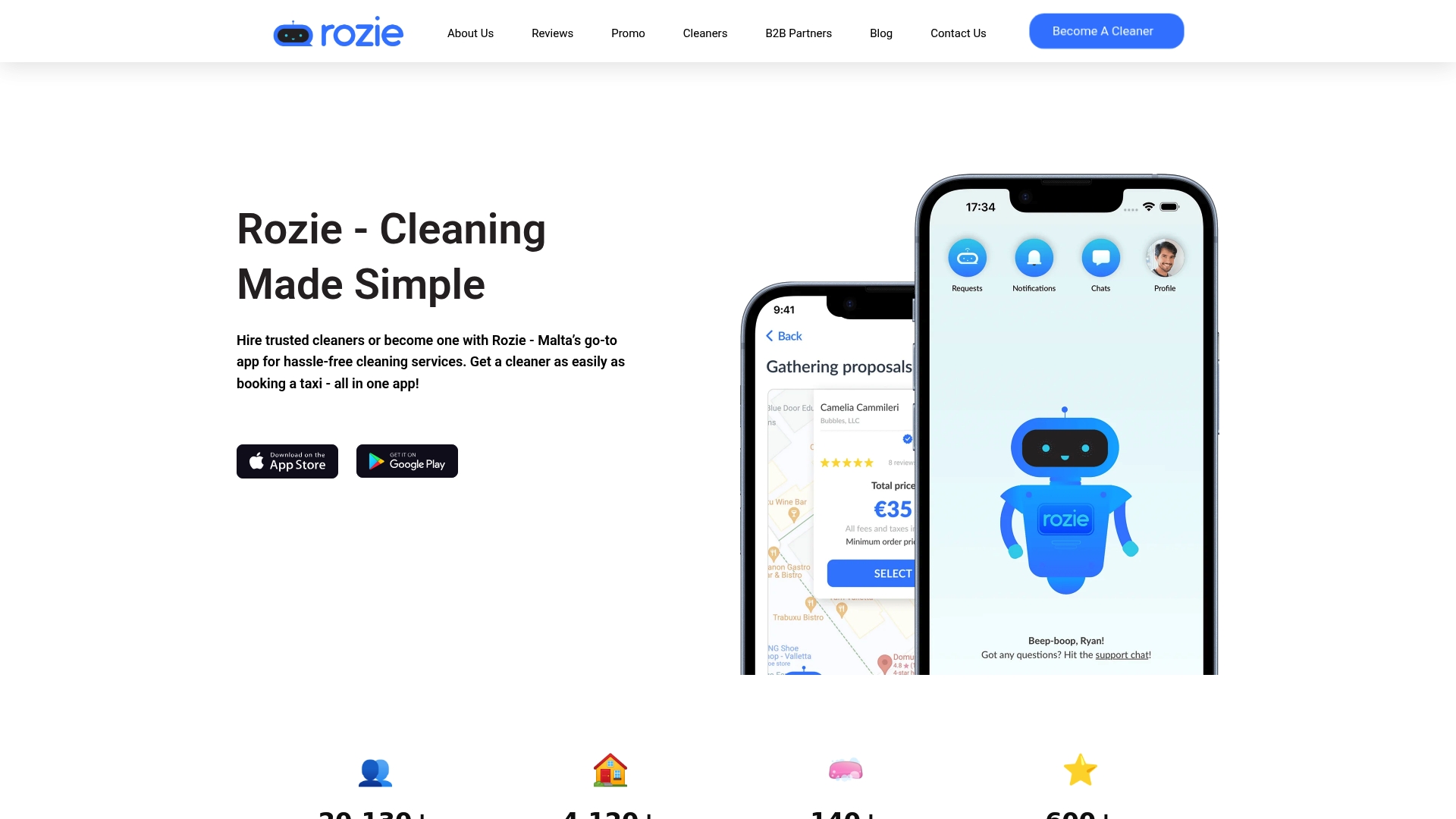
Malta’s hard water, humidity, and salt air mean that regular home maintenance isn’t optional — it’s a fixed cost of island life. One of the easiest line items to handle is professional cleaning. Rozie connects you with verified, background-checked cleaners across Malta, with transparent pricing before you book and 7-day payment protection. Over 22,700 users and 710 five-star reviews on the platform suggest this has become a routine part of how professionals manage their homes here.
Whether you handle the rest yourself or bring in specialists for AC servicing and mold treatment, staying on top of maintenance protects both your deposit and your health. For a full breakdown of what professional cleaning costs in Malta, see the Rozie cleaning cost guide.