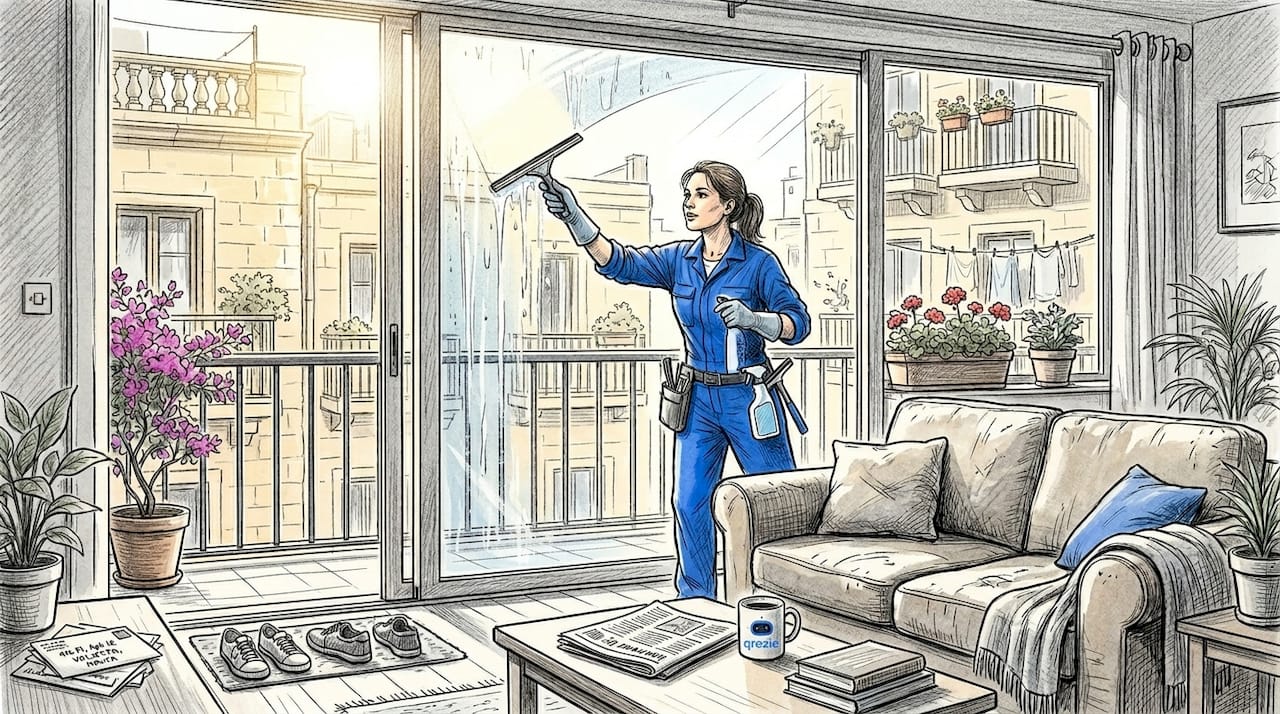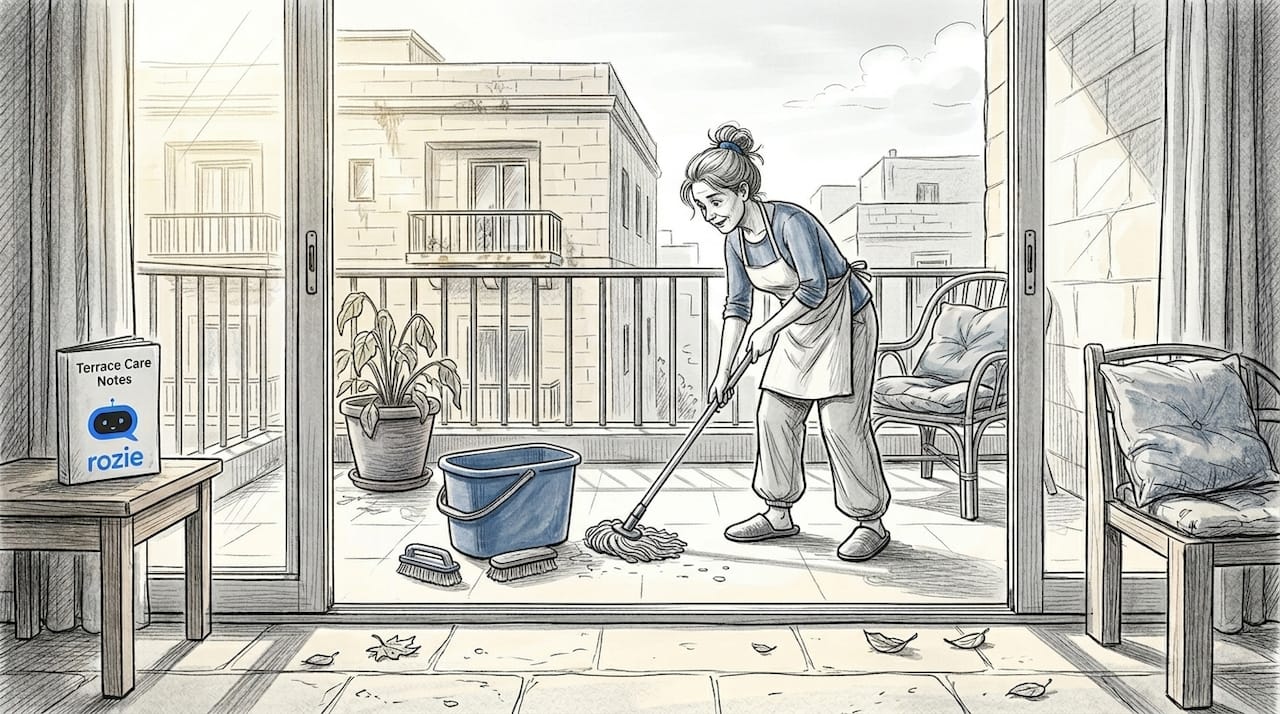


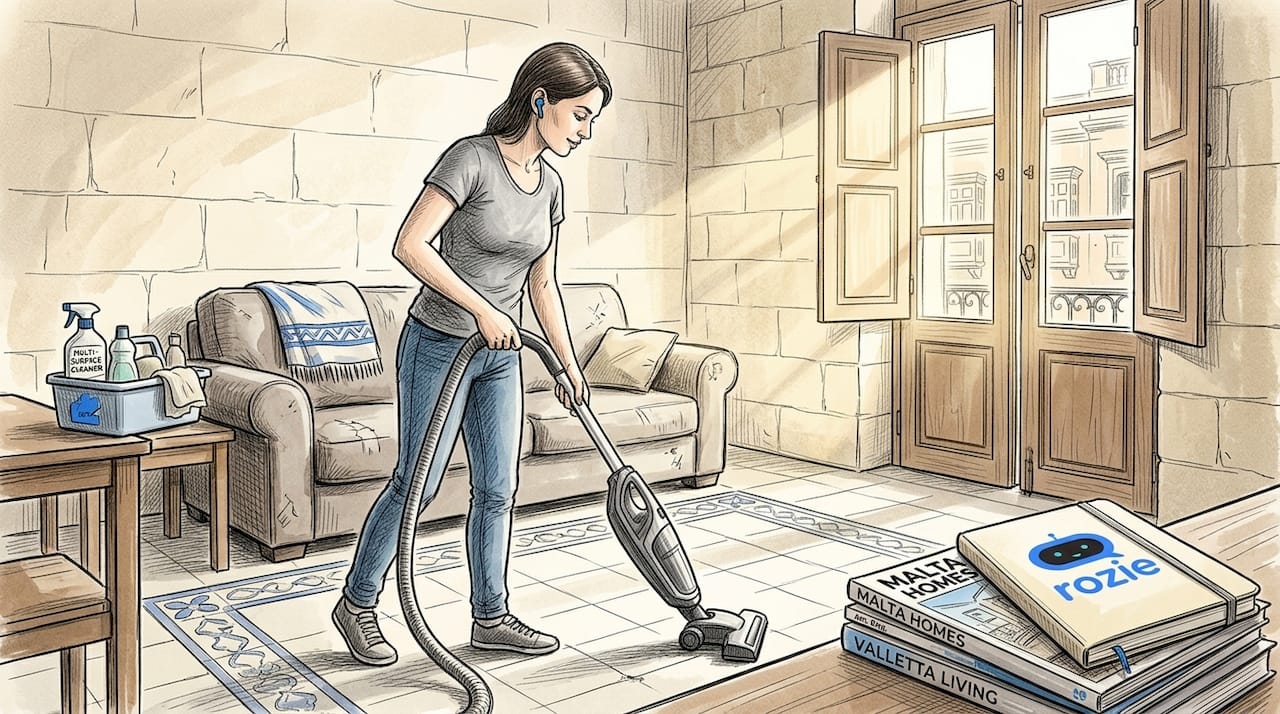
Hourly maid service in Malta lets you book a verified cleaner for a specific number of hours — typically one to four — with no contracts, no minimum commitment periods, and no cancellation penalties beyond short-notice windows. Independent cleaners charge €10–20 per hour, while agencies and platform-verified professionals charge €15–25 per hour, with a standard two-bedroom routine clean running €30–50 total. This format puts scheduling and task priorities entirely in your hands, making it the practical choice for expats, working parents, and Airbnb hosts across the island.
Malta’s cleaning market has shifted heavily toward hourly, on-demand booking over the past two years. The combination of a transient expat workforce, high Airbnb turnover in coastal localities, and unpredictable work-from-home schedules means rigid weekly contracts often waste money on sessions people don’t need. This guide breaks down exactly how hourly maid service works, what realistic pricing looks like, which Malta-specific factors affect your booking, and how to choose a cleaner you can trust.
Table of Contents
- How does hourly maid service work in Malta?
- What does hourly maid service cost in Malta?
- Why is hourly maid service a better fit for Malta residents?
- What Malta-specific challenges should your cleaner handle?
- How do you choose a trusted hourly cleaner in Malta?
- How to get the most value from every hour
- Ready to book hourly cleaning in Malta?
- Frequently asked questions about hourly maid service in Malta
How does hourly maid service work in Malta?
Hourly maid service operates on a pay-per-session model where you select a date, choose a time window of one to four hours, and specify which tasks the cleaner should prioritise. There are no binding contracts, recurring charges, or minimum service periods — you book only when you need help and pay only for the hours used.
The booking process through cleaning platforms works in a few steps. You enter your location and preferred date, select your cleaning type (general or deep clean), add any extras you need — such as oven cleaning, fridge interior, or inside window washing — and choose from available cleaners based on their ratings, reviews, and pricing. The platform shows a transparent price breakdown before you confirm, so there are no surprise charges after the session.
Payment typically processes after the cleaning is completed. On platforms like Rozie, your payment is held under 7-day payment protection until you confirm satisfaction with the work. This protects both sides: cleaners get fair compensation, and clients have recourse if something is missed.
Communication happens directly through in-app chat. You can share specific instructions — “focus on the kitchen and both bathrooms, skip the guest bedroom” — before the cleaner arrives. This direct line eliminates the guesswork that makes traditional agency arrangements frustrating, especially when your priorities change from one session to the next.
What does hourly maid service cost in Malta?
Hourly cleaning rates in Malta range from €10 to €25 per hour depending on whether you book an independent cleaner or a professional through an agency or platform. A routine clean for a one-bedroom apartment typically takes one to two hours and costs €20–50 total, while a thorough deep clean of a two-bedroom flat runs €80–120 over three to five hours. For a detailed pricing breakdown with calculator, check the full Malta cleaning cost guide.
| Service type | Typical duration | Cost range | What’s included |
|---|---|---|---|
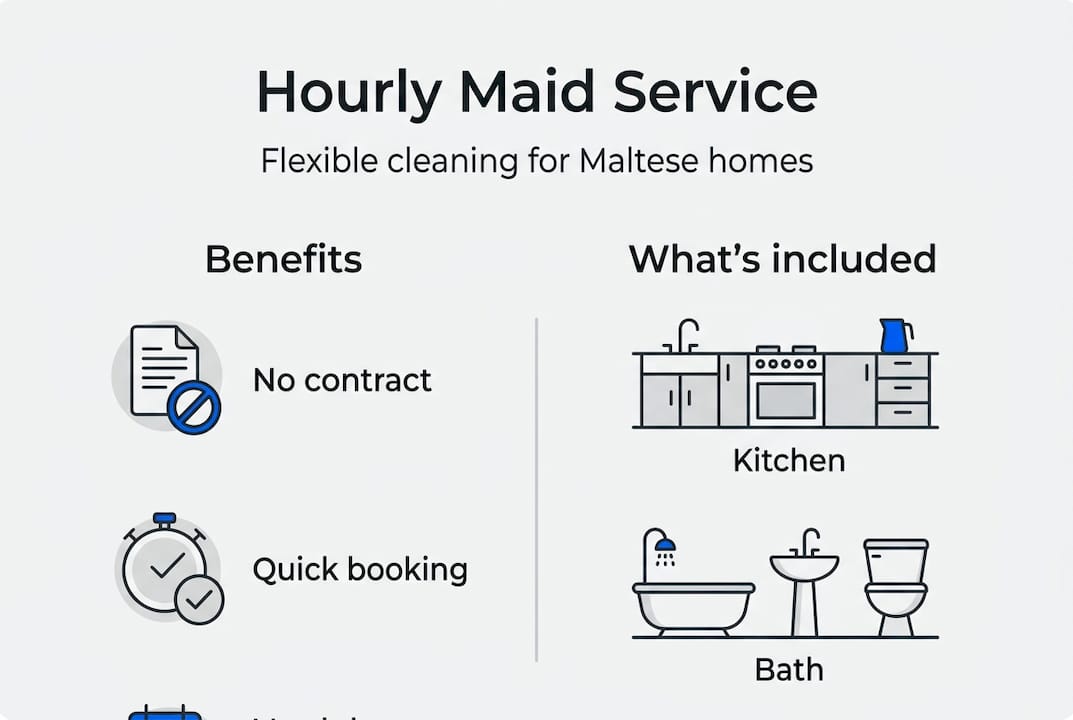
| Routine clean | 1–2 hours | €20–50 | Dusting, vacuuming, mopping, bathroom sanitising, kitchen surfaces |
| Deep clean | 3–5 hours | €80–120 | Everything in routine plus baseboards, inside appliances, grout scrubbing, detailed surface work |
| Post-renovation | 4–6 hours | €90–150 | Construction dust removal, debris cleanup, surface restoration |
| End-of-tenancy | 4–7 hours | €100–175 | Full property reset — all surfaces, inside cabinets, appliances, windows |
End-of-tenancy cleaning deserves special attention for renters. Under Malta’s Private Residential Leases Act (Cap. 604), landlords can deduct from your deposit for cleaning shortfalls — and a professional end-of-tenancy clean at €100–175 is almost always cheaper than losing a €500–€1,000 deposit.
Several factors push prices up or down. Sliema, St Julian’s, and Valletta waterfront apartments typically cost 15–20% more than the island average due to higher demand, limited parking for cleaners, and high-rise access logistics. Inland towns like Mosta, Birkirkara, and Naxxar tend to be more competitively priced.
Common extras and their typical additional costs:
| Extra | Additional cost |
|---|---|
| Inside window cleaning | €10–25 |
| Limescale treatment (taps, showerheads) | €15–30 |
| Oven deep clean | €20–35 |
| Fridge interior | €10–20 |
| Balcony or terrace scrub | €10–20 |
Some providers require a minimum booking of two to three hours, particularly for first-time clients or deep cleaning jobs. Always confirm minimum requirements before booking a short session — discovering a three-hour minimum after you’ve scheduled a two-hour slot wastes everyone’s time.
Why is hourly maid service a better fit for Malta residents?
Hourly maid service eliminates the core problem with fixed cleaning contracts: paying for sessions you don’t use. For anyone whose schedule fluctuates — remote workers with variable office days, parents managing school runs and after-school activities, expats who travel frequently — on-demand booking matches cleaning support to actual need rather than forcing a rigid weekly slot.
The financial case is straightforward. A weekly two-hour contract at €15/hour costs €120/month regardless of whether you’re home, travelling, or simply don’t need cleaning that week. Switching to hourly bookings — say, two three-hour sessions per month when you actually need them — cuts that to €90/month while delivering deeper, more focused cleaning per session.
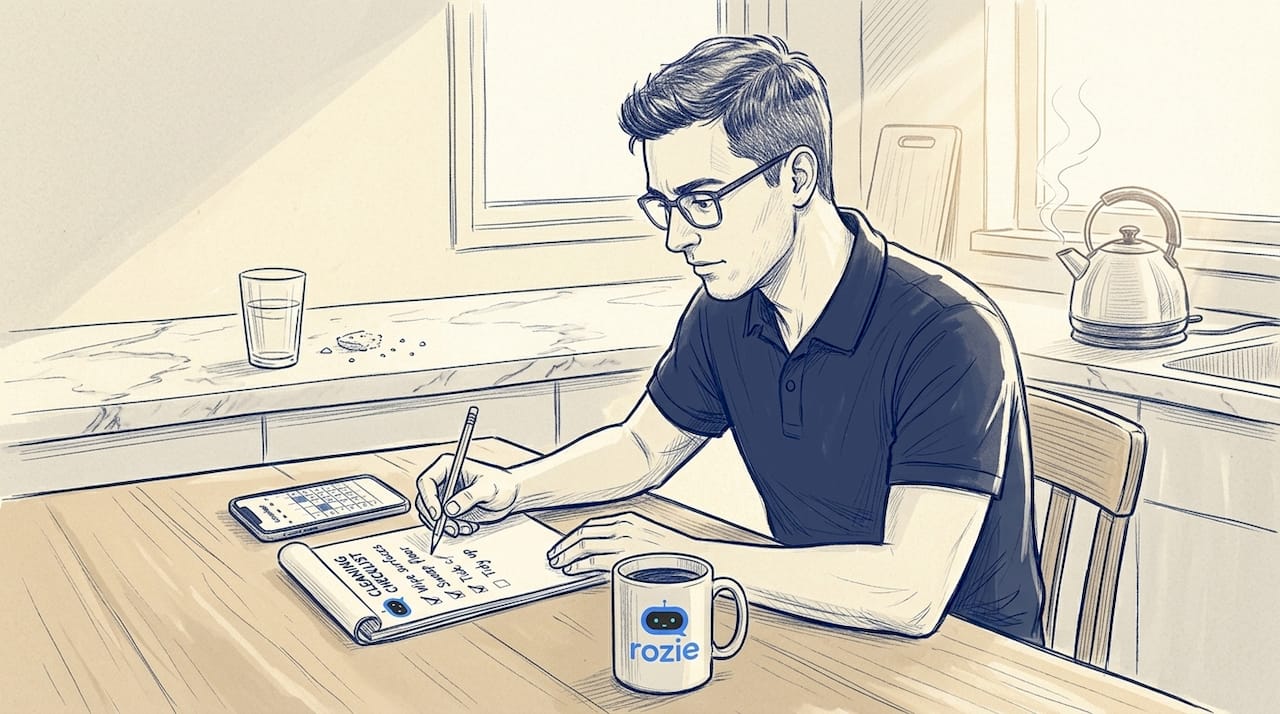
The control factor matters equally. You decide exactly which rooms and tasks get attention. A parent might prioritise sanitising bathrooms and play areas one week, then shift to a full kitchen deep clean the next. A professional working from home might focus on the living area before a client visit. Hourly booking lets you direct every minute of paid time toward your actual priorities rather than following a generic checklist.
For Malta’s large short-let market, hourly maid service is particularly valuable. Airbnb hosts need turnover cleaning between guests on unpredictable schedules — bookings come and go with varying check-out times and property conditions. Hourly flexibility means you can book a two-hour quick turnover for a studio or a five-hour deep reset for a three-bedroom villa, adjusting to each situation.
What Malta-specific challenges should your cleaner handle?
Malta’s climate and building materials create cleaning challenges that generic guides completely miss. Any hourly cleaner working in Maltese homes needs to understand these local factors — and you should ask about them before booking.
Globigerina limestone floors and surfaces. Malta’s traditional building stone is porous and pH-sensitive. Standard acidic cleaners — including vinegar, lemon juice, and many supermarket bathroom sprays — etch and permanently damage limestone. Your cleaner should use pH-neutral products specifically formulated for natural stone. Lithofin and HG both offer limestone-safe ranges available at PAVI and Smart Supermarket.
Hard water and limescale. Malta’s tap water contains 200–600 parts per million of calcium carbonate, varying significantly by area. This creates persistent limescale deposits on taps, showerheads, glass screens, and inside kettles and washing machines. Effective cleaning requires dedicated limescale removers (Viakal or HG limescale remover work well) applied regularly — not just a quick wipe with an all-purpose spray. According to the Water Services Corporation, Malta’s water hardness consistently ranks among the highest in Europe.
Humidity and mould. Relative humidity in Malta runs 60–95% year-round, peaking between October and February. This drives mould growth in bathrooms, wardrobes, under-ventilated corners, and behind furniture pushed against exterior walls. An experienced cleaner treats visible mould with appropriate solutions and flags ventilation problems that will cause recurrence.
Saharan dust events (il-qilla). Several times each year, southerly winds carry fine red Saharan dust across the island, coating balconies, terraces, outdoor furniture, and infiltrating through open windows. After a dust event, every horizontal surface in your home needs wiping — a perfect use case for a targeted hourly session focused entirely on dusting.
Coastal salt buildup. Apartments in Sliema, St Julian’s, Bugibba, and other seafront localities accumulate salt deposits on windows, balcony railings, and outdoor metal fittings. Regular cleaning prevents corrosion on fixtures and keeps glass clear. If you live within 500 metres of the coast, mention this when booking so your cleaner comes prepared.
How do you choose a trusted hourly cleaner in Malta?
Choosing a reliable hourly cleaner requires checking five things before your first booking. Skipping any of these increases the chance of wasted money, poor results, or — in the worst case — damage to surfaces like limestone that costs far more to repair than the cleaning itself.
1. Verify identity and background checks. Reputable platforms verify cleaners through ID checks and background screening before allowing them to accept bookings. This provides accountability that informal arrangements — Facebook group recommendations, word-of-mouth referrals — cannot match. A verified cleaner has a documented track record, not just a friend’s reassurance.
2. Confirm they use appropriate products for Malta conditions. Ask explicitly whether they bring their own cleaning supplies, and whether those supplies include pH-neutral solutions for limestone and dedicated limescale removers. A cleaner who shows up with supermarket all-purpose spray and vinegar is not equipped for the average Maltese apartment.
3. Understand the complete pricing before you confirm. Get clarity on the hourly rate, any minimum booking requirements, whether extras are charged separately, and if travel/parking surcharges apply (common in Valletta and Sliema). Compare total projected costs, not just headline hourly rates — the cheapest rate often hides fees that inflate the final bill.
4. Use platforms with payment protection. App-based platforms that hold payment until you confirm satisfactory service give you recourse if quality disappoints. Cash-only arrangements with no paper trail offer zero protection if work is incomplete or surfaces are damaged.
5. Read review patterns, not just star ratings. Multiple reviews mentioning punctuality, attention to detail, and good communication signal reliability. Repeated complaints about missed areas or poor time management are red flags regardless of the overall star count. Consistent positive feedback matters more than a perfect five-star rating from a handful of reviews.
How to get the most value from every hour
The difference between a satisfying hourly session and a disappointing one usually comes down to preparation and communication — not the cleaner’s skill level. These practical steps ensure your paid hours deliver maximum impact.
Declutter before the cleaner arrives. Tidying toys, clothes, and dishes off surfaces before the session means your cleaner spends paid time actually cleaning — not picking up clutter you could have handled in five minutes. A 10-minute pre-session tidy can save 30 minutes of paid cleaning time.
Create a prioritised task list. Rank your tasks from “must do” to “nice to have.” Share this list with your cleaner at the start of the session so they know exactly where to focus if time runs short. A written list prevents the common frustration of discovering the bathroom was left untouched because the kitchen took longer than expected.
Book your first session as a deep clean. Starting with a thorough deep clean establishes a baseline level of cleanliness. After that, shorter routine maintenance sessions (one to two hours bi-weekly) keep the standard high without requiring intensive work each visit. This approach is more cost-effective long-term than booking medium-length sessions that never quite catch up with accumulated grime.
Bundle extras strategically. Rather than adding one extra every session, batch them together periodically. Schedule oven and fridge cleaning together once a month, or combine inside window cleaning with your regular bi-weekly session. A single longer visit with bundled extras is more time-efficient than multiple short specialist bookings.
Book midweek for better availability. Tuesday through Thursday mornings are typically less in-demand than weekends and Monday mornings. If your schedule allows flexibility, midweek bookings often give you access to more experienced cleaners and wider time slot options.
Ready to book hourly cleaning in Malta?
Finding a verified hourly cleaner in Malta doesn’t require scrolling through Facebook groups or gambling on unverified recommendations. Rozie connects you with background-checked cleaning professionals in a few taps — you see transparent pricing before you confirm, choose from verified cleaner profiles with real ratings, select your extras, and your payment is protected for seven days until you’re satisfied with the work.
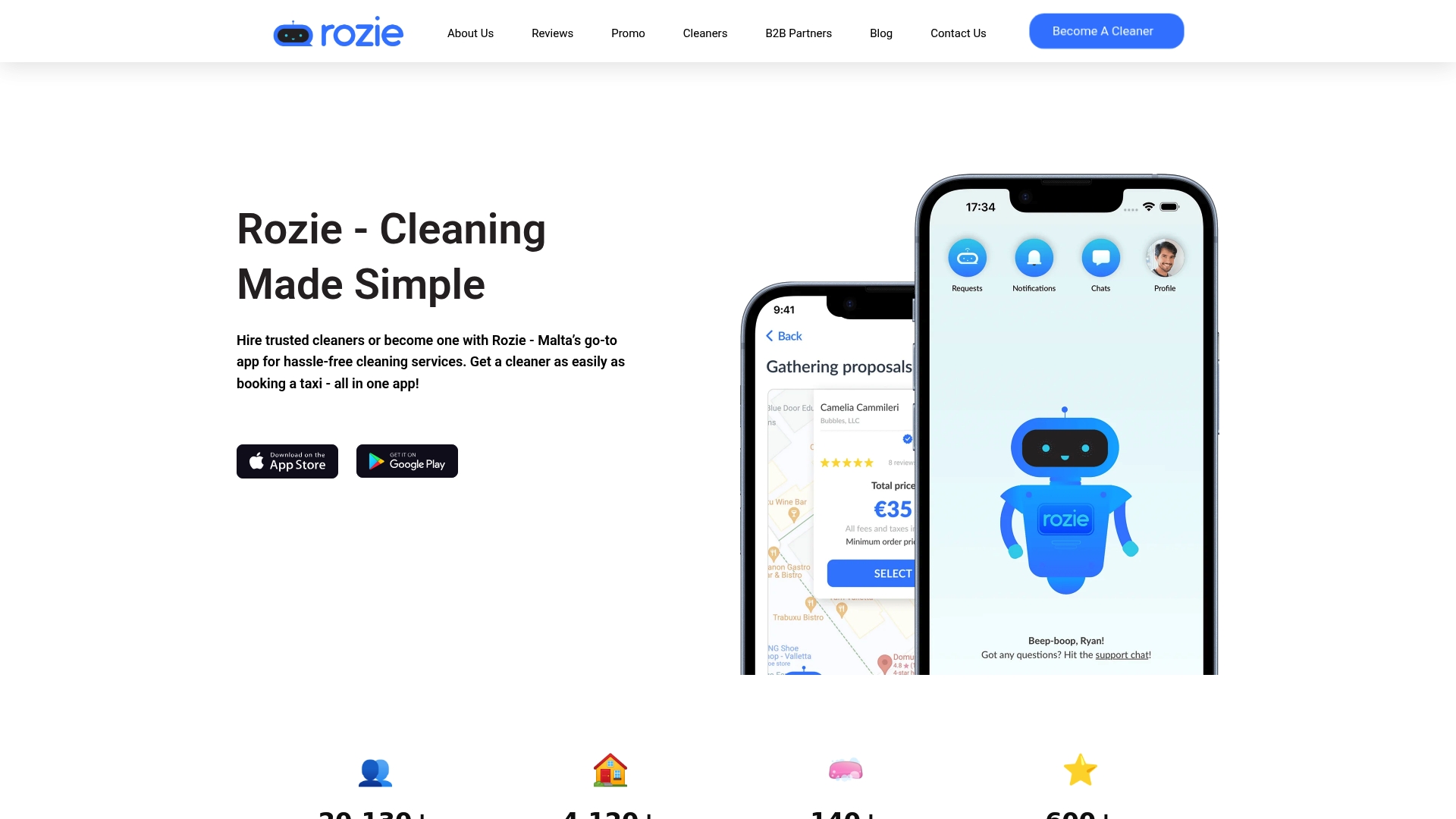
With 22,700+ users and 710+ five-star reviews, Rozie is Malta’s go-to platform for on-demand cleaning. Whether you need a quick two-hour routine clean or a full end-of-tenancy deep clean, download Rozie and book your first session today.
Frequently asked questions about hourly maid service in Malta
What is hourly maid service?
Hourly maid service lets you book a professional cleaner for a specific number of hours — typically one to four — without contracts or recurring commitments. You choose your date, time window, and priority tasks, then pay only for the hours used. It’s the most flexible way to get professional cleaning support in Malta.
How much does hourly maid service cost in Malta?
Independent cleaners charge €10–20 per hour, while agencies and platform-verified professionals charge €15–25 per hour. A routine one-bedroom clean takes one to two hours (€20–50 total). Deep cleans for a two-bedroom apartment run €80–120 over three to five hours. Prices in Sliema and St Julian’s tend to be 15–20% higher than the island average.
What tasks can I request during an hourly session?
Standard tasks include dusting, vacuuming, mopping, bathroom sanitising, and kitchen surface cleaning. Most platforms also offer bookable extras — oven deep cleaning, fridge interior, inside windows, balcony scrubbing, and limescale treatment — for additional fees. You specify your priorities before the session begins.
Is hourly maid service safe and reliable?
When booked through platforms that verify cleaner identity through background checks and provide payment protection, hourly maid service is significantly safer than informal arrangements. Real-time ratings, written reviews, and in-app communication create layers of accountability. Always book through a platform with a documented verification process rather than relying solely on word-of-mouth referrals.
Do hourly cleaners bring their own supplies?
This varies by provider. Some cleaners bring a full kit including vacuums, mops, and cleaning products. Others expect you to supply equipment and consumables. Always confirm this before your first booking — and if you have limestone floors or persistent limescale, specify that you need pH-neutral products and dedicated limescale removers, not generic all-purpose sprays.
How far in advance should I book in Malta?
For routine cleaning, booking three to five days ahead usually secures your preferred time slot. During peak season (June through August) and around public holidays, booking a week in advance is safer. For urgent or same-day cleaning, on-demand platforms like Rozie often have availability when traditional agencies do not.
Is hourly cleaning better than a fixed weekly contract?
Hourly booking is more cost-effective for anyone whose cleaning needs vary from week to week — travellers, remote workers with flexible schedules, or households that only need fortnightly deep attention. Fixed contracts suit people who want guaranteed consistency every week without needing to re-book. For most Malta expats and professionals, the flexibility of hourly service delivers better value.
Recommended
- Hourly Cleaning Service: Flexible Home Help in Malta | Rozie – Malta’s Best Cleaning Services
- Top 4 Airbnb Host Cleaning Services in Malta 2026 | Rozie – Malta’s Best Cleaning Services
- How to Choose a Cleaning Service in Malta (2026 Guide)
- Top 5 Bi-Weekly Cleaning Services Malta 2026 | Rozie – Malta’s Best Cleaning Services