


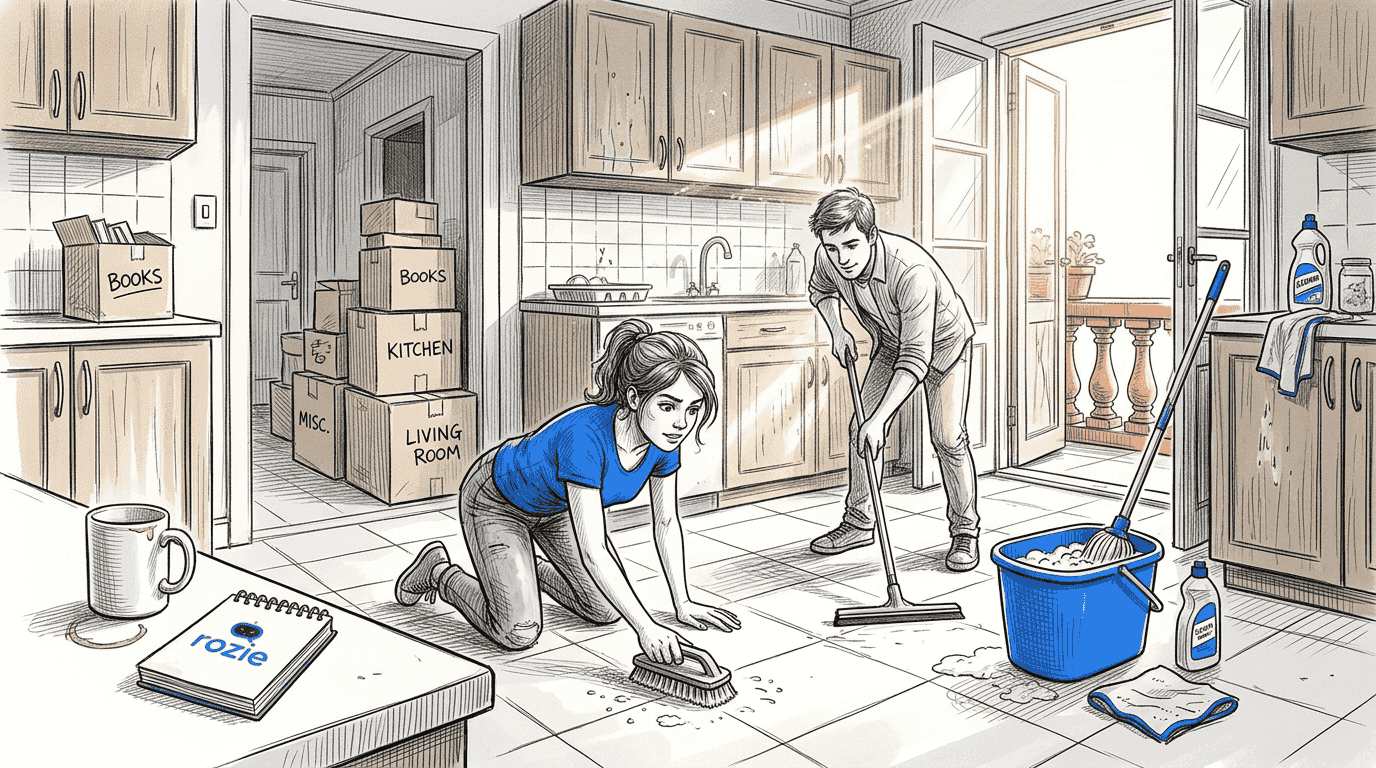
End of tenancy cleaning in Malta typically costs €80–€200 for a professional deep clean of a standard two-bedroom apartment, or 6–10 hours of focused effort if you tackle it yourself. Under Malta’s Private Residential Leases Act (Cap. 604), every rental contract must include an inventory documenting the property’s condition at move-in — and your landlord will compare the move-out state against that inventory line by line. Failing to meet the standard means deposit deductions, sometimes amounting to hundreds of euros for issues as small as limescale-caked shower screens or grease-filmed oven interiors.
This checklist covers every room, every appliance, and every Malta-specific cleaning challenge — from globigerina limestone floors that need pH-neutral products to bathroom mould driven by 60–95% year-round humidity. Use it as a printable walkthrough to make sure nothing gets missed.
Table of Contents
- What Does Malta Law Say About End of Tenancy Cleaning?
- What Should Your End of Tenancy Cleaning Checklist Include?
- Which Malta-Specific Cleaning Challenges Should You Prepare For?
- How Long Does End of Tenancy Cleaning Take in Malta?
- Should You DIY or Hire a Professional for Move-Out Cleaning?
- How Do You Protect Your Deposit During the Final Inspection?
- Frequently Asked Questions About End of Tenancy Cleaning in Malta
What Does Malta Law Say About End of Tenancy Cleaning?
Malta’s Private Residential Leases Act (Cap. 604) requires every rental agreement signed after 1 January 2020 to include an inventory with documentary evidence of the property’s condition, including furniture and fittings. This inventory is the legal baseline your landlord uses to assess whether cleaning deductions from your deposit are justified.
If a dispute arises over deposit deductions of up to €5,000, the Housing Authority Malta Adjudicating Panel handles the case. The panel examines whether deductions relate to genuine damage or cleaning shortfalls beyond normal wear and tear — not cosmetic preferences. Your strongest defence is photographic evidence showing the property was returned in comparable condition to the move-in inventory.
Some lease agreements include specific clauses requiring professional cleaning at move-out. Read your contract carefully before deciding between DIY and hiring a cleaner. If the clause mandates professional cleaning, doing it yourself — even thoroughly — may not satisfy the contractual requirement, and your landlord can withhold funds to cover it.
What counts as “normal wear and tear” in Malta?
Minor scuff marks on walls, slight discolouration of grout from regular use, and faded paint from sunlight are generally considered wear and tear. Grease buildup in the oven, limescale deposits on bathroom fixtures, mould growth in shower silicone, and stained kitchen surfaces are not — these are cleaning failures that justify deductions. The distinction matters because Malta’s high humidity and hard water accelerate visible deterioration, making regular cleaning even more critical throughout your tenancy.
What Should Your End of Tenancy Cleaning Checklist Include?
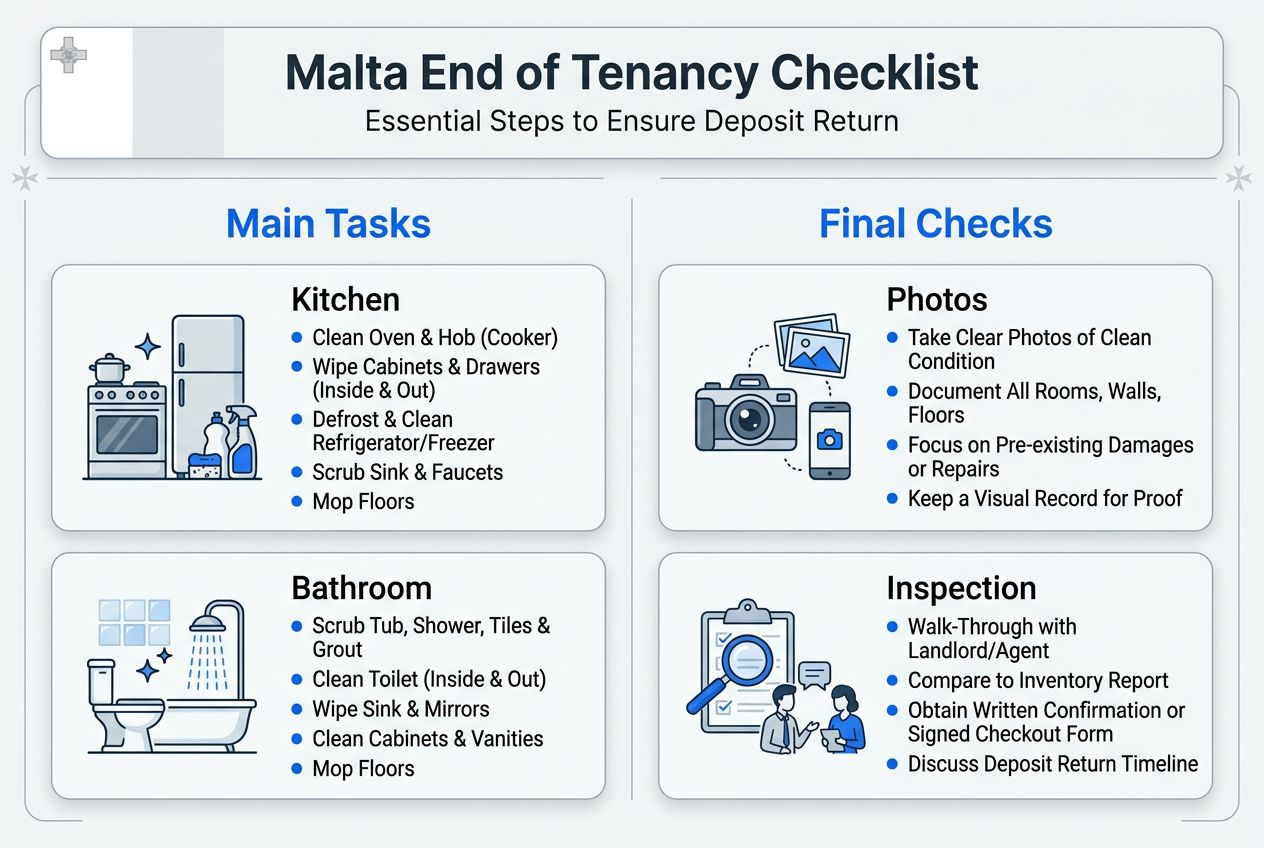
A complete end of tenancy clean in Malta covers every room, every appliance interior, and every surface your landlord will inspect — including areas most tenants forget, like exhaust hood filters, window tracks, and the floor behind the washing machine. The checklist below is organised room by room, with Malta-specific additions flagged where relevant.
Kitchen checklist
Kitchens are the single most scrutinised area during move-out inspections. Oven interiors, fridge shelves, and exhaust hoods accumulate grease and food residue that landlords check first. Budget at least 2–3 hours for the kitchen alone in a standard Malta apartment.
Clean inside and outside the oven, including racks, glass door, and the gap between the glass panels. Defrost the freezer completely and sanitise all fridge shelves, drawers, and rubber door seals. Degrease the stovetop, backsplash tiles, and exhaust hood — remove and soak the filter if possible. Scrub the sink basin, taps, and drain. Wipe all cabinet interiors and exteriors. Clean countertops, removing any stains or heat marks. Wipe light switches, plug sockets, and cupboard handles. Sweep and mop the floor, pulling out appliances to clean the floor and walls behind them.
Malta-specific note: Kitchen taps in Malta are prone to heavy limescale buildup from the island’s hard water, which runs 200–600 PPM calcium carbonate depending on your area. Use a dedicated limescale remover like HG (available at PAVI and Smart Supermarket) rather than vinegar, especially if your countertops or backsplash are natural stone.
Bathroom checklist
Bathrooms are the second inspection hotspot, particularly shower enclosures and tile grout. Malta’s year-round humidity (60–95%, peaking October through February) accelerates mould growth in silicone seals, grout lines, and under-ventilated corners.
Remove limescale from the shower screen, bathtub, tiles, and glass doors. Descale showerheads and taps — soak in limescale remover if heavily caked. Scrub tile grout with a dedicated grout cleaner and stiff brush. Clean the toilet bowl, seat, base, and behind the cistern. Sanitise the sink, taps, and mirror. Wipe cabinets and shelves inside and out. Clean ventilation fans and grilles — these accumulate dust rapidly in humid conditions. Sweep and mop the floor, including behind the toilet and under any freestanding furniture.
Malta-specific note: If black mould has developed in shower silicone, a surface wipe will not remove it. You need a mould-specific spray (available at Homemate or PAVI) left on for 15–30 minutes. For severe cases, the silicone may need replacing entirely — flag this to your landlord before the inspection rather than trying to cover it up.
Bedrooms and living areas checklist
These rooms are less labour-intensive but have their own common pitfalls — especially wall marks, dusty wardrobes, and window tracks that nobody thinks to clean until the landlord points them out.
Dust all surfaces including shelves, wardrobes, and window sills. Wipe walls to remove scuff marks, fingerprints, and adhesive residue from picture hooks. Clean inside all wardrobes and drawers. Vacuum carpets thoroughly or mop hard floors, paying attention to corners and under furniture. Clean windows inside and out, including frames and tracks — use a flat-head screwdriver wrapped in cloth to reach track corners. Wipe light fixtures, ceiling fans, and air conditioning unit filters. Clean skirting boards, door frames, and door handles.
Malta-specific note: If your apartment has globigerina limestone flooring — common in older Maltese townhouses and some newer builds — never use acidic or alkaline cleaners. Vinegar, lemon juice, and many supermarket floor cleaners will etch and permanently damage the stone. Use only pH-neutral products designed for natural stone, such as Lithofin or HG Natural Stone Cleaner.
Balcony and outdoor areas checklist
Balconies and terraces are easily forgotten but almost always included in the landlord’s inspection, especially in Sliema, St Julian’s, and coastal localities where salt deposits accumulate on every surface exposed to sea air.
Sweep and scrub balcony floors — tiles accumulate a film of salt and Saharan dust (il-qilla) that a dry sweep alone will not remove. Clean railings, removing any rust spots or salt corrosion. Wipe down outdoor light fixtures. Remove cobwebs from corners and ceiling edges. Clean balcony windows and sliding door tracks.
Quick-reference areas and common mistakes
| Area | Critical Tasks | Most Often Missed |
|---|---|---|
| Kitchen | Oven interior, fridge shelves, cabinet interiors, stovetop | Behind appliances, exhaust hood filter, oven door glass gap |
| Bathroom | Limescale removal, grout scrubbing, toilet base | Ventilation grilles, under-sink area, shower silicone mould |
| Bedrooms | Wall marks, wardrobe interiors, light fixtures | Window tracks, skirting boards, AC filters |
| Living areas | Dust all surfaces, vacuum/mop thoroughly | Behind radiators, door frames, ceiling fan blades |
| Balcony | Floor scrub, railing wipe, window tracks | Light fixtures, salt/dust film, sliding door tracks |
Which Malta-Specific Cleaning Challenges Should You Prepare For?
Malta’s climate and geology create cleaning challenges that generic move-out guides do not address. Ignoring these local factors is the single biggest reason tenants in Malta lose deposit money on preventable issues. Here are the four you must plan for.
Hard water and limescale
Malta’s tap water contains 200–600 PPM calcium carbonate, making it among the hardest in Europe. This creates persistent white limescale deposits on taps, showerheads, glass shower screens, and inside kettles and washing machines. If you have not been descaling regularly throughout your tenancy, a single cleaning session may not be enough — heavy buildup requires soaking with a limescale remover for 30–60 minutes, sometimes repeated over several days. HG Professional Limescale Remover (sold at PAVI, Smart Supermarket, and most hardware stores) works well for bathroom fixtures.
Humidity and mould
Relative humidity in Malta sits between 60% and 95% year-round, with peaks from October through February. Bathrooms without proper ventilation, ground-floor apartments, and north-facing rooms are particularly vulnerable. Mould commonly develops in shower silicone, tile grout, behind wardrobes pushed against exterior walls, and under kitchen sinks. The World Health Organization links prolonged indoor dampness to respiratory health risks, and landlords increasingly treat mould as a cleaning shortfall rather than a structural issue during inspections.
Globigerina limestone floors
Many older Maltese homes and some modern builds feature globigerina limestone flooring. This stone is beautiful but highly porous and pH-sensitive. Acidic cleaners — including vinegar, lemon-based products, and many common multi-surface sprays — will etch the surface permanently. Use only pH-neutral stone-specific products (Lithofin MN Wash & Clean is the most widely available in Malta). Never use a steam mop on unsealed limestone, as the heat and moisture can cause damage.
Coastal salt and Saharan dust
Properties in Sliema, St Julian’s, Bugibba, and other coastal localities accumulate salt deposits on windows, balcony railings, and metal fittings. Several times a year, Saharan dust events (known locally as il-qilla) coat outdoor surfaces and enter through open windows. A thorough move-out clean must address both — standard dusting is not sufficient for the gritty red film left by il-qilla, and salt deposits need wet wiping rather than dry rubbing, which can scratch glass.
How Long Does End of Tenancy Cleaning Take in Malta?
A standard end of tenancy clean for a two-bedroom apartment in Malta takes 6–10 hours of focused work for one person, or 3–5 hours for a two-person team. These estimates assume the property was maintained with regular cleaning throughout the tenancy. If heavy limescale, grease buildup, or mould are present, add 2–4 additional hours.
| Property Size | Estimated DIY Time (1 person) | Professional Team Time |
|---|---|---|
| Studio / 1-bedroom | 4–6 hours | 2–3 hours |
| 2-bedroom apartment | 6–10 hours | 3–5 hours |
| 3-bedroom apartment | 8–12 hours | 4–6 hours |
| Townhouse / maisonette | 10–16 hours | 5–8 hours |
Start at least three to five days before your move-out date — not the night before. This gives you time to tackle one or two rooms per session, address stubborn issues that need overnight soaking (oven grease, heavy limescale), and do a final walkthrough with fresh eyes before the landlord arrives.
Work top-to-bottom in every room: ceiling fans and light fixtures first, then shelves and countertops, finishing with floors. This prevents dust and dirty water from falling onto already-cleaned surfaces and saves you from re-cleaning.
Should You DIY or Hire a Professional for Move-Out Cleaning?
A professional end of tenancy deep clean for a two-bedroom apartment in Malta costs €80–€200, depending on property condition and extras selected. That may seem steep until you compare it to potential deposit deductions of €300–€1,000 for inadequate cleaning, or the 6–10 hours of your own time a DIY clean requires.
| Factor | DIY Cleaning | Professional Cleaning |
|---|---|---|
| Cost | €20–€50 (supplies) | €80–€200 (2-bed apartment) |
| Time investment | 6–10 hours (2-bed) | 0 hours (your time) |
| Equipment quality | Household supplies | Professional-grade products |
| Malta-specific knowledge | Requires research | Experienced with local challenges |
| Deposit risk | Higher — missed areas are common | Lower — professionals know what landlords check |
| Best for | Small properties, tight budgets, tenants with cleaning experience | Larger properties, time-poor tenants, lease clauses requiring professional clean |
If you decide to hire a professional, look for cleaners experienced with end of tenancy work specifically — not just regular cleaning. End of tenancy requires attention to areas that standard cleans skip: oven interiors, fridge shelves, window tracks, cabinet insides, and behind appliances. On Rozie, you can browse verified cleaners, compare reviews, and select extras like oven, fridge, and inside window cleaning to customise the job to your property’s needs. Every booking includes 7-day payment protection and in-app chat so you can share specific instructions with your cleaner.
For a detailed breakdown of current rates across all service types, see the cleaning cost Malta 2026 guide with live pricing estimates, or check deep cleaning prices in Malta for cost benchmarks by property size.
How Do You Protect Your Deposit During the Final Inspection?
Completing a thorough clean is only half the job. Without proper documentation, your word against the landlord’s is a losing position. The tenants who get their full deposit back are the ones who can prove the property was returned clean — not the ones who simply remember cleaning it.
Document everything with date-stamped photos
After completing your clean — and before the landlord arrives — photograph every room from multiple angles. Include close-ups of appliance interiors (oven, fridge, dishwasher), bathroom fixtures, window tracks, and any area that was problematic during your tenancy. Most smartphone cameras embed the date and time in photo metadata automatically. Organise photos by room and store them in a cloud folder you can access later if needed.
Request a joint walkthrough
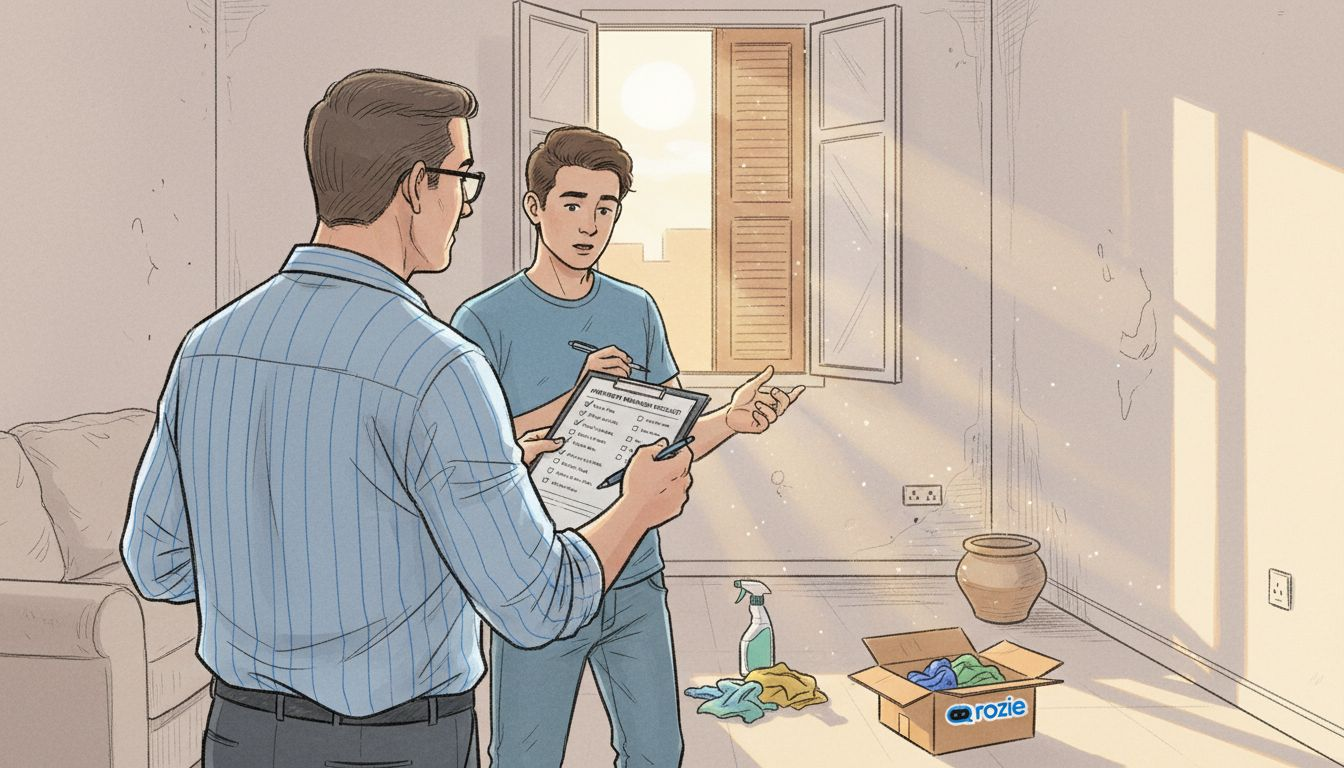
If possible, schedule a joint inspection with your landlord or their representative. Walking through together lets you address concerns immediately — a smudge on a window can be wiped on the spot, saving both parties the cost and hassle of a formal dispute. If the landlord identifies areas needing improvement, you have the opportunity to fix them before handing over the keys.
Keep all receipts and records
If you hired professional cleaners, keep the booking confirmation and receipt. If you purchased cleaning products specifically for the move-out, keep those receipts too. Under Cap. 604, landlords must provide itemised justifications for any deposit deductions — your documentation serves as counter-evidence if deductions seem disproportionate. For disputes up to €5,000, the Housing Authority Adjudicating Panel provides a resolution process that is faster and cheaper than going to court.
Email a summary to your landlord
After completing the clean, email your landlord a brief summary with a selection of photos attached. This creates a timestamped record proving the property’s condition at the time you finished cleaning. Even a simple message — “Cleaning completed today, photos attached for your records” — establishes a paper trail that strengthens your position if disputes arise later.
For additional strategies on navigating the deposit return process, see our guide to getting your deposit back in Malta.

If the checklist feels overwhelming and you would rather hand the job to someone who knows exactly what Malta landlords expect, Rozie connects you with verified cleaners across Malta. You see transparent pricing before confirming, choose extras like oven, fridge, and window cleaning to match your property’s needs, and get 7-day payment protection on every booking.
Frequently Asked Questions About End of Tenancy Cleaning in Malta
How much does professional end of tenancy cleaning cost in Malta?
Professional end of tenancy cleaning in Malta costs €80–€200 for a standard two-bedroom apartment in 2026. The price varies based on property size, condition, and extras like oven or window cleaning (typically €10–€25 each). Larger properties or homes with heavy limescale or mould buildup may cost more. Compare current rates on Rozie’s cleaning cost calculator.
Can I use vinegar to clean my Malta apartment before moving out?
Vinegar is effective for limescale on stainless steel taps and glass, but never use it on globigerina limestone floors, natural stone countertops, or marble surfaces — all common in Maltese homes. The acid etches these materials permanently. Use pH-neutral cleaners like Lithofin for stone surfaces and a dedicated limescale remover like HG for bathroom fixtures.
What happens if my landlord claims the cleaning is insufficient?
Request a joint walkthrough and discuss specific issues using your photos and checklist as evidence. If you cannot resolve it directly, landlords in Malta must provide itemised written justification for deposit deductions. For disputes up to €5,000, you can file a claim with the Housing Authority Adjudicating Panel under Cap. 604, which is faster and less costly than court proceedings.
Do I need to hire a professional cleaner, or can I do it myself?
Check your lease agreement first — some contracts specifically require professional cleaning. If yours does not, DIY is perfectly acceptable provided you meet the standard documented in your move-in inventory. Professional cleaners are worth considering for larger properties, time-poor tenants, or apartments with significant buildup from Malta’s hard water and humidity.
How far in advance should I start end of tenancy cleaning?
Start three to five days before your move-out date. This allows time to tackle rooms in manageable sessions, soak stubborn grease and limescale overnight, and do a final walkthrough with fresh eyes. Rushing the entire clean into one day increases the chance of missed areas and leaves no buffer for touch-ups the landlord may request.
What cleaning supplies do I need for a Malta end of tenancy clean?
Essential supplies include microfiber cloths, a pH-neutral floor cleaner (critical for limestone), a dedicated limescale remover (HG or similar), an oven degreaser, a mould-specific bathroom spray, a grout brush, a good vacuum, and a mop with a bucket. All are available at PAVI, Smart Supermarket, or Homemate. Budget €20–€50 for supplies if you do not already have them.
Are balconies and outdoor areas included in the end of tenancy inspection?
Yes. Balconies, terraces, and any outdoor areas listed on your lease are inspected. In coastal localities like Sliema or St Julian’s, balconies accumulate salt deposits and Saharan dust (il-qilla) that require scrubbing with water — a dry sweep will not suffice. Clean railings, light fixtures, and sliding door tracks as well.
Recommended
- End of Tenancy Cleaning Malta: Secure Your Deposit Easily | Rozie – Malta’s Best Cleaning Services
- Short-Let Cleaning in Malta Guide. CHECKLIST
- Essential Move-Out Cleaning Tips for a Spotless Exit | Rozie – Malta’s Best Cleaning Services
- Move In Cleaning Malta 2026: Save Up to 50% with Verified Pros | Rozie – Malta’s Best Cleaning Services