


Over 60 percent of busy professionals say kitchen cleaning is their most time-consuming household chore. If you live in Malta and constantly juggle work, family, and daily routines, finding efficient solutions can make a serious difference in reducing stress. Even an american cleaning routine, known for its strategic steps, can be adapted to fit local lifestyle needs. This guide helps you pinpoint your unique cleaning challenges so you save time and maintain a healthy kitchen with less hassle.
Table of Contents
- Step 1: Assess Your Kitchen Cleaning Needs
- Step 2: Design A Realistic Weekly Cleaning Plan
- Step 3: Assign And Prioritize Cleaning Tasks
- Step 4: Set Up Reminders And Use Helpful Apps
- Step 5: Check Results And Adjust Your Schedule
Quick Summary
| Main Insight | Clear Explanation |
|---|---|
| 1. Assess Kitchen Cleaning Needs | Evaluate your kitchen’s size and usage to create a targeted cleaning plan that maximizes efficiency and hygiene. |
| 2. Create a Weekly Cleaning Plan | Develop a manageable weekly schedule that divides tasks across days to avoid overwhelming cleaning sessions. |
| 3. Prioritize and Assign Tasks | Organize cleaning tasks by urgency and fit them into your schedule to ensure critical areas are consistently maintained. |
| 4. Utilize Technology for Reminders | Use apps to set up recurring cleaning tasks and notifications to keep your kitchen maintenance routine organized. |
| 5. Regularly Review and Adapt Your Plan | Periodically assess your cleaning routine to make necessary adjustments based on your lifestyle and kitchen use. |
Step 1: Assess Your Kitchen Cleaning Needs
Busy professionals need a strategic approach to kitchen cleaning that balances thoroughness with efficiency. Understanding your specific kitchen cleaning requirements helps create a targeted plan that saves time and maintains hygiene standards.
Start by conducting a comprehensive evaluation of your kitchen’s unique characteristics. Consider factors like kitchen size, cooking frequency, number of household members, and typical meal preparation styles. Kitchen safety and hygiene research indicates that regular assessment prevents potential foodborne illness risks caused by bacteria accumulation. Focus on identifying high-touch surfaces such as countertops, stovetops, refrigerator handles, and sink areas that require consistent attention.
Make a detailed inventory of your kitchen surfaces and appliances to determine cleaning frequency and methods. Ceramic tiles might need different maintenance compared to stainless steel counters, while wooden cutting boards require specific sanitization techniques. Break down your assessment into distinct zones like food preparation areas, cooking spaces, storage regions, and dining sections. This systematic approach ensures no area gets overlooked during your cleaning routine.
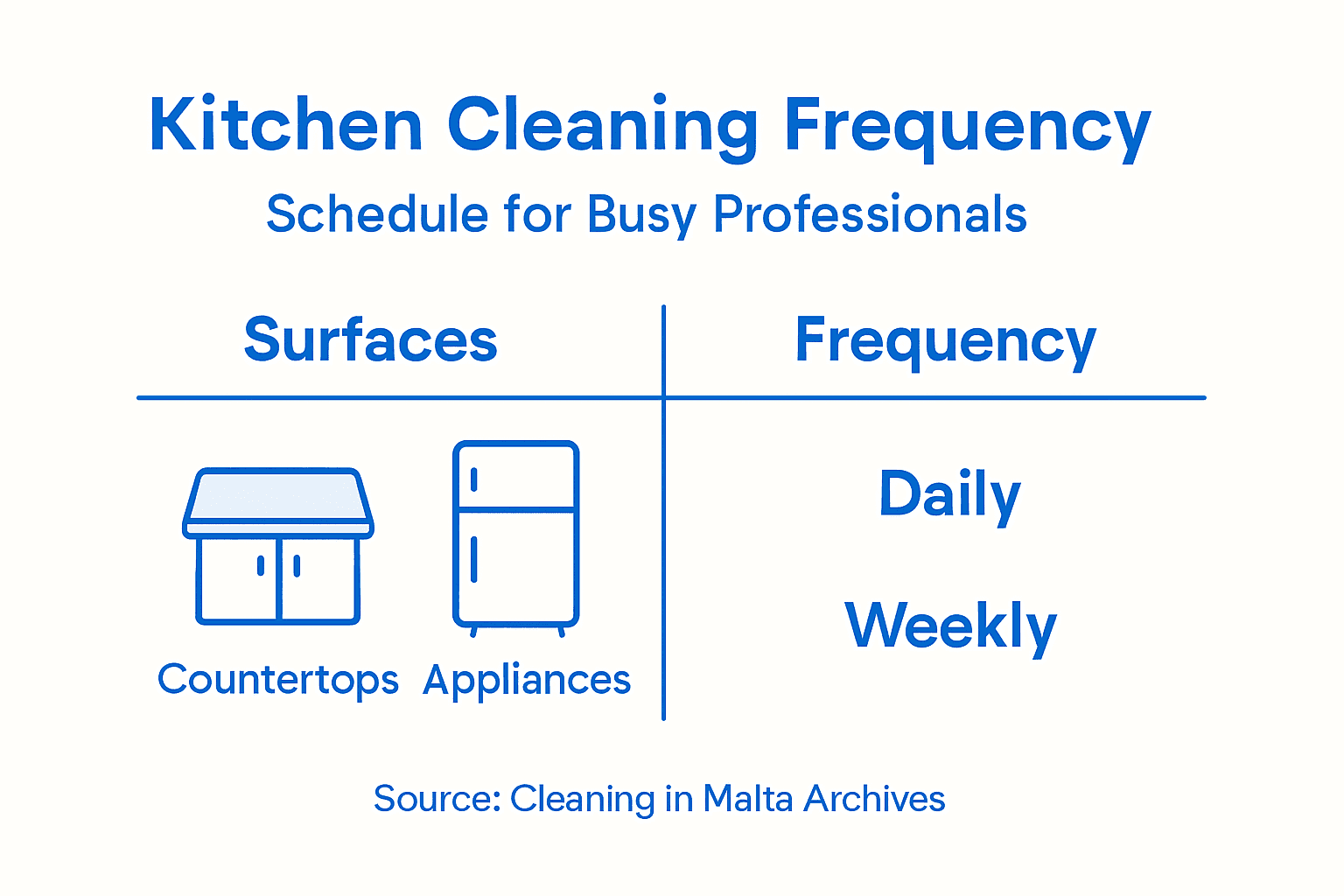
Here is a comparison of kitchen surface types and their recommended cleaning frequency:
| Surface Type | Recommended Frequency | Special Considerations |
|---|---|---|
| Stainless Steel | Daily or after use | Use gentle cleaner, avoid abrasives |
| Wooden Cutting Board | After each use | Sanitize regularly, air dry |
| Ceramic Tile | Weekly | Seal grout, mop with mild solution |
| Granite Countertop | Daily | Use pH-neutral cleaner only |
Pro tip: Keep a small notebook or digital tracking app to document your kitchen’s specific cleaning needs and track maintenance patterns for more efficient future cleaning sessions.
Step 2: Design a Realistic Weekly Cleaning Plan
Creating an effective weekly cleaning plan requires strategic thinking and a personalized approach that fits your unique lifestyle and kitchen demands. The goal is to develop a schedule that maintains cleanliness without overwhelming your already busy professional life.
Start by crafting a customizable cleaning framework that breaks down tasks into manageable daily and weekly segments. Divide your kitchen cleaning routine into core zones: daily quick maintenance, midweek deep cleaning, and weekend comprehensive sanitization. Prioritize high traffic areas like countertops, stovetops, and sink regions that accumulate the most grime and bacteria. Consider your typical cooking patterns some weeks might require more intensive cleaning if you prepare complex meals or host dinner parties.
Organize your cleaning tasks strategically by allocating specific days for different activities. For instance, Monday could focus on refrigerator organization, Wednesday on appliance exterior cleaning, and Saturday for a thorough deep clean. This systematic approach prevents cleaning from becoming a massive weekend chore and distributes the workload more evenly throughout the week. Remember to remain flexible and adjust your plan as your schedule and kitchen usage evolve.
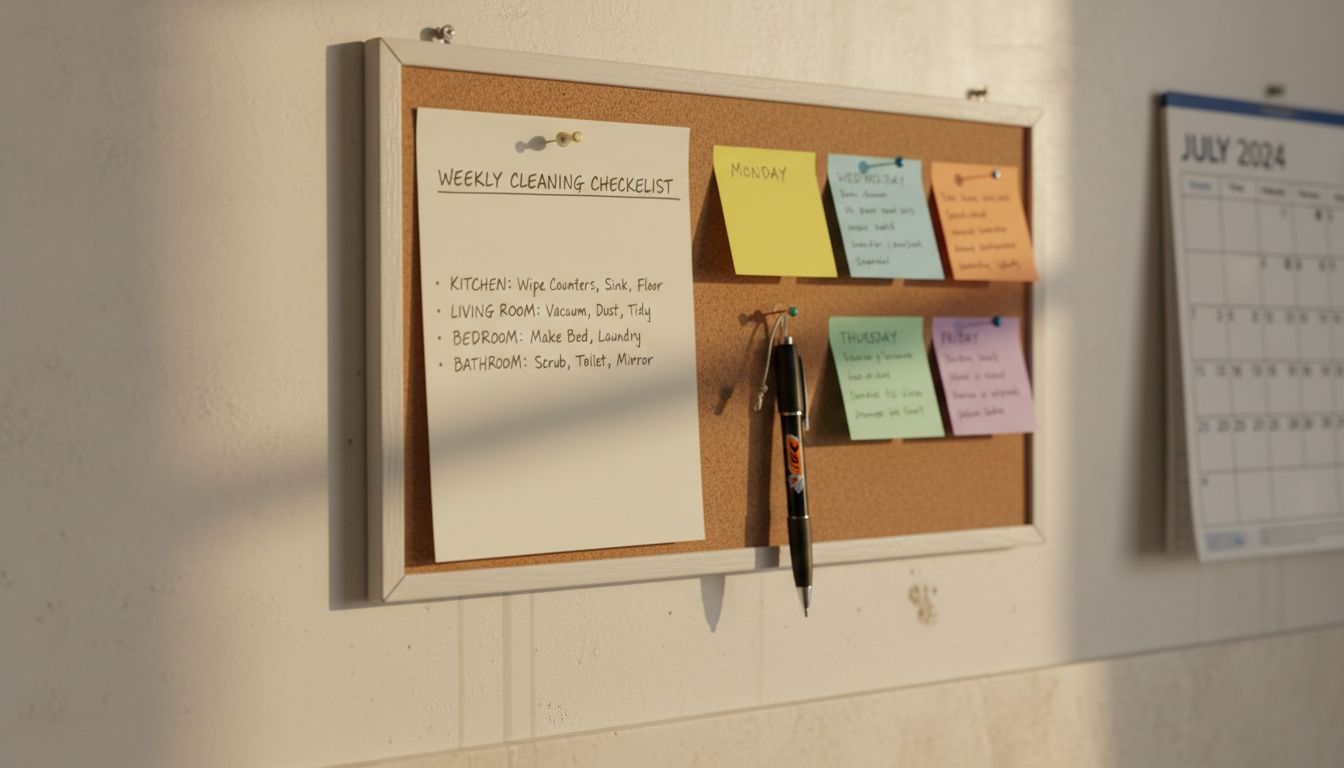
Pro tip: Create a digital or physical cleaning checklist that you can easily modify and track your progress to maintain motivation and consistency in your kitchen maintenance routine.
Step 3: Assign and Prioritize Cleaning Tasks
Effective kitchen cleaning requires a strategic approach to task management that maximizes efficiency and ensures comprehensive sanitation. Your goal is to create a systematic method for allocating and organizing cleaning responsibilities that fits seamlessly into your busy professional lifestyle.
Task prioritization methods are crucial for transforming kitchen cleaning from an overwhelming chore into a manageable routine. Begin by categorizing tasks based on urgency and importance. High priority zones include food preparation surfaces, sink areas, and appliance exteriors that directly impact food safety and kitchen hygiene. Create a tiered system where daily essential tasks like wiping counters and washing dishes take precedence over weekly deep cleaning activities like refrigerator organization and cabinet interior cleaning.
Consider your personal schedule and energy levels when assigning cleaning tasks. Some professionals might prefer quick morning touch ups, while others find evening cleaning more convenient. Break down larger tasks into smaller achievable segments that can be completed in 10 to 15 minute increments. This approach prevents cleaning from becoming a massive time commitment and allows you to maintain a consistently clean kitchen without feeling overwhelmed by the entire process.
Pro tip: Invest in multipurpose cleaning tools and keep them easily accessible to reduce friction and make spontaneous cleaning more likely during brief moments of available time.
Step 4: Set Up Reminders and Use Helpful Apps
Maximizing your kitchen cleaning efficiency requires strategic use of technology to keep you organized and motivated. The right digital tools can transform your cleaning routine from a sporadic chore into a consistent and manageable process.
Digital calendar apps and reminder systems provide powerful solutions for busy professionals seeking to maintain a clean kitchen. Consider using smartphone applications that allow you to create recurring cleaning tasks, set customized notifications, and sync across multiple devices. Choose apps that enable you to break down larger cleaning objectives into smaller actionable steps and provide gentle nudges at strategically timed intervals. This approach helps prevent tasks from becoming overwhelming and ensures consistent maintenance of your kitchen space.
Experiment with different reminder strategies to find what resonates with your personal workflow. Some professionals prefer daily short reminders, while others might opt for weekly comprehensive checklists. Integrate these digital tools with your existing calendar and work schedule to create a seamless cleaning management system that adapts to your lifestyle and energy levels. Look for applications that offer flexibility, offline functionality, and easy customization to match your unique kitchen cleaning needs.
Pro tip: Set up location based reminders that trigger cleaning tasks when you arrive home, making it easier to start your kitchen maintenance routine immediately.
Below is a summary of digital tools that streamline kitchen cleaning routines for busy professionals:
| App/Tool Type | Key Function | Benefit for Professionals |
|---|---|---|
| Calendar Apps | Schedule recurring tasks | Automate reminders and deadlines |
| Checklist Apps | Track task completion | Visual progress boosts motivation |
| Location Reminders | Trigger tasks at home | Increase cleaning task consistency |
Step 5: Check Results and Adjust Your Schedule
Creating an effective kitchen cleaning routine is an ongoing process that requires regular assessment and strategic refinement. Your initial cleaning plan serves as a starting point from which you can develop a personalized and increasingly efficient approach.
Continuous improvement techniques provide a systematic framework for evaluating and enhancing your kitchen cleaning strategy. Begin by tracking your actual cleaning performance against the original schedule you designed. Note areas where you consistently succeed and identify zones that seem challenging to maintain. Pay attention to how much time tasks actually take compared to your initial estimates and which cleaning activities feel most natural within your lifestyle. Some professionals find keeping a simple log or digital tracking system helps them understand their real cleaning patterns and energy levels.
Review your cleaning routine monthly to make meaningful adjustments. Look for patterns in your cleaning habits and be willing to modify your approach. Perhaps certain tasks work better at different times of day or week than originally planned. Consider factors like your work schedule, energy levels, and unexpected life events that might impact your cleaning consistency. The goal is to create a flexible system that adapts to your changing professional and personal demands while maintaining high standards of kitchen cleanliness.
Pro tip: Schedule a quarterly review of your cleaning system to ensure it remains aligned with your current lifestyle and continues to meet your hygiene standards.
simplify your kitchen cleaning with trusted professionals in Malta
Maintaining an effective kitchen cleaning schedule as a busy professional can feel overwhelming. You want to keep every surface spotless but struggle with limited time and competing priorities. The article highlights the challenges of task prioritization, designing realistic weekly plans, and setting reminders to keep your kitchen hygienic and safe. If balancing daily quick maintenance with deep cleaning tasks feels like a constant challenge, you are not alone.
Experience peace of mind by connecting with verified cleaners through Cleaning in Malta Archives | Rozie – Malta’s Best Cleaning Services.

Rozie.app makes booking a trusted cleaner simple and reliable so you can focus on what matters most professionally and personally. With verified professionals, 7-day support, and payment protection, Rozie ensures your kitchen and home receive consistent care that matches your tailored cleaning schedule. Visit Rozie.app now to find your ideal cleaner and transform your kitchen cleaning routine into a stress-free experience. Stay updated with tips and success stories on our Rozie Blog, Business Archives and News to keep your cleaning game strong.
Make your kitchen hygiene effortless today by letting expert cleaners support your busy lifestyle.
Frequently Asked Questions
How do I assess my kitchen cleaning needs effectively?
To assess your kitchen cleaning needs, evaluate factors such as kitchen size, cooking frequency, and the number of household members. Make a detailed inventory of surfaces and appliances to determine cleaning frequency and methods for each area.
What should my weekly kitchen cleaning plan include?
A weekly kitchen cleaning plan should include daily maintenance, midweek deep cleaning, and a comprehensive weekend sanitization. Organize tasks by allocating specific days for different activities, like tackling the refrigerator on Mondays and appliance exteriors on Wednesdays.
How do I prioritize cleaning tasks in my kitchen?
Prioritize cleaning tasks by categorizing them based on urgency and importance, focusing on high traffic areas like food preparation surfaces. Create a tiered system so daily tasks, such as wiping counters, take precedence over less urgent weekly tasks like cabinet cleaning.
What technology can help me with my kitchen cleaning schedule?
Use digital calendar apps and reminder systems to create recurring tasks and set notifications for your kitchen cleaning. Experiment with different reminder strategies to find the best fit for your routine, ensuring tasks remain manageable and consistent.
How often should I review and adjust my kitchen cleaning schedule?
You should review your kitchen cleaning schedule monthly to evaluate your performance and make adjustments as needed. Take note of areas that are hard to maintain or tasks that feel too time-consuming to ensure your cleaning routine remains efficient and effective.
Recommended
- Cleaning Kitchen Made Easy: Step-by-Step Guide for Malta | Rozie – Malta’s Best Cleaning Services
- Understanding Cleaning Time Management for Busy Lives | Rozie – Malta’s Best Cleaning Services
- 7 Best Cleaning Habits Every Busy Maltese Should Know | Rozie – Malta’s Best Cleaning Services
- Understanding What is Kitchen Deep Cleaning for Your Home | Rozie – Malta’s Best Cleaning Services