

After builders cleaning in Malta typically costs €300–800 for a standard apartment and takes one to three days depending on renovation scope, with a systematic three-phase approach — rough clean, detail clean, final polish — producing move-in-ready results that a single pass with household tools cannot achieve. Malta’s construction dust presents a particular challenge because the island’s primary building material, globigerina limestone, produces extremely fine calcium carbonate particles that cling to surfaces, turn paste-like in humidity, and penetrate HVAC systems, soft furnishings, and sealed cabinets far more aggressively than standard drywall dust.
This guide covers the complete after builders cleaning process adapted specifically for Malta’s building materials and climate, with room-by-room checklists, realistic pricing, common mistakes that damage expensive finishes, and practical advice on whether to tackle this yourself or hire professionals.
Why Post-Construction Dust in Malta Is Different
Construction dust in Malta is predominantly limestone-based, which behaves differently from the gypsum and drywall dust common in northern European or North American renovations. Understanding this difference determines whether your cleaning approach works or creates new problems.
Limestone dust characteristics
Globigerina limestone — Malta’s ubiquitous building stone — produces fine calcium carbonate particles when cut, drilled, or demolished. These particles are lighter and more persistent than concrete dust. They settle slowly, meaning airborne particles continue landing on “cleaned” surfaces for 24–48 hours after construction activity stops. In Malta’s humid climate (60–80% year-round), limestone dust absorbs moisture and forms a chalky paste that bonds to surfaces rather than simply sitting on top of them. This paste requires wet cleaning with appropriate products — dry wiping just smears it across finishes.
Limestone dust also contains trace amounts of crystalline silica (quartz), which is classified as a respiratory hazard by the International Agency for Research on Cancer. While the silica content in Maltese limestone is lower than in sandstone or concrete, any renovation involving cutting, drilling, or demolishing stone walls generates respirable particles that standard household vacuums cannot capture — they simply recirculate fine dust back into the air through their exhaust.
Cement and concrete residue
Modern Malta construction uses reinforced concrete alongside traditional limestone. Cement dust is alkaline (pH 12–13) and can etch polished marble, damage chrome fixtures, and leave permanent cloudiness on glass if not removed promptly. Cement splashes and mortar drips that dry on surfaces bond chemically and cannot be removed by wiping alone — they require careful scraping followed by acid-based removers on appropriate surfaces, or mechanical removal on delicate ones.
Malta’s humidity factor
In most European climates, construction dust remains dry and relatively easy to vacuum and wipe. In Malta, where indoor humidity regularly exceeds 70% between October and February, dust absorbs atmospheric moisture within hours. This moisture-laden dust penetrates deeper into porous surfaces (limestone floors, grout lines, unfinished plaster), bonds more stubbornly to smooth surfaces (glass, ceramic tiles, stainless steel), and creates an ideal environment for mould growth if trapped behind furniture or inside closed cabinets. Timing your post-renovation clean matters — starting within 48–72 hours of construction completion, before humidity bonds dust to surfaces, significantly reduces both effort and cost.
Safety Gear You Need Before Starting
Post-construction cleaning is not regular housework. Limestone and cement dust contain respirable particles that cause throat irritation immediately and can contribute to chronic lung conditions with repeated exposure. Whether you clean yourself or hire professionals, proper protective equipment is non-negotiable.
Minimum PPE requirements:
Respiratory protection: FFP2 masks (available at PAVI, Homemate, or any Malta hardware store for €5–15 per box) filter 94% of airborne particles. For heavy dust environments — especially during Phase 1 rough cleaning — FFP3 masks provide 99% filtration. Standard surgical or cloth masks are inadequate for construction dust.
Eye protection: Safety glasses with side shields prevent dust particles from irritating eyes. Contact lens wearers should switch to glasses during cleaning, as dust trapped under lenses causes corneal scratches.
Hand protection: Chemical-resistant gloves (nitrile or PVC, not latex) protect against cleaning solution irritation and the alkaline burn risk from wet cement residue. Limestone dust also causes skin dryness and irritation with prolonged contact.
Clothing: Long sleeves, long trousers, and closed shoes. Disposable coveralls (€5–10 from local hardware stores) are worth the investment for Phase 1 rough cleaning where you’ll be handling debris and heavy dust.
The 3-Phase After Builders Cleaning Process
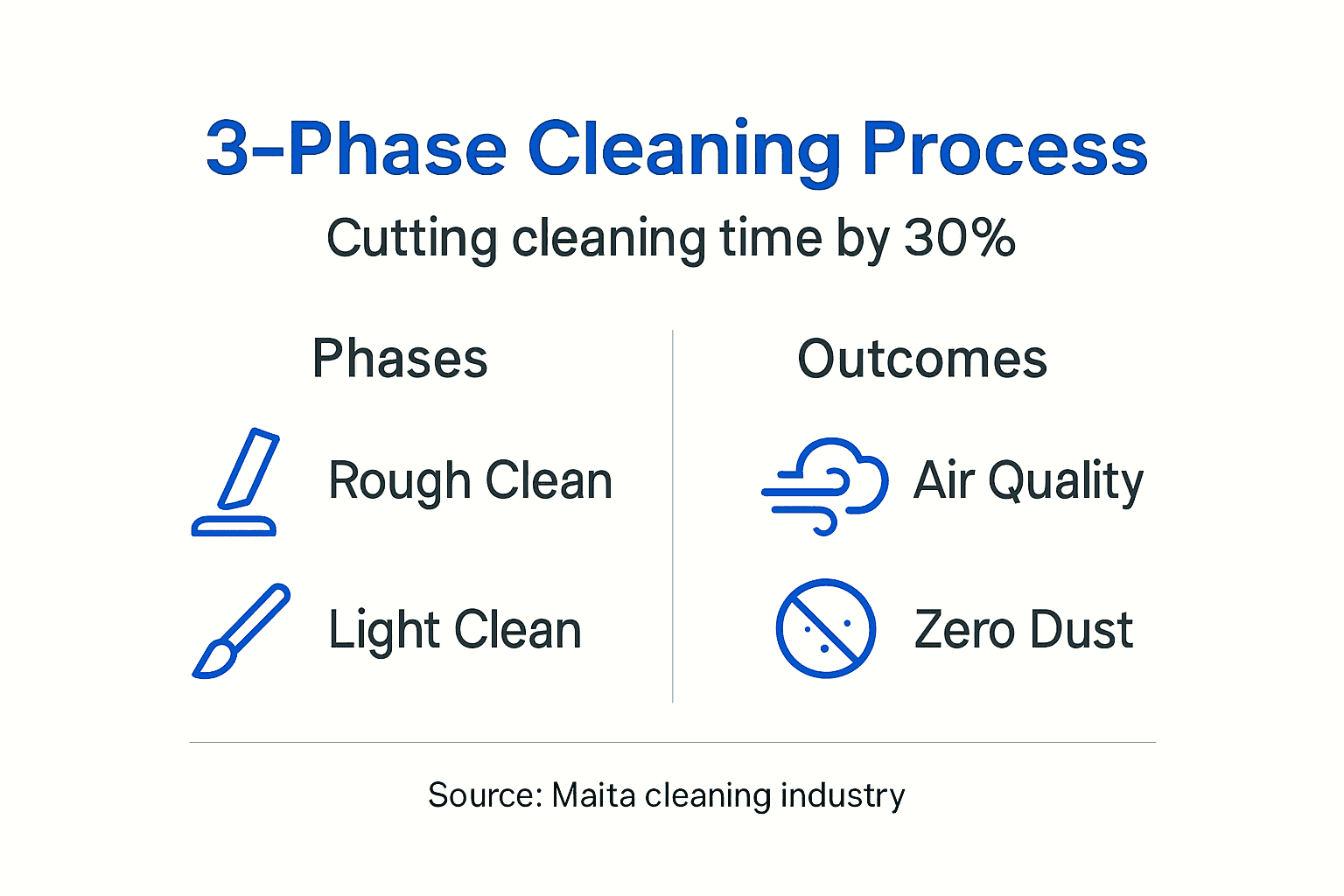
Professional after builders cleaning follows three distinct phases, each with a specific purpose. Attempting to skip phases or combine them produces visibly inferior results — you’ll see dust reappearing on “cleaned” surfaces within hours because fine particles disturbed by Phase 1 activities haven’t had time to settle before Phase 3 finishing work begins.
Phase 1: Rough clean (debris removal and bulk dust)
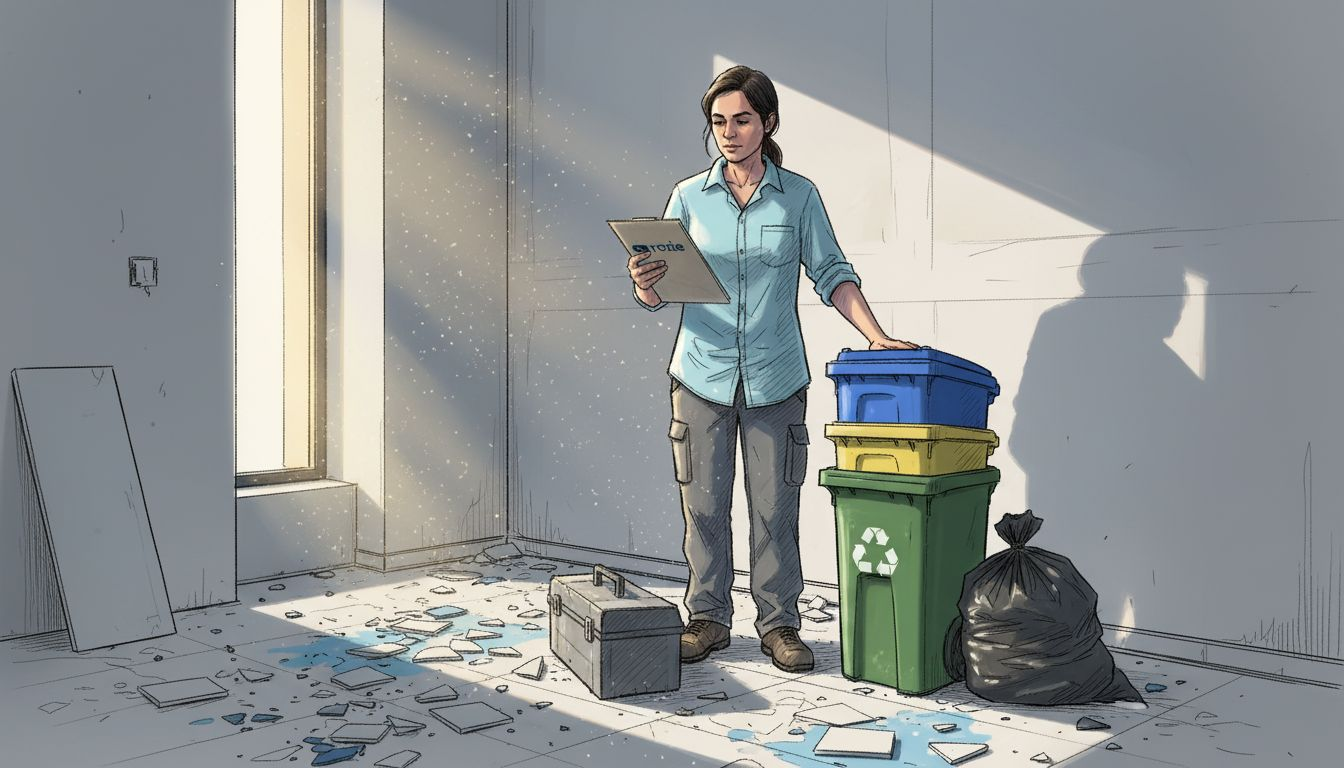
The rough clean removes everything visible — construction debris, packaging materials, offcuts, protective sheeting, large dust accumulations, and any items left by the building crew. This is the heaviest, dirtiest phase and accounts for roughly 40% of total cleaning time.
Tasks in order:
Remove all remaining construction materials, packaging, plastic sheeting, and large debris. Bag separately: general waste, construction rubble (stone, concrete, tile fragments), recyclables, and hazardous materials (paint cans, solvent containers, adhesive tubes). In Malta, construction waste must be disposed through authorised contractors — WasteServ Malta does not collect building rubble through standard household collection. Most building contractors arrange skip hire, but verify this before they leave site.
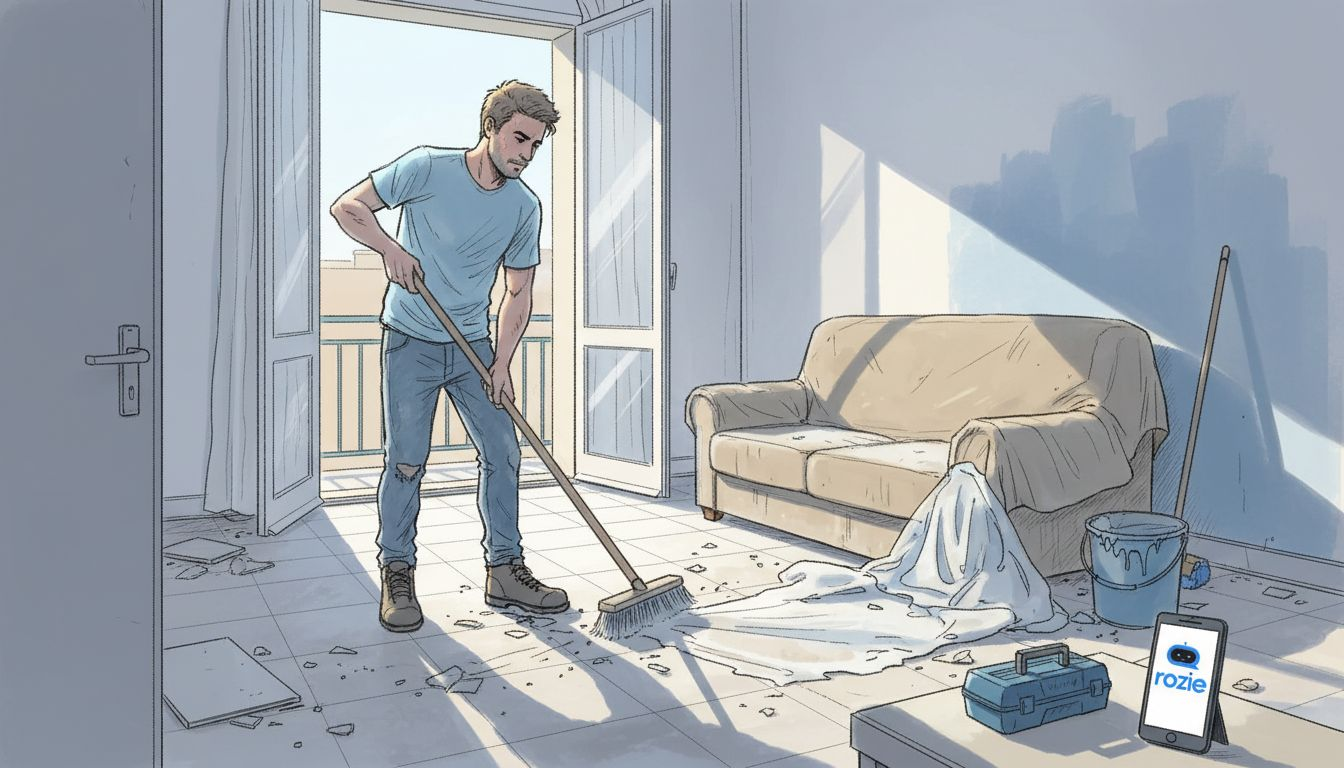
Sweep all floors with a wide push broom to collect heavy dust and debris. Start from the room furthest from the exit and work toward the door to avoid tracking debris through cleaned areas.
Use a shop vacuum (not your household vacuum) for the first pass on all surfaces — floors, window ledges, built-in shelving, inside empty cabinets, and tops of door frames. A shop vacuum handles large particles and heavy dust loads without burning out the motor. If you don’t own one, hardware stores in Malta rent them for €20–35 per day.
Scrape paint splatters, mortar drips, adhesive residue, and grout haze from hard surfaces using a plastic scraper (never metal on glass, tiles, or polished stone). For dried cement on glass, apply a purpose-made cement remover (available at Homemate or hardware stores) and allow it to soak before scraping.
Remove protective film and tape from windows, fixtures, and appliances. Film left too long bakes onto surfaces in Malta’s sun and becomes extremely difficult to remove — if your renovation happened during summer, address this immediately.
Duration: 4–8 hours for a standard two-bedroom Malta apartment, depending on renovation scope.
Phase 2: Detail clean (surface-by-surface dust elimination)
Phase 2 is the systematic, room-by-room deep clean that removes the fine dust layer covering every surface. This is where a HEPA-filter vacuum becomes essential — standard vacuums exhaust fine particles back into the air, creating a cycle where dust reappears hours after cleaning. HEPA filters capture 99.97% of particles down to 0.3 microns.
Work top-to-bottom in every room:
Ceilings and light fixtures: HEPA vacuum ceiling corners, light fixture housings, and recessed spotlight cavities. Wipe light fittings with a damp microfibre cloth. Replace any blown bulbs (dust-clogged fixtures often burn out during renovation).
Walls: HEPA vacuum from top to bottom using the brush attachment. Follow with a damp microfibre cloth wipe-down. For freshly painted walls, check paint has fully cured (typically 2–4 weeks) before wet wiping — premature wiping can leave marks or remove paint film.
Windows and glass: Clean interior and exterior glass. Remove all construction film and tape residue. Use a glass-specific cleaner (not vinegar on freshly sealed aluminium frames — the acid can damage new sealant). Clean tracks and frames — Malta’s window tracks accumulate a cement-dust-and-humidity paste that jams sliding mechanisms if left untreated.
Built-in storage: Empty and HEPA vacuum all cabinet interiors, drawer runners, and wardrobe shelves. Dust penetrates closed cabinets through gaps around doors and drawer fronts. Wipe all interior surfaces with a damp cloth, then leave doors open for 2–3 hours to air-dry fully before loading contents.
Bathroom fixtures: Clean all ceramic, chrome, and glass surfaces. Remove any grout haze from tiles (grout haze remover from Homemate, €8–12, works on porcelain and ceramic — test first on natural stone). Descale showerheads and taps that accumulated construction debris. Check drain covers for cement or plaster blockages.
Kitchen: Clean inside all appliances — oven interior, microwave, fridge (even if “protected” during renovation, dust finds its way in), dishwasher filter and spray arms, washing machine drum and detergent drawer. Degrease hob and extractor hood. Wipe all countertop and cabinet surfaces.
Floors: HEPA vacuum entire floor area, including under and behind any installed fixtures. Mop with a pH-neutral cleaning solution — this is critical for Malta properties with limestone flooring. Standard floor cleaners, vinegar-based solutions, and most “all-purpose” products are acidic and will etch limestone permanently. Use Lithofin, HG, or another pH-neutral stone cleaner. For ceramic and porcelain tiles, a standard floor cleaner works fine, but verify what you’re cleaning first.
Duration: 4–8 hours for a standard two-bedroom apartment.
Phase 3: Final clean (inspection and finishing)
Phase 3 happens 24 hours after Phase 2 — this gap allows any remaining airborne particles to settle before the final pass. Attempting Phase 3 immediately after Phase 2 is the most common mistake in post-renovation cleaning, resulting in visible dust on “finished” surfaces.
Tasks:
Walk every room with a white microfibre cloth and run it along surfaces — baseboards, window sills, cabinet tops, door frames, light switches, electrical outlets, radiators. Any dust pickup means that area needs re-cleaning.
Polish all glass, chrome, and reflective surfaces to a streak-free finish. Clean door handles, cupboard knobs, and switch plates with antibacterial spray — these high-touch surfaces often get missed.
Run final HEPA vacuum pass on all floors. Follow with a clean mop using fresh water and pH-neutral cleaner (for limestone) or appropriate floor product.
Check HVAC systems: replace or clean all AC filters, vacuum AC vents and return grilles, and run the system for 30 minutes to flush any remaining dust from ductwork. In Malta, where AC runs six to eight months per year, a clogged post-construction filter reduces cooling efficiency and circulates dust into your living space for months.
Ventilate the entire property for at least two hours — open all windows and create cross-draughts. This clears residual airborne particles and any chemical odours from paint, sealant, or cleaning products.
Do a sunlight test: close blinds, then open them one room at a time. Bright sunlight at an angle reveals dust on surfaces that overhead lighting misses. Address any visible areas.
Duration: 2–4 hours for final inspection and finishing of a standard two-bedroom apartment.
Room-by-Room Checklist for Malta Properties
Use this checklist to ensure every area is covered. Malta-specific items are marked with an asterisk (*).
Kitchen: Degrease hob, oven interior, and extractor hood. Clean microwave interior. Wipe fridge interior and check coil area for dust. Clean dishwasher filter and spray arms. Sanitise countertops. Wipe all cabinet and drawer interiors. Clean sink and taps, removing any cement residue. Check garbage disposal if fitted. Sweep and mop floor. *Use pH-neutral cleaner on limestone or natural stone countertops.
Bathroom: Scrub toilet bowl, seat, and exterior. Clean shower enclosure including glass, tracks, and drain. Remove grout haze from newly tiled surfaces. Wipe basin, taps, and mirror. *Descale all chrome immediately — Malta’s hard water (350–600 PPM) begins depositing limescale on new fixtures within days. Clean exhaust fan and vent. Mop floor. *Check behind toilet and under basin for mould-prone gaps common in humid Maltese bathrooms.
Bedrooms: HEPA vacuum all surfaces including wardrobe interiors and shelving. Wipe window sills and frames. Clean light fixtures and switches. *Damp-wipe windowsills and balcony door frames for salt-dust residue (even during renovation, salt air deposits continue). Mop or vacuum floor. Check radiators and AC vents.
Living areas: Clean ceiling fans and light fixtures. HEPA vacuum upholstered furniture if already in place. Wipe all flat surfaces, including TV units, shelving, and decorative ledges. Clean windows and tracks. *Sweep and damp-wipe balcony railings and floor — Maltese balconies accumulate construction dust plus ongoing salt and Saharan dust. Mop floor with appropriate product.
Entrance and hallways: Clean front door (interior and exterior), letterbox, intercom unit, and light switches. HEPA vacuum coat cupboard if fitted. Mop floor. *Clean communal stairwell adjacent to your door if construction debris has spread — this is a courtesy to neighbours and often a requirement in condominium regulations.
Common Mistakes That Damage Malta Properties
Using acidic cleaners on limestone
This is the single most expensive mistake in Maltese post-renovation cleaning. Vinegar, citrus-based cleaners, standard bathroom products, and even some “natural” cleaning solutions are acidic. Applied to globigerina limestone floors, walls, or countertops, they react with the calcium carbonate and create permanent etch marks — cloudy, lighter patches that cannot be cleaned off because the stone surface itself is damaged. The fix is either professional re-polishing (€15–25 per square metre) or living with the marks. Always use pH-neutral products on limestone. If you’re unsure whether a surface is limestone, test the cleaner on a hidden area first.
Skipping the 24-hour gap before Phase 3
Fine construction particles remain airborne for hours after cleaning activity disturbs them. Completing Phase 3 immediately after Phase 2 means your “final” surfaces will be visibly dusty within a day. Allow at least 24 hours between Phase 2 and Phase 3 for airborne dust to settle. In Malta’s humid months (October–February), this settling period may need to extend to 36–48 hours because moisture-laden air suspends particles for longer.
Ignoring HVAC filters and ductwork
If your AC was running at any point during renovation — or even if it wasn’t but was exposed to construction dust — the filters and internal components are contaminated. Running uncleaned AC circulates fine dust particles through every room, depositing them on surfaces you’ve already cleaned. Replace all filters (standard split-system filters cost €15–30 per unit in Malta) and vacuum all vent grilles before running the system post-renovation.
Using household vacuums for Phase 1
Standard household vacuums are designed for domestic dust loads — hair, skin cells, light dirt. Construction debris includes heavy particles (stone fragments, dried mortar, tile chips) that burn out domestic motors, and fine limestone dust that passes straight through standard filters. Use a shop vacuum for Phase 1, then switch to a HEPA-filter vacuum for Phases 2 and 3. If you don’t own a HEPA vacuum, renting one costs €25–40 per day — cheaper than replacing a burned-out household vacuum.
Cleaning windows in direct sunlight
Malta’s intense sun heats glass surfaces to temperatures that evaporate cleaning solution before you can wipe it, leaving streaks and residue marks. Clean windows early morning or late afternoon, or work on the shaded side of the building first. This applies year-round in Malta, not just summer.
Not documenting the condition
If this renovation was done on a rental property or a new-build purchase, photograph every room after cleaning is complete. Timestamped photos establish the baseline condition — useful for landlord-tenant deposit assessments (under Malta’s PRL Act, deposits can only cover tenant-caused damage, not pre-existing conditions) and for warranty claims with your building contractor if defects appear later.
Pricing: What After Builders Cleaning Costs in Malta
After builders cleaning costs significantly more than standard domestic cleaning because it requires specialist equipment, longer timeframes, and multi-phase processes. Here are realistic benchmarks for Malta in 2026:
| Property size | Typical duration | Cost range | Key variables |
|---|---|---|---|
| 1-bed apartment (50–70 m²) | 1 day | €200–400 | Extent of renovation, bathroom count |
| 2-bed apartment (80–100 m²) | 1–2 days | €300–500 | Dust level, number of fixtures |
| 3-bed house (120–150 m²) | 2–3 days | €500–800 | Multiple floors, outdoor areas |
| Villa / large property (200+ m²) | 3–5 days | €800–1,500+ | Outdoor areas, pool, garden, complexity |
Factors that increase cost: Extensive stone cutting or demolition (more fine dust), multiple bathrooms (limescale and grout haze removal is time-intensive), properties that sat unclean for weeks after construction (humidity-bonded dust is harder to remove), outdoor areas including pools, terraces, and gardens, and specialty finishes (marble countertops, heritage stonework, custom joinery) that require extra care.
Factors that reduce cost: Starting within 48–72 hours of construction completion (before humidity bonds dust), removing your own debris before cleaners arrive (saves 2–4 hours of billable time), providing clear access and working power/water, and choosing off-peak timing (avoiding June–September when cleaners are busiest with tourist-related work).
For standard cleaning rate benchmarks in Malta, Rozie’s cleaning cost guide shows hourly rates of €10–20 for independent cleaners and €15–25 for agencies. After builders work commands a premium of 30–50% above standard rates due to the specialist equipment and extra labour involved.
DIY vs Professional: When to Hire Help
Post-renovation cleaning is one area where the DIY vs professional decision has clear guidelines.
DIY is realistic when: The renovation was limited to one room or a small area (single bathroom refit, kitchen refresh). You own or can rent a HEPA vacuum and shop vacuum. You have two full days available — not compressed into a single afternoon. The property has no specialist finishes that require product expertise (polished marble, heritage limestone, custom joinery). You’re physically able to handle sustained manual cleaning including overhead work.
Hire professionals when: The renovation involved structural work, multiple rooms, or full property renovation. Extensive stone cutting or demolition created heavy dust loads. The property has been sitting unclean for more than a week (humidity-bonded dust). You’re cleaning a property for sale or rent where first impressions directly affect price. The property has specialist finishes — professionals know which products are safe on which surfaces, which avoids the expensive mistakes described above. You need the property move-in ready within a specific deadline.
For properties needing professional after builders cleaning, platforms like Rozie connect you with verified cleaners who’ve been background-checked before onboarding. Transparent pricing shown before booking, in-app chat for sharing specific instructions and photos of problem areas, and 7-day payment protection (you confirm satisfaction before payment releases) eliminate the common risks of hiring for a job this important. This is especially valuable for overseas property owners managing Malta renovations remotely — you can brief the cleaner in detail through the app and confirm the result through post-clean photos.
After the Clean: Maintaining a Dust-Free Environment
Even after a thorough three-phase clean, fine dust continues emerging from hidden spaces for two to four weeks as air circulation, door opening, and vibration dislodge particles from cracks, behind skirting boards, and inside wall cavities. This is normal and doesn’t mean the clean was inadequate.
Week 1–2 post-clean: Run your regular vacuum with a HEPA filter every two to three days. Damp-wipe horizontal surfaces (shelves, windowsills, furniture tops) twice weekly. Keep AC filters checked and replace if visibly dusty. Leave windows open for ventilation whenever practical.
Week 3–4: Reduce to your normal cleaning frequency. If you’re still seeing dust accumulation, check AC vents, under-stair cupboards, and storage areas behind closed doors — these are common reservoirs for post-construction particles.
One-month mark: Schedule a standard deep clean to address any residual dust that’s emerged since the initial after builders clean. This catch-up clean is much quicker and cheaper than the original — typically two to three hours for a two-bedroom apartment. For a full guide to Malta cleaning services, explore Rozie’s archive.
Key takeaway: After builders cleaning in Malta requires a phased approach because the island’s limestone dust, high humidity, and porous building materials create challenges that single-pass cleaning cannot solve. The three-phase process — rough clean, detail clean, then final polish after a 24-hour settling period — transforms a dusty construction site into a genuinely move-in-ready home. Starting within 48–72 hours of construction completion, before humidity bonds dust to surfaces, saves both time and money.
Ready to get your renovated Malta property professionally cleaned? Download Rozie to find verified cleaners with transparent pricing and 7-day payment protection.

Frequently Asked Questions
How much does after builders cleaning cost in Malta?
After builders cleaning in Malta costs €200–500 for a one- to two-bedroom apartment, €500–800 for a three-bedroom house, and €800–1,500+ for larger villas. Pricing depends on renovation scope, dust intensity, property size, number of bathrooms, and whether specialist finishes need careful treatment. Starting within 48–72 hours of construction completion reduces cost by preventing humidity-bonded dust that requires more intensive removal.
How long does after builders cleaning take in Malta?
A standard two-bedroom apartment requires 10–16 labour hours spread over one to two days, plus a 24-hour gap between Phase 2 and Phase 3 for airborne particles to settle. Larger properties or heavy renovations may take three to five days. The total timeline also depends on whether you need to arrange waste removal for construction debris separately.
Can I use vinegar to clean after renovation in Malta?
No — not on limestone surfaces, which are found in the majority of Maltese properties. Vinegar is acidic and reacts with the calcium carbonate in globigerina limestone, causing permanent etch marks that cannot be cleaned off. Use pH-neutral cleaners (Lithofin, HG, or similar products available at Homemate and PAVI) for any limestone, marble, or natural stone surfaces. Vinegar is safe on ceramic tiles, glass, and stainless steel, but always verify the surface material first.
When should I schedule after builders cleaning?
Schedule cleaning 48–72 hours after all construction work is complete. This gap allows the heaviest dust to settle out of the air while avoiding the longer delay that lets Malta’s humidity bond dust particles to surfaces. If your renovation finished more than a week ago, expect the cleaning to take longer and cost more because moisture-bonded dust requires more intensive removal techniques.
Do I need to clean AC systems after renovation?
Yes. AC filters and internal components accumulate construction dust even when the unit wasn’t running during renovation — dust enters through the indoor unit’s vents. Replace all filters (€15–30 per split-system unit in Malta) and vacuum all vent grilles before running the system. A contaminated AC recirculates fine particles through every room, undermining your cleaning work and posing ongoing respiratory irritation.
Should I hire professionals or clean after renovation myself?
For single-room renovations (bathroom refit, kitchen refresh), DIY is realistic if you have a HEPA vacuum, appropriate cleaning products, and two full days. For multi-room or full-property renovations, professional cleaners are strongly recommended — they have the equipment (industrial HEPA vacuums, shop vacs, extension tools), product knowledge (safe products for limestone, marble, and specialist finishes), and systematic approach to deliver move-in-ready results that DIY cleaning typically cannot match. Rozie.app connects you with verified professionals who show transparent pricing before you commit.
What protective equipment do I need for post-renovation cleaning?
At minimum: FFP2 masks (€5–15 per box at Malta hardware stores), safety glasses with side shields, chemical-resistant nitrile gloves, long sleeves, and closed shoes. For heavy Phase 1 rough cleaning involving debris removal and significant dust disturbance, upgrade to FFP3 masks and consider disposable coveralls (€5–10). Standard surgical masks do not filter construction dust particles effectively.
Recommended
- Property Management Cleaning Malta: 67% More Trust Verified | Rozie – Malta’s Best Cleaning Services
- Deep Cleaning Benefits – How It Transforms Busy Lifestyles | Rozie – Malta’s Best Cleaning Services
- What Is Deep Cleaning? Complete Guide for Malta | Rozie – Malta’s Best Cleaning Services
- How to Choose Cleaning Services: Find the Right Fit | Rozie – Malta’s Best Cleaning Services
- Waterproofing Under Tiles: 3-Day Cure Prevents Leaks