


In this guide
When and where do village festas happen in 2026?
Feast day vs festa weekend: what’s the difference?
What happens at a typical festa?
Which are Malta’s biggest festas in 2026?
How do Gozo festas compare with Malta’s?
How should you plan to attend a festa?
When and where do village festas happen in Malta and Gozo in 2026?
Malta’s festa season runs from the end of April to the beginning of October, with the busiest stretch falling in June, July and August. Almost every village and town on both islands holds a festa for its patron saint, so on most summer weekends at least one celebration is happening somewhere within a short drive or ferry ride.
The rhythm follows the Catholic calendar, which fixes each saint’s feast day. The celebration itself is recognised by UNESCO as Intangible Cultural Heritage, and a typical festa runs for about a week of build-up before climaxing on its main weekend. Between them, Malta and Gozo stage well over 80 patron-saint festas a year, which is why the calendar can feel relentless from June onward.
Two periods stand out in 2026. The first is the weekend of 28–29 June, around the feast of St Peter and St Paul, which also brings l-Imnarja, Malta’s oldest folk festival. The second, and the biggest of all, is 15 August: the feast of Santa Marija, a public holiday when seven parishes celebrate at the same time. On the main island, festas cluster in the south and centre — villages like Siġġiewi, Żebbuġ and Qrendi — while Gozo’s are spread across a smaller island, which makes it easy to catch more than one in a single trip.
What is the difference between the feast day and the festa weekend?
The feast day is the saint’s date in the religious calendar; the festa weekend is when the village actually celebrates. When the feast day falls midweek, the processions, band marches and fireworks shift to the nearest weekend. Turning up on the calendar date alone often means missing the spectacle entirely.
Take Xewkija in Gozo. Its patron, St John the Baptist, has a feast day of 24 June, which in 2026 falls on a Wednesday — but the main external celebration, with the crowds and the headline fireworks, lands on Sunday 21 June instead. The same logic applies almost everywhere, so before you plan your evening, check whether a village’s “feast day” and its “festa weekend” are actually the same dates.
Plan around the weekend, not the date.
If a festa’s feast day falls on a weekday, head to the village on the nearest Friday-to-Sunday for the procession and fireworks. Midweek you may find a quiet church service and little else.
What happens at a typical Maltese village festa?
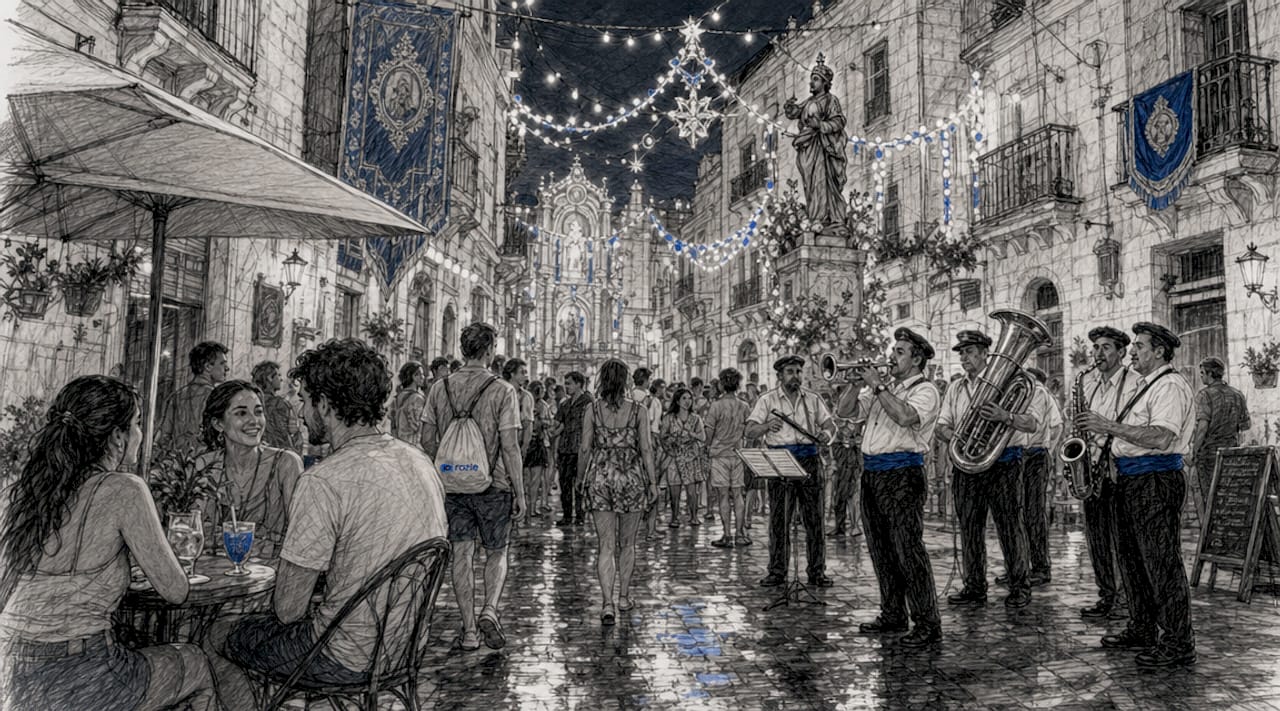
A festa blends the religious and the social over several days, building to a main feast with morning and evening Mass, an evening statue procession, marching bands, street food and a fireworks finale. The headline events on the main day are compressed into roughly two hours, usually between 8pm and 11pm, so timing matters.
Here is what a full festa typically includes:
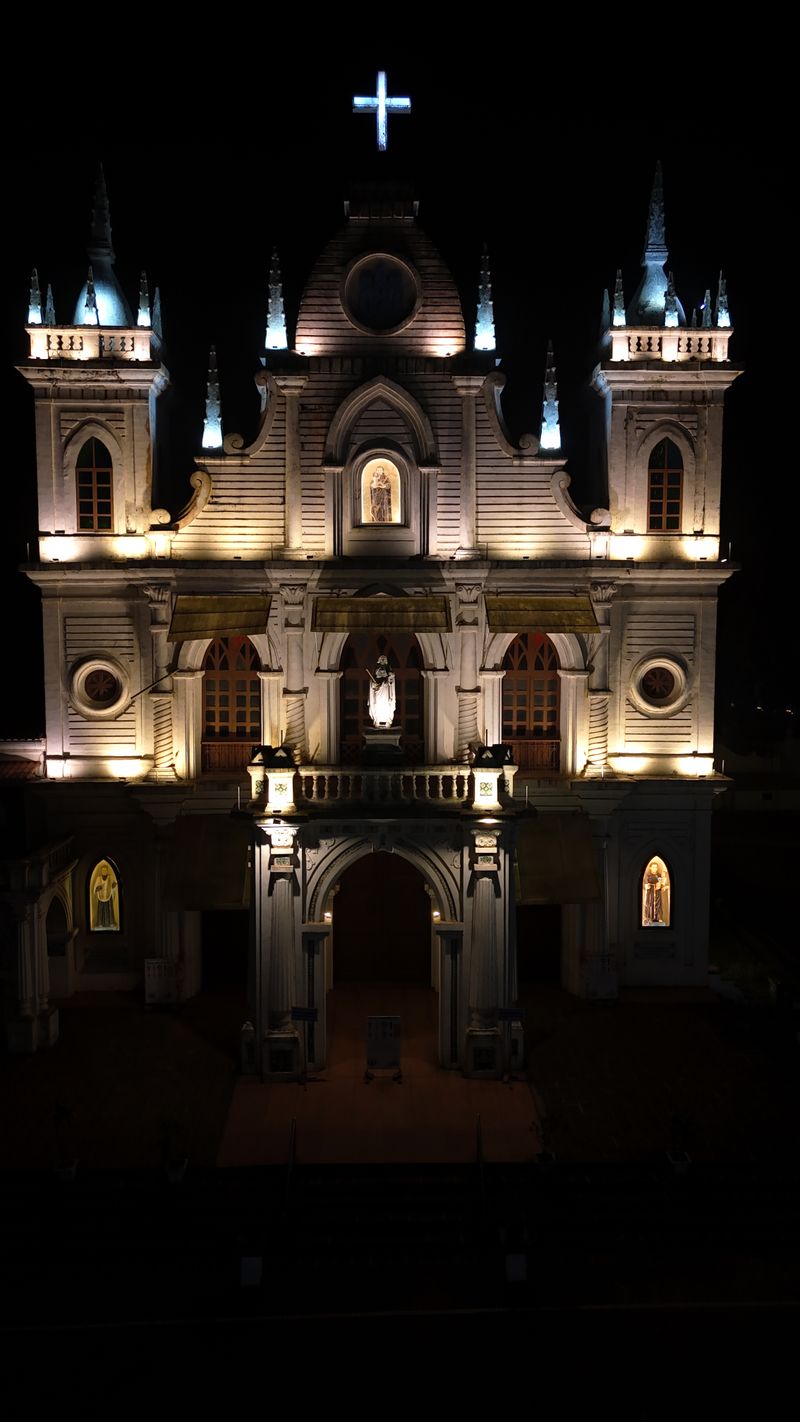
- Religious Mass — held morning and early evening at the parish church, its interior decked in silver, damask and flowers.
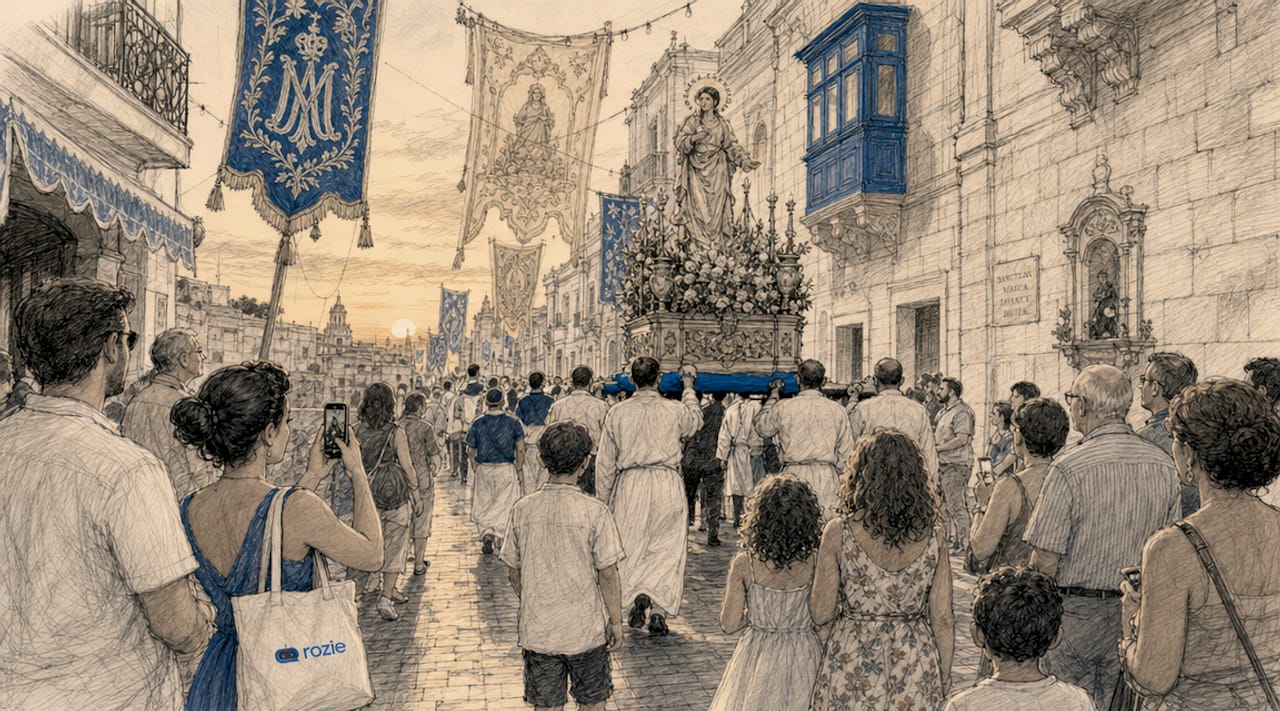
- Statue procession — the patron saint’s statue carried through the streets, usually from around 8:00–8:30pm, accompanied by clergy, devotees and a band.
- Band marches — performed by the local band clubs (għaqdiet). Larger villages often field two rival clubs, which adds a spirited, competitive edge.
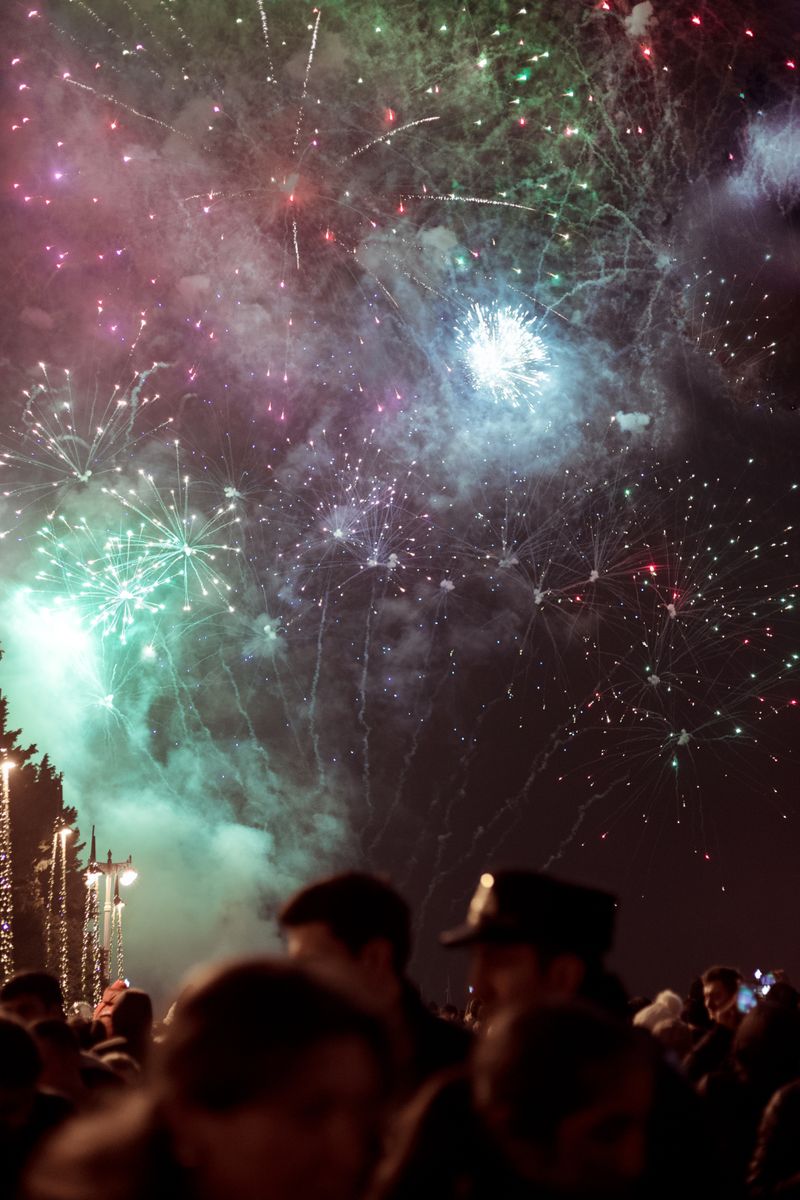
- Fireworks — synchronised to the band programme, typically from around 10:00–10:30pm. Malta takes its pyrotechnics extremely seriously.
- Street food — qubbajt (nougat), pastizzi, ħobż biż-żejt and imqaret sold from stalls along streets strung with thousands of coloured lights.
- Children’s festa (festa tat-tfal) — a smaller daytime celebration on a separate day, with children carrying a miniature statue.
Pro tip
Arrive 60–90 minutes before the procession to claim a spot on the main street. The best positions for both the statue and the fireworks fill quickly, and latecomers end up watching from side streets with blocked views.
Which are Malta’s biggest festas in 2026?
The two largest events are Santa Marija on 15 August and l-Imnarja on 28–29 June. Santa Marija, the feast of the Assumption, is a national public holiday celebrated in seven parishes at once and is the undisputed peak of the season. L-Imnarja is Malta’s oldest folk festival and has a completely different, rural character.
Santa Marija (15 August)
Santa Marija is celebrated in seven parishes — Mqabba, Qrendi, Mosta, Attard, Gudja, Għaxaq and Victoria in Gozo — each staging its own large-scale festa on the weekend closest to 15 August. It is also a national public holiday with a second meaning: it commemorates the 1942 Santa Marija Convoy (Operation Pedestal), the wartime supply convoy that limped into the Grand Harbour and helped Malta survive the siege. For pyrotechnics, Mqabba is the place to be — its St Mary’s fireworks section are former world champions, and the main music-synchronised display is staged on the eve of 14 August. In Mosta, the vast Rotunda dome anchors the celebrations.
L-Imnarja (28–29 June)
L-Imnarja (from the Italian luminaria, “illumination”) is Malta’s oldest folk festival, tied to the feast of St Peter and St Paul. It centres on Buskett Gardens and Rabat rather than a single village, and feels agrarian rather than urban: għana folk singing, agricultural shows, and the classic Maltese fenkata — a long, convivial meal of rabbit stew. If the polished village festas feel too intense, l-Imnarja is a gentler, more historic alternative.
Key takeaway: If you plan around just one festa in 2026, make it Santa Marija on 15 August — a public holiday when seven parishes celebrate at once, and the most spectacular night of the season.
How do Gozo festas compare with those on the main island?
Gozo’s festas share the same structure as Malta’s but often feel more community-centred, simply because the villages and the population are smaller. A handful — Victoria, Nadur and Xewkija — rival the largest mainland events for crowds and fireworks, while villages like Sannat and Għarb stay intimate and relaxed.
Xewkija’s festa (main day Sunday 21 June 2026, with the liturgical feast of St John the Baptist on 24 June) is staged beside the Xewkija Rotunda — one of the largest church domes in the world — a backdrop no other Gozo village can match. Nadur, celebrating St Peter and St Paul on 29 June, and the island’s capital, Victoria, draw the biggest and most boisterous crowds with the most ambitious fireworks programmes.
At the quieter end, Sannat’s feast of St Margaret falls on Sunday 26 July 2026, with a relaxed pace, modest fireworks and room to move. For a first festa without the sensory overload, a smaller village like Sannat or Għarb is the better choice — you can actually talk to people and watch the procession from a comfortable distance.
Here is the 2026 Gozo festa calendar, based on the official Visit Gozo schedule. Dates shown are the principal feast days; the main street celebrations fall on the nearest weekend and can shift, so confirm locally before travelling.
How should you plan to attend a village festa in 2026?
Plan around the festa weekend rather than the feast day, book accommodation early for the August peak, and arrive in the evening with time to spare. For Gozo festas, factor in the ferry. A little planning is the difference between catching the fireworks and watching them from a traffic jam.
- Book accommodation early for mid-August. The 15 August Santa Marija weekend is the single most concentrated period of the season, with seven parishes celebrating at once. Rooms near popular festa villages fill up weeks ahead.
- Arrive early for evening events. The procession, bands and fireworks compress into about two hours. Getting there 60–90 minutes early secures a good vantage point and lets you absorb the street atmosphere first.
- Check parish sources before you go. Programmes shift with weather and local decisions. The most reliable updates come from parish Facebook pages, the official Visit Gozo site and community notices posted in the days before. If you’re building a whole trip around the calendar, it’s worth cross-referencing your dates with the best time to visit Malta.
- Match the festa to your crowd tolerance. Big festas — Mqabba, Mosta, Nadur, Victoria, Siġġiewi — deliver spectacle and density. Smaller ones like Sannat, Għarb or Għasri are calmer and more personal.
- Plan transport for Gozo. The Gozo Channel ferry from Ċirkewwa runs frequently, but late-night return crossings after fireworks can mean queues. Staying over on Gozo removes the stress entirely.
One practical note if you host guests or run a holiday let: festa weekends are busy, and turning a property around between a late celebration and the next check-in is hard to do alone. Lining up a cleaner in advance — for example through a Malta marketplace like Rozie — takes that pressure off so you can actually enjoy the festa.
Pro tip
Many villages hold a separate children’s festa (festa tat-tfal) in the days before the main event. These daytime celebrations are far less crowded, genuinely charming, and a great way to experience the atmosphere with young kids.
An honest take after years of festa-going
What surprises most first-timers is how genuinely communal these events feel. A festa isn’t a tourist production. The band clubs have competed for generations, the fireworks are made by local artisans, and the procession follows the same route the village has walked for over a century. That continuity is something no staged cultural event can fake — and it’s part of why festas are one of the fastest ways for new arrivals to feel at home, worth knowing if you’ve recently moved to Malta.
My honest advice: resist the urge to chase only the biggest, most famous festas on a first visit. Mqabba’s fireworks and Nadur’s crowds are spectacular, but a smaller festa like Sannat or Għasri will teach you more about what a festa actually means to the people who live there. The smaller the crowd, the more likely someone hands you a glass of wine and explains the history of their patron saint with real pride.
Come prepared for the senses, too. The fireworks are loud, the band music is relentless, and the streets smell of nougat and gunpowder in equal measure. Lean into all of it. Festa season is one of the most honest expressions of Maltese identity you’ll find anywhere on the islands, and 2026 offers a full, rich calendar to explore.
Keeping your home festa-ready during the season
Festa season is one of the best times to be in Malta — and one of the busiest. Hosting friends, opening a holiday property, or getting home at 1am after the fireworks all leave your space needing attention exactly when you have the least energy for it.
Finding a cleaner the traditional way means scrolling Facebook groups and chasing quotes, which is not how you want to spend a festa weekend. With Rozie you post the job once, verified cleaners send offers (usually within minutes), and you compare the exact price in each offer before you accept. Every booking includes 7-day payment protection and up to €1,000,000 in professional liability insurance underwritten by Lloyd’s Insurance Company S.A. Here is the whole process in under 60 seconds:
It works for a one-off clean before a big weekend or regular help through the summer. If you manage a short-let, our holiday home cleaning guide walks through getting a property guest-ready between stays.

Rather enjoy the festa than the cleanup? Post your job on Rozie, compare offers from verified cleaners, and book the one that suits you — before or after the celebrations.
Key takeaways
Malta’s 2026 festa season runs from late April to early October, peaks on weekends rather than feast days, and ranges from intimate village gatherings to vast celebrations drawing thousands.
Frequently asked questions
What are village festas in Malta?
Village festas are annual multi-day celebrations honouring each village’s Catholic patron saint, combining religious ceremonies, processions, band marches, fireworks and street food. They are a central part of Maltese cultural identity — recognised by UNESCO as Intangible Cultural Heritage — and run mainly from late April to early October.
When is festa season in Malta in 2026?
The season runs from late April to early October 2026, with the highest concentration of festas on weekends in June, July and August. The single biggest day is 15 August, the feast of Santa Marija, when seven parishes celebrate at the same time.
What is the biggest festa in Malta?
Santa Marija on 15 August. It is a national public holiday celebrated in seven parishes — Mqabba, Qrendi, Mosta, Attard, Gudja, Għaxaq and Victoria in Gozo — and is famous for its fireworks, especially in Mqabba.
How long does a Maltese village festa last?
Most festas span about a week of build-up events, culminating in a main feast weekend with a procession, band performances and fireworks. The evening programme on the main day typically runs from around 8:00pm to midnight.
Are Gozo festas different from those on the main island?
Gozo festas share the same structure as Malta-island festas but often feel more community-centred because the villages and population are smaller. They range from intimate celebrations like Sannat to large, vibrant events like Nadur, Victoria and Xewkija.
Do I need to book tickets to attend a village festa?
No — festas are free public celebrations, so no ticket is required. Accommodation near popular festa villages should be booked well in advance, especially for the mid-August peak. If you’re hosting guests over a festa weekend, it’s also worth arranging a cleaner ahead of time — a marketplace like Rozie lets you compare offers and book in advance — so the turnaround between visitors isn’t a scramble.