


In this guide
Can you really live in Malta without a car?
What public transport options support car-free living in Malta?
Which areas are best for living in Malta without a car?
How do Malta’s car-free neighborhoods compare?
What does car-free life in Malta actually cost?
Can you really live in Malta without a car?
Yes — if you choose the right area. Malta squeezes one of the highest car densities in the EU onto 316 square kilometres, which makes driving slow and parking scarce in exactly the places most newcomers want to live. In Sliema, Gżira, St Julian’s, Valletta and the Three Cities, walking, free buses and harbour ferries cover daily life, with app-based cabs as the backup.
The honest split is this: Malta’s harbour towns reward car-free living, and much of the rest of the island does not. In Mellieħa, the rural west or many southern villages, services spread out, bus frequency drops, and a car genuinely improves quality of life. Going car-free in Malta is therefore a decision about your address far more than your willpower. Rush-hour congestion regularly turns a short cross-island drive into a 40-minute crawl, while someone on foot in Sliema can finish the supermarket, the pharmacy and the bank inside the same half hour.
The corridor rule.
Car-free life in Malta works best when home, work and daily errands all sit inside one harbour corridor — either the Gżira–Sliema–St Julian’s strip on Marsamxett Harbour, or the Valletta–Three Cities ring around the Grand Harbour. Cross between corridors occasionally; live and work inside one.
What public transport options support car-free living in Malta?
Malta’s public transport rests on the Tallinja bus network, two harbour ferry lines and app-based cabs. Since October 2022, residents who hold a personalised Tallinja card travel free on all standard day and night bus routes, and since January 2024 the same card also covers the Valletta–Sliema ferry, the Valletta–Three Cities ferry and the Barrakka Lift.
That free-travel scheme is the single biggest fact most relocation guides still get wrong. The personalised Tallinja card is applied for online with an ID document and a photo, carries a one-time registration fee of €25 for adults plus postage, and usually arrives within two weeks. Until it does, you pay the standard cash fare of €2.00–€2.50 for a single two-hour journey, or €3.00 on night routes. The only regular exception once you hold the card is the Tallinja Direct (TD) express network, which sits outside the government free transport scheme and charges card holders €1.50 per trip.
The Tallinja app is the tool that makes the network usable. Malta’s traffic means printed timetables drift quickly, so locals trust live arrival data instead. Save your regular routes as favourites, check the app before leaving home, and build a five-minute buffer into morning and evening rush hours. Night buses run mainly on Friday and Saturday nights, and the night network gained additional routes in April 2026, which has made late weekends in Paceville or Valletta easier to get home from.
The ferries are the corridor shortcut. Marsamxett crossings link Sliema and Valletta, Grand Harbour crossings link Valletta and the Three Cities, and both take roughly five to ten minutes — faster than any bus or cab stuck on the harbour ring roads, with some of the best fortification views on the island thrown in. On the Valletta side, the Barrakka Lift, free for card holders since January 2024, saves you the climb from the waterfront up to town.
App-based cabs fill whatever is left. Bolt, eCabs and Uber all operate in Malta, and a typical ride between the main hubs runs about €8–€15 depending on traffic and time of day. Most car-free residents use them a handful of times a month — late nights, airport runs and heavy-load days — rather than as a daily habit.
Pro tip
Apply for the personalised Tallinja card online during your first week in Malta — or before you arrive, if you already have a local address. Delivery takes up to two weeks, and every standard bus and harbour-ferry trip becomes free the day it lands in your letterbox.
Which areas are best for living in Malta without a car?
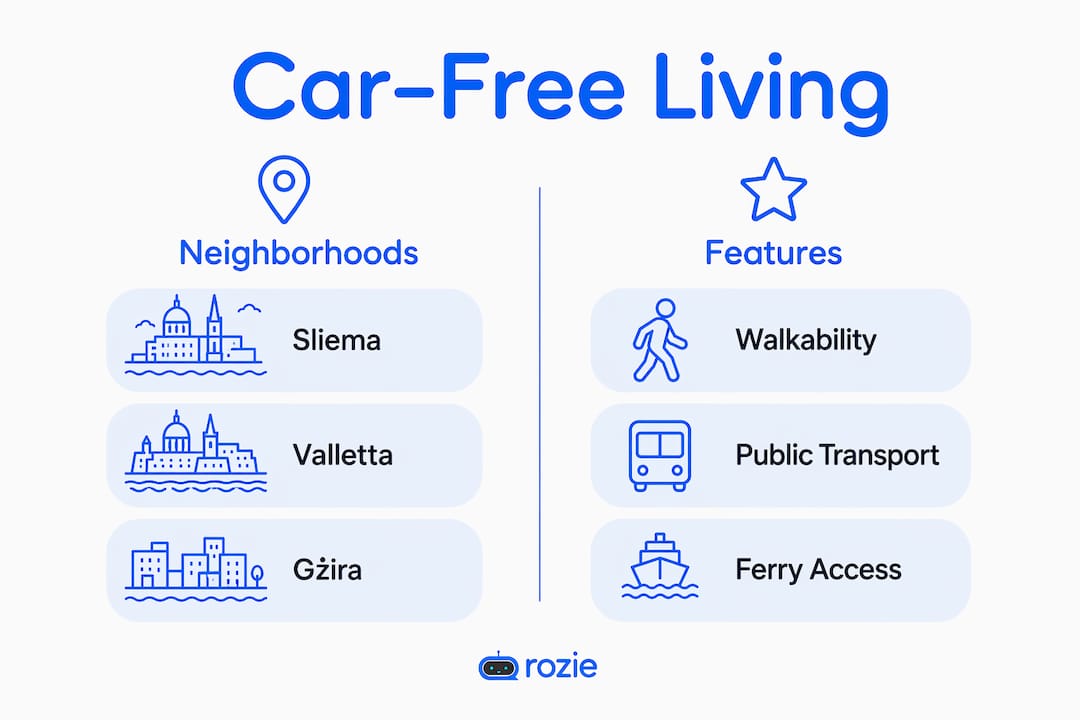
The Gżira–Sliema–St Julian’s strip and Valletta offer the densest mix of supermarkets, pharmacies, gyms, offices and bus connections in Malta, which is why they absorb most of the island’s car-free residents. The Three Cities trade a little of that convenience for calm, character and a ferry commute across the Grand Harbour.
Sliema
Sliema is the default choice for a reason. The seafront promenade runs flat from Gżira to St Julian’s, and The Ferries area works as a one-stop hub: a major bus interchange, the Valletta ferry landing, supermarkets, pharmacies and banks all within a few hundred metres. Most daily errands sit inside a ten-minute walk. The trade-offs are the highest rents on the island and near-constant construction noise as older blocks get replaced.
St Julian’s
St Julian’s shares Sliema’s walkability with a younger, louder energy around Spinola Bay and Paceville. Many of Malta’s igaming and tech offices sit here or in neighbouring Swieqi and Pendergardens, so plenty of residents walk to work. The seafront route into Sliema is flat and pleasant; the climb up from Balluta Bay is the one hill worth checking before you sign for an apartment above it.
Gżira
Gżira is the strip’s best value. Wedged between Msida and Sliema, it puts you a short, flat walk from the Sliema Ferries on one side and the University of Malta on the other, with the Manoel Island waterfront as your evening loop. Every Sliema-bound bus passes through, and rents run noticeably below its glossier neighbour for essentially the same car-free convenience.
Valletta
Valletta is arguably the easiest car-free address in the country, because the island’s transport network is built around it: nearly every bus route starts or ends at the Valletta terminus, two ferry lines leave from its shores, and the Barrakka Lift links the Grand Harbour waterfront to the town centre. The largely pedestrianised core means everything from government offices to your pharmacy sits within a 15-minute walk. The price is topography — steep side streets and stairs — plus heritage apartments that vary wildly in condition, and quiet streets after shops close.
The Three Cities
Birgu (Vittoriosa), Senglea (Isla) and Cospicua (Bormla) are the quiet option. The ferry puts you in Valletta in about ten minutes, free with your Tallinja card, and daily life moves at a village pace around the marina and parish squares. Walkability changes block by block: waterfront streets are flat and easy, while the upper alleys involve serious stairways. Big supermarkets are thinner on the ground here, so the shop-as-you-go habit matters more.
How do Malta’s car-free neighborhoods compare?
All five areas support life without a car; the real differences are rent, terrain and atmosphere. Sliema and St Julian’s maximise convenience at a premium, Gżira delivers most of the same strip for less, Valletta trades flat streets for unbeatable connections, and the Three Cities exchange some convenience for quiet and character.
Rent ranges are typical asking prices for furnished one-bedroom apartments in mid-2026 and move with the market — the Malta apartment rental guide breaks down what those figures include, deposits, and how to spot an overpriced listing.
Key takeaway: The single best predictor of a happy car-free life in Malta is living and working inside the same harbour corridor — Gżira–Sliema–St Julian’s on one side, or Valletta–Three Cities on the other — so a normal day never needs more than a walk, a free bus or a ferry.
What does car-free life in Malta actually cost?
With buses and harbour ferries free for residents, most car-free people in Malta spend roughly €30–€60 per month on transport, almost all of it on occasional Bolt or eCabs rides. Running a car in Malta costs €250–€450 per month all-in once insurance, fuel, maintenance and parking are counted, based on the figures in the 2026 cost of living in Malta guide.
Monthly transport spend in Malta
Car-free (free buses + occasional cabs)
€30–€60
Running a car (insurance, fuel, parking)
€250–€450
Typical resident estimates. Buses and the Valletta ferries are free with a personalised Tallinja card; the car figure comes from the 2026 cost of living guide linked above.
Run the arithmetic and the corridor premium starts paying for itself. Skipping a car frees up roughly €3,000–€5,000 a year — close to the annual rent gap between a one-bed in Gżira and one in central Sliema. Many car-free residents effectively spend their car budget on living one street closer to the seafront, which is usually the better trade for daily quality of life. Visitors and new arrivals without the card still travel cheaply: single fares are €2.00–€2.50, and a seven-day Explore card for unlimited bus travel costs €25.
How do you make car-free life in Malta work?
Car-free life in Malta succeeds on address choice plus a handful of habits. Newcomers who struggle almost always underestimated traffic and picked a cheaper apartment outside the walkable core; the fix is choosing proximity first and adjusting routines to the island’s rhythm.
- Pick housing inside the corridor, then test it on foot. Before signing any lease, walk from the front door to the nearest bus stop, supermarket and your workplace at 8 a.m. on a weekday. That single walk reveals more than any listing photo, and the apartment hunting guide covers the rest of the checklist.
- Make the Tallinja app a reflex. Check live arrivals before leaving home rather than trusting timetables, and favourite your two or three core routes. A five-minute buffer at rush hour removes most of the frustration people blame on the buses.
- Treat Bolt as a backup, not a habit. At €8–€15 per ride it is great for late nights, airport runs and rainy-day exceptions, but it erodes the savings fast as a daily commute. The Malta taxi guide compares Bolt, eCabs, Uber and white taxis in detail.
- Shop little and often. Without a car boot, two small grocery runs a week beat one heroic haul. Buy from the small supermarkets and grocers within walking distance and save bulky orders for delivery.
- Plan for hills and heat. Valletta and the Three Cities punish heavy bags on stairs, and July–August afternoons punish everyone. A decent backpack and early-morning or evening errands solve most of it — the Malta summer survival guide explains how residents adapt.
- Bring services to your door instead of travelling to them. Cleaning is the clearest example: instead of ringing around Facebook groups, you post the job once on Rozie and verified cleaners send offers with exact prices, usually within 5–15 minutes, so you compare and accept without a single phone call. The cleaning in Malta guides cover what different services include.
Pro tip
Budget €30–€60 a month for occasional rides and treat everything else as free. Then put a slice of the €3,000+ a year a car would have cost toward living one street closer to the seafront — proximity is the upgrade you will feel every single day.
Keep your home spotless while you enjoy car-free Malta
One thing going car-free does not solve is housework. Hauling cleaning supplies home on foot is nobody’s favourite errand, and finding help the traditional way in Malta still means scrolling Facebook groups, sending messages, chasing quotes and hoping whoever turns up is reliable.
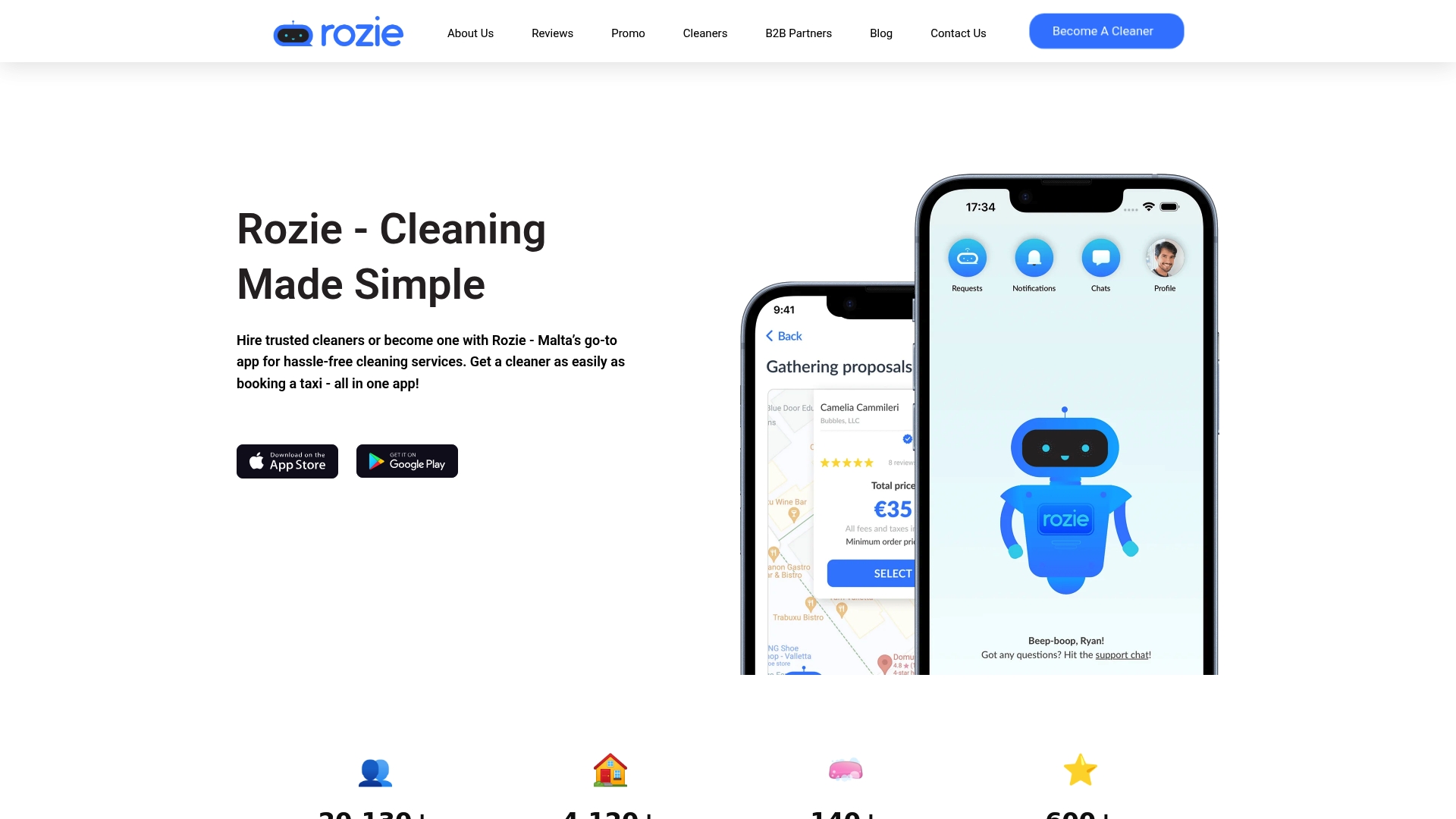
Rozie was built to remove that friction. It is Malta’s cleaning marketplace — think “Uber for cleaning” — where you post the job once, pick a date and any extras such as the oven, fridge, balcony or inside windows, and verified cleaners send you offers with exact prices, typically within 5–15 minutes. You compare offers before you accept, every booking includes 7-day payment protection, and jobs are covered by up to €1,000,000 in professional liability insurance underwritten by Lloyd’s Insurance Company S.A. — Rozie covers the deductibles, so you pay no excess. Over 24,800 people across Malta already book their cleaning this way.
Here is the full booking process in under 60 seconds:
Compare Cleaning Offers on Rozie →
Frequently asked questions
What are the most walkable areas in Malta?
Sliema, St Julian’s, Gżira and Valletta are the most walkable areas in Malta, with supermarkets, pharmacies, cafes and bus stops within a short walk of most apartments. The Three Cities are also compact, but steep steps and narrow alleys make street-level walkability vary from one block to the next.
Is public transport really free in Malta?
Yes. Since October 2022, Malta residents who hold a personalised Tallinja card travel free on all standard day and night bus routes, and since January 2024 the card also covers the Valletta–Sliema and Valletta–Three Cities ferries and the Barrakka Lift. Tallinja Direct express routes are excluded, and visitors without the card pay €2.00–€2.50 per journey.
Can you live in Valletta without a car?
Valletta is arguably the easiest place in Malta to live without a car. Almost every bus route on the island starts or ends at the Valletta terminus, two ferry lines connect the capital to Sliema and the Three Cities, and most daily errands sit within a 15-minute walk. The trade-offs are steep streets, stairs and very limited parking for visitors.
How much should I budget for transport in Malta without a car?
Most car-free residents in Malta spend roughly €30–€60 per month on transport. Buses and harbour ferries are free with a personalised Tallinja card, so the budget mostly covers occasional Bolt or eCabs rides at around €8–€15 per trip. That compares with €250–€450 per month for running a car in Malta.
Are the Three Cities a good option for living without a car?
Yes, if you choose your street carefully. The ferry connects Birgu, Senglea and Cospicua to Valletta in about ten minutes and is free with a personalised Tallinja card. The neighbourhoods are quiet and characterful, but hills and stairways mean walkability changes block by block, so walk your exact route before signing a lease.
How do I handle home services like cleaning without a car?
Book them online and let the provider come to you. On Rozie, you post the job once, verified cleaners send offers with exact prices, usually within 5–15 minutes, and you compare before accepting, so there are no phone calls or supply runs. Typical rates are covered in the cleaning cost in Malta guide.