

In this guide
Who is legally responsible for cleaning common areas?
What counts as “common parts” in a Malta apartment building?
How are common area cleaning costs split between residents?
Why is common area cleaning more demanding in Malta than elsewhere?
How much does professional common area cleaning cost in Malta?
How do you choose and coordinate a cleaning service for your building?
What does a year-round cleaning schedule look like?
What can residents do when cleaning standards aren’t being met?
Who is legally responsible for cleaning common areas in a Maltese apartment block?
The condominium administrator is the legally responsible party for organising the cleaning and upkeep of common areas in any Malta apartment block with more than three units. Under the Condominium Act (Chapter 398 of the Laws of Malta), the administrator acts as the legal representative of the condominium, executes decisions made at general meetings, and apportions costs among co-owners (known as condomini). For buildings with three or fewer units, the owners may administer the building jointly without appointing a formal administrator.
The administrator’s job goes well beyond hiring a cleaner. They keep a register of all unit owners, manage the condominium’s funds, hold general meetings, record minutes, and take legal action on behalf of the building when contributions go unpaid. The administrator holds office for two years unless the condomini agree otherwise, and the condominium itself must be registered with the Land Registry Agency for its rules to be enforceable.
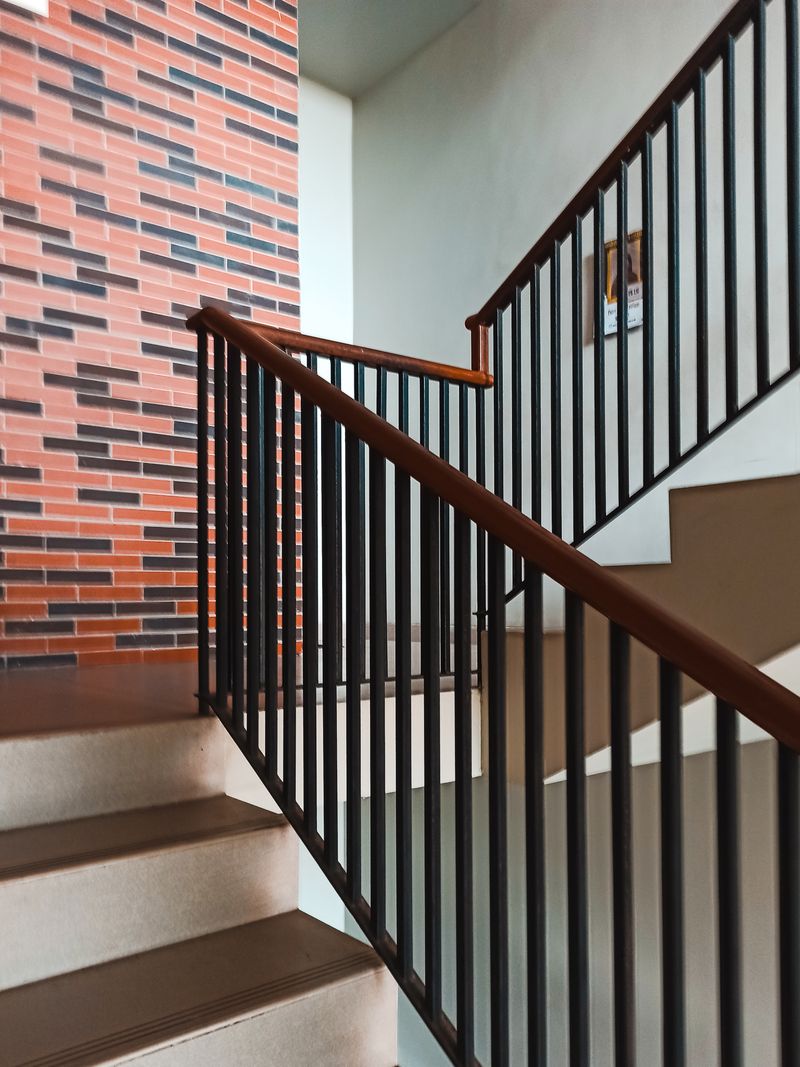
This matters in everyday terms because if your stairwell hasn’t been mopped in three weeks, you have a clear chain of accountability. The administrator is legally obliged to maintain the common parts to a reasonable standard. If they don’t, residents have formal channels — general meetings, votes, and ultimately arbitration — to address it. Many residents in Malta don’t realise these channels exist, which is partly why neglected entrance halls and dusty lifts are such a common complaint across the islands.
Key takeaway: If your building has four or more units, an administrator is legally required. They are accountable for organising common area cleaning and collecting contributions — not the loudest neighbour or the most committed resident.
What counts as “common parts” in a Malta apartment building?
Common parts are the areas of a building co-owned by all unit owners in undivided shares. Under the Condominium Act, common parts are presumed to include the land the building stands on, the foundations and external walls, the roof, entrance hall, staircase and landings, lifts, wells, cisterns, drainage pipes, and the shared installations for water, gas, electricity and similar services up to the point where they branch off to a single unit. Anything used or enjoyed in common is presumed to be a common part unless the deed of sale says otherwise.
For cleaning purposes, this means the administrator is responsible for arranging the cleaning of:
🚪 Entrance lobby and main door.
High-touch surfaces that face the street and accumulate dust, salt spray (in coastal areas), and tracked-in grit daily.
🪜 Staircases, landings, corridors.
The most-walked surfaces in any block, often finished with porous globigerina limestone or tiles that need pH-neutral care.
🛗 Lifts and lift cabins.
Mirrors, control panels, floor surfaces, and walls — small spaces that show grime quickly.
🏢 Rooftop terraces, basements, and parking areas.
Often forgotten until they fill with red Saharan dust after an il-qilla event or develop mould in damp underground corners.
Individual apartment interiors are not common parts and remain each owner’s responsibility. The dividing line gets blurry around things like a private terrace that drains onto a shared roof, or a balcony whose underside is part of the building façade — these are usually handled case-by-case in the condominium rules. If your building has registered rules with the Land Registry, those rules override the default presumptions in the Act.
How are common area cleaning costs split between residents?
Cleaning costs for common areas are apportioned among the condomini in proportion to their share of the common parts. By default, the Condominium Act presumes equal shares — in a five-unit block, each owner is presumed to hold a one-fifth share and pays one-fifth of the cleaning bill. However, this default can be overridden by the deed of sale (which often allocates shares based on the floor area or value of each unit) or by registered condominium rules.
Decision-making at general meetings follows clear voting thresholds, and it’s worth knowing them before pushing for change in your building:
The practical implication for cleaning is significant: hiring or switching a cleaning service only needs a simple majority of condomini present at a properly convened meeting. You don’t need everyone to agree, and you don’t need a special majority. This is one of the most common areas where residents incorrectly believe they’re powerless. If half your neighbours plus one are unhappy with the current cleaning, the votes are there to change it. Detailed analysis of administrator duties and voting procedures is set out in this overview of the Condominium Act from AMA Advocates.
Custom rules can also be drawn up by the condomini and registered with the Land Registry, giving them legal weight. This is genuinely useful and very few buildings actually do it. Registered rules can specify cleaning frequency, what areas are covered, how costs are apportioned (for example, ground-floor units paying less because they don’t use the lift), and the standards the cleaner must meet. Once registered, those rules bind every current and future owner. If you want a more in-depth read on rules and dispute mechanisms in Maltese condominia, this Times of Malta article on rules governing condominiums is a good starting point.
Why is common area cleaning more demanding in Malta than elsewhere?
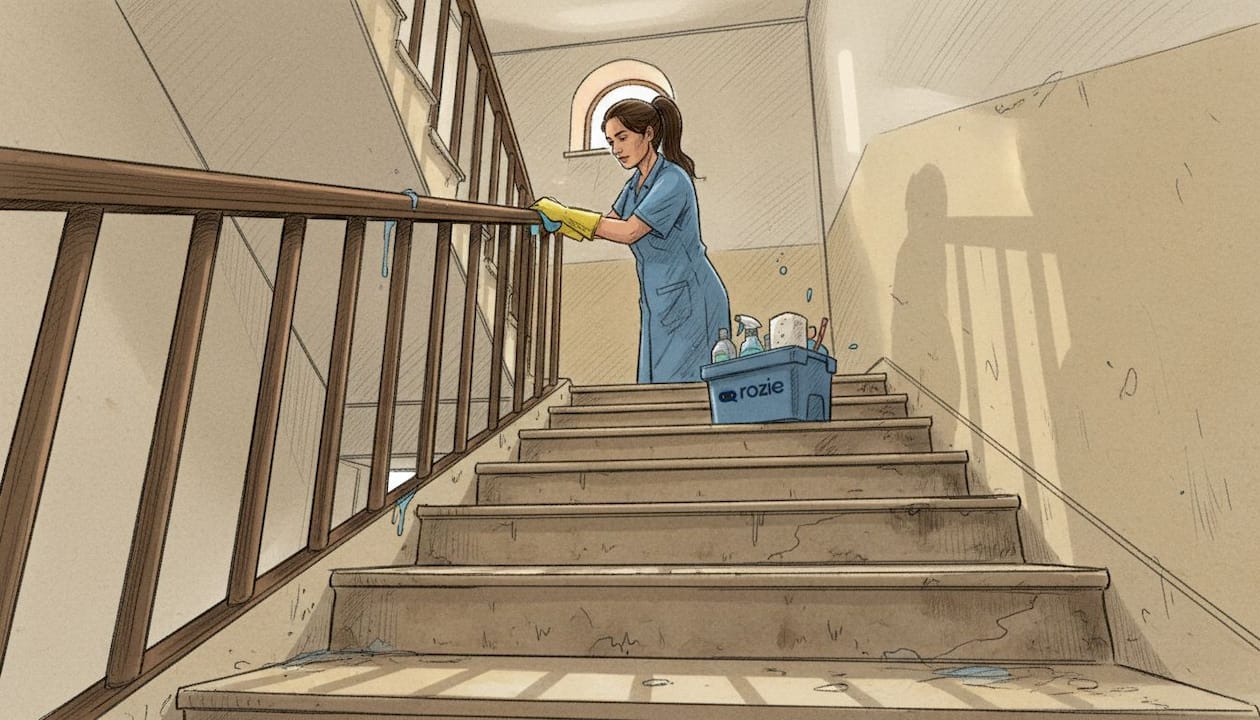
Malta’s climate and building materials create cleaning challenges most European countries don’t face. Hard water (200–600 PPM calcium carbonate, depending on locality), year-round humidity that often sits between 60% and 95%, salt-laden coastal air in places like Sliema and St Julian’s, and several Saharan dust events per year all combine to make shared spaces deteriorate faster than they would in mainland Europe. A “good” cleaner in Lyon or Berlin would be noticeably under-equipped for a Malta apartment block.
Three environmental factors do most of the damage:
💧 Hard water and limescale.
Tap water in Malta is naturally rich in calcium carbonate, with coastal localities towards the higher end of the range. Within days of cleaning, white limescale rings can reappear on stairwell windows, entrance door handles, and any chrome fittings in the lift. Standard supermarket cleaners barely touch it — descalers like Viakal or HG are needed for the buildup, and even those require regular routine application rather than occasional deep scrubs.
🌫️ Humidity and mould.
Stairwells, basements, and enclosed corridors are mould factories from October through February, when relative humidity routinely sits above 80%. The earliest signs are dark patches at floor-to-wall junctions and a musty smell that hits you when you open the entrance door. Cleaning here isn’t just aesthetic — for residents with asthma, young children, or elderly relatives, mould in shared corridors is a real respiratory health concern.
🟠 Saharan dust and salt air.
Several times a year, Saharan dust (locally known as “il-qilla”) coats every outdoor and semi-outdoor surface in a fine red film — rooftops, balconies, entrance porches, and any windows left ajar. In coastal blocks in Sliema, St Julian’s, and Bugibba, salt deposits compound the problem on metal fittings and glass. Both require wet cleaning, not just sweeping; dry brooms simply move the dust around.
There’s one more crucial point that almost every internet cleaning guide gets wrong: do not use vinegar on globigerina limestone, the golden-yellow stone used in many older Maltese stairwells, entrance halls, and façades. It’s pH-sensitive and the acid in vinegar reacts with the calcium carbonate in the stone, leaving permanent dull etched patches. For limestone, use only pH-neutral cleaners such as Lithofin or HG Tile Cleaner. For ceramic tiles, a standard floor cleaner is fine, but pay attention to grout lines, which absorb mould-feeding moisture in humid corridors.
How much does professional common area cleaning cost in Malta?
Professional common area cleaning in Malta typically costs €15 to €60 per resident per month, depending on the size of the building, the cleaning frequency, and the locality. A small block of four to six units paying for once-weekly cleaning of a basic stairwell sits at the lower end. A larger block of 10–15 units in Sliema with twice-weekly cleaning, lift maintenance, and rooftop attention sits at the higher end.
For a clearer picture, here’s a rough breakdown by building size and frequency:
These are realistic ranges as of 2026. Sliema, St Julian’s, and central Valletta typically command a 15–20% premium over inland localities like Mosta, Birkirkara, or Naxxar, partly due to demand and partly because coastal buildings genuinely need more frequent attention to deal with salt and dust. Gozo blocks tend to pay slightly less because labour rates are lower, but availability is also more constrained.
💰 Routine cleaning vs neglect-and-rescue
Routine weekly cleaning (10-unit block, full year)
€2,400–€3,360
Mould remediation + repainting after 12 months of neglect
€3,500–€6,000
Skipping routine cleaning to save money in Malta’s humid climate almost always costs more in the end — particularly when mould reaches paintwork or tenants stop renewing leases over a poorly maintained entrance.
Many residents are surprised at how affordable professional common area cleaning works out per unit when split across the building. €25 per month per resident for a clean, presentable entrance and stairwell is genuinely good value compared to lost weekend hours, awkward cleaning rotas, and the repair costs of letting things slide. For a fuller breakdown of cleaning prices across the islands, see our Malta cleaning cost guide.
Get Cleaning Offers for Your Building →
How do you choose and coordinate a cleaning service for your building?
Choosing a cleaning service for a shared building isn’t like booking a one-off apartment clean. The decision affects every co-owner, the standards have to hold week after week, and a bad provider doesn’t just frustrate one household — it triggers a chain of complaints, missed payments, and neighbour conflict. The administrator usually does the legwork, but residents should still be actively involved.

Six steps make the process much smoother:
- Audit the shared spaces. Walk through the building, from the entrance lobby to the rooftop, and write down everything that needs regular attention — stairs, lift cabin, mailboxes, corridor windows, basement, parking area. This becomes the brief for any quote.
- Define the scope clearly. Specify cleaning frequency, areas covered, products required (pH-neutral on limestone, descaler on chrome), and Malta-specific add-ons like post-il-qilla rooftop cleanup.
- Vet the providers thoroughly. Ask for references from other Malta residential blocks, confirm cleaners are insured against accidental damage, and check that the company runs background checks on staff.
- Read the contract carefully. Look for clauses on what happens when the regular cleaner is sick (replacement staff?), what the response time is for missed appointments, and how the contract can be ended if standards drop.
- Set a feedback mechanism. A simple WhatsApp group, a notice in the lobby with a QR code linking to a Google Form, or a building email address all work. Without one, problems fester silently for months.
- Schedule quarterly reviews. Cleaning needs in Malta change with the seasons. A short check-in every three months keeps scope and frequency aligned with reality.
💡 Pro tip
Before signing any annual contract for your shared building, request a four-week trial period at the agreed weekly rate. This gives you real evidence of consistency before committing — and four weeks is enough time to spot whether the same cleaner shows up reliably or whether the company keeps swapping in unfamiliar faces.
Vetting and insurance are where shared-building cleaning differs most from a private apartment clean. The cleaner is in your building unsupervised, often holding a key or fob, with access to multiple residents’ floors. The traditional Malta approach — finding a cleaner through a Facebook group, calling around, hoping the person who turns up is competent — is genuinely painful at the building scale, because every co-owner has to trust the same individual. Most administrators end up spending hours chasing references, comparing quotes by phone, and second-guessing whether they’ve actually verified anyone properly.
That friction is exactly the problem Rozie was built to solve. Instead of phone calls and Facebook posts, you post a cleaning request describing your building and the scope, and within minutes verified, background-checked cleaners send competitive offers with the exact price for the job. Every booking is backed by professional liability insurance up to €1,000,000 per occurrence, underwritten by Lloyd’s Insurance Company S.A. — so if a cleaner accidentally damages something in the entrance hall, residents aren’t on the hook for the repair. You compare offers, accept the one that fits, and the booking is confirmed. Here’s the booking flow in under 60 seconds:
For administrators dealing with multiple buildings, this matters even more — one platform with verified providers replaces the spreadsheet of phone numbers, the chase for quotes, and the risk of an uninsured cleaner damaging something. For a fuller breakdown of how to evaluate any cleaning company in Malta, our guide on why professional cleaners are worth it walks through what good vetting actually looks like.
Post a Cleaning Request on Rozie →
What does a year-round cleaning schedule look like for a Maltese apartment block?
A practical schedule for a Maltese block matches the building’s needs to the season. Inland and coastal buildings have different priorities, but most share the same rhythm: weekly basic cleaning year-round, plus a deep clean each season to deal with whatever the weather has thrown at the building. Trying to apply a generic “weekly mop and dust” schedule from a UK property management template misses everything that actually accumulates here.
Here’s a sensible annual plan for a typical 8–12 unit Maltese apartment block:
The two seasonal moments that make the biggest difference are the spring deep clean (often timed before Easter, in line with a longstanding Maltese custom) and the autumn deep clean before humidity rises in October. Buildings that handle these two well rarely have problems through the rest of the year. Buildings that skip them often spend more on emergency mould remediation than they would have on routine cleaning.
A few coordination habits that consistently work in Maltese blocks:
- Use a shared digital calendar (a Google Calendar shared with all residents works well) so everyone can see when the cleaner is scheduled.
- Keep a one-page log near the postboxes where the cleaner notes the date, time, and what was done — accountability without surveillance.
- Appoint a “building liaison” among residents who acts as the everyday point of contact with the cleaner. This takes pressure off the administrator for minor issues.
- Review expense statements at every quarterly meeting. Small overspends are easier to catch and discuss in 90-day windows than after a full year.
Skip the rota: If your building is currently rotating cleaning duties between residents, the schedule above is exactly what’s failing. Most rotas collapse within six months because someone is always travelling, sick, or simply over it. A verified cleaner on a fixed schedule replaces the entire arrangement for €20–€40 per resident per month — and removes the awkward “whose turn was it?” conversation entirely.
What can residents do when cleaning standards aren’t being met?
If common area cleaning in your building isn’t up to standard, residents have clear formal channels — they’re not just stuck complaining in the lift. Under the Condominium Act, the administrator is legally obliged to maintain the common parts. If they aren’t doing the job, residents can require them to. There is real recourse, even if most people don’t use it.
Here’s the escalation path that actually works:
- Raise it informally with the administrator first. A polite written message documenting specific issues (dates, photos, areas affected) is harder to dismiss than a verbal complaint. Most issues get resolved at this stage.
- If the administrator doesn’t respond or address it, request a general meeting. Any condomini can ask for a meeting on cleaning quality. Bring photo evidence and quotes from alternative providers if relevant.
- Vote at the meeting. Replacing the cleaning service requires only a simple majority. Replacing the administrator themselves is more involved but possible.
- Use arbitration as a last resort. The Condominium Act provides for compulsory arbitration when disputes can’t be resolved internally. It’s slower and more expensive than a meeting, so most disputes settle before reaching this stage.
💡 Pro tip
Before any general meeting, walk through the building with two or three residents and document specific failures with photos and dates. Vague complaints (“the building is dirty”) rarely lead to action. Specific evidence (“the staircase between floors 2 and 3 hasn’t been mopped in three weeks; here are the dust accumulation photos from each Friday”) almost always does.
Persistent neglect is also a property value issue most residents underestimate. Buildings with a documented, professionally managed cleaning arrangement consistently rent and resell better than buildings with a tired entrance, dirty lift, and uneven stairwell. Renters in Sliema and St Julian’s especially — many of whom view 8–12 apartments before signing — make a quick judgment based on the lobby. A clean common area is one of the simplest, lowest-cost ways to protect every owner’s investment in the building. For administrators specifically, our guide on property management cleaning in Malta walks through the multi-building setup in more detail.
Tired of chasing the administrator and watching the entrance hall get worse? You’re not alone — it’s the most common reason residents and committees turn to a verified marketplace. Over 22,700 people across Malta now use Rozie to find background-checked cleaners with insurance up to €1,000,000 per occurrence. Post your building’s cleaning request and have competitive offers within minutes.
Download Rozie — Book in 60 Seconds →
If you’d rather browse more guides before booking, our full library of Malta cleaning guides and our directory of verified cleaners in Malta are good next stops.
Frequently asked questions
Who is responsible for cleaning common areas in a Maltese apartment block?
The condominium administrator is responsible for organising the cleaning and upkeep of common areas under Malta’s Condominium Act (Chapter 398). For buildings with more than three units, appointing an administrator is compulsory. They organise the cleaning service, collect contributions from co-owners, and execute decisions made at general meetings.
How much does common area cleaning cost in Malta?
Common area cleaning in Malta typically costs €15–€60 per resident per month, depending on building size, cleaning frequency, and locality. A small block of 4–6 units paying for once-weekly cleaning might pay €100–€180 per month total, while a 10–15 unit coastal building with twice-weekly cleaning and monthly deep cleans can run €500–€800 per month.
Can residents legally vote to change the cleaning company?
Yes. Agreeing on or changing the cleaning service for common parts requires only a simple majority of condomini at a properly convened general meeting. You don’t need unanimous agreement, and you don’t need a two-thirds majority. The two-thirds threshold applies to changes in the condominium’s registered rules, not to choosing a cleaner.
Are cleaning costs always split equally between residents?
Not necessarily. The Condominium Act presumes equal shares unless the deed of sale or registered condominium rules say otherwise. Many buildings allocate shares based on the floor area or value of each unit, so a penthouse owner pays more than a studio owner. Custom rules can also differentiate by usage — for example, ground-floor units paying less because they don’t use the lift.
Is vinegar safe to use on Maltese limestone stairwells?
No. Globigerina limestone, the golden-yellow stone common in older Maltese buildings, is pH-sensitive. The acid in vinegar reacts with the calcium carbonate in the stone and leaves permanent dull etched patches. Use only pH-neutral cleaners such as Lithofin MN Easy Clean or HG Tile Cleaner on limestone surfaces. Standard floor cleaners are fine for ceramic tiles.
What happens if my building doesn’t have a registered administrator?
If your building has more than three units and no administrator, any condominus can request the appointment of one. If owners can’t agree, the matter goes to arbitration. Without a registered administrator and Land Registry registration, the condominium’s rules aren’t enforceable, which often leaves residents with no formal way to compel cleaning standards.
Can residents create custom cleaning rules for their building?
Yes. Condomini can draft custom rules covering cleaning frequency, scope, cost allocation, and standards, and register these with the Land Registry. Once registered, the rules bind every current and future owner. This is one of the most underused powers in Maltese condominium law — most buildings rely on default presumptions when written rules would prevent half their disputes.
Recommended
- How to Choose a Cleaning Service in Malta (2026 Guide)
- Property Management Cleaning Malta: 67% More Trust Verified | Rozie – Malta’s Best Cleaning Services
- Reliable Apartment Cleaning Malta 2026: Verified Cleaners Guide
- Holiday Home Cleaning Malta: Step-by-Step Guide for Expats | Rozie – Malta’s Best Cleaning Services