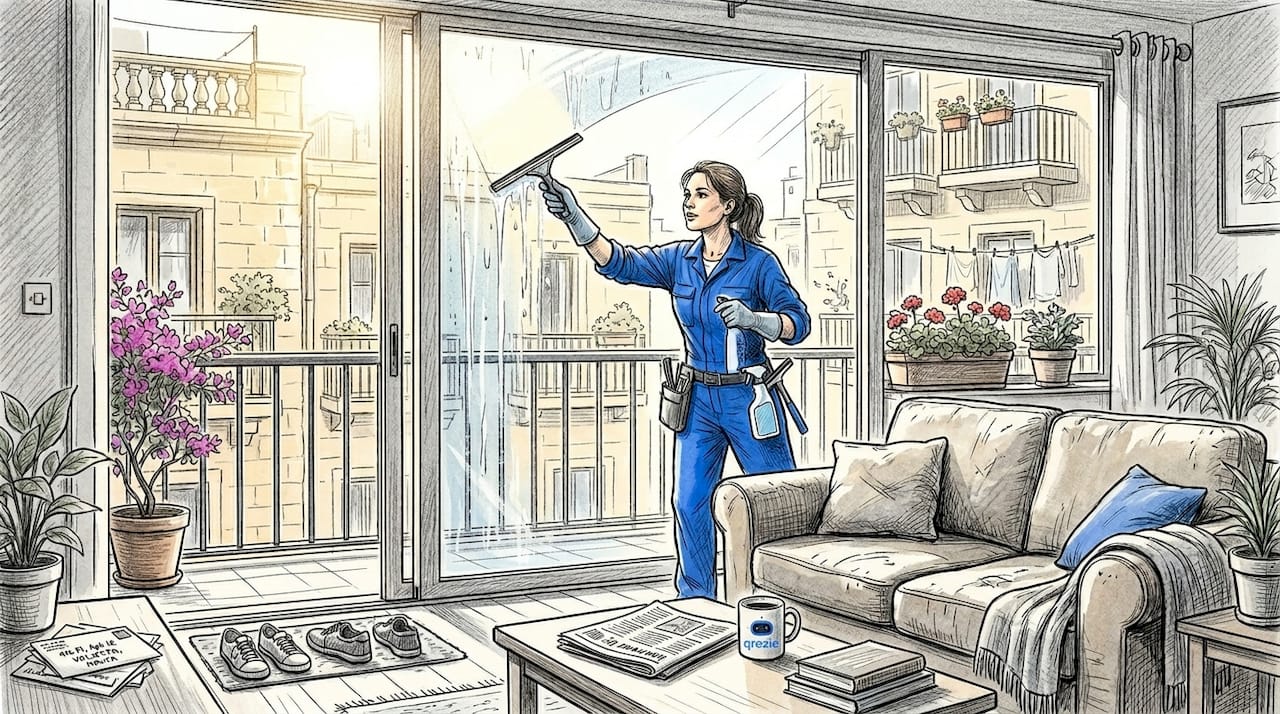


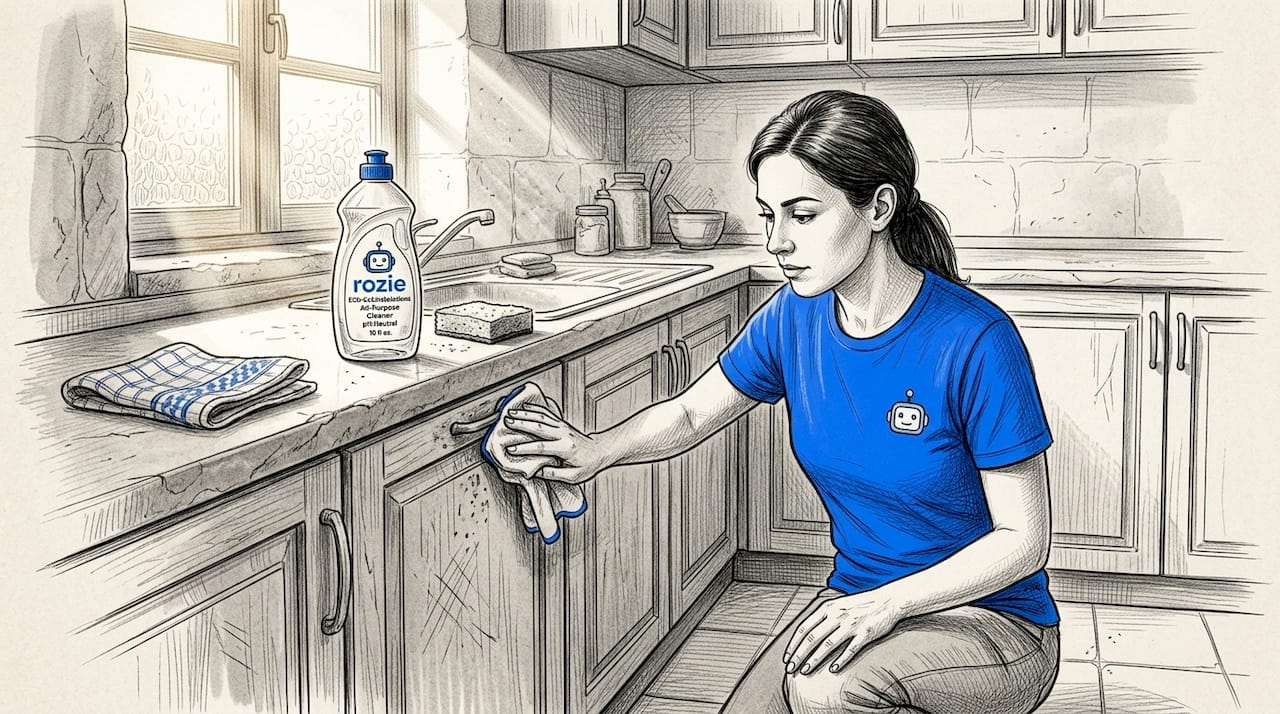
Kitchen cabinets in Malta take a beating that most cleaning guides never account for. Year-round humidity above 60%, tap water running 200–600 PPM calcium carbonate, and airborne cooking grease combine to create sticky films and white limescale deposits that standard wiping can’t touch. Professional cabinet cleaning in Malta costs €15–€25 as an add-on to a deep clean, and most verified cleaners on marketplace apps like Rozie include cabinet care as part of a full kitchen deep clean starting from €80–€120 for a two-bedroom apartment. Here’s how to protect your cabinets — whether you tackle them yourself or hire a professional.
Table of Contents
- Why do kitchen cabinets in Malta get so dirty so fast?
- What cleaning products are safe for Maltese kitchen cabinets?
- How do professionals clean kitchen cabinets step by step?
- How often should you deep clean kitchen cabinets in Malta?
- How much does professional cabinet cleaning cost in Malta?
- How can you find a verified cabinet cleaner in Malta?
- Frequently Asked Questions About Kitchen Cabinet Cleaning in Malta
Why do kitchen cabinets in Malta get so dirty so fast?
Malta’s Mediterranean climate creates a triple threat for kitchen cabinets: persistent humidity, extremely hard water, and salt-laden coastal air that accelerates deterioration far beyond what homeowners in drier climates experience. When humidity consistently sits above 60% — and peaks between 80–95% from October to February — cooking oils and airborne grease don’t evaporate. They settle on cabinet surfaces and form tacky films that trap dust, turning a light residue into a stubborn, discoloured layer within weeks.
Hard water is the second culprit. According to the Water Services Corporation, Malta’s tap water carries high levels of dissolved calcium and magnesium. Areas like Mosta, Birkirkara, and St Paul’s Bay frequently record readings above 300 PPM, leaving white limescale deposits on cabinet surfaces near sinks, on handles, and anywhere water splashes during cooking or washing up. Over time, these mineral deposits etch into finishes, dulling the appearance and weakening protective coatings.
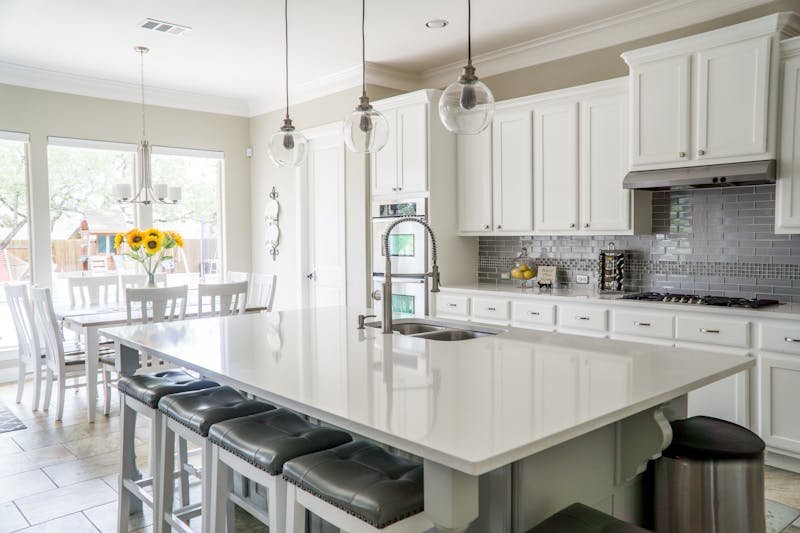
Then there’s Malta’s porous globigerina limestone. Many older Maltese homes have limestone elements near or within kitchen areas. Limestone is acid-sensitive — meaning the vinegar-based or lemon-based cleaners that countless online guides recommend will actually dissolve the surface, causing permanent etching and discolouration. This is one of the most common cleaning mistakes in Malta, and it applies to any cabinet finish that sits near limestone countertops or splashbacks.
Coastal localities like Sliema, St Julian’s, and Bugibba add a fourth factor: salt air corrosion. Salt deposits settle on window frames, balconies, and kitchen fittings — including cabinet handles and hinges — accelerating metal tarnishing and degrading adhesives used in laminate cabinets.
Book a Kitchen Deep Clean on Rozie →
What cleaning products are safe for Maltese kitchen cabinets?
The single most important rule for cleaning cabinets in Malta is to use pH-neutral products only — especially anywhere near limestone, sealed wood, or painted finishes. Acidic cleaners (vinegar, lemon juice, citric acid–based sprays) and strongly alkaline products (ammonia, bleach) damage surfaces that Malta’s environment is already stressing. Stick to pH-neutral degreasers and mild soap solutions, and you’ll avoid the two most common mistakes: etching limestone and stripping protective coatings.
| Cabinet Material | Recommended Cleaner | Never Use | Deep Clean Frequency |
|---|---|---|---|
| Painted wood | pH-neutral all-purpose cleaner | Abrasives, ammonia, scouring pads | Every 3 months |
| Natural / sealed wood | Mild dish soap diluted in lukewarm water | Excess water, vinegar, steam cleaners | Every 2–3 months |
| Laminate | Gentle degreaser (e.g., HG Kitchen Degreaser) | Abrasive pads, acetone, harsh solvents | Every 3–4 months |
| Near limestone surfaces | Non-acidic mineral remover (e.g., Lithofin) | Vinegar, lemon, citric acid sprays | Every 3–6 months |
For everyday limescale around the sink area, products like HG Professional Limescale Remover (available at PAVI and Smart Supermarket) work on chrome taps and stainless steel, but should never be used on limestone or natural stone. For limestone-adjacent surfaces, Lithofin MN Power-Clean is the go-to — it’s non-acidic and specifically formulated for natural stone environments.
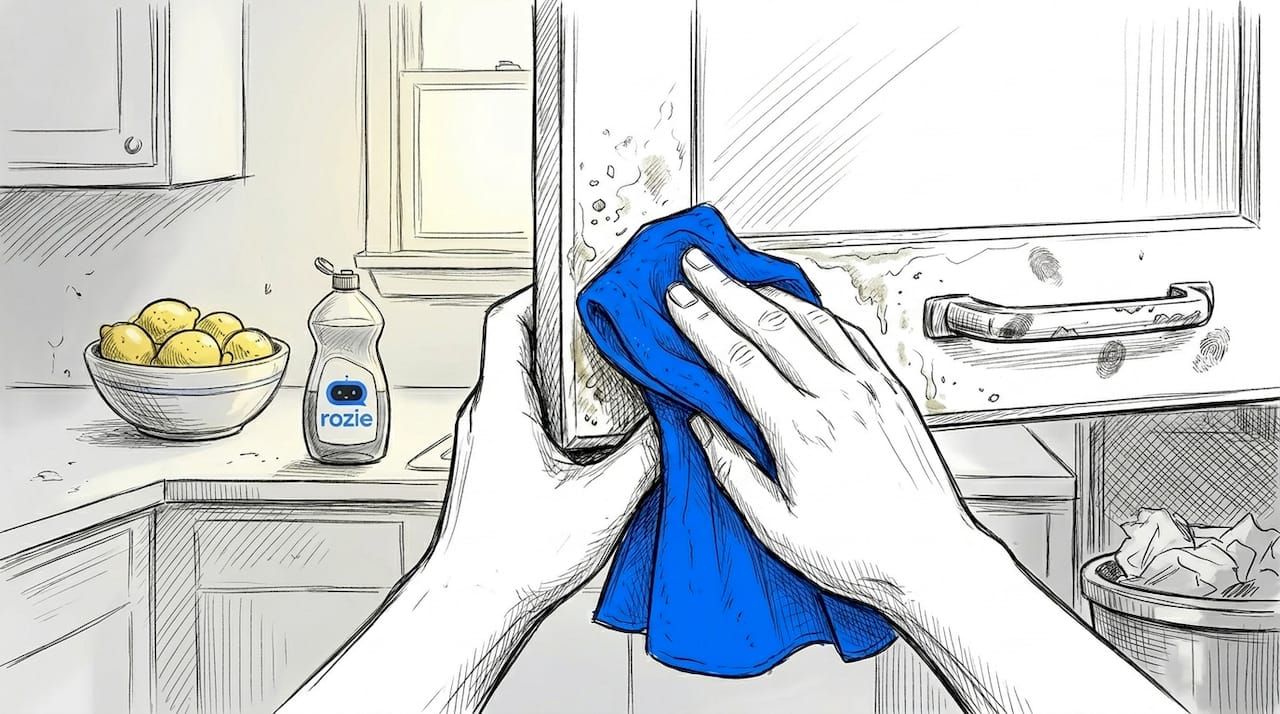
Microfiber cloths are your best tool regardless of cabinet material. Their ultra-fine fibres trap grease and particles mechanically rather than pushing residue around. Use them barely damp — never soaking wet — to avoid moisture penetrating unsealed wood joints. Malta’s humidity means excess water on cabinet surfaces takes longer to evaporate, increasing the risk of warping and finish failure.
How do professionals clean kitchen cabinets step by step?
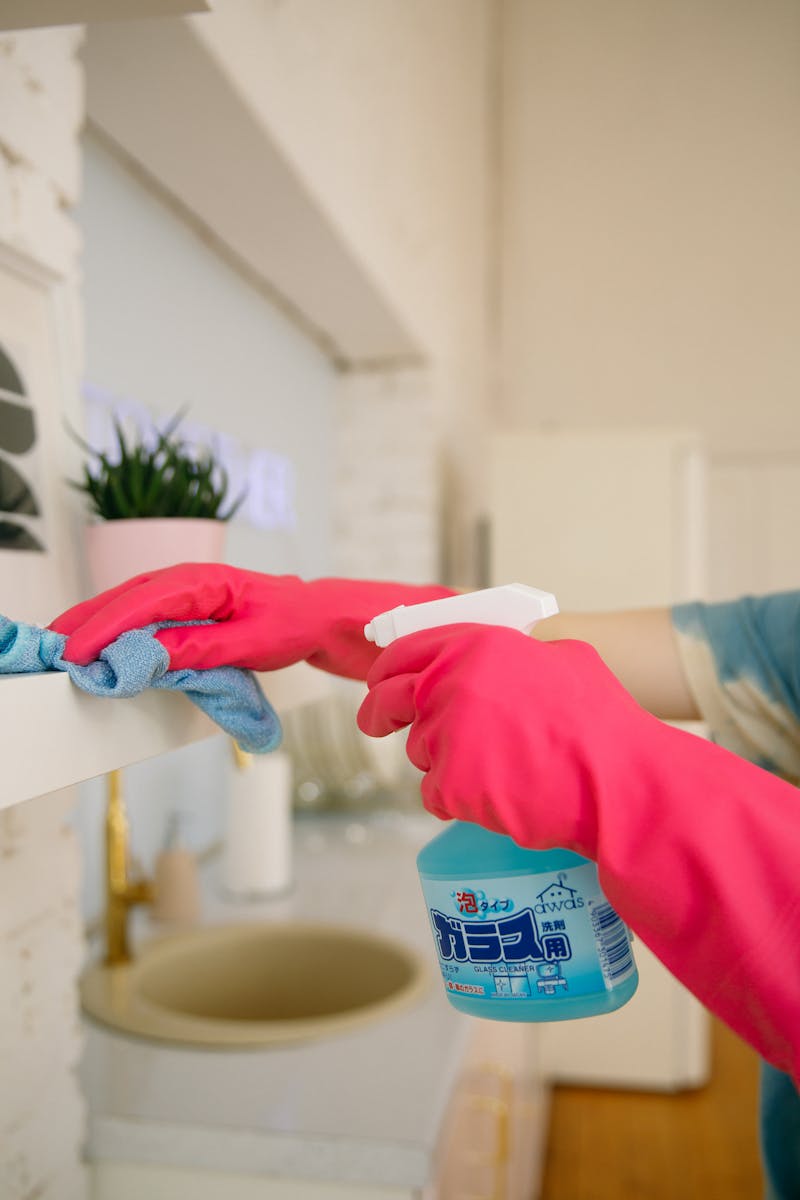
Professional cleaners in Malta follow a top-to-bottom, dry-before-wet method specifically adapted for the island’s humidity and hard water challenges. The entire process takes 30–60 minutes for a standard kitchen and uses products chosen to match each cabinet material — no one-size-fits-all spray.
Step 1: Remove and dry-dust
Clear items from cabinet tops and exteriors. Open all doors to access hinges and interior edges. Dry-dust every surface with a clean microfiber cloth to remove loose particles, Saharan dust (il-qilla deposits are common on top of upper cabinets), and cobwebs without scratching.
Step 2: Degrease with pH-neutral product
Apply a pH-neutral degreaser to exterior panels, focusing on areas around handles, near the hob, and above the oven where grease films are thickest. Let the product sit for 30–60 seconds to break down oil films before agitating.
Step 3: Agitate stubborn grease
Use soft microfiber cloths in gentle circular motions. For carbonised grease around cooking zones, a paste of baking soda and water applied for 2–3 minutes lifts hardened residue without harsh chemicals. Never use abrasive pads — they scratch painted and laminate surfaces permanently.
Step 4: Address limescale deposits
On chrome handles and stainless steel hardware, use a dedicated limescale remover. On or near limestone surfaces, use only a non-acidic mineral remover (Lithofin or similar). Professionals often use plastic scrapers for thick mineral buildup before applying product.
Step 5: Wipe and dry immediately
Wipe all surfaces with a fresh, barely damp cloth, changing the rinse water frequently. Dry immediately with a clean towel — this step is critical in Malta, where humidity means surfaces stay wet longer, increasing the risk of water spots and mineral re-deposits from the hard water itself.
Step 6: Polish and protect
Apply a cabinet-appropriate polish or wax to painted and wood surfaces. This creates a protective barrier that slows grease accumulation and repels moisture — particularly valuable during Malta’s humid winter months.
Rather skip the DIY? A verified cleaner on Rozie handles all six steps in 30–60 minutes as part of a kitchen deep clean — including the stubborn grease zones around the hob and the limescale patches near the sink that most people skip because they’re unsure which product is safe.
How often should you deep clean kitchen cabinets in Malta?
Every 3 months is the baseline for most Maltese kitchens — significantly more frequent than the 6-month recommendation you’ll find in generic cleaning guides written for drier climates. Malta’s humidity, hard water, and year-round cooking culture accelerate buildup at roughly double the rate of Northern European or North American homes.
| Kitchen Usage | Weekly Maintenance | Deep Clean Frequency | Why |
|---|---|---|---|
| Heavy cooking (daily frying/grilling) | Wipe cabinet fronts near hob | Every 2–3 months | Grease films harden within weeks |
| Moderate cooking | Wipe handles and near-sink surfaces | Every 3–4 months | Limescale and light grease accumulate steadily |
| Light use / Airbnb turnover | Quick wipe after guest checkout | Every 4–6 months | Less cooking means slower buildup |
| Coastal localities (Sliema, St Julian’s) | Wipe handles, hinges, metal fittings | Every 2–3 months | Salt air corrodes hardware faster |
Weekly maintenance between deep cleans makes a significant difference. A 5-minute wipe of cabinet fronts near the hob and handles near the sink with a damp microfiber cloth prevents fresh grease from hardening and limescale from bonding. This simple habit can extend your professional deep clean intervals by 4–6 weeks.
Seasonal timing matters in Malta. Schedule a professional cabinet deep clean before October, when humidity begins its winter climb toward 80–95%, and again in March or April ahead of Easter — which is traditionally when Maltese households do their biggest annual deep clean. For a complete room-by-room guide to seasonal cleaning in Malta, see our apartment cleaning checklist.
If that cleaning schedule looks ambitious for your lifestyle, you’re not alone — most Rozie users tell us they’d rather spend their weekend at Golden Bay than scrubbing cabinet grease. Bundling a kitchen cabinet clean onto your regular booking takes the task off your plate entirely.
How much does professional cabinet cleaning cost in Malta?
Professional kitchen cabinet cleaning in Malta costs €15–€25 as an add-on when bundled with a kitchen or full-apartment deep clean. Standalone cabinet cleaning is rarely offered because it’s more efficient — and cheaper for the homeowner — to include cabinet care in a broader kitchen deep clean session.
| Service | Typical Duration | Cost Range | Best For |
|---|---|---|---|
| Cabinet add-on to deep clean | 30–60 min | €15–€25 | Routine quarterly maintenance |
| Full kitchen deep clean (incl. cabinets) | 2–3 hours | €80–€120 | Comprehensive kitchen care |
| Full apartment deep clean (incl. kitchen cabinets) | 4–6 hours | €120–€180 | Seasonal / pre-tenancy cleans |
| Intensive restoration (neglected cabinets) | 1–2 hours (cabinets only) | €40–€60 | Years of buildup, heavy grease/limescale |
For a full breakdown of Malta cleaning prices across all service types, check our cleaning cost guide for Malta.
On marketplace apps like Rozie, you select “kitchen cabinets” as an extra during booking — the total price updates before you confirm, so there are no hidden costs. This bundling approach is how most Rozie users handle cabinet maintenance: add it to a regular or deep clean every two to three months and the task never becomes a weekend project.
Prices in Sliema and St Julian’s tend to run 10–20% above the island average due to higher demand and limited parking for cleaners. Gozo may see slightly higher rates as well, reflecting fewer available cleaners on the sister island.
Finding a reliable cleaner in Malta the traditional way means scrolling through Facebook groups, making phone calls, chasing quotes, and hoping the person who shows up actually does a good job. Most busy professionals don’t have time for that — and it’s exactly the problem Rozie was built to solve. No calls, no chasing. You pick a date, select your extras (like kitchen cabinets), see the final price upfront, and get matched with a verified, background-checked cleaner. Here’s the full booking process in under 60 seconds:
Try Rozie Free — See Prices Instantly →
How can you find a verified cabinet cleaner in Malta?
The most reliable way to find a cabinet cleaner in Malta is through a verified cleaning marketplace that background-checks cleaners, shows transparent pricing upfront, and collects genuine reviews. Independent searches through Facebook groups and Maltapark ads can work, but there’s no verification layer — you’re trusting strangers with access to your home based on a text message and a profile photo.
On Rozie, every cleaner is verified and background-checked before they can accept bookings. With 22,700+ users, 710+ five-star reviews, and 140+ active cleaners across Malta, the platform handles the vetting so you don’t have to. You select your date, pick “kitchen cabinets” as an extra, see the total price before confirming, and communicate with your cleaner through the in-app chat. If anything goes wrong, Rozie provides 7-day payment protection.
When booking cabinet cleaning through any provider, communicate these details upfront for the best results:
- Cabinet material — painted wood, natural wood, laminate, or mixed. This determines which products the cleaner brings.
- Proximity to limestone — if you have limestone countertops or splashbacks, the cleaner needs to avoid acidic products in those areas.
- Problem zones — point out specific areas: grease buildup near the hob, limescale near the sink, salt residue on coastal-apartment hardware.
- Previous damage — any peeling paint, warped edges, or etching from past cleaning mistakes should be flagged so the cleaner adjusts technique.
Cabinet cleaning integrates naturally into broader kitchen or deep cleaning sessions. For practical examples of what a professional deep clean covers in a Maltese home, see our deep cleaning examples for Maltese homes. And for tips on choosing the right cleaning service in Malta, our 2026 guide breaks down what to look for.
Not enough hours in the day? That’s the #1 reason 22,700+ people across Malta use Rozie. No phone calls, no quote-chasing, no guesswork — just verified cleaners, transparent pricing, and a kitchen that stays spotless without eating your weekend. Cabinet cleaning is one of the most popular extras Rozie users add to their regular booking.
Download Rozie — Book in 60 Seconds →
Frequently Asked Questions About Kitchen Cabinet Cleaning in Malta
What is the best way to clean kitchen cabinets in Malta?
Use a pH-neutral cleaner and a barely damp microfiber cloth. Avoid vinegar, lemon, or any acidic product — especially if your kitchen has limestone elements. Wipe top-to-bottom, degrease weekly near the hob, and deep clean every 3 months to prevent grease and limescale from bonding permanently.
Can I use vinegar to clean kitchen cabinets in Malta?
Only on stainless steel or chrome hardware — and even then, diluted and rinsed immediately. Never use vinegar on or near globigerina limestone, painted wood, or natural stone countertops. Malta’s limestone is calcium-based and acid-sensitive; vinegar dissolves it on contact, causing permanent etching that no amount of polishing will fix.
How often should kitchen cabinets be professionally cleaned in Malta?
Every 3 months for most households. Heavy cooking (daily frying or grilling) warrants every 2 months. Coastal apartments in Sliema or St Julian’s benefit from quarterly cleans due to salt air corroding cabinet hardware. Between professional sessions, a 5-minute weekly wipe of high-grease and high-splash zones extends cabinet life significantly.
How much does kitchen cabinet cleaning cost in Malta?
As an add-on to a deep clean, expect €15–€25. A full kitchen deep clean that includes cabinets runs €80–€120 for a two-bedroom apartment. On Rozie, you select kitchen cabinets as an extra and the total price updates before you confirm — no surprises.
Why do my cabinets get a white film near the kitchen sink?
That’s limescale — calcium carbonate deposits from Malta’s hard water. Every time water splashes on cabinet surfaces and evaporates, it leaves mineral residue behind. The Water Services Corporation confirms Malta’s water carries high calcium levels. Wipe splashes immediately and use a non-acidic limescale remover like HG or Lithofin on affected areas monthly.
Is kitchen cabinet cleaning included in a standard deep clean?
On most marketplace platforms, cabinet exterior cleaning is included in a kitchen deep clean. Cabinet interiors (inside the drawers, behind stored items) may require selecting kitchen cabinets as an additional extra. On Rozie, the extras menu lets you add cabinet cleaning during booking so the cleaner arrives prepared with the right products and time allocation.
What products should I buy for DIY cabinet maintenance between professional cleans?
A pH-neutral all-purpose cleaner (available at PAVI or Smart Supermarket), a pack of quality microfiber cloths, and a non-acidic limescale remover for the sink area. For natural wood cabinets, a mild dish soap diluted in lukewarm water is all you need. Avoid anything marketed as a “heavy-duty degreaser” unless it’s specifically labelled pH-neutral — many are alkaline and will strip finishes over time.
For more guides on keeping your home clean in Malta’s unique climate, browse our Malta cleaning guides. From fridge cleaning to full apartment deep cleans, each article is written specifically for Malta’s hard water, humidity, and limestone realities.

Recommended
- How to Choose a Cleaning Service in Malta (2026 Guide)
- Office cleaning tips for busy professionals in Malta | Rozie – Malta’s Best Cleaning Services
- How to Choose Cleaning Services: Find the Right Fit | Rozie – Malta’s Best Cleaning Services
- 7 Practical Examples of Deep Cleaning for Busy Maltese Homes | Rozie – Malta’s Best Cleaning Services