

Keeping an office clean in Malta requires more than generic tidying advice — the island’s year-round humidity (60–95%), hard water that leaves limescale on every tap and kettle, and periodic Saharan dust events (il-qilla) create challenges you won’t find in a UK or US cleaning guide. A focused 10-minute daily routine targeting high-touch surfaces, combined with weekly deep maintenance and the right products for Malta’s conditions, keeps workspaces hygienic and productive without eating into billable hours. For offices that need professional-grade results, verified cleaners through platforms like Rozie handle everything from regular upkeep to deep cleans — typically costing €12–18 per hour in Malta.
Table of Contents
- Why Does Office Cleaning Matter More in Malta?
- What Daily Office Cleaning Routine Works for Busy Professionals?
- Which Cleaning Products Work Best in a Maltese Office?
- How Should You Handle Weekly and Seasonal Office Cleaning?
- How Much Does Professional Office Cleaning Cost in Malta?
- When Should You Hire a Professional Cleaner for Your Office?
- Frequently Asked Questions About Office Cleaning in Malta
Why Does Office Cleaning Matter More in Malta?
Malta’s Mediterranean climate creates office cleaning challenges that standard international advice doesn’t address. Humidity rarely drops below 60% and peaks between October and February, making mould a persistent threat in bathrooms, kitchens, and under-ventilated server rooms. Hard water — running at 200–600 PPM calcium carbonate depending on your area — deposits limescale on taps, kettles, and coffee machines within weeks. And if your office is anywhere along the coast (Sliema, St Julian’s, Gzira), salt spray accelerates corrosion on window frames, metal fixtures, and balcony railings.
The WHO’s indoor air quality guidelines identify persistent dampness and microbial growth as primary drivers of respiratory symptoms, allergies, and workplace absenteeism. In Malta’s humid climate, those risks are elevated year-round. An office that looks tidy on the surface can still harbour mould behind furniture, inside air conditioning units, and along window seals — all of which directly affect staff health and concentration.
Then there’s il-qilla — the Saharan dust events that coat outdoor surfaces in fine red particles several times per year. If your office has balcony access or windows that open, that dust settles on desks, keyboards, and monitors within hours. A cleaning routine that ignores these Malta-specific factors is fighting the wrong battle.
What Daily Office Cleaning Routine Works for Busy Professionals?
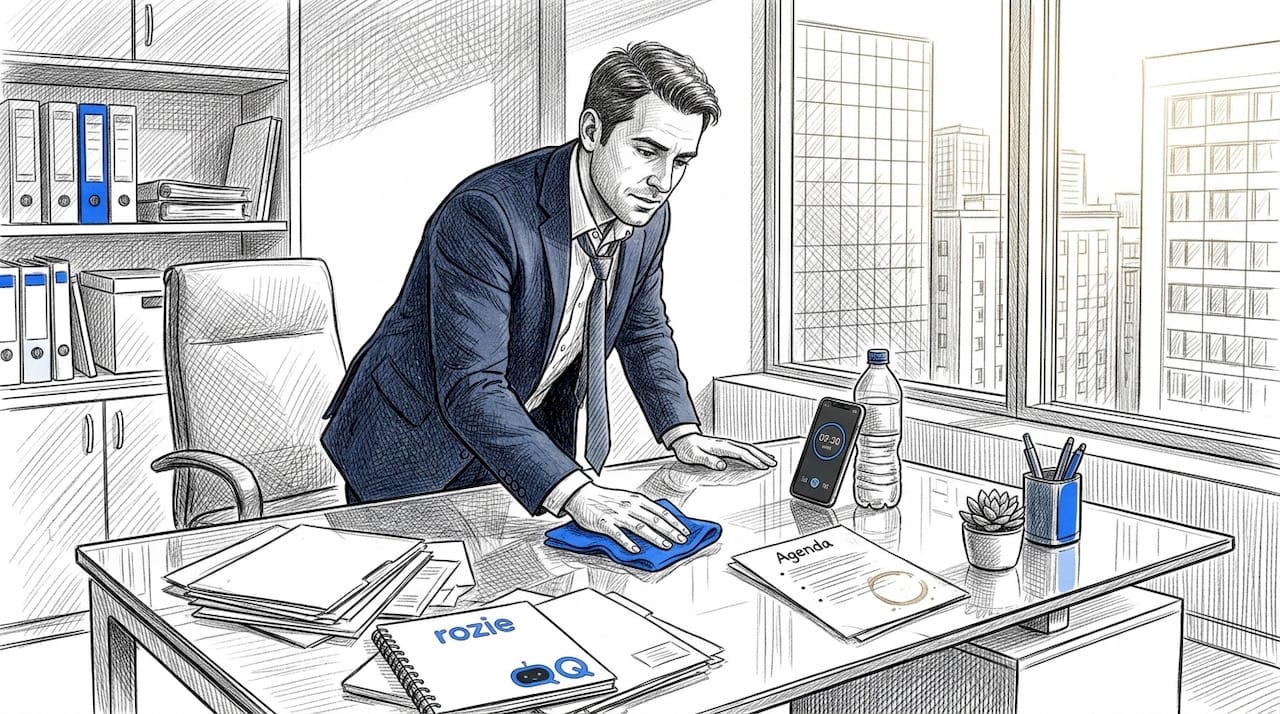
A 10-minute end-of-day routine prevents 80% of the buildup that forces time-consuming deep cleans. Focus on three categories: high-touch surfaces (keyboard, mouse, phone, door handles), desk surfaces, and waste removal. This takes less time than making a coffee — and the payoff in reduced sick days and sharper focus is significant.
Here’s a practical daily routine that fits around a packed schedule:
Minutes 1–3: High-touch surfaces. Wipe your keyboard, mouse, phone, and desk surface with an electronics-safe wipe or a lightly damp microfiber cloth. These items carry more bacteria per square centimetre than a toilet seat, according to multiple workplace hygiene studies. In Malta’s humidity, bacteria multiply faster on warm, moist surfaces — making daily wiping non-negotiable rather than optional.
Minutes 4–6: Declutter and clear. File or discard loose papers. Toss food wrappers, used coffee cups, and expired documents. Return shared items (chargers, staplers, pens) to their designated spots. A clear desk surface is faster to wipe and creates less dust accumulation overnight.
Minutes 7–10: Quick floor and bin check. Sweep visible crumbs or dust around your desk area. Empty your personal bin — food waste left overnight in Malta’s warm indoor temperatures attracts insects quickly, particularly during summer months when offices can reach 28–30°C even with air conditioning.
Set a daily phone reminder for 10 minutes before your usual departure time. The consistency matters more than perfection — even five minutes of focused maintenance outperforms a sporadic 30-minute scramble once things get out of hand.
Which Cleaning Products Work Best in a Maltese Office?
The right products for a Maltese office must handle limescale, resist humidity-driven mould, and be safe around electronics and shared spaces. Generic “all-purpose cleaners” from international guides often miss the hard water factor that makes Malta’s cleaning requirements distinct.
| Product Type | Recommended For | Malta-Specific Pick | Where to Buy |
|---|---|---|---|
| Limescale remover | Taps, kettles, coffee machines, bathroom fixtures | HG Professional Limescale Remover or Viakal | PAVI, Smart Supermarket |
| Anti-mould spray | Window seals, bathroom corners, AC vents | HG Mould Spray | PAVI, Smart Supermarket |
| All-purpose cleaner (low-VOC) | Desks, chairs, non-electronic surfaces | Homemate All-Purpose or any EU Ecolabel product | PAVI, Smart Supermarket, Homemate stores |
| Electronics wipes | Keyboards, monitors, phones, mice | Pre-moistened electronics wipes (alcohol-based) | Any electronics retailer or pharmacy |
| Glass cleaner (ammonia-free) | Windows, monitors, glass partitions | Ammonia-free formula to avoid streaking on screens | PAVI, Smart Supermarket |
| Microfiber cloths | Dusting, wiping, general surfaces | Reusable microfiber (3–4 cloths per desk kit) | Any supermarket or household store |
Critical note on limestone surfaces: If your office has globigerina limestone flooring or feature walls — common in Valletta and older buildings across Malta — never use vinegar, lemon-based cleaners, or acidic bathroom sprays on these surfaces. Limestone is pH-sensitive, and acidic products react with the calcium carbonate, leaving permanent dull patches and etching. Use only pH-neutral cleaners like Lithofin MN Easy Clean or HG Tile Cleaner on any limestone.
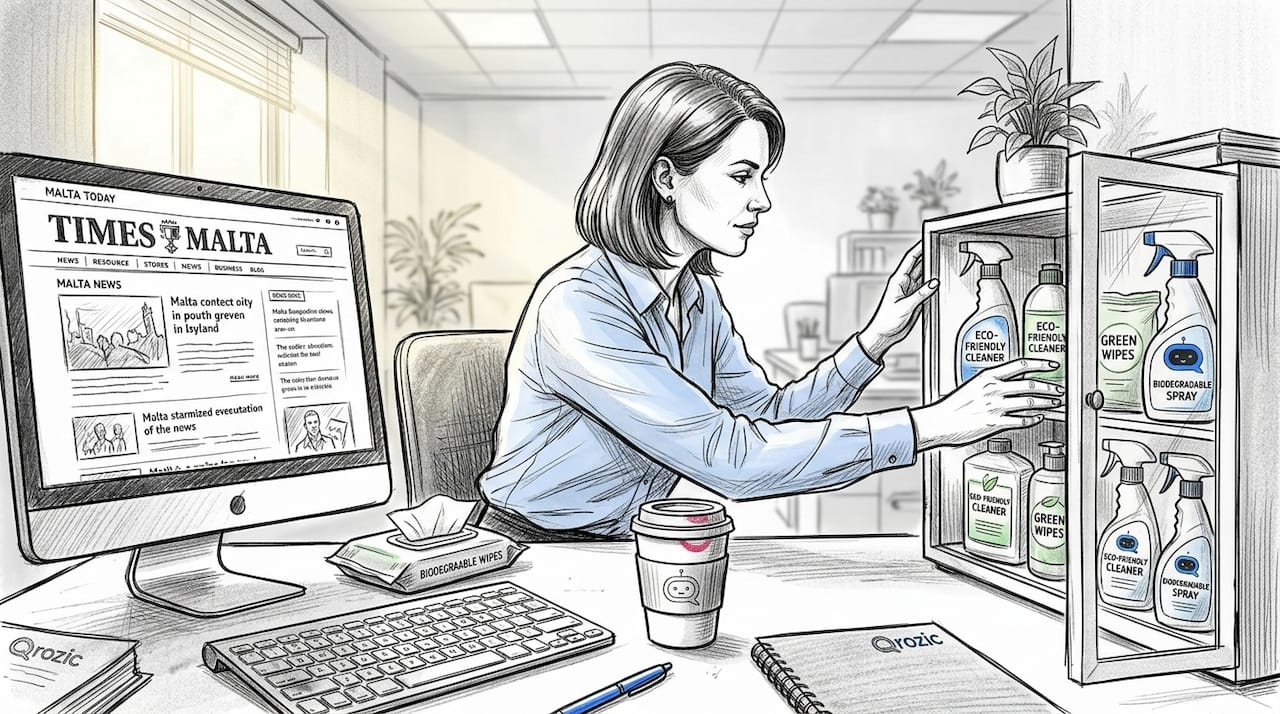
For offices prioritising environmental impact, look for the EU Ecolabel certification on cleaning products. These meet strict environmental criteria while delivering effective results — a practical choice when multiple people share a space and chemical exposure adds up over an 8-hour workday. Low-VOC formulas reduce indoor air pollution, which matters more in Malta’s humid climate where offices often stay closed up with recirculated air conditioning.
How Should You Handle Weekly and Seasonal Office Cleaning?
Weekly cleaning should take 20–30 minutes and cover everything your daily routine misses: floors, shelving, communal areas, and the equipment that accumulates grime over five working days. Seasonal cleaning addresses Malta-specific buildup that no weekly routine can prevent.
Weekly checklist (20–30 minutes):
Vacuum or sweep all floor areas, paying attention to corners and under desks where dust collects. Wipe down communal surfaces — break room counters, meeting room tables, shared printers, and door handles throughout the office. Descale the kettle and wipe around sink taps where limescale rings form within days in Malta’s hard water zones. Clean glass surfaces and partitions, especially if your office is near the coast where salt deposits cloud windows quickly. Empty and wipe out the office fridge — in Malta’s warm climate, forgotten food spoils faster than you’d expect.
Seasonal deep-clean triggers specific to Malta:
October–February (humidity peak): Inspect window seals, bathroom corners, and AC unit vents for mould. Malta’s humidity regularly exceeds 80% during these months, and offices with poor ventilation develop mould rapidly. Treat early signs with anti-mould spray before they spread. Check behind furniture and filing cabinets — these hidden spots trap moisture against walls.
After il-qilla events (Saharan dust): When a dust event coats your balcony and exterior windows in red-brown grit, the fine particles also enter through open windows and ventilation systems. Wipe all surfaces, vacuum thoroughly, and clean or replace AC filters. This isn’t optional — the dust is fine enough to irritate airways and settle inside electronics.
Pre-summer (May–June): Service air conditioning units before the summer rush. A dirty AC unit recirculates dust, mould spores, and bacteria — exactly what you don’t want when the office is sealed up against 35°C heat for four months. This is also the ideal time for a professional deep clean to reset your workspace before the hottest period.
How Much Does Professional Office Cleaning Cost in Malta?
Professional office cleaning in Malta costs €12–18 per hour for regular maintenance through marketplace apps and independent cleaners, with established agencies typically charging €15–25 per hour. Deep cleaning commands a 30–50% surcharge over regular rates due to the intensive labour and specialist products involved. For a full breakdown of cleaning pricing across Malta, see the cleaning cost Malta guide.
| Service Type | Typical Cost (Malta) | Frequency | Best For |
|---|---|---|---|
| Regular office maintenance | €12–18/hour | Weekly or bi-weekly | Ongoing upkeep, surface cleaning, waste removal |
| Deep clean (full office) | €80–150 (small office) | Quarterly or seasonal | Post-il-qilla, pre-summer, mould prevention |
| One-off pre-event clean | €50–100 | As needed | Client meetings, office events, inspections |
| AC vent and filter cleaning | €30–60 per unit | Twice yearly | Pre-summer and mid-winter maintenance |
Offices in Sliema and St Julian’s tend to run 15–20% above these averages due to higher demand, limited parking for cleaners, and the additional salt-air maintenance that coastal workspaces require. If you’re comparing quotes, always clarify whether products and equipment are included or if the cleaner expects you to supply them — this varies significantly between providers in Malta.
For many professionals, the cost comparison with DIY is straightforward. If your billable rate exceeds €20–25 per hour, outsourcing cleaning to a professional at €12–18 per hour frees up time that’s worth more than the service costs. The advantages of professional cleaning extend beyond time savings — verified cleaners bring commercial-grade equipment, knowledge of Malta’s surfaces and climate, and consistency that solo maintenance can’t match.
When Should You Hire a Professional Cleaner for Your Office?
The hybrid approach — daily DIY maintenance plus periodic professional deep cleans — delivers the best balance of cost and results for most Malta-based professionals. Handle the daily 10-minute routine yourself and bring in professional help for situations where thoroughness matters more than frugality.
| Scenario | DIY Sufficient? | Professional Recommended? |
|---|---|---|
| Daily desk and surface maintenance | Yes | No |
| Weekly floor cleaning and decluttering | Yes (small office) | Helpful for larger spaces |
| Quarterly deep clean | Time-intensive | Yes — far more thorough and efficient |
| Post-il-qilla dust removal | Surface only | Yes — AC filters, vents, hidden surfaces |
| Mould inspection and treatment | Risky without expertise | Yes — prevents spread and health risks |
| Pre-client meeting or event | Possible but stressful | Yes — professional finish, zero stress |
| Moving into a new office | No | Essential — previous tenants’ residue needs deep treatment |
When booking professional office cleaning in Malta, verify three things: that the cleaner is experienced with office environments (not just residential), that they understand Malta’s surface types (particularly if you have limestone), and that payment is protected. Platforms like Rozie address all three — offering verified, background-checked cleaners, transparent pricing shown before booking, 7-day payment protection, and in-app chat so you can communicate specific requirements directly. The flexible scheduling means you can book cleaning around your working hours rather than disrupting the business day.
For a detailed comparison of what distinguishes office cleaning from home cleaning — including equipment, frequency, and hygiene standards — the office vs home cleaning guide covers the key differences.
Frequently Asked Questions About Office Cleaning in Malta
How often should I clean my office in Malta?
Aim for a 10-minute daily wipe of high-touch surfaces (keyboard, mouse, phone, door handles) plus a 20–30 minute weekly session for floors, communal areas, and limescale removal. Schedule a professional deep clean every 3–4 months, and add an extra session after major Saharan dust events.
What is the best way to prevent mould in a Maltese office?
Ensure adequate ventilation — open windows when humidity allows, and service AC units twice yearly to prevent mould growth in vents and filters. Use anti-mould spray (HG Mould Spray is widely available at PAVI and Smart Supermarket) on window seals and bathroom corners during the October–February humidity peak. Keep furniture slightly away from exterior walls to allow airflow.
Can I use vinegar to clean my office in Malta?
Only on certain surfaces. Vinegar works well on glass, stainless steel, and ceramic tiles. However, never use vinegar on globigerina limestone floors or feature walls — the acid reacts with calcium carbonate and causes permanent etching and discolouration. Use pH-neutral cleaners like Lithofin or HG products on any limestone surface.
How do I remove limescale from office kitchen taps and kettles?
Malta’s hard water (200–600 PPM calcium carbonate) deposits limescale quickly. For taps and fixtures, apply HG Professional Limescale Remover or Viakal, leave for 5–10 minutes, then wipe clean. For kettles, fill with equal parts water and white vinegar, boil, let sit for an hour, then rinse thoroughly. Repeat monthly in heavy-limescale areas.
How much does it cost to hire an office cleaner in Malta?
Regular office cleaning in Malta typically costs €12–18 per hour through marketplace apps and €15–25 per hour through established agencies. Deep cleaning a small office runs €80–150 per session. Coastal offices in Sliema and St Julian’s may pay 15–20% more due to demand and additional salt-air maintenance needs.
What should I do after a Saharan dust event (il-qilla)?
Wipe all desk surfaces, vacuum floors thoroughly, and clean or replace AC filters. The fine red dust penetrates through open windows and ventilation systems, settling on electronics and in airways. If the event was heavy, consider booking a professional clean to address vents, hidden surfaces, and equipment interiors that a surface wipe won’t reach.
Are eco-friendly cleaning products effective enough for an office?
Yes — EU Ecolabel-certified products meet strict performance standards alongside environmental criteria. Low-VOC formulas also improve indoor air quality, which is especially important in air-conditioned Maltese offices where recirculated air can concentrate chemical residues. For practical tips on integrating sustainable products, see the guide to eco-friendly cleaning supplies.
Recommended
- Professional Cleaning Advantages for Busy Expats in Malta | Rozie – Malta’s Best Cleaning Services
- How to Choose a Cleaning Service in Malta (2026 Guide)
- Property Management Cleaning Malta: 67% More Trust Verified | Rozie – Malta’s Best Cleaning Services
- Deep Cleaning Benefits – How It Transforms Busy Lifestyles | Rozie – Malta’s Best Cleaning Services
- Cozee Bay – Bathroom decluttering checklist 2026: sustainable tips