

In this guide
What does a handyman in Malta actually do?
How much do handyman services cost in Malta in 2026?
How do you find a reliable handyman in Malta?
When do you need a licensed contractor instead?
What about insurance and damage during the work?
Is it cheaper to handle handyman jobs yourself?
How do you clean up after handyman work?
What does a handyman in Malta actually do?
A Malta handyman handles small-to-medium repairs and improvements that don’t require a specialist licence — typically plumbing fixes, light electrical work, painting, carpentry, assembly and general home maintenance. The legal line is clear: anything classified as demolition, excavation or structural building work falls outside handyman scope and requires a contractor licensed by the Building and Construction Authority (BCA).
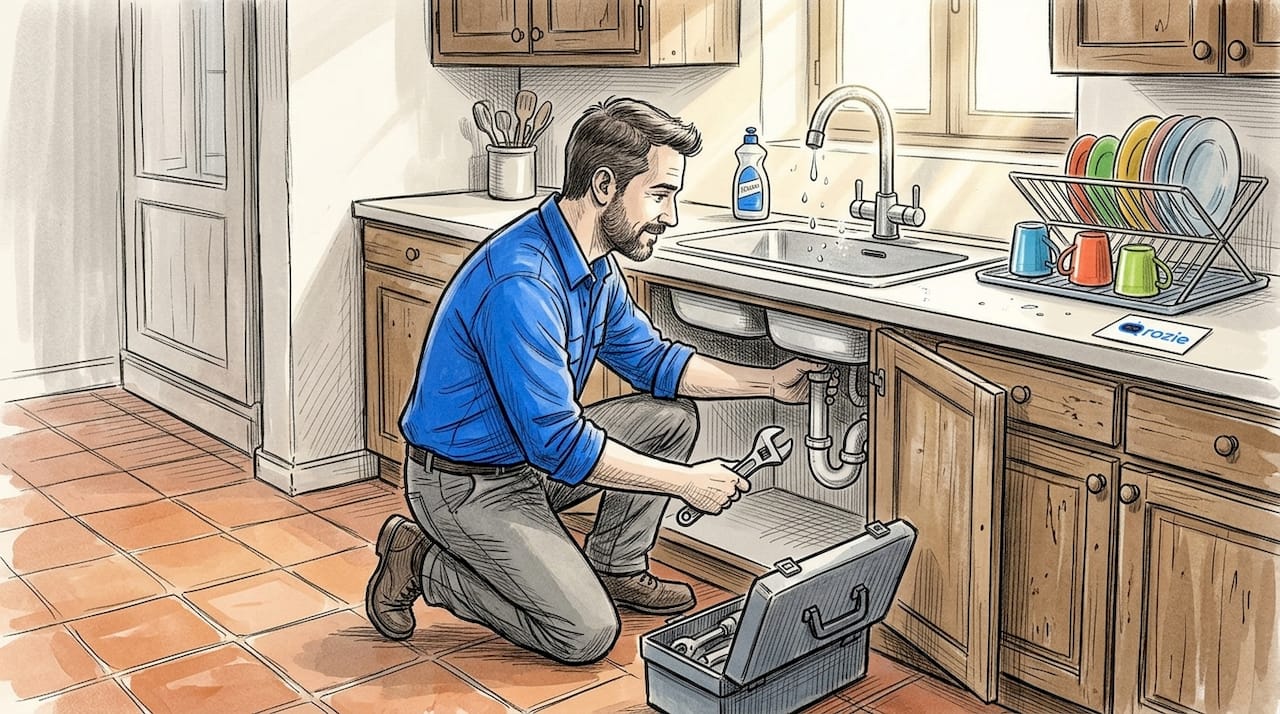
The day-to-day Malta handyman job list looks fairly consistent across the island. Plumbing repairs dominate — leaking taps, blocked drains, replacing showerheads furred up by Malta’s notoriously hard water (200–600 PPM calcium carbonate, depending on locality). Carpentry comes next: assembling flat-pack furniture, hanging doors, fitting shelves, fixing wardrobes after the humidity has done its work. Then there’s painting and decorating, light electrical jobs (replacing fittings, swapping out switches and sockets), and the long tail of “small but annoying” tasks — squeaky hinges, wobbly toilet seats, blinds that won’t roll up.
🔧 Standard handyman scope.
Tap and shower repairs, drain unblocking, fitting replacement, painting, fixture mounting, furniture assembly, door and window adjustments, and basic electrical swaps. Most jobs fit a 1–3 hour window.
⚡ Specialist work — not handyman scope.
New circuits, mains rewiring, gas line work, structural alterations, demolition, excavation and any new construction. These require a BCA-licensed contractor and, for masonry, a licensed mason.
🏛️ Heritage and limestone-specific work.
Repairs to globigerina limestone walls, ceilings or floors in older Maltese properties need someone who understands the stone’s pH sensitivity. Acidic cleaners and modern fillers can cause permanent etching and discolouration.
How much do handyman services cost in Malta in 2026?
Expect to pay between €35 and €50 per hour excluding VAT for general handyman work in Malta in 2026, with most providers charging a one-hour minimum on the first call-out. After the first hour, half-hourly rates are common — typically €25–30 per half hour. Saturdays usually match weekday rates, while Sunday or after-hours emergency call-outs can carry a 50–100% surcharge.
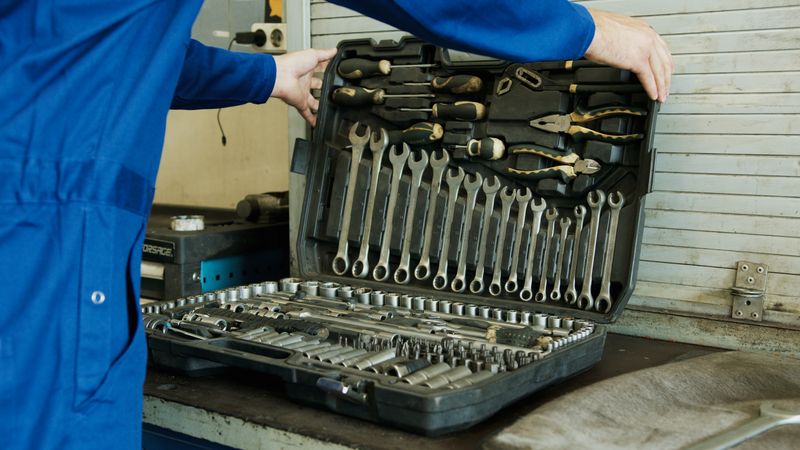
Materials are billed separately. If the handyman has to drive to a hardware store mid-job, expect a “shopping time” rate of around €30–35 per hour on top of the materials cost itself. The smarter move is to provide materials in advance — your handyman can usually give you a shopping list once they’ve assessed the job, and Maltese hardware retailers like Bricoman, B&Q, and PAVI carry most fittings.
According to ERI’s 2025 Malta salary data, the average handyman in Malta earns around €23,000 annually — meaning the €35–50/hour quoted rate covers the worker’s wage, vehicle, tools, insurance and overheads. Anyone quoting under €25/hour is either underestimating their costs (which usually shows up later as cut corners) or operating informally without proper insurance.
For a fuller picture of how home services pricing works on the island — and how cleaning compares to handyman work — our cleaning cost guide for Malta breaks down hourly rates, extras, and how the offer-based marketplace model differs from agency pricing.
How do you find a reliable handyman in Malta?
The most reliable Malta handymen are usually found through personal recommendation — neighbours, your block administrator, your real estate agent, or expat groups on Facebook. Online directories and trade-listing sites help when you need someone fast, but always cross-check with reviews and ask for references before booking.
Malta’s handyman market is fragmented and largely informal, which is both a feature and a bug. The upside: lots of skilled independents who’ll give you flexible scheduling and personal service. The downside: standards vary wildly, paperwork is sometimes loose, and the wrong choice can cost you more in damage than the job was worth. A 15-minute vetting conversation before you book saves hours of regret afterwards.
💡 Pro tip — the 5-question vetting call
Before you book, ask: (1) Are you insured for property damage? (2) Can you provide two recent references? (3) Will you give me a written quote before starting? (4) What’s your hourly rate after the first hour? (5) Do you handle materials, or do I provide them? If any answer is vague or evasive, keep looking.
Beyond the obvious — reviews, Google ratings, word of mouth — there are a few Malta-specific signals that separate professionals from chancers. A handyman who arrives in a marked van with company branding, carries a printed price list, and provides a written invoice with VAT details is operating properly. One who insists on cash-only, refuses to put anything in writing, and shows up in an unmarked car is not someone you want re-wiring your kitchen.
For more general guidance on vetting home-service professionals in Malta, our guide to finding reliable cleaners in Malta covers similar verification principles that apply to any in-home service.
When do you need a licensed contractor instead of a handyman?
If your project involves demolition, excavation or any kind of structural building work, Maltese law requires you to use a contractor licensed by the Building and Construction Authority (BCA). Since Legal Notice 166 of 2023 came into force, all contractors operating in these three sectors must hold a valid BCA licence — and as of 2025, the BCA had already issued 2,265 contractor licences across demolition, excavation and building.
The distinction matters legally and financially. A licensed contractor must carry insurance specifically covering damage to your property and any contiguous third-party properties during works. A handyman doing tiling or fitting cabinets doesn’t need this — but a contractor knocking down a non-load-bearing partition does. Hiring an unlicensed operator for licensable work can leave you personally exposed if something goes wrong, including potential administrative penalties of up to €50,000 under the legal notice.
You can verify any contractor’s status on the BCA’s official Register of Contractors before hiring — a 30-second check that protects you if anything goes wrong. Times of Malta’s reporting on the BCA’s licensing rollout covers the broader regulatory shift the sector is going through.
What about insurance and damage during the work?
Always confirm in writing that your handyman carries third-party liability insurance before any work starts — and ask to see a copy of the policy. Without it, you bear the cost of any accidental damage to your property, your neighbour’s property, or to the handyman themselves.
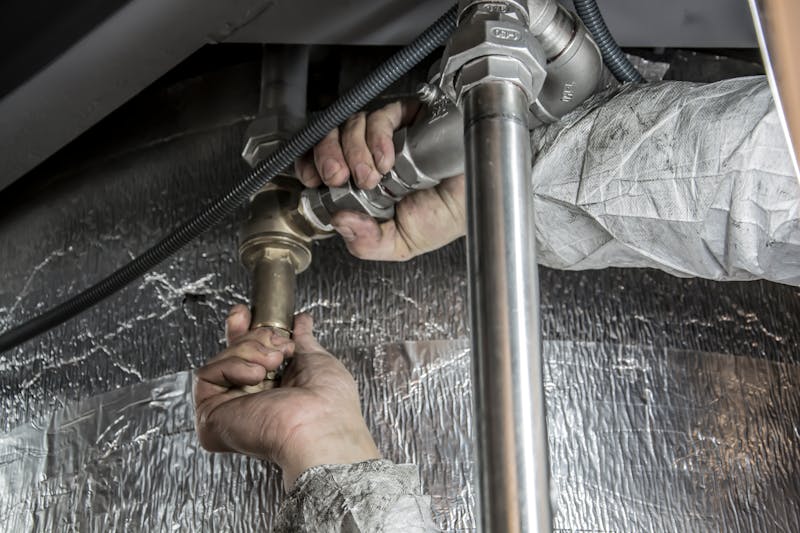
The risks are real and specific to Maltese properties. A misplaced drill bit can hit a hidden electrical conduit running through a limestone wall. A burst pipe during a tap replacement can flood a downstairs neighbour’s apartment within minutes — and Malta’s apartment construction means water travels fast through ceiling slabs. A poorly secured hanging unit can pull half a wall away when it fails. Without insurance, all of this becomes your problem.
💡 Pro tip — protect yourself before work starts
Take dated photos of the work area before the handyman arrives. Note any existing marks, damage or wear. If a dispute arises later about “pre-existing” damage, photo evidence settles it. This costs you 60 seconds and can save thousands.
Key takeaway: A handyman without insurance is a financial risk you’re absorbing without realising it. The €5–10/hour you might save by hiring uninsured can become a €5,000 repair bill the moment something goes wrong.
Is it cheaper to handle handyman jobs yourself in Malta?
For small jobs — tightening a screw, replacing a battery, hanging a picture — DIY makes obvious sense. For anything involving plumbing under pressure, mains electricity, or work above shoulder height, the math usually flips against DIY once you factor in tool purchases, time, and the risk of getting it wrong twice.
💰 DIY vs handyman: replacing a kitchen tap
DIY (first-time)
€80–120
Tap + tools + 2–4hrs of YouTube + risk of leak
Handyman (1 hour)
€60–80
Tap supplied by you + 1hr labour + insurance
If you already own the tools, DIY is cheaper. If you don’t — and you’re under time pressure — a handyman often wins on total cost.
The honest answer: DIY in Malta makes sense when you have time, basic tools, and the failure mode is “I waste an afternoon” rather than “the downstairs neighbour’s ceiling collapses.” For anything else, the hourly rate of a competent handyman is usually money well spent — particularly given that Malta’s hard water and salt-laden coastal air make corroded fittings and seized threads more common than you’d expect, which can turn a “simple” tap swap into a frustrating two-hour fight.
How do you clean up after handyman or renovation work?
The handyman finishes, packs their tools, drives off — and you’re left with a fine layer of cement dust, paint splatters, drilled-out limestone particles, and a weird grey film on every horizontal surface. This is the part of any home project people consistently underestimate, and in Malta the climate makes it worse than almost anywhere in Europe.
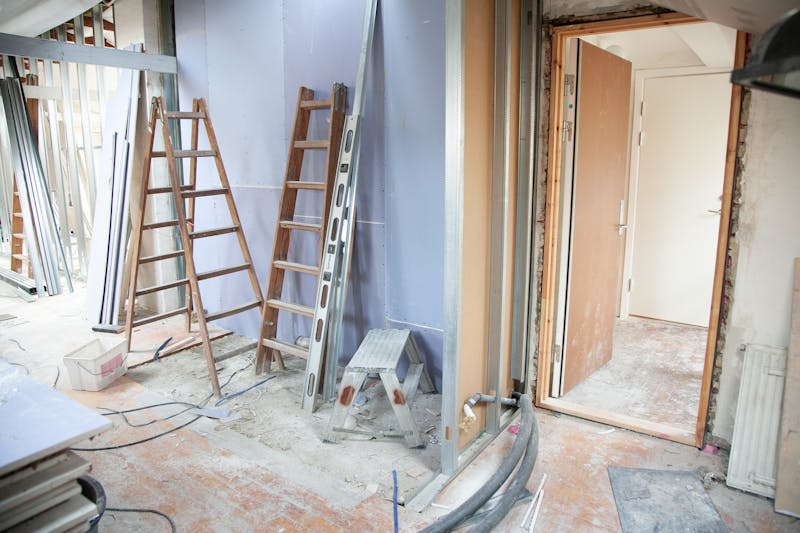
Here’s why Malta makes post-job cleanup uniquely painful. Indoor humidity regularly sits above 70% between October and February — and that moisture binds construction dust to surfaces within hours. Limestone and cement particles that would simply vacuum up in a drier climate become a stubborn, almost greasy film that requires specific products to remove. Add in Saharan dust events (il-qilla) that coat outdoor and balcony surfaces several times a year, and even a small repair can leave behind a cleanup that takes longer than the work itself.
The right approach is phased: rough clean first (debris removal, gross dust), detail clean second (surfaces, fixtures, edges), then a final polish 24 hours later once airborne particles have settled. We’ve covered the full process in our after-builders cleaning Malta guide, including which products are safe on limestone, which masks actually filter construction particles, and why timing matters within the first 48–72 hours after work completes.
💡 Pro tip — never use vinegar on limestone
Half the internet will tell you vinegar dissolves construction dust. On globigerina limestone — found in most Maltese floors and feature walls — vinegar etches the stone permanently. Use pH-neutral products like Lithofin or HG limestone cleaners instead, available at PAVI or Smart Supermarket.
Finding a reliable cleaner in Malta the traditional way means scrolling through Facebook groups, making phone calls, chasing quotes, and hoping the person who shows up actually does a good job — and knows the difference between safe and unsafe products for limestone surfaces. Most busy professionals don’t have time for that, especially right after a renovation when they just want their home back. That’s exactly the problem Rozie was built to solve. No calls, no chasing. You pick a date, select a deep clean and any extras you need (oven, fridge, windows), and within minutes verified cleaners send you competitive offers with exact prices. Every booking is backed by professional liability insurance up to €1,000,000 underwritten by Lloyd’s. Here’s the full booking process in under 60 seconds:
Get Cleaning Offers on Rozie →
For ongoing maintenance after the handyman has gone, our 10 essential deep cleaning tips for Malta homes covers products, timing and the small habits that prevent dust building up again before the next job.
What handyman scams should you avoid in Malta?
Most Malta handymen are honest tradespeople. The few who aren’t follow a predictable playbook: cash-only with no receipt or VAT, refusing to put quotes in writing, demanding large deposits upfront, and inflated “materials runs” that produce no receipts.
🚩 Cash-only with no invoice.
If they refuse to issue a VAT-compliant invoice, you have no proof the job was done, no warranty, and no comeback if work fails. Walk away.
🚩 No written quote before work starts.
“I’ll see what it needs and let you know” is how a €60 job becomes a €400 job. Always get a written estimate — even if it’s a text message — before tools come out.
🚩 Large upfront deposit demands.
For small jobs, no deposit should be needed. For larger jobs (multi-day work, materials over €500), a 25–30% deposit against a written contract is reasonable. Anyone asking for full payment before starting is a red flag.
🚩 “Materials runs” with no receipts.
If they buy materials on your behalf, demand the original receipt. The honest ones will produce it without being asked; the dishonest ones will suddenly remember they “lost it.”
The simplest protection: get the quote in writing, photograph the work area beforehand, pay only after completion, and keep the invoice. Four small habits that eliminate 90% of handyman headaches.
Of course, even the best handyman work leaves a mess behind. If you’d rather not spend your weekend wiping cement dust off every surface in your apartment, this is exactly when most Rozie users book a one-off deep clean — verified cleaners, transparent offers, every booking backed by Lloyd’s-underwritten liability insurance. Browse more Malta cleaning guides for tips on managing a home through renovations and beyond.
Don’t have a free weekend to scrub up after the handyman? That’s the #1 reason 29,080+ people across Malta use Rozie. Verified cleaners, offers in minutes, exact prices before you accept, and €1,000,000 liability cover on every booking.

Download Rozie — Book in 60 Seconds →
Frequently asked questions
What is the average hourly rate for a handyman in Malta in 2026?
Most Malta handymen charge €35–50 per hour excluding VAT for general work, with a one-hour minimum on the first call-out. Half-hour increments after the first hour typically run €25–30. Out-of-hours and Sunday emergency rates can rise to €60–100/hour.
Does a handyman in Malta need a licence?
For general repair, painting, plumbing fixes, and small carpentry — no specific licence is required. For demolition, excavation or building/structural work, the operator must hold a valid Building and Construction Authority (BCA) contractor licence under Legal Notice 166 of 2023. Mason work also requires a separate licensed mason. You can check status on the BCA’s online register.
How quickly can I get a handyman in Malta?
For non-emergency work, expect a 1–3 day wait for a reputable handyman. For emergencies (burst pipes, electrical faults), some Malta providers offer same-day or 90-minute response services for a surcharge. The fastest route is usually a recommendation from your block administrator or property manager, who often has a regular handyman on call.
Are handymen in Malta insured?
Reputable handymen carry third-party liability insurance covering damage to your property and any contiguous third-party properties during the work. Always ask to see proof before booking. Uninsured handymen are common but represent a real financial risk — you bear the cost of any accidental damage they cause.
Can a handyman in Malta do plumbing and electrical work?
Yes, for replacement and repair work — swapping taps, replacing fittings, fixing leaks, changing light fittings or sockets. For new wiring, new circuits, mains-level electrical work, or anything involving gas, you should engage a licensed electrician or plumber. The dividing line is between “replacing what’s there” (handyman) and “creating something new” (specialist).
What’s the difference between a handyman and a contractor in Malta?
A handyman handles small-to-medium repairs and improvements without structural impact. A contractor — specifically one licensed by the BCA — handles demolition, excavation and building work that affects the structure of a property. The legal and insurance requirements are very different. Anyone doing structural work without a BCA licence is operating illegally and exposes you to financial risk.
Should I clean up myself after handyman work in Malta?
For small jobs (one-room painting, single tap replacement), DIY cleanup is reasonable. For multi-room work, post-renovation, or anything involving cement, drywall or limestone dust, hiring a verified cleaner is usually faster and gets a deeper result — particularly given Malta’s high humidity, which bonds construction dust to surfaces within hours and creates a film that’s hard to shift without the right products.
Recommended
- Top 8 Window Cleaning Malta Services in 2026 for Busy Professionals Seeking Reliable Solutions | Rozie – Malta’s Best Cleaning Services
- Emergency Cleaning Malta: Fast, Reliable Help in 4–6 Hours
- Reliable Cleaning Company Malta: How to Choose (2026)
- How to Choose a Cleaning Service in Malta (2026 Guide)