

Moving to Malta with school-age children is one of the most consequential decisions an expat family faces — and one that comes with surprisingly good news. Malta spends 7.2% of GDP on education (the highest share in the EU, per NSO Malta 2024 data), follows a British-style curriculum, and offers a genuine choice between free state schools, near-free church schools, and a small cluster of high-quality international and independent schools. Compulsory schooling runs from age 5 to 16 under the Education Act (Chapter 327), and most families opt to continue through sixth form to age 18.
This guide walks you through the four schools we’d recommend looking at first — covering both international K–18 options and higher education — plus the practical context you actually need: how the system works, what fees look like, when application windows open, and what daily school life is like on a small Mediterranean island.
In this guide
How does Malta’s education system actually work?
What types of schools are there in Malta?
How much does private and international school cost in Malta?
What are the top 4 schools in Malta for 2026?
How do you apply to schools in Malta as an expat family?

How does Malta’s education system actually work?
Malta’s education system is structured in four stages: pre-primary (ages 3–5), primary (5–11), secondary (11–16 or 18), and tertiary. The system inherits much of its structure from the British model — a legacy of Malta’s time as a British colony until 1964 — and the academic year runs roughly from late September to late June, with a long summer break and shorter breaks at Christmas and Easter.
Compulsory education runs from age 5 to 16 under the Education Act (Chapter 327). Students who finish secondary school sit the Secondary Education Certificate (SEC) exams, and those continuing toward university typically complete a two-year sixth form ending in the Matriculation Certificate (MATSEC). International schools generally replace this pathway with IGCSEs, A-Levels, or the International Baccalaureate Diploma.
The bilingual reality matters for expat planning. Malta is officially bilingual: English and Maltese share equal constitutional status. In state schools, Maltese is the dominant medium of instruction; in church and independent schools, the language balance varies; in international schools, instruction is entirely in English. Most Maltese students grow up genuinely fluent in both languages, and many also pick up Italian from television and proximity.
📅 Academic year at a glance
School year runs roughly late September to late June. Three terms with two-week breaks at Christmas and Easter. Summer holidays are exceptionally long — around three months — which catches many parents off guard. Plan summer childcare, camps, or extended grandparent visits well in advance.
What types of schools are there in Malta?
Malta has four practical categories of school, regulated by the Ministry for Education, Sport, Youth, Research and Innovation. Each suits different families, budgets, and language preferences.
State schools are free and open to all residents, with free textbooks and free bus transport — generous benefits by EU standards. Church schools (mostly Catholic, with several historically segregated by gender) operate under a long-standing agreement with the government that removed tuition; parents pay only an annual donation. Admission, however, is by lottery and applications open very early — usually around November of the previous year.
Independent and international schools both charge fees, but the distinction matters: independent schools are typically founded by Maltese institutions and follow the Maltese curriculum with English instruction, while international schools follow British, American, or IB curricula designed to transfer cleanly across borders. According to the Global Citizen Solutions guide to schools in Malta, there are around 35 English-language schools across Malta and Gozo.
How much does private and international school cost in Malta?
Annual tuition for international schools in Malta typically falls between €8,000 and €18,000 per child, with fees rising as students move from kindergarten to high school. Maltese independent schools are noticeably cheaper, with most charging €3,000–€10,000 per year. State and church schools are functionally free.
That headline number is rarely the full picture. International schools layer on registration fees, books, uniforms, transport, lunch, and sometimes a re-enrolment deposit. The realistic all-in cost for one child at a top international school often lands closer to €11,000–€18,000 once everything is added — and registration fees alone can reach €5,000 at the more in-demand campuses.
💰 Real-world annual cost: one child, international school
Tuition (Grade 5)
€10,800
Add-ons (uniform, books, transport, lunch)
+€2,500
Sample figures based on Verdala International School’s published 2025/26 fees. Registration (€5,000) is one-off, payable at admission.
Two practical realities help offset the sticker shock. First, many international employers in Malta — particularly in financial services, igaming, and shipping — subsidise international school fees as part of relocation packages. If you’re moving for work, this is one of the most valuable line items to negotiate. Second, Malta’s compact geography means transport costs are low and most international schools cluster within a 20-minute drive of each other in the Pembroke–Swieqi–Kappara corridor.
💡 Pro tip
If your relocation package doesn’t include school fees, ask whether the company will at least cover the one-off registration fee (typically €950–€5,000). It’s a smaller ask and a frequent compromise that employers will accept when full tuition reimbursement is off the table.
For higher education, the financial picture flips entirely: the University of Malta is free for EU citizens and EU long-term residents, and Maltese students even receive a small monthly stipend. Non-EU students pay tuition that starts around €6,500 per year and rises depending on the programme.
What are the top 4 schools in Malta for 2026?
Our shortlist below mixes K–18 international and independent options with Malta’s flagship university. We’ve deliberately favoured schools with strong accreditation, English-language instruction, and proven longevity — the qualities that matter most for families who may relocate again in five years.
1. Verdala International School (Pembroke)
Verdala International School is Malta’s oldest international school, founded in 1976 to educate the children of expatriate oil-industry families. It now sits inside the historic Fort Pembroke — a 150-year-old British fort overlooking the Mediterranean — and educates around 520 students aged 3 to 18 from over 38 nationalities.
The curriculum is a full International Baccalaureate continuum: the Primary Years Programme for elementary, the Middle Years Programme for grades 6–10, and the IB Diploma Programme or Career-related Programme for grades 11–12. This is the most globally portable qualification setup on the island, and Verdala holds Middle States Association accreditation through 2028. The school also runs a small residential (boarding) option for students aged 14 and above.
📋 At a glance
Ages: 3–18 | Curriculum: IB (PYP, MYP, DP, CP) | Students: ~520 | Nationalities: 38+ | Fees: €9,450–€14,500/year (2025/26) | Location: Fort Pembroke | Website: verdala.org
Best for: Expat families on multi-country career tracks who want a clean IB pathway from kindergarten through university entry. The international mix is genuine — Verdala’s student body regularly includes children from 30+ countries — and the school invests heavily in inclusion support, with a dedicated Inclusion Department and Learning Support Educators.
2. QSI International School of Malta
QSI International School of Malta is the American-curriculum counterpart to Verdala. Founded as part of the global QSI (Quality Schools International) network, it serves students from age 3 through secondary, with around 250 students representing 43+ nationalities. The school is accredited by the Middle States Association of Colleges and Schools (since 2015) and prepares students for universities in the United States and globally.
The defining feature is QSI’s Mastery Learning approach: students progress by demonstrating genuine understanding of competencies rather than by hitting an arbitrary percentage cutoff. In practice, this means smaller class sizes (12–18 students in middle school), individualised pacing in literacy and mathematics, and a “Success for All” school culture. Secondary students can earn a General Diploma, Academic Diploma, or Academic Diploma with Honors, plus the College Board’s AP Capstone Diploma.
📋 At a glance
Ages: 3–18 | Curriculum: American (with AP options) | Students: ~250 | Nationalities: 43+ | Accreditation: Middle States Association | Website: malta.qsi.org
Best for: American families and any expat family planning a return to a US-style higher education system. The school benefits from free Maltese government school transportation (via the contracted bus company Dacoby), and the small student body means new arrivals integrate quickly. Standard school day runs 8:30am to 3:45pm, Monday to Friday.
3. Chiswick House School & St Martin’s College (CHS & SMC)
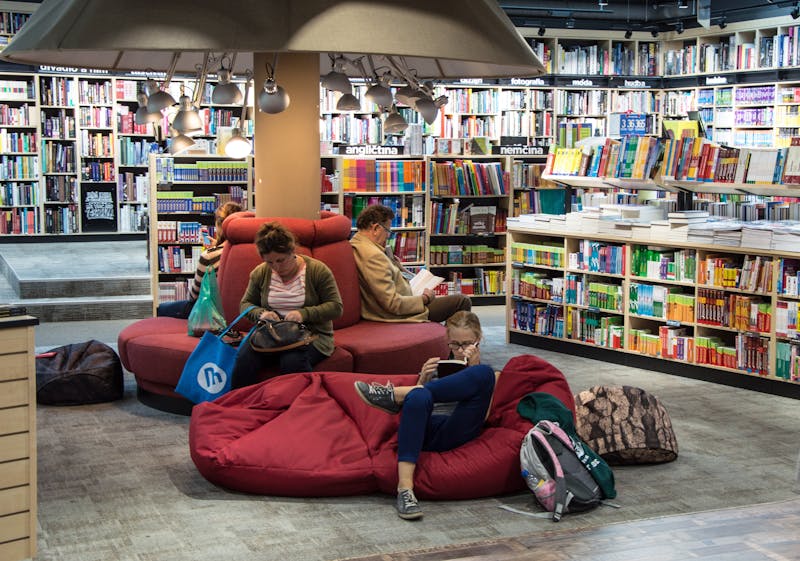
Chiswick House School and St Martin’s College together form Malta’s largest independent co-educational group, serving pupils aged 3 to 18 across two campuses in Kappara and Swatar. Unlike Verdala and QSI, CHS & SMC sit in the Maltese independent (not international) category — they follow a bespoke curriculum that combines Pearson Edexcel IGCSEs with Maltese cultural integration and lower fees than the pure international schools.
The language programme is genuinely impressive: by upper levels, students study some combination of English, French, Italian, German, Spanish, Mandarin and Maltese. The school uses Singapore Maths Mastery (the “Maths No Problem!” programme), runs strong Ethics Education alongside Religious Education, and operates a dedicated School of Performing Arts (SOPA) for ages 3–18. Sixth Form pathways include the Maltese MATSEC route, UCAS for UK universities, and international Pathway options.
📋 At a glance
Ages: 3–18 | Curriculum: Pearson Edexcel IGCSE + international + Maltese | Languages: 6+ | Campuses: Kappara, Swatar | Website: chsmalta.com
Best for: Families who plan to settle in Malta for the long term and want English-language instruction without the international school price tag. The bilingual environment helps children integrate into Maltese society in a way that purely international schools, by design, do not. The two-campus structure also means primary and secondary students aren’t sharing the same building, which many families appreciate.
4. University of Malta (Msida)
For students leaving sixth form, the University of Malta is the country’s flagship higher-education institution and one of the oldest universities in the Mediterranean — its origins trace back to 1592. The main campus sits in Msida, with smaller campuses in Valletta, Marsaxlokk, and Gozo, and the university teaches around 11,000 students across 14 faculties.
The University offers undergraduate, postgraduate, doctoral, and short-course programmes spanning humanities, sciences, law, engineering, medicine, ICT, and the arts. Tuition is free for EU citizens and EU long-term residents — a genuinely meaningful advantage that few EU countries still offer. Non-EU students pay from around €6,500 per year depending on the programme. The primary language of instruction is English, which makes the university accessible to international students; around 650 of the 11,000 students come from 77 different countries.
📋 At a glance
Founded: 1592 | Students: ~11,000 | International students: ~650 from 77 countries | Faculties: 14 | EU/Long-term resident tuition: Free | Website: um.edu.mt
Best for: Domestic students completing sixth form locally, EU expat children seeking a free European degree, and international students looking for an English-language Mediterranean alternative to UK universities. The university also hosts a strong Erasmus exchange programme and active research clusters across the sciences and humanities.
How do you apply to schools in Malta as an expat family?
Application timelines differ sharply between school types, and missing a deadline is the single most common reason families end up scrambling. State schools accept rolling enrolment based on residency, while church schools open applications around November of the year before and use a lottery system. International and independent schools generally accept applications year-round but recommend at least 4–6 months’ lead time, since the most popular year groups (Kindergarten, Year 7, Grade 11) fill up early.
The standard document pack for any school application includes: child’s birth certificate (translated to English if needed), proof of address in Malta (rental contract works), parents’ identification, the child’s vaccination record, and academic records from previous schools. International schools will also want previous report cards going back at least two years.
For state schools, applications go through the Ministry of Education’s online portal. For church schools, the Archdiocese of Malta admissions site is the central hub — applications cost €25, with a €50 registration fee on enrolment. For independent and international schools, applications go directly to the school.
What does daily life actually look like for expat parents?
The first surprise for most expat families is how short the daily journey actually is. Malta is 27 kilometres long and 14.5 kilometres wide — the entire island. From most family-friendly localities (Sliema, St Julian’s, Swieqi, Pembroke, Kappara, Madliena), school is a 5–15 minute drive. There’s no morning marathon. Public buses run a flat €2 fare network that reaches every village.
The second surprise is how packed the school year feels despite the short distances. Most international schools operate 8:30am to 3:30pm or 3:45pm, with after-school activities (sports, music, language classes, drama) running until 5pm or later. Once the kids settle into a routine — school runs, homework supervision, weekend extracurriculars, work pressures of your own — most expat parents find that the household tasks that used to fit easily into the week simply don’t.
This is where most newcomers eventually look for help. The traditional Maltese route — scrolling Facebook groups, asking neighbours, chasing quotes from agencies — is slow and unpredictable, and it’s exactly the friction Rozie was built to solve. You post a cleaning request from the app, verified cleaners send you offers within minutes with the exact price for your job, and every booking is backed by up to €1,000,000 in professional liability insurance underwritten by Lloyd’s Insurance Company S.A. No phone calls, no Facebook chains, no waiting. Here’s the full booking process in under 60 seconds:
The locality choice also shapes daily life more than most families expect. Sliema and St Julian’s are the obvious expat hubs — densely populated, walkable, with the best concentration of restaurants and amenities — but they’re also the most expensive and the most touristy in summer. Pembroke, Swieqi, Madliena and Kappara give you proximity to the main international schools with quieter residential streets. For families with a longer view, Birkirkara, Mosta, and the northern villages offer better value and more space for the same budget.
Practical add-ons most expat families set up in their first few weeks: a small grocery delivery routine (the supermarket chains all deliver), a regular cleaning arrangement, and a backup nanny or childcare option for school breaks. Our guides to finding a reliable nanny in Malta and choosing safe childcare options cover that ground in detail. Malta’s compulsory schooling stops at 16, but the long summer holiday — almost three months — means childcare planning extends well past school enrolment.
Ready to settle into life in Malta?
Choosing the right school is the first big decision. Setting up a smooth weekly routine is the second. For the household side of that equation, Rozie takes the friction out of finding a reliable cleaner — verified professionals, transparent offer-based pricing, and Lloyd’s-underwritten insurance on every booking.
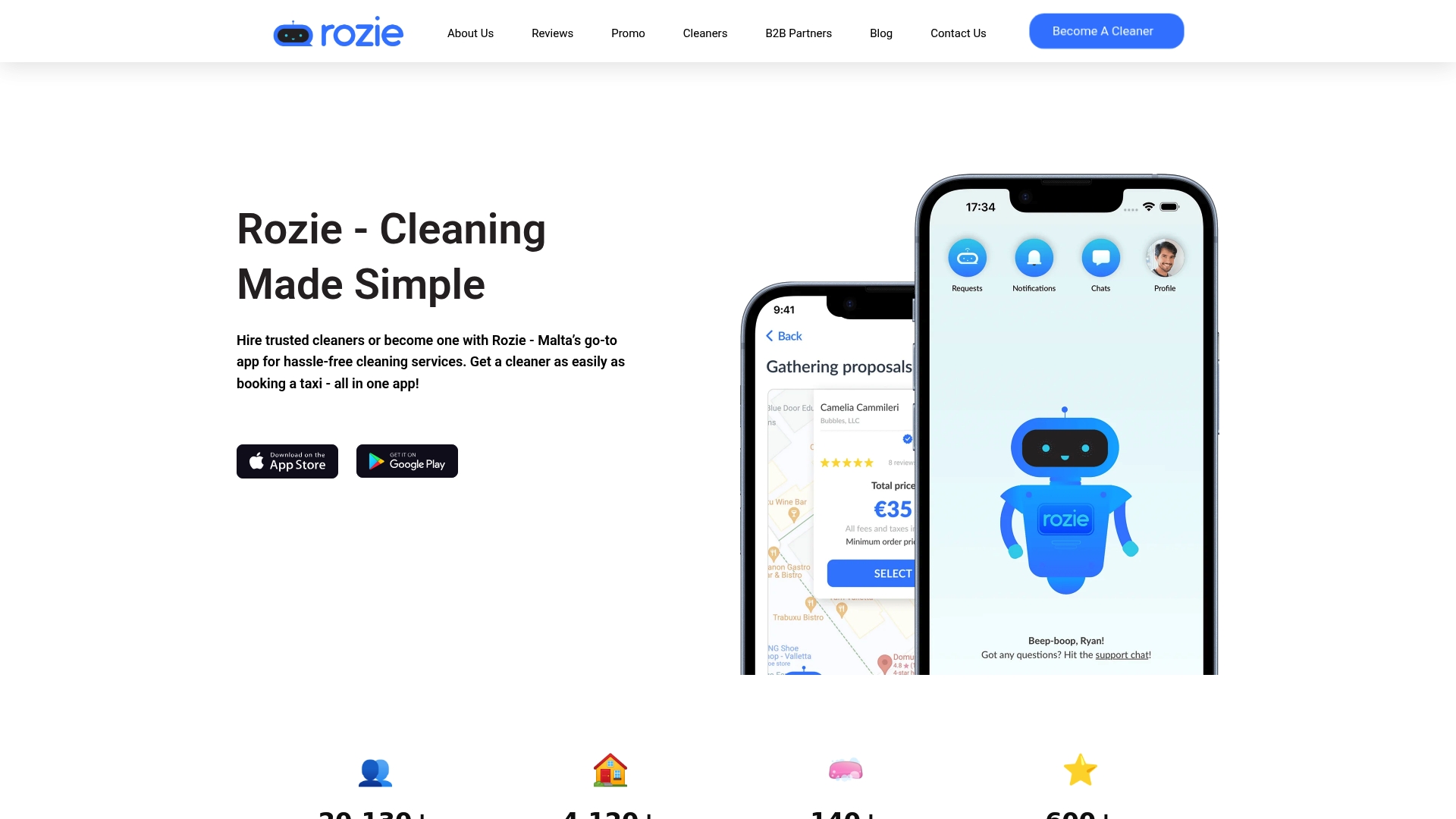
Download Rozie — Book in 60 Seconds →
Frequently asked questions
What’s the difference between an international school and an independent school in Malta?
International schools follow non-Maltese curricula (typically IB, British, or American) designed to transfer cleanly between countries, with English-only instruction and globally portable qualifications. Independent schools are Maltese-founded institutions that follow the Maltese curriculum (or a bespoke version of it) with mostly English instruction. Independent schools are usually €3,000–€10,000 per year; international schools are €8,000–€18,000.
Do I have to be Catholic to send my child to a church school in Malta?
No. Catholic religious education is part of the curriculum at church schools, but non-Catholic and non-religious children may opt out of religion classes and study or read in the library instead. The bigger practical hurdle for expat families is the lottery-based admissions system: church schools have limited places and applications open very early — around November of the year before — which catches many families off guard.
How early should I apply for an international school in Malta?
Apply at least four to six months before your intended start date for the most popular year groups (Kindergarten, Year 7, the IB diploma years). Some schools maintain waiting lists for in-demand year groups, particularly mid-year transfers. If you’re moving in for September, January or February is a sensible window to start the application conversation.
Is Malta’s University free for international students?
Tuition at the University of Malta is free for EU citizens and EU long-term residents — Maltese students even receive a small government stipend. Non-EU students pay tuition starting from around €6,500 per year, varying by faculty and programme. Application requirements include English-language proficiency and equivalent A-level or IB qualifications. The university teaches around 11,000 students, of whom roughly 650 come from 77 different countries.
How do expat families manage school logistics and home life in Malta?
The standard expat playbook in Malta combines a few practical arrangements: school enrolled with confidence (pick by curriculum portability first, location second), reliable household help (most families use a recurring cleaner through verified marketplaces like Rozie rather than chasing quotes through Facebook groups), and a fallback childcare option for the long summer break. Malta’s compact geography means most of this happens within a 20-minute radius of home, which makes everything more manageable than in larger European cities.
Will my child have to learn Maltese?
It depends on the school type. In state schools, Maltese is the primary language of instruction from age 7 onward — children of non-Maltese-speaking families typically attend a one-year Language Induction course first. In church schools, expect roughly an even mix. In Maltese independent schools like Chiswick House, Maltese is taught as a subject. In international schools (Verdala, QSI), Maltese is not part of the core curriculum, though some offer it as an elective. Most expat children pick up everyday Maltese socially even when it’s not formally taught.
What happens during the long summer holiday?
The Maltese school year ends in late June and starts again in late September — nearly three months off. Most international schools run paid summer programmes, and Malta hosts dozens of private summer camps covering sports, sailing, languages, and the arts. Many families also use this window for extended visits home or to schedule maintenance projects (deep cleaning, painting, repairs) that don’t fit during the school year. Our cleaning guides cover the deep-clean side in detail.