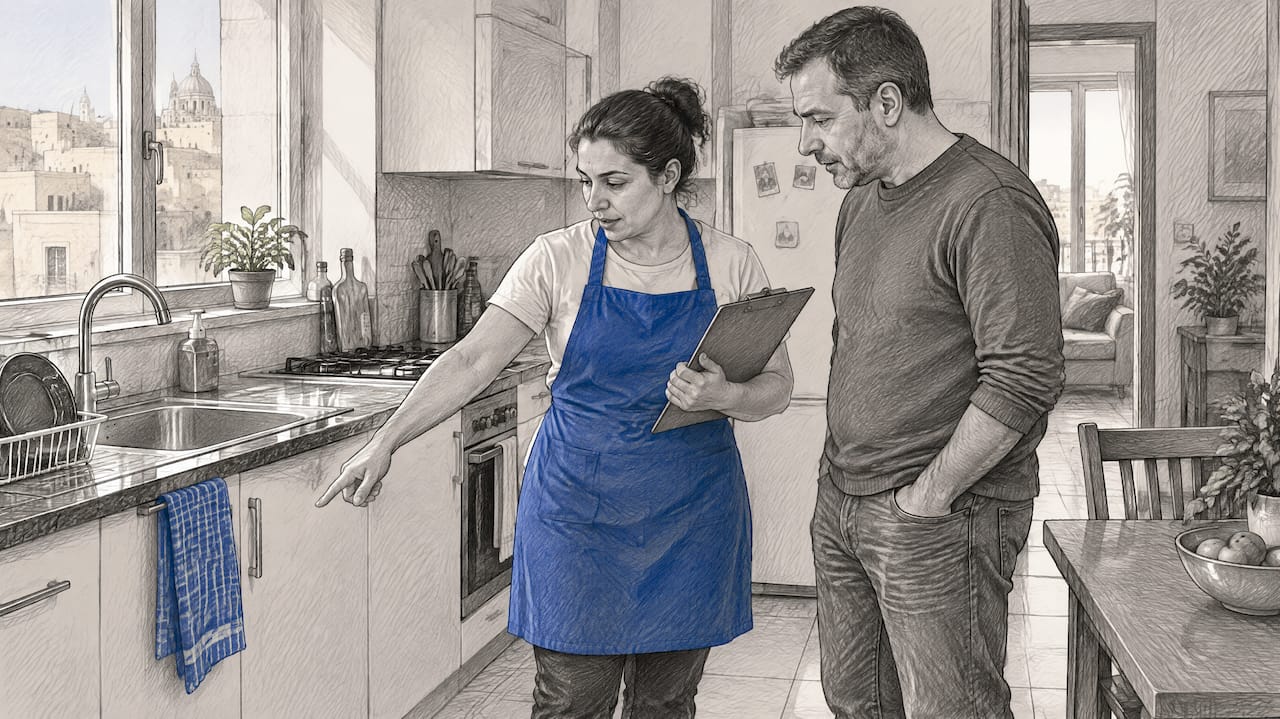


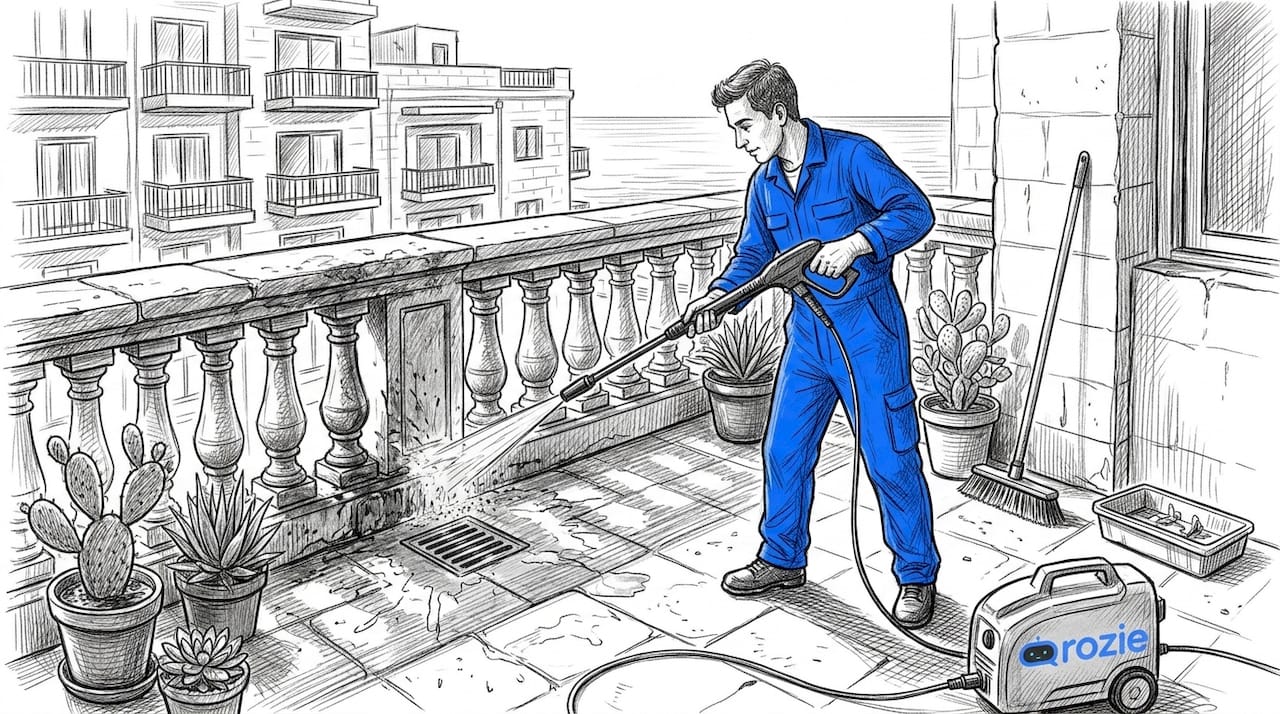
Professional balcony cleaning in Malta typically costs €10–25 as an add-on to a regular or deep cleaning booking, with standalone balcony deep cleans running €30–60 depending on size and condition. Salt spray from the Mediterranean, Saharan dust events (il-qilla), and year-round humidity above 60% mean Maltese balconies accumulate grime faster than anywhere in mainland Europe — and the wrong cleaning approach can permanently damage globigerina limestone tiles or corrode metal railings. This guide covers exactly what professional balcony cleaning involves in Malta, how to prepare, what to expect during the service, and how to maintain your outdoor space between bookings.
Table of Contents
- What does professional balcony cleaning in Malta include?
- Why do Maltese balconies need specialist cleaning?
- How much does balcony cleaning cost in Malta?
- How should you prepare your balcony before the cleaner arrives?
- What happens during a professional balcony clean?
- How do you maintain your balcony between professional cleans?
- How often should you book professional balcony cleaning in Malta?
- Frequently asked questions about balcony cleaning in Malta
What does professional balcony cleaning in Malta include?
Professional balcony cleaning in Malta covers floor tile scrubbing, railing and glass panel degreasing, drain clearing, and salt deposit removal — all using pH-neutral products safe for the island’s porous limestone surfaces. Most services take 45 minutes to 2 hours depending on balcony size and condition, compared with a full weekend of DIY effort for comparable results.
A typical service begins with a dry sweep to remove loose debris, dust, and leaves. The cleaner then applies a degreasing or salt-dissolving solution to tiles and lets it sit for several minutes before scrubbing. Railings — whether metal, glass, or painted wood — are wiped with microfibre cloths and appropriate products. Drains are checked and cleared to prevent water pooling during and after the wash.
On Rozie, balcony cleaning is available as a selectable add-on when you book a general or deep cleaning service. You pick your date, choose “balcony” from the extras list, and verified cleaners send offers with exact prices that you compare before you accept, so there are no phone calls and no quote-chasing. Every cleaner on the platform has passed identity verification.
Book a Balcony Clean on Rozie →
Why do Maltese balconies need specialist cleaning?
Malta’s coastal environment creates a triple threat for outdoor surfaces: salt spray that corrodes metal and etches glass, Saharan dust (il-qilla) that bonds to tiles within hours if left wet, and humidity levels of 60–95% that encourage mould in shaded corners and under furniture. Generic cleaning advice from UK or US websites simply doesn’t account for these conditions.
Salt air corrosion is the most urgent concern for balconies in coastal localities like Sliema, St Julian’s, and Buġibba. Salt deposits form a white crystalline film on glass panels, corrode unprotected metal railings, and leave water spots that become permanent if not removed regularly. Properties within 500 metres of the sea accumulate visible salt buildup within days of cleaning, especially during north-easterly Gregale winds.
Saharan dust events coat every outdoor surface in a fine, reddish-brown film several times per year. The critical rule: sweep the dust away before it gets wet. If rain falls on settled il-qilla dust — or you try to mop it without sweeping first — the mineral-rich particles bond to tile surfaces and become extremely difficult to remove without professional equipment.
Malta’s hard water (200–600 PPM calcium carbonate, according to the Water Services Corporation) adds another layer. When tap water dries on balcony tiles or glass after mopping, it leaves limescale deposits that compound over time. Professional cleaners use filtered water or specialised descaling agents to prevent this buildup.
Key takeaway: Malta’s salt spray, Saharan dust, hard water, and year-round humidity create conditions no generic cleaning guide can address. Professional cleaners familiar with these challenges use the right products and techniques to protect your surfaces — not just clean them.
How much does balcony cleaning cost in Malta?
Balcony cleaning in Malta costs €10–25 when booked as an add-on extra through a cleaning platform, or €30–60 as a standalone deep clean for larger balconies or terraces. Pricing depends on balcony size, condition, and whether you’re bundling with other services like window or general cleaning.
| Service type | Typical cost | Best for |
|---|---|---|
| Balcony add-on (with regular clean) | €10–25 | Standard-size balconies maintained regularly |
| Standalone balcony deep clean | €30–60 | Large balconies/terraces or heavy buildup |
| Balcony + inside windows bundle | €25–45 | Complete exterior refresh in one booking |
| Full exterior package (balcony + all windows + terrace) | €50–90 | Seasonal deep clean or Airbnb turnover |
Sliema and St Julian’s balconies typically cost 10–20% more than the island average — partly because demand is higher in these areas, and partly because coastal grime requires more intensive treatment. Properties with glass railings or panels add time (and cost) compared with standard metal railings.
On marketplace apps like Rozie, you select “balcony” as an extra during booking and each offer shows the exact price before you accept, so there are no hidden costs or surprise invoices after the job. For a detailed breakdown of all cleaning rates across Malta, see our complete cleaning cost guide.
How should you prepare your balcony before the cleaner arrives?
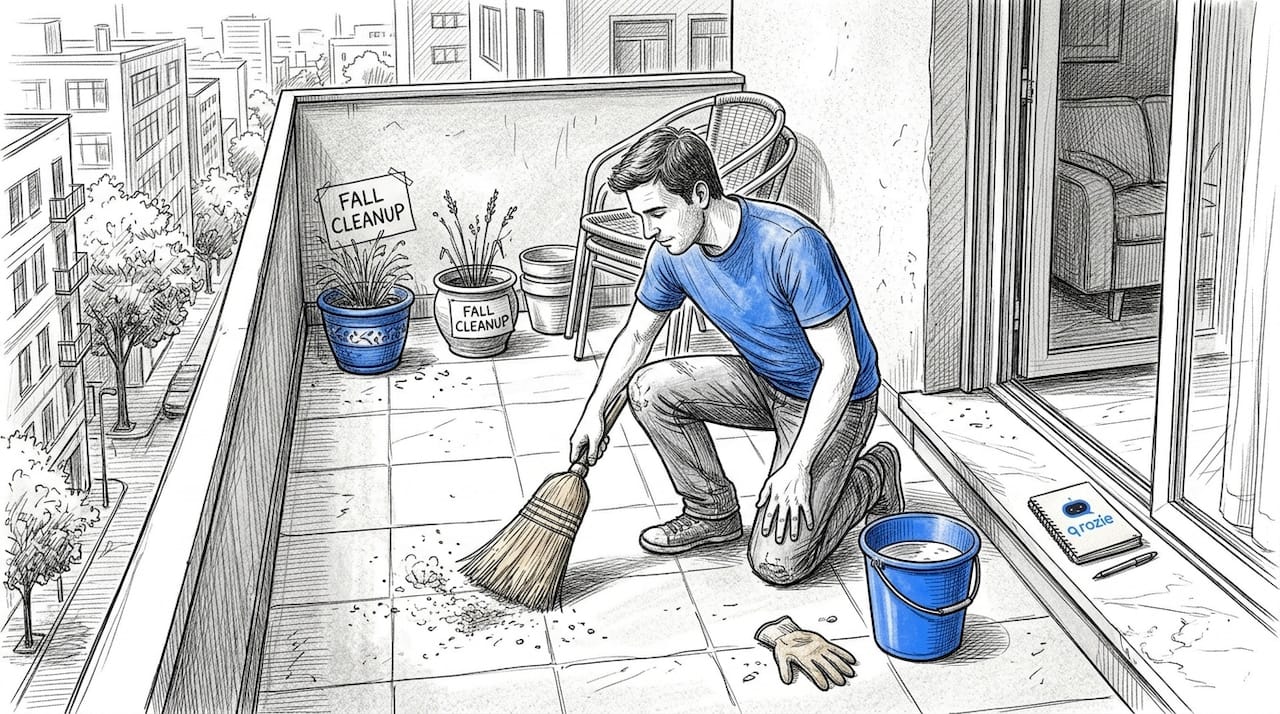
Remove all furniture, plant pots, and personal items at least 24 hours before the scheduled cleaning. Cleaners need unobstructed access to every surface — floor tiles, railings, corners, and drains. Moving items yourself prevents accidental damage and saves time that would otherwise be billed.
Clear your balcony drains of leaves, soil, and debris before the team arrives. Blocked drains cause water pooling during the cleaning process, which can seep into your home or drip onto neighbours’ balconies below. If you have potted plants, check that soil hasn’t accumulated around drain covers — this becomes a muddy mess once water flow increases.
Identify any delicate surfaces and let your cleaner know in advance. Maltese globigerina limestone tiles are pH-sensitive and will etch or discolour if treated with acidic cleaners like vinegar or strong citric solutions. Painted railings need gentler approaches than raw metal. Taking photos of existing damage or stains helps the cleaning team bring the right products.
If you live in an apartment building, inform your downstairs neighbours about the scheduled cleaning. Water runoff during scrubbing and rinsing is unavoidable, and a quick heads-up prevents disputes. Consider placing protective coverings over any items on lower balconies.
If that preparation checklist feels like a lot of effort on top of an already packed schedule, you’re not alone — most Rozie users tell us they’d rather spend their Saturday at Għajn Tuffieħa than prepping for a balcony scrub. The prep takes 15 minutes; the cleaner handles everything else.
What happens during a professional balcony clean?
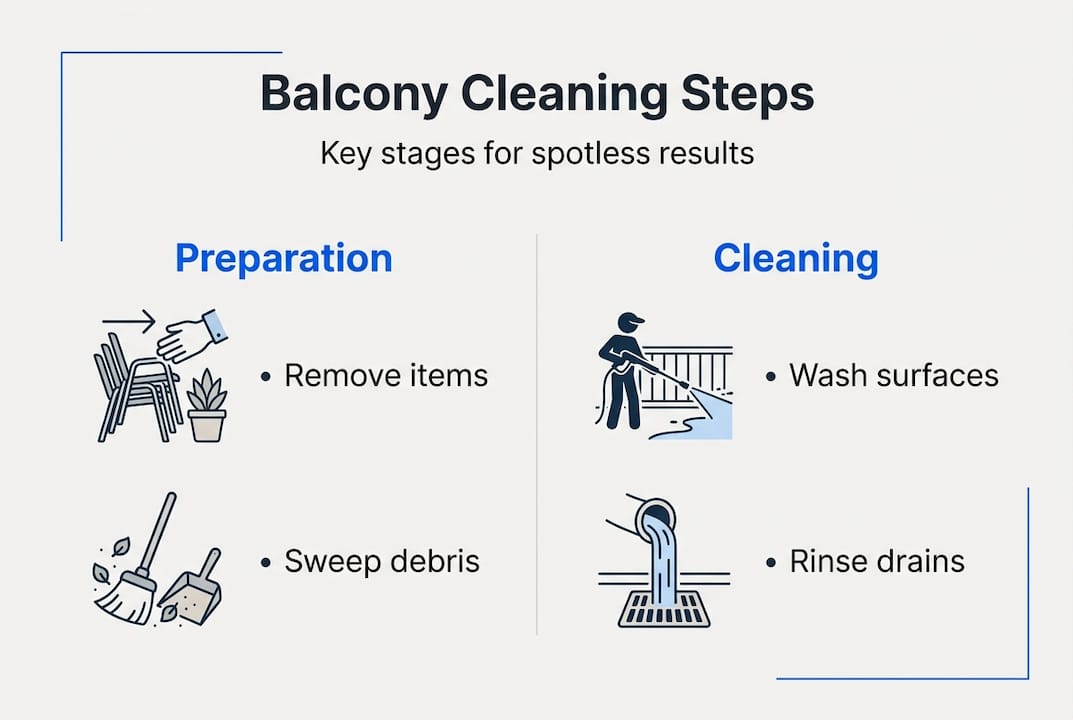
Professional balcony cleaning follows a five-stage process: inspection, dry sweep, solution application and dwell time, main wash, and detail finishing. The entire process takes 45 minutes to 2 hours depending on balcony size and the severity of buildup.
| Stage | Duration | What happens |
|---|---|---|
| 1. Inspection | 5–10 min | Cleaner assesses surface types, identifies limestone or painted surfaces, notes problem areas |
| 2. Dry sweep | 5–10 min | All loose debris, dust, and leaves removed before introducing water |
| 3. Solution application | 10–15 min | pH-neutral degreaser or salt-dissolving solution applied; dwell time to break down grime |
| 4. Main wash | 15–30 min | Scrubbing with appropriate pressure for surface type; rinse and drain check |
| 5. Detail finishing | 10–20 min | Railings wiped, glass panels streak-free, corners scrubbed, final drain flow check |
The inspection stage is critical in Malta. An experienced cleaner won’t blast high-pressure water at every surface. Ceramic and concrete tiles handle high pressure well, but globigerina limestone needs lower pressure and wider spray patterns to avoid erosion. Painted railings require soft brushes and pH-neutral solutions — the wrong approach can strip protective coatings that prevent rust in Malta’s salty coastal air.
Coastal balconies get extra attention on railings and metal fixtures. Salt deposits aren’t just unsightly — they accelerate corrosion that leads to expensive repairs if left untreated. Professional cleaners use pH-neutral products that dissolve salt without damaging protective coatings, and they can spot early signs of corrosion that most homeowners miss.
The detail finishing stage separates a good clean from a great one. Glass panels are wiped streak-free, corners where grime accumulates are scrubbed individually, and drains are verified to flow freely. This attention to detail ensures the balcony looks refreshed from every angle — not just the obvious floor area.
Finding a reliable cleaner in Malta the traditional way means scrolling through Facebook groups, making phone calls, chasing quotes, and hoping the person who shows up actually does a good job. Most busy professionals don’t have time for that — and it’s exactly the problem Rozie was built to solve. No calls, no chasing. You pick a date, select your extras (like balcony cleaning), and verified cleaners send you offers with exact prices, so you can compare offers before you accept. Here’s the full booking process in under 60 seconds:
Try Rozie Free — See Prices Instantly →
How do you maintain your balcony between professional cleans?
Weekly sweeping and immediate spot-cleaning of spills keeps your balcony in good condition between professional visits. Five minutes each week with a broom — focusing on corners and along railings where wind deposits concentrate — extends the time between deep cleans and protects your investment.
Address spills and bird droppings immediately. These substances bond with porous tile surfaces as they dry, becoming progressively harder to remove. Keep a spray bottle with diluted pH-neutral cleaner and a cloth near your balcony door for quick action. Products like HG or Lithofin (available at PAVI and Smart Supermarket) are safe for limestone and won’t leave chemical residue.
Use gravel trays under plant pots to catch excess water and soil before they reach drainage channels. Empty these monthly — or more often during heavy watering seasons. Blocked drains lead to standing water, which accelerates both tile staining and mould growth in Malta’s humid climate.
After a Saharan dust event (il-qilla), act quickly. Sweep thoroughly before introducing any water. If you mop or hose down settled dust without sweeping first, the mineral-rich particles turn into a muddy paste that bonds to surfaces and can cause permanent discoloration. Once swept, a simple mop with clean water removes residual dust.
Rather skip the DIY? A verified cleaner on Rozie handles the full balcony service — tile scrubbing, railing degreasing, drain clearing, and salt removal — in under two hours. Most users bundle balcony cleaning onto their regular booking for as little as €10, keeping their outdoor space spotless without adding another task to the to-do list.
How often should you book professional balcony cleaning in Malta?
Coastal properties in Sliema, St Julian’s, or Buġibba benefit from professional balcony cleaning every 4–6 weeks due to aggressive salt spray buildup. Inland properties in areas like Birkirkara, Mosta, or Żebbuġ typically maintain cleanliness with quarterly professional deep cleans.
| Location type | Recommended frequency | Key challenge |
|---|---|---|
| Within 500m of coastline | Every 4–6 weeks | Salt spray corrosion, mineral deposits on glass |
| Inland residential | Quarterly (every 3 months) | General dust, humidity-related grime |
| Airbnb / short-let property | Every guest turnover | Guest experience and review scores |
| Near construction sites | Monthly | Concrete dust and construction debris |
Spring is the best time to schedule your first annual deep clean. Winter’s salt accumulation and humidity-driven grime peak between October and February, so a March or April balcony clean removes the worst buildup and establishes a clean baseline for the warmer months. This also aligns with Malta’s pre-Easter deep cleaning tradition.
For Airbnb and short-let properties, balcony cleaning should be part of every turnover — or at minimum every second turnover during summer’s back-to-back bookings. Guests notice dirty balconies immediately, and a salt-streaked glass panel or grimy railing is exactly the kind of detail that turns a five-star review into a four-star one. Bundling balcony and inside window cleaning into your regular Rozie booking keeps turnovers tight and review scores high.
Not enough hours in the day? That’s the #1 reason 29,080+ people across Malta use Rozie. Verified cleaners, exact offers you can compare, and 7-day payment protection, all booked in under 60 seconds from your phone.
Download Rozie — Book in 60 Seconds →

Frequently asked questions about balcony cleaning in Malta
Can I use vinegar to clean my Maltese balcony tiles?
No — if your balcony has globigerina limestone tiles, which are common across Malta. Limestone is pH-sensitive and acidic cleaners like vinegar, lemon juice, or citric acid solutions will etch and permanently discolour the surface. Use a pH-neutral product such as Lithofin MN Wash & Clean or HG Natural Stone Cleaner instead.
What is the best time of year to deep clean a balcony in Malta?
Spring (March–April) is ideal. It removes winter’s accumulated salt, humidity-driven mould, and Saharan dust residue, establishing a clean baseline before summer. A second deep clean in October, after the summer tourist season and before the wet season begins, keeps coastal balconies in top condition year-round.
How do I remove Saharan dust from my balcony without staining the tiles?
Always sweep il-qilla dust away thoroughly before introducing any water. If rain falls on settled dust or you attempt to mop without sweeping, the mineral-rich particles bond with the surface and become extremely difficult to remove. After a thorough dry sweep, mop with clean water and a microfibre cloth.
Does Rozie offer standalone balcony cleaning or is it only an add-on?
On Rozie, balcony cleaning is available as a selectable extra when booking a general or deep cleaning session. You add it during booking and each offer shows the exact price before you accept. This bundling approach is more cost-effective than hiring a separate service just for the balcony.
How do I protect balcony railings from salt corrosion in coastal Malta?
Regular cleaning with pH-neutral products removes salt before it causes damage. For metal railings, wipe weekly with a damp microfibre cloth and apply a protective marine-grade coating seasonally. Professional cleaners can spot early corrosion signs — catching them early prevents expensive railing replacement. Properties in Sliema, St Julian’s, and Buġibba should prioritise this.
What cleaning products are safe for Maltese balcony surfaces?
Use pH-neutral cleaners for limestone tiles (Lithofin, HG Natural Stone range), standard degreasers for ceramic or concrete tiles, and glass cleaner for panels and windows. Avoid bleach on coloured grout and acidic products on any natural stone. Homemate’s own-brand cleaning products, available at PAVI and Smart Supermarket, are an affordable local option for non-stone surfaces.
Is pressure washing safe for all balcony surfaces?
Not all. Ceramic and concrete tiles handle high pressure well. However, globigerina limestone, painted surfaces, and decorative tiles require lower pressure settings and wider spray patterns. An experienced professional will assess your surface types before choosing their technique — which is one of the key advantages of hiring a cleaner who understands Malta’s specific building materials.
Browse more cleaning guides and tips on the Rozie blog, or find a trusted cleaner near you in Malta.
Recommended
- How to Choose a Cleaning Service in Malta (2026 Guide)
- Top 8 Window Cleaning Malta Services in 2026 for Busy Professionals Seeking Reliable Solutions | Rozie – Malta’s Best Cleaning Services
- Property Management Cleaning Malta: 67% More Trust Verified | Rozie – Malta’s Best Cleaning Services
- How to Choose Cleaning Services: Find the Right Fit | Rozie – Malta’s Best Cleaning Services