

In this guide
Why does short-let cleaning in Malta change with the season?
What does Malta’s short-let cleaning calendar look like month-by-month?
How should you manage peak season (May–Sep) turnovers?
What does a proper pre-winter reset (Oct–Nov) involve?
How do you keep a vacant unit healthy through winter (Dec–Feb)?
What should the pre-season deep clean (Mar–Apr) cover?
How much does seasonal short-let cleaning cost across the year?
Why does short-let cleaning in Malta change with the season?
Short-let cleaning in Malta changes season by season because the island’s main cleaning problems — limescale, salt, dust, humidity, and occupancy pressure — peak at completely different times of year. Running a single fixed routine across 12 months means over-spending in quiet months and under-cleaning during peak risk periods.
Malta’s tap water sits between 200 and 600 PPM calcium carbonate according to the Water Services Corporation, which places it firmly in the “very hard” category by European standards. That baseline limescale pressure exists year-round, but it compounds differently with each season’s other environmental factors.
🌬️ Saharan dust peaks mid-spring to mid-summer.
Locally called il-qilla, these reddish dust events deposit fine particles on balconies, window ledges, and outdoor furniture several times each season. A property that’s spotless inside still photographs terribly if the balcony shows dust film when the guest opens the doors.
🌊 Sea-salt buildup hits coastal properties hardest June–September.
Apartments in Sliema, St Julian’s, Buġibba, Marsaskala, and Mellieħa accumulate a gritty salt film on balcony glass, railings, and outdoor furniture within days. Summer sea breezes intensify this; winter dampens it considerably.
💧 Humidity peaks October–February.
Relative humidity swings between 60% and 95% through the cooler months, making vacant short-lets a mould-risk zone. Wardrobes, under-ventilated bathrooms, and grout lines are the first places it appears — often invisible until you return to prepare for spring guests.
Layer peak summer’s back-to-back guest turnovers on top of Saharan dust and salt, and you have a cleaning workload that bears no resemblance to a February week with one booking and 85% humidity. The two situations need different routines, different cleaner availability planning, and different budgets. Malta’s short-let sector operates under Malta Tourism Authority licensing, which means cleanliness standards are also compliance-adjacent — something hosts often forget when improvising a cleaning plan in July.
What does Malta’s short-let cleaning calendar look like month-by-month?
A Malta short-let cleaning calendar runs four distinct phases: pre-season prep (March–April), peak season operations (May–September), pre-winter reset (October–November), and off-season maintenance (December–February). Occupancy, cleaning focus, and the specific Maltese environmental risk shift in each phase.
This is a typical rhythm — individual properties in Valletta, Sliema, or Gozo shift slightly based on guest mix, property type, and whether the host runs winter long-stays for digital nomads. But the overall four-phase shape holds across nearly every Maltese short-let.
How should you manage peak season (May–Sep) turnovers?
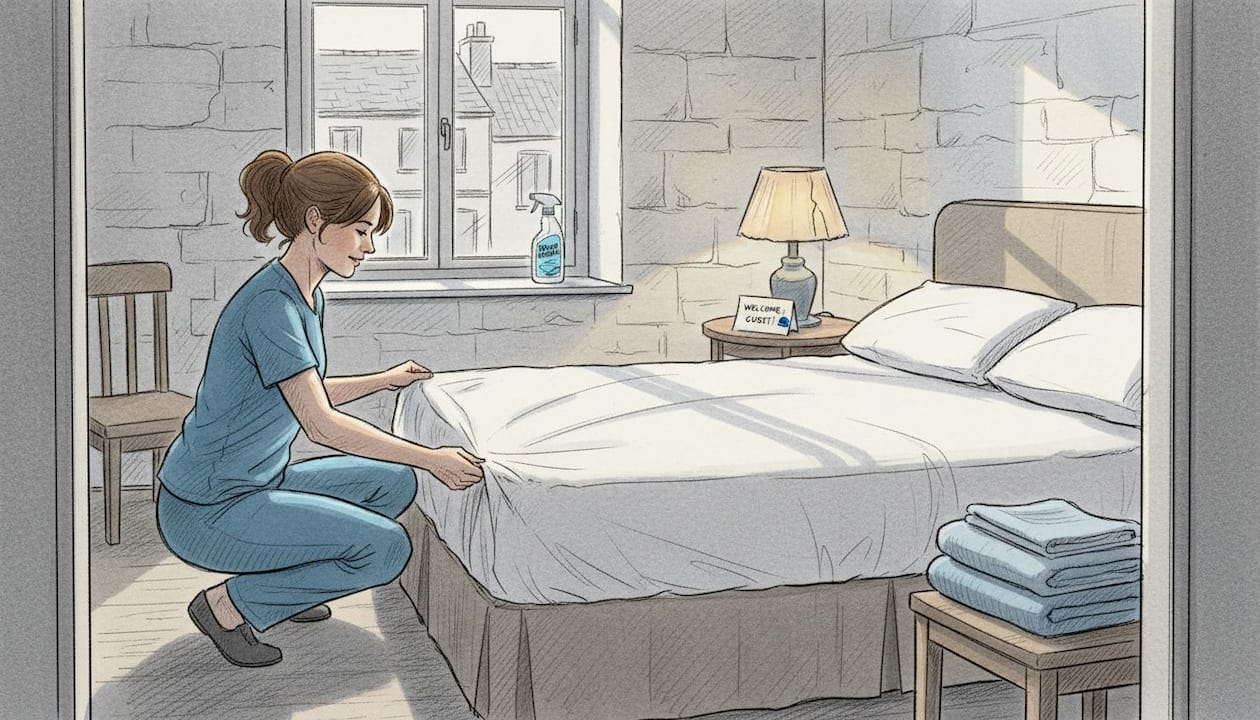
Peak season management in Malta comes down to four things: booking cleaners in advance, compressing every turnover into a three-hour window, staying ahead of Saharan dust and salt on coastal properties, and running a weekly check on AC hygiene. Hosts who get these four right hold 4.9+ review scores through August; hosts who don’t often slide to 4.6 by September — and the algorithm punishes that drop hard.
The turnover window is tight. Most Maltese listings run 11:00 checkout to 15:00 check-in, which gives cleaners four clock hours but realistically three hours of uninterrupted work. During July and August, more than half of bookings will be same-day turnovers. This is why the standard Airbnb turnover workflow needs to be locked in and rehearsed before May — learning it in July costs you reviews.
💡 Pro tip
Book your regular cleaner’s peak-season slots by mid-April. Good cleaners are fully booked for July by May — waiting until June leaves you scrambling with unknown stand-ins during your highest-stakes bookings. If your usual cleaner falls sick, having a backup channel already set up (not “figured out on the day”) is what separates the 4.9 hosts from the 4.6 ones.
For coastal properties in Sliema, St Julian’s, Buġibba, or Mellieħa, salt air and Saharan dust demand a dedicated balcony step every single turnover — not an occasional top-up. A quick rinse and squeegee on balcony glass plus a wipe-down of outdoor furniture adds 10 minutes but prevents the single most common complaint in coastal Airbnb reviews: “balcony was dusty” or “outdoor chairs had a gritty film.”
AC hygiene is the silent review killer. Units running 16–18 hours a day develop a musty smell from condensate buildup and filter dust. Guests walking into a warm apartment at 16:00, flicking the AC on, and smelling that stale air will immediately downgrade your cleanliness score — even if every surface is spotless. Clean the filters every 7–10 days during peak season and run a 10-minute dry-mode cycle before leaving after each deep clean. For properties in heavy guest-use months, the deep cleaning prep checklist covers AC service timing in full detail.
Peak-season takeaway: Lock in recurring cleaner slots by April, budget 10 extra minutes per turnover for balcony/salt/dust steps on coastal properties, and add AC filter checks to every second turnover. Reactive peak season = 4.7 review score. Proactive = 4.9+.
What does a proper pre-winter reset (Oct–Nov) involve?
A pre-winter reset in Malta is one annual deep clean — usually late October or November — that undoes eight months of accumulated summer wear and prepares the property for a completely different set of winter risks. It’s arguably the single most important clean of the year for a short-let, because high summer usage and rising winter humidity hit the property simultaneously in this window.
What “pre-winter” means in practice: the appliances you used hardest in summer (fridge, oven, AC, washing machine) get a proper deep clean, the soft furnishings and linens get inspected and replaced as needed, and you set up humidity management for the quiet months ahead. Hosts who use a short-let for part of the year as personal accommodation often do this clean right after the last summer guest leaves.
The pre-winter checklist covers six areas in sequence:
- Oven and hob deep clean — heavy summer cooking plus humidity equals baked-on grease that sets hard over winter if ignored. Budget €15–€30 as an add-on to a regular clean.
- Fridge-freezer defrost and disinfect — especially if the unit will switch off over winter.
- Kitchen cabinet wipe-down inside and out — PAVI, Smart Supermarket, and Homemate stock pH-neutral cabinet cleaners that won’t damage finishes.
- Mattress and linen audit — replace anything visibly yellowed, pilled, or thin. Guests notice.
- Window and balcony glass — complete salt and Saharan-dust residue removal; winter rain otherwise cements it in place.
- Grout and silicone inspection — catch early mould before December humidity peaks.
For properties built on globigerina limestone floors (common across older Maltese conversions), this is also when you re-seal or top-up sealing. Never use vinegar or acidic cleaners on limestone — acid permanently etches the stone. Use pH-neutral products from Lithofin or HG, available in most Maltese supermarkets.
Book Your Pre-Winter Deep Clean →
How do you keep a vacant unit healthy through winter (Dec–Feb)?
Keeping a vacant Maltese short-let healthy through winter comes down to one thing: managing humidity. With relative humidity sitting between 60% and 95% from December through February and the unit unoccupied, you can go from “ready for spring” to “visible mould and musty smell” in eight to ten weeks with zero visible warning. The Malta property management cleaning standard calls for a light monthly maintenance visit plus proactive ventilation.
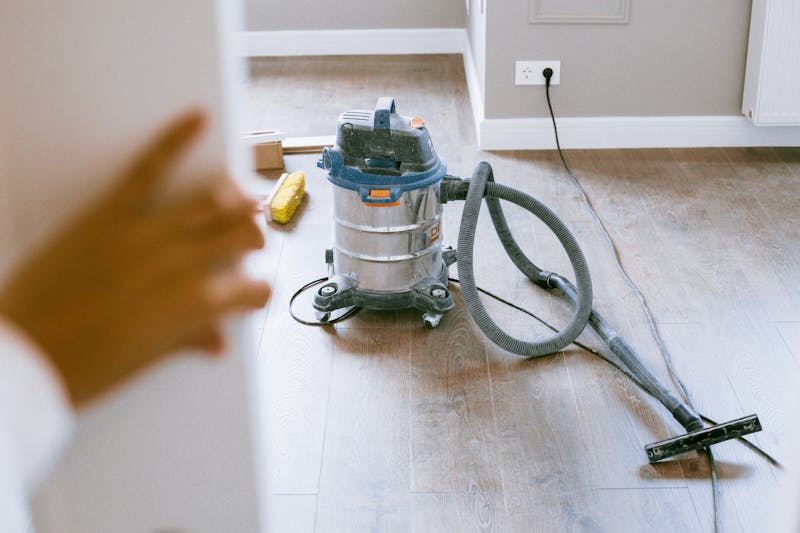
A Malta winter vacant protocol looks like this:
- Run a dehumidifier or AC dry-mode 2 hours every other day. A basic dehumidifier pulls 6–10 litres of water from a 2-bed flat in a week during January. That water would otherwise become wall condensation and wardrobe mould.
- Cross-ventilate 20 minutes on any dry day. Mornings between 10:00 and 12:00 are usually the driest window in a Maltese winter day.
- Monthly maintenance clean (60–90 minutes). Floor mop, bathroom surface sanitisation, limescale check, grout inspection, visual mould check in wardrobes and under beds.
- Don’t leave damp towels, bedding, or closed wardrobes full of clothes. If the unit won’t rent for two months, store soft goods sealed in plastic bins elsewhere.
- Drain washing machines and dishwashers between uses. Stagnant residue in seals and pumps develops odour within three to four weeks of disuse.
Rather skip the DIY? Posting a monthly maintenance request on Rozie takes under a minute. Verified cleaners send you offers with exact prices within 5–15 minutes — typically €25–€45 for a 60–90 minute maintenance visit on a standard two-bed flat. Every booking is covered by up to €1,000,000 Lloyd’s of London professional liability insurance with no excess for the host.
What should the pre-season deep clean (Mar–Apr) cover?
The pre-season deep clean in March or April is where Maltese short-let operators either set themselves up for a strong May or spend all summer fighting problems they could have solved in one afternoon. Unlike the pre-winter reset (which retires the summer), the spring deep clean restores the property to launch-quality condition for the next peak season.
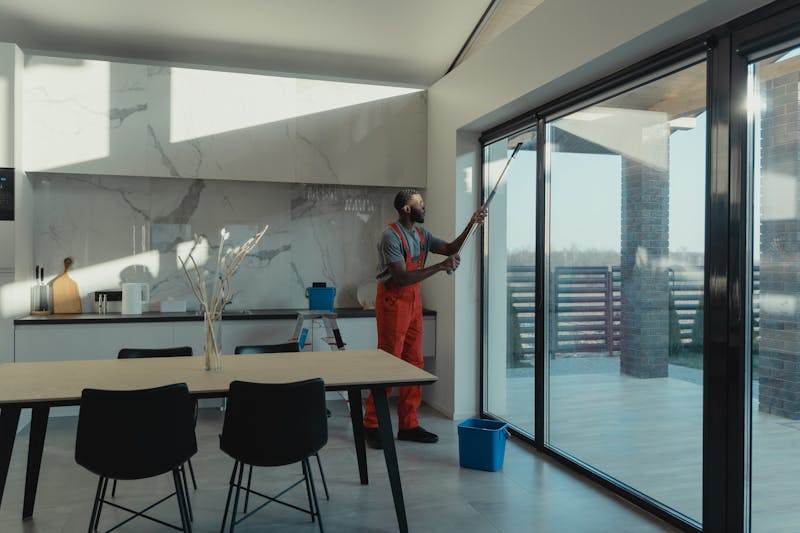
What a proper spring deep clean covers in a Maltese short-let:
- Full limescale reset — every tap, showerhead, kettle, and glass shower screen descaled using HG or Viakal (available at Homemate and Smart Supermarket). Never apply vinegar or acidic products on limestone or natural stone — they permanently etch the surface.
- Mattress rotation, deep vacuum, and steam — winter humidity leaves moisture inside mattresses even in well-ventilated units.
- Linen stock audit and replacement — anything with greyed corners, visible stains, or thin fabric goes. Budget €300–€500 per bedroom for a full linen refresh.
- AC service — professional filter clean or replacement, drainage line flush, and condenser coil wash before May demand kicks in. Budget €60–€120 per unit.
- Outdoor furniture and balcony reset — winter rain leaves salt and grime deposits on outdoor chairs, tables, and umbrellas. Soap-and-water deep wash, then reseal wood or treat metal as needed.
- Welcome stock reset — toilet rolls, soap, kitchen essentials, laundry pods, local guide refresh.
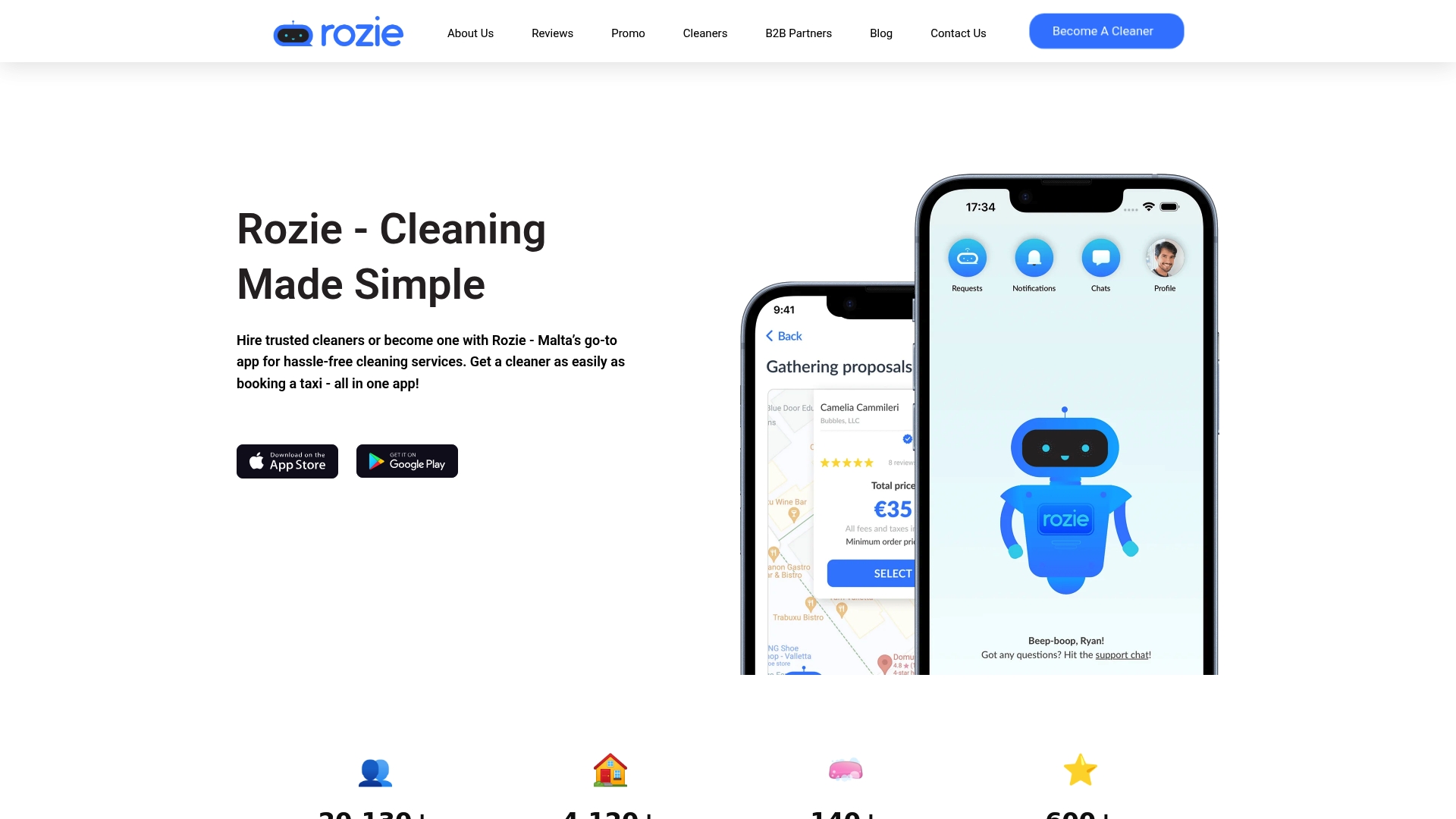
Finding a reliable cleaner for a one-off pre-season deep clean in Malta the traditional way means scrolling Facebook groups, calling three or four agencies for quotes, and hoping whoever agrees actually shows up. Most busy short-let hosts don’t have time for that — and it’s exactly the problem Rozie was built to solve. No calls, no chasing. You post your request with the extras you need (deep clean, fridge, oven, cabinets, inside windows), and within minutes verified cleaners send you competitive offers with exact prices. Every booking is backed by up to €1,000,000 in professional liability insurance underwritten by Lloyd’s of London. Here’s the full booking process in under 60 seconds:
How much does seasonal short-let cleaning cost across the year in Malta?
Seasonal short-let cleaning costs in Malta vary clearly by phase: €35–€55 per standard turnover in shoulder months, €45–€85 per turnover at peak (size-dependent), €110–€180 for pre-season or pre-winter deep cleans, and €25–€45 per monthly winter maintenance visit. Annualised, a 2-bedroom apartment with high occupancy typically spends €4,500–€6,500 on cleaning; a 3-bedroom villa runs €6,000–€9,000.
Valletta and St Julian’s properties typically sit 15–20% above these ranges because of access constraints (narrow streets, limited parking, no-lift buildings) and higher guest expectations. For full locality benchmarks, see the Malta cleaning cost guide.
💰 Seasonal cleaning: proactive vs reactive budget
Proactive annual spend (2-bed)
€4,500–€6,500
Covers all turnovers, 2 deep cleans, winter maintenance
Lost peak-month bookings after a review drop
€2,000–€4,000
From falling 4.9 → 4.6 across July
One poor peak-month review streak typically wipes out a full year’s cleaning saving. The maths on Maltese short-let cleaning is almost always: spend the budget, protect the score.
Most Malta hosts pass the turnover cost through as an Airbnb cleaning fee of €30–€60 per stay, which rarely affects booking conversion. Deep cleans and winter maintenance are absorbed from revenue but recover quickly — a single five-star peak-season review often justifies months of maintenance spend.
Get Cleaning Offers on Rozie →
How do you book cleaners reliably during peak season?
Booking cleaners reliably through Malta’s peak season means setting up a primary channel before May, holding a same-day backup option, and avoiding sole reliance on a single independent cleaner. The traditional route — Facebook groups, Maltapark ads, phone calls — breaks down the moment your regular cleaner is fully booked in June or falls sick on a Saturday in August when you have a check-in at 15:00.
An on-demand marketplace like Rozie works differently from a call-around model. You post your request with the date, location, and any extras you need (deep clean, fridge, oven, cabinets, inside windows, terrace). Verified cleaners available that day send offers — typically within 5 to 15 minutes — each showing the exact price for that job. You compare offers, pick the cleaner whose profile, rating, and reviews you prefer, and the booking is confirmed. Every booking includes 7-day payment protection and up to €1,000,000 in Lloyd’s of London professional liability insurance, with no excess to the host.
Rozie currently has 22,700+ users across Malta, more than 140 active verified cleaners, and over 710 five-star reviews. The same-day booking flow specifically handles peak-season emergencies — a cancellation, a double-booked cleaner, or an unexpected early check-in. For hosts with multiple properties or weekly recurring needs, combining Rozie for flexible same-day and recurring bookings with one trusted independent as a personal backup is the most resilient setup through July and August.
For more seasonal guides and locality-specific advice, browse our full archive of Malta cleaning guides.
Short-let cleaning shouldn’t steal your summer. The hosts who stay at 4.9+ review scores through August aren’t working harder — they just have a booking system that works when their regular cleaner doesn’t. That’s exactly what 22,700+ Malta users rely on Rozie for: verified cleaners, offers in minutes, €1M liability cover on every single booking, and no phone calls required.
Download Rozie — Book in 60 Seconds →
Frequently asked questions
When does Malta’s short-let peak season actually start and end?
Malta’s short-let peak season runs roughly May through September, with July and August as the highest-occupancy months. Mid-April and early October act as shoulder months when pricing and availability start shifting. Some host profiles — especially Valletta cultural stays and digital-nomad-friendly apartments — maintain 60%+ occupancy year-round, which changes the cleaning rhythm significantly.
How often should I deep-clean a Malta short-let?
Twice a year is the minimum — once as a pre-season reset in March or April, and once as a pre-winter reset in October or November. High-occupancy listings in central Sliema, St Julian’s, Buġibba, or Valletta often add a mid-summer deep clean in late July to reset AC filters, balcony salt buildup, and kitchen grease before the second half of peak.
Is vinegar safe to use on Maltese limestone floors?
No. Vinegar and any acidic cleaner permanently etch globigerina limestone — a common flooring material in Maltese apartments and villas. Use only pH-neutral cleaners. Lithofin, HG, and Homemate products sold at PAVI, Smart Supermarket, and local hardware stores are specifically formulated for Maltese stone surfaces.
What’s the biggest cleaning mistake Malta short-let hosts make?
Using one fixed cleaning routine for all 12 months. A July turnover and a January maintenance visit require completely different work, different products, and different cleaner availability planning. The second biggest mistake is waiting until June to lock in peak-season cleaner availability — by then, most reliable cleaners are already fully booked.
Are cleaning fees passed through to short-let guests in Malta?
Yes, in most cases. A cleaning fee of €30–€60 per booking is standard across Malta’s Airbnb market and rarely affects booking conversion as long as nightly rates remain competitive. Deep cleans and winter maintenance are typically absorbed by the host as part of property running cost.
Does Rozie cover Gozo short-lets?
Yes. Rozie operates across Malta and Gozo, though cleaner density is higher in central and coastal Malta. Gozo bookings occasionally have longer response windows for offers — posting 24–48 hours in advance rather than same-day gives you the best choice of cleaners and pricing.
What happens if a cleaner accidentally damages something during a booking?
Every Rozie booking includes up to €1,000,000 in professional liability insurance underwritten by Lloyd’s of London, covering accidental property damage and bodily injury caused by cleaners during the booking. Rozie covers all deductibles, so the host pays no excess. For guest-caused damage, your Airbnb AirCover and your own short-let insurance apply separately.
Recommended
- Short-Let Cleaning in Malta Guide. CHECKLIST
- Top 4 Airbnb Host Cleaning Services in Malta 2026 | Rozie – Malta’s Best Cleaning Services
- Holiday Home Cleaning Malta: Step-by-Step Guide for Expats | Rozie – Malta’s Best Cleaning Services
- Airbnb Cleaning Checklist Malta: Room-by-Room Guide 2026
- Mejores prácticas para gestores vacacionales en España