

More than **60 percent of busy professionals in Malta say maintaining a spotless home is their biggest weekly challenge, even with popular American cleaning tips flooding social media. When your schedule is packed, quick surface sweeps rarely deliver that real sense of tidiness you crave. This guide spotlights practical steps for deep cleaning, helping you select smart supplies, declutter efficiently, and achieve an outstanding level of cleanliness with less stress.
Table of Contents
- Step 1: Gather Essential Supplies For Deep Cleaning
- Step 2: Declutter Spaces To Maximize Cleaning Impact
- Step 3: Tackle High-Traffic Areas For Thorough Results
- Step 4: Disinfect Surfaces And Appliances Effectively
- Step 5: Inspect Your Home To Confirm Outstanding Cleanliness
Quick Summary
| Key Point | Explanation |
|---|---|
| 1. Gather Essential Cleaning Supplies | Collect microfiber cloths, specialized solutions, and protective gear for an effective deep clean. |
| 2. Declutter for Efficiency | Systematically sort items into keep, donate, or discard to enhance cleaning effectiveness and reduce clutter. |
| 3. Focus on High-Traffic Areas | Target frequently used surfaces to eliminate germs and dirt, ensuring thorough sanitization. |
| 4. Properly Disinfect Surfaces | Use correct disinfectants on high-touch areas, following contact time guidelines to kill pathogens effectively. |
| 5. Conduct a Thorough Inspection | Review each room for missed spots, ensuring all surfaces are clean and properly maintained for hygiene. |
Step 1: Gather Essential Supplies for Deep Cleaning
Deep cleaning your home requires strategic preparation and the right set of tools. Understanding the most effective cleaning supplies for comprehensive sanitization will transform your approach from basic tidying to professional level cleaning.
Start by collecting your core cleaning arsenal. You will need microfiber cloths for streak-free surfaces, several specialized cleaning solutions for different materials like glass, wood, and tile, a high-quality mop with replaceable heads, extendable dusters, scrub brushes with varying bristle strengths, protective rubber gloves, and disposable cleaning wipes. Select multipurpose cleaners that can handle multiple surface types to minimize the number of products you need. Always prioritize cleaning solutions that are effective yet safe for your specific home surfaces and environmentally friendly.
Organize your supplies in a portable cleaning caddy or bucket to make your deep cleaning process more efficient. Group similar items together and ensure everything is easily accessible. This preparation will help you move systematically through each room without unnecessary interruptions or searching for misplaced tools.
Here’s a summary of supply categories and their impact on deep cleaning:
| Supply Category | Example Tool | Impact on Cleaning |
|---|---|---|
| Cloths & Dusters | Microfiber cloths | Reduce streaks, trap dust |
| Cleaning Solutions | Multipurpose spray | Sanitize various surfaces |
| Brushes & Scrubbers | Stiff-bristle brush | Remove stubborn grime |
| Protection Gear | Rubber gloves | Protect hands, safe use |
| Storage & Organization | Portable caddy | Improve cleaning workflow |
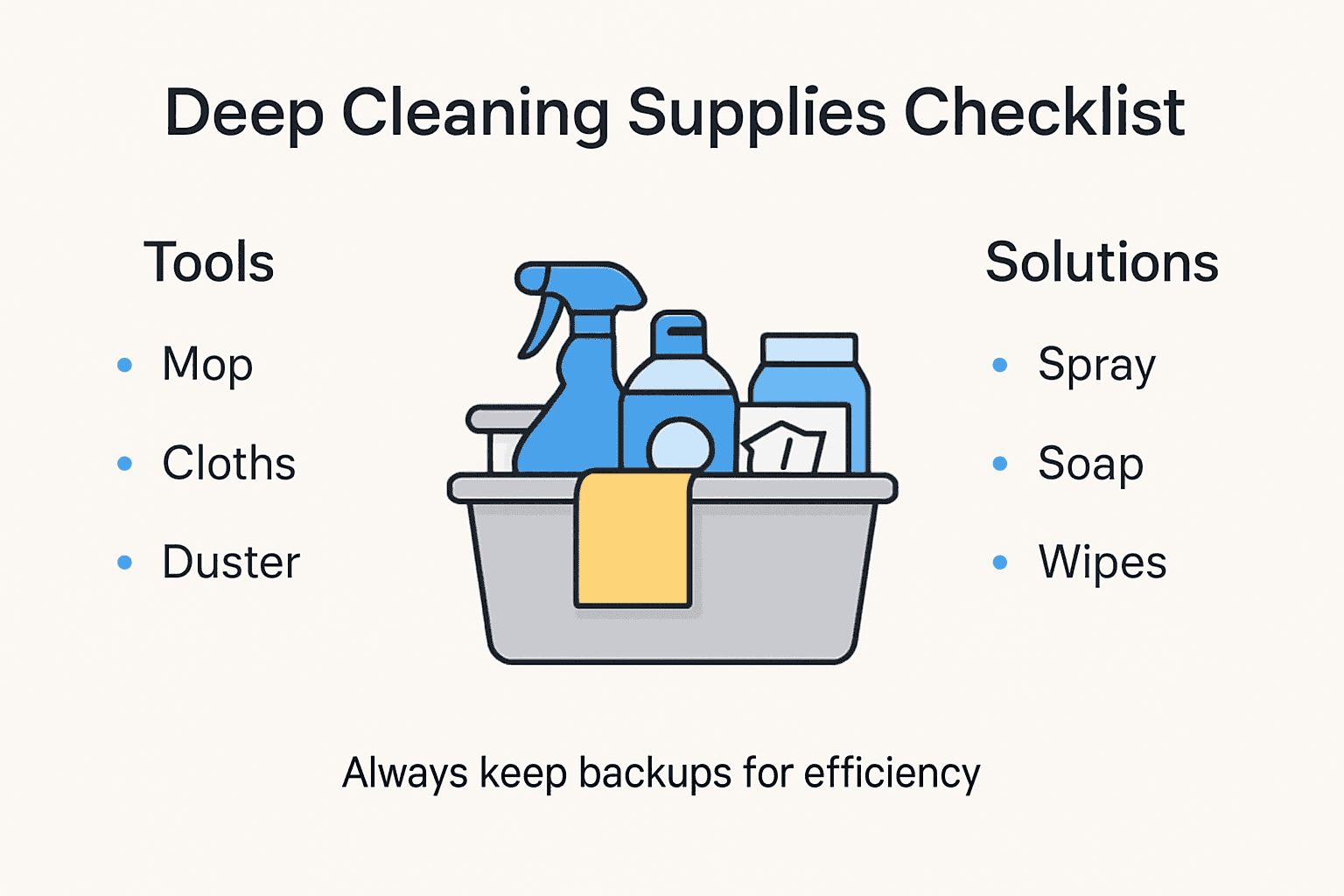
Pro tip: Keep a backup set of cleaning supplies in a sealed container to ensure you never run out of essential cleaning materials during an important cleaning session.
Step 2: Declutter Spaces to Maximize Cleaning Impact
Decluttering is the strategic first step to transforming your cleaning routine from overwhelming to manageable. Mindful decluttering techniques can significantly improve your living environment by reducing dust traps and creating more efficient cleaning workflows.
Begin by selecting one area or room to declutter systematically. Sort items into three primary categories: keep, donate, and discard. Focus on surfaces first removing unnecessary papers, decorative items, and random objects that accumulate dust and impede thorough cleaning. Pay special attention to high traffic zones like living room tables, kitchen counters, and bedroom dressers. As you declutter, consider the health implications potential clutter creates for your living space. Removing unnecessary items not only makes cleaning easier but also reduces environments where dust allergens and potential respiratory irritants can accumulate.
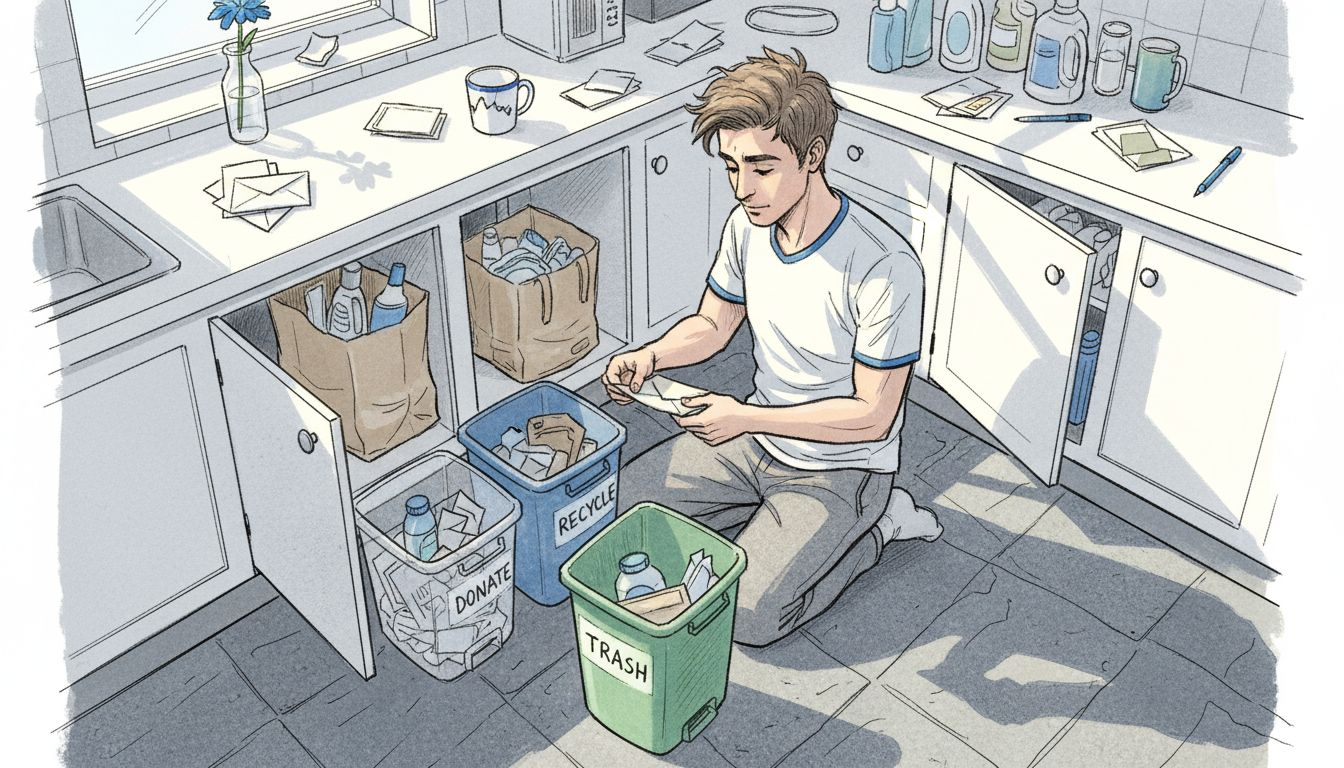
Create designated storage solutions for items you decide to keep. Use clear containers, labeled boxes, and strategic shelving to maintain organization. This approach ensures that future cleaning sessions will be more streamlined and efficient, allowing you to focus on actual cleaning rather than moving objects around.
Compare how decluttering and deep cleaning contribute to a healthier home:
| Aspect | Decluttering Benefit | Deep Cleaning Benefit |
|---|---|---|
| Dust Allergen Load | Reduces dust-collecting items | Removes dust from all surfaces |
| Workflow Simplicity | Easier to clean, less moving | More effective cleaning steps |
| Health Impact | Fewer respiratory irritants | Eliminates germs, bacteria |
| Long-term Results | Maintains organization | Prolongs cleanliness |
Pro tip: Implement a one-in-one-out rule for new items to prevent future clutter buildup and maintain the organizational momentum you have created.
Step 3: Tackle High-Traffic Areas for Thorough Results
Deep cleaning requires strategic focus on areas that accumulate the most dirt and germs. Systematic cleaning protocols for high-touch surfaces can transform your approach from surface level cleaning to comprehensive sanitization.
Start with high-traffic zones like entryways, kitchen counters, living room tables, and bathroom surfaces. These areas demand extra attention because they experience the most frequent contact and potential contamination. Use microfiber cloths with appropriate cleaning solutions for each surface type. Pay special attention to frequently touched objects such as doorknobs, light switches, remote controls, and electronic devices. Work systematically from top to bottom in each area, ensuring you clean surfaces thoroughly before moving to the next section. This methodical approach prevents cross-contamination and ensures no spot is overlooked.
Develop a cleaning sequence that allows you to move efficiently through these high-traffic zones. Begin with dry cleaning methods like dusting and sweeping, then progress to wet cleaning with appropriate disinfectants. Use color-coded cleaning cloths to prevent transferring bacteria between different areas of your home, and replace cleaning materials frequently to maintain maximum effectiveness.
Pro tip: Keep a dedicated cleaning caddy with separate microfiber cloths for different areas to prevent potential bacterial cross-contamination during your deep cleaning process.
Step 4: Disinfect Surfaces and Appliances Effectively
Disinfecting goes beyond basic cleaning by eliminating harmful pathogens and creating a truly sanitized environment. Safer cleaning and disinfecting strategies are crucial for protecting your home and family from potential health risks.
Approach disinfection systematically by selecting the right products for different surfaces. Kitchen counters, bathroom fixtures, and high-touch appliances require specific disinfectant solutions. Use ethanol or hydrogen peroxide based cleaners for most hard surfaces, ensuring you follow manufacturer instructions carefully. Work from clean to dirty areas, using separate microfiber cloths for each zone to prevent cross-contamination. Pay special attention to frequently touched surfaces like refrigerator handles, stove knobs, microwave buttons, and electronic device screens. Allow disinfectant solutions to remain on surfaces for the recommended contact time to effectively kill germs and bacteria.
Ventilate your space during and after disinfection by opening windows and using fans. Wear protective gloves and consider using respiratory protection if you are sensitive to cleaning chemicals. Always read product labels thoroughly, avoid mixing different cleaning agents, and store disinfectants in their original containers away from heat and direct sunlight.
Pro tip: Create a dedicated disinfection kit with color-coded microfiber cloths and specific cleaning solutions for different areas of your home to streamline your sanitization process.
Step 5: Inspect Your Home to Confirm Outstanding Cleanliness
The final stage of deep cleaning involves a meticulous inspection to ensure no area has been overlooked. Comprehensive home cleanliness assessment techniques will help you verify that your cleaning efforts have truly transformed your living space.
Begin your inspection systematically by moving room to room with a critical eye. Check surfaces from multiple angles using natural and artificial light to reveal dust, streaks, or missed spots. Pay close attention to often neglected areas like baseboards, ceiling corners, behind appliances, and inside cabinets. Look for subtle signs of dust accumulation, moisture buildup, or potential pest activity. Examine hard surfaces for water spots, fingerprints, or residual cleaning product marks. Test surfaces by running a clean white cloth over them to confirm they are truly clean and free from hidden dirt or grime.
Prioritize high traffic and high touch areas during your inspection. Verify that electronic screens are free from smudges, kitchen counters are completely sanitized, and bathroom fixtures shine without water spots. Check that all cleaning tools have been properly cleaned and stored, and that your cleaning products are securely sealed and organized. This final walkthrough not only confirms the effectiveness of your deep cleaning but also helps you develop a more refined cleaning strategy for future maintenance.
Pro tip: Use your smartphone camera to take close-up photos of challenging areas during your inspection to help identify and target missed spots more effectively.
Experience Spotless Living with Trusted Cleaning Experts in Malta
Deep cleaning your home can feel overwhelming when trying to manage every detail from decluttering to disinfecting high-traffic areas. If you have carefully followed this ultimate guide and still find the process time-consuming or physically demanding, it makes sense to consider professional support. The challenge of maintaining your home’s cleanliness while protecting your family’s health calls for reliable, verified cleaners who understand thorough cleaning techniques and use safe supplies.
Discover how Cleaning in Malta Archives | Rozie – Malta’s Best Cleaning Services connects you instantly to trusted cleaning professionals right here on Rozie.app. Rozie.app makes booking a verified cleaner simple, fast, and secure with full support 7 days a week and payment protection to give you peace of mind. Take the stress out of deep cleaning by letting experienced experts handle even the toughest sanitization tasks. Act now and transform your home into the spotless sanctuary you deserve with just a few clicks on Rozie today.
Frequently Asked Questions
What supplies do I need for a deep cleaning house list?
You will need microfiber cloths, specialized cleaning solutions, a high-quality mop, extendable dusters, scrub brushes, protective gloves, and disposable cleaning wipes. Gather these items in a portable caddy for easy access as you move through your home.
How can I effectively declutter my home before deep cleaning?
Start by focusing on one area or room at a time and categorize items into keep, donate, or discard. This process will not only simplify your cleaning but also create a healthier environment by reducing dust accumulation.
What high-traffic areas should I focus on when deep cleaning?
Concentrate on entryways, kitchen counters, living room tables, and bathroom surfaces. These areas accumulate the most dirt and germs, so ensure you clean frequently touched objects like doorknobs and light switches thoroughly.
How do I disinfect surfaces effectively during a deep clean?
Select the appropriate disinfectant for each surface type and apply it correctly, allowing it to remain on the surface for the recommended contact time. Remember to work from clean to dirty areas and use separate cloths for different zones to avoid cross-contamination.
What should I look for when inspecting my home after deep cleaning?
Inspect each room carefully, checking surfaces for dust, streaks, and missed spots. Pay special attention to areas often overlooked, like baseboards and behind appliances, to ensure everything is pristine and sanitized.
Recommended
- 7 Essential Steps for a Complete Deep Cleaning Checklist | Rozie – Malta’s Best Cleaning Services
- 7 Practical Examples of Deep Cleaning for Busy Maltese Homes | Rozie – Malta’s Best Cleaning Services
- Holiday Home Cleaning Steps for a Spotless Stay | Rozie – Malta’s Best Cleaning Services
- Efficient Apartment Cleaning Checklist Guide for Busy Lives | Rozie – Malta’s Best Cleaning Services
- Toilet Troubles? Home Depot’s Unclogging Tips to the Rescue! – Davinroy Plumbing and Mechanical
- Understanding House Clearance in Newcastle: Affordable and Stress-Free Option – Venture Waste