


TL;DR:
- Effective ant control in Malta apartments requires bait stations targeting the entire colony, especially the queen. Proper sealing of entry points, hygiene, and coordinated building-wide treatment prevent reinfestation. Sprays and natural repellents only provide temporary relief and can worsen long-term problems.
Ant infestations in Malta apartments are best controlled with bait stations that target the entire colony, not sprays that only kill the ants you can see. Malta is home to approximately 50 ant species, and queen ants can live up to 30 years, which means a colony survives long after you wipe out a trail of foragers. The only way to end an infestation for good is to eliminate the queen. Bait stations do exactly that. This guide walks you through every step, from spotting the first signs of an ant infestation in your Malta home to sealing every gap and knowing when to call a professional.
What attracts ants in Malta apartments?
Ants enter apartments for three reasons: food, water, and warmth. Malta’s warm Mediterranean climate means ant colonies stay active for more of the year than in northern Europe. That extended season gives colonies more time to scout your kitchen, bathroom, and utility areas.
The most common attractants inside a Malta apartment include:
- Food residues: Even microscopic traces of juice, jam, or crumbs draw scouts. Small spills that seem invisible to you are obvious signals to an ant.
- Standing water: Leaky pipes under sinks, condensation on tiles, and pet water bowls left out overnight all qualify.
- Pet food: A bowl left out all day is one of the most reliable ant attractants in any apartment.
- Warmth: Electrical conduits and wall cavities stay warm year-round, making them ideal nesting spots.
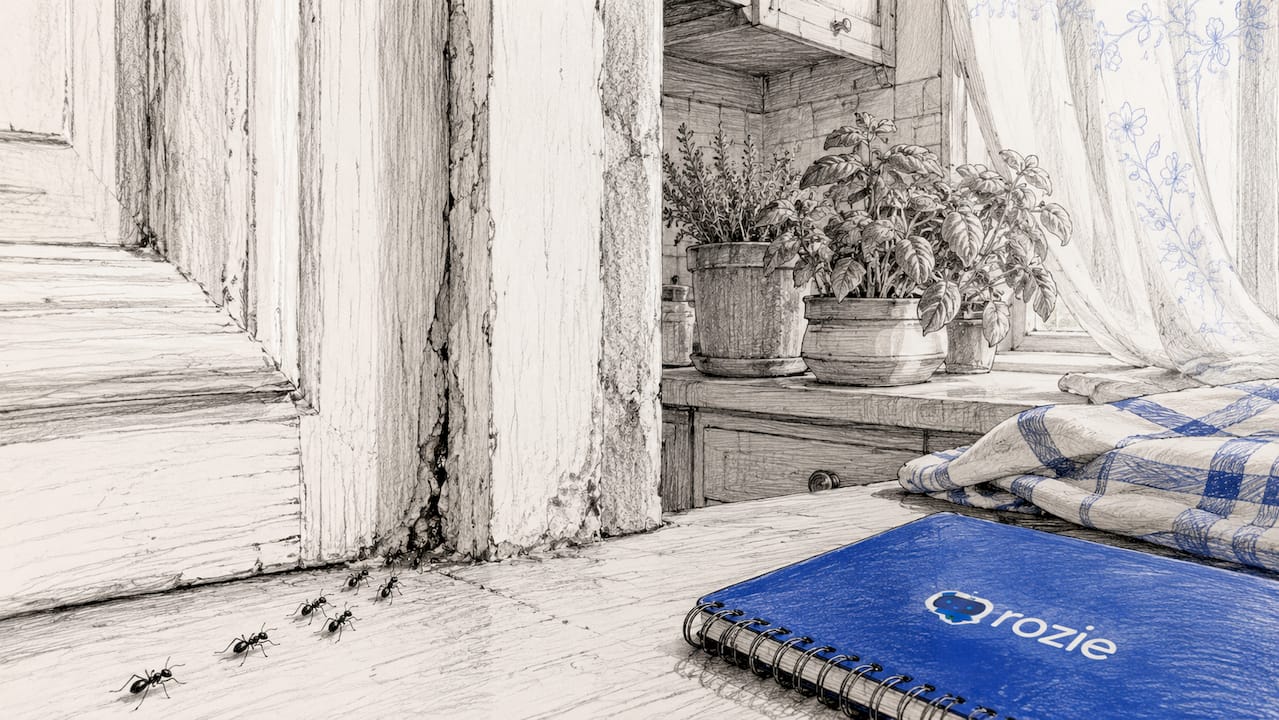
Common entry points include gaps around water pipes, cracks near window frames, spaces under doors, and electrical conduit openings. The species Lasius maltaeus, native to Malta, exploits gaps as small as 0.5mm. That is smaller than a grain of sand, which is why sealing feels futile unless you are genuinely systematic about it.
Early signs of an ant infestation in Malta
Catching an infestation early saves you weeks of effort. Watch for these signals:
- Ant trails: A visible line of ants moving between a food source and a wall gap is the clearest sign.
- Damaged packaging: Tiny holes chewed through cereal boxes, sugar bags, or bread wrappers indicate active foraging.
- Scattered soil or debris: Small piles of fine dirt near baseboards or window sills often indicate a nest nearby.
- Winged ants indoors: Seeing winged reproductives (alates) inside your apartment means a mature colony is nearby and expanding.
Pharaoh ants are particularly problematic in Maltese apartment buildings. They form multiple queens per colony and spread rapidly through wall voids. Spotting them early is critical because improper DIY control can cause their colonies to split and multiply.
What tools do you need to get rid of ants in an apartment?
The right materials make the difference between a two-week fix and a six-month struggle. You do not need a large arsenal. You need the right ones, used correctly.
Baiting products
Bait stations are the core tool. Look for products containing spinosad as the active ingredient. Spinosad-based ant baits work systematically, meaning worker ants carry the bait back to the nest and feed it to the queen and larvae. Full colony eradication typically takes about four weeks of consistent use.
| Method | What it targets | Effectiveness | Risk of colony splitting |
|---|---|---|---|
| Bait stations | Queen and entire colony | High, lasting | None |
| Spray insecticides | Visible foragers only | Low, temporary | High |
| Natural repellents | Pheromone trails | Supplementary only | None |
| Sealing entry points | Future ingress | Preventive | None |
Non-chemical aids
- Silicone sealant or caulk: Use these to close gaps around pipes, window frames, and baseboards.
- Vinegar spray (1:1 with water): Disrupts pheromone trails temporarily. Useful between bait placements, but not a standalone fix.
- Airtight food containers: Transfer sugar, flour, and cereals out of their original packaging immediately.
- Pet food management: Pick up pet bowls after each feeding and wash them daily.
Pro Tip: Never place bait stations near areas where you spray vinegar or insecticide. The chemical scent deters ants from approaching the bait, which defeats the entire strategy.
Safety matters if you have children or pets at home. Choose enclosed bait station designs that prevent direct contact with the bait gel. Place stations behind appliances, inside cabinet corners, or along baseboards where children and pets cannot reach them easily. Regular home cleaning also reduces the attractants that draw ants in the first place, making your bait strategy more effective.
How to eliminate ants step by step
This process works. Follow it in order and resist the urge to skip steps.
-
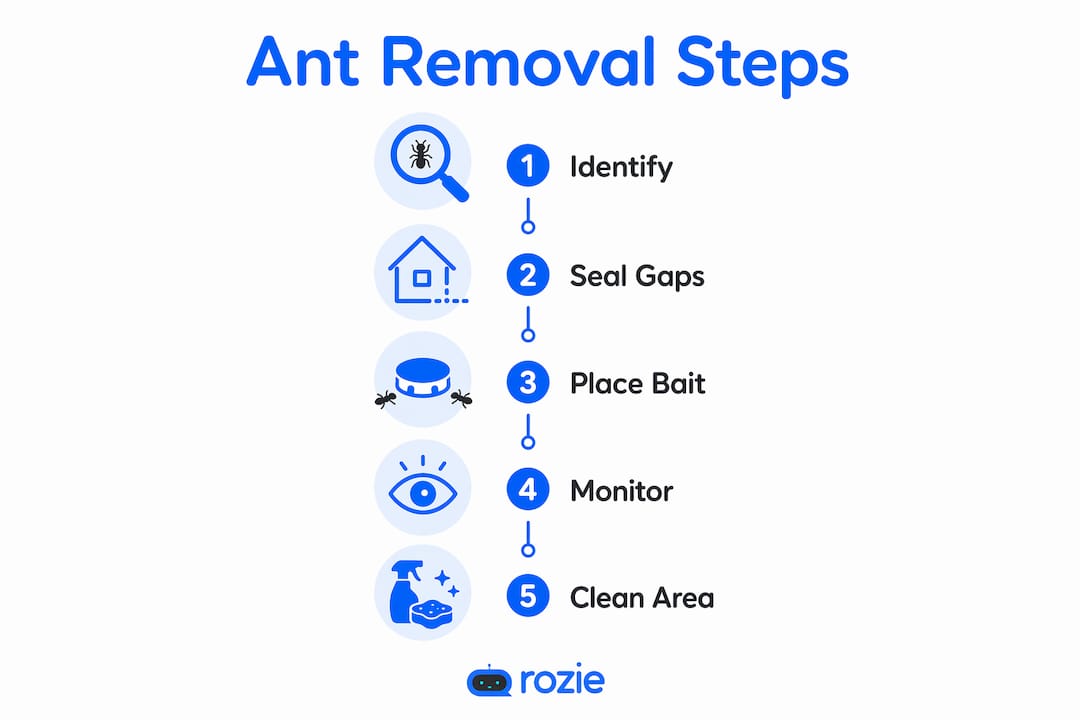
Observe before acting. Spend 10–15 minutes watching ant trails. Note where they enter the apartment and where they are heading. This tells you exactly where to place bait stations for maximum contact.
-
Place bait stations on active trails. Set stations directly on the trail path, not nearby. Ants need to walk through or past the bait to pick it up. Use two to four stations per active trail. Correct bait placement on the trail is the single most important factor in colony elimination.
-
Leave the ants alone. This is the hardest part. You will see more ants initially as they flock to the bait. Do not spray them. Do not wipe the trail. Let them feed and carry the bait back to the nest. Patience here is what kills the queen.
-
Wait 3–7 days. Bait stations typically resolve infestations within this window. Activity will peak and then drop sharply as the colony collapses.
-
Remove all food and water attractants. While the bait works, deep-clean your kitchen. Wipe down every surface, including the underside of shelves and the back of cabinets. Fix any dripping pipes. Store all food in sealed containers. Pick up pet bowls after each meal.
-
Seal every entry point. Once ant activity drops, begin sealing. Apply silicone sealant around all pipe penetrations, window frames, door gaps, and electrical conduit openings. Pay special attention to ventilation shafts, which are a common overlooked entry point in Maltese apartments. Entry points as small as 0.5mm require meticulous attention, so use a flashlight and inspect every inch of each wall where pipes or cables enter.
-
Repeat if needed. If activity resumes after two weeks, replace bait stations and check for unsealed gaps you may have missed. A second round is normal for large colonies.
Pro Tip: After sealing, dust a thin line of food-grade diatomaceous earth along baseboards in the kitchen and bathroom. It is safe for humans and pets, and it creates a physical barrier that deters ants from exploring new routes.
Malta’s national pest management guidelines, aligned with the MCCAA 2026 sustainability plan, prioritize Integrated Pest Management (IPM). IPM means combining sealing, hygiene, and targeted baiting before reaching for broad-spectrum chemical sprays. This approach protects both your household and Malta’s environment.
Common mistakes that make ant problems worse
Most ant problems in Malta apartments persist because of a handful of avoidable errors. Knowing them saves you weeks of frustration.
- Using spray insecticides as the primary method. Sprays kill visible foragers but leave the queen and colony intact. Worse, they cause colony fragmentation, splitting one nest into several. You end up with more infested areas, not fewer.
- Disturbing bait-feeding ants. Wiping trails or spraying near bait stations stops workers from carrying poison back to the nest. The bait becomes useless.
- Ignoring hidden food sources. Crumbs under the refrigerator, sticky residue inside cabinet hinges, and grease behind the stove are all enough to sustain a colony indefinitely.
- Relying on natural repellents alone. Vinegar and lemon juice disrupt pheromone trails, but their effects wear off quickly and require constant reapplication. Use them to support baiting, not replace it.
- Treating only your apartment. Ant infestations in multi-unit buildings are a community-wide problem. If your neighbor’s apartment is untreated, ants will simply reroute through shared walls and return.
When to call a professional: Pharaoh ants require expert management because their colonies split aggressively when disturbed incorrectly. If you identify small, pale yellow ants with a dark abdomen, or if a second round of baiting fails to reduce activity, contact a licensed pest control specialist in Malta. Professional treatment is also the right call for infestations that span multiple floors of a building.
Talk to your building management or neighbors before starting treatment. Coordinated, building-wide baiting produces far better results than isolated apartment-level efforts. Pest control specialists consistently emphasize treating ant infestations as a colony-wide problem, not a per-unit one.
Key Takeaways
Bait stations that target the queen are the only method proven to eliminate ant colonies in Malta apartments for the long term.
| Point | Details |
|---|---|
| Baiting beats spraying | Bait stations kill the queen and colony; sprays only remove foragers and risk splitting the nest. |
| Patience is the strategy | Allow 3–7 days for bait to work; disturbing feeding ants stops the poison from reaching the queen. |
| Seal every gap | Entry points as small as 0.5mm require systematic sealing around pipes, conduits, and vents. |
| Hygiene removes the draw | Remove all food residues, standing water, and pet food to make your apartment unattractive to scouts. |
| Coordinate with neighbors | Building-wide treatment prevents ants from rerouting through shared walls and returning. |
What I’ve learned about ant control in Malta apartments
Living and working in Malta, I have seen the same pattern repeat itself. Someone spots a trail of ants, grabs a can of spray, and feels like the problem is solved. Two weeks later, the ants are back, and there are more of them. The spray did exactly what it was designed to do: kill the ants in front of you. It did nothing to the colony behind the wall.
The shift in thinking that actually works is treating an ant infestation as a colony problem, not a visibility problem. The ants you see are scouts and foragers. They are expendable. The queen, sitting safely inside a wall cavity or under a floor tile, is the target. Bait stations are the only practical tool that reaches her.
What I find genuinely underappreciated is the sealing step. People bait successfully, the colony collapses, and then six months later the ants are back. That happens because the entry points were never closed. Malta’s old apartment stock, with its stone walls and aging pipe fittings, is full of gaps. Spending an afternoon with a tube of silicone sealant after a successful bait treatment is the difference between a one-time fix and an annual battle.
The other thing worth saying plainly: if you live in a block of apartments, your results are limited by what your neighbors do. I have seen well-treated apartments re-infested within weeks because the colony simply shifted to an adjacent unit. Talking to your building manager and encouraging coordinated treatment is not just neighborly. It is the only way to get a lasting result in a shared building.
— Alex
Rozie can help you keep your Malta apartment ant-free
A clean apartment is your strongest defense against ant infestations. Removing food residues, managing pet food, and keeping surfaces spotless all reduce the conditions that attract ants in the first place.
Rozie connects Malta apartment residents with verified cleaners who know exactly what a thorough clean looks like. Every cleaner on the Rozie platform is vetted before joining, and bookings are available seven days a week with full payment protection. Whether you need a deep clean after a bait treatment or regular maintenance to keep ants from returning, you can book apartment cleaning in minutes through the Rozie app. It is the simplest way to take one big variable out of your ant problem.
FAQ
What is the fastest way to get rid of ants in a Malta apartment?
Bait stations placed directly on active ant trails are the fastest and most effective method. Activity typically drops within 3–7 days as the colony collapses from the inside out.
Why do ants keep coming back after spraying?
Sprays kill only visible foragers and can cause the colony to split into multiple nests. The queen survives and continues producing workers, which is why the infestation returns and often worsens.
Are there ant species in Malta that need professional treatment?
Pharaoh ants, which are pale yellow with a dark abdomen, require professional pest control because their colonies fragment aggressively when disturbed incorrectly, spreading the infestation further.
How do I stop ants from entering my apartment in Malta?
Seal all gaps around pipes, window frames, door thresholds, and electrical conduits with silicone sealant. Ant species common in Malta can enter through openings as small as 0.5mm, so a thorough and systematic approach is necessary.
Does vinegar get rid of ants permanently?
No. A 1:1 vinegar and water solution disrupts pheromone trails temporarily, but the effect wears off quickly and requires constant reapplication. Use it as a supplement to bait stations, not as a standalone solution.