


TL;DR:
- Sea salt window cleaning in Malta uses diluted natural salt solutions to dissolve mineral deposits caused by coastal salt spray. It offers an eco-friendly, cost-effective method that effectively removes salt deposits without damaging glass or seals, especially when combined with proper rinse steps and protective treatments. For upper-floor or heavily soiled windows, hiring verified professional cleaners ensures long-lasting, streak-free results.
Sea salt window cleaning in Malta is the practice of using diluted natural salt solutions, combined with pH-neutral agents, to dissolve mineral deposits and salt crust from glass surfaces exposed to the island’s coastal air. Malta’s maritime environment deposits salt spray and dust on windows year-round, making standard cleaning methods fall short fast. The good news is that natural window cleaning with sea salt works with the island’s chemistry rather than against it. This guide covers the right tools, a step-by-step method built for Maltese conditions, and when calling a verified professional makes more sense than doing it yourself.
What tools do you need for sea salt window cleaning in Malta?
The right tools make the difference between a streaky finish and glass that looks brand new. For natural window cleaning in Malta, you need materials that are gentle on the glass but tough on salt crust and hard water stains.
Core cleaning tools:
- A rubber-bladed squeegee (at least 30 cm wide for efficiency)
- Microfiber cloths for detailing edges and corners
- A soft-bristle scrubbing brush or applicator sleeve
- Two clean buckets (one for solution, one for rinse water)
- A spray bottle for targeted application
Cleaning agents to use:
- Natural sea salt (fine-grain, not iodized) dissolved in warm water
- A pH-neutral, salt-safe cleaner added to the solution to prevent long-term glass deterioration
- White vinegar as an optional rinse aid for hard water spots
Local experts recommend avoiding bleach-based or highly alkaline products. Harsh chemicals accelerate the breakdown of window seals and frames, especially in homes close to the sea.
| Cleaning agent | Eco-friendly | Effective on salt deposits | Risk of damage |
|---|---|---|---|
| Sea salt solution | Yes | High | Low |
| pH-neutral detergent | Yes | Medium | Very low |
| White vinegar rinse | Yes | Medium | Low |
| Bleach-based cleaner | No | Low | High |
| Tap water only | Yes | Low | Medium (mineral buildup) |
Pro Tip: Mix one tablespoon of fine sea salt with two liters of warm water and a few drops of pH-neutral dish soap. This ratio dissolves salt crust without leaving a film on the glass.

How to clean windows with sea salt: step-by-step for Malta homes
Malta’s climate adds a layer of complexity to window cleaning. Wind direction, humidity, and direct sun all affect your results. Follow these steps to get a streak-free finish every time.
Before you start:
- Check the weather. Clean windows on a cloudy day or in the early morning. Direct sunlight dries the solution too fast and leaves streaks.
- Rinse the window frame and sill with plain water first to remove loose dust and debris.
- Gather all tools before you begin so you are not stopping mid-clean.
Step-by-step cleaning process:
- Mix your sea salt solution in a clean bucket using warm water, fine sea salt, and a few drops of pH-neutral soap.
- Dip your applicator sleeve or scrubbing brush into the solution and apply it to the full glass surface using horizontal strokes.
- Let the solution sit for 60–90 seconds to break down salt deposits and hard water stains.
- Pull your squeegee from top to bottom in straight, overlapping strokes. Wipe the blade with a clean microfiber cloth after each pass.
- Use a dry microfiber cloth to wipe the edges and corners where the squeegee cannot reach.
- Rinse the glass with clean, low-mineral water. Tap water in Malta carries mineral content that can leave new deposits, so filtered or purified water works best for the final rinse.
- Inspect the glass from an angle in natural light to catch any missed streaks before the surface dries.
Common mistakes to avoid:
- Using tap water with impurities for the final rinse, which reintroduces mineral residue
- Skipping the protective rinse step, which leaves salt solution residue on the glass
- Cleaning in full afternoon sun, which causes the solution to dry before you can squeegee it off
- Using paper towels instead of microfiber, which leaves lint and micro-scratches
Pro Tip: After the final rinse, apply a thin layer of glass sealant or rain repellent product to the exterior surface. This creates a barrier that slows down future salt buildup and cuts your next cleaning time in half.
For balcony windows that face the sea directly, check the balcony window cleaning guide for additional tips on high-exposure surfaces.
What are the advantages of sea salt cleaning versus traditional methods?
Sea salt cleaning outperforms standard chemical methods in Malta’s specific conditions. The reason is simple: you are using a substance that shares chemistry with the problem itself.
Salt deposits on glass form because airborne sodium chloride bonds to the surface and attracts moisture. A diluted sea salt solution disrupts that bond without the abrasive action that scratches glass. Chemical degreasers, by contrast, often leave a residue that attracts more dust and salt particles after cleaning.
Key advantages of sea salt cleaning for Malta homeowners:
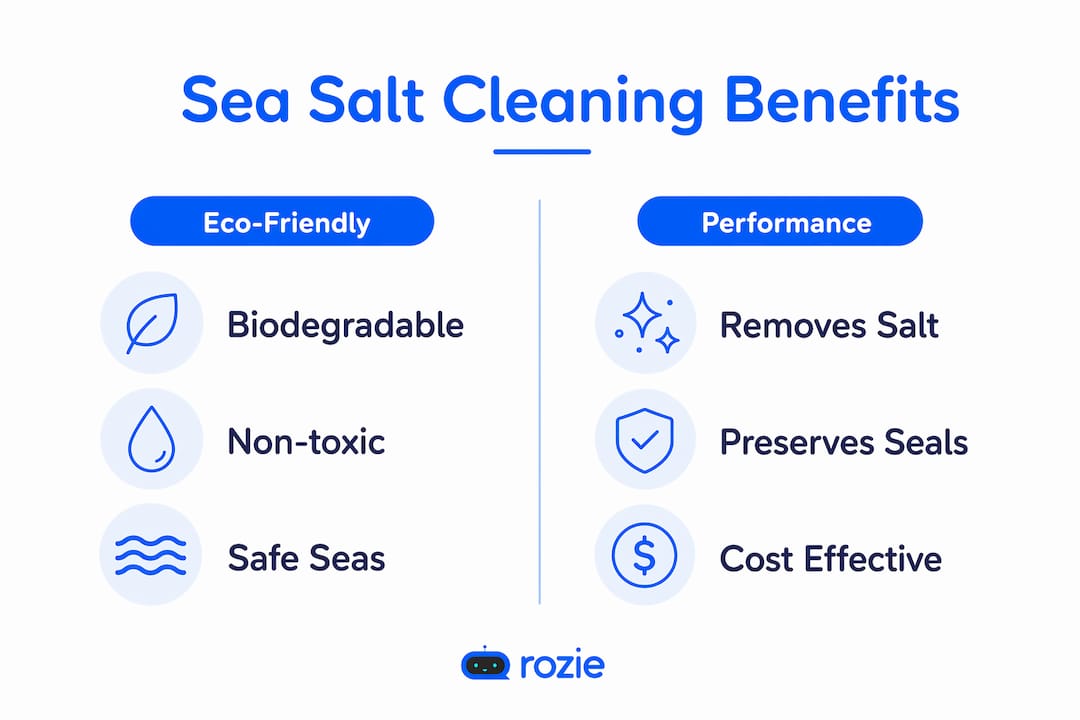
- Eco-friendly. Sea salt is biodegradable and does not introduce synthetic chemicals into Malta’s coastal ecosystem.
- Cost-effective. Fine sea salt costs a fraction of commercial window cleaning products and is widely available across Malta.
- Effective on hard water stains. The mild abrasive quality of dissolved salt lifts mineral deposits that plain water cannot shift.
- Gentle on window seals. Unlike alkaline cleaners, a properly diluted sea salt solution does not degrade rubber seals or UPVC frames.
- Reduces cleaning frequency. When combined with a glass sealant after cleaning, the method extends the time between cleans.
Maintaining window cleanliness in Malta is a year-round task due to constant salt and dust exposure. That reality makes the low cost and availability of sea salt a genuine advantage over specialty cleaning products that need to be ordered or imported.
The environmental benefit matters too. Malta’s coastal waters are a protected resource. Choosing natural, biodegradable cleaning agents means less chemical runoff reaching the sea, which is a small but real contribution to the island’s environmental health.
When should you hire professional window cleaning services in Malta?
DIY sea salt cleaning works well for standard windows at ground level or on low balconies. Certain situations call for professional expertise, though, and recognizing those situations saves you time, money, and potential damage.
Call a professional when:
- Windows are on upper floors or require ladder access above two stories
- Salt and mineral buildup has hardened over multiple seasons and resists DIY methods
- You have specialty glass such as tinted, double-glazed, or UV-coated panes
- You manage a rental property or holiday home and need a reliable, documented cleaning schedule
- You want the job done quickly before guests arrive or after a storm
Professional window cleaners in Malta often use pure water cleaning technology that removes mineral and salt residue more effectively than tap water. Purified water leaves no mineral trace on the glass after it evaporates, which is why professional results tend to last longer than DIY cleans.
Coastal properties benefit most from monthly professional cleaning, while inland homes can typically extend that to every six to eight weeks. The frequency depends on how directly exposed your windows are to sea spray.
Professional sea salt window cleaning services in Malta tailor their procedures to the local environment, using eco-friendly solutions designed for high salt exposure. That specialization produces longer-lasting results than a generic cleaning approach.
When selecting a cleaner, prioritize verified cleaners experienced with salt-safe methods. Verification matters because not every cleaner understands the specific risks of working on glass that has been repeatedly exposed to sea salt and UV light. An inexperienced cleaner using the wrong product can etch the glass or void a window warranty.
Key Takeaways
Sea salt window cleaning is the most practical, eco-friendly method for Malta homeowners dealing with year-round coastal salt buildup on glass surfaces.
| Point | Details |
|---|---|
| Sea salt solution basics | Mix fine sea salt, warm water, and pH-neutral soap for a safe, effective cleaning solution. |
| Avoid tap water rinses | Use filtered or purified water for the final rinse to prevent new mineral deposits from forming. |
| Clean on cloudy days | Direct sunlight dries the solution too fast and causes streaks on Maltese windows. |
| Monthly cleaning for coastal homes | Properties directly exposed to sea spray need cleaning at least once a month to prevent buildup. |
| Hire verified professionals | For upper floors, specialty glass, or heavy buildup, choose a verified cleaner trained in salt-safe methods. |
Living with salt air: what I’ve learned about window care in Malta
I’ve spent enough time talking to Malta homeowners through Rozie to know that most people underestimate how aggressive the island’s salt air really is. You can clean your windows on a Saturday morning and by Tuesday they already look dull again. That is not a cleaning failure. That is just Malta.
The insight that changes everything is this: the goal is not to clean perfectly once. The goal is to build a rhythm that keeps windows consistently presentable without burning hours every week. Sea salt cleaning fits that rhythm because it is fast, cheap, and uses materials you already have at home.
What most people overlook is the protective step after cleaning. Applying a glass sealant takes five minutes and cuts your next cleaning effort significantly. Almost nobody does it, and almost everybody complains that their windows get dirty again too fast. Those two facts are connected.
My honest recommendation is to combine a monthly DIY clean using the sea salt method with a professional deep clean every three to four months. That combination keeps windows in good shape year-round without the cost of weekly professional visits. For anyone managing a holiday home in Malta, the professional visits are non-negotiable before each guest arrival.
Sustainable cleaning habits are not just good for the environment. They are good for your wallet and your windows’ longevity. Sea salt is one of those rare solutions where the eco-friendly choice is also the practical one.
— Alex
How Rozie connects you with trusted window cleaners in Malta
Finding a reliable window cleaner in Malta used to mean asking neighbors or hoping for the best. Rozie changes that completely.

Rozie is Malta’s platform for booking verified cleaners online, seven days a week. Every cleaner on Rozie goes through a verification process before they can accept bookings, so you know exactly who is coming to your home. You can browse cleaner profiles, read real customer ratings, and book cleaners online in minutes. Rozie also provides payment protection for both homeowners and cleaners, which means no awkward cash exchanges and no disputes. Whether you need a one-time deep clean after a storm or a regular monthly schedule for your sea-facing windows, Rozie makes the whole process straightforward and stress-free.
FAQ
What is sea salt window cleaning?
Sea salt window cleaning is a natural cleaning method that uses a diluted sea salt solution, combined with a pH-neutral soap, to dissolve salt deposits and hard water stains from glass surfaces. It is especially effective in coastal environments like Malta where airborne salt buildup is a constant challenge.
How often should Malta homeowners clean their windows?
Monthly cleaning is recommended for properties directly exposed to sea spray, while inland homes can typically extend the interval to every six to eight weeks.
Can sea salt damage window glass or seals?
A properly diluted sea salt solution does not damage glass or rubber seals. The risk comes from using overly concentrated solutions or skipping the rinse step, which leaves salt residue that can etch the surface over time.
Is sea salt cleaning better than chemical window cleaners?
Sea salt cleaning is more eco-friendly, gentler on window seals, and more cost-effective than most chemical cleaners for Malta’s conditions. Chemical degreasers often leave a residue that attracts more dust and salt particles after cleaning.
How do I find a verified window cleaner in Malta?
Rozie lists verified window cleaners across Malta who are experienced with salt-safe and eco-friendly cleaning methods. You can book online, check ratings, and get payment protection through the platform.