

In this guide
What makes a Maltese festa special?
Which are the best festas in Malta in 2026?
When is festa season in Malta in 2026?
How do you enjoy a festa without the common pitfalls?
What makes a Maltese festa special?
A Maltese festa is a multi-day village feast honouring the parish patron saint, organised entirely by volunteers from local band clubs (każini), fireworks societies and parish committees. In December 2023, UNESCO inscribed il-Festa Maltija on its Representative List of the Intangible Cultural Heritage of Humanity — formal recognition that these celebrations are a living tradition, not a tourist production.
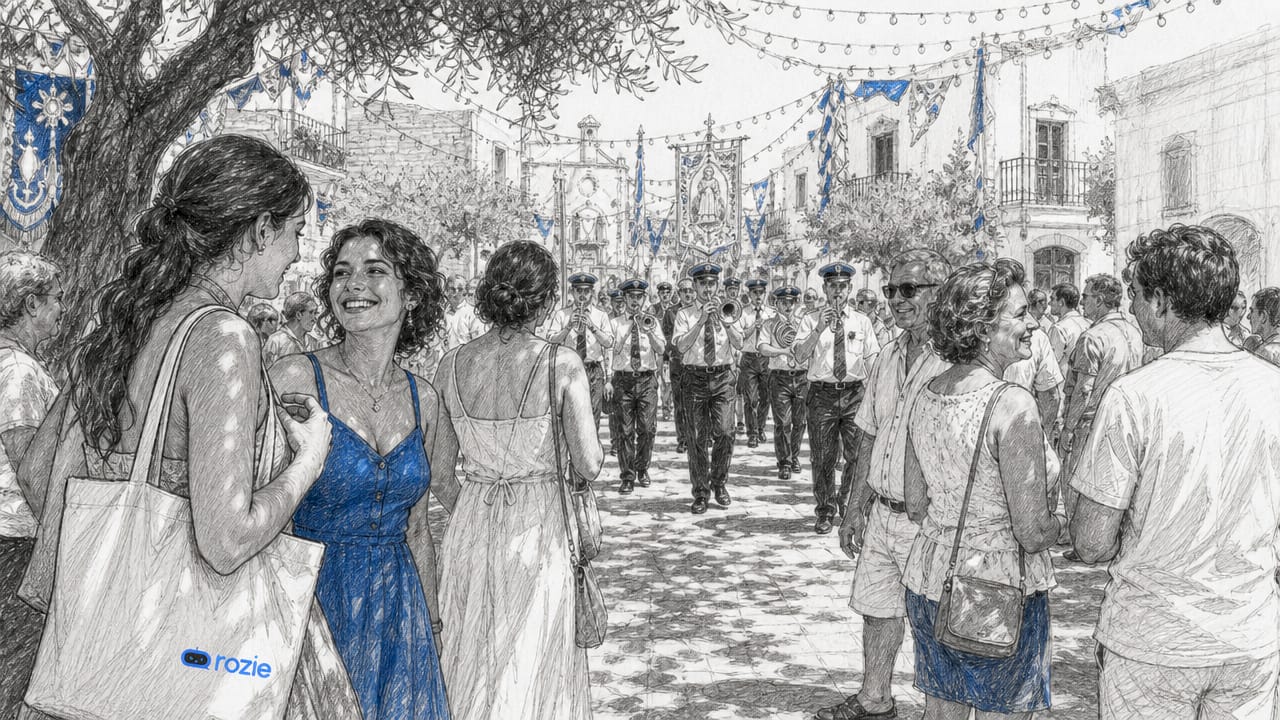
That volunteer engine is what separates a festa from any ticketed event. Band club musicians rehearse for months. Each village’s fireworks society, the għaqda tan-nar, spends the entire year hand-crafting displays in its own licensed workshop. Decorators hang banners, pavaljuni and thousands of light bulbs across the streets and church façade weeks in advance. The application for UNESCO recognition was led by the Malta Band Clubs Association with the parishes and festa communities behind it — and the islands marked the honour by forming Malta’s largest-ever band on Tritons Square in Valletta.
Every major festa builds across the week toward the feast day, and the programme follows a familiar rhythm:
- Marċ ta’ filgħodu — the loud, joyful morning band march that winds through the streets and announces the celebration has begun.
- Evening processions — the statue of the patron saint is carried shoulder-high through decorated streets lined with locals in their finest clothes.
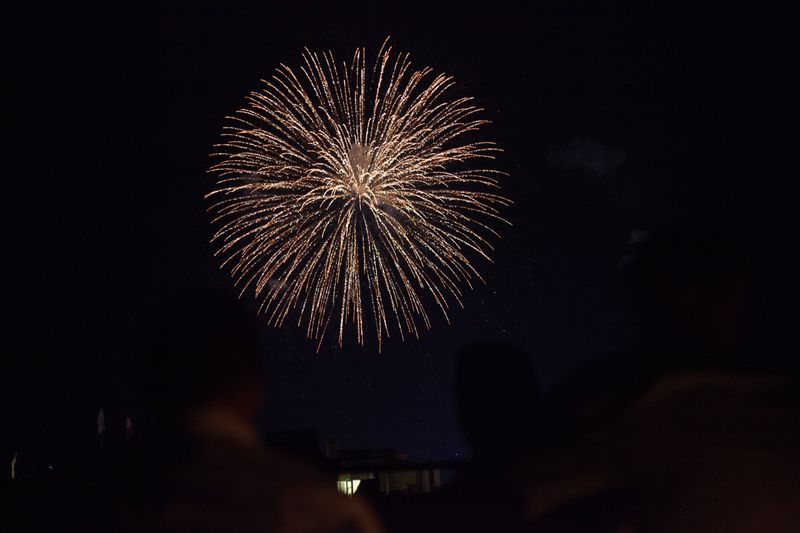
- Fireworks — daytime petards and aerial bombs (murtali) mark the hours, while choreographed aerial shows light up each night of festa week.
- Street food — stalls sell pastizzi (flaky ricotta or pea pastries), imqaret (fried date pastries) and qubbajt, the traditional Maltese nougat sold from decorated carts.
- Band clubs and friendly rivalry — many villages have two każini competing to outdo each other in music, decorations and pyrotechnics, which is half the fun.
Why the UNESCO listing matters.
The 2023 inscription puts the festa alongside Malta’s ftira bread (2020) and għana folk singing (2021) on UNESCO’s intangible heritage list. It recognises the festa as community heritage passed down through families, band clubs and pyrotechnic apprenticeships — not a show staged for visitors.
Which are the best festas in Malta in 2026?
The best festa for you depends on one question: do you want fireworks, scale, history or intimacy? Mqabba on 14 August is Malta’s fireworks summit. Mosta on 15 August offers the grandest backdrop for a first festa. Birgu on 10 August wins on atmosphere, June feasts like Ħaż-Żebbuġ and Qormi deliver raw community energy, and Gozo’s village feasts are the calm, intimate option.
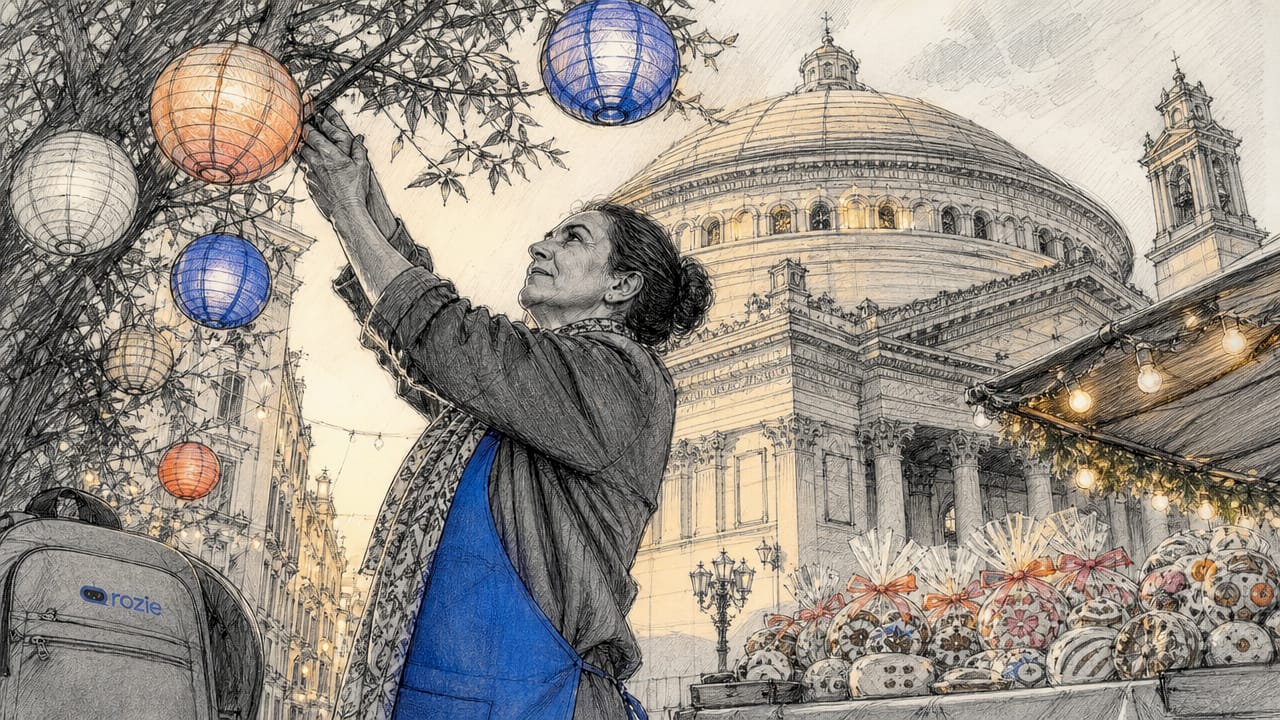
Mosta is the natural first festa. The Rotunda — one of the largest church domes in Europe — towers over the square, and the Santa Marija procession against that backdrop is genuinely breathtaking. The basilica also carries Malta’s most famous wartime story: in April 1942 a bomb pierced the dome during Mass and failed to explode, and a replica is still displayed inside. In 2026 the feast day lands on a Saturday and a public holiday at once, so arrive early.
Mqabba is Malta’s fireworks capital, and the eve of Santa Marija on Friday 14 August is the most intense pyrotechnic night of the entire season — locals travel from across the island for it. The village’s headline set piece, the Tower of Light, fires around 10,000 shots from a 62-metre structure. If fireworks are the reason you are going, start here and keep our 2026 Malta fireworks calendar to hand for the rest of the summer.
Birgu (Vittoriosa) offers something different entirely. The fortified harbour setting, narrow limestone streets and centuries-old auberges make the St Lawrence festa on 10 August feel lifted out of time. The crowd is devoted rather than enormous, and the dgħajjes bobbing in the creek below the bastions add a backdrop no other festa can match.
Ħaż-Żebbuġ and Qormi deliver the unfiltered version in June. Żebbuġ’s feast of St Philip runs on the energy of two rival band clubs trying to outplay each other, while Qormi’s St George festa in late June is a celebration the town throws for itself rather than for visitors. These are the festas where you end up sharing a table with a local family and leaving with an invitation for next year.
Gozo’s village festas — Nadur, Xagħra and Victoria among them — keep the full programme of band marches, processions and fireworks at a calmer scale. Squares are smaller, crowds thinner, and the whole celebration feels like it belongs to the people standing next to you, because it does.
Pro tip
Dates shift slightly from village to village, and some of the best smaller feasts are easy to miss. Cross-check your travel dates against the complete 2026 festa season guide before locking in accommodation.
When is festa season in Malta in 2026?
Festa season 2026 runs from late April to early October, with more than 80 feasts across the islands — over 60 in Malta and around 20 in Gozo — and the busiest weekends in July and August. The peak is Santa Marija on 15 August, a public holiday celebrated simultaneously in seven localities: Mosta, Attard, Mqabba, Qrendi, Gudja, Għaxaq and Victoria in Gozo.
Each festa follows a weekly rhythm: smaller marches and church celebrations from midweek, an explosive eve night on the second-to-last evening, then the feast day itself with the procession. From June onwards there is a festa somewhere on Malta or Gozo almost every weekend, so even a short stay will overlap with at least one.
Santa Marija week is Malta’s version of Ferragosto: many businesses close, beaches fill with Maltese families, and the island runs on festa time. If you live here, plan errands around it — our resident’s guide to surviving summer in Malta covers that mid-August shutdown in detail. With the feast day falling on a Saturday in 2026, expect village squares to be fuller than usual.
How do you enjoy a festa without the common pitfalls?
A festa rewards a little planning: go on eve night rather than only the feast day, sort transport before you arrive, expect serious noise from morning petards onward, dress modestly near the church, and eat before the food stalls run dry. Get those five things right and the rest takes care of itself.
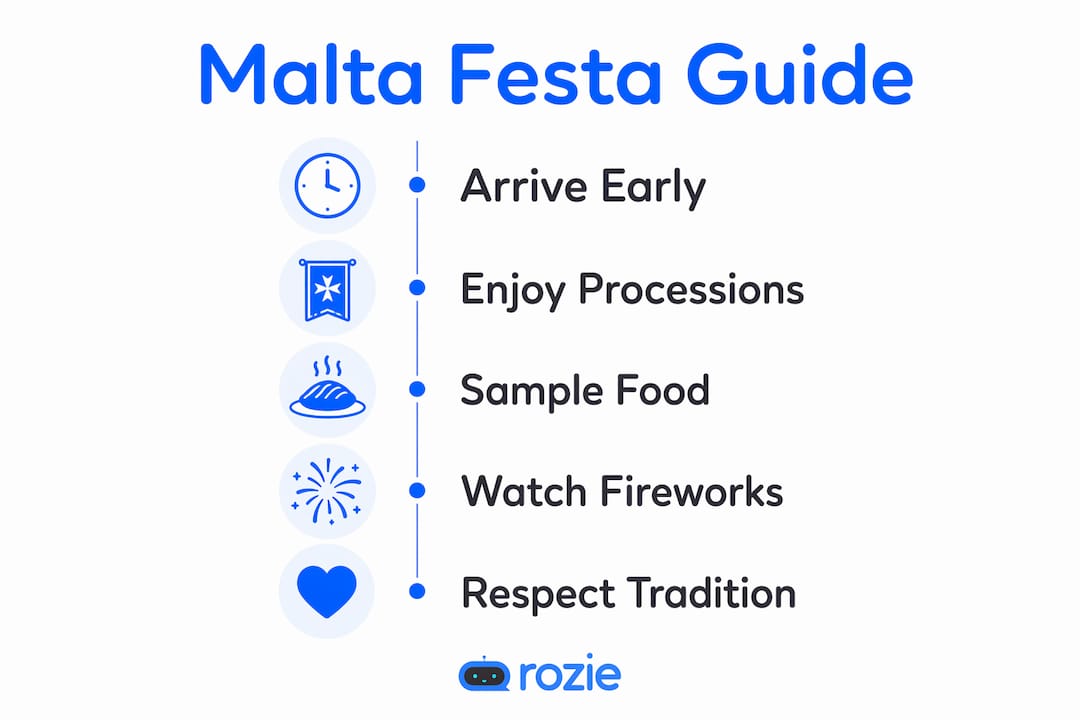
- Prioritise the eve night. The lejlet il-festa — the night before the feast day — usually delivers the most intense fireworks and street energy. Locals know this; most visitors do not. Arriving the evening before the main date gives you the peak experience.
- Prepare for the noise. Petards and murtali fire from early morning, in broad daylight, without warning. Bring earplugs if you are sensitive to loud bangs, and plan around it if you have young children or pets. This is not a complaint about festas — it is simply what they are.
- Sort transport early. Streets around the village core close, buses divert on peak nights, and parking disappears hours before the procession. Arrive by bus or taxi, plan the return trip in advance, and accept that leaving takes longer than arriving.
- Choose accommodation strategically. Staying inside the festa village puts you at the centre of the action — wonderful until 2 a.m. when the fireworks are still going. The village outskirts let you walk in and retreat to quiet. For Gozo feasts especially, that balance makes a multi-day stay genuinely enjoyable.
- Respect the religious dimension. A festa is not a theme park. Stand respectfully when the statue passes, dress modestly near the church, and follow the lead of locals. Visitors who engage with genuine curiosity are welcomed warmly.
- Eat before you arrive. The pastizzi, imqaret and qubbajt stalls are part of the experience, but the best ones sell out early. Treat street food as a supplement to your evening, not your dinner plan, and carry cash.
One more local reality: festa week often doubles as hosting week, with relatives flying in for the village feast. If the pre-festa scrub is eating the day you had set aside for the marċ, Rozie lets you post the job once and compare exact offers from verified cleaners within minutes — instead of chasing quotes between band marches.
Pro tip
Arrive in the festa village the morning of the feast. The marċ ta’ filgħodu at sunrise is one of the most memorable sensory experiences Malta offers, and most visitors sleep through it.
How are festas different from Malta’s other festivals?
Village festas are parish-based religious feasts with free admission, organised by band clubs and volunteers and funded by year-round community fundraising. Commercial events like Isle of MTV or the Malta Jazz Festival are ticketed productions with international line-ups and no link to village identity. Both have value — they simply deliver completely different experiences.
Three other fixtures on Malta’s cultural calendar are worth telling apart from the festa cycle:
- Malta International Fireworks Festival — a competitive display event each spring featuring international pyrotechnic teams; the 2026 edition ran from 18 to 30 April over Nadur and the Grand Harbour. Spectacular, but without the religious or community context of a festa.
- Notte Bianca — Valletta’s annual late-night arts and culture event, when museums, palaces and galleries open into the small hours. Urban and contemporary rather than parochial.
- Carnival — pre-Lenten parades and costumes in Valletta and Nadur, Gozo. A beloved tradition with its own character, separate from the patron-saint feast cycle.
Knowing what you are attending shapes how you engage with it. Visitors who arrive at a festa expecting a street party usually leave moved by something deeper; those who want a polished stage show are better served by the ticketed festivals.
Key takeaway: Pick by priority — Mqabba on 14 August for fireworks, Mosta on 15 August for scale, Birgu on 10 August for atmosphere. And to understand what the festa actually means to the people who build it, find a small Gozo village square where the whole crowd fits in front of the church.
Hosting guests during festa week? Rozie has you covered
Hosting family for the village festa usually means two big cleans in one week: the scrub before guests arrive and the reset after a weekend of late nights, balconies dusted in firework ash and a kitchen that fed twelve. Finding help the traditional way — scrolling Facebook groups, calling numbers, chasing vague quotes — eats exactly the time the festa was supposed to be for.
Rozie removes that friction. You post the job once, pick your date and extras, and verified cleaners send you offers with exact prices, typically within 5–15 minutes, so you compare before you accept. Every booking is backed by 7-day payment protection and professional liability insurance of up to €1,000,000 per occurrence, underwritten by Lloyd’s Insurance Company S.A. — Rozie covers all deductibles, so you pay no excess. It is how 24,800+ users across Malta book cleaning in Malta — including last-minute pre- and post-event cleans — without a single phone call.
Here is the full booking process in under 60 seconds:

Compare Cleaning Offers on Rozie ->
Frequently asked questions
When is the festa season in Malta?
Malta’s festa season runs from late April to early October, with the busiest weekends in July and August. More than 80 village feasts take place across the islands — over 60 in Malta and around 20 in Gozo — and all of them are free to attend.
Which Malta festa has the best fireworks?
Mqabba is widely regarded as Malta’s fireworks capital, and its Santa Marija eve display on 14 August is the most intense night of the season. Lija is the other name enthusiasts mention, celebrated especially for its spinning ground fireworks known locally as ġiġifogu.
Are Malta festas suitable for tourists?
Yes. Festas are free, open to everyone and genuinely welcoming to visitors. The main considerations are cultural: stand respectfully when the procession passes, dress modestly near the church, and remember the feast is a sincere religious celebration for the community hosting it.
What should I bring to a Malta festa?
Comfortable shoes, earplugs if you are sensitive to loud bangs, and cash for the food stalls. Arrive early on eve night to secure a good viewing spot for the fireworks, and eat beforehand — the best pastizzi and imqaret stalls sell out well before midnight.
How is a village festa different from the Malta International Fireworks Festival?
A village festa is a parish-organised religious feast honouring a patron saint, with processions, band marches and community-funded fireworks. The Malta International Fireworks Festival is a separate competitive event held each spring, featuring international pyrotechnic teams without the religious or village context.
Can I get help cleaning before or after hosting festa guests?
Yes. On Rozie you post one request and verified cleaners across Malta send offers with exact prices, usually within 5–15 minutes, so you can compare before accepting. For a sense of typical rates, see our guide to cleaning prices in Malta.