

In this guide
What is Saharan dust and why does Malta get so much of it?
What tools do you need to clean Saharan dust in Malta?
How do you stop Saharan dust getting into your home?
How do you clean your home after a Saharan dust event?
Which mistakes make Saharan dust cleanup worse?
What is Saharan dust and why does Malta get so much of it?
Saharan dust — known locally as il-qilla — is fine, iron-rich particulate matter (PM10 and PM2.5) carried across the Mediterranean from North Africa by southerly scirocco winds. Malta sits directly in the transport path, so the islands get coated several times a year, most often between March and June. The dust settles on balconies, windows, cars, and every horizontal surface indoors.
The health dimension is what makes proper cleanup matter. Respiratory physician Prof. Stephen Montefort has warned that Saharan dust carries allergens, viruses, and bacteria, raising the risk for children, the elderly, and anyone with asthma or other respiratory conditions. And this is not an occasional nuisance: data from Malta’s Environment and Resources Authority has attributed as much as 20% of PM10 measured at the Għarb monitoring station in Gozo to Saharan dust. You can check live readings from ERA’s stations in Msida, Attard, Żejtun, and Għarb on the official Air Quality Index before deciding when to open your windows again.
Why the dust looks red-orange.
The particles are rich in iron oxides from Saharan soil. That colour makes deposits obvious on white Maltese balconies and windowsills — but the finest particles, the ones that reach your lungs, are invisible and settle indoors for days after the sky clears.
What tools do you need to clean Saharan dust in Malta?
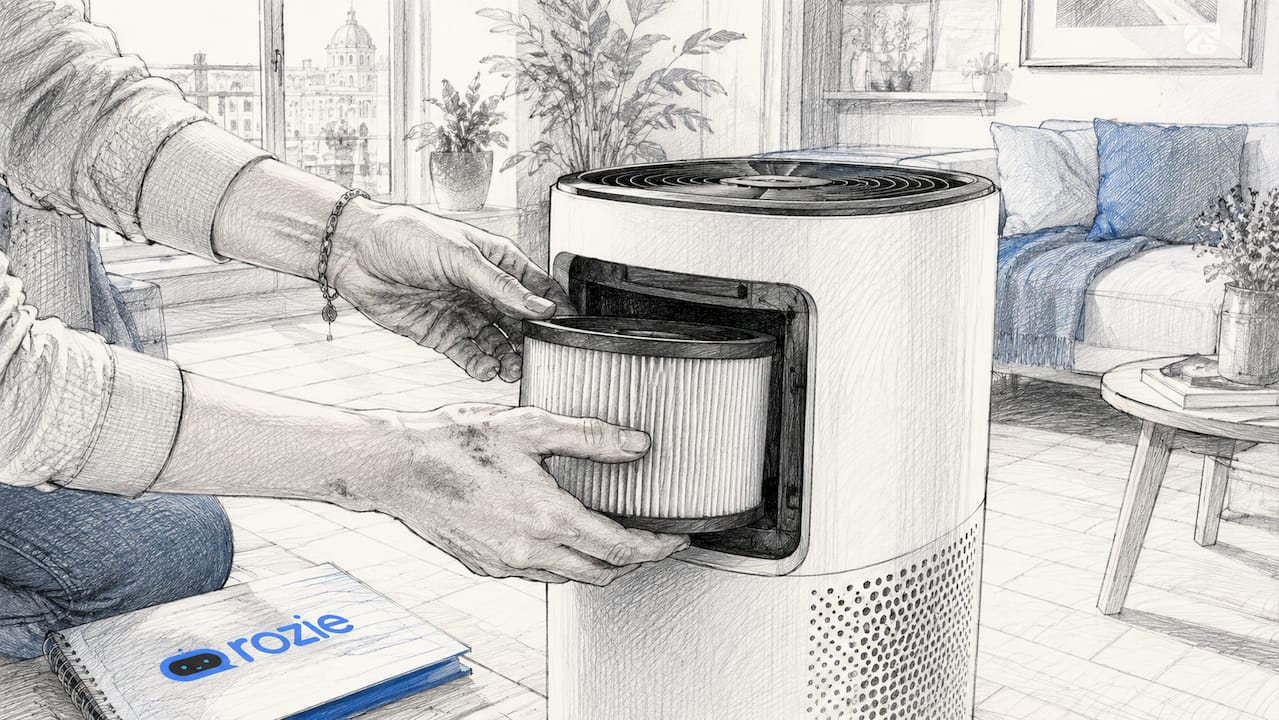
Effective Saharan dust cleanup in Malta needs a HEPA-filter vacuum, damp microfiber cloths, an N95 or KN95 mask, gloves, and ideally a HEPA air purifier. The equipment matters because Standard vacuums and dry dusters redistribute fine particles rather than capturing them — you end up breathing the dust you thought you removed.
Here is the core kit every Maltese household needs before dust season:
- HEPA-filter vacuum cleaner. Only a genuine HEPA filter captures PM2.5 and PM10 particles instead of exhausting them back into the room. This is the single most important purchase.
- Damp microfiber cloths. Microfiber traps fine particles on contact. Dampen the cloth slightly so dust sticks instead of going airborne. Multipacks are easy to find at PAVI, Smart Supermarket, and Homemate.
- N95 or KN95 mask. Standard surgical masks do not filter PM10 effectively. Wear a proper respirator mask while cleaning, when disturbed dust becomes airborne again.
- Disposable gloves. Dust on your hands transfers to eyes and mouth. Gloves keep the cleanup hygienic.
- HEPA air purifier. Run it in the room where you spend the most time, during and for a few days after the event.
- Weatherstripping and silicone sealant. The simplest, lowest-cost prevention there is — see the sealing steps below.
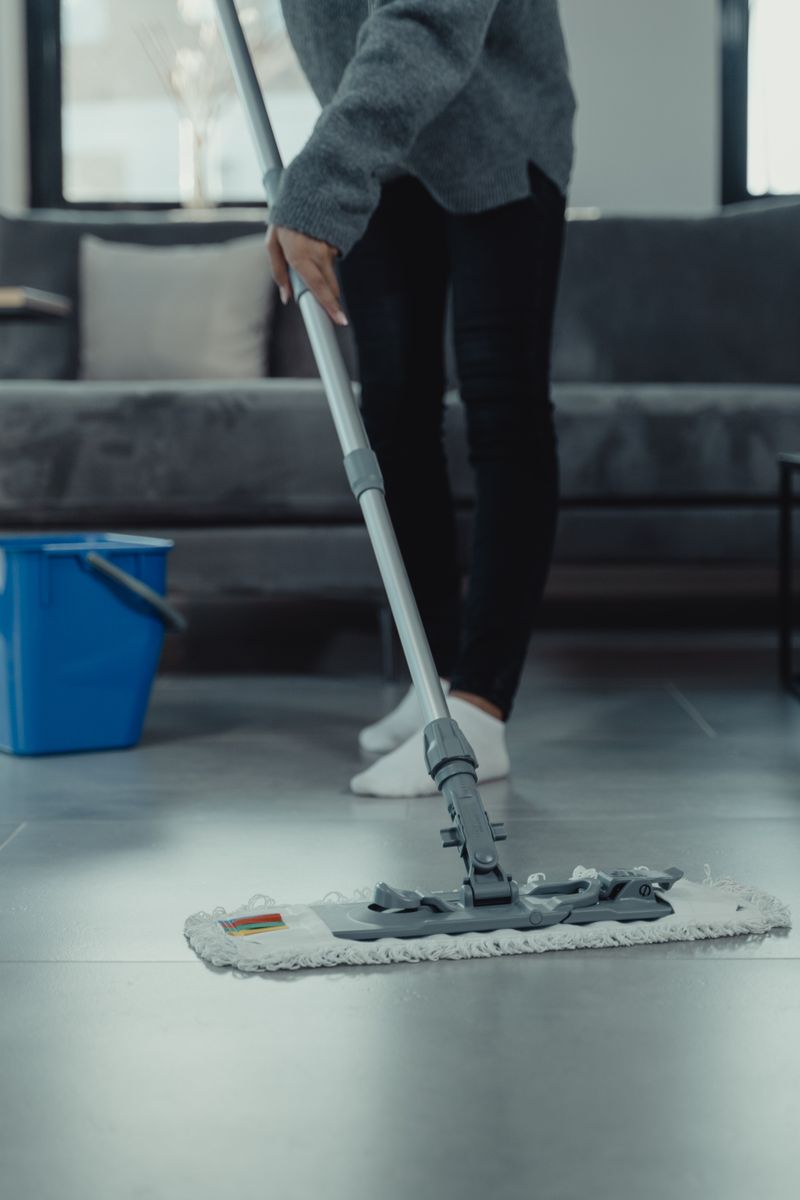
- Microfiber flat mop. For Malta’s tiled and stone floors, a damp microfiber mop picks up residue after vacuuming without scattering it.
Pro tip
Buy a spare set of HEPA vacuum filters before dust season starts (roughly March). Filters clog fast during heavy il-qilla events, and replacements for popular models sell out quickly in Malta’s small retail market.
How do you stop Saharan dust getting into your home?
Prevention starts with sealing gaps around windows and doors, switching your AC to recirculation mode, and keeping windows shut during the event. Every gram of dust you keep outside is a gram you never have to vacuum, and in older Maltese apartments — where wooden apertures and worn seals are common — sealing alone can transform how much cleanup an event creates.
- Find and seal the gaps. Run your hand along window frames and door edges on a windy day; any draught is a dust route. Sealing windows and external vents significantly reduces infiltration during events. Check the inside window seals on your frames at least twice a year — cracked or missing seals are the biggest single source of indoor dust during il-qilla.
- Switch the AC to recirculation. Most split units have a setting that draws from indoor air rather than outside. Use it for the duration of the event.
- Clean the AC filters. A clogged filter spreads dust through the house and raises your electricity bill. Rinse filters weekly during dust season.
- Cover external vents. Fit temporary covers over kitchen and bathroom exhaust vents while dust is active, and remove them afterwards.
- Time your ventilation. Open windows only once air quality readings drop — early morning or after rain. Fine dust can linger in the air and on surfaces for days, sometimes over a week, until rain washes it out.
- Shut balcony doors and shutters. Balcony doors are the main entry point for coarse dust, and Malta’s traditional wooden shutters make a genuinely useful second barrier.
Key takeaway: Sealing frames, running the AC on recirculation, and keeping windows shut until readings drop can cut your post-event cleaning workload dramatically — prevention is cheaper than any vacuum.
How do you clean your home after a Saharan dust event?
Clean top-to-bottom with damp microfiber cloths first, then HEPA-vacuum soft furnishings and floors, and finish with a damp mop. The sequence matters: Saharan dust is abrasive, so dry-wiping it grinds micro-scratches into glass and polished stone, and cleaning floors before shelves means recontaminating what you already finished.
- Mask and gloves on first. Settled dust becomes airborne the moment you disturb it.
- Start at the top. Damp-wipe ceiling corners, light fittings, and the tops of cabinets and wardrobes — the surfaces everyone forgets and il-qilla never does.
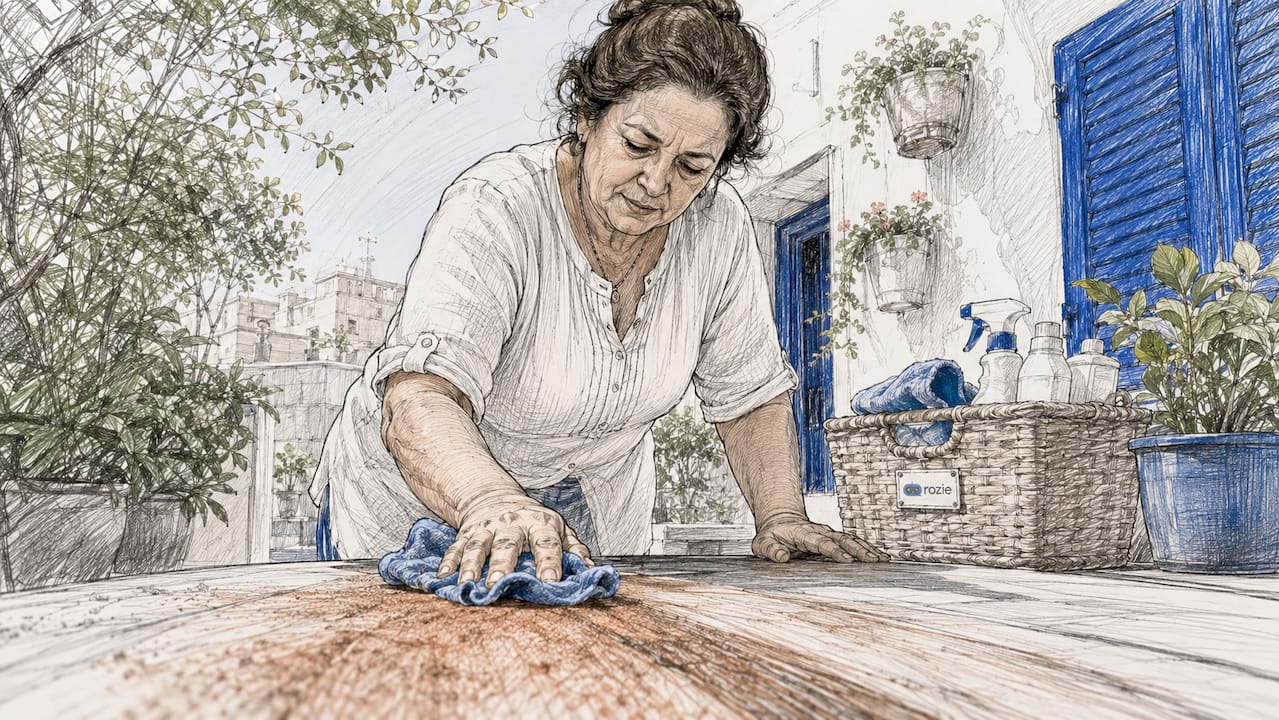
- Damp-wipe all horizontal surfaces. Windowsills, shelves, countertops, and furniture tops carry the heaviest deposits. Rinse the cloth often so you are not relocating dust.
- HEPA-vacuum soft furnishings. Sofas, rugs, curtains, and mattresses trap fine particles deep in their fibres. Only HEPA filtration captures them rather than recirculating them.
- Floors last. HEPA-vacuum, then follow with a damp microfiber mop. On globigerina limestone or other natural stone, use only a pH-neutral cleaner such as Lithofin or HG — never vinegar or acidic products, which permanently etch Malta’s porous, pH-sensitive stone.
- Electronics gently. A soft, barely damp cloth on screens and keyboards; dust inside electronics causes overheating.
- Rinse outdoor surfaces and solar panels. The iron-rich coating noticeably reduces solar panel output until it is washed off. Rinse with water in the early morning, before the sun heats the glass. Balconies and terraces need their own pass — the terrace cleaning guide for Malta covers that side in detail.
Pro tip
During dust season, a ten-minute daily routine beats a marathon clean. The dust settles in waves — a second, finer layer lands hours after the first visible one — so a quick damp wipe of horizontal surfaces each morning, plus an air purifier overnight, keeps particle levels manageable between full cleans.
Which mistakes make Saharan dust cleanup worse?
The most damaging mistakes are dry dusting, using a non-HEPA vacuum, cleaning bottom-up, and stopping after a single session. Each one either launches fine PM2.5 particles back into the air you breathe or grinds abrasive grit across surfaces. Most of these come from habit rather than carelessness — ordinary dusting instincts simply don’t work on il-qilla deposits.
- Dry dusting. A dry cloth lifts the coarse layer but launches the fine fraction airborne. Always damp-wipe.
- Non-HEPA vacuuming. Standard vacuum filters exhaust PM2.5 straight back into the room.
- Airing the house too soon. Opening windows while dust is still falling brings in a fresh load. Check the ERA readings first.
- Skipping AC filter maintenance. A clogged filter circulates contaminated air continuously and quietly degrades indoor air quality for weeks. Washing it takes five minutes — the highest-return maintenance task in the house during dust season.
- Cleaning bottom-up. Floors first means dust from shelves and ceilings falls onto finished surfaces. Always top-to-bottom.
- Ignoring hidden reservoirs. Behind radiators, inside light fixtures, along skirting boards — these spots release particles back into the air for days.
- Stopping after one clean. Fine particulate keeps settling for days after an event. Plan at least two full cycles within 48 hours of a major episode.
Is it worth hiring a cleaner after a dust event?
For a full post-dust deep clean — soft furnishings, every horizontal surface, floors, windowsills, balcony — many Malta households find it worth outsourcing. Done properly, the job takes 4–6 hours of physical work, and professionals with commercial HEPA equipment typically finish faster and more thoroughly. Pricing on Rozie is offer-based: cleaners send exact offers for your specific job, so you can see typical rates in the Malta cleaning cost guide and compare before you accept.
Finding that cleaner the traditional way is the painful part. It usually means scrolling Facebook groups, texting numbers, chasing quotes, and hoping whoever turns up owns a HEPA vacuum and knows not to wet-mop fine red dust straight into your grout.
Rozie was built to remove that friction. You post the job once, note “Saharan dust cleanup — HEPA-vacuum before wet cleaning” in the instructions, and verified cleaners send you offers with exact prices within minutes. Every booking is backed by 7-day payment protection and up to €1,000,000 in professional liability insurance underwritten by Lloyd’s Insurance Company S.A.
Here is the full booking process in under 60 seconds:
Compare Cleaning Offers on Rozie ->
Rozie makes post-dust deep cleaning simple in Malta
After a heavy il-qilla event, the cleanup can feel like a second job — fine particles work into carpets, curtains, and every corner of the home. That is exactly where professional help earns its keep.

Rozie connects you with verified cleaners across Malta who handle post-dust deep cleaning regularly. Every cleaner is verified before joining the platform, every booking carries 7-day payment protection, and accidental damage is covered by liability insurance of up to €1,000,000 per occurrence — with Rozie covering all deductibles. You can book a verified cleaner online in minutes with flexible scheduling that fits dust-event timing, and browse deep cleaning options for Maltese homes to see what a thorough post-event clean includes. When you fill in your request, the deep clean prep checklist shows exactly what to write in your booking notes so cleaners quote accurately. For more Malta-specific advice, browse all our cleaning in Malta guides — including the room-by-room apartment cleaning checklist built for il-qilla, limescale, and humidity.
Rather skip the dust battle entirely? Post your request on Rozie, add “post-il-qilla deep clean” to the notes, and compare exact offers from verified cleaners before you accept — no phone calls, no quote chasing.
Download Rozie – Book in 60 Seconds ->
FAQ
What is Sahara dust and why does it affect Malta so often?
Saharan dust is fine particulate matter carried by scirocco winds from North Africa across the Mediterranean. Malta’s position makes it one of the most frequently affected countries in Europe, with multiple il-qilla events each year, most commonly between March and June.
How dangerous is Saharan dust for indoor air quality?
Pollution levels during major events have exceeded 270µg/m³ at Malta’s monitoring stations, more than six times the WHO 24-hour guideline of 45µg/m³. The fine particles penetrate deep into the lungs and can carry allergens, bacteria, and viruses, posing real risk to children, the elderly, and people with respiratory conditions.
What is the most effective way to clean Sahara dust from floors and carpets?
HEPA-filter vacuuming combined with damp microfiber mopping is the most effective method. Vacuum carpets and soft furnishings before mopping hard floors, work top-to-bottom, and use only pH-neutral cleaners on Malta’s limestone and natural stone surfaces.
How long does Saharan dust stay in the air and on surfaces indoors?
Fine dust can linger in the air and keep settling on indoor surfaces for days after an event, sometimes over a week if no rain falls. Plan for repeated cleaning sessions — at least two full cycles within 48 hours — rather than a single cleanup.
Should I run my air conditioning during a Saharan dust event?
Yes, but switch the unit to recirculation mode so it draws from indoor air rather than outside. Clean or replace the AC filter before and after each dust event to stop the unit spreading contaminated air through your home.
Can I book a post-dust deep clean on Rozie?
Yes. Post a cleaning request on Rozie, mention the recent dust event in your booking notes, and verified cleaners send you offers with exact prices within minutes. You compare the offers and accept the one you prefer, with 7-day payment protection and insurance coverage on every booking.
Recommended
- After Builders Cleaning Malta: 3-Phase Process Cuts Time 30% | Rozie – Malta’s Best Cleaning Services
- Holiday Home Cleaning Malta: Step-by-Step Guide for Expats | Rozie – Malta’s Best Cleaning Services
- Post Renovation Cleaning Malta 2026: Cut Mistakes by 40% | Rozie – Malta’s Best Cleaning Services
- Short-Let Cleaning in Malta Guide. CHECKLIST