


In this guide
How do you find a trusted nanny in Malta?
How much does a nanny in Malta cost in 2026?
What are the top 6 nanny services in Malta?
How do you balance childcare with keeping the home running?

How do you find a trusted nanny in Malta in 2026?
Trusted childcare in Malta comes through one of four channels: a full-service agency that vets and matches sitters for you, a peer-to-peer platform where you message sitters directly, a registered childcare centre that offers in-house care plus occasional babysitting, or direct hiring through Facebook groups and word-of-mouth. Each route has trade-offs around speed, vetting depth, and cost.
Whichever route you take, four verification checks are non-negotiable: a Police Conduct Certificate (issued in Malta on request through Pulizija ta’ Malta), pediatric first aid certification, two contactable references from previous families, and a written agreement covering hours, rate, and termination notice. Agencies handle this for you. With direct hires, you handle it yourself — and most disputes happen because someone skipped this step.
👶 Free Childcare Scheme.
Launched in 2014 and run by Jobsplus, the scheme covers free childcare for children aged 3 months to 3 years whose parents work or study. As of late 2023, 186 registered centres and roughly 7,900 children participated. The scheme covers staff costs and consumables — you still pay for food, nappies, and outings.
🌍 Expats and Third-Country Nationals.
EU citizens and long-term residents access the Free Childcare Scheme on the same terms as Maltese nationals. Third-country nationals on a single permit qualify if both parents are employed and paying social security; those on a Students Directive residence permit are not eligible unless they hold an Employment Licence.
Most expat parents in Sliema, St Julian’s, Gżira, and Msida split their childcare between a registered centre during work hours and a private sitter for evenings, weekends, and school holidays. That hybrid model is the norm, not the exception. Read the European Commission’s overview of Malta’s early-childhood system for the full regulatory picture, or the EURAXESS Malta guide for relocating researchers and their families.
How much does a nanny in Malta cost in 2026?
Private nanny pay in Malta lands between €8 and €15 per hour for standard regular care, with newborn nurses, governesses, and live-in roles pushing the upper end to €20–€25 per hour or more depending on language skills and qualifications. Casual evening babysitting through peer platforms typically averages €10–€11 per hour, while agencies charge a 20–40% margin on top of the sitter’s pay to cover vetting, scheduling, and insurance.
Sliema, St Julian’s, and central Valletta typically run at the higher end of these ranges — premium localities concentrate demand from working expats and short-let hosts, and parking constraints add friction that sitters price into their rates. Inland towns like Mosta, Birkirkara, Naxxar, and Żabbar are usually more competitive.
💰 Working parent monthly budget
Free Childcare Scheme
(eligible toddler, 40 hrs/week)
€0
Private nanny
(€12/hr × 40 hrs/week)
€2,080+
The gap is why most Malta families with toddlers default to a registered centre during work hours and only book a private sitter for evenings, weekends, or school-holiday weeks.
What are the top 6 nanny services in Malta?
Below are the six options Maltese and expat parents return to most often. Each entry covers the model, what stands out, and where it fits best. None of these services publish hard pricing online — confirm rates directly before booking.
1. Call A Nanny
Best for: last-minute and 24/7 babysitting, including hotel stays and overnight cover. Call A Nanny is a long-running Malta agency known for speed and round-the-clock availability — handy for parents with shift work, late events, or out-of-town visitors. Sitters are vetted before placement and many hold pediatric first aid certification. The roster also includes nursing nannies and party animators, which is unusual locally.
The service runs an “Emergency Always Available” promise; in practice, expect a confirmed sitter within a few hours during evenings and weekends, longer during peak summer. Pricing is request-based — the company prefers a quick call to match the right sitter to your needs.
2. My Poppins & Co.
Best for: working parents who want a regular nanny and backup babysitting from one provider. My Poppins & Co. places sitters with pediatric first aid certification, runs an in-house training academy, and partners with several Malta hotels for guest childcare. Their mobile app handles bookings and rebookings — a meaningful time-saver compared with phone-call agencies.
They also offer corporate childcare arrangements for employers running family-friendly events and after-school cover for staff. If your office is in St Julian’s or Sliema, this is worth asking your HR team about.

3. Caring Companions Malta
Best for: households needing childcare alongside elder care, special-needs support, or post-hospital recovery. Caring Companions Malta blends nanny, respite, and overnight care under one roof — useful if a grandparent lives with you or if your child has additional needs that go beyond a typical sitter’s scope.
Their carers are typically multilingual, which matters for households where parents and grandparents speak different languages. Verify accreditation directly: the website emphasises empathy and flexibility but is light on formal qualifications, so request CVs and references for any candidate before signing.
4. Team Tickles
Best for: registered childcare under the Free Childcare Scheme plus occasional babysitting and birthday parties. Team Tickles runs a network of nursery centres across Malta with extended morning and evening hours. They use the illumine parent-communication platform for real-time daily updates — photos, naps, meals, and milestones pushed to your phone.
If your child is between 3 months and 3 years and both parents work or study, Team Tickles is a strong default for primary care. The babysitting and party services are useful add-ons but not the main draw — book those well ahead during Carnival, Easter, and summer.
5. Nannies Incorporated
Best for: premium and international placements — newborn nurses, full-time live-in nannies, governesses with multiple languages. Nannies Incorporated is a London-headquartered agency operating in Paris and Dubai with active Malta placements. Their job listings show recent Malta searches — including a recent live-in nanny role at £800 net per week for a 4-month-old, which gives you a realistic ceiling for the premium segment.
Expect personal-consultant matching, deeper background checks than local agencies, and contracts that specify holiday, sick pay, and notice periods. This is the route for families with non-trivial budgets, multiple children, or specialised needs (multilingual schooling, frequent travel).
6. Babysits.mt
Best for: families who want to interview sitters directly without an agency markup. Babysits.mt is a peer-to-peer marketplace — you post your needs, browse sitter profiles, message directly, and arrange an introductory meeting before any booking. The platform’s identity-verification features and review system give a baseline of safety, but vetting is on you.
Average rates on the platform sit around €10.44 per hour across active Malta listings, which is meaningfully below agency rates. The trade-off: you handle scheduling, payment, and any backup if your sitter cancels. Best suited to parents who already know what they’re looking for and are comfortable interviewing.
How do you balance childcare with keeping the home running?
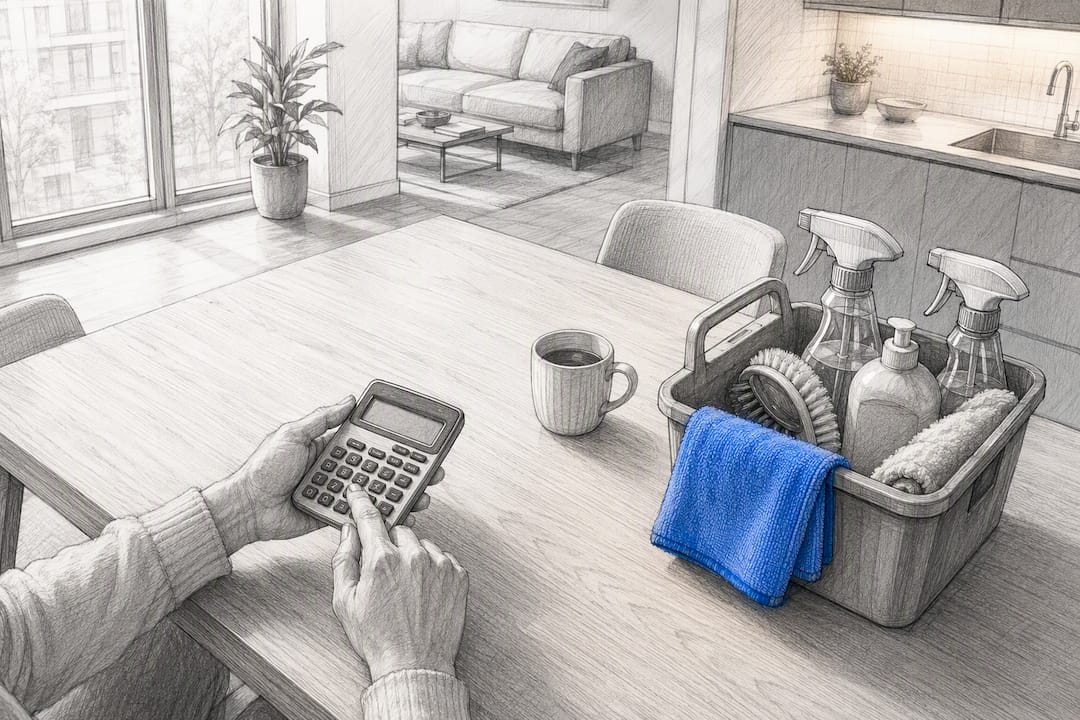
Here is the part nobody tells you in advance: solving the childcare problem reveals the next problem. Once a nanny or nursery covers your work hours, the bottleneck shifts to everything else — laundry, cooking, the bathroom you’ve been meaning to deep clean, the fridge that needs sorting, the windows the Saharan dust just coated for the third time this season. Working parents in Malta consistently say the cleaning is what eats the weekend they planned to spend with the kids.
The fix isn’t doing more yourself. It’s outsourcing the parts that don’t need you. A regular cleaner once a week — through a verified marketplace rather than a Facebook group — frees up four to six hours that go straight back into family time. Most Rozie users are working parents who’d rather spend Saturday morning at Golden Bay or Mellieħa than scrubbing the oven their toddler somehow got jam into.
Pricing follows roughly the same logic as nanny rates: cleaning in Malta runs €10–€25 per hour depending on whether you go independent or platform-verified, and Sliema/St Julian’s command a 15–20% premium over inland towns. The honest comparison is between time and money — and for most parents juggling a full-time job and a toddler, two hours of professional cleaning a week is the highest-value €30–€50 they spend.
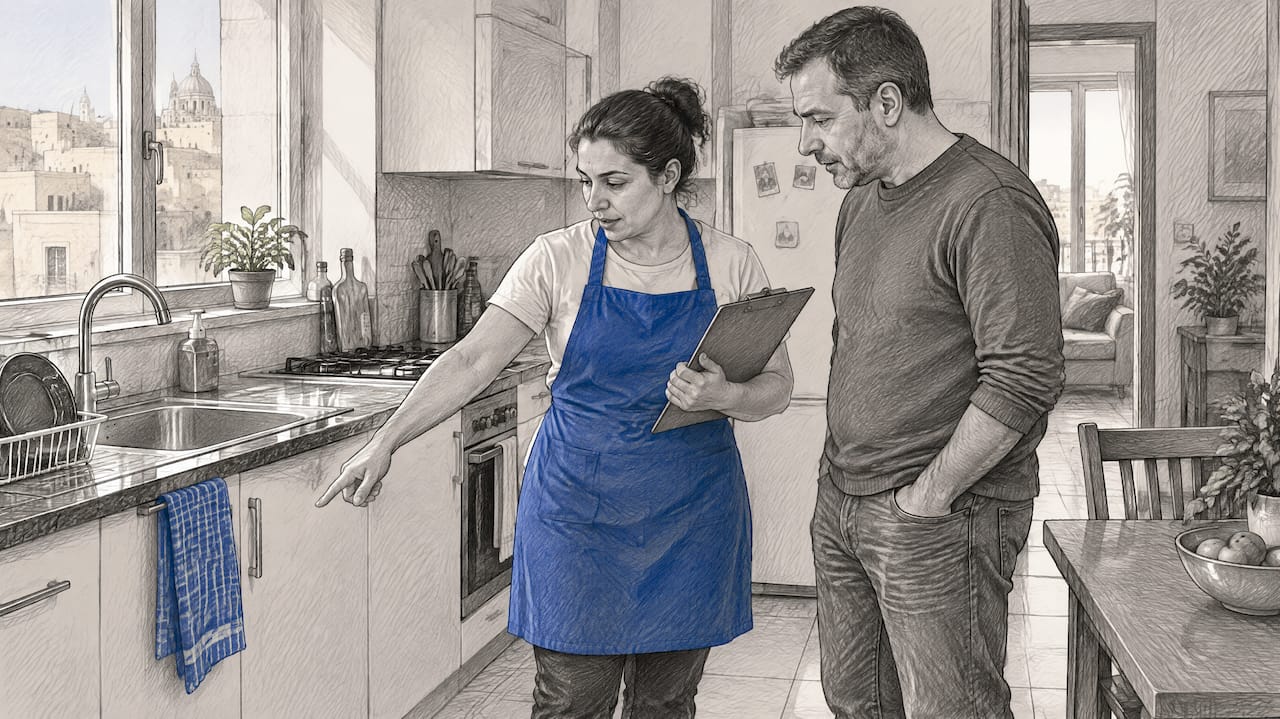
Finding a reliable cleaner in Malta the traditional way means scrolling through “Nannies and Cleaners Malta” on Facebook, making phone calls, chasing quotes, and hoping the person who shows up actually does a good job. Most working parents don’t have time for that — and it’s exactly the problem Rozie was built to solve. No calls, no chasing. You pick a date, select your extras (oven, fridge, inside windows), and within minutes verified cleaners send you competitive offers with the exact price for your job. Every booking is backed by professional liability insurance up to €1,000,000 underwritten by Lloyd’s. Here’s the full booking process in under 60 seconds:
Get Cleaning Offers on Rozie →
Key takeaway: Combining a registered childcare centre, a vetted private sitter for evenings, and a regular cleaner is the practical baseline most Malta working parents settle into. It’s three small recurring costs that buy back more weekend hours than any single big spend.
What questions should you ask before hiring a nanny?
The interview matters more than the CV. A polished résumé tells you what someone has done; a good interview tells you whether they’ll fit your specific household, your child’s temperament, and the routines you actually run. Ask the same questions to every candidate so you can compare answers fairly.
💡 Pro tip
Run a paid trial before committing. Two to three days at the agreed rate, ideally with you home for the first day, tells you more than three rounds of interviews. Watch how the candidate handles the first refusal, the first scraped knee, and the transition home from the park — those small moments are the job.
Get the agreement in writing. A simple one-page document covering hourly rate, weekly hours, holiday entitlement, sick-pay policy, notice period, and a confidentiality clause prevents 90% of disputes. The Malta working parent survival guide covers the broader logistics of family life on the island — schools, healthcare, weekend planning — alongside childcare specifics.
Frequently asked questions
How much should I pay a nanny in Malta in 2026?
Expect €8–€12 per hour for a casual babysitter via a peer platform, €10–€15 per hour for a regular nanny through an agency, and €18–€25+ per hour for a maternity nurse or newborn specialist. Live-in nannies run €1,500–€3,000+ per month depending on experience, hours, and whether the family covers accommodation and food. Live-in roles for premium international placements can exceed €4,000 per month.
Who qualifies for the Free Childcare Scheme in Malta?
Children aged 3 months to 3 years whose parents (or single parent/guardian) are either employed and paying social security, or pursuing a recognised qualification. Parents on parental leave or a career break do not qualify. Third-country nationals on a single permit qualify if both parents work; those on a Students Directive permit need an Employment Licence to be eligible.
Do I need to give my nanny a written contract in Malta?
Yes — Maltese employment law requires a written statement of employment terms for any regular employed role. For full-time live-in or live-out nannies, you should formalise the role properly with social security contributions, paid leave, and a notice period. For occasional babysitting through agencies or platforms, an informal written agreement covering rate, hours, and cancellation policy is enough.
What’s the difference between a nanny, a babysitter, and an au pair?
A nanny is a regular caregiver with set weekly hours, often involved in routines, meals, and developmental activities. A babysitter covers occasional or short sessions — date nights, evenings, weekends. An au pair is typically a young foreign caregiver living with the family, exchanging childcare for room, board, and a modest allowance, usually for 6–12 months. Each has different legal, tax, and visa implications.
Are nanny services in Malta available in Maltese as well as English?
Most agencies place sitters who speak both English and Maltese, plus often Italian, Filipino, or French. If you specifically want a Maltese-speaking caregiver to support your child’s bilingual development, ask the agency upfront — it’s a common request and most rosters can accommodate it. Caring Companions Malta and My Poppins & Co. both highlight multilingual placements.
What home services do Malta working parents typically rely on?
Beyond childcare, the most common recurring services are weekly or fortnightly cleaning, grocery delivery (Wolt, Lidl Plus, Bolt Food), and laundry pick-up for ironing. A verified cleaning service is usually the highest-impact addition — it converts the four to six hours a parent would spend on chores into family time. Many Rozie users book a regular slot the same week they finalise their nanny arrangement, treating both as part of the same “get the household functioning” decision.
How do I check if a nanny is properly verified?
Ask for and inspect three documents: a valid Police Conduct Certificate (issued by Pulizija ta’ Malta, dated within the last 12 months), a pediatric first aid certificate from a recognised provider (Red Cross Malta, St John Ambulance, or equivalent), and contact details for at least two prior families. Call the references — don’t just read written testimonials. Agencies typically handle this verification on your behalf; with direct hires you do it yourself.
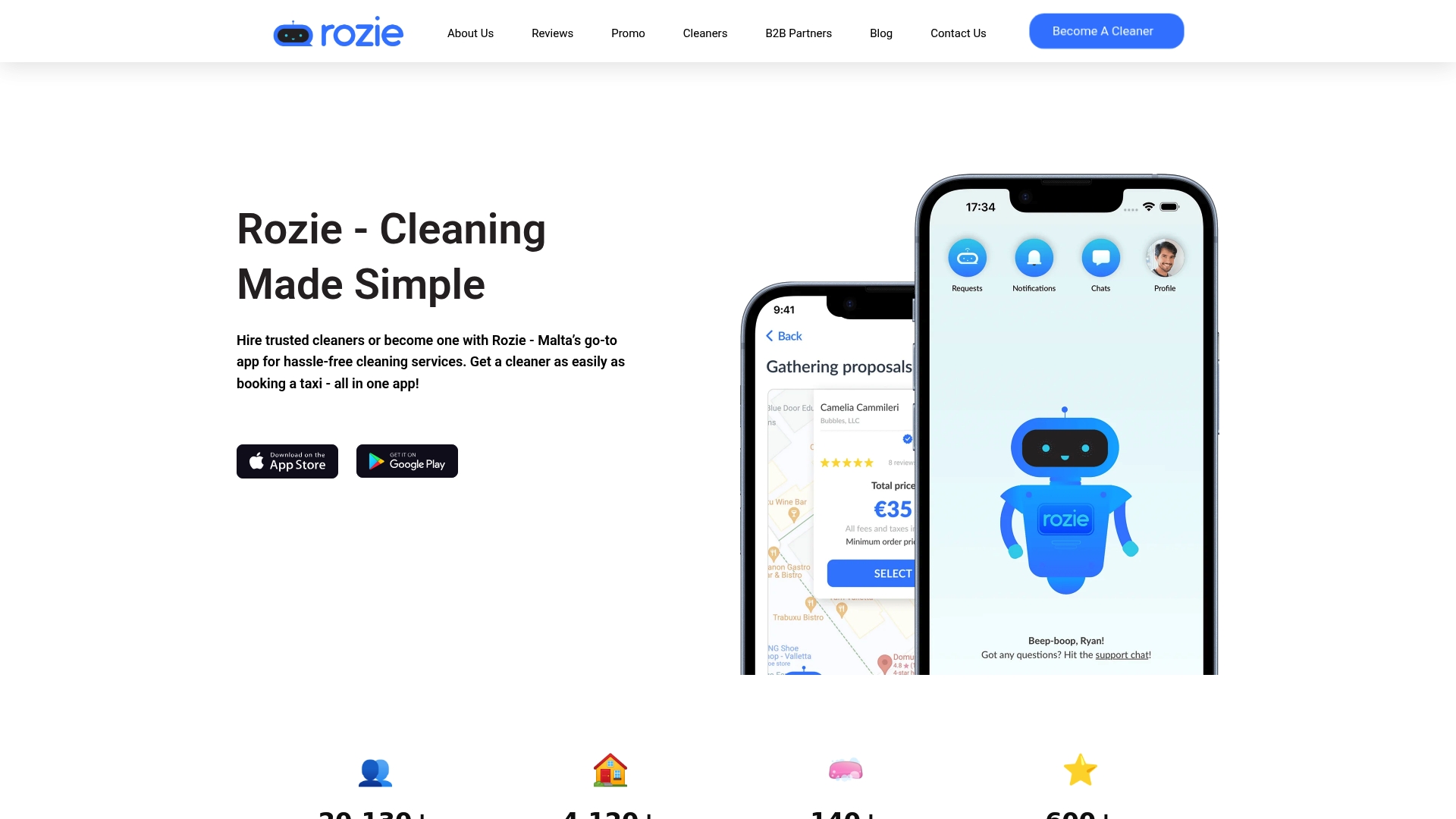
Sorted childcare? Sort the home next. Over 29,080 Malta residents use Rozie to book verified cleaners with transparent offer-based pricing and €1,000,000 liability cover on every booking. The whole thing takes under a minute — no phone calls, no quote chasing.
Download Rozie — Book in 60 Seconds →