

Post renovation cleaning in Malta typically costs €250–€1,200 for professional service and takes one to three days, depending on property size and renovation scope. The single biggest factor that separates a successful clean from a costly disaster is understanding how Malta’s limestone dust, high humidity, and alkaline cement residues interact with your new finishes — and which mistakes to avoid during removal. Getting this wrong doesn’t just waste time; it permanently damages the surfaces you just paid to install.
This guide covers the eight most common post-renovation cleaning mistakes Malta homeowners make, the three-phase process that professionals follow, realistic pricing by property size and renovation type, and a clear framework for deciding whether to tackle the job yourself or hire a specialist.
Table of Contents
- Why Renovation Dust in Malta Demands a Different Approach
- 8 Post-Renovation Cleaning Mistakes That Damage Malta Homes
- What Safety Equipment Do You Need for Post-Renovation Cleaning?
- The Three-Phase Cleaning Process for Malta Renovations
- How to Clean Specific Surfaces After Renovation in Malta
- How Much Does Post-Renovation Cleaning Cost in Malta?
- Should You DIY or Hire a Professional in Malta?
- What Results Should You Expect and When?
- FAQ
Why Renovation Dust in Malta Demands a Different Approach
Malta’s primary building material — globigerina limestone — produces fine calcium carbonate dust that behaves entirely differently from the gypsum and drywall dust found in northern European or North American homes. When this powder meets Malta’s year-round humidity of 60–80%, it absorbs atmospheric moisture within hours and forms a chalky paste that bonds to surfaces instead of sitting loosely on top. Standard dry wiping smears this paste across finishes rather than removing it.
The health implications are equally specific to Malta’s conditions. Limestone contains trace amounts of crystalline silica (quartz), which the International Agency for Research on Cancer classifies as a Group 1 carcinogen when inhaled as respirable dust. Renovation activities like cutting, drilling, or demolishing stone walls generate these fine particles — and standard household vacuums cannot capture them. They recirculate particles smaller than 10 microns back through their exhaust and into your lungs.
Modern Malta construction also introduces cement and concrete alongside traditional limestone. Cement dust is highly alkaline (pH 12–13) and will etch polished marble, permanently cloud glass, and corrode chrome fixtures if not removed promptly with the correct products. This combination of limestone paste, silica particles, and alkaline cement residue is what makes post-renovation cleaning in Malta a specialised task — and why generic online cleaning guides written for dry-climate markets fall short here.
Malta’s humidity makes timing critical
Between October and February, when indoor humidity regularly exceeds 70%, limestone dust absorbs moisture faster and bonds more aggressively to surfaces. Starting your post-renovation clean within 48–72 hours of construction completion — before humidity transforms loose dust into surface-bonded residue — can reduce both effort and cost by roughly a third. Waiting longer than a week in winter months often means tougher stains, deeper penetration into porous surfaces like grout lines and unfinished plaster, and a higher risk of mould developing behind furniture and inside closed cabinets.
8 Post-Renovation Cleaning Mistakes That Damage Malta Homes
Rushing through post-renovation cleaning or using the wrong methods increases recontamination risk significantly and can permanently damage the finishes you just installed. These are the most common errors homeowners make in Malta, ranked by how expensive they are to fix.
Mistake 1: Using acidic cleaners on limestone floors
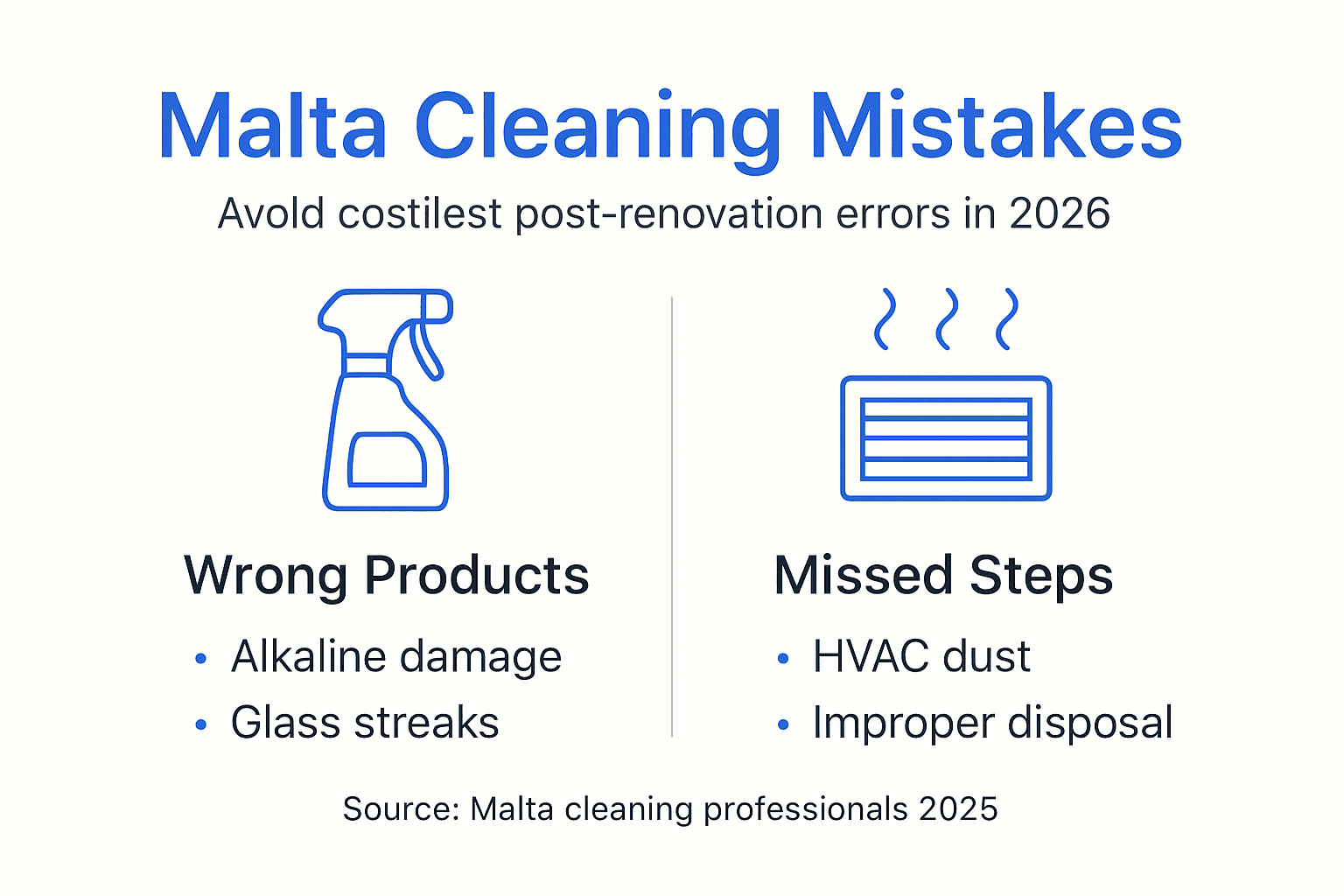
Malta’s globigerina limestone floors are porous and highly sensitive to acid. Products containing vinegar, citric acid, or hydrochloric acid dissolve the calcium carbonate surface, creating permanent dull patches and etching. This damage cannot be reversed with polishing alone — the stone must be professionally resurfaced at €15–€30 per square metre. Always use pH-neutral stone cleaners (pH 7–8) on limestone. Fila Cleaner and Lithofin MN Easy Clean are both available at Homemate and suitable for Maltese limestone.
Mistake 2: Dry-sweeping or dry-dusting limestone residue
Dry sweeping launches fine limestone particles back into the air, where they remain suspended for hours before resettling on surfaces you’ve already cleaned. This creates an endless cycle of dust redistribution. Every cleaning pass on renovation dust in Malta should use damp methods — a damp broom for initial sweeping, damp microfiber cloths for wiping, and HEPA vacuum filtration for extraction. Dry dusting is the single most counterproductive action in Maltese post-renovation cleaning.
Mistake 3: Using a standard household vacuum
Conventional vacuum cleaners use fabric or foam filters that cannot capture particles below 10 microns. Limestone renovation dust includes particles as small as 0.3 microns. A standard vacuum actively worsens air quality by pulling settled dust into the airflow and blowing the finest, most dangerous particles back into your living space through its exhaust. Only HEPA-filtered vacuums (capturing 99.97% of particles at 0.3 microns) are appropriate. You can rent industrial HEPA vacuums in Malta from equipment hire companies in Mriehel and Marsa for approximately €30–€50 per day.
Mistake 4: Skipping cleaning phases or combining them
The three-phase cleaning process (rough clean, detail clean, final polish) exists for a practical reason: each phase disturbs dust that settles during the next waiting period. Attempting to do detail cleaning before the rough clean has been completed — or polishing surfaces before the detail wipe-down — means fine particles disturbed by earlier work land on supposedly finished surfaces. This recontamination effect is especially pronounced in Malta’s humid conditions, where airborne dust particles absorb moisture and become stickier as they resettle.
Mistake 5: Using alkaline cement removers on marble or chrome
Cement residue requires acid-based removers to dissolve, but these same products destroy natural marble, chrome fixtures, and unsealed grout. Many homeowners apply a single “heavy duty” product across all surfaces, not realising that the cleaner solving one problem is creating another. Always test any cleaning product on an inconspicuous area first, and use different products for different surfaces: acid-based removers for cement on ceramic tiles and glass, pH-neutral products for stone, and non-abrasive chrome cleaners for fixtures.
Mistake 6: Neglecting HVAC ducts and filters
Renovation dust infiltrates every duct, vent, and return in your HVAC system. If you clean every visible surface but skip the HVAC, your system will continuously blow fine dust back into freshly cleaned rooms for weeks. Replace all HVAC filters immediately after renovation — they’ll be saturated regardless of their rated lifespan. For split-unit air conditioners (the most common system in Malta), remove and wash the mesh filters with warm water, and have the internal coils professionally cleaned if the renovation was extensive. Clogged filters also force systems to work harder, increasing electricity consumption during Malta’s already expensive summer cooling season.
Mistake 7: Not separating clean and dirty water
When wiping surfaces with a single bucket of water, the cloth picks up dissolved limestone and cement, then redeposits a thin film on the next surface you wipe. This film dries to a barely visible haze that dulls finishes and attracts new dust. Use two buckets: one with clean solution, one for rinsing dirty cloths. Change the rinse water every 10–15 minutes, or whenever it becomes visibly cloudy. This seems tedious but halves the number of wipe-down passes needed for a streak-free result.
Mistake 8: Disposing of renovation waste in household bins
Malta’s Construction and Demolition Waste Framework Regulations (S.L. 549.161) require proper disposal of construction waste through licensed carriers and approved facilities. Mixing limestone rubble, cement bags, tile fragments, and chemical containers with household waste violates these regulations and can result in fines — €25 for households caught disposing waste inappropriately, doubling to €50 for repeat offences. Take construction waste to WasteServ’s Civic Amenity sites, or arrange collection through your contractor. Hazardous items like solvent containers and paint cans require separate hazardous waste disposal.
What Safety Equipment Do You Need for Post-Renovation Cleaning?
FFP2 masks (minimum), nitrile gloves, safety glasses with side shields, and long-sleeved clothing are the baseline requirements for any post-renovation cleaning in Malta — whether you’re doing the work yourself or simply inspecting the space during cleaning. Limestone dust containing crystalline silica causes respiratory irritation immediately and can contribute to chronic lung conditions with repeated unprotected exposure.
Standard surgical masks and cloth face coverings are inadequate for construction dust. FFP2 masks filter 94% of airborne particles, and you can buy a box of five from PAVI, Homemate, or any Malta hardware store for €5–€15. For the Phase 1 rough clean — when dust disturbance is heaviest — FFP3 masks (99% filtration) are the safer choice.
Contact lens wearers should switch to glasses during cleaning. Fine limestone particles trapped under contact lenses cause corneal scratches that require medical attention. Chemical-resistant nitrile gloves (not latex) protect against both skin irritation from prolonged limestone dust contact and the alkaline burn risk from wet cement residue.
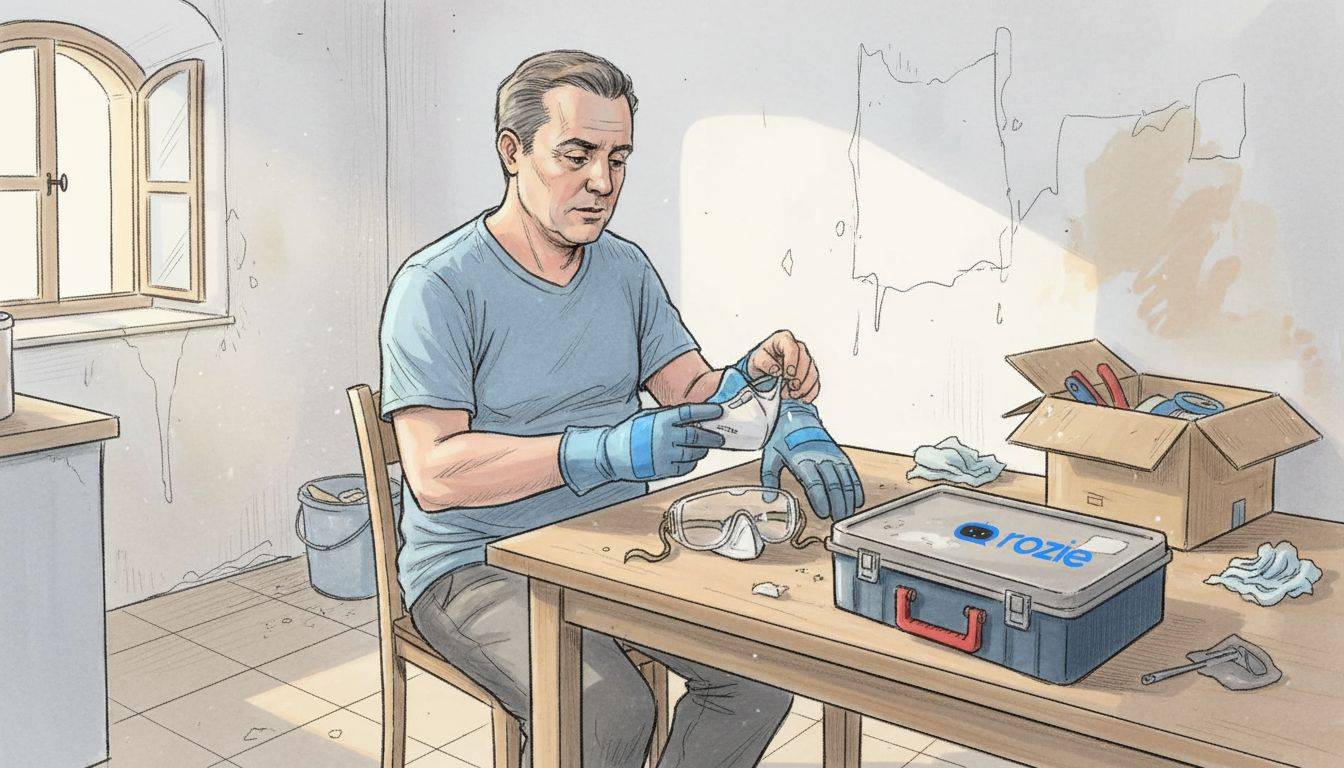
Essential PPE checklist: FFP2/FFP3 mask, nitrile gloves, safety glasses with side shields, closed shoes, long sleeves. For heavy Phase 1 work, add disposable coveralls (€5–€10 from local hardware stores). Invest in quality PPE even if hiring professionals — you’ll need protection when inspecting the space during cleaning.
The Three-Phase Cleaning Process for Malta Renovations
Professional post-renovation cleaning follows three distinct phases, each designed to handle a specific contamination level. Skipping phases or combining them causes recontamination — fine dust disturbed by Phase 1 activities needs 6–12 hours to settle before Phase 2 wet cleaning can be effective. The entire process takes 15–22 hours of work for a standard 100 m² Malta apartment with moderate renovation dust.
Phase 1: Rough clean (4–6 hours for 100 m²)
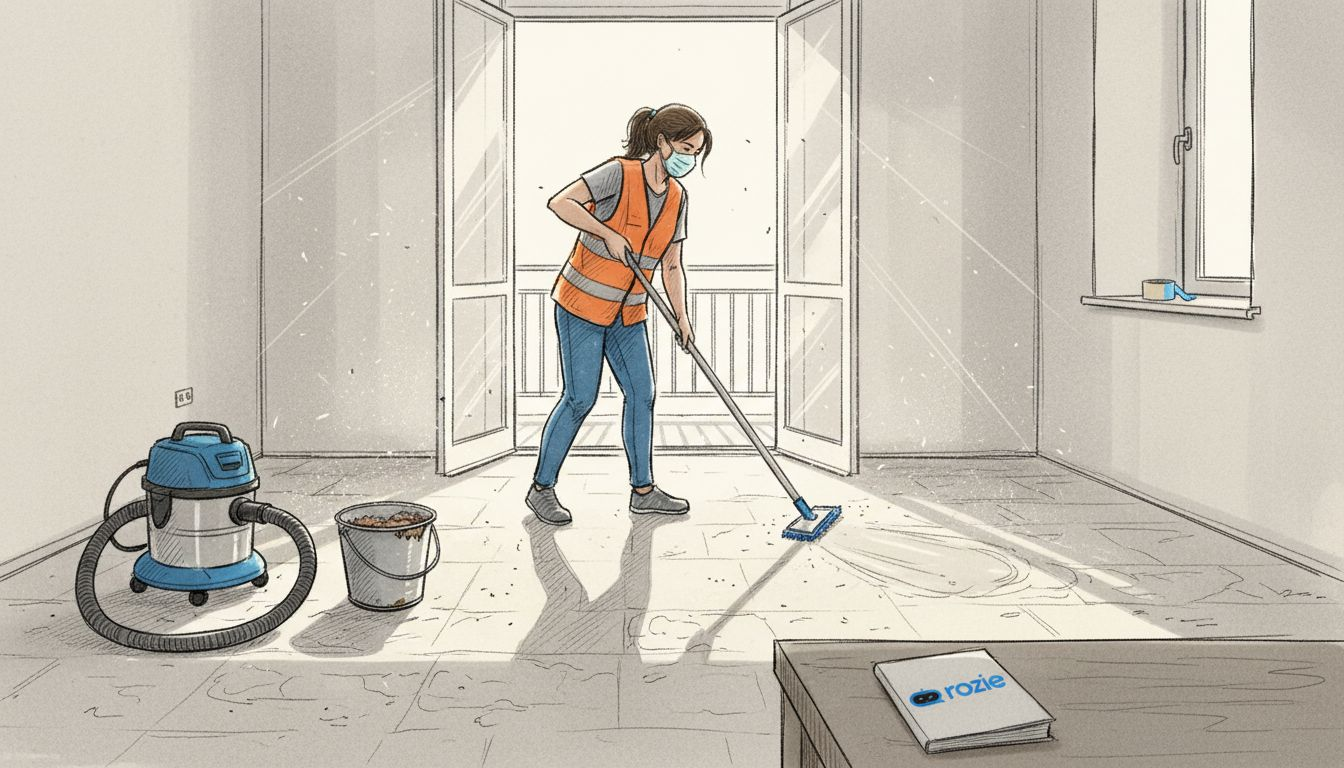
Remove all visible debris — construction rubble, packaging, plastic sheeting, offcuts, and large dust accumulations. Work from the top of each room downward: ceilings first, then walls, then horizontal surfaces, then floors. Use a damp broom (never dry) for initial floor sweeping to prevent dust clouds. HEPA-vacuum all horizontal surfaces. Bag waste separately: general rubbish, construction rubble (for Civic Amenity site disposal), and hazardous materials (solvents, paint). Empty vacuum bags or canisters frequently — a full collection vessel reduces suction and allows fine particles to escape.
After completing the rough clean, leave the space for 6–12 hours with windows open. This allows airborne particles to settle before Phase 2, rather than landing on surfaces you’ve already wet-cleaned.
Phase 2: Detail wet clean (8–12 hours for 100 m²)
This is the most labour-intensive phase and the one where Malta-specific technique matters most. Prepare surface-appropriate cleaning solutions — pH-neutral for limestone and marble, mildly acidic for cement residue on ceramic tiles and glass, non-abrasive for chrome and stainless steel. Work section by section, wiping all surfaces with damp microfiber cloths using overlapping strokes. Clean walls from ceiling to baseboard in manageable sections. Use the two-bucket method (clean solution and rinse water, changed frequently) to avoid redepositing dissolved residue.
Pay special attention to recessed areas that trap dust: window track channels, door hinge pockets, light switch plates, power socket surrounds, cabinet interiors, and the tops of door frames. Use detail brushes (old toothbrushes work well) for fixtures, hinges, and hardware. Rinse cloths after every 1–2 square metres of surface area.
Phase 3: Final polish (3–4 hours for 100 m²)
Polish glass and mirrors with streak-free glass cleaner. Buff metal fixtures with appropriate products. Mop floors with the correct solution for each material (pH-neutral for stone, suitable cleaner for ceramic). Perform a final HEPA vacuum pass on all surfaces. Inspect each room under bright light — use a torch at oblique angles to reveal dust that’s invisible under overhead lighting. Check windowsills, door frame tops, baseboard edges, and corners.
| Phase | Primary Method | Duration (100 m²) | Key Products |
|---|---|---|---|
| 1. Rough clean | Dry removal + HEPA vacuum | 4–6 hours | HEPA vacuum, damp broom, heavy-duty bags |
| 2. Detail clean | Wet cleaning (two-bucket method) | 8–12 hours | pH-neutral cleaners, microfiber cloths, detail brushes |
| 3. Final polish | Surface-specific finishing | 3–4 hours | Glass cleaner, chrome polish, floor-specific solutions |
Allow 24–48 hours after the final polish for residual airborne particles to settle. A light follow-up dusting after this period is normal and expected — it doesn’t indicate inadequate initial cleaning. If heavy dust reappears within hours, the rough clean phase was insufficient and needs repeating.
How to Clean Specific Surfaces After Renovation in Malta
Different surfaces in Maltese homes require different products and techniques. Using the wrong approach on the wrong material is the leading cause of avoidable damage during post-renovation cleaning. Here’s a surface-by-surface guide for the materials most common in Malta renovations.
Globigerina limestone floors and walls
Malta’s native limestone is porous and reacts destructively with acidic and alkaline cleaners. Use only pH-neutral stone cleaners (Fila Cleaner, Lithofin MN Easy Clean, or HG Natural Stone Cleaner — all available at Homemate). Apply with a damp (not wet) microfiber mop or cloth. Excess water penetrates limestone pores and can cause salt efflorescence (white crystalline deposits) as it dries. For stubborn cement residue on limestone, use a plastic scraper followed by a poultice of pH-neutral cleaner — never acid-based removers.
Ceramic and porcelain tiles
New tiles often have a persistent grout haze (cement film) that resists regular cleaning. For ceramic and porcelain surfaces, a diluted acid-based grout haze remover (available at construction supply shops in Mriehel) dissolves cement residue effectively. Apply to tiles only — protect adjacent stone surfaces, metal fixtures, and grout lines with masking tape and petroleum jelly. Rinse thoroughly afterward to neutralise acid traces.
Glass and windows
Cement splashes on glass bond chemically and cannot be removed by glass cleaner alone. Scrape dried cement spots with a new, sharp razor blade held at a 30-degree angle to the glass. Follow with a mild acidic cleaner (white vinegar solution works for glass), then finish with streak-free glass cleaner. Malta’s sea-spray conditions mean exterior windows may also have salt residue mixed with construction dust — a preliminary rinse with warm water before applying cleaner prevents scratching from salt crystals.
Marble countertops and surfaces
Marble is calcium carbonate — chemically identical to limestone — and equally sensitive to acid. Even mild household vinegar etches marble. Clean with pH-neutral products only, using soft microfiber cloths. For cement spots on marble, soften with warm water and pH-neutral cleaner for 10–15 minutes, then gently scrape with a plastic tool. Never use metal scrapers, abrasive pads, or acid-based cement removers on marble surfaces.
Chrome and stainless steel fixtures
Alkaline cement dust corrodes chrome plating if left in contact for extended periods. Clean chrome fixtures promptly with a non-abrasive chrome cleaner or warm soapy water. Dry immediately — Malta’s hard water (350–600 PPM) leaves limescale spots on wet metal surfaces within hours. For stainless steel, wipe in the direction of the grain to avoid micro-scratches. Avoid steel wool, scouring pads, and chloride-based cleaners.
How Much Does Post-Renovation Cleaning Cost in Malta?
Professional post-renovation cleaning in Malta costs €250–€1,200 depending on property size, renovation scope, and the number of specialised surfaces involved. Hourly rates for professional cleaners start at approximately €12–€20 per hour, but most providers quote fixed prices based on a site assessment because renovation cleaning time varies dramatically with dust levels and surface types.
| Property Size | Light Renovation (painting, minor updates) | Moderate Renovation (bathroom/kitchen refit) | Heavy Renovation (structural work, new floors) |
|---|---|---|---|
| Studio / 1-bed (50 m²) | €250–€350 | €350–€500 | €500–€650 |
| 2-bed (80–100 m²) | €350–€500 | €500–€700 | €700–€950 |
| 3-bed (120–150 m²) | €500–€700 | €700–€950 | €950–€1,200 |
These prices typically include labour, professional-grade equipment, cleaning products, and basic waste removal. HVAC cleaning and filter replacement may be quoted separately — expect an additional €50–€150 depending on the number of units. When comparing quotes, check whether the provider includes all three cleaning phases, how many return visits are covered, and whether HVAC work is included.
DIY post-renovation cleaning appears cheaper at €80–€200 for supplies and equipment rental, but takes significantly longer — five to ten days of part-time work compared to one to three days for a professional team. Factor in the risk value: incorrect product use on a marble countertop or limestone floor can cost €500+ to repair, often exceeding the professional cleaning fee you saved.
Should You DIY or Hire a Professional in Malta?
The honest answer depends on your renovation scope, the surfaces involved, and how quickly you need the space ready. Small projects — a single room repainted, new shelving installed, minor plaster repairs — generate manageable dust levels that most homeowners can handle with proper equipment and techniques. Anything involving limestone cutting, tile removal, bathroom or kitchen refits, or structural work generates dust quantities and contamination types that require professional equipment and expertise.
| Factor | DIY Makes Sense | Hire a Professional |
|---|---|---|
| Renovation scope | Single room, painting, minor repairs | Multiple rooms, structural, wet areas |
| Surfaces involved | Ceramic tiles, painted walls | Marble, limestone floors, chrome fixtures |
| Equipment available | You own or can rent a HEPA vacuum | No access to HEPA filtration |
| Time available | 5–10 days flexible timeline | Need the space within 1–3 days |
| Physical capability | Can sustain hours of reaching, bending, scrubbing | Limited mobility or stamina for intensive work |
| Budget | €80–€200 (plus your time) | €250–€1,200 (fully handled) |
If you’re leaning toward professional help, look specifically for cleaners experienced with post-renovation work rather than general house cleaning services. The equipment requirements are different — industrial HEPA vacuums, professional wet-extraction systems, and surface-specific products. General cleaners may lack these tools and the knowledge of which products are safe on which Malta-specific surfaces.
Rozie connects you with verified cleaners in Malta, including professionals experienced with post-renovation work. Every cleaner on the platform undergoes background verification, and you see transparent pricing before confirming a booking. The 7-day payment protection means funds are only released after you confirm the work is satisfactory — meaningful assurance when the quality of post-renovation cleaning determines whether your new finishes survive their first week. You can browse cleaner profiles, read ratings from other homeowners, and book directly through the app.

What Results Should You Expect and When?
A properly completed post-renovation clean in Malta produces specific, measurable results. All horizontal surfaces should be dust-free when tested with a white cloth. Windows and mirrors should be streak-free and clear. Metal fixtures should shine without residue or water spots. Floors should be clean enough to walk on barefoot without any gritty sensation. Air should smell fresh — no dusty or chemical odours.
Some residual dust settling is normal for 24–48 hours after the final clean. As air currents redistribute the last remaining airborne particles, a thin layer of fine dust appears on surfaces. This is expected and requires only a light wipe-down — it doesn’t indicate a failed cleaning. What’s not normal is heavy dust reappearing within hours, visible residue on glass, or persistent chemical smells. These indicate the cleaning phases were either skipped or incomplete.
Inspection checklist after cleaning
Use a bright torch (phone flashlight works) at a low angle across surfaces to reveal dust invisible under overhead lights. Run your fingertip along windowsills, door frame tops, light switch surrounds, and baseboard edges — these are where rushed cleaning always shows. Check inside cabinets and wardrobes, behind doors, and along skirting board corners. Verify HVAC vents are clean and filters replaced. Turn on each air conditioning unit and check that no dust blows from the vents.
Photograph each room after cleaning is complete. This creates a baseline reference if issues appear later, helps with any quality discussions with your cleaner, and provides documentation for landlords or property managers. Photograph in natural daylight where possible — artificial light hides dust that’s clearly visible in sunlight.
For ongoing maintenance after the post-renovation clean, increase your regular cleaning frequency for the first two to four weeks. Fine particles continue to emerge from crevices, fabric furniture, and HVAC systems for some time. A weekly dust with damp microfiber cloths during this period prevents buildup from reaching noticeable levels.
FAQ
How long does post-renovation cleaning take in Malta?
A standard 100 m² Malta apartment with moderate renovation dust requires 15–22 total work hours across all three phases. Professional teams typically complete this in one to three days. DIY efforts take five to ten days of part-time work. Allow an additional 24–48 hours after the final clean for residual airborne particles to settle before a light follow-up wipe.
Can I use vinegar to clean limestone dust in Malta?
No. Vinegar is acidic and dissolves calcium carbonate — the main component of both limestone dust and Malta’s globigerina limestone floors. Using vinegar on limestone surfaces causes permanent etching and dulling that requires professional resurfacing to repair. Use only pH-neutral cleaners (pH 7–8) on limestone. Fila Cleaner and Lithofin MN Easy Clean are available at Homemate and formulated for natural stone.
Why does dust keep reappearing after I clean?
Two common causes: either the rough clean phase was insufficient (leaving too much loose dust that becomes airborne during detail cleaning), or the HVAC system is recirculating dust from contaminated ducts and filters. Replace all HVAC filters immediately after renovation and have split-unit mesh filters washed. Some residual settling within 24–48 hours of the final clean is normal and requires only a light wipe.
What does professional post-renovation cleaning cost in Malta?
Professional rates range from €250 for a small studio with light renovation dust to €1,200 for a large three-bedroom property after heavy structural work. A standard two-bedroom apartment with moderate renovation typically costs €500–€700. Most providers quote fixed prices after a site assessment. Compare quotes carefully — check whether all three cleaning phases, HVAC work, and return visits are included.
Is it safe to clean renovation dust without professional equipment?
Only if you have a HEPA-filtered vacuum and proper PPE (FFP2 mask minimum, safety glasses, nitrile gloves). Standard household vacuums recirculate fine silica-containing limestone particles back into the air. Prolonged unprotected exposure to respirable crystalline silica dust can cause respiratory irritation and, with chronic exposure, serious lung conditions. For light renovations (painting, minor repairs), proper PPE and a rented HEPA vacuum make DIY feasible. For heavy dust from stone cutting or demolition, professional equipment is strongly recommended.
How soon after renovation should I start cleaning?
Within 48–72 hours of construction completion for best results. In Malta’s humid climate, limestone dust bonds to surfaces more aggressively with each passing day as it absorbs atmospheric moisture. Starting promptly — especially during the high-humidity months of October to February — significantly reduces effort, cleaning product use, and the risk of permanent surface staining. Wait at least 24 hours after the last construction activity to let the heaviest dust settle before beginning Phase 1.
Do I need to clean HVAC systems after a renovation?
Yes — this is one of the most commonly skipped steps and causes ongoing dust problems for weeks. Renovation dust infiltrates all ductwork, vents, and filters regardless of precautions. At minimum, replace all disposable filters and wash reusable mesh filters on split-unit systems. For extensive renovations, have internal coils professionally cleaned. Blocked filters also increase energy consumption — a particular concern during Malta’s cooling season when air conditioning runs continuously.
Recommended
- After Builders Cleaning Malta: 3-Phase Process Cuts Time 30% | Rozie – Malta’s Best Cleaning Services
- Cleaning cost Malta 2026: Price calculator + hourly rates
- Property Management Cleaning Malta: 67% More Trust Verified | Rozie – Malta’s Best Cleaning Services
- Short-Let Cleaning in Malta Guide. CHECKLIST