

Malta packs about 7,000 years of history, 300+ days of sunshine, and a real island culture into 316 km², which means weekends here look nothing like the bar-and-beach stereotype most new arrivals expect. Locals and long-term expats organise their two days off around contrast — a city day balanced by a coastal day, a busy morning balanced by a slow evening, an anchor activity balanced by something lighter. This guide gives you the framework, the practical 2026 logistics, and the small insider checks that separate a “fine” weekend from one you’ll remember.
In this guide
How do locals actually spend a weekend in Malta?
How should you build your weekend itinerary?
Is Gozo worth a weekend escape from Malta?
What events and transport should you check before the weekend?
How do locals actually spend a weekend in Malta?
Locals and long-term expats organise their weekend around a loose three-part rhythm — Friday evening to reset, Saturday as the cultural or social anchor, and a slower Sunday that contrasts with whatever Saturday looked like. It isn’t a fixed plan, but it gives the days a shape. Once you start noticing it, you see it everywhere: the Friday-night promenade crowds in Sliema, the Saturday queues outside Is-Serkin in Rabat, the Sunday luzzu boats in Marsaxlokk harbour at noon.
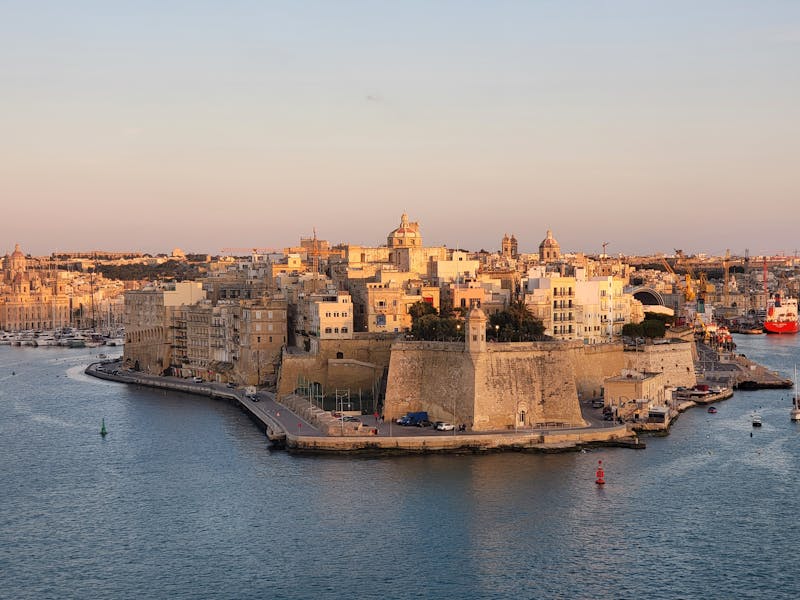
Friday evening is about decompression. The classic move is a slow walk along the Sliema or Gżira promenade — the view back towards Valletta at sunset is genuinely beautiful, especially from October through April when the light hits the limestone bastions at a low angle. Most people then settle into a waterfront restaurant for dinner. The vibe is unhurried.
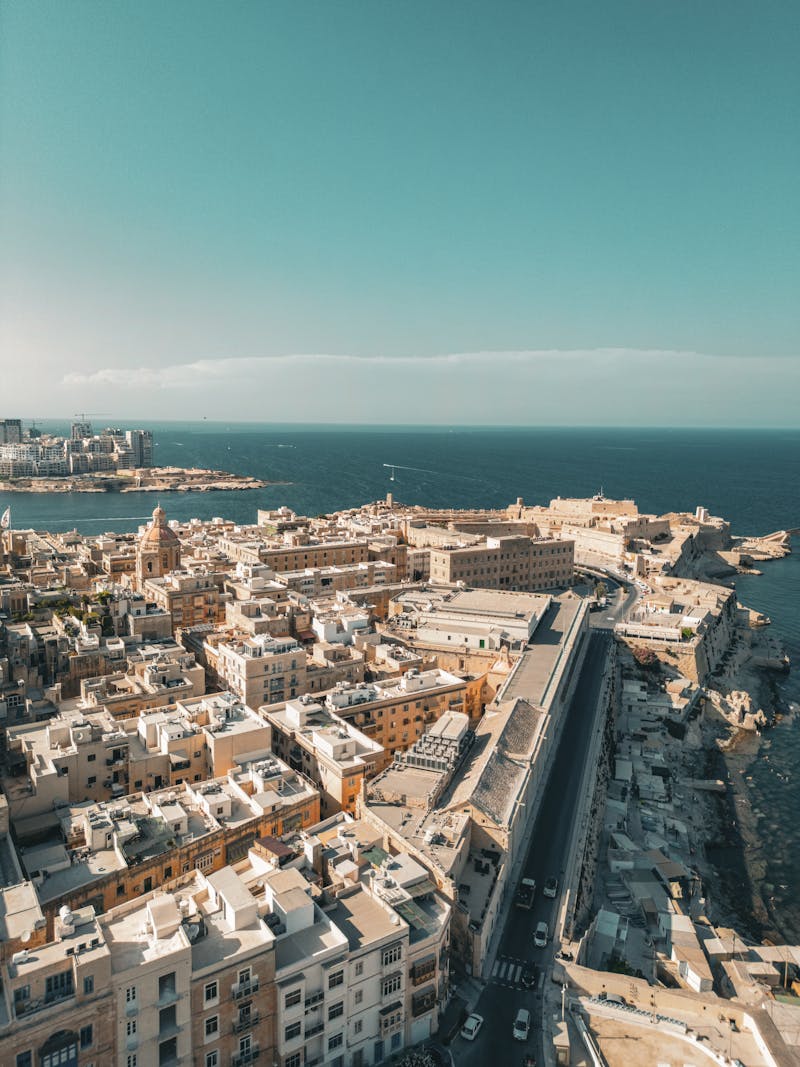
Saturday is the anchor. Valletta — Europe’s smallest capital and a UNESCO World Heritage Site — rewards a full day. Heritage Malta manages a cluster of sites within walking distance of each other: the National Museum of Archaeology, the Grand Master’s Palace, and Fort St Elmo. Add St John’s Co-Cathedral (Caravaggio’s Beheading of St John the Baptist, his largest signed work), a long lunch in one of the side streets off Republic Street, and the Upper Barrakka Gardens for the noon saluting battery, and the day fills itself.
Sunday leans slower. Some locals go to Mdina at dawn — between 7 and 9 a.m., the “Silent City” actually lives up to its nickname before the day-tour coaches arrive from Sliema. Others choose Marsaxlokk’s Sunday fish market (it runs every Sunday morning, the bigger fish stalls cluster nearest the church). Others again go coastal: Dingli Cliffs at sunset, Għajn Tuffieħa for a long swim, or St Peter’s Pool for the daredevil dive crowd. The point isn’t where you go — it’s that Sunday contrasts with Saturday.
The biggest gap most newcomers don’t notice is how much weekend time disappears to chores before the fun even starts. Hard water leaves limescale on every tap and shower screen, the October–February humidity drives mould in bathrooms and wardrobes, and Saharan dust events (il-qilla) coat balconies and windows several times a year. By the time you’ve mopped, scrubbed, and rinsed, half of Saturday is gone — and so is half your weekend energy. The locals who get the most out of their weekends tend to be the ones who’ve figured out how to take that morning back.
How should you build your weekend itinerary?
The simplest, most effective framework is “anchor + lighter option” — pick one main destination or experience for Saturday, then pair it with a contrasting, lower-energy plan for Sunday. This works because Malta is small enough that you don’t need three packed days to cover ground, but varied enough that contrast is what makes the weekend feel substantial.
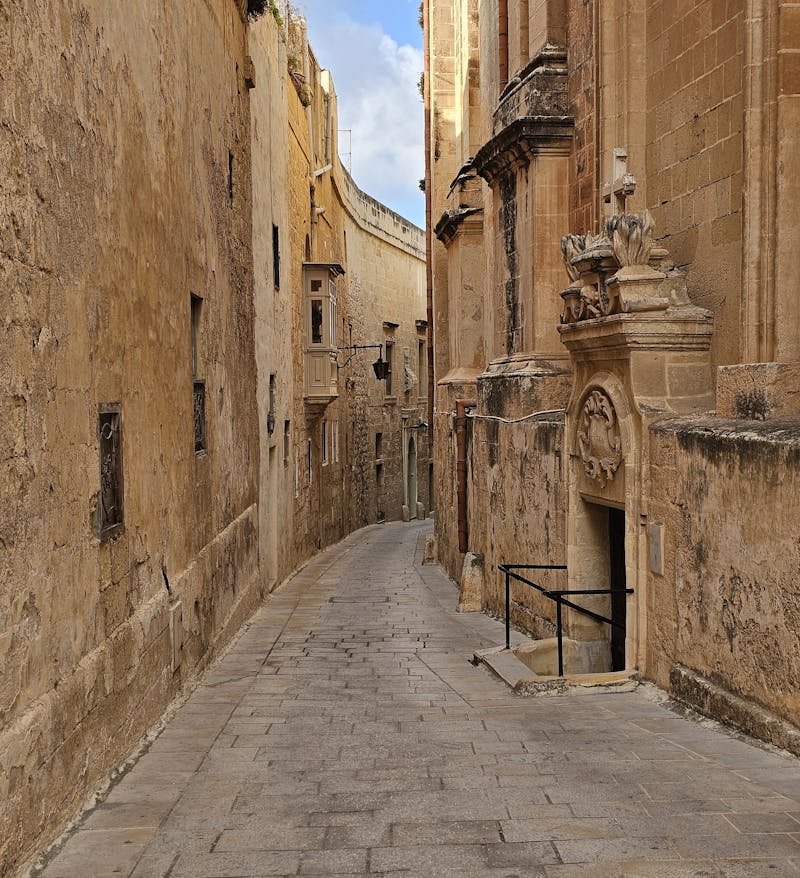
Step 1: Choose your anchor. Pick one half-day-to-full-day experience. Valletta is the obvious default. Other strong anchors: the Three Cities (Vittoriosa, Senglea, Cospicua — combined a quieter, more residential alternative to Valletta), the Sunday fish market in Marsaxlokk (best 9 a.m. to noon, then lunch at one of the harbour-side restaurants), Mdina + Rabat as a paired half-day, or a full hike along the Dingli Cliffs.
Step 2: Choose your lighter option. This is your Sunday — or a Sunday-afternoon add-on. It should contrast with Saturday. If Saturday was urban and museum-heavy, Sunday should be outdoors and open. If Saturday was a long hike, Sunday should be a sit-down lunch in a village. Good lighter options: Dingli Cliffs at sunset, a swim at Għar Lapsi or Blue Grotto, the Hagar Qim & Mnajdra temples in the early morning, or Popeye Village in Anchor Bay (the actual 1980 film set, now a small theme park — best for families).
Step 3: Check the events calendar. This is where most people leave the best stuff on the table. Malta runs a surprisingly rich annual cultural calendar — the Valletta Cultural Agency coordinates flagship events like the Valletta Green Festival (April–May), Notte Bianca (October), and Christmas in Valletta. Add the village festi from May through September, the Malta Jazz Festival in July, and ad-hoc concerts, and you can almost always find one event that anchors your weekend better than any generic itinerary would. Times of Malta‘s weekly “what’s on” guide is the single most reliable source.
Step 4: Build in buffer time. Malta is small but traffic is stubborn, especially Saturday mornings heading into Valletta from Sliema or St Julian’s. Add 20 minutes for any drive. If you’re using the bus, double the journey time you’d expect from the map — Sunday service runs less frequently than weekdays.
Step 5: Have a backup. Smaller restaurants in Valletta and Gozo have only 30–40 covers, and weekend walk-ins often fail. Book at least a few days ahead. If a beach is overcrowded (Għajn Tuffieħa on a July Sunday is a stress test) or a museum closes earlier than you expected, having a second option in mind removes the standing-around frustration.
🌅 Anchor city + dawn slot.
If your Saturday anchor is Valletta, schedule Mdina for 7–9 a.m. Sunday. The Silent City is genuinely silent before the tour coaches arrive, and you’ll be back in time for a long Maltese lunch.
🐟 Marsaxlokk timing.
The Sunday fish market runs roughly 7 a.m. to noon. Arrive by 9 if you want photos of the luzzu boats with morning light and lunch reservations at a harbour-side spot like Tartarun or Roots.
🎺 Festa season.
From May to September, every village runs its patron-saint feast — fireworks, brass bands, food stalls, decorated churches. A festa weekend can completely change a quiet locality. Check the village festa calendar before locking in plans.
Browse more Malta weekend ideas →
💡 Pro tip
Book smaller, independent restaurants 2–4 days ahead, especially in Valletta and Victoria (Gozo). The best places in Malta have small rooms, no walk-in capacity on weekends, and seasonal closures from late June to early September if the owners take their summer holiday.
Is Gozo worth a weekend escape from Malta?
Yes — and the difference between a Gozo day trip and a Gozo overnight is striking enough that most residents recommend committing to at least one night. Day-trippers see the highlights and rush back for the 9 or 10 p.m. ferry. Overnight visitors get the part most people miss: Gozo after the last ferry leaves, when the lanes around the Cittadella catch the last of the light and the island genuinely quiets down.
What to see in a single full day:
🏛️ Ġgantija Temples (Xagħra).
Among the oldest freestanding structures in the world — built between 3600 and 3200 BCE, older than Stonehenge or the Egyptian pyramids. UNESCO World Heritage Site, managed by Heritage Malta. Plan 45–60 minutes including the small on-site museum.
🏰 The Cittadella (Victoria/Rabat).
Gozo’s medieval fortified hilltop city, with views across most of the island from the ramparts. The Cathedral of the Assumption inside is worth the interior visit. Free to walk around 24/7; museums inside have entry fees.
🏖️ Ramla Bay (Xagħra).
Gozo’s largest sandy beach, with distinctly russet-coloured sand — a contrast to Malta’s beige Mellieħa. Quieter than Malta’s beaches even in August. Bring water and snacks; facilities are limited.
🌊 Dwejra Bay (San Lawrenz).
The Azure Window arch collapsed in March 2017, but the area is still spectacular — the Inland Sea, Fungus Rock, and the surrounding cliffs are some of the most dramatic coastline in the Maltese islands.
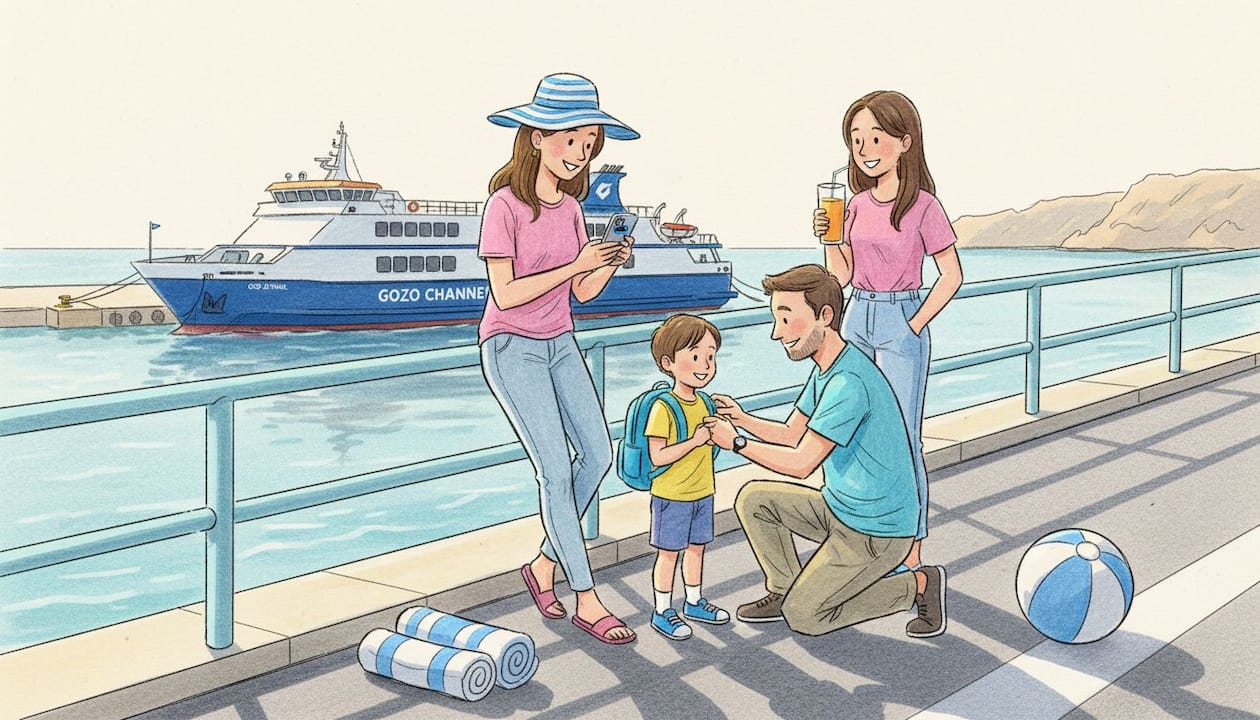
Ferry practicalities. The Gozo Channel ferry runs between Ċirkewwa (Malta) and Mġarr (Gozo) 24/7 with departures roughly every 45 minutes. The crossing is 25 minutes. Foot passengers pay €4.65 adult return; car with driver is €15.70 return. Importantly, you only pay on the return leg from Gozo back to Malta — so don’t queue at the ticket office at Ċirkewwa. The faster Valletta–Mġarr catamaran (foot passengers only, ~€7.50 one way, 45 minutes) skips the road journey to Ċirkewwa entirely — handy if you’re starting from Valletta and don’t have a car.
Key takeaway: Gozo as a day trip is good. Gozo with one overnight is genuinely different — you get the quiet hour between the last ferry and dinner, the locals’ restaurants in Victoria after 9 p.m., and a slow Sunday morning in Xlendi or San Blas Bay before the day-trippers arrive.
What events and transport should you check before the weekend?
Two small checks done 2–3 days before the weekend produce most of the difference between a smooth plan and a frustrating one — confirm an event or two, and confirm your transport. Both take about ten minutes total.
Events to scan for. The Times of Malta weekly guide and the Valletta Cultural Agency calendar cover most flagship events. The 2026 Valletta Green Festival, for example, ran from 30 April to 10 May with 100 trees, 12,000 flowers, and 45,000 shrubs transforming St George’s Square and Freedom Square — the largest edition since 2014. The L-Aqwa 20 tal-Maltin concert followed on 30 May 2026 with twenty classic Maltese songs from 1975–2005. The point isn’t to chase every event — it’s that a single one-off festival or open-air concert can completely reshape a weekend you’d otherwise spend the same way as the last six.
Transport: what changed in 2026. Malta Public Transport rolled out a meaningful expansion of its night bus network on 5 April 2026 — four new night routes (N3 Valletta–Kalkara, N52 Valletta–Dingli, N71 Valletta–Żurrieq, N120 Xgħajra–Pembroke) and increased frequency on existing N13 and N212 routes (every 10–20 minutes). For weekend planning this is a real shift: you can now stay in Valletta or St Julian’s until midnight without organising a taxi home. Night bus tickets are €3.00; Tallinja card holders travel free.
One caveat — public holidays. Bus service on holidays like Christmas Day and New Year’s Day can run on a reduced timetable or pause entirely between noon and 3 p.m. If your weekend overlaps a national or religious holiday, check the current Tallinja app before assuming the normal weekend schedule applies. Maltese Sunday service is also lighter than Saturday — sometimes meaningfully so on outlying routes.
💡 Pro tip
Download the official Tallinja app for real-time bus tracking and ticket purchase, screenshot the Gozo Channel ferry timetable if you’re staying overnight, and bookmark Times of Malta’s weekly events page in your browser. That’s the entire planning toolkit — three apps and you’re set.
How can you free up your weekend from chores?
The single biggest difference between people who use their Malta weekends well and people who don’t isn’t where they go — it’s how much of Saturday morning they’ve already lost to chores before they walk out the door. Malta’s climate makes this worse than most places. Hard water (Malta’s tap water runs 200–600 PPM calcium carbonate depending on the area) leaves limescale on every surface. Humidity from October through February drives mould in bathrooms. Saharan dust events coat balconies and inside windows several times a year. By 11 a.m. Saturday, half your weekend energy can be gone before you’ve even decided where to have lunch.
For locals, expats, and short-let hosts who’d rather spend Saturday morning watching the sun come up over Valletta’s bastions than scrubbing fridge seals, outsourcing is the obvious move. Rozie.app is Malta’s on-demand cleaning marketplace — over 29,080 people use it to find verified, background-checked cleaners without the traditional friction of phone calls and quote-chasing. You post a request with your date and any extras (fridge, oven, kitchen cabinets, inside windows, balcony, terrace), and verified cleaners send you competitive offers — usually within 5–15 minutes — with the exact price for your job. You compare, accept the one you prefer, and the weekend’s chores are handled. Every booking is covered by professional liability insurance up to €1,000,000 per occurrence, underwritten by Lloyd’s Insurance Company S.A., and Rozie covers all deductibles — so a cleaner who accidentally damages something during a booking doesn’t become your problem. Browse the full cleaning cost guide for Malta or the category archive of cleaning guides for more detail on how the pricing works.
Finding a reliable cleaner in Malta the traditional way means scrolling through Facebook groups, making phone calls, chasing quotes, and hoping the person who shows up actually does a good job. Most busy professionals don’t have time for that — and it’s exactly the friction Rozie was built to solve. Here’s the full booking process in under 60 seconds:
Not enough hours in the day? That’s the single most common reason 29,080+ people across Malta use Rozie. Schedule a cleaning for Friday during work hours, and you walk into a clean home on Friday evening — Saturday morning becomes Valletta, not vacuuming.

Download Rozie — Take Back Your Weekend →
Frequently asked questions
What is the best way to travel between Malta and Gozo on weekends?
The Gozo Channel ferry from Ċirkewwa to Mġarr runs 24/7 with departures every ~45 minutes. The crossing is 25 minutes and costs €4.65 adult return for foot passengers — paid only on the return leg. If you’re starting from Valletta without a car, the direct Valletta–Mġarr catamaran (foot passengers only, ~€7.50 one way, 45 minutes) skips the road journey to Ċirkewwa entirely. Sunday evenings in summer have the busiest car queues, so foot passengers consistently have the easier time.
Are most attractions and restaurants open on weekends in Malta?
Yes. Major attractions, museums managed by Heritage Malta, and the bulk of restaurants stay open through the weekend. Public holidays and religious feast days are the main exceptions — some museums close on 1 January, Good Friday, and 25 December, and a few smaller restaurants in Valletta or Victoria take an annual summer break in late August. Always check the venue’s own page if your visit falls on a public holiday or a Sunday afternoon.
How do I find out what events are happening this weekend in Malta?
The single best source is the Times of Malta weekly “what’s on” guide, which covers festivals, concerts, exhibitions, outdoor screenings, and one-off events across both islands. The Valletta Cultural Agency calendar covers the capital’s flagship events, and the Malta Tourism Authority publishes a wider events list for tourists. Bookmark one of these three and you’ll rarely miss anything significant.
What transport limitations should I know about for Maltese weekends and holidays?
Sunday bus service is lighter than Saturday — outlying routes can run hourly rather than every 20–30 minutes. Public holidays like Christmas Day and New Year’s Day historically pause bus service between noon and 3 p.m. The night bus network expanded on 5 April 2026 with four new routes and increased frequency, which makes late-night returns from Valletta and Paceville much easier than in previous years.
What’s a good mix of activities for a balanced Malta weekend?
Pair an urban anchor (Valletta, the Three Cities, or Mdina) with a contrasting coastal or outdoor option (Dingli Cliffs at sunset, Marsaxlokk Sunday market, or a Gozo overnight). Check the Times of Malta events guide before locking in plans — a one-off festival, concert, or village festa can completely change what’s worth doing.
Is one night in Gozo enough, or should I stay longer?
One night is enough to feel the difference between Gozo as a day trip and Gozo as an overnight — the quiet hour after the last ferry leaves is what most people remember. Two nights lets you slow down properly and explore the western coast (Dwejra, San Lawrenz, Wied il-Mielaħ) without rushing. Three or more is for repeat visitors who want to actually swim, hike, and eat their way through the island.
How much does a typical weekend cost in Malta?
A reasonable benchmark for a couple, excluding accommodation: €40–70 for dinner at a mid-range Valletta restaurant, €15–25 for a long Maltese lunch in a village, €4.65 return per foot passenger to Gozo, €2–2.50 per bus journey (or €0.75 with a Tallinja card), and €8–15 per entry to major Heritage Malta sites. A full weekend of activities runs €150–250 per couple before accommodation. For a deeper breakdown of the real cost of living in Malta in 2026, the wider expat budget guide goes through every category in detail.
Recommended
- 7 Smart Things to Do in Malta for Busy Professionals | Rozie – Malta’s Best Cleaning Services
- 7 Smart Things To Do in Malta for Busy Professionals | Rozie – Malta’s Best Cleaning Services
- Things to Do in Malta 2026: Insider Guide for Visitors & Residents
- Top Beaches in Malta 2026: Relaxation, Swimming & Fun