

In this guide
What do local cleaners in Malta actually do?
How do Malta’s health and safety laws shape a cleaner’s work?
Why does hiring a local cleaner benefit Malta beyond a clean home?
Should you hire an individual cleaner or a cleaning company?
How do you hire and work well with a local cleaner in Malta?
What do local cleaners in Malta actually do?
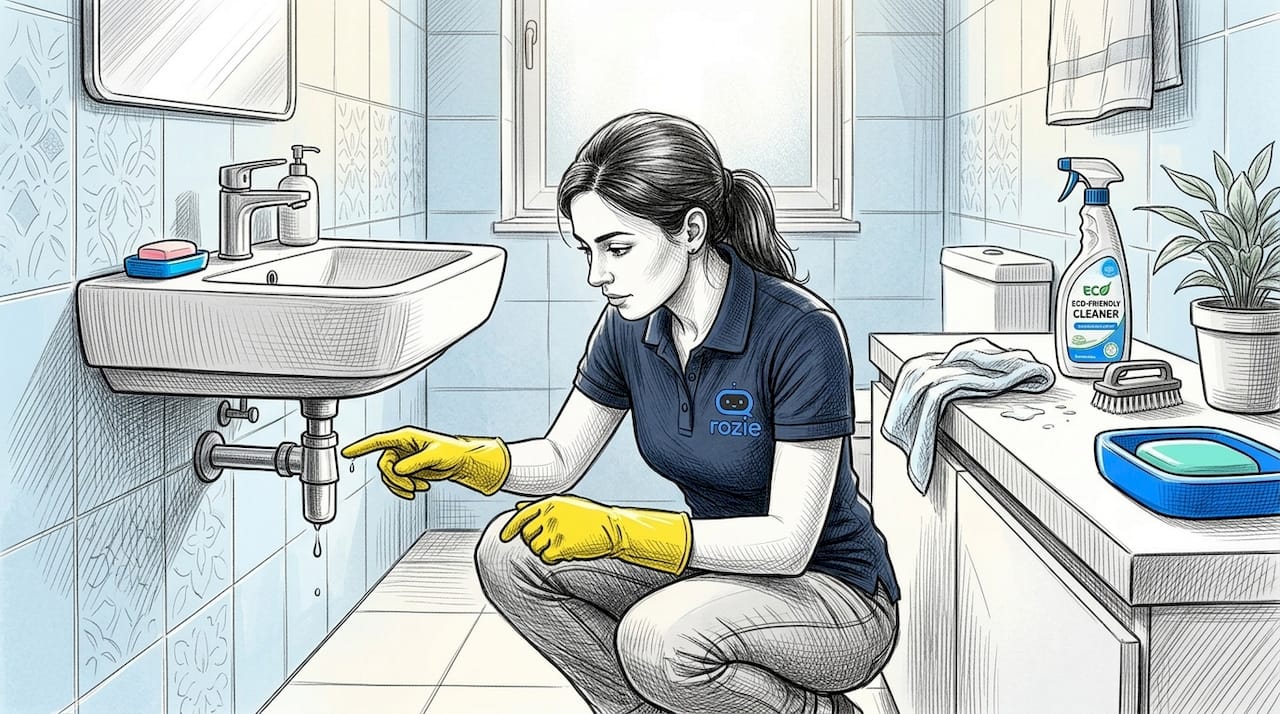
Local cleaners in Malta handle a structured set of tasks: floor care across tiled and stone surfaces, kitchen and bathroom sanitising, dusting and glass cleaning, upholstery spot-cleaning, laundry, supply restocking in commercial settings, and maintenance reporting. That last point matters most — a cleaner is often the first person to notice a slow leak, a faulty socket, or early mould, especially in Malta’s humid, coastal homes.
The scope is broader than most people assume. A good local cleaner moves through a property with a routine that keeps it hygienic and presentable day to day, not just visibly tidy. The core duties usually include:
- Floor care: sweeping, mopping, and vacuuming across every surface type, from tiled and patterned Maltese floors to carpeted offices.
- Kitchen and bathroom sanitising: disinfecting sinks, worktops, toilets, and appliances to limit the spread of bacteria and viruses.
- Dusting and surface cleaning: wiping furniture, fixtures, shelves, mirrors, and glass, including inside windows.
- Upholstery and fabric care: spot-cleaning sofas, chairs, and soft furnishings in both homes and hospitality settings.
- Supply restocking: replenishing soap, paper, and consumables in commercial and short-let environments.
- Laundry management: handling bed linen, towels, and uniforms in hotel and residential contexts.
- Incident and maintenance reporting: flagging broken fixtures, leaks, pests, or hazards to the owner or supervisor.
The reporting role is genuinely valuable in Malta and easy to underestimate. In coastal localities like Sliema, Gzira, and Bugibba, a cleaner who knows the island will check window frames and balcony railings for salt corrosion. In poorly ventilated bathrooms — common across older apartments — they will spot mould forming on grout and silicone before it spreads. After a Saharan dust event (known locally as il-qilla), they notice when fine red-brown dust has worked its way onto sills and terraces. That early-warning function only works when you brief your cleaner on what to report and how.
It is also worth understanding how residential and commercial roles differ. Residential cleaners usually work alone or in small teams, in personal spaces, where trust and discretion matter most. Commercial cleaners — in hotels, offices, and retail — tend to follow structured schedules, work in larger teams, and answer to supervisors and compliance checklists. Both require real skill and reliability, but the expectations and working conditions are not the same. If you are weighing which kind of help you actually need, it helps to look at the full range of cleaning services available in Malta before deciding.
Pro tip
Write out a room-by-room task list before the first appointment. Cleaners who get clear instructions on day one deliver more consistent results and are far less likely to skip the spots that matter to you, like behind the toilet, inside the microwave, or the balcony door tracks.
How do Malta’s health and safety laws shape a cleaner’s work?
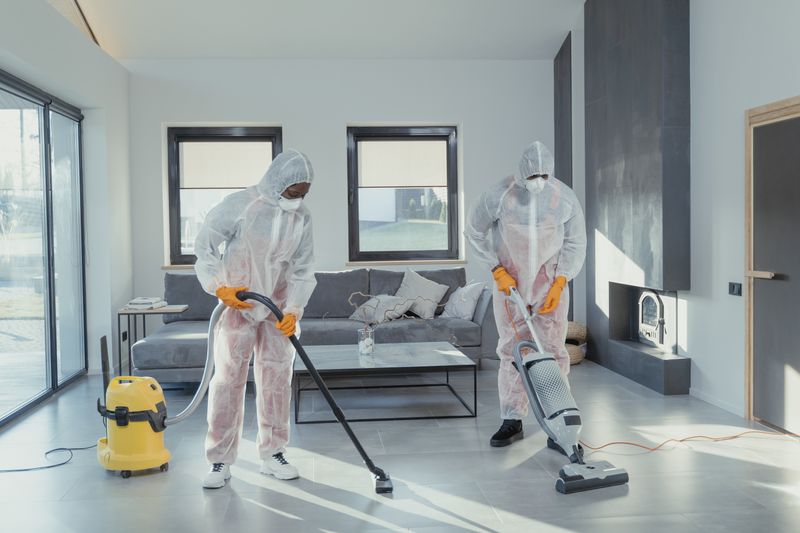
Malta’s Occupational Health and Safety Authority Act (Cap. 424) requires every employer to provide safe working conditions, assess risks, train staff before they handle chemicals, and supply protective equipment such as gloves and masks. For you as a client this is practical, not abstract: a cleaning business that follows Cap. 424 tends to be the same one that takes service quality seriously.
Under the Occupational Health and Safety Authority Act (Cap. 424), employers have a general duty to ensure the health and safety of everyone affected by their work. In a cleaning context, that means proper training on chemical handling, correct storage of products, risk assessments, and personal protective equipment. The law is enforced by Malta’s Occupational Health and Safety Authority (OHSA), which can inspect workplaces and issue penalties for breaches.
This connects directly to the quality of service you receive. A company that trains staff on safe chemical use is also a company that knows acidic cleaners will etch Malta’s porous Globigerina limestone, that bleach can ruin coloured grout, and that some products should never be mixed. A provider that cuts corners on safety obligations tends to cut corners on craft, too. The two usually travel together.
Two questions worth asking any cleaner or company.
First: do your staff receive formal safety training, and what products do you use? Second: are those products safe for limestone, stone, and the people in my home? A credible provider answers both without hesitation. Vague or defensive answers are a useful warning sign.
Why does hiring a local cleaner benefit Malta beyond a clean home?
Hiring a local cleaner in Malta keeps money circulating in the local economy, supports a sector that is steadily professionalising, and delivers measurable health benefits — professionally cleaned homes carry fewer allergens, less mould, and lower dust, which matters in Malta’s humid climate. Regular cleaning also protects flooring, grout, and appliances, often costing less than replacing them early.
The wider impact is easy to miss when you only think about a tidy living room:
- Local employment and circulation: money spent on local cleaning stays on the island, paying wages and flowing through local suppliers rather than leaving Malta.
- Better health outcomes: consistent professional cleaning reduces dust, allergens, and mould — a real benefit for families with children, elderly residents, or anyone with respiratory issues, especially during Malta’s October-to-February damp season when relative humidity sits high.
- Time and stress saved: delegating cleaning frees up hours each week. For households it removes a common source of friction; for business owners it converts directly into productive time.
- Property preservation: grout cleaned regularly lasts longer, carpets wear more slowly, and appliances kept free of grease and limescale last longer. The running cost of a cleaner is often lower than early replacement.
Malta’s cleaning sector is formalising.
In 2013, several of the island’s largest contract-cleaning firms formed the Malta Cleaning Contractors Association (MCCA), whose members together employ over 1,200 people and commit to legal and safety compliance. The MCCA mostly represents large commercial and contract cleaners — the kind that service offices, government tenders, and big facilities — rather than the individual cleaners most households hire. For home cleaning, the practical equivalent of that accountability is a platform that vets cleaners before they ever take a booking.
If you want the detail on why structured, professional help tends to outperform ad-hoc arrangements over time, it is worth reading more on what makes professional cleaning worth it for busy households in Malta.
Should you hire an individual cleaner or a cleaning company?
For most Maltese households, a vetted individual cleaner offers the best mix of cost, flexibility, and a personal working relationship. A cleaning company suits offices, multi-unit properties, and short-let portfolios that need structured schedules and backup staff. The right choice depends on the size of your space, how often you need cleaning, and how much you want to manage.
Here is a quick comparison to weigh the two:
For most homes, an individual vetted cleaner wins on cost and personal service. For offices, properties with multiple units, or a short-let portfolio, a company’s structure and backup capacity usually justify the higher price.
This is also where an app changes the maths. Instead of phoning round for quotes, on Rozie you post the job once — your locality, date, and any extras like oven, fridge, or inside windows — and verified cleaners send you offers, usually within minutes. Each offer shows the exact price for that job, so you compare cleaners and prices side by side before you accept, rather than committing blind. If you want a sense of what shapes those numbers, the cleaning cost guide for Malta breaks down what changes the price.
Finding a reliable cleaner in Malta the traditional way usually means scrolling Facebook groups, texting numbers, making calls, and waiting on vague quotes — then hoping whoever turns up actually does the job well.
Rozie was built to remove that friction. You pick a date, choose your extras, and verified cleaners send offers with the exact price before you accept. Every booking is backed by 7-day payment protection and up to €1,000,000 in professional liability insurance underwritten by Lloyd’s Insurance Company S.A. Here is the full booking process in under 60 seconds:
Compare Cleaning Offers on Rozie →
How do you hire and work well with a local cleaner in Malta?
To hire well in Malta, confirm the cleaner is vetted and insured, write a clear room-by-room task list, agree who supplies products (and check they are safe for limestone and stone), and brief the cleaner on what to report. Clear expectations from day one are the single biggest factor in getting consistent, reliable results over time.
A simple sequence that works for both households and businesses:
- Verify credentials and vetting. Ask whether the cleaner has been background-checked and whether liability cover applies. Platforms like Rozie verify cleaners before they appear, which removes much of the guesswork.
- Create a detailed cleaning schedule. List every room, every task, and the frequency you expect. Ambiguity is the most common cause of disappointment in cleaning arrangements.
- Brief your cleaner on reporting. Tell them what to flag, who to contact, and how. In Malta that often means salt corrosion on coastal fixtures, mould in unventilated bathrooms, and limescale build-up on taps and glass.
- Clarify supply responsibilities. Decide upfront whether the cleaner brings products or uses yours. If they bring their own, ask what they use and confirm it is pH-neutral and safe for stone — brands like Lithofin and HG, available at Homemate and PAVI, are reliable local options.
- Check in early. Schedule a short review after the first few appointments to adjust the task list before habits form. It also signals that you are engaged, which tends to lift the standard of work.
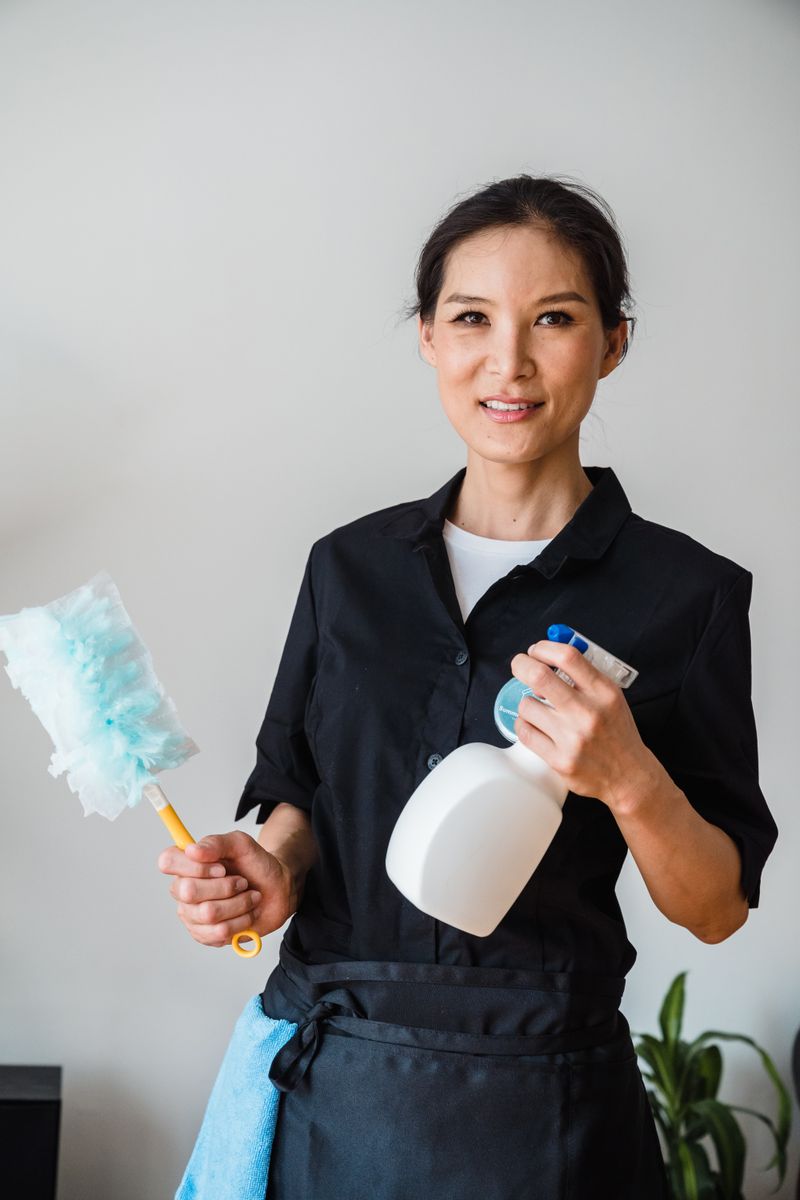
Rather skip the search and the reference-checking? On Rozie, every cleaner is background-checked and identity-verified before they appear, so the vetting step is already done for you. You post the job, compare offers, and accept the cleaner that suits you — no calls, no chasing quotes.
Key takeaways
Local cleaners in Malta perform a structured set of tasks that protect health, preserve property, and support the local economy — and the quality of that service depends directly on vetting, clear communication, and legal compliance.
An editor’s note on the people who clean our homes
After years working with cleaners, cleaning companies, and the clients who hire them across Malta, the most consistent pattern I have seen is this: people treat cleaning as a commodity, then feel let down when they get commodity-level results.
The cleaners who stand out are not simply faster. They understand the spaces they work in. They notice the silicone seal starting to blacken in a bathroom that never quite dries out. They know not to take an acidic spray to a limestone windowsill. They flag the dripping pipe before it becomes a ceiling stain downstairs. Those are professional skills, and Malta’s sector is slowly recognising them as such — through the application of Cap. 424 to cleaning workplaces, the formation of an industry association, and the growth of platforms that verify cleaners before connecting them with clients. That is good for cleaners, who deserve safe and fair conditions, and good for the people who hire them.
The relationship works best when it is built on mutual respect and clear expectations. Treat your cleaner as a professional, be specific about what you need, and you will almost always get better results than someone who treats the whole thing as a faceless transaction. That is not idealism — it is just what works, consistently, over time.
— Alex, Rozie editorial
Find a verified local cleaner in Malta with Rozie
If you are ready to hire a vetted local cleaner without the stress of searching, checking references, and hoping for the best, Rozie makes it simple. Cleaners are background-checked and identity-verified before they ever appear on the platform, every booking comes with 7-day payment protection, and you get in-app chat plus support if anything comes up.
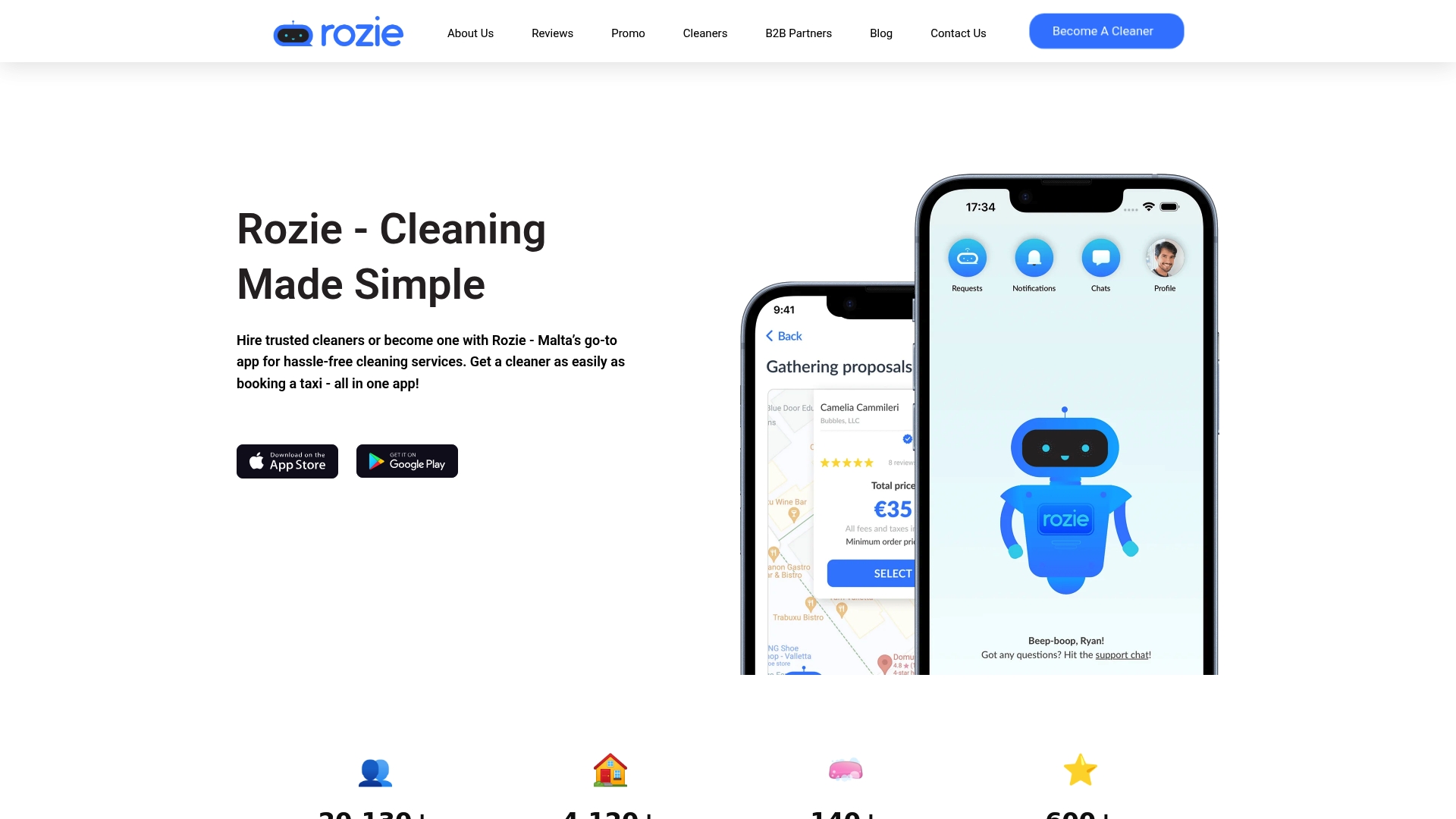
Whether you need a one-off clean or a regular arrangement, you post the job once, compare exact offers from verified cleaners, and accept the one that suits you. You can also explore cleaning services in Malta to see the full range of help available before you book.
Download Rozie — Book in 60 Seconds →
Frequently asked questions about local cleaners in Malta
What does a local cleaner in Malta typically do?
Local cleaners in Malta perform floor care, kitchen and bathroom sanitising, dusting, supply restocking, laundry management, and maintenance reporting. The exact scope varies depending on whether they work in residential, commercial, or hospitality settings, and on the task list you agree with them in advance.
Are cleaning companies in Malta required to follow health and safety laws?
Yes. Under Malta’s Occupational Health and Safety Authority Act (Cap. 424), employers must provide safe working conditions, training, protective equipment, and risk assessments for all cleaning staff. This applies to cleaning companies and to any business that employs cleaners directly, and it is enforced by the Occupational Health and Safety Authority (OHSA).
Should I look for MCCA membership when hiring a home cleaner?
The Malta Cleaning Contractors Association (MCCA) mainly represents large commercial and contract cleaners that handle offices, facilities, and government tenders, so its membership is most relevant to businesses. For home cleaning, the more practical signals are independent vetting, liability cover, visible reviews, and a clear booking process — the things a verified platform provides directly.
How do I know if a cleaner in Malta is trustworthy?
Look for cleaners who have been independently vetted, who carry liability cover, and who have visible reviews from real clients. Rozie verifies every cleaner before they join the platform, which is one of the most reliable ways to find trusted cleaners in Malta without relying on a stranger’s word.
What is the difference between hiring an individual cleaner and a cleaning company?
Individual cleaners usually offer more flexibility and lower cost, while cleaning companies provide structured schedules, backup staff, and company-level accountability. The right choice depends on the size of your space, how often you need cleaning, and how much management involvement you want to take on.
What happens if a cleaner damages something in my home?
It depends on the cover behind the booking. With Rozie, cleanings include professional liability insurance of up to €1,000,000 per occurrence, underwritten by Lloyd’s Insurance Company S.A., covering accidental property damage and bodily injury caused by a cleaner during a booking. Rozie covers any deductibles, so users pay no excess. Terms, exclusions, and reporting requirements apply.
Recommended
- How to Find a Trusted Cleaner Near You in Malta (2026 Guide) | Rozie – Malta’s Best Cleaning Services
- Professional Cleaner in Malta: Trusted Help for Expats | Rozie – Malta’s Best Cleaning Services
- Home Cleaning Malta: Verified Help for Busy Lives | Rozie – Malta’s Best Cleaning Services
- How to Choose a Cleaning Service in Malta (2026 Guide)