

In this guide
Where does the festa tradition come from?
What happens during festa week?
What are the traditional elements of a Maltese festa?
What do the key Maltese festa terms mean?
When is festa season in Malta?
How do festas hold Maltese communities together?
What is a Maltese festa?
A Maltese festa is a community celebration of religious origin held every year in village parishes across Malta and Gozo to honour the locality’s patron saint. It typically lasts about a week and combines high Mass and other liturgical services with brass band marches, decorated streets, fireworks and bell ringing, building towards a solemn procession with the saint’s statue on the final day.
The festa (plural: festi) was inscribed by UNESCO on the Representative List of the Intangible Cultural Heritage of Humanity in December 2023, a formal recognition that this is a living tradition rather than a show staged for visitors. There is no ticket, no stage and no organiser in the commercial sense: each festa is produced by the parish itself, through its band clubs, fireworks societies and decoration volunteers. With around 80 festas spread across the two islands, there is a celebration somewhere in Malta or Gozo almost every summer weekend, and each one belongs unmistakably to its own village.
Where does the festa tradition come from?
The festa grew out of Malta’s Catholic parish system, in which every town and village is dedicated to a patron saint or a Marian title. Feast-day celebrations moved beyond the church walls under the Order of St John and took their recognisable modern shape in the 19th century, when most of Malta’s village band clubs were founded.
The parish church has been the centre of Maltese village life for centuries — a popular saying claims the islands have a church for every day of the year — and the festa is the one week when that relationship is performed in public. Band clubs, known as każini, gave the celebration its soundtrack and its social headquarters; in several localities two rival clubs emerged, and the friendly competition between them, il-pika, still pushes each side to outdo the other in decorations, marches and fireworks. What began as a liturgical feast became a layered cultural event carrying the weight of local identity, which is exactly why the celebrations have survived Malta’s rapid modernisation largely intact.
What happens during festa week?
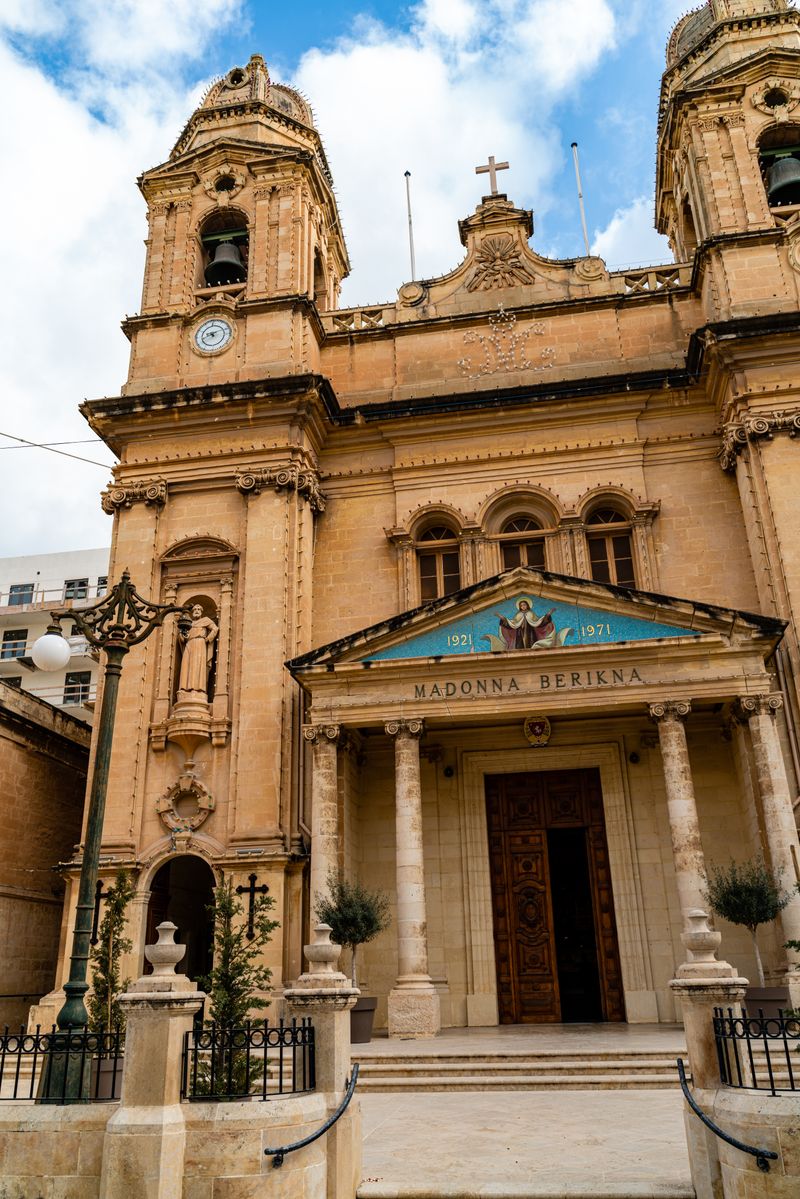
A festa builds in intensity across the week. Liturgical services and early band programmes open the celebrations, the tridu adds three solemn evenings of Mass and sermons, the eve (lejlet il-festa) brings the liveliest band march and the main aerial fireworks, and the feast day itself centres on high Mass and the evening procession with the saint’s statue.
Programmes differ from parish to parish, but the rhythm below holds across most of Malta and Gozo. The street decorations go up well before any of it starts, so a village announces its festa weeks in advance.
If you can only make one night, locals will tell you the eve has the energy and the feast day has the meaning. The fireworks peak on the eve; the procession belongs to the day itself.
What are the traditional elements of a Maltese festa?
Five elements define every Maltese festa: the armar that dresses the streets, the brass band marches, the fireworks produced by the village’s own volunteers, the final-day procession with the saint’s statue, and the festa food sold from street stalls. Each one is run by parishioners rather than contractors, which is precisely what keeps the tradition alive.
The armar: dressing the village
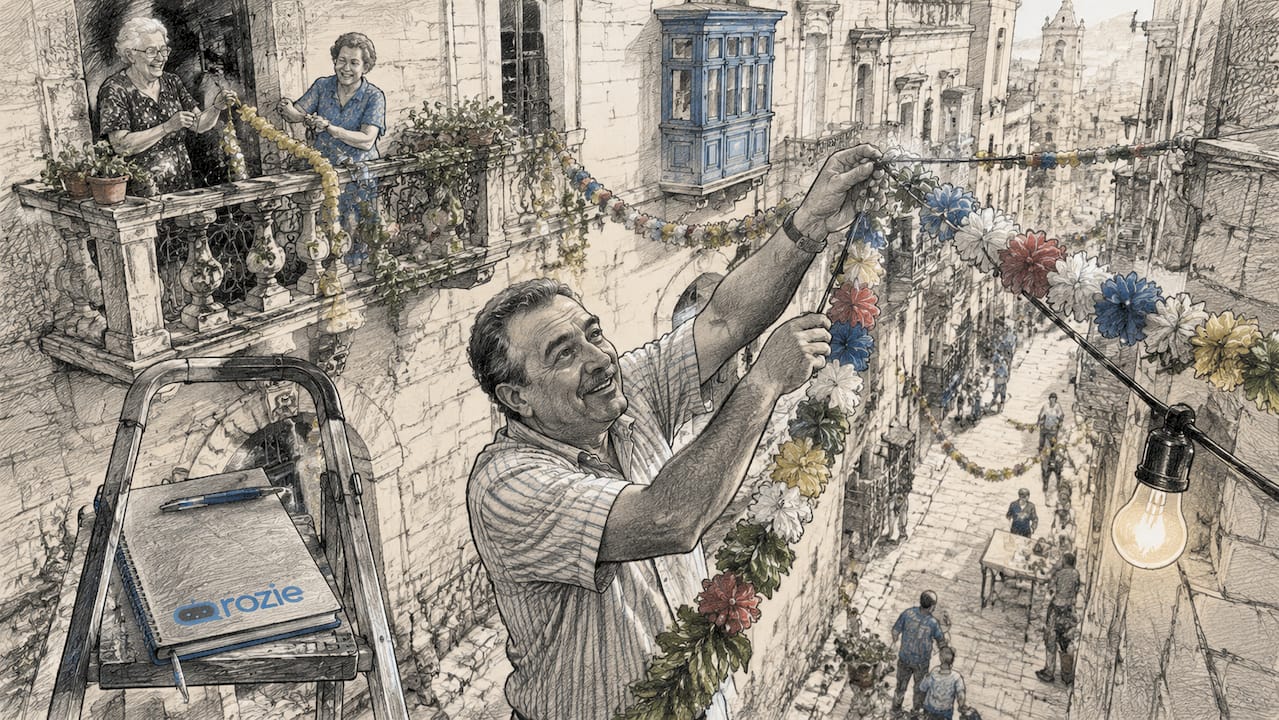
For festa week the parish core disappears under armar: ceremonial banners and pavaljuni hung across the streets, damask drapes on the church facade, statues raised on pedestals along the procession route and festoons of lights overhead. Volunteer groups store, repair and rig these pieces year after year — some banners and statues are more than a century old — and the moment the armar goes up, the whole village knows the countdown has started.
Band marches and the każini
Brass bands are the festa’s soundtrack and its engine. Most festa localities have at least one band club, and the marches they lead — slow and ceremonial behind the procession, loud and joyous on the eve and the morning of the feast — physically pull the community through its own streets. The każin clubhouse on the village square doubles as a social hub all year round, hosting rehearsals, fundraising and the planning that makes the week possible.
Fireworks and the għaqda tan-nar
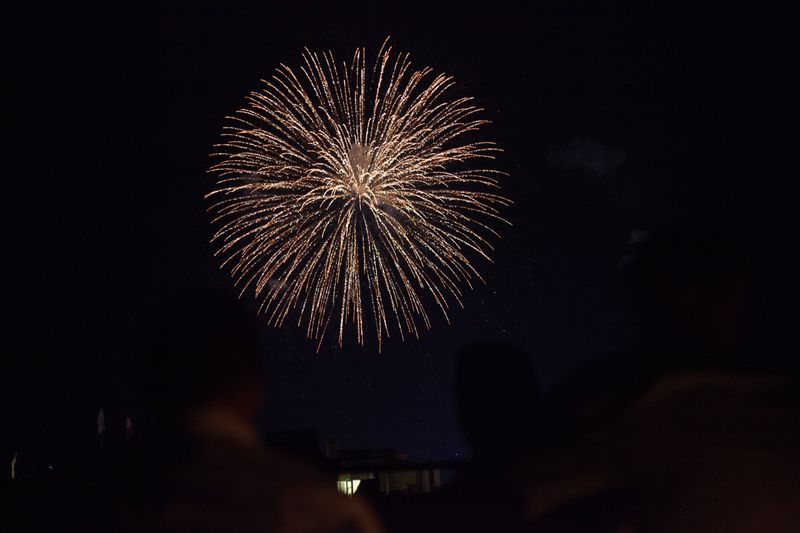
Maltese festa fireworks are produced by the village’s own volunteer fireworks society, the għaqda tan-nar, which works the whole year for one week of displays. Daytime petards mark the hours, aerial bombs called murtali and thunderous beraq salutes build through the week, and the main synchronised show traditionally falls on the eve of the feast. The most famous displays draw crowds from across the islands — Mqabba’s Tower of Light on 14 August fires around 10,000 shots from a 62-metre structure — and our Malta fireworks calendar lists every major display this season.
The procession and the reffiegħa
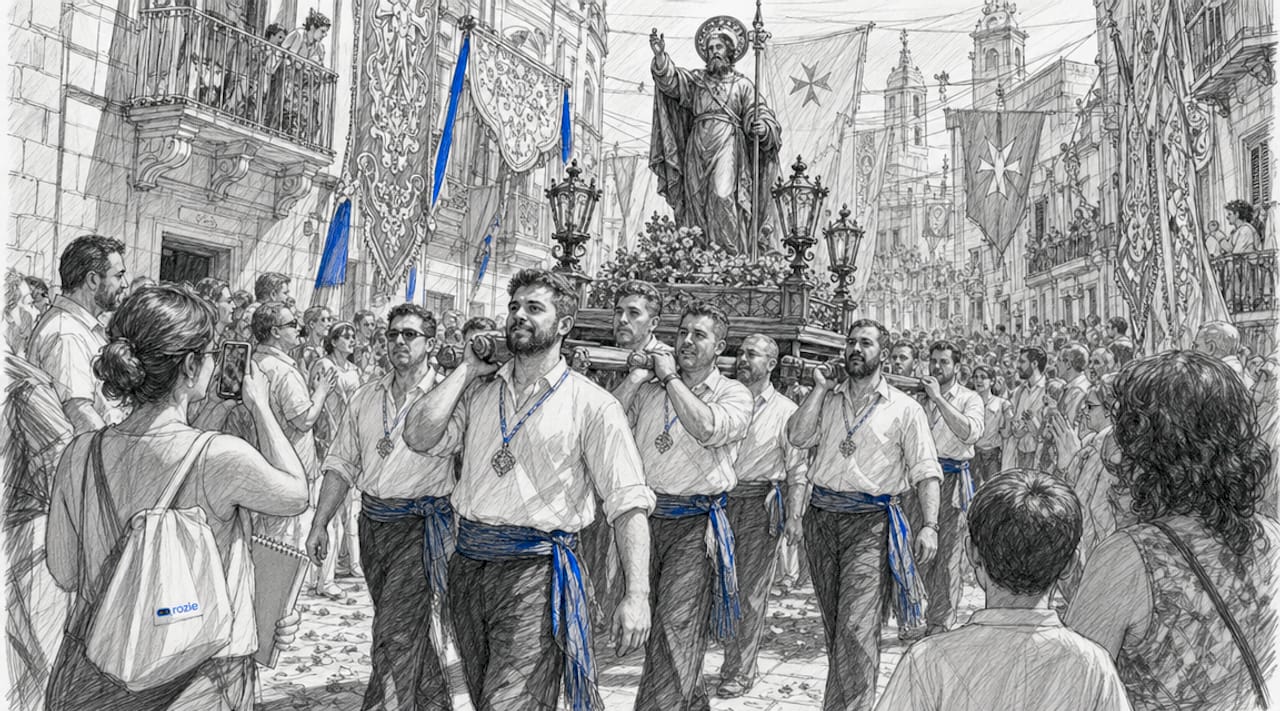
The climax of every festa is the final-day procession, led by the clergy and accompanied by the band, in which the titular statue is carried shoulder-high by a group of parishioners called the reffiegħa. The role is physically demanding and carries real prestige, and the crowd’s mood shifts the moment the statue appears at the church door: the same streets that hosted a party the night before fall noticeably quiet. When the statue re-enters the church to the antiphon, the festa is, formally, over.
Pro tip
If you want to understand what the festa means to the people who live it, watch the faces of the reffiegħa as the statue leaves the church. The mix of physical strain, solemnity and pride in that moment says more than any guidebook.
Festa food
No festa is complete without the food stalls. The signature treat is qubbajt, Maltese nougat sold in slabs from decorated carts, alongside imqaret (fried date pastries) and everything else you would expect from a Mediterranean street party. Buying from the stalls is a small act of participation: many vendors follow the festa circuit all season, and some qubbajt families have been working it for generations.
What do the key Maltese festa terms mean?
Festa vocabulary is Maltese, and the same dozen words appear in every parish programme. Knowing them turns a confusing schedule into a readable one, and they are the words you will hear locals using all around you during the week.
When is festa season in Malta?
Festa season runs from late April to early October, with the heaviest concentration of feasts in June, July and August. The single biggest date is 15 August, Santa Marija, a public holiday when seven parishes celebrate the Assumption at once: Mosta, Attard, Mqabba, Qrendi, Gudja and Għaxaq in Malta, and Victoria in Gozo.
From June onwards there is a festa somewhere on the islands almost every weekend, so you rarely need to plan far ahead to find one. A few dates anchor the season:
One scheduling quirk catches visitors out: the festa weekend does not always match the saint’s date in the Church calendar. Dingli, Mġarr and Żebbuġ in Gozo, for example, keep Santa Marija on the nearest Sunday, and many parishes anchor their festa to a convenient summer weekend. For confirmed dates parish by parish, see our complete guide to Malta’s 2026 festa season, and if you are on the islands in mid-August, our resident’s guide to surviving summer in Malta explains why the whole country seems to pause for Santa Marija week.
Check the parish programme, not just the calendar.
Festa timings can shift by an hour or more with weather and logistics, and the liturgical feast date is not always the street-celebration weekend. Parish noticeboards, local council pages and village Facebook groups carry the definitive schedule.
How do festas hold Maltese communities together?
The festa works as social glue because it belongs to everyone in the parish, not only to the devout. UNESCO describes it as a celebration of popular religiosity that unites families, outsiders and local communities: people who rarely attend Mass still turn out for the marċ, the fireworks and the procession, because the festa is the village’s own.
Transmission happens informally and year-round. Children grow up inside the tradition, at band rehearsals, in the armar stores, around the fireworks factory where their relatives volunteer, and in some parishes a children’s festa lets the youngest carry a smaller statue through the town themselves. By the time they formally take on a role, they have been absorbing the songs, the rhythms and the responsibilities for years. That continuity is the festa’s quiet achievement: the man shouldering the statue at seven in the evening is eating qubbajt with his family at ten, and the sacred and the social never separate.
There is a live debate in Malta about modern touches, with DJ-style entertainment edging into spaces the brass bands have always held, and the UNESCO listing has sharpened the conversation about what authentic celebration means. The honest answer is that the festa has always evolved, but its core elements — the band, the fireworks, the procession — are not interchangeable parts. Remove one and you have a different event entirely.
Key takeaway: A festa is a yearly act of self-definition. For one week the village says, in lights, music and fireworks: this is who we are, this is what we honour, and this is how we do it together.
How can you experience a Maltese festa respectfully?
Treat the festa as a religious celebration that welcomes guests, not a show staged for them. Arrive in the early evening for the build-up, follow the band, eat from the stalls, and give the procession the quiet it deserves. Nobody minds visitors at a festa — villages are proud of them — as long as the solemn moments stay solemn.
- Go before the final night. The tridu evenings and the eve show you how the celebration builds, and the eve march is the most fun you will have standing in a crowd in Malta.
- Follow the marċ. Walking alongside the band through the decorated streets is where the festa’s energy is most direct, and locals of every age do exactly the same.
- Eat from the stalls. A slab of qubbajt or a bag of imqaret is the entrance fee that isn’t one.
- Position early for the procession, then lower your voice when the statue passes. That collective hush is the emotional centre of the entire week.
- Dress modestly inside the church. Shoulders and knees covered is the standard, especially during festa services.
- Plan transport home. Roads around the parish core close, parking evaporates and festa fireworks run late, so check the last bus before you commit.
- Pack earplugs if you are staying in a festa village. Petards start early in the morning and continue through the week; they are loud by design.
And if it is your own village’s turn, festa week usually means hosting: relatives over for lunch on the feast day, friends dropping in after the procession, the traditional open house in full swing. The pre-festa clean is the one job nobody volunteers for. Posting it on Rozie takes a minute — pick the date and any extras, and verified cleaners send you offers with exact prices, usually within 5–15 minutes, so you can compare before you accept. Our Malta cleaning cost guide shows what a one-off clean typically runs.
Get your home festa-ready with Rozie
Festa week fills the calendar fast: decorating, cooking, hosting, late nights following the band. Finding a cleaner the traditional way — scrolling Facebook groups, sending messages, calling around and chasing quotes from people who may or may not turn up — eats the very time the festa is supposed to give you back.
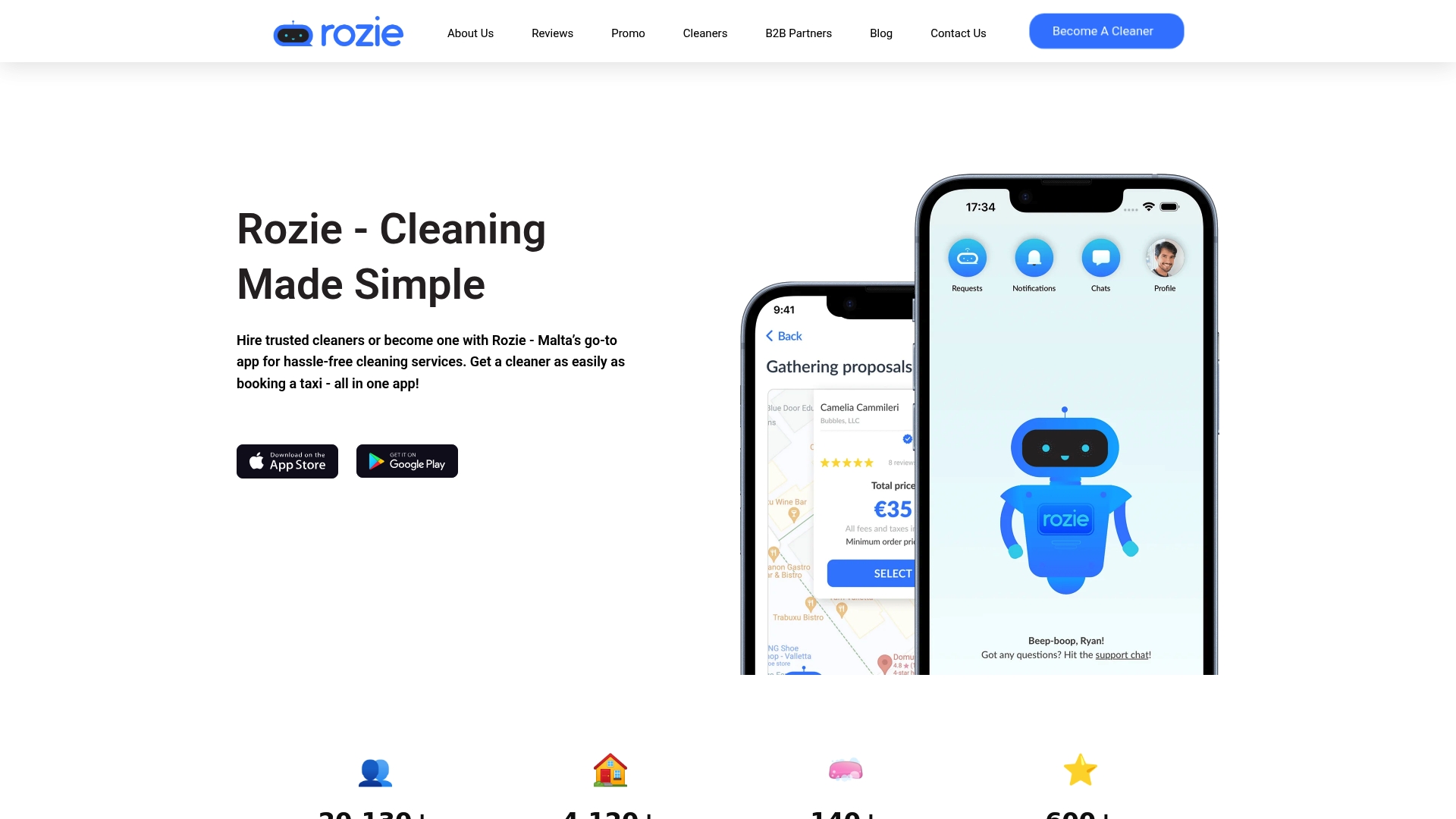
Rozie was built to remove that friction. You post the job once in the app, pick your date and any extras such as oven, fridge or balcony, and verified cleaners send you offers with exact prices, usually within 5–15 minutes. You compare the offers and accept the one that suits you, with 7-day payment protection and up to €1,000,000 in professional liability insurance on every booking. More than 24,800 people across Malta already book this way, and our cleaning in Malta guides cover everything else a Maltese home throws at you.
Here is the full booking process in under 60 seconds:
Compare Cleaning Offers on Rozie ->
FAQ
What is a Maltese festa in simple terms?
A Maltese festa is the annual feast a village or town holds in honour of its patron saint. It lasts about a week and combines church services with band marches, street decorations, fireworks and a final-day procession in which the saint’s statue is carried through the parish.
How long does a Maltese festa last?
Most festas run for about a week, with liturgical celebrations and band marches building through the tridu days towards the eve, when the main fireworks are held, and the feast day itself, when the statue is carried in procession. Street decorations usually go up weeks earlier.
When is the best time to see a festa in Malta?
Festa season runs from late April to early October, and from June onwards there is a festa somewhere in Malta or Gozo almost every weekend. The single biggest date is 15 August, Santa Marija, when seven parishes across the two islands celebrate at once.
What is the role of the reffiegħa in a festa?
The reffiegħa are the parishioners who carry the patron saint’s statue shoulder-high during the final-day procession. The role is physically demanding and carries real prestige within the parish, and the moment the statue leaves the church is the emotional peak of the entire week.
Do I need to be Catholic to enjoy a Maltese festa?
No. The festa has deep Catholic roots, but the band marches, street food, decorations and fireworks are open to everyone, and visitors are welcome. Respect the religious moments, keep quiet near the procession and dress modestly if you enter the church, and you will fit right in.
How do locals get their homes ready for festa week?
Many Maltese households host relatives and friends over their village’s festa weekend, so a thorough clean beforehand is part of the tradition. If you would rather not spend festa week scrubbing, posting the job on Rozie gets you offers with exact prices from verified cleaners, usually within 5–15 minutes, so you can compare before you accept.