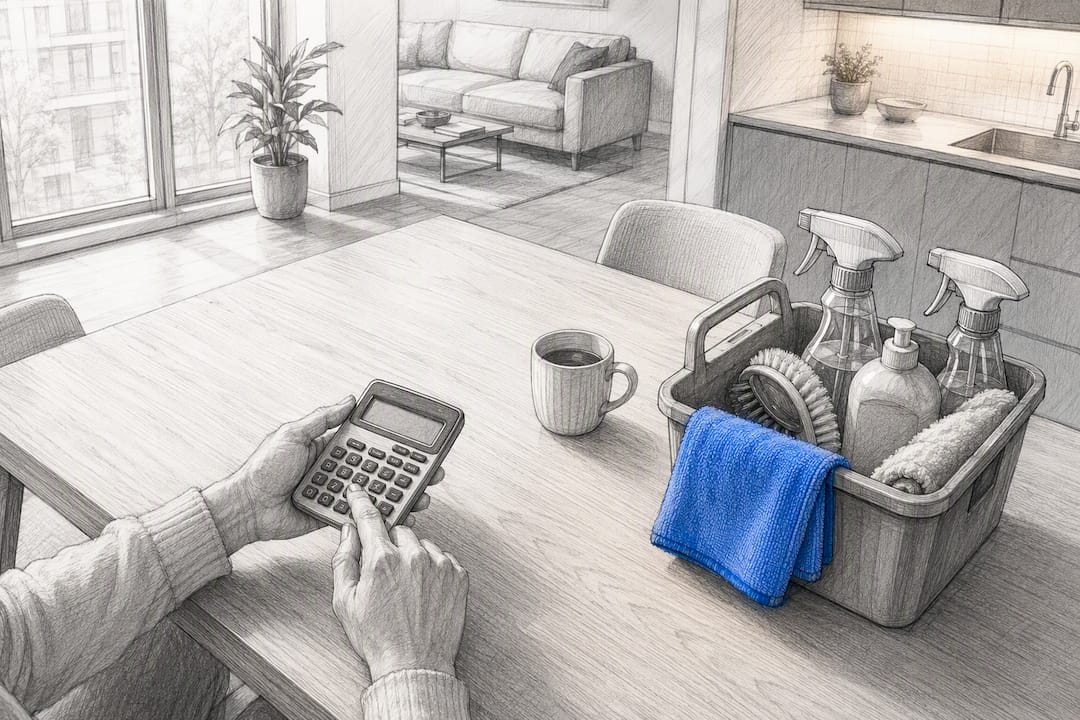



A recurring maid service is a standing, scheduled cleaning plan in which a vetted cleaner or team visits your home on a predictable cadence, typically weekly, bi-weekly, or at least monthly. It is the practical alternative to scrambling for a one-off booking every time your home needs attention. Busy households, families with kids or pets, and anyone managing allergies tend to benefit most. The sections below walk you through scheduling options, what’s included, how pricing works, and exactly how to set one up.
Table of Contents
- What Is a Recurring Maid Service, Really?
- Why a Regular Cleaning Schedule Pays Off
- How Often Should You Schedule Recurring Cleaning?
- What Does a Recurring Visit Actually Include?
- How Recurring Maid Service Pricing Works
- How to Hire and Set Up a Recurring Maid Service
- What the Evidence Says About Recurring Cleaning
- Key Takeaways
- Why Recurring Cleaning Makes Sense for Central European Households
- Rozie Makes Verified Recurring Cleaning Easy in Malta
- Useful Sources and Further Reading
What Is a Recurring Maid Service, Really?
A recurring cleaning service is a formal service agreement, not just a repeated booking. You agree on a frequency, a scope of work, and a price, and a cleaner shows up on that schedule without you having to re-book each time. The European Commission’s guidance on indoor cleaning services defines “routine professional cleaning” as services provided at least once a month, which gives you a useful baseline: if it happens monthly or more often, it qualifies as recurring maintenance.
This is meaningfully different from a one-off clean or a specialized service. Here is how the three models compare:
| Service type | Frequency | Typical purpose |
|---|---|---|
| Recurring maintenance | Weekly, bi-weekly, or monthly | Keep a clean home consistently clean |
| One-off / deep clean | Single visit, or before recurring starts | Reset a home that needs a hygiene baseline |
| Specialized cleaning | As needed | Oven restoration, upholstery, floor refinishing |
The key distinction is that recurring visits maintain a standard already achieved. They are not designed to rescue a home that has not been cleaned in months. That is what a deep clean is for, and most professionals recommend starting there if your home needs a reset before moving to a regular schedule.
Why a Regular Cleaning Schedule Pays Off
The most obvious benefit is time. A household that outsources cleaning reclaims several hours every week, and that time compounds. But the case for recurring cleaning goes beyond convenience.
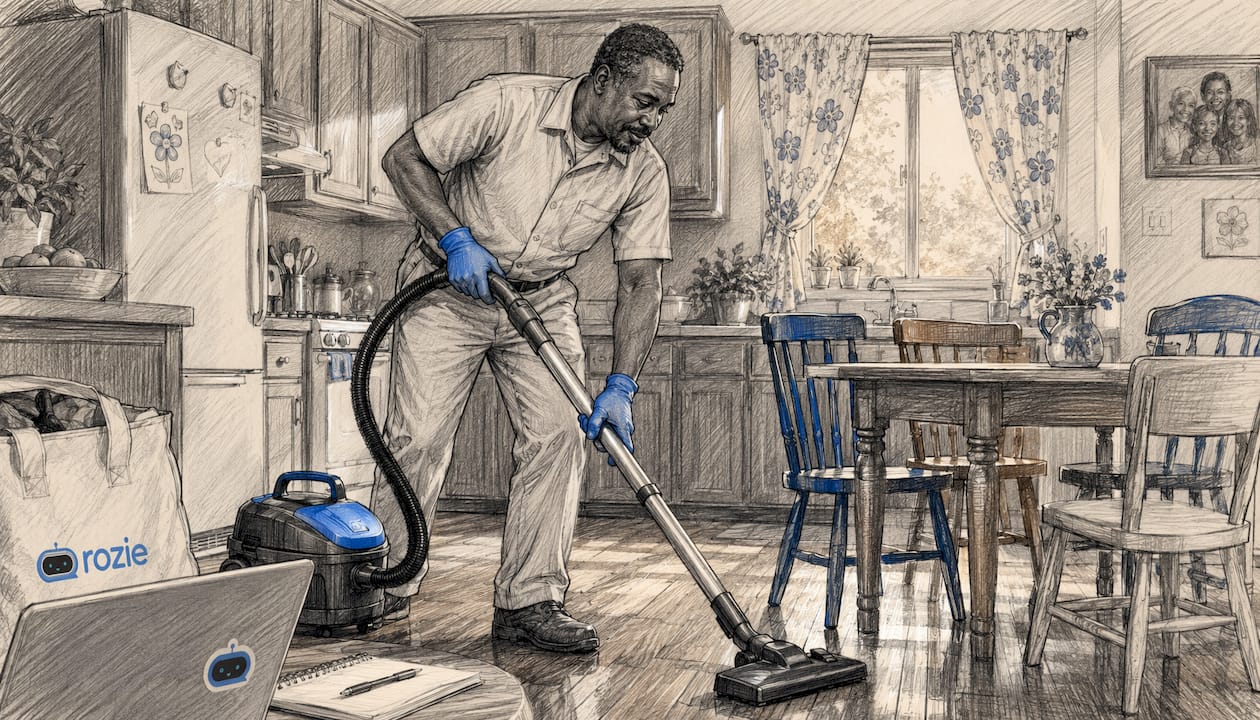
Systematic professional cleaning cuts allergen levels and bacterial load more effectively than ad-hoc DIY cleaning, and research links consistently tidy spaces to lower cortisol and improved focus. For allergy sufferers, that is a meaningful health outcome, not just a comfort preference. Dust mites, mold spores, and pet dander accumulate quickly in Central European homes, especially during winter when windows stay closed.
There is also a financial argument. Surfaces and fixtures that are cleaned regularly last longer. Grout, hardwood floors, and kitchen appliances all degrade faster when grime is allowed to build up. The long-term value of professional floor care alone often justifies the recurring cost when you factor in delayed refinishing or replacement.
Pro Tip: If you have pets or young children, start with weekly visits rather than bi-weekly. The difference in allergen accumulation between those two cadences is significant, and weekly cleaning prevents the kind of buildup that turns a maintenance visit into a mini deep clean.
Frequency discounts are common too. Most providers charge less per visit when you commit to a weekly or bi-weekly schedule compared to booking monthly. That pricing structure rewards consistency.
How Often Should You Schedule Recurring Cleaning?
Matching cadence to your household’s actual activity level is the single most important scheduling decision you will make. Here is how the three standard options break down:

| Cadence | Best for | Cost per visit | Hygiene outcome |
|---|---|---|---|
| Weekly | Large families, pets, high-traffic homes | Lowest (frequency discount) | Highest consistency |
| Bi-weekly | Average households, couples, small families | Moderate | Good maintenance |
| Monthly | Low-use homes, vacation properties, singles | Highest per visit | Baseline upkeep |
Weekly cleaning suits homes where dust and mess accumulate fast. Bi-weekly is a common choice for average Central European households because it balances cost and cleanliness without feeling excessive. Monthly works for people who travel often or live alone in a small apartment, though targeted sanitization of high-touch surfaces may still be needed between visits.
Pro Tip: Start at bi-weekly and reassess after two months. If your cleaner consistently finds the home in good shape, you can drop to monthly. If they are spending extra time on buildup, move to weekly. Let the actual condition of your home guide the decision, not the budget alone.
One rule of thumb worth keeping: busy homes with kids, pets, or frequent guests should treat weekly cleaning as the baseline, not a luxury. The cultural shift toward weekly recurring cleaning in Western and Central Europe is driven primarily by households buying back time and reducing the mental load of chores, not by hygiene anxiety.
What Does a Recurring Visit Actually Include?
Standard recurring visits cover the tasks that keep a clean home clean. They are not designed for heavy-duty restoration work. Here is a typical scope:
Standard recurring tasks:
- Vacuuming and mopping all floors
- Wiping down kitchen counters, stovetop, and high-touch surfaces
- Cleaning bathrooms (toilet, sink, shower/tub, mirrors)
- Dusting surfaces, shelves, and accessible furniture
- Emptying trash bins
- Tidying common areas
Common add-ons (usually priced separately):
- Inside oven and refrigerator cleaning
- Balcony or terrace cleaning
- Upholstery cleaning
- Window interior cleaning (beyond basic wiping)
- Moving heavy furniture
Standard recurring scopes intentionally exclude heavy furniture moving and treat oven and fridge interiors as paid extras, primarily for safety and liability reasons. This is not a gap in service quality; it is a deliberate boundary that keeps recurring visits efficient and predictable.
Pro Tip: During your initial consultation, ask the provider for a written checklist of exactly what each recurring visit covers. If inside-oven cleaning matters to you, confirm whether it is included or priced separately before you sign anything. Scope surprises are the most common source of dissatisfaction in recurring cleaning arrangements.
How Recurring Maid Service Pricing Works
Pricing for recurring services is typically set by frequency and property size rather than purely by the hour. This gives you a predictable monthly cost, which is one of the practical advantages of a standing agreement over ad-hoc bookings.
The main cost drivers are:
- Property size: A two-bedroom apartment costs less per visit than a four-bedroom house.
- Frequency: Weekly visits carry the lowest per-visit rate; monthly visits the highest.
- Initial condition: If your home needs a deep clean before recurring maintenance begins, expect a one-time higher charge for that first visit.
- Location: Labor costs vary across Central Europe. Urban areas tend to run higher than suburban or rural ones.
- Add-ons: Each specialized task added to the scope increases the per-visit price.
- Cancellation and skip policies: Some providers charge a fee if you skip a scheduled visit on short notice, which can affect your effective monthly cost.
When getting quotes, ask these questions directly:
- What is the per-visit price at my chosen frequency?
- Is there a discount for committing to a longer-term schedule?
- What is the cancellation or rescheduling policy, and are there fees?
- Is an initial deep clean required, and what does it cost?
- Which tasks are included in the standard scope, and what are the add-on prices?
Getting clear answers to all five before signing protects you from billing surprises later.
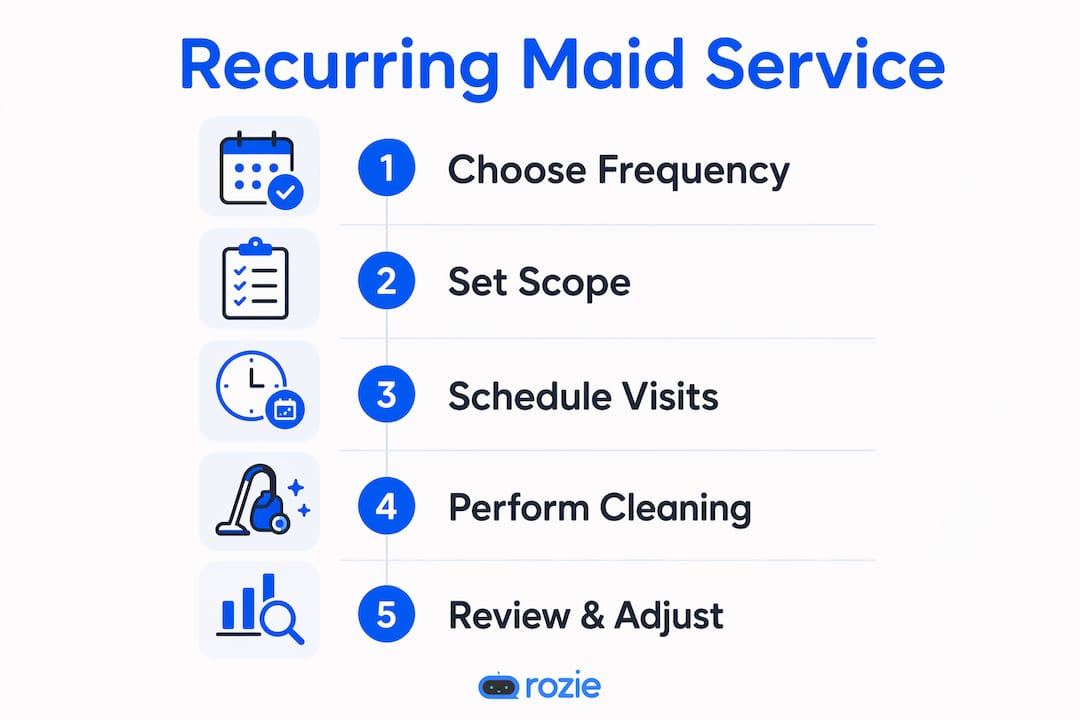
How to Hire and Set Up a Recurring Maid Service
The setup process matters as much as the service itself. A provider who skips the onboarding steps is a provider who will likely skip tasks later too.
- Initial consultation: Describe your home, your schedule, and your priorities. A reputable provider will ask questions, not just quote a price.
- Walk-through or written scope: Either a physical walk-through or a detailed written checklist should confirm exactly what each visit covers.
- Verify insurance and vetting: Confirm the provider carries liability insurance and that cleaners have passed background checks. Ask for proof, not just assurances.
- Trial visit or initial deep clean: If your home needs a hygiene reset, start with a one-off deep clean before the recurring schedule begins. This is the single most common professional recommendation.
- Finalize the recurring schedule: Agree on the day, time, frequency, and what happens if a visit needs to be rescheduled.
Red flags to watch for during this process:
- Vague or verbal-only guarantees with no written scope
- No proof of insurance or background checks on staff
- No re-clean policy for missed or substandard tasks
- Unclear cancellation or rescheduling terms
- Pressure to pay large amounts upfront
Reputable providers offer a re-clean policy, typically a 24–48 hour window to report missed tasks and receive a free return visit. If a provider cannot tell you their re-clean policy, that is a meaningful red flag.
Pro Tip: Ask about the key-holding policy before your first visit. A trustworthy provider will have a documented process for storing your key that prevents it from being traced back to your address. If they look puzzled by the question, keep looking.
For verified cleaner onboarding steps and what a proper vetting process looks like, Rozie’s documentation is a useful reference point.
What the Evidence Says About Recurring Cleaning
The health case for regular professional cleaning is well-supported. Systematic cleaning reduces allergens, dust mites, and harmful microorganisms, and the correlation between consistently clean spaces and lower stress is documented across multiple studies. For Central European households where windows are sealed for months during winter, indoor air quality is a genuine concern, and recurring cleaning is one of the most practical ways to manage it.
The European Commission’s EU Green Public Procurement guidance defines routine cleaning as services performed at least once a month, which aligns with the bi-weekly and weekly cadences most households choose. That definition was developed for commercial and institutional buildings, but the underlying hygiene logic applies equally to private residences.
Professionals consistently recommend beginning with a deep clean before any recurring schedule starts. Starting recurring visits without that reset is one of the most common mistakes households make, and it tends to reduce long-term satisfaction because the cleaner is always catching up rather than maintaining.
Pro Tip: Central European homes with forced-air heating benefit from HEPA-filter vacuuming during recurring visits. Ask your provider whether their equipment includes HEPA filtration, especially if anyone in the household has asthma or seasonal allergies.
| Evidence area | Key finding | Source |
|---|---|---|
| Allergen reduction | Systematic cleaning cuts allergen and bacterial load more effectively than ad-hoc DIY | Supervivo / professional health review |
| EU routine definition | Routine cleaning means at least once a month | European Commission Decision 2018/680 |
| Deep-clean-first recommendation | Start with a reset deep clean before recurring maintenance | Industry practitioner consensus |
| Weekly trend | Cultural shift toward weekly cleaning driven by reclaiming time and reducing mental load | Cleaning industry research, Central Europe |
Key Takeaways
A recurring maid service works best when the cadence matches your household’s actual activity level, the scope is documented in writing, and the provider is vetted and insured before the first visit.
| Point | Details |
|---|---|
| Definition | A recurring maid service is a standing schedule (weekly, bi-weekly, or monthly) and a vetted cleaner. |
| Start with a deep clean | If your home needs a reset, book a one-off deep clean before recurring maintenance begins. |
| Match cadence to activity | Families with kids or pets should start weekly; average households can begin bi-weekly. |
| Verify before you commit | Confirm insurance, background checks, and a written re-clean policy before signing. |
| Rozie for Malta | Rozie connects households with verified, insured cleaners for flexible recurring schedules. |
Why Recurring Cleaning Makes Sense for Central European Households
There is a pattern worth naming honestly: most people who start a recurring cleaning schedule do not do it because they suddenly care more about hygiene. They do it because they finally get tired of spending their weekends cleaning, or they realize the mental load of managing a home is quietly draining them. That is the real driver, and the research on weekly cleaning growth in Central and Western Europe confirms it.
What I find genuinely underappreciated is how much the cadence decision matters. Most people default to bi-weekly because it sounds reasonable, but households with pets or young children often find that bi-weekly visits still leave them doing meaningful cleaning in between. Weekly is not a luxury for those households; it is the threshold where the service actually delivers on its promise of a consistently clean home. The health benefits, the reclaimed time, and the reduced stress are all real, but they only materialize when the frequency is honest about your home’s actual needs.
The other thing worth saying plainly: the initial deep clean recommendation is not a sales tactic. Starting recurring maintenance in a home that has not been professionally cleaned in months means the cleaner spends every visit catching up, not maintaining. That is frustrating for everyone. Get the reset right, then let the recurring schedule do its job.
Rozie Makes Verified Recurring Cleaning Easy in Malta
Finding a vetted, insured cleaner for a recurring schedule used to mean asking around, hoping for referrals, and crossing your fingers. Rozie changes that. The platform connects households across Malta with verified cleaners who have passed background checks before they ever appear in the app, so you are not taking a chance on an unknown.
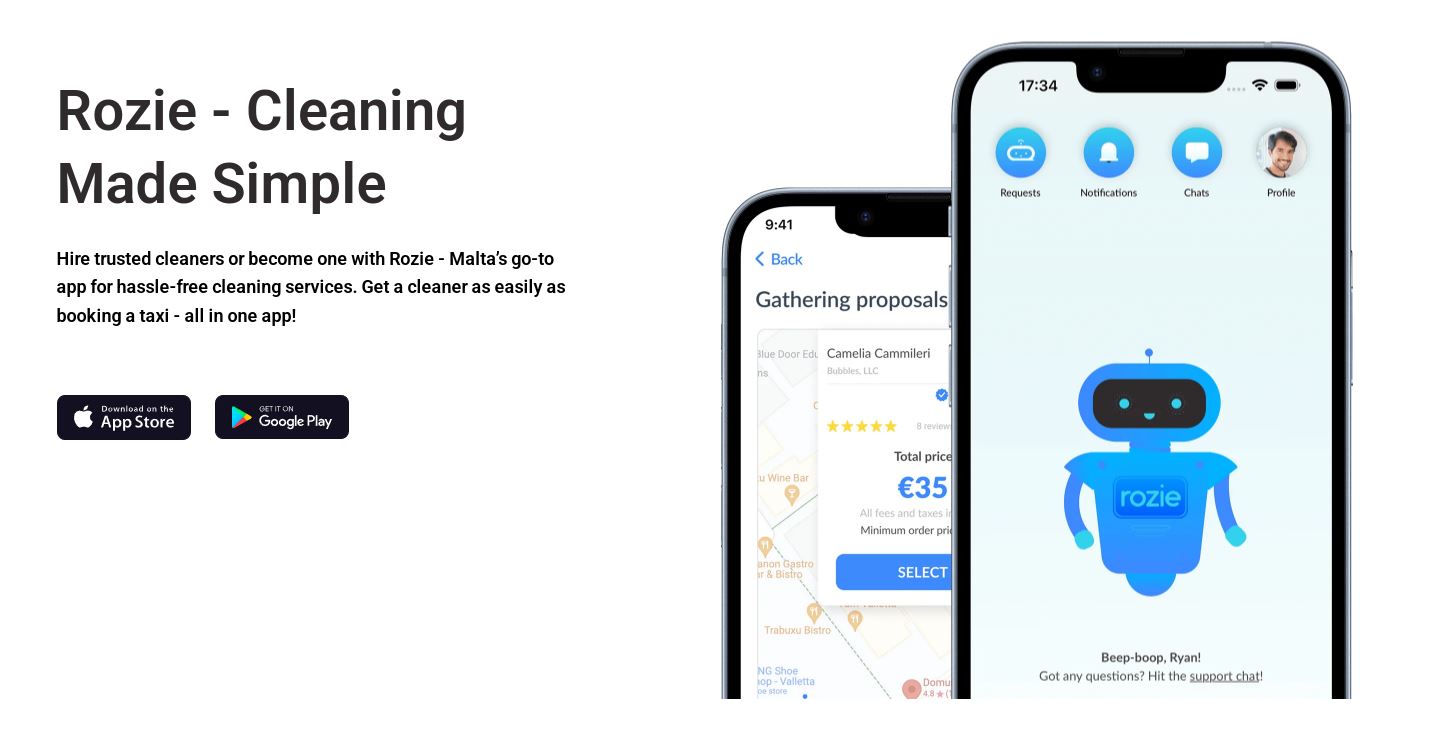
Rozie supports weekly, bi-weekly, and monthly recurring schedules, with payment protection for both clients and cleaners and seven-day support if anything needs attention. The booking process is straightforward: find a cleaner, choose your frequency, and confirm your schedule. No long phone calls, no vague verbal agreements.
Ready to set up a recurring cleaning schedule with a cleaner you can trust? Find verified cleaners in Malta through Rozie and book your first visit today.
Useful Sources and Further Reading
The following sources informed this article and are worth consulting directly if you want to verify specific points or explore the evidence further:
- European Commission Decision 2018/680 on EU Ecolabel for Indoor Cleaning Services — the official EU definition of routine professional cleaning (at least monthly).
- EU Green Public Procurement Criteria for Indoor Cleaning Services (JRC Technical Report) — detailed guidance on routine cleaning scope and frequency standards.
- How does a professional cleaner support healthy living? (Supervivo) — evidence on allergen reduction, indoor air quality, and stress benefits of regular professional cleaning.
- Why are more households choosing weekly cleaning? (Cleaning Total) — industry analysis of the Central and Western European trend toward weekly recurring services.
- What to expect from professional cleaning services (Cyprus Mail) — practitioner guidance on the deep-clean-first recommendation.
- Professional cleaning service checklist (Moppa) — practical breakdown of standard recurring scope and common add-ons.
- Rozie: Deep Cleaning Malta — details on one-off deep clean options before starting a recurring schedule.
- Rozie: What Does a Cleaning Service Do? — overview of routine versus specialized tasks and mental-health benefits.
- 8 Smart Ways to Organize a Busy Family Household (Atlas Kings) — practical household organization tips that complement a recurring cleaning routine.
Recommended
- What is Maid Service? Understanding the Essentials | Rozie – Malta’s Best Cleaning Services
- Understanding What Do Maids Do: Roles and Responsibilities | Rozie – Malta’s Best Cleaning Services
- Regular Home Cleaning Malta | Verified Cleaners | Rozie
- What Is Weekly Cleaning Service? Complete Guide Malta | Rozie – Malta’s Best Cleaning Services