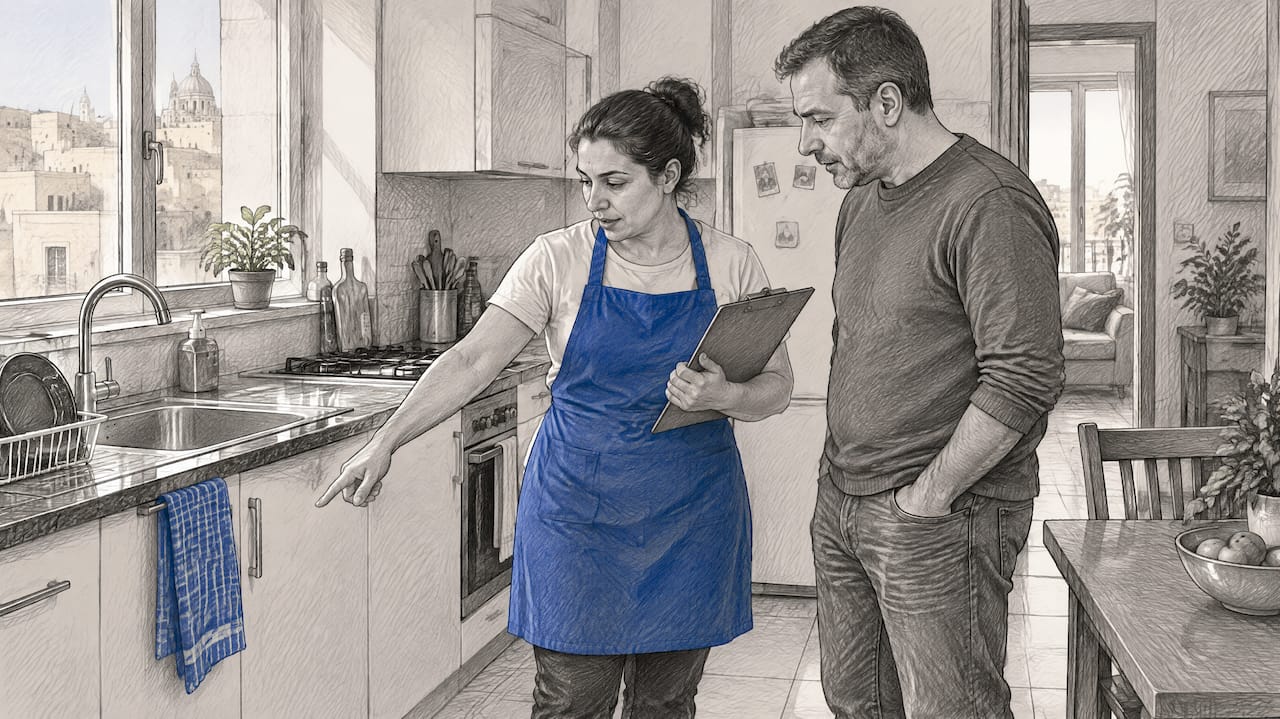


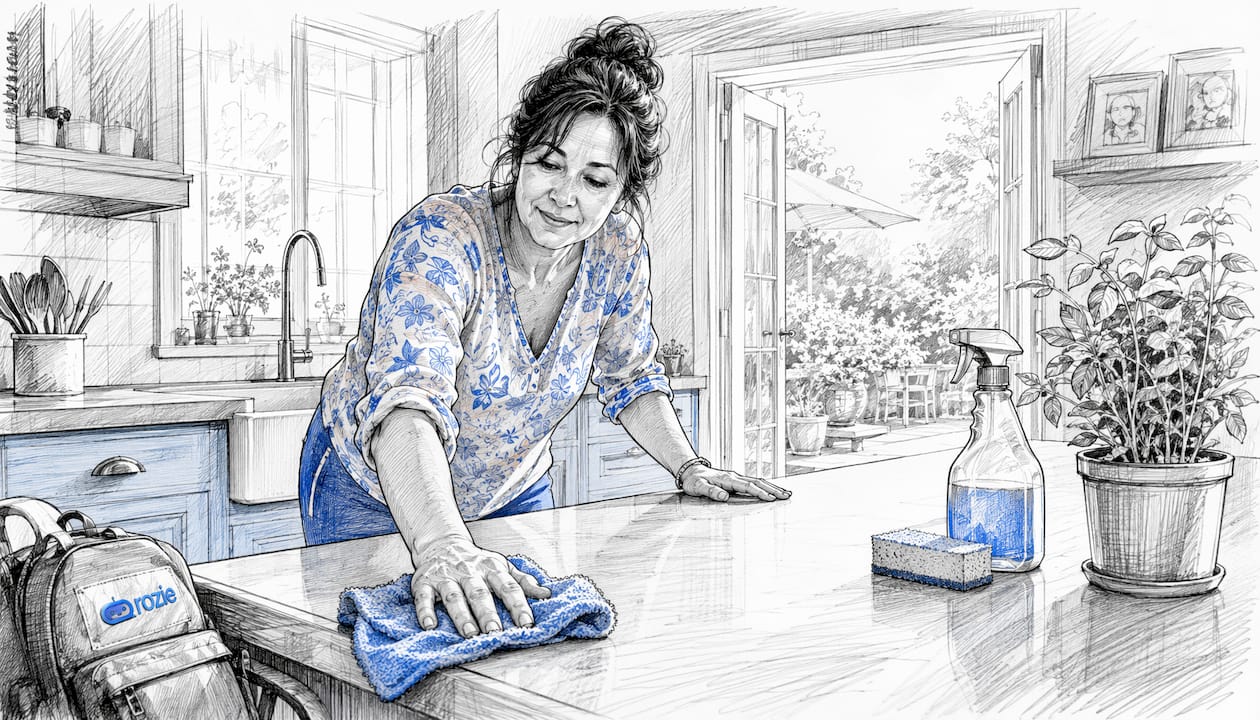
Kitchen cleaning is the systematic process of removing dirt, food residue, and microorganisms from all kitchen surfaces, utensils, and appliances to maintain a safe, hygienic environment. It goes well beyond a quick wipe-down. Done properly, it prevents foodborne illness, stops bacterial growth, and keeps your home genuinely safe for everyone who eats there.
Under EU food hygiene rules (Regulation EC No 852/2004), all food premises must be kept clean and maintained in good condition. That standard applies to home kitchens too, and the European Food Safety Authority (EFSA) backs it up with clear, practical guidance on what “clean” actually means in practice.
What is kitchen cleaning and why does it matter?
Kitchen cleaning covers four core activities: cleaning work surfaces, washing utensils and dishware, maintaining appliances, and practicing good hand hygiene throughout food preparation. Each one matters because kitchens are warm, moist, and full of food particles. That combination is exactly what bacteria like Salmonella and Listeria need to multiply fast.
- Surface cleaning: Removing food residue, grease, and visible dirt from countertops, stovetops, and cutting boards
- Utensil and dishware washing: Cleaning and, where needed, disinfecting all items that contact food
- Appliance maintenance: Keeping the refrigerator, oven, microwave, and ventilation hood free of buildup
- Hand hygiene: Washing hands before handling food, during preparation, and always after using the toilet
Neglecting any of these creates real risk. Bacteria thrive on unwashed surfaces, cross-contamination spreads through shared utensils, and a dirty refrigerator can harbor pathogens even at cold temperatures. The good news is that a consistent routine makes all of this manageable.
How to clean a kitchen step by step
A logical order matters here. Cleaning from top to bottom and from least contaminated to most contaminated areas stops you from spreading dirt you just removed.
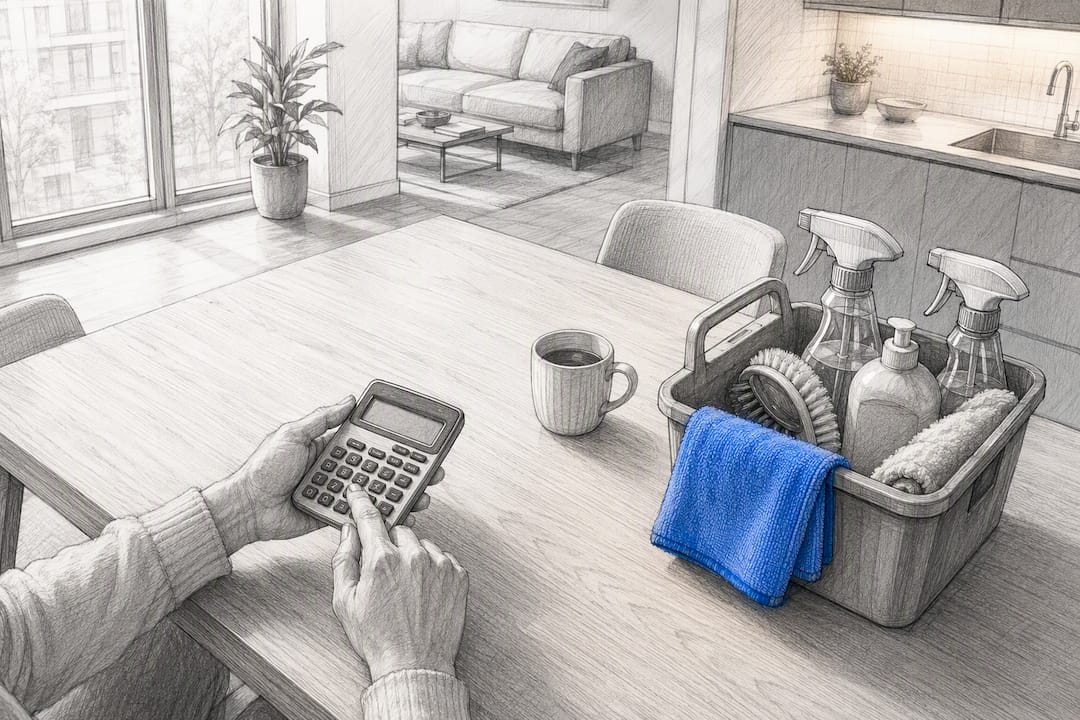
- Clear the space first: Remove items from counters, put away food, and gather your supplies (dish soap, an all-purpose cleaner, disinfectant spray, microfiber cloths, a scrub brush, and gloves).
- Soak what needs soaking: Place heavily soiled pots, pans, and baking trays in hot soapy water before you start on surfaces. This saves scrubbing time later.
- Wipe down surfaces top to bottom: Start with upper cabinets and shelves, then move to countertops and the stovetop. Use a damp microfiber cloth with an all-purpose cleaner.
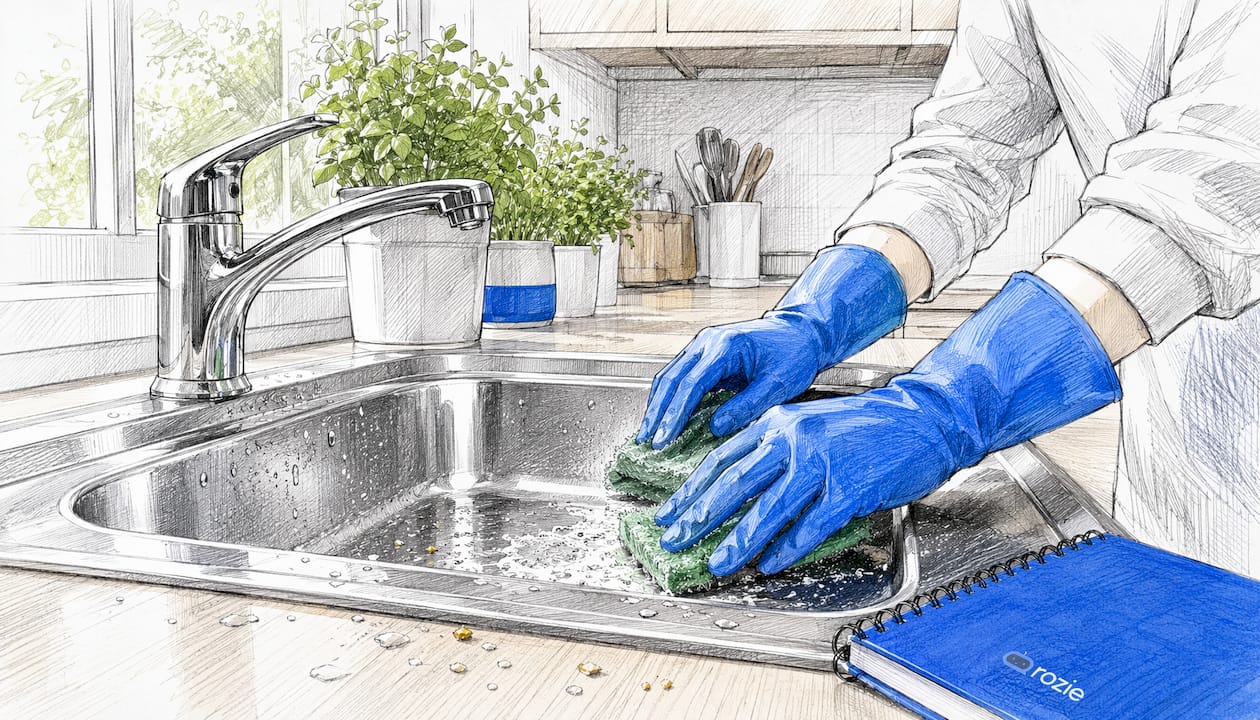
- Clean the sink: Scrub the basin, faucet, and drain with a dedicated brush and cleaner. The sink is one of the most bacteria-laden spots in any kitchen.
- Tackle appliances: Wipe the exterior of the microwave, refrigerator, and oven. Clean the microwave interior with a damp cloth after loosening residue with steam.
- Wash and rinse utensils: Scrub dishes, pots, and utensils with hot soapy water, rinse thoroughly, and allow to air dry or dry with a clean cloth.
- Disinfect high-touch surfaces: Apply a food-safe disinfectant to countertops, handles, and switches. Let it sit for the contact time stated on the label, then rinse if required.
- Mop the floor last: Sweep or vacuum first to collect loose debris, then mop with a suitable floor cleaner.
Pro Tip: Always rinse disinfectant residue from food-contact surfaces with clean water before using the workspace again, especially after working with raw poultry or eggs.
Kitchen cleaning schedules: daily, weekly, monthly, and seasonal tasks
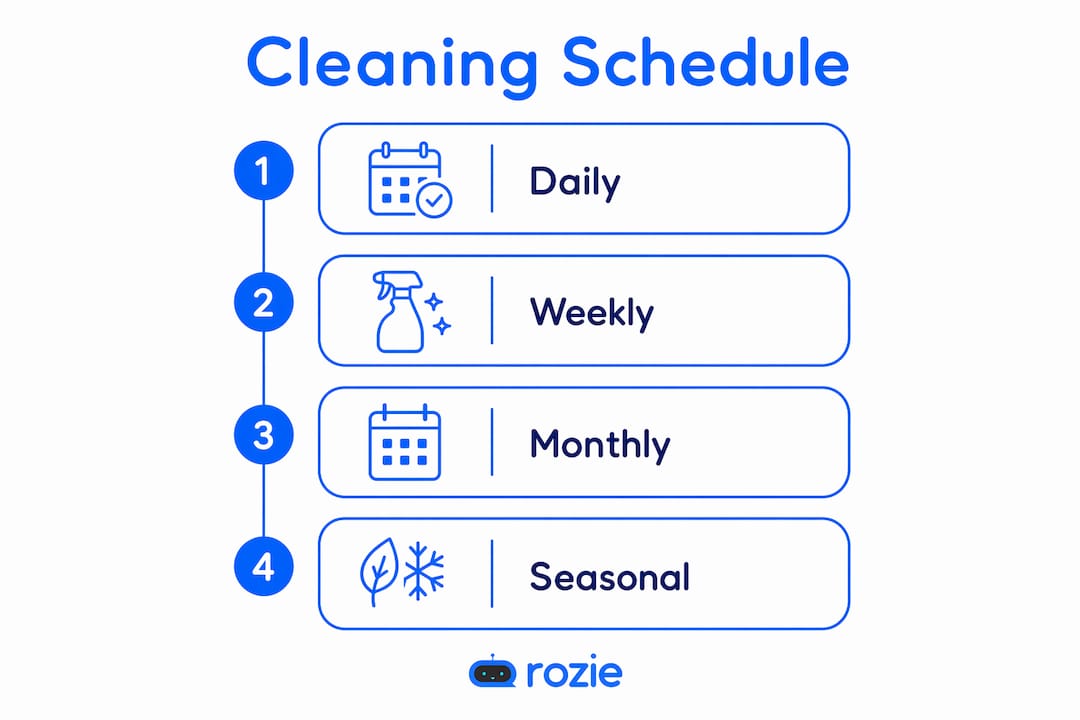
The right cleaning frequency depends on how intensively you use your kitchen. A household cooking three meals a day needs a more rigorous routine than one that mostly reheats food. A structured schedule removes the guesswork entirely.
Daily tasks:
- Wipe down countertops and the stovetop after cooking
- Wash dishes, pots, and utensils or run the dishwasher
- Wipe sink and faucet handles
- Sweep or spot-clean the floor
Weekly tasks:
- Deep clean the stovetop and oven exterior
- Wipe down the refrigerator exterior and handles
- Mop the floor thoroughly
- Clean the microwave interior
- Sanitize the sink drain and garbage disposal
Monthly tasks:
- Clean the refrigerator interior, discarding expired items
- Wipe down cabinet fronts and drawer handles
- Clean the range hood filter
- Descale the kettle and coffee maker
Seasonal tasks (every 3–6 months):
- Defrost and deep clean the freezer
- Pull out the refrigerator and clean behind it
- Thoroughly clean inside all cabinets and pantry shelves
- Inspect and clean ventilation ducts and exhaust fans
A documented checklist that records who cleaned what and when is the approach used in professional kitchens under HACCP principles. The same logic works at home: when tasks are written down, nothing gets forgotten for months.
Cleaning versus disinfecting: why you need both
These two steps are not the same thing, and skipping one undermines the other.
Cleaning means mechanically removing visible dirt, food residue, and grease using soap or detergent and water. It reduces the number of microorganisms on a surface but does not eliminate them. Disinfecting means applying a chemical agent or heat to kill the microorganisms that remain after cleaning. As research confirms, disinfecting alone on a visibly dirty surface is ineffective because organic matter shields pathogens from the disinfectant.
The sequence is non-negotiable: clean first, then disinfect. Visual cleanliness is the prerequisite for effective disinfection.
Three main disinfection methods are used in kitchens:
- Chemical disinfection: Food-safe disinfectant sprays or solutions applied for a set contact time, then rinsed from food-contact surfaces
- Thermal disinfection: The gold standard for dishware. Effective thermal disinfection requires exposure to at least 80°C for a minimum of 30 seconds (or 85°C for at least 10 seconds in manual washing)
- Chemo-thermal disinfection: A combination of both, used in professional dishwashers
For home kitchens, a dishwasher with a hot wash cycle handles thermal disinfection automatically. For surfaces, a food-safe disinfectant spray used after cleaning covers the chemical step.
How to prevent cross-contamination in your kitchen
Cross-contamination happens when bacteria from one food or surface transfer to another, often invisibly; following guidelines from Schoonmaak- en ontsmettingsondernemingen | Nowjobs ensures kitchen cleaning meets safety and hygiene standards. Raw meat, poultry, and seafood are the most common sources, and the transfer can happen through hands, cutting boards, or utensils.
- Store raw proteins separately: Raw meat, poultry, and seafood must be stored on the lowest refrigerator shelf, in sealed containers, away from ready-to-eat foods.
- Use dedicated cutting boards: Keep one board for raw meat and a separate one for vegetables, bread, and cooked foods. Color-coded boards make this easy to maintain.
- Wash hands repeatedly: Handwashing is the single most overlooked step. Wash before handling food, after touching raw meat, after handling garbage, and after using the toilet.
- Maintain separate washing facilities: EU Regulation (EC) No 852/2004 requires that hand-washing facilities be kept separate from food-washing sinks, with hot and cold running water and hygienic drying materials.
- Sanitize high-touch surfaces regularly: Door handles, faucet handles, and light switches collect bacteria from hands throughout the day. Wipe them with disinfectant daily.
What products and tools work best for different surfaces?
Matching the right product to the right surface protects both the surface and your health.
| Surface or appliance | Recommended product | Best tool |
|---|---|---|
| Countertops (stone, laminate) | All-purpose cleaner, then food-safe disinfectant | Microfiber cloth |
| Stovetop (ceramic, gas) | Degreaser or baking soda paste | Scrub brush, non-scratch pad |
| Stainless steel appliances | Stainless steel cleaner or diluted dish soap | Soft cloth, wipe with the grain |
| Oven interior | Oven cleaner or baking soda and vinegar | Stiff brush, damp cloth |
| Refrigerator interior | Mild dish soap in warm water | Soft sponge |
| Floors (tile, vinyl) | pH-neutral floor cleaner | Microfiber mop |
| Wooden cutting boards | Hot soapy water, then food-safe mineral oil | Scrub brush |
For kitchen cabinet cleaning, a mild dish soap solution works on most painted or laminate finishes. Avoid abrasive scrubbers that scratch the surface and trap bacteria in the marks they leave.
Common kitchen cleaning mistakes to avoid
Even well-intentioned cleaning routines have blind spots. These are the ones that create the most risk.
Using the same cloth everywhere. A single cloth used on raw meat surfaces and then on countertops spreads contamination rather than removing it. Use separate cloths for different areas, and wash them frequently in a hot cycle.
Skipping the disinfection step. Wiping a surface with a damp cloth removes visible dirt but leaves pathogens behind. Cleaning without following up with a disinfectant is only half the job, particularly after handling raw protein.
Not letting disinfectant work. Spraying and immediately wiping defeats the purpose. Every disinfectant has a contact time, typically 30 seconds to several minutes, printed on the label. That time is when the killing happens.
Forgetting the refrigerator. The fridge interior needs monthly wet cleaning and disinfection. Perishables must be kept below 5°C to prevent bacterial growth, but a dirty interior can contaminate food even at the right temperature.
Ignoring the range hood filter. Grease accumulates in the filter and becomes a fire hazard as well as a hygiene issue. Clean it monthly.
What health risks come from poor kitchen hygiene?
A poorly maintained kitchen is not just unpleasant. It is a genuine health risk, particularly for children, older adults, and anyone with a compromised immune system.
Bacterial pathogens like Salmonella, Listeria monocytogenes, Campylobacter, and E. coli can survive on kitchen surfaces for hours or days. Cooked food left at room temperature for more than two hours enters the temperature range where bacteria multiply rapidly. Cross-contamination from raw meat to salad ingredients can cause serious illness without any visible sign that something is wrong.
Mold growth in damp areas like the sink drain, refrigerator seals, and under the dish rack adds another layer of risk, particularly for people with respiratory conditions. A consistent kitchen cleaning process is the most direct way to eliminate these hazards before they reach the plate.
When the schedule feels overwhelming or life gets busy, Rozie makes it easy to book a vetted, verified cleaner in Malta who knows exactly how to handle a thorough kitchen clean. Whether you need a one-off deep clean for your home or a regular visit to keep things hygienic between your own sessions, Rozie connects you with trusted professionals seven days a week, with full payment protection built in.

Key Takeaways
Effective kitchen cleaning requires both cleaning and disinfecting in sequence, a structured schedule, and consistent hygiene habits to prevent foodborne illness and cross-contamination.
| Point | Details |
|---|---|
| Clean before you disinfect | Disinfectants cannot work on visibly dirty surfaces; always remove residue first. |
| Thermal disinfection standard | Dishware requires thermal disinfection at temperatures at or above 80°C for effective pathogen kill, for a minimum of 10 seconds. |
| Perishable foods should be kept refrigerated at low temperatures to inhibit bacterial growth. | Cooked food should not be left at room temperature for extended periods, as this increases the risk of bacterial growth. |
| Use a documented schedule | HACCP-based checklists prevent key areas from being missed over time. |
| Separate raw and ready-to-eat foods | Dedicated cutting boards and utensils for raw proteins are the simplest cross-contamination barrier. |
Recommended
- Cleaning Kitchen Made Easy: Step-by-Step Guide for Malta | Rozie – Malta’s Best Cleaning Services
- Understanding What is Kitchen Deep Cleaning for Your Home | Rozie – Malta’s Best Cleaning Services
- 7 Practical Examples of Deep Cleaning for Busy Maltese Homes | Rozie – Malta’s Best Cleaning Services
- 7 Essential Steps for a Complete Deep Cleaning Checklist | Rozie – Malta’s Best Cleaning Services