

In this guide
What does a citywide janitorial service cover in Malta?
What should a janitorial cleaning contract include?
How do you check insurance and health and safety?
How do you confirm the contractor employs cleaners lawfully?
Which certifications are worth asking for?
How do pricing models, notice periods and renewals work?
Do multi-site and single-site businesses need different setups?
Janitorial contract or per-visit cleaners: which fits?
What does a citywide janitorial service cover in Malta?
A citywide janitorial service in Malta is an ongoing cleaning contract for business premises: offices, shops, clinics, showrooms and residential common areas. The contractor supplies trained staff, a supervisor, equipment and usually consumables, and cleans to an agreed schedule. The word “citywide” matters less in a country as compact as Malta; what matters is the scope you put in writing.
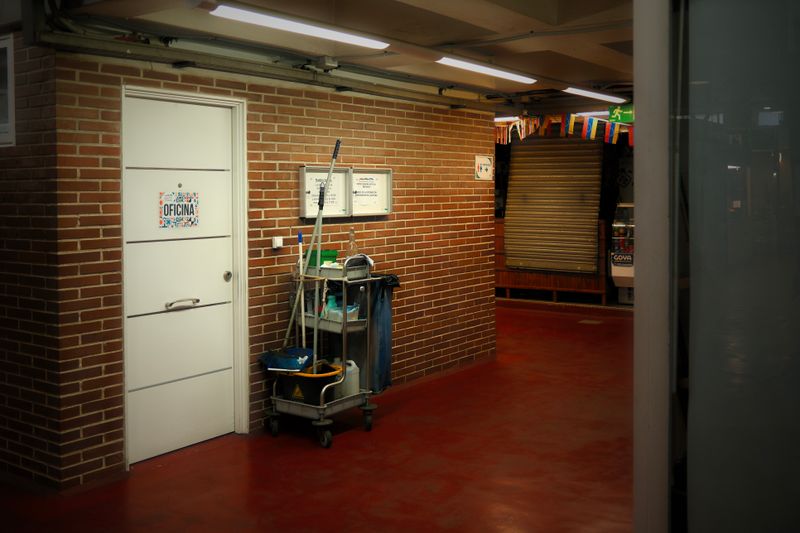
A typical janitorial scope bundles routine work with a few specialty services:
- Routine cleaning: bins, washrooms, kitchenettes, desks, floors and touch points, daily or several times a week.
- Day cover: a cleaner on site during business hours for spills, washroom checks and meeting room resets.
- Periodic work: floor care, inside windows, high dusting and deep cleans on a set cycle.
- Consumables: toilet paper, hand soap, bin liners and cleaning chemicals, either supplied by the contractor or bought by you.
- One-off jobs: post-fit-out dust, pre-inspection cleans and event clean-ups.
Malta adds its own conditions. Hard water leaves limescale on washroom taps and glass, coastal offices in Sliema, St Julian’s and Gzira collect salt film on windows, and many older buildings have Globigerina limestone floors that need pH-neutral products only. A contractor that has never mentioned any of these in a site visit has probably not looked closely at your building. For a broader overview of business cleaning prices and services, see our commercial cleaning buyer’s guide for Malta.
What should a janitorial cleaning contract include?
A janitorial cleaning contract in Malta should define the scope room by room, the frequency for each task, measurable KPIs, how inspections work, who supplies consumables, insurance and health and safety duties, how the contractor employs its staff, key and alarm handling, and the notice and renewal terms. Anything left verbal becomes a dispute the first time a washroom is missed.
Use this checklist as the backbone of your request for proposals or your contract review. Every row is something facility managers in Malta regularly forget to pin down.
How detailed should the scope and frequency be?
Detailed enough that a new cleaner could follow it without asking. List every room, its floor type, its use and how often each task happens. Green procurement guidance from the European Commission shows the same logic at public-sector scale: a French local authority split its cleaning contract into separate lots for daycares, sports halls and waste centres, and kept the right to apply penalties or end the contract early if performance or environmental rules slipped. A written, room-by-room inventory is the same preparation recommended for RFPs, and it works just as well for a single office in Mosta as for a public tender.
Which KPIs and inspections actually work?
Measure outcomes, not hours. EFCI procurement guidance from the European cleaning industry federation advises buying on best value rather than lowest price, keeping price below half of the overall score, and not scoring bids on the number of hours, because cleaning contracts should be results-based. Practical KPIs include a monthly walkthrough score, response time to a reported problem and the number of repeat failures.

Pro tip
Ask every shortlisted contractor for a sample inspection report from an existing site, with the client’s name removed. If they cannot produce one within a week, they are not measuring quality, whatever the proposal says.
How do you check insurance and health and safety?
Insurance and health and safety checks for a janitorial contractor in Malta come down to documents: a current liability insurance certificate with clear limits, a written risk assessment for your premises, safety data sheets for every chemical used, and training records for the staff assigned. Malta’s Health and Safety at Work Act (Cap. 646) and its regulations set the legal baseline.
The Occupational Health and Safety Authority legislation page lists the regulations that matter for cleaning work, including the rules on chemical agents at work, personal protective equipment and general workplace provisions. The parent law is the Health and Safety at Work Act, Cap. 646, in force since November 2024. As the building owner or occupier you share responsibility for a safe workplace, so ask how the contractor will handle wet-floor signage in busy corridors, ladder work for high dusting and storage of chemicals on your premises.
Chemical choice also matters for your building. Acidic descalers that work on chrome taps can etch Globigerina limestone, marble and terrazzo, so the contract should state pH-neutral products on stone floors. Ask to see the product list before work starts, and keep the safety data sheets on file.
Insurance questions to ask.
What is the limit per occurrence, who is the insurer, is there an excess, and does the policy cover every address in the contract? Get the certificate itself, not a line in the proposal saying the company is insured.
How do you confirm the contractor employs cleaners lawfully?
To confirm a janitorial contractor in Malta employs its cleaners lawfully, ask for written confirmation that staff on your site are employed under the Employment and Industrial Relations Act (Cap. 452), hold valid work permits where needed, and receive at least the pay and conditions the law requires. Underpriced bids often hide underpaid or undocumented labour, which becomes your reputational problem.
The Employment and Industrial Relations Act, Cap. 452 is the main law on employment conditions in Malta. The Department for Industrial and Employment Relations publishes a plain-language DIER Charter of Workers’ Rights, which notes that employees of private contractors serving other businesses must receive at least the hourly rate paid to comparable employees, with the same working conditions. That is worth quoting back to any bidder whose price looks too low.
EFCI makes a related point: labour is around 80% of the price a cleaning company quotes, so a bid far below the others usually means fewer hours, lower pay or both. For household employers, our legal guide to hiring a cleaner in Malta covers the private side of the same rules. This section is general information, not legal advice; for a large contract, have a Maltese employment lawyer review the clauses.
Which certifications are worth asking for?
The certifications worth asking a janitorial contractor in Malta for are the EU Ecolabel for indoor cleaning services, ISO 9001 for quality management, ISO 14001 for environmental management and ISO 45001 for occupational health and safety. Ask for the certificate and its expiry date, not a logo on the proposal cover, and check the scope covers cleaning services.
The EU Ecolabel Decision 2018/680 sets criteria for indoor cleaning services, including product choice, dosing, staff training and waste sorting. ISO 41001 is a facility management standard aimed at the building owner rather than the cleaner; for comparison, a certification body in Bosnia and Herzegovina explains how ISO 41001 supports consistent service delivery across a portfolio. Few small Maltese contractors hold it, so treat it as a bonus, not a requirement.
Certifications do not replace a site visit. If greener products matter to your team, our guide to eco-friendly cleaning supply practices helps you ask sharper questions about what a contractor actually uses.
How do pricing models, notice periods and renewals work?
Janitorial pricing in Malta usually follows one of three models: a fixed monthly fee for a defined scope, an hourly rate, or a fee linked to KPI results. Notice periods and renewals are whatever you negotiate, since Maltese law sets no standard term for commercial cleaning contracts. Read the renewal clause before the price, because automatic renewal at a higher rate is a common surprise.
For a sense of labour cost, Rozie’s cleaning cost guide for Malta puts hourly rates at roughly €10 to €20 for independent cleaners and €15 to €25 for agency teams. A contract adds supervision, consumables and cover for sick days on top. Each model has a trade-off:
- Fixed monthly fee: predictable budgets, but rigid when your use of the space changes.
- Hourly billing: flexible, but it rewards slow work unless you track results.
- KPI-linked fee: part of the payment depends on audit scores, which aligns incentives between you and the contractor better than paying for time alone.
On notice: many service agreements use a period of around one to three months, and some add an early exit fee. Treat that as a typical negotiating range, not a legal rule. Ask for mutual termination rights, a short notice-and-fix period for missed KPIs, a 30 to 90 day trial and a cap on renewal increases. If you are unsure what a professional clean should deliver in the first place, read what a cleaning service actually does.

Key takeaway: A janitorial contract is only as good as its scope, KPIs and exit terms. If you cannot measure it and cannot leave it, you are paying for a promise rather than a service.
Do multi-site and single-site businesses need different setups?
Multi-site and single-site businesses in Malta need different cleaning setups. A retailer or clinic group with branches in several localities benefits from one janitorial contract, one checklist and one supervisor reporting across sites. A single small office, a showroom or a block’s common areas rarely needs that overhead, and per-visit cleaners booked when needed often cover the work for less effort.
What multi-site operators should insist on
With several sites, consistency is the product. Ask for one standard checklist adapted per site, a named supervisor, a monthly scorecard per address and a plan for travel time between localities. Traffic between Birkirkara, Valletta and Sliema can eat into short evening slots, and parking near Valletta and Sliema offices is tight, so confirm when and how cleaners will arrive. Coastal branches need more frequent glass cleaning because of salt air.
What a single site really needs
A small office of a few desks, a dental practice reception or the stairwell of an apartment block usually needs a reliable person, a clear task list and the ability to add a deep clean before an inspection or after works. Locking that into a long contract with consumables and day cover can mean paying for capacity you never use. Our office cleaning schedule template helps you decide how often each area really needs attention.
Janitorial contract or per-visit cleaners: which fits?
A janitorial contract fits when you need daily cleaning across large or multiple sites, day cover, consumables management and formal reporting. Per-visit marketplace cleaners such as those on Rozie fit small offices, common areas and one-off cleans booked on request, when you want to compare offers and stay free of long commitments. Many Malta businesses use both for different jobs.
To be clear about what Rozie is: Rozie is a marketplace that connects you with verified cleaners for individual visits. Rozie does not run janitorial contracts, does not supply consumables and does not offer multi-user business accounts. Office and common-area cleaning can be arranged on request, as a regular cleaning visit or a deep cleaning visit before a move or an inspection, and if you liked a cleaner you can easily book them again.
Finding a reliable cleaner for a small office in Malta the traditional way often means scrolling Facebook groups, making phone calls, chasing quotes, and hoping the person who shows up actually does a good job.
Rozie was built to remove that friction. You pick a date, select the extras you need, and verified cleaners send you offers with exact prices before you accept. Every booking is backed by 7-day payment protection and professional liability insurance up to €1,000,000 per occurrence, underwritten by Lloyd’s Insurance Company S.A.
Here is the full booking process in under 60 seconds:
Compare Cleaning Offers on Rozie →
How does booking a per-visit office clean on Rozie work?
Booking a per-visit office or common-area clean on Rozie takes a few minutes. You post the job with the date, locality and extras, add notes about the space, and verified cleaners in Malta send offers with exact prices, typically within 5 to 15 minutes. You compare offers, chat with the cleaner in the app, and accept the one that suits you.
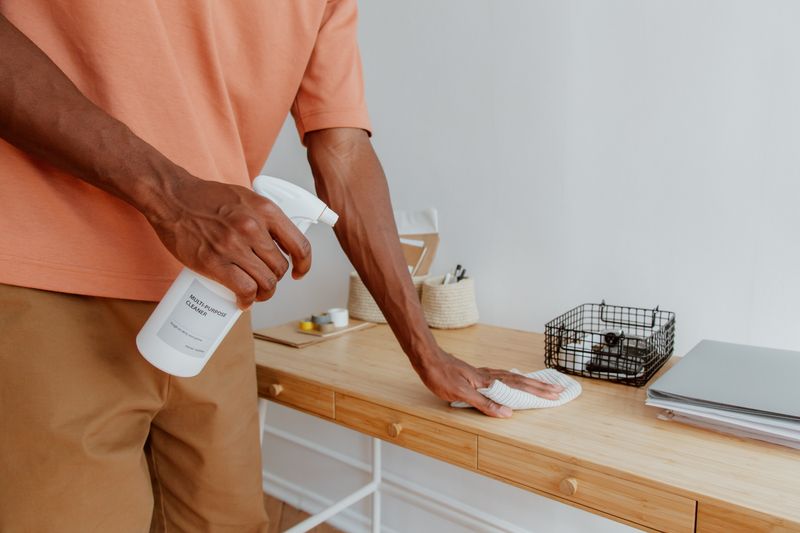
- Write a short scope. Number of rooms, washrooms and desks, floor types, and anything special such as a stairwell over three floors or a kitchenette.
- Post the request on Rozie. Choose the date, the locality and extras such as inside windows, inside the fridge or kitchen cabinets.
- Compare offers. Each offer shows the exact price before you accept, and you can check ratings and reviews. Our guide on what to look for in verified cleaner profiles explains which signals matter.
- Agree the details in chat. Confirm access, keys, and that you will leave out soap, paper and bin liners, since the cleaner works with what you provide.
- Accept and relax. Payment is held under 7-day payment protection, and the visit is covered by liability insurance with no excess for you.
Rozie verifies cleaners before they can send offers; our article on how Rozie verifies cleaners in Malta explains the checks, and the guide to finding insured cleaners in Malta covers the insurance side.
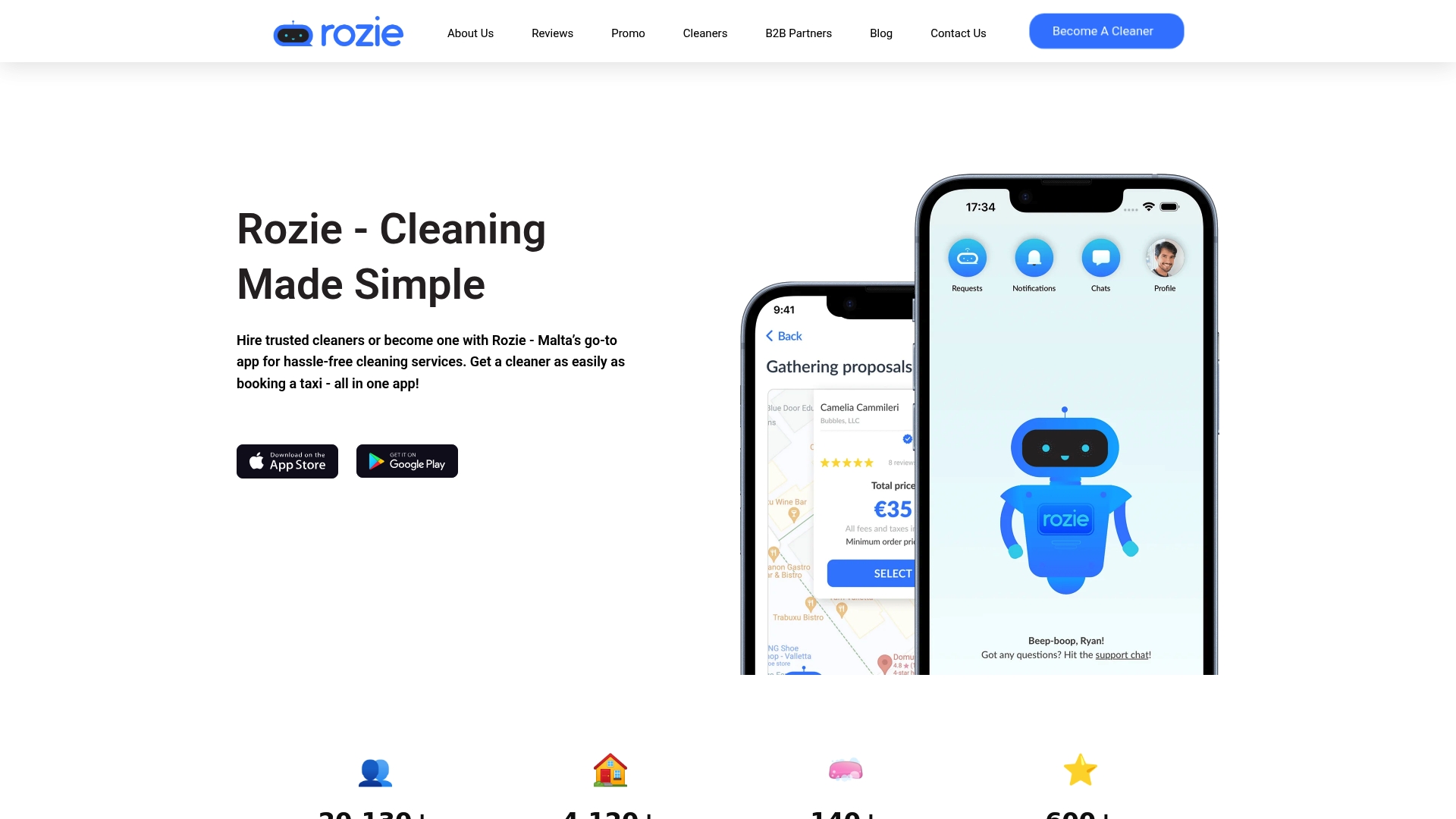
Not ready for a contract? If your building is one small office or a stairwell, skip the tender. Post the job on Rozie, compare offers from verified cleaners in Malta, and book only the visits you need. More practical guides live in our Cleaning in Malta articles.
Frequently asked questions
What is a citywide janitorial service?
A citywide janitorial service is a contracted cleaning provider that looks after business premises on a fixed scope and schedule, usually with its own staff, supervision, equipment and consumables. In a compact country like Malta, the written contract scope matters more than the label.
What should I check before signing a janitorial contract in Malta?
Check the room-by-room scope and frequency, KPIs and inspections, the liability insurance certificate, the risk assessment and chemical safety data sheets, written confirmation that staff are employed lawfully under Cap. 452, who supplies consumables, key handling, and the notice and renewal terms.
How long is the notice period on a cleaning contract in Malta?
Maltese law sets no standard notice period for commercial cleaning contracts, so it is whatever both sides agree. Many service agreements use around one to three months, but treat that as a typical range to negotiate, and make sure both parties have the same exit rights.
Does Rozie offer janitorial contracts or business accounts?
No. Rozie is a marketplace for individual cleaning visits. Rozie does not run janitorial contracts, does not supply consumables and does not offer multi-user business accounts. Office and common-area cleaning can be arranged on request, booked per visit like any other clean.
Is a per-visit cleaner enough for a small office?
For a small office, a showroom or a block’s common areas, a per-visit cleaner is often enough. You post the job on Rozie, verified cleaners send offers with exact prices, and you can easily book a cleaner you liked again, without a long contract or paying for day cover you do not need.
Are Rozie cleaning visits insured?
Yes. Every Rozie booking includes 7-day payment protection and professional liability insurance up to €1,000,000 per occurrence, underwritten by Lloyd’s Insurance Company S.A., covering accidental property damage and bodily injury caused by cleaners during bookings. Rozie covers deductibles, so you pay no excess.
Download Rozie, Get Offers in Minutes →
Sources
- Decision (EU) 2018/680 establishing EU Ecolabel criteria for indoor cleaning services
- EFCI procurement leaflet on best-value procurement for cleaning services
- Green Public Procurement — sustainable cleaning services good practice
Recommended
- Rozie Cleaner Requirements: Start Your Career in Malta!
- Office vs Home Cleaning: Complete Comparative Guide | Rozie – Malta’s Best Cleaning Services
- 8 Essential Maid Service Tips for Busy Lifestyles | Rozie – Malta’s Best Cleaning Services
- Post Construction Cleaning Malta: Move-In Ready Made Easy | Rozie – Malta’s Best Cleaning Services