

In this guide
What should a daily cleaning checklist cover in a Malta home?
What does the printable 35 to 50 minute checklist look like?
How do you adapt daily cleaning to Malta’s dust, humidity and hard water?
What is the 15 minute version for busy days?
How do you fit the checklist into a Malta workday?
How do you print the checklist on A4 and make it stick?
Does a daily cleaning routine actually reduce stress?
What should a daily cleaning checklist cover in a Malta home?
A daily cleaning checklist for a Malta home should cover only the surfaces that get dirty every day: kitchen counters and the hob, dishes, bins, the bathroom sink and shower glass, high-traffic floors and visible clutter. Deep tasks such as ovens, grout and windows belong on a weekly or monthly plan. A daily list that stays short is a daily list that actually gets done.
The trick is choosing what not to do every day. Cornell University survey research on household task fatigue (385 respondents, published in 1999) ranked scrubbing, mopping, tidying, vacuuming and doing the washing as the most tiring household tasks. That is why the checklist below keeps those jobs short and spot-focused: spot-sweep the kitchen, dust-mop the walkway, squeegee the glass, rather than scrubbing every surface daily.
In Malta, the daily list also has to deal with a few things that a generic template ignores. Fine dust blows onto balconies and window sills, bathrooms without windows trap steam for hours, the tap water leaves white limescale marks, and many homes have porous Globigerina limestone or terrazzo floors that acidic cleaners can etch. Each of these gets one short line on the checklist instead of becoming a weekend project.
If you are looking for the bigger picture of what gets done weekly and monthly, Rozie already covers that in the weekly cleaning planner guide and the seven-step household cleaning checklist. This page stays strictly on the daily routine.
What does the printable 35 to 50 minute checklist look like?
The printable daily cleaning checklist below fits on one A4 page and splits into 13 core tasks worth 35 minutes, plus three Malta add-ons worth up to 15 minutes. Each task has a tick box and a time in minutes, so you can see at a glance what fits before work, after dinner or on a slow Sunday. Print it, stick it on the fridge and tick as you go.
Daily cleaning checklist, Malta home (A4)
Date: ____________ Done by: ____________ Start time: ______
Timings are estimates for a two-bedroom, one-bathroom apartment. Add about 4 minutes per extra bedroom and 7 minutes per extra bathroom.
There are 13 core tasks on the sheet, grouped so you move through the home once without doubling back: kitchen first while the kettle boils, bathroom after the last shower, living areas and bedrooms next, entrance on the way out. The three Malta add-ons are not daily jobs in every season. Tick them only on the days they apply, which is why the full routine ranges from 35 to 50 minutes.
The timings are planning estimates, not a race. Your first week will run slower while you find the right cloth and spray for each spot. By the second week, the core list should settle close to the 35 minute mark in a typical two-bedroom flat, whether you live in Msida, Mosta or Sliema.
Key takeaway: Keep the daily list to surfaces that get dirty every day. If a task on your sheet takes longer than 8 minutes, it probably belongs on a weekly plan, not on the daily checklist.
How do you adapt daily cleaning to Malta’s dust, humidity and hard water?
Daily cleaning in Malta needs four local tweaks: a balcony and sill wipe after Saharan dust days, ventilation and condensation control in the humid months, a quick dry of taps and shower glass to stop limescale from Malta’s hard water, and pH-neutral products on Globigerina limestone and terrazzo floors. Each tweak takes between one and eight minutes when done daily, far less than fixing the build-up later.
Saharan dust days and balconies
A few times a year, southerly winds carry fine reddish Saharan dust across Malta, and it settles on balconies, outdoor tables, window sills and anything left on the drying rack. Sweep first, then damp-wipe: dry-wiping just smears the fine dust across the glass and paintwork. Rozie has a full guide to cleaning up after Sahara dust in Malta and another on keeping balcony dust under control. On the daily checklist, the dust-day add-on is a single 8 minute line, not a full outdoor clean.
Humid months, bathroom ventilation and mould
From roughly October to February, Malta homes deal with damp air, cold walls and bathrooms that stay wet for hours. The WHO guidelines on dampness and mould link persistent indoor damp to respiratory problems, so prevention is worth a daily minute. Run the extractor or open the window for 15 minutes after showering, leave the door ajar and wipe condensation off windows in the morning. For general healthy-home habits around damp and mould, this partner guide is worth a read. If black spots are already spreading, read Rozie’s guide to black mould in Malta bathrooms and the guide to controlling humidity in Malta apartments. Mould that keeps coming back is a building issue for a specialist, not a daily cleaning task.
Hard water on taps and shower glass
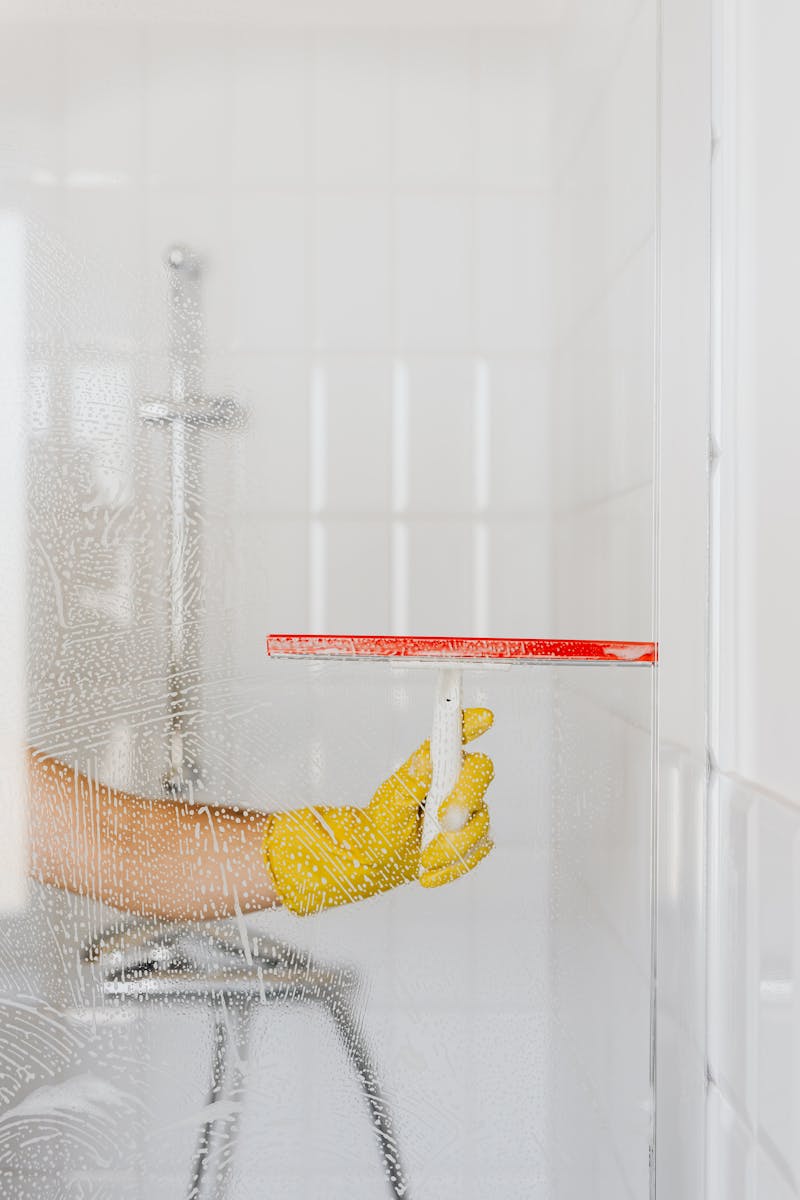
The Water Services Corporation explains that limescale comes from minerals in the water and does not affect its safety, but it does leave white marks on chrome taps, shower heads and glass screens. The daily fix is simple: squeegee the glass and dry the taps after the last shower. Once a week, use a limescale remover such as Viakal or an HG limescale product on chrome, ceramic and glass only, rinse well, and keep it away from stone surrounds and stone floors.
Limestone and terrazzo floors
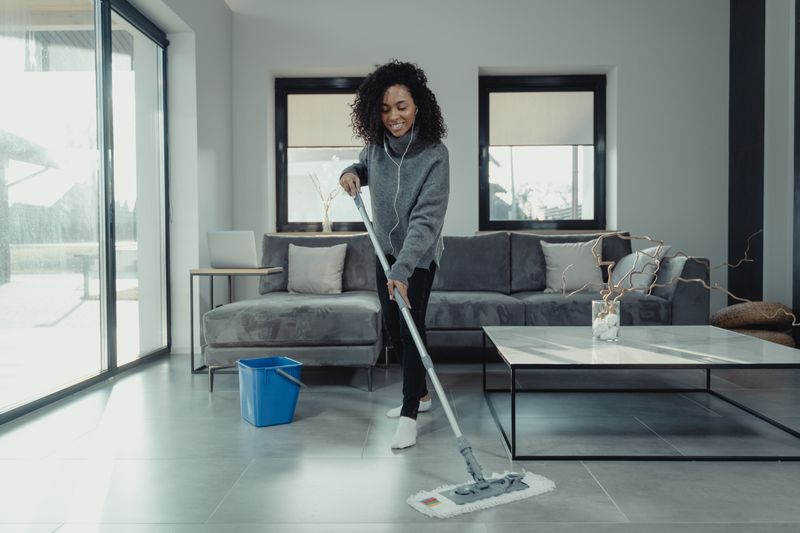
Globigerina limestone, the soft golden stone used in many Maltese houses of character, is porous and sensitive to acid, and terrazzo contains marble chips that react the same way. Never use vinegar, lemon or acidic descalers on these floors. For the daily line, a dust-mop or a lightly damp mop with a pH-neutral stone cleaner, such as products from HG or Lithofin sold at PAVI, Smart Supermarket and hardware shops, is enough. Wring the mop well: standing water soaks into limestone.
Stone safety check.
The Water Services Corporation suggests vinegar or lemon juice for limescale on kettles, shower heads and taps. That advice is fine for chrome and glass, but keep both well away from limestone, marble and terrazzo, where acid leaves dull etch marks that cannot be wiped off.
What is the 15 minute version for busy days?
The 15 minute version of the daily cleaning checklist keeps only hygiene surfaces and visible clutter: kitchen counters and hob, dishes, the bathroom sink and toilet rim, the shower squeegee, the bed and the entrance. It skips vacuuming, floors and the Malta add-ons. Use it on long workdays or when guests are not coming, and go back to the full 35 minute list the next day.
Families can add a five minute toy sweep before bedtime, and pet owners usually need an extra two or three minutes around food bowls and litter trays. Shared flats work best when each person owns a zone, so the bathroom always has one named person instead of three people assuming someone else did it.
How do you fit the checklist into a Malta workday?
The easiest way to fit a daily cleaning checklist into a Malta workday is to split it into two short blocks: about 15 minutes in the morning for the kitchen, bathroom and beds, and about 20 minutes in the evening for living areas, floors and the entrance. Linking each block to an existing habit, such as breakfast or the evening news, makes the routine automatic.
A timer keeps the routine honest. Set it for 15 or 20 minutes, work through the checklist in order and stop when it rings, even if a task is left. Penn State’s PRO Wellness team recommends starting small and using short time-blocks, doing a little each day rather than expecting to sort the whole house in one weekend.
Tasks that do not belong on a daily list, such as oven cleaning, grout, skirting boards and inside windows, still need a home. Pairing a daily checklist with a weekly zone rotation keeps the daily sheet light while the bigger jobs rotate through the week.
Pro tip
Keep a small kit in the bathroom: a squeegee on a hook, one microfibre cloth for the taps and a pH-neutral spray. If the tools are where the mess is, the 2 minute bathroom tasks actually take 2 minutes.
How do you print the checklist on A4 and make it stick?
To print the daily cleaning checklist in Malta, use A4 paper (210 x 297 mm), portrait orientation and the default margins. Select the checklist block on this page, press Ctrl+P or Cmd+P, choose A4 and print the selection or the matching page. One page per day is the goal: a checklist that runs to two pages tends to get half-ignored by midweek.
A few small changes help the sheet survive past the first week:
- Cross out what you do not have. No balcony, no dust line. No stone floors, no stone line. A shorter sheet gets finished.
- Write in your own timings. After three days, replace our estimates with your real times in the Min column.
- Use a sheet protector. Slip the A4 page into a plastic sleeve on the fridge and tick with a whiteboard marker, so one print lasts for weeks.
- Add initials in shared flats. Put a name next to each zone so nobody has to ask whose turn the bathroom is.
- Prefer your phone? Take a screenshot of the checklist and use the photo as a daily reminder instead of paper.

Does a daily cleaning routine actually reduce stress?
A daily cleaning routine can reduce stress for many people, because short, predictable tasks give a clear finish line. Published research supports this: a set of preregistered experiments found that both actual and imagined cleaning reduced the effects of stressful events. A daily cleaning checklist turns that into a habit without letting cleaning take over the evening.
Reporting on the topic describes how cleaning functions as a grounding, stress-reducing activity for a lot of people, not just a chore to dread.
For context, the research was run outside Malta: a series of experiments with 3,066 participants in the UK, the United States and Canada found that both actual and simulated cleaning attenuated the psychological effects of stressful events, and that actual cleaning also improved cardiovascular responses to a social stress task. The research suggests that the act of moving through defined cleaning steps can help people cope with stress, which is the same structure a checklist gives you.
There is a physical side too. Ergonomics research on cleaning tasks reports that following ergonomic guidelines reduced muscular and cardiovascular load. In practice that means bending at the knees, switching hands on long wiping jobs and using a long-handled squeegee and mop instead of kneeling on the floor.
When is a daily routine not enough in Malta?
A daily routine is not enough in Malta when dirt has built up beyond the surfaces the checklist covers: limescale crust on taps, grease on cabinet doors, mould spots in grout, dust in corners and on skirting boards, or a move-in or move-out. At that point a regular clean every week or two, or a one-off deep clean booked through Rozie, resets the home so the daily list works again.
Rozie’s cleaning cost guide for Malta puts a one-off regular clean of a one-bedroom, one-bathroom flat at about €40 to €65 and a deep clean at about €55 to €95, with independent cleaners typically charging €10 to €20 per hour. The hourly cleaning guide explains how hours add up. A regular home clean in Malta usually takes 1 to 3 hours on site, and a deep clean in Malta usually takes 3 to 6 hours. If time is the real obstacle, hiring occasional help through a professional cleaning service fills the gap without replacing your daily habits.
Rather skip the DIY? Keep the 15 minute essentials list for daily hygiene and let a verified cleaner handle the floors, bathroom and kitchen once a week or every two weeks. On Rozie you post the job once and compare offers from verified cleaners in Malta before you accept.
Finding a reliable cleaner in Malta the traditional way often means scrolling Facebook groups, making phone calls, chasing quotes, and hoping the person who shows up actually does a good job.
Rozie was built to remove that friction. You pick a date, select the extras you need, and verified cleaners send you offers with exact prices before you accept, typically within 5 to 15 minutes. Every booking is backed by 7-day payment protection and professional liability insurance up to €1,000,000 per occurrence, underwritten by Lloyd’s Insurance Company S.A., and Rozie covers the deductible, so you pay no excess.
Here is the full booking process in under 60 seconds:
Compare Cleaning Offers on Rozie →
Not sure what to look for in a cleaner? Rozie’s guide to choosing the right cleaner in Malta covers verification, reviews and what to agree before the first visit. When you find a cleaner you like, you can simply rebook the same person for the next visit through the app, and chat with them in the app about your priorities, such as the limestone floor or the shower glass.

More cleaning guides for Malta homes are in the Cleaning in Malta category.
Short on time this week? Post one cleaning request on Rozie, add the extras you need, and verified cleaners in Malta send offers with exact prices. You compare offers before you accept, and every booking has 7-day payment protection.
Download Rozie, Get Offers in Minutes →
Frequently asked questions
How long should daily cleaning take in a Malta apartment?
Daily cleaning in a typical two-bedroom Malta apartment takes about 35 minutes for the core tasks and up to 50 minutes on days when you add the Malta extras: a balcony sweep after Saharan dust, condensation control in the humid months and a pH-neutral mop on stone floors. A 15 minute essentials version covers busy days.
Is there a PDF or spreadsheet version of this checklist?
No, there is no separate PDF or spreadsheet download. The checklist on this page is designed to print directly from your browser on one A4 page: select the checklist block, press Ctrl+P or Cmd+P, choose A4 portrait and print. You can also save it as a screenshot on your phone.
Can I use vinegar for daily cleaning on limestone or terrazzo floors?
No. Vinegar, lemon and acidic descalers etch Globigerina limestone, marble and terrazzo, leaving dull marks that cannot be wiped away. Use a pH-neutral stone cleaner, such as products from HG or Lithofin, with a well-wrung mop. Keep acidic limescale removers for chrome, ceramic and glass only.
How do I stop bathroom mould with a daily routine in Malta?
Ventilate for about 15 minutes after every shower with the extractor or an open window, squeegee the glass and tiles, leave the door ajar and wipe window condensation each morning in the humid months. Mould that returns despite this usually points to damp in the walls, which needs a specialist rather than more cleaning.
Which tasks should not be on a daily cleaning checklist?
Oven cleaning, inside the fridge, grout scrubbing, skirting boards, inside windows, bed changing and full-floor mopping belong on a weekly or monthly plan, not on a daily cleaning checklist. Keeping them off the daily list is what keeps the routine short enough to finish every day.
When should I book a cleaner instead of doing it all myself?
Book a cleaner when you regularly skip the daily list because of time, when build-up such as limescale, grease or dusty corners goes beyond daily surfaces, or before and after a move. On Rozie, verified cleaners in Malta send offers with exact prices, and you compare offers before you accept.
Sources
This guide draws on stress-reduction reporting from AP News, a 3,066-participant set of experiments on cleaning and stress, ergonomics research on cleaning tasks, habit guidance from Penn State PRO Wellness, the Cornell household task survey, Water Services Corporation guidance on limescale and WHO guidance on dampness and mould.
- Cleaning can have meditative and other mental health benefits | AP News
- Actual Cleaning and Simulated Cleaning Attenuate Psychological and Physiological Effects of Stressful Events
- The Connection Between Cleanliness and Mental Health – Penn State PRO Wellness
- Ergonomics guidelines reduce muscular and cardiovascular load during cleaning tasks