

The most reliable office cleaning schedule runs on four cumulative tiers: daily, weekly, monthly, and quarterly. Daily tasks cover reception, workstations, meeting rooms, kitchens, restrooms, and back-of-house areas. Below, you will find a zone-by-zone checklist for each tier, plus the verification fields that turn a printed list into an operating control you can actually manage.
TL;DR:
- Weekly tasks such as vacuuming edges, dusting surfaces, and disinfecting shared equipment prevent buildup that would require more extensive monthly or quarterly cleaning.
- Monthly cleaning includes high dusting, upholstery vacuuming, and interior fridge and vent cleaning, often needing specialized equipment or vendors.
- Quarterly work involves deep cleaning tasks like carpet extraction, floor stripping, and exterior window cleaning, typically outsourced to licensed professionals.
- Proper scheduling requires mapping every task to specific zones and recording detailed methods, responsible personnel, and verification procedures.
- Regularly review audit data and adjust cleaning frequencies based on actual traffic to maintain high hygiene standards and prevent task neglect.
Table of Contents
- What Goes on the Daily Office Cleaning Schedule?
- Which Tasks Belong on the Weekly Cleaning Schedule?
- Monthly and Quarterly: Restorative Work That Protects Your Assets
- How Do You Turn a Checklist Into an Operational Schedule?
- Templates and Tools to Pilot Your Schedule
- What Compliance Steps Belong in Every Schedule?
- When Should You Bring in Verified Professionals Instead of Handling It In-House?
- Let Rozie Handle the Cleaner Search While You Run the Schedule
- Sources
What Goes on the Daily Office Cleaning Schedule?
Daily tasks protect two things: hygiene and first impressions. Skip a day on restroom disinfection or trash pickup, and both erode fast.
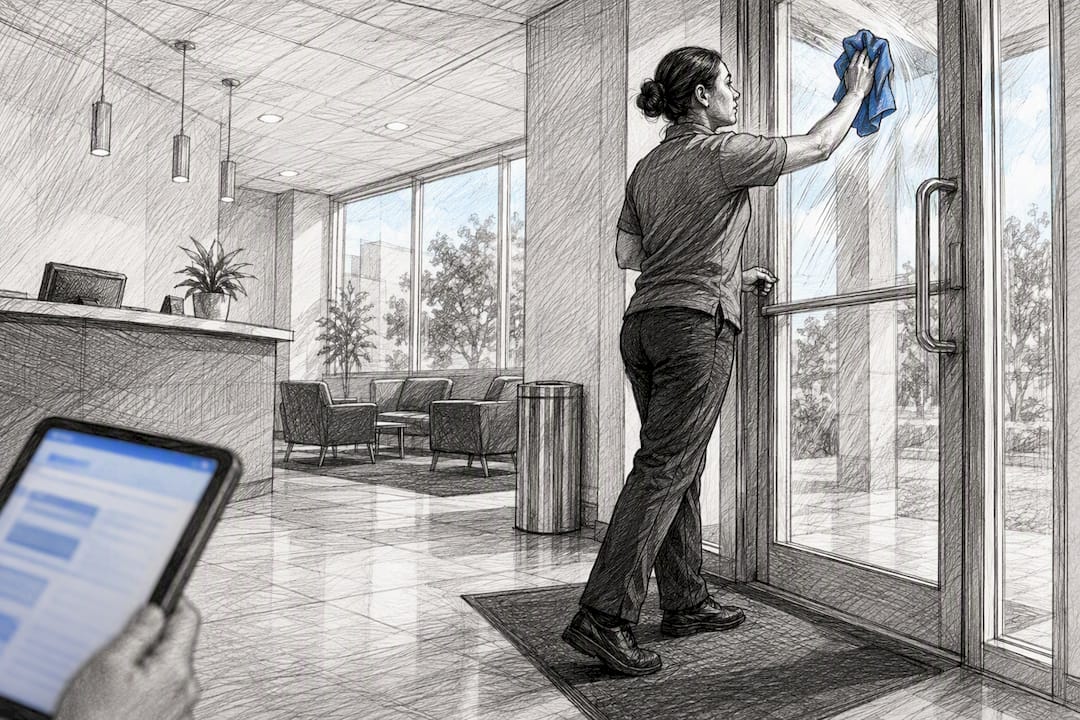
Reception is your first zone, since it sets the tone before anyone reaches a desk. Wipe down the front desk and glass entry doors, empty visitor-area trash, vacuum or spot-mop entry mats, and straighten seating and reading materials. In open offices and workstations, empty bins, disinfect shared keyboards and phones, wipe down desks that rotate between employees (hot desks especially), and spot-clean visible stains on carpet tile. Meeting rooms need whiteboard and table wipe-downs, chair straightening, and a check for leftover cups or trash after each use, not just once a day.
The kitchen or break room is the highest-risk zone for cross-contamination. Wipe counters and tables, empty and reline trash, disinfect the microwave door handle and buttons, and load or run the dishwasher. Restrooms get the most attention of any zone: restock paper products and soap, disinfect toilets, sinks, and door handles, mop floors, and empty sanitary bins. Back-of-house areas like storage rooms and server closets just need trash removal and a quick tidy so nothing blocks equipment access.
Some of this happens during occupied hours, like restroom restocking and kitchen wipe-downs between meal breaks. Heavier tasks, such as full floor mopping and detailed disinfection, belong after hours when foot traffic will not undo the work.
Time guidance scales with headcount: smaller offices typically need less daily cleaning time, medium offices require a moderate amount of time, and larger floors may need multiple staff working in shifts to complete tasks.
- Reception: desk wipe, glass doors, entry mats, trash
- Workstations: bin removal, high-touch disinfection, hot-desk wipe-down
- Meeting rooms: table and whiteboard wipe, chair reset, trash check after each use
- Kitchen: counters, microwave, dishwasher, trash reline
- Restrooms: full disinfection, restocking, floor mop
- Back-of-house: trash pickup, pathway clearance
Pro Tip: Log restroom and kitchen touch-ups on a clipboard or app at the door. If a task keeps getting skipped at the same hour, that’s a shift-window problem, not a staffing problem.
Daily attention to high-touch surfaces is not optional even in hybrid offices. Guidance from the CDC on cleaning and disinfecting facilities treats frequent contact points as a baseline tier that stays fixed regardless of how deep cleaning tiers above it flex.
Which Tasks Belong on the Weekly Cleaning Schedule?
Weekly work is where accumulation gets stopped before it becomes a bigger job. These tasks do not need daily attention, but skipping a week shows.
- Run a full floor pass, vacuuming carpet edges and corners that daily spot-cleaning misses.
- Dust horizontal surfaces, including shelving, monitor tops, and window sills.
- Clean interior glass partitions and conference room windows.
- Wipe down refrigerator interiors and toss unclaimed leftovers.
- Disinfect shared AV equipment, remote controls, and conference phones.
- Do a restroom detail pass: grout lines, partition edges, and vent covers.
Friday afternoons or Monday mornings before the office fills up tend to work best, since both windows minimize disruption. If your office runs a hybrid schedule, shift the floor pass to whichever day sees the lowest occupancy that week rather than locking it to a fixed date.
Handled consistently, these weekly tasks reduce what monthly and quarterly crews have to tackle, which keeps those bigger jobs shorter and cheaper.
Monthly and Quarterly: Restorative Work That Protects Your Assets
Monthly tasks catch what weekly passes cannot reach without more time or equipment: high dusting above eye level, upholstery vacuuming on office chairs and lobby furniture, refrigerator coil and interior deep-cleans, air vent wipe-downs, and interior window washing across the full floor.
Quarterly work is restorative, meaning it repairs wear rather than just preventing it, often including exterior window cleaning by specialists. That includes carpet hot-water extraction, floor stripping and waxing on hard surfaces, high-access dusting near ceilings and light fixtures, and exterior window cleaning. Sanitation authorities generally recommend thorough periodic cleaning at least every six months, with more frequent passes for higher-traffic or higher-risk floors.
- Carpet extraction (requires specialized equipment)
- Floor stripping and waxing (often needs licensed vendor crews)
- High-access dusting near ceilings and fixtures
- Exterior window cleaning, frequently outsourced to specialists
Most of these jobs call for equipment or certification your janitorial staff will not have on hand, which is exactly why they get scheduled as vendor work rather than folded into daily duties.
How Do You Turn a Checklist Into an Operational Schedule?
A checklist only works as a schedule once you build one master task list before you start assigning frequencies. Map every task to a physical zone first. Assigning a daily, weekly, or monthly tag before you know the zone layout is how offices end up with duplicate coverage in one area and gaps in another.
Each task on that master list needs the same fields whether it lives on a spreadsheet or inside a CMMS platform:
- Zone (reception, workstations, restrooms, and so on)
- Frequency (daily, weekly, monthly, quarterly)
- Assigned role or team member
- Shift window (before hours, midday, after hours)
- Estimated time to complete
- Method or product note (specific disinfectant, dilution ratio, equipment)
- Verification method
- Escalation contact if the task is missed
Method and product notes matter more than they look. Cleaning staff turnover is common industry-wide, and a task list that spells out how a job gets done, not just that it needs doing, shortens onboarding and keeps quality consistent across new hires.
Verification is what separates a schedule from a hope. Visual sign-off sheets work for low-risk zones. Photo logs add an audit trail for anything client-facing. CMMS timestamps automate that trail entirely. ATP swab testing gives you a hard number for high-risk surfaces like restroom counters or kitchen prep areas. Whatever mix you choose, review the audit data quarterly and adjust frequencies to match what the traffic actually looks like, not what the schedule assumed six months ago.
Pro Tip: When a task keeps showing up as missed in your logs, don’t just remind the team again. Change something: bump the frequency, reassign the owner, or move it to a vendor line item.
Templates and Tools to Pilot Your Schedule
A durable checklist does double duty. It runs your daily operations, and it becomes the scope-of-work document you hand to vendors when you need comparable bids instead of guesswork.
Start small. Pilot the schedule on one floor or one zone for two weeks, track completion rates, and adjust shift windows or frequencies before rolling it out building-wide.
- Pilot on one zone or floor first
- Track completion and verification data for two weeks
- Adjust time estimates and frequencies based on real results
- Roll out to remaining zones once the format holds up
Rozie hosts a printable daily cleaning checklist template and a weekly planner template that adapt easily from home use into a zone-based office format, giving you a starting structure instead of a blank page.
What Compliance Steps Belong in Every Schedule?
Every schedule needs a compliance layer, not just a task list. Keep Safety Data Sheets accessible for every chemical in use, and confirm labels match the original container, not a handwritten substitute. Assign one person to own HazCom training and PPE provisioning, and record that assignment in your master task list alongside cleaning duties. Where OSHA’s Hazard Communication requirements apply to your facility, document training dates and PPE checks the same way you document a completed floor pass.
When Should You Bring in Verified Professionals Instead of Handling It In-House?
Frequency drift is the tell: tasks quietly slipping from weekly to “whenever,” quality swinging between shifts. That is usually a staffing gap, not a checklist problem. Verified platforms cut onboarding friction and hand you a vetting layer you’d otherwise build yourself.
— Alex
Let Rozie Handle the Cleaner Search While You Run the Schedule
Building the checklist is the easy part. Finding cleaners who actually show up, follow your product notes, and pass a background check is where most office managers lose time. There are platforms designed to connect you with verified, background-checked cleaners and cleaning companies, bookable and payable through an app with payment protection on both sides.
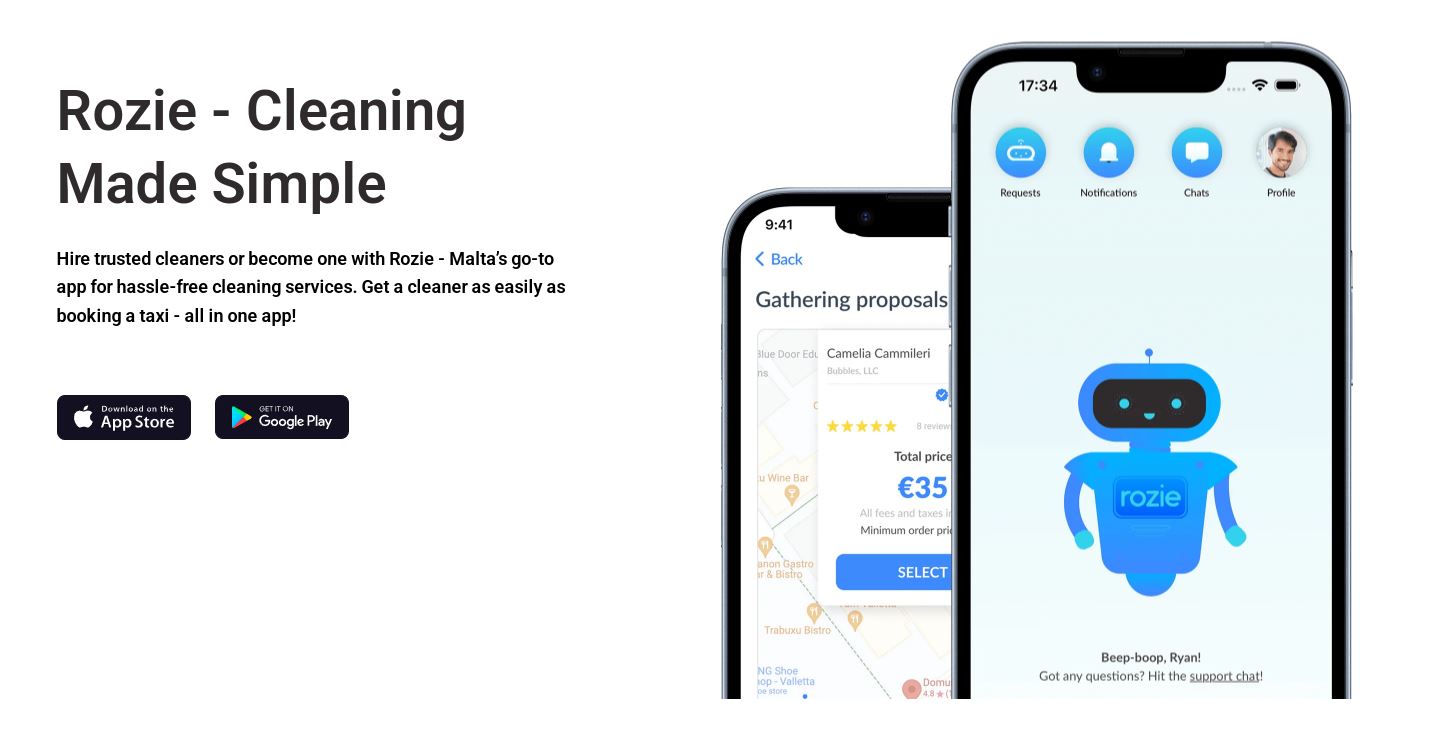
You keep the master task list and verification fields from this article; Rozie brings the vetted labor and 7-day support to execute it, without you chasing references or negotiating contracts one vendor at a time. If you are still scoping what a cleaning service should actually cover before you commit, Rozie’s breakdown of what a cleaning service does is a practical next stop before you book.
Sources
- CDC — When and how to clean and disinfect a facility
- Facility Management Insights — Office cleaning schedule template (2026)
- Appalachian State University — Chemical safety / HazCom summary