

Malta is a tiny archipelago with a beach dilemma that surprises almost every visitor: you have a handful of genuinely stunning coastlines, each with a completely different personality, and only a limited number of days to enjoy them. Do you chase the clearest water you’ve ever swum in? Find the safest shore for your kids? Disappear somewhere wild and quiet? Or simply settle into the most beautiful stretch of sand on the island and let the day take care of itself? This guide matches Malta’s top beaches to real traveller priorities — so you spend less time guessing and more time soaking up the Mediterranean sun.
In this guide
How do you choose the best beach in Malta?
Why is Golden Bay Malta’s best all-round beach?
Where is Malta’s best swimming beach?
Which Malta beach is best for families?
Where is Malta’s most secluded beach?
Quick comparison: Which beach matches your trip?
When is the best time to visit Malta’s beaches?
Why the best beach depends on your priorities, not rankings
How do you choose the best beach in Malta?
Picking the right beach in Malta starts with five honest questions: scenery, swimming quality, family-friendliness, tranquillity, and accessibility. Different beaches win on different criteria, and Malta is small enough that you can comfortably fit two or three beach days into a single trip — so think of this less as picking one winner and more as building a short coastal itinerary.
Travel rankings often disagree because they measure different things. A travel writer might rank a secluded cove highest for raw beauty, while a family of four would reasonably rank it last because there’s no shade, no café, and no easy path down. The trick is knowing what you actually want from the day before you set off.
Here are the five priorities worth weighing before you commit to a beach:
🌅 Scenery and natural beauty.
Are you after the visual wow factor — golden sand, dramatic cliffs, painterly light? Most of Malta’s famous beaches deliver here, but the trade-off is usually crowds.
🏊 Swimming quality.
Calm, clear, shallow water is what makes a beach feel special. Sheltered bays beat exposed coastline for swim quality, especially with children or nervous swimmers.
👨👩👧 Family-friendliness.
Look for gentle slopes into the water, lifeguards in summer, on-beach toilets, food, and ideally sunbed and umbrella rental. Easy parking matters more with kids than scenery.
🤫 Tranquillity.
Some travellers will trade amenities for peace and silence. Malta’s quietest beaches are also its most physically demanding to reach — and that’s the entire point.
🚗 Accessibility.
Can you manage a steep, rocky descent in proper shoes? Or do you need flat parking, a stroller-friendly path, and a ramp into the water? This single question disqualifies more beaches than any other.
💡 Pro tip
Before you leave your accommodation, write down your top two priorities for the day. Scenery? Swimming? Quiet? Facilities? That two-minute exercise will point you to the right beach almost immediately and save you a frustrating drive.
Why is Golden Bay Malta’s best all-round beach?
Golden Bay (Ir-Ramla tal-Mixquqa) on Malta’s north-west coast near Mellieħa is the strongest all-round beach on the island. It combines a wide stretch of warm, orange-gold sand, a gradual entry into clear water, watersports operators, beach bars and restaurants within walking distance, and easy parking — a rare combination. If you only have time for one beach in Malta, this is the safe, rewarding pick.
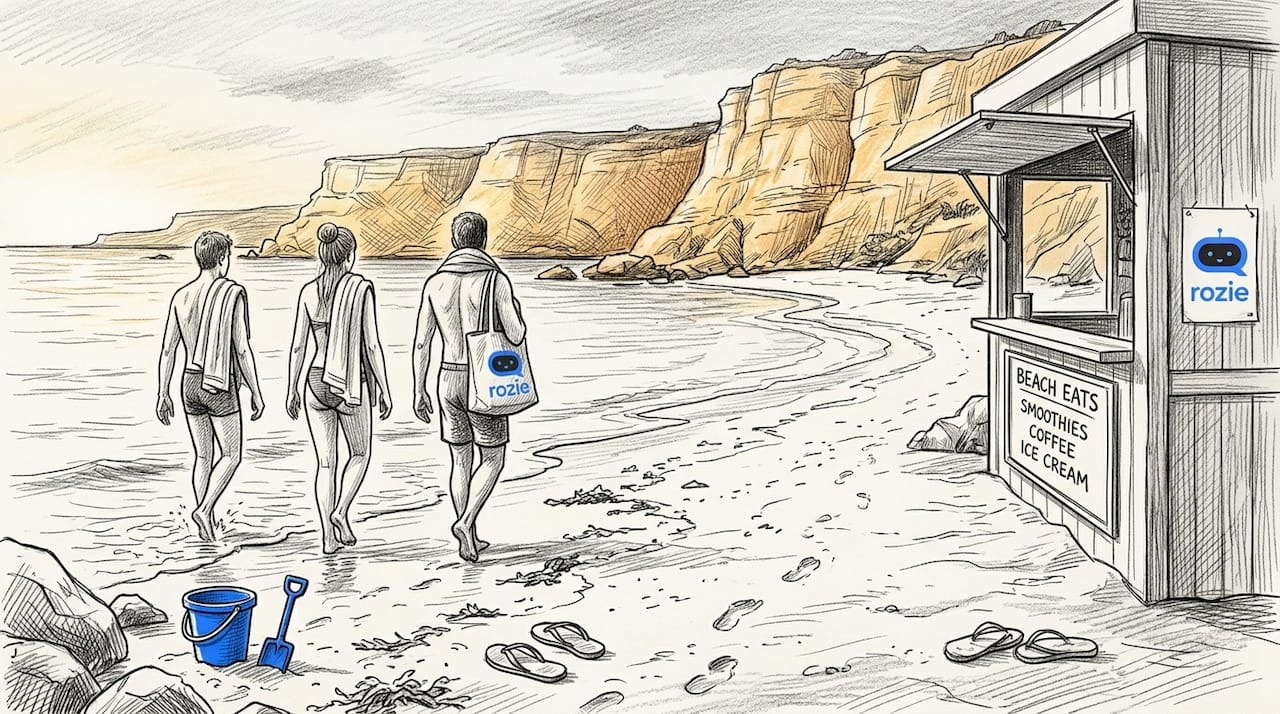
What sets it apart from the rest of Malta’s coastline:
🏖️ A wide, soft sandy stretch.
Most of Malta is rocky shoreline. Golden Bay’s broad band of fine sand gives you room to spread out even on busy summer days — something Sliema and St Julian’s swimming spots simply can’t offer.
🌊 Gradual water entry.
The seabed slopes gently, making it safe for children and comfortable for less confident swimmers. Lifeguards are on duty during summer.
🚤 Watersports and boat trips.
Jet skis, paddleboards, and boat departures (including trips toward Comino and the Blue Lagoon) leave directly from the bay during peak season.
🍝 Restaurants on the sand.
Beach bars and full restaurants sit right above the bay, so you’re never far from a cold drink, a proper lunch, or a sunset Aperol. Munchies and Apple’s Eye are local fixtures.
Golden Bay sits on the exposed north-west coast, which means it catches reliable summer breezes that keep the heat manageable when inland Malta hits 32 °C. It’s lively without being chaotic, and it pulls a genuinely mixed crowd: couples, families, friend groups, solo travellers. That diversity is part of the charm.
One honest caveat: it gets busy on weekends and public holidays in July and August. Arriving before 10 a.m. makes a noticeable difference — better spots, calmer water before the watersports crowd arrives, and a more relaxed atmosphere overall. Late afternoon is the other sweet spot, when the light turns the whole bay almost amber and most day-trippers have gone home.
Key takeaway: Golden Bay is the safest single-beach pick in Malta because it covers nearly every priority — beauty, swimming, food, watersports, and easy access. Get there early or stay late to dodge the midday crowds.
Where is Malta’s best swimming beach?
The Blue Lagoon, between the small islands of Comino and Cominotto, is Malta’s best swimming beach. The water is a shade of turquoise that looks digitally enhanced in photos but is completely real in person — shallow enough to see the white sandy bottom from a boat, and sheltered enough that even nervous swimmers feel relaxed within minutes.
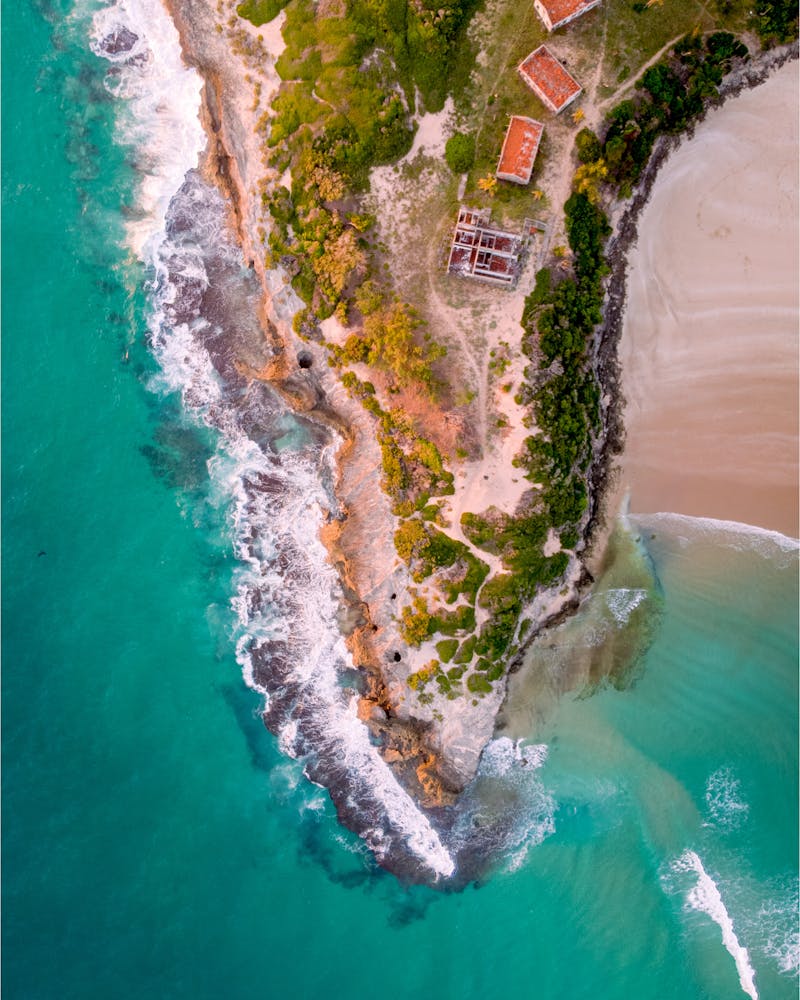
Three things genuinely set it apart from every other beach in this guide:
👁️ Exceptional visibility.
The combination of a sandy bottom, shallow depth (around 5–6 metres in the central pool), and protected position means the water clarity is consistently excellent — making it one of the best easy-access snorkelling spots in the Mediterranean.
🛡️ A naturally sheltered bay.
The two islands shield the lagoon from open-sea currents, so conditions stay gentle even when the wind picks up elsewhere. This is why it works for families and confident swimmers alike.
⛴️ Easy boat access.
Shuttle ferries from Ċirkewwa Ferry Terminal in northern Malta cost roughly €15 return and run regularly between April and November. Larger boat tours leave from Sliema, St Julian’s, and Buġibba — typically including stops at sea caves and Crystal Lagoon as well.
The honest caveat is the same one every Malta resident will give you: in peak season, from late June through August, the Blue Lagoon gets very crowded. By mid-morning, dozens of boats anchor in the bay and the small landing beach fills quickly. It’s still beautiful, but the solitude is gone. As of mid-2025, visitors disembarking on the Comino shoreline need a free timed-entry slot to help manage numbers — worth checking before you go.
The smartest move is an early-morning departure: catch the first ferry, aim to be in the water before 9 a.m., and enjoy the lagoon before the day-trippers flood in. Facilities are minimal, so bring your own water, snacks, and proper sun protection. Comino has almost no permanent residents and very limited infrastructure — that’s part of why it feels so genuinely wild for a place this famous. For more shoulder-season context on the wider trip, the Malta Tourism Authority’s official guide is a useful starting point.
Which Malta beach is best for families?
Ramla Bay (Ir-Ramla l-Ħamra) in Gozo is Malta’s most family-friendly beach. The distinctive terracotta-red sand, very gradual slope into the water, on-beach café and umbrella rental, and easy road access make it the most practical choice for travellers with young children, mobility considerations, or anyone who simply wants an easy day.
Gozo, Malta’s quieter sister island, is worth the short ferry ride on its own — and Ramla is the main reason most beach lovers make the crossing. The Ċirkewwa to Mġarr ferry runs frequently throughout the day and takes about 25 minutes; from Mġarr it’s a 15-minute drive across Gozo to the bay.
What makes it the standout family pick:
Ramla manages to be popular without ever feeling overwhelmed. Gozo’s overall visitor numbers are lower than Malta’s main island, so even at peak times the bay retains a sense of space — you can actually spread out, which is a genuine luxury in summer. The orange-red sand comes from iron-rich soil washed down from the surrounding hills, and it stays warm under bare feet long after the sun drops.
💡 Pro tip
If you’re staying in Gozo for a few nights, visit Ramla in the early evening. The light on those terracotta sands at sunset is spectacular, the crowd thins out considerably after 5 p.m., and the on-beach café often stays open through golden hour.
Where is Malta’s most secluded beach?
Fomm ir-Riħ on Malta’s western coast — the name translates roughly as “mouth of the wind” — is the island’s most genuinely remote beach. Reaching it requires navigating a steep, rocky path that filters out casual visitors, which is exactly why those who make the descent often have something close to a private cove. This is not a beach for everyone, but for the right traveller it’s unforgettable.
What you’ll find when you get there:
🔇 Genuine quiet.
Even in peak summer, the access challenge keeps numbers low. You’ll regularly find yourself sharing the cove with fewer than a dozen people.
🪨 Dramatic raw scenery.
High limestone cliffs, scattered boulders in the water, and uninterrupted sea views toward Filfla island and Gozo. Photographers come here just for the descent shots.
💧 Clear, deep water.
The cove drops off quickly into deep, clean swimming water — better suited to confident swimmers than waders. When the scirocco wind blows from the south, it can get choppy fast.
❌ Zero facilities.
No toilets, no café, no kiosk, no lifeguards, no shade. You bring everything: water, food, sun protection, a fully charged phone.
This beach is genuinely not suitable for young children, elderly travellers, or anyone with mobility challenges. The path down is steep, loose in places, and demands reasonable fitness and proper trainers — flip-flops are a bad idea and so are ballet flats. But if you’re fit, adventurous, and craving a beach experience that feels almost private, Fomm ir-Riħ delivers something the more famous bays simply can’t.
Honest warning: Don’t attempt the descent alone, in the heat of midday in summer, or after rain when the path turns slippery. Aim for late afternoon, bring twice the water you think you need, and tell someone where you’re going.
Quick comparison: Which beach matches your trip?
Here’s the side-by-side summary to help you make a fast, confident decision based on what matters most to you.
If you’re travelling with children, Ramla Bay wins clearly. If swimming is your single priority, the Blue Lagoon is in a category of its own. If you want the most beautiful and practical all-around experience in one place, Golden Bay is the safe, rewarding pick. And if you want to feel like you’ve escaped Malta entirely without leaving the islands, Fomm ir-Riħ rewards the effort. For more sandy, rocky and hidden options across the islands, our complete Malta beaches roundup goes deeper into the lesser-known coves.
When is the best time to visit Malta’s beaches?
Malta’s beaches are at their best in the shoulder months of May, June, September, and early October. The water is warm enough to swim comfortably (typically 21–26 °C), the sun is reliable, the crowds are thinner, and accommodation is cheaper. Mid-July to mid-August is peak season — beautiful, but the islands are at their hottest, busiest, and most expensive.
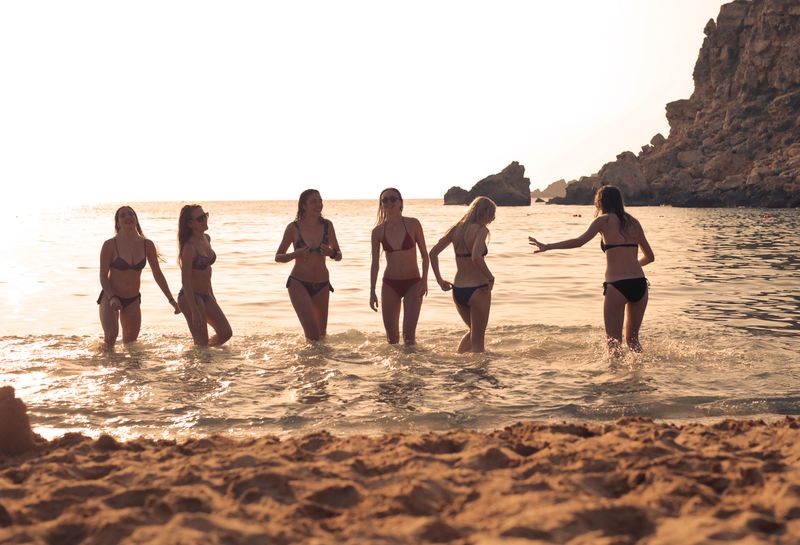
Two weather realities are worth knowing about before you go:
Saharan dust events (locally known as il-qilla). Several times per year, southerly winds carry red dust from North Africa across Malta, coating outdoor surfaces, cars, and balcony furniture in a fine reddish layer. They typically last 1–3 days. If you arrive during one, indoor sightseeing days work better than beach days — and you’ll appreciate the difference between paid car parks and street parking.
The scirocco wind. A hot, humid southerly wind that can roll in unpredictably from spring through autumn. It makes western and southern beaches choppy and the air feel heavy. North-east-facing bays like Ramla shelter well against it; exposed western coasts like Fomm ir-Riħ are immediately affected. Always check a Malta-specific weather app the morning of a beach day, not just the long-range forecast.
💡 Pro tip
Whatever month you visit, shift your beach day by two hours in either direction and you’ll see a completely different Malta. Arrive before 10 a.m. or stay after 4 p.m. — the light is warmer, the crowds thinner, the water calmer, and parking far easier.
If you’re hosting Airbnb guests in beach-heavy areas like Sliema, St Paul’s Bay, or Mellieħa, the post-beach reality is practical: sandy floors, salt-streaked towels, and a tight check-out-to-check-in window. Many local hosts handle this by booking a verified turnover cleaner through a marketplace like Rozie’s short-let cleaning service — they post the job, offers come back within minutes, and the apartment is fresh for the next guest the same day.
Why the best beach in Malta depends on your priorities, not the rankings
Most beach guides won’t tell you this honestly: rankings are almost meaningless without context. We’ve watched travellers follow a “top-rated” recommendation and feel genuinely disappointed — not because the beach was bad, but because it wasn’t right for them on that particular day.
The Blue Lagoon is objectively stunning. But if you arrive at 11 a.m. in August surrounded by 40 boats and 500 other swimmers, the magic dilutes fast. Golden Bay is genuinely gorgeous, but if you’re craving solitude and you turn up on a Saturday in July, you’ll find a lively, busy beach scene that won’t match your mood. Fomm ir-Riħ is breathtaking, but on a 35 °C day in flip-flops it’s a small ordeal, not a holiday.
Our honest take: the best Maltese beach experience comes from mixing beaches across your trip rather than committing to one. Spend a morning at the Blue Lagoon early, before the crowds. Spend a lazy afternoon at Ramla Bay with the family. Save Fomm ir-Riħ for a quieter weekday when you’re feeling adventurous. End your trip with a sunset at Golden Bay with a cold drink in hand.
Key takeaway: Pick beaches by priority, not popularity. Rankings exist to help you start planning — but your travel companions, fitness, and honestly your mood on the day should have the final say. Malta’s coastline rewards travellers who pay attention.
If beaches are part of a bigger Malta trip, our wider things to do in Malta guide covers cultural day-trips, hikes, and food spots that pair well with beach mornings. And if you’re staying long-term and looking at gyms and fitness routines, the expat’s honest gym guide is the natural follow-up. For broader Mediterranean context, Lonely Planet’s Malta beach round-up is also worth a read.
After the beach: a clean rental in Malta
For Airbnb hosts and short-let owners along Malta’s coast, the booking turnover after a beach-heavy weekend is real work. Salt, sand, and tired guests leaving sandy footprints across the apartment add up — and the check-out-to-check-in window is rarely generous. Finding a reliable cleaner the traditional way means scrolling Facebook groups, making phone calls, chasing quotes, and hoping someone shows up before the next arrival.
Rozie was built to make that simple. You post the job, verified cleaners send you offers within 5–15 minutes with exact prices, and you compare and accept the one you prefer. Every booking is backed by professional liability insurance up to €1,000,000 per occurrence, underwritten by Lloyd’s Insurance Company S.A. Here’s the full booking process in under 60 seconds:
Whether you need a one-off deep clean after a sandy weekend or a regular turnover service that keeps your short-let consistently spotless, Rozie connects you with verified cleaners across Malta and Gozo — including beach-area localities like Mellieħa, Sliema, St Paul’s Bay, and Marsalforn. Seven-day payment protection and real in-app chat with your cleaner come standard. You can also browse more Malta cleaning guides covering Airbnb turnovers, end-of-tenancy, and seasonal deep cleans.

Download Rozie — Book in 60 Seconds →
Frequently asked questions
Which Malta beach has the clearest water for swimming?
The Blue Lagoon on Comino has the clearest swimming water in the Maltese Islands. The combination of a shallow sandy bottom, sheltered position between Comino and Cominotto, and protected status keeps the water consistently clear and gentle. For best clarity, arrive on the first morning ferry from Ċirkewwa before the boat traffic stirs the sand.
What is the most family-friendly beach in Malta?
Ramla Bay in Gozo is the most practical family beach, with a very gradual slope into the water, sunbed and umbrella rental, an on-beach café, and proper road access for strollers. Golden Bay is a strong runner-up on the main island and is easier to reach if you’re not crossing to Gozo.
Which is Malta’s quietest or most secluded beach?
Fomm ir-Riħ on the western coast is Malta’s most secluded beach. The steep, rocky access path discourages casual visitors, so even in peak summer you’ll often share the cove with fewer than a dozen people. It is not suitable for young children, elderly travellers, or anyone with mobility issues.
Is Golden Bay good for families and groups?
Yes. Golden Bay works well for both families and larger groups because it combines wide sandy space, gradual water entry, lifeguards in summer, watersports, and several restaurants and beach bars in one place. Arrive before 10 a.m. on summer weekends to claim a good spot.
How do I get to the Blue Lagoon from Malta?
The cheapest option is the shuttle ferry from Ċirkewwa Ferry Terminal in northern Malta, which costs around €15 return and takes about 25–35 minutes each way. Direct buses run to Ċirkewwa from Valletta, Sliema, St Julian’s, and Buġibba. Boat tours from Sliema or St Julian’s are pricier but include other stops like Crystal Lagoon and the sea caves.
When is the best time of year to visit Malta’s beaches?
The shoulder months — May, June, September, and early October — offer the best balance of warm water (21–26 °C), reliable sun, manageable crowds, and lower prices. Peak July and August are gorgeous but hot, busy, and the most likely period for Saharan dust events. Within any month, early morning and late afternoon are consistently the most pleasant times to be on the beach.
How do Airbnb hosts in Malta handle cleaning between beach-day guests?
Most short-let hosts in beach areas — Sliema, St Paul’s Bay, Mellieħa, Marsalforn — use a marketplace cleaning service to handle same-day turnovers. Hosts post the job (typical Malta turnover ranges €40–€80 depending on size and extras), verified cleaners send offers within minutes with exact prices, and the host picks one. Rozie is the most widely used option locally and works for one-off jobs as well as recurring bookings.
Recommended
- Best Malta Beaches 2026: Sandy, Rocky & Hidden Gems
- Things to Do in Malta 2026: Insider Guide for Visitors & Residents
- 7 Smart Things To Do in Malta for Busy Professionals | Rozie – Malta’s Best Cleaning Services
- Best Gyms & Fitness in Malta 2026: The Expat’s Honest Guide
- Family-friendly beaches and luxury resorts in Rhodes and Crete – Longevity Travel