

TL;DR:
- Living car-free in Malta is most practical along the central harbor corridor, where walkable streets and reliable public transport are available. Neighborhoods like Sliema, Gżira, St Julian’s, and Valletta offer the best access to buses, ferries, and daily essentials, making them ideal for this lifestyle. Combining walking, buses, ferries, and ride-hailing creates a flexible, efficient transport system that enhances urban living.
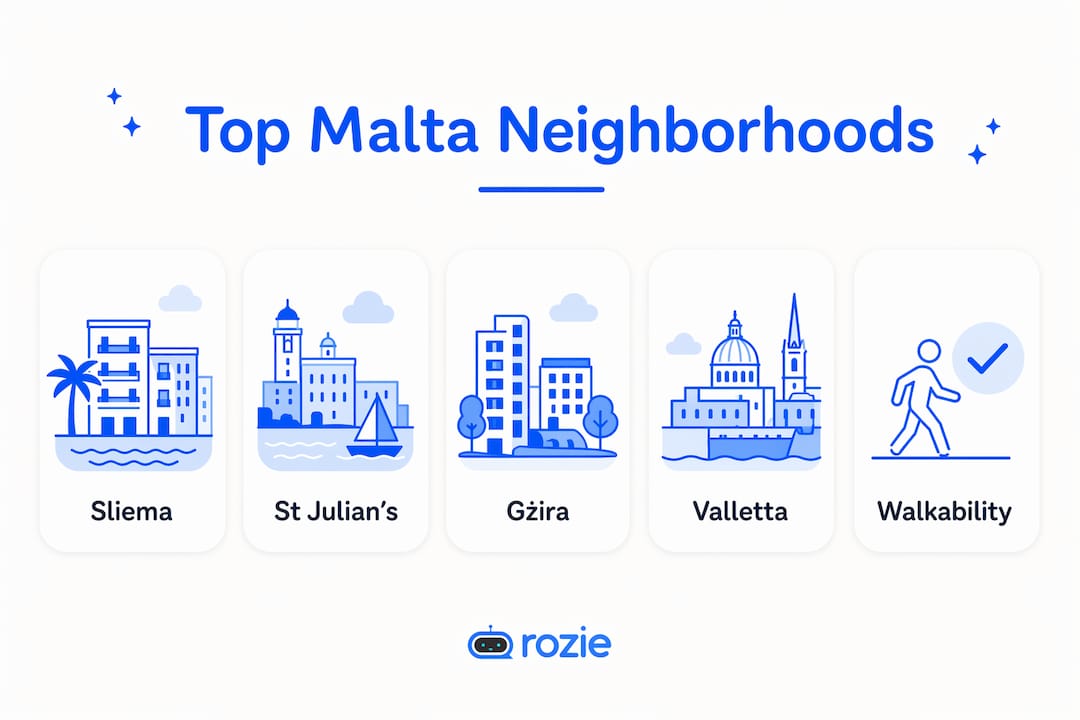
Living car-free in Malta is fully practical when you choose the right neighborhood. The best areas for this lifestyle are Sliema, St Julian’s, Gżira, and Valletta, all of which sit along the central harbour corridor and offer walkable streets, frequent bus connections, ferry access, and daily essentials within a short walk. Whether you are relocating for work, retirement, or a change of pace, understanding where to live in Malta without a car makes the difference between a smooth transition and a frustrating one. This guide breaks down exactly which areas work, how transport holds up day to day, and what to expect from the lifestyle.
Which neighborhoods in Malta offer the best car-free living experience?
Car-free living in Malta is most feasible along the Valletta-Sliema-St Julian’s corridor due to frequent, direct buses and ferry service. Living outside this corridor increases the practical need for a vehicle considerably. So if you are serious about going car-free, your neighborhood choice is your single most important decision.
Sliema
Sliema is the gold standard for walkable living in Malta. Supermarkets, banks, and pharmacies sit within a 10 to 15 minute walk from most apartments, and the promenade connects you to cafes, restaurants, and retail without ever needing a bus. The Sliema ferry terminal offers a quick crossing to Valletta in under 10 minutes, which is far faster than any bus during peak hours. Rental prices are higher here than elsewhere, but the convenience factor is real and measurable.

St Julian’s
St Julian’s delivers a lively mix of restaurants, entertainment, and walkable zones centered around Spinola Bay and Paceville. The area is well served by multiple bus routes connecting it to Valletta, Sliema, and Msida. For younger residents or those who value nightlife and dining within walking distance, St Julian’s competes closely with Sliema. The trade-off is that some parts of St Julian’s are hillier and less pedestrian-friendly than the flat Sliema seafront.
Gżira
Gżira is the smartest value option for car-free residents. It sits between Sliema and Msida, shares many of the same transport links, and offers lower rental prices than its more famous neighbors. Residents here can walk to Sliema in under 15 minutes or catch a bus toward Valletta with ease. Gżira is often overlooked by newcomers, but experienced expats consistently rate it as one of the most practical bases for car-free living in Malta.
Valletta
Valletta is Malta’s most walkable historic city, though apartments tend to be smaller and parking is extremely limited. The compact street grid means almost everything is reachable on foot, from government offices to specialty shops and cultural venues. It suits people who prioritize atmosphere and central access over living space. The ferry to Sliema runs frequently and adds another transport layer that makes Valletta genuinely car-free friendly.
Here is a quick comparison of the four main neighborhoods:
| Neighborhood | Walkability | Transport access | Rental cost | Best for |
|---|---|---|---|---|
| Sliema | Excellent | Ferry + multiple buses | High | Families, professionals |
| St Julian’s | Good | Multiple bus routes | High to medium | Young professionals, social lifestyle |
| Gżira | Very good | Buses + walking to Sliema | Medium | Budget-conscious expats |
| Valletta | Excellent | Ferry + buses | Medium | Culture seekers, singles |
How reliable is Malta’s public transportation for car-free residents?
Malta’s bus network covers the entire island, but bus commute times can be unpredictable due to traffic congestion, which leads most residents to supplement with ride-hailing apps costing between €8 and €15 for cross-town trips. That unpredictability is the honest reality of relying on buses alone. The good news is that combining multiple transport modes creates a system that genuinely works.
The key public transport options for car-free residents include:
- Bus network: Malta Public Transport operates routes connecting all major towns. Routes 12, 13, and 14 are among the most useful for the Sliema to Valletta corridor, running frequently during daytime hours.
- Tallinja Card: The Tallinja Card provides free or reduced fares for residents, making regular bus travel very affordable. Personalized cards tied to your ID give you the resident rate, which is significantly cheaper than tourist fares.
- Sliema to Valletta ferry: The ferry runs every 30 minutes and takes under 10 minutes. It bypasses road congestion entirely and is one of the most reliable transport options on the island.
- Ride-hailing apps: Bolt and Uber both operate in Malta. They are useful for late-night trips, time-sensitive appointments, or routes where buses are infrequent. Budget €8 to €15 per trip for most urban journeys.
- Walking: In Sliema, Gżira, and Valletta, walking covers a surprising number of daily errands. Many residents find they use buses mainly for longer trips and walk for everything local.
Pro Tip: Register for a personalized Tallinja Card as soon as you establish residency. The cost difference between tourist and resident fares adds up quickly, and the card pays for itself within the first month of regular use.
For a broader look at taxi and ride-hailing options in Malta, including how Bolt compares to white taxis, it is worth reading up before you arrive so you are not figuring it out on your first week.
What lifestyle trade-offs come with living car-free in Malta?
Living along the harbour corridor reduces time lost to Malta’s notorious traffic congestion and replaces lengthy waits with short walking commutes. That is the core lifestyle advantage. But car-free living in Malta also comes with real challenges that are worth understanding before you commit.
Here are the most important lifestyle factors to weigh:
- Traffic congestion is severe. Malta has one of the highest car ownership rates in Europe. During rush hours, buses get stuck in the same traffic as everyone else. If your schedule is time-sensitive, plan around this or use the ferry and walking as your primary options.
- Pavements outside central areas are inconsistent. Sliema and Valletta have well-maintained walking infrastructure. Venture into towns like Birkirkara or Mosta and the sidewalks become narrower, less maintained, and sometimes absent. Car-free living works best when you stay central.
- Families face more complexity. A single professional in Sliema can manage car-free living with minimal friction. A family with school-age children in a less central area will find the logistics harder, especially for school runs and weekend activities.
- Evening transport has gaps. Bus frequency drops significantly after 9 PM. For late-night returns from Valletta or Paceville, a Bolt or Uber is the practical solution. Budget for this as a regular expense rather than an occasional one.
“The residents who thrive car-free in Malta are the ones who stop thinking of buses as their only option and start thinking of walking, ferries, and ride-hailing as one connected system.” — Experienced Malta expat community insight via hybrid transport approach
The hybrid transport mindset is the honest key to making this work. Most successful car-free residents in Malta walk for daily errands, use buses for medium-distance trips, take the ferry when crossing the harbour, and call a Bolt for anything time-sensitive or late at night. Accepting this mix from day one removes a lot of frustration.
How to find rental housing suited for car-free living in Malta
The right apartment for car-free living is not just about price or size. It is about location relative to bus stops, supermarkets, and the ferry terminal. Finding an apartment in walkable neighborhoods requires knowing what to prioritize before you start viewing properties.
When searching for rentals, focus on these proximity factors:
- Grocery access: Sliema has multiple supermarkets including PAVI and Lidl within walking distance. Gżira has smaller local stores and is a short walk from Sliema’s larger options. Check Malta’s grocery store options to understand which chains are closest to your target neighborhood.
- Pharmacy and healthcare: All four core neighborhoods have pharmacies within walking distance. Mater Dei Hospital is accessible by bus from Sliema and St Julian’s, though the journey takes 20 to 30 minutes depending on traffic.
- Bus stop proximity: Aim for an apartment within a 5 to 7 minute walk of a main bus route. Side streets in Sliema and St Julian’s can be 10 to 15 minutes from the nearest useful stop, which adds up over time.
- Parking as a non-factor: When viewing apartments, skip the parking spot. In Sliema and Valletta especially, parking spaces add cost to rent without adding value to your lifestyle. Redirect that budget toward a more central location instead.
Popular rental platforms for Malta include Frank Salt, RE/MAX Malta, and Quicklets, all of which list properties by neighborhood and allow you to filter by area. For a structured approach to the rental process, the expat apartment rental guide covers contracts, deposits, and what to watch for as a newcomer.
Key takeaways
Car-free living in Malta works best when you choose a neighborhood along the Valletta-Sliema-St Julian’s corridor and combine walking, buses, the ferry, and occasional ride-hailing into one flexible transport system.
| Point | Details |
|---|---|
| Neighborhood choice is decisive | Sliema, Gżira, St Julian’s, and Valletta offer the best walkability and transport access. |
| Tallinja Card cuts transport costs | Register for a personalized card to access resident bus fares and reduce monthly expenses. |
| Hybrid transport is the real strategy | Mixing walking, buses, the ferry, and Bolt covers nearly every daily need without a car. |
| Gżira is the best value option | Similar access to Sliema at lower rental prices makes it ideal for budget-conscious residents. |
| Evening transport needs a backup plan | Bus frequency drops after 9 PM, so budget for occasional ride-hailing as a regular cost. |
Living car-free in Malta: what I’ve actually learned
I want to be honest with you about something most relocation guides skip. Malta’s car-free lifestyle is genuinely enjoyable, but it rewards people who choose their neighborhood with intention and punishes those who pick based on price alone and end up in a less connected area.
The residents I have seen struggle are the ones who rented somewhere affordable but remote, thinking the buses would cover everything. They quickly discovered that a 40-minute bus ride to Valletta, stuck in traffic, is a very different experience from a 12-minute ferry crossing from Sliema. The geography of Malta is small, but the traffic makes distances feel much larger than they are on a map.
What actually works is treating your neighborhood as your transport infrastructure. If you live in Sliema or Gżira, you are already close to the ferry, multiple bus routes, and everything you need on foot. Your daily life becomes genuinely pleasant. You walk to the bakery, catch the ferry for a meeting in Valletta, and call a Bolt for a late dinner in Paceville. That rhythm feels good.
For families, I would push harder toward Gżira or Sliema specifically, because the school and activity logistics get complicated fast in less central areas. Singles and couples have more flexibility, but even then, St Julian’s and Sliema are worth the slightly higher rent for the time and energy they save.
The other thing worth saying: Malta rewards people who embrace the pace of island life. Car-free living here is not a compromise. It is often a genuinely better way to experience the place.
— Alex
How Rozie makes car-free living in Malta even easier
One of the quiet wins of living car-free in Malta is discovering how many services come to you. Rozie is Malta’s trusted app-based cleaning platform, often called the “Uber for cleaning,” and it fits perfectly into a car-free lifestyle. You book a vetted, verified cleaner online in minutes, without needing to travel anywhere or carry anything.
Rozie verifies every cleaner before they join the platform, offers payment protection for both clients and cleaners, and provides support seven days a week. For busy residents who are already managing their lives without a car, having verified home cleaning handled through an app is one less thing to organize. You can also book cleaners online in just a few taps, with transparent pricing and no transport hassle on your end. It is the kind of service that makes urban living in Malta feel genuinely smooth.
FAQ
What are the best neighborhoods in Malta for car-free living?
Sliema, Gżira, St Julian’s, and Valletta are the top choices for car-free living in Malta. All four offer walkable streets, frequent bus connections, and access to daily essentials within a short walk.
Is Malta’s public transport reliable enough to live without a car?
Malta’s bus network is extensive but can be delayed by traffic congestion. Most car-free residents combine buses with the Sliema to Valletta ferry and occasional ride-hailing apps like Bolt to cover all their transport needs reliably.
How much does getting around Malta without a car cost?
With a personalized Tallinja Card, bus travel is very affordable for residents. Ride-hailing trips across town typically cost between €8 and €15, and the ferry between Sliema and Valletta costs just a few euros per crossing.
Is Gżira a good option for car-free living in Malta?
Gżira is one of the best-value neighborhoods for car-free living, offering similar transport access and amenities to Sliema at lower rental prices. It is well connected by bus and within walking distance of Sliema’s ferry terminal.
Can families live car-free in Malta?
Families can live car-free in Malta, but it works best in central neighborhoods like Sliema or Gżira. School runs and weekend activities become more complex in less connected areas, so location choice matters even more for households with children.