


Sliema and St Julian’s dominate almost every conversation about where expats should live in Malta, and for good reason: they are walkable, social, and built for newcomers. But they are also the loudest and most expensive corners of the island. This guide breaks down each major area by atmosphere, cost, and community — and weighs the one factor most rankings skip — so you can match your move to what actually matters to you.
In this guide
What are Malta’s best neighborhoods for expats?
How much does it cost to live in each Malta neighborhood?
Convenience or calm: what should shape your choice?
How should you plan your move and find housing in Malta?
What are Malta’s best neighborhoods for expats?
There is no single best neighborhood in Malta — only the best fit for your lifestyle. Sliema and St Julian’s lead for urban convenience and a ready-made social scene. Swieqi and Madliena suit families and remote workers who want quiet streets within easy reach. The Three Cities offer affordable historic character, and Gozo is the choice for a rural, unhurried pace.
Sliema is Malta’s most cosmopolitan district — one of the island’s most built-up and densely populated localities, with The Point shopping mall and a direct ferry across Marsamxett Harbour to Valletta. For expats arriving without local contacts, Sliema delivers everything within walking distance: pharmacies, gyms, English-language services, and a dense social calendar. The trade-off is real. Rents are among the highest on the island, and the pace is relentlessly urban.

St Julian’s sits immediately north of Sliema and shares its energy. Paceville, the nightlife district within St Julian’s, makes the area a natural fit for younger expats and international workers in tech, finance, and iGaming. Spinola Bay is a calmer pocket within the same postcode — close to the action without being in the middle of it.
Quieter residential options worth knowing.
Swieqi sits just inland from St Julian’s and attracts families and professionals who want calm streets without losing access — around 10 to 15 minutes by car to the central hub. Madliena is even more residential, with larger properties and a genuine neighborhood feel, ideal for remote workers who value space over nightlife. The Three Cities — Vittoriosa (Birgu), Senglea (Isla), and Cospicua (Bormla) — offer traditional Maltese character, lower rents, and a slower pace that suits retirees and history lovers. Gozo, a 25-minute ferry crossing away, is for those who genuinely want rural island life; remote workers and retirees thrive there, while daily commuters find it exhausting.
Pro tip
Before committing to any area, spend at least one weekend in each neighborhood you are seriously considering. Sliema on a Tuesday morning feels nothing like Sliema on a Saturday night, and that difference matters enormously for long-term satisfaction.
How much does it cost to live in each Malta neighborhood?
Housing is the single biggest variable, and the range is wide. A one-bedroom apartment averages roughly €900 per month nationally, but a seafront flat in Sliema or St Julian’s can reach €1,500, while the Three Cities and Gozo can start near €500 to €600. Where you live determines a large share of your total monthly budget, so the neighborhood you pick is also a budget decision.
The figures below are typical ranges for a one-bedroom apartment and a useful starting point for planning. Actual rent depends on views, finishes, furnishing, and how close you are to the waterfront. For a full euro-by-euro breakdown of rent, utilities, food, and the hidden costs that catch expats off guard, see this cost of living analysis for Malta in 2026.
Beyond rent, budget roughly €1,700 to €2,600 a month for a single expat in a prime area once you add utilities, transport, and regular eating out. Families should plan for around €4,000 or more. The Three Cities and Gozo bring those figures down noticeably, which is part of their appeal.
Most expats rent rather than buy, at least at first — and for non-EU citizens that is often the practical route by law. Outside designated zones, non-EU nationals (and EU citizens who have not lived in Malta for five years) generally need an Acquisition of Immovable Property (AIP) permit to buy. The exception is Special Designated Areas — high-end developments such as Tigné Point, Portomaso, and Fort Cambridge — where there are no restrictions, but where prices typically start far above the rental ranges above.
Pro tip
Rent for three to six months before signing a long-term lease or considering a purchase. Malta’s micro-neighborhoods have strong personalities, and what looks ideal on paper can feel wrong once you are living it daily.
Convenience or calm: what should shape your choice?
Choosing between Malta’s areas is really a choice between two competing values: convenience and calm. No single neighborhood gives you both in full. Urban hubs deliver services, walkability, and an instant social circle but come with noise and construction. Quieter areas give you space and peace but ask more of your patience with transport and distance.
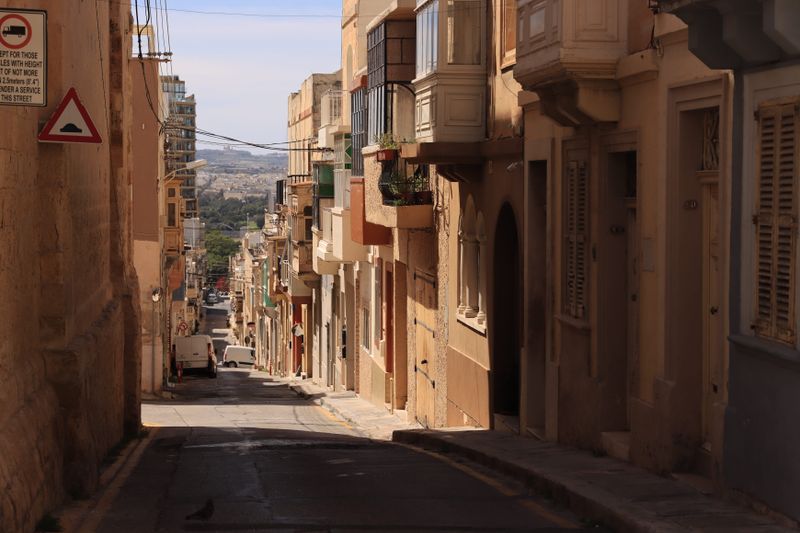
Sliema and St Julian’s win on convenience without compromise: English is spoken everywhere, services are plentiful, and the expat community is large enough that you will meet people fast. The downside is construction. Malta approved more than 12,300 new dwellings in 2025 — up from about 8,700 the year before, according to the National Statistics Office — and the Northern Harbour district that contains Sliema, Gzira, Msida, and St Julian’s consistently records the highest number of approvals on the island. In practice that means cranes, dust, and early-morning drilling are a near-constant backdrop in exactly the areas most expats move to first.
The factors worth weighing honestly before you choose:
- Noise tolerance. St Julian’s and Sliema are genuinely loud, day and night. Swieqi and Madliena are not. If you work from home, this is the factor that will wear on you fastest.
- Social needs. For a ready-made expat scene, Sliema and St Julian’s win easily. To integrate more with Maltese culture, the Three Cities offer that far more authentically.
- Transport reliance. Malta’s bus network reaches everywhere on a flat €2 fare but is slow. If you do not drive, staying in Sliema or St Julian’s keeps life manageable; Gozo realistically requires a car and ferry planning for any mainland commitment.
- Family considerations. Swieqi and Madliena sit close to international schools and offer safer, calmer streets for children. Parents will find useful context in this Malta family life guide.
- Cultural atmosphere. The Three Cities carry centuries of Maltese history in their streets — genuinely underappreciated for expats who want texture and character over modern polish.
Matching your lifestyle preference to the area’s pace of life is the single most reliable predictor of expat satisfaction in Malta. Attempting an urban lifestyle in rural Gozo, or expecting village quiet in Sliema, produces the same outcome: disappointment.
How should you plan your move and find housing in Malta?
Timing makes the practical side far easier. The best months to move are the shoulder seasons — September to November and March to April — when the summer heat eases, tourist crowds thin, and professional services are more responsive. From there, a clear sequence protects you from the most common and most expensive mistakes.
- Book temporary accommodation first. Many newcomers stay four weeks in a serviced apartment or short-term let to view properties in person. Malta’s standard private residential lease has a minimum duration of one year, so you want to be sure before you sign — remote decisions based on photos alone carry real risk.
- Use a local agent. Malta’s rental market has quirks. Good agents know which landlords are responsive, which buildings have recurring issues, and which streets are about to get noisier from new construction. This apartment rental guide covers contracts, deposits, and what to watch for under Cap. 604.
- Register the lease. By law, landlords must register private residential leases with the Housing Authority. A registered contract protects your rights as a tenant, so confirm it has been done — the official process runs through servizz.gov.mt.
- View multiple neighborhoods in person. Walk Sliema on a weekday morning. Drive through Swieqi on a Saturday. Take the ferry to Gozo for a night. Your gut reaction after experiencing each area in real time beats any ranking.
- Budget for a move-in clean. Most rental properties in Malta need a thorough clean before you move your things in. Rather than chasing quotes from cleaners you have never met during an already hectic first week, Rozie lets you post the job once and compare offers from verified cleaners before you accept — each offer shows the exact price up front. You can see what a clean typically costs in this Malta cleaning cost guide.
Pro tip
Avoid moving in July or August. The heat makes viewings exhausting, landlords are least flexible on price because demand peaks, and many services run reduced schedules. Arriving in October gives you the best mix of weather, availability, and negotiating position.
Key takeaways
The best place to live in Malta for expats is the one that matches your priorities: Sliema and St Julian’s for urban convenience, Swieqi and Madliena for family-friendly calm, the Three Cities for affordable character, and Gozo for a genuinely rural pace.
Why most expat neighborhood guides get Malta wrong
I have watched a lot of people move to Malta and make the same mistake: they pick a neighborhood based on what sounds exciting in a blog post rather than what fits their actual daily rhythm. Sliema gets top billing in almost every guide because it is genuinely impressive on arrival — the waterfront promenade, the cafes, the energy. It sells itself.
But six months in, the construction noise that nobody mentioned starts to feel relentless. The apartment that looked spacious in photos feels cramped once you realize you cannot open a window without dust. The social scene that felt thrilling at first becomes background noise when you just want a quiet evening.
The expats I have seen thrive here are the ones who were honest with themselves before they moved. A remote worker who values silence chose Madliena and loves it. A young professional who wanted to meet people immediately chose St Julian’s and has not looked back. A retired couple who wanted history and affordability chose the Three Cities and feel like they discovered a secret.
No neighborhood is objectively best. The right question is not “where should I live in Malta?” It is “what kind of day do I actually want to have?” Answer that first, then match the neighborhood to the answer.
— Alex, Rozie editorial
Settle into your new Malta home with Rozie
Moving to a new country is exciting and exhausting in equal measure. Once you have found your apartment, the last thing you want is to spend your first days scrubbing someone else’s mess before your own things are even unpacked.
Finding a reliable cleaner in Malta the traditional way usually means scrolling Facebook groups, messaging numbers a friend passed on, and waiting for quotes that may never come. Rozie was built to remove that friction. You post the job once, pick a date and any extras, and verified cleaners send you offers with the exact price before you accept. Every booking is covered by 7-day payment protection and up to €1,000,000 in professional liability insurance underwritten by Lloyd’s Insurance Company S.A., with Rozie covering any deductible so you pay no excess.
Here is the whole booking process in under 60 seconds:
Whether you need a one-off move-in clean in Sliema, a regular weekly service in Swieqi, or a deep clean in the Three Cities, booking takes about a minute — no phone calls, no quote chasing. For more local home and cleaning guides, browse the cleaning in Malta section.

Download Rozie — Book in 60 Seconds →
Frequently asked questions
What is the best area in Malta for expat families?
Swieqi and Madliena are the top choices for expat families, offering quieter streets, proximity to international schools, and commute times of around 10 to 15 minutes to Malta’s main centers.
How much does it cost to rent in Malta as an expat?
A one-bedroom apartment averages roughly €900 per month nationally. Prime areas like Sliema and St Julian’s run from about €800 to €1,500, while more affordable options in the Three Cities and Gozo can start closer to €500 to €600 per month.
Is Gozo a good option for expats relocating to Malta?
Gozo suits remote workers and retirees who want a slower pace of life. The ferry crossing to mainland Malta takes about 25 minutes, which makes daily commuting impractical for most working expats.
Do non-EU citizens need a permit to buy property in Malta?
Yes. Non-EU nationals generally need an Acquisition of Immovable Property (AIP) permit to buy in Malta. The main exception is Special Designated Areas, such as Tigné Point and Portomaso, where there are no nationality restrictions on purchase.
When is the best time to move to Malta?
Shoulder seasons, specifically September through November and March through April, offer the best combination of mild weather, rental availability, and access to professional relocation services.
Should I rent or buy property when I first move to Malta?
Renting for at least three to six months before committing to a purchase is strongly recommended. It lets you test neighborhoods in real life and avoids costly decisions based on incomplete information.
How do I arrange a move-in clean before settling into a Malta rental?
Most expats book a one-off deep clean for the day before or the day they move in. On Rozie, you post the job once, choose any extras such as oven, fridge, or inside windows, and verified cleaners send offers with exact prices before you accept, typically within minutes. Every booking includes payment protection and €1,000,000 liability cover.
Recommended
- Malta Country: Why Expats Choose Island Life | Rozie – Malta’s Best Cleaning Services
- Country Malta Europe – Daily Life and Modern Solutions | Rozie – Malta’s Best Cleaning Services
- Top Beaches in Malta 2026: Relaxation, Swimming & Fun
- Things to Do in Malta 2026: Insider Guide for Visitors & Residents