

In this guide
What does cleaner insurance actually cover in Malta?
Accidental damage or normal wear: what will a claim pay for?
What do “per occurrence”, limits and excess mean?
What should you ask a cleaner or company before you book?
What changes if you hire a cleaner directly?
How do you document damage and make a claim?
How does Rozie’s insurance and payment protection work?
What do insured cleaners cost in Malta?
Which cleaning jobs carry the most damage risk in Malta homes?
What does cleaner insurance actually cover in Malta?
Cleaner insurance in Malta is normally a liability policy. It pays when the cleaner is legally responsible for accidental damage to your property or for injury to another person during the booked job, such as a cracked glass tabletop, a scratched marble sill or a visitor slipping on a freshly mopped floor. It does not replace your own home insurance, and it rarely covers theft, old damage or items that simply wear out.
Most homeowners only ask “are you insured?” and accept a yes. That answer tells you a policy exists somewhere, not whether it fits a cleaning job in your flat in Sliema or your house of character in Rabat. The useful questions are about the type of cover, the person or business named on it, and the limits.
Public liability vs employer’s liability
Public (or professional) liability protects third parties: you, your family, your guests and your belongings. If a cleaner knocks a television off its stand, this is the cover that responds. Employer’s liability is different. It protects an employer against claims from their own staff who are injured at work. A cleaning company with employees may hold both. A self-employed cleaner usually needs only public liability, and many informal cleaners carry neither.
Why it matters who holds the policy
A policy only helps you if it covers the person standing in your kitchen. Agency cover may apply to employees but not to subcontractors. A platform policy may apply only to jobs booked and paid through the platform. If you arrange extra hours with the same cleaner in cash, that visit is usually outside the cover.
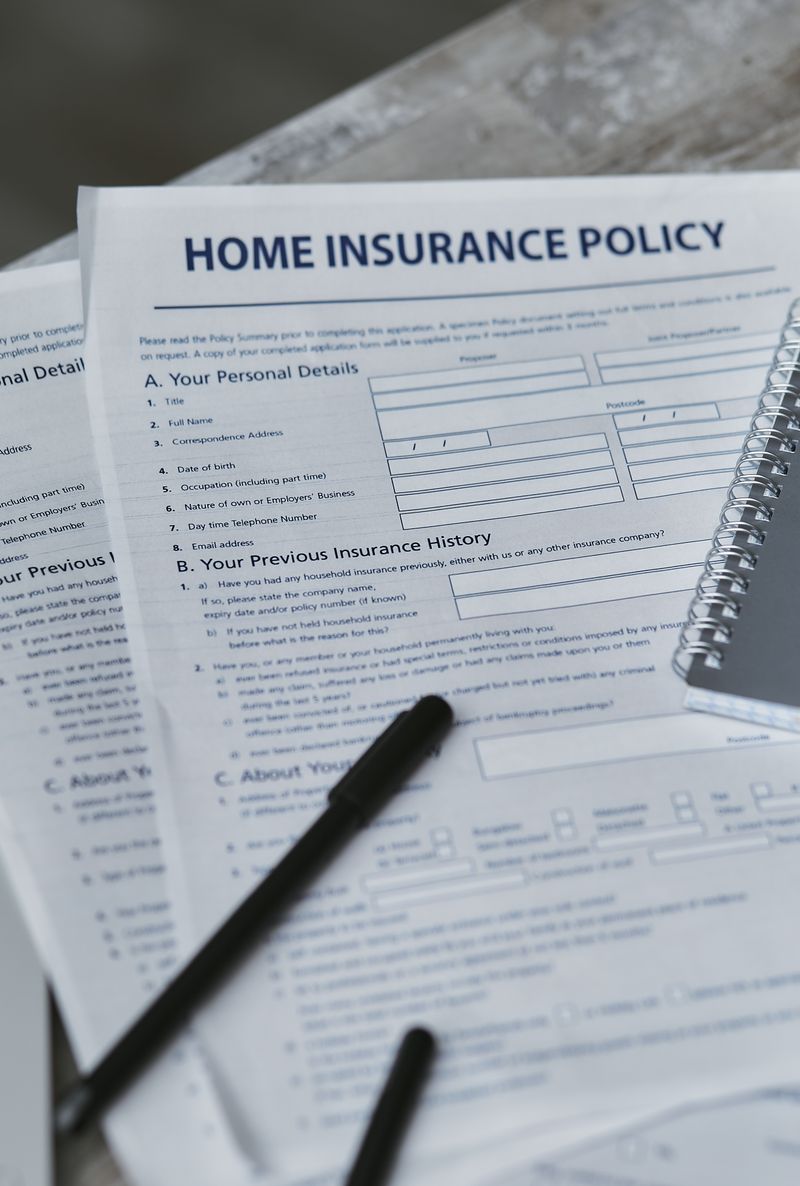
For anyone serious about choosing reliable cleaning companies in Malta, the insurance question deserves the same weight as reviews and price. If you are comparing marketplaces, agencies and freelancers more broadly, the guide on how to choose the right cleaning service in Malta covers the full picture.
Accidental damage or normal wear: what will a claim pay for?
A cleaner liability claim in Malta pays for sudden, accidental damage caused by the cleaner during the booked service. It does not pay for gradual wear, damage that was already there, or a surface that was fragile before anyone touched it. The clearest way to decide is to ask three questions: did it happen during the job, was it sudden, and did the cleaner cause it?
The table below is a practical decision guide based on how liability policies are generally structured. Every policy has its own wording, so treat it as a starting point and check the actual terms.
Key takeaway: Liability insurance pays for something the cleaner broke or someone the cleaner hurt during the job. It does not pay for wear, for damage that was there before, or for anything you cannot link to the visit, so evidence matters as much as the policy.
What do “per occurrence”, limits and excess mean?
“Per occurrence” means the policy limit applies to each separate incident. A limit of €1,000,000 per occurrence means one incident can be paid up to that amount, and a second unrelated incident has its own limit. The excess, also called the deductible, is the part of each claim that the insured person pays before the insurer pays the rest.
The Malta Financial Services Authority’s insurance guidance defines the excess as “the amount of each claim that you pay yourself” and notes there are no fixed rules on how high it can be. That is why two policies with the same headline limit can leave you with very different bills.
Worked example: a €400 repair to a damaged cabinet door
Booked on Rozie (deductible covered by Rozie)
€0 excess
Hypothetical policy with a €250 excess passed on to you
€250 from you
Illustrative figures only. The €250 excess is an example, not a Malta average. With a high excess, small accidents often cost you the full repair because the claim never goes above the excess.
Limits also matter for bodily injury. A serious fall on a staircase can lead to medical and legal costs far larger than any furniture repair, which is why a high per-occurrence limit is worth more than it first appears.
What should you ask a cleaner or company before you book?
Before booking a cleaner in Malta, ask five things: the name of the insurer, whose name is on the policy, the limit per occurrence, the excess and who pays it, and how a claim is reported. A genuinely insured cleaner, agency or platform can answer all five in writing within a day. Vague answers such as “we’re fully covered” are a reason to keep looking.
The five-question insurance check.
1. Which insurer underwrites the policy? 2. Is the policy in the cleaner’s, the company’s or the platform’s name? 3. What is the limit per occurrence for property damage and for bodily injury? 4. What is the excess, and will you be asked to pay it? 5. Who do you contact, and how fast, if something breaks?
You can check whether an insurer or intermediary is licensed in Malta on the MFSA Financial Services Register. Insurers based elsewhere in the EU can also operate here, so a missing local entry is a prompt to ask more, not proof of a problem.
Other Malta cleaning providers publish their own service pages, for example Tidy Malta offers fully licensed and StayCare Group employs a professional. Whichever provider you consider, ask the same five questions and compare the written answers.
When finding reliable cleaners in Malta, keep insurance separate from identity checks: the article on what “verified” means for cleaners in Malta covers vetting, and the list of questions to ask cleaning services before you book covers scope and pricing.
Pro tip
Ask for the insurer’s name and the policy limit in a message, not on the phone. Trusted Malta cleaners who are genuinely covered will send it without pushback, and you then have a written record if you ever need to claim.
What changes if you hire a cleaner directly?
Hiring a cleaner directly in Malta, through a Facebook group or a neighbour’s recommendation, usually means no insurance at all unless the cleaner holds their own policy. If the cleaner works regularly in your home under your direction, you may also be treated as their employer, which brings legal duties and the employer’s liability question onto your side of the table.
Employment in Malta falls under the Employment and Industrial Relations Act (Cap. 452), and workplace safety under the Health and Safety at Work Act (Cap. 646), listed on the OHSA legislation page. If a cleaner you employ slips while washing your terrace, the question of who pays for that injury can land on you.
Check whether your own home insurance covers injury to domestic staff and accidental damage by visitors; many household policies treat these as optional extras. Our legal guide to hiring a cleaner in Malta covers PE numbers, wages and contributions in detail.

How do you document damage and make a claim?
To claim for cleaning damage in Malta, stop using the damaged item, photograph it straight away with a wide shot and a close-up, note the date and time, and report it promptly to the platform, company or cleaner in writing. Keep receipts or repair quotes. Insurers and platforms decide claims on evidence, so the first hour after you notice the damage matters most.
- Make it safe. Move broken glass, unplug a damaged appliance and mark a wet or slippery area.
- Photograph everything. One wide photo showing the room, one close-up of the damage, and one of any product or tool involved.
- Write it down the same day. Send a short message describing what happened and when. On Rozie, the in-app chat with the cleaner gives you a dated record.
- Report it promptly. Most policies have reporting timeframes. The MFSA’s general advice is to contact your insurer as soon as possible after an incident.
- Get a repair quote or proof of value. An invoice, an original receipt or a written quote from a Maltese repairer.
- Escalate if needed. If an insurer rejects a complaint or does not reply within 15 working days, you can take it to the Office of the Arbiter for Financial Services.
Policies underwritten by Lloyd’s Insurance Company S.A. are handled through the brokers and coverholders named in the policy, as explained on the Lloyd’s Europe policy and claims page. That is why a platform or broker usually guides you through the claim rather than you contacting the insurer cold.
Rather skip the paperwork? With an informal cleaner, you build the claim yourself and hope the other person cooperates. Booking through Rozie means you report it with photos and details, and Rozie guides you through the review process.
How does Rozie’s insurance and payment protection work?
Every Rozie booking includes professional liability insurance up to €1,000,000 per occurrence, underwritten by Lloyd’s Insurance Company S.A. It covers accidental property damage and bodily injury caused by cleaners during bookings. Rozie covers the deductibles, so you pay no excess. Each booking also carries 7-day payment protection, with the payment made securely in the app.
Rozie is a marketplace, not a cleaning agency: you post a request with your date, locality and extras, and verified cleaners in Malta send offers with exact prices, typically within 5 to 15 minutes. You compare offers before you accept. Because the job, the price and the chat all sit in the app, there is a clear record of who cleaned, when, and what was agreed, which is exactly what a claim needs.
Terms, exclusions, evidence requirements and reporting timeframes apply, so read the Rozie terms and conditions once before your first booking. If something goes wrong, report it promptly with photos and details through Rozie’s WhatsApp support.
What do insured cleaners cost in Malta?
According to the Rozie cleaning cost guide for Malta, independent cleaners typically charge about €10 to €20 per hour and agency teams about €15 to €25 per hour, with deep cleaning priced roughly 30% to 50% above regular rates. These are estimates that vary by locality, timing and extras. On Rozie, each offer shows the exact price before you accept.
Cleaning services in Malta typically cost less per hour when you hire informally, but the gap is smaller than it looks once you price in the risk of paying for one accident yourself. For larger one-off jobs, compare deep cleaning prices and the hourly cleaning rates in Malta, and read why professional cleaners in Malta make sense for high-stakes visits such as move-outs.
Finding a reliable, insured cleaner in Malta the traditional way often means scrolling Facebook groups, making phone calls, chasing quotes, and asking each person whether they have any cover at all.
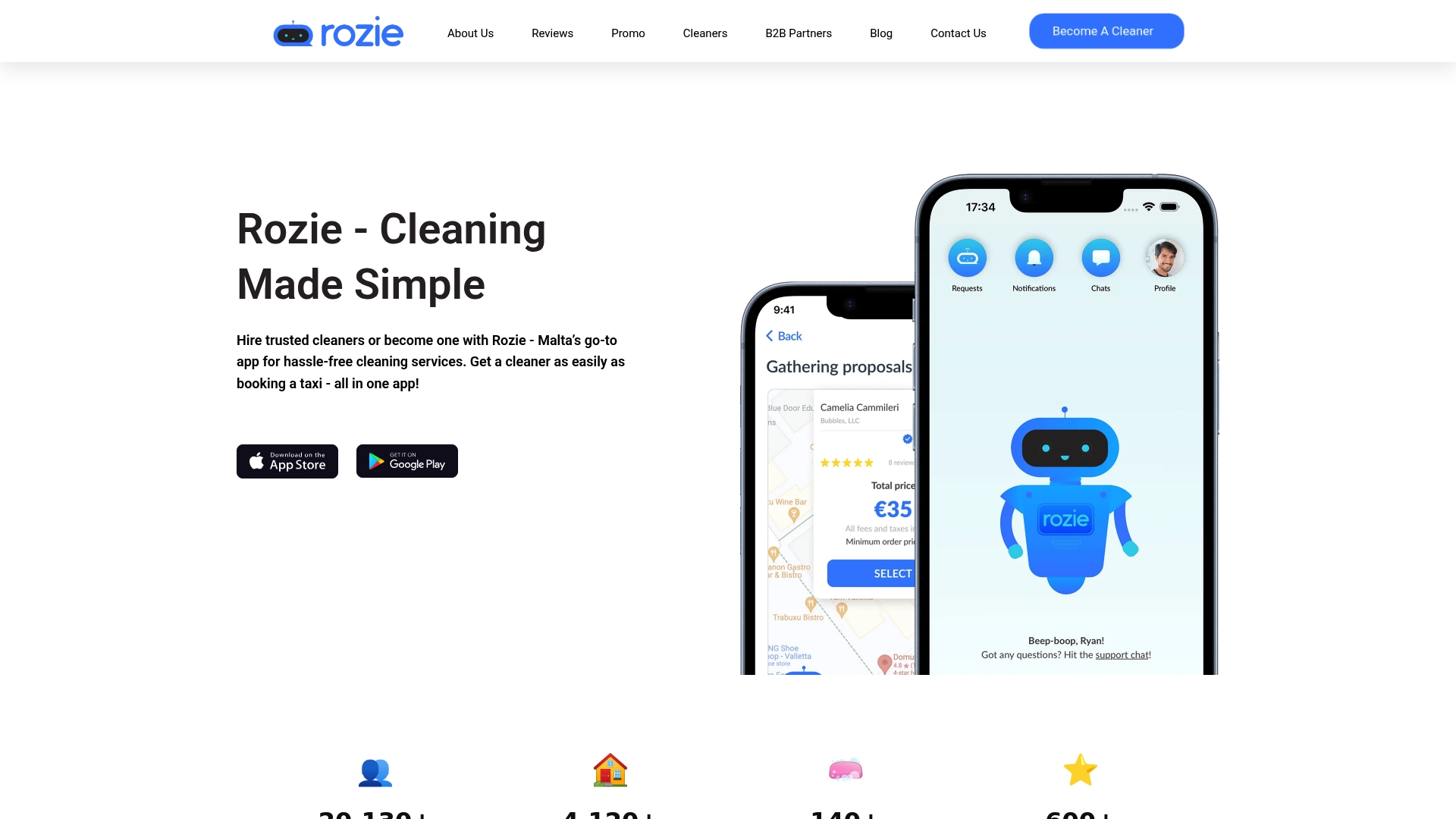
Rozie was built to remove that friction. You pick a date, select the extras you need, and verified cleaners send you offers with exact prices before you accept. Every booking is backed by 7-day payment protection and professional liability insurance up to €1,000,000 per occurrence, underwritten by Lloyd’s Insurance Company S.A.
Here is the full booking process in under 60 seconds:
Compare Cleaning Offers on Rozie →
Which cleaning jobs carry the most damage risk in Malta homes?
The cleaning jobs with the highest damage risk in Malta are deep cleans on Globigerina limestone, marble or terrazzo, descaling around hard-water fittings, fast Airbnb turnovers, move-out cleans and post-renovation cleans. These jobs combine strong products, delicate surfaces, ladders or time pressure, which is exactly when a liability policy is most likely to be needed.
Limestone, marble and hard water
Globigerina limestone, marble and terrazzo are porous and acid-sensitive, so they need pH-neutral cleaners only. Vinegar, lemon or citric-acid descalers can etch them permanently. Some local cleaning guides quote Malta’s hard water at 350 to 600 PPM; the Water Services Corporation does not publish one national figure, but its limescale page explains that Malta’s limestone geology makes the water harder and that limescale forms when that water evaporates or is heated. Descalers such as Viakal belong on ceramic, chrome and glass only, never on the stone around them.
Airbnb turnovers and move-out cleans
Turnovers run against check-in times, and rushed work is when things get knocked over. On Rozie, a turnover is booked as a regular or deep clean plus your notes; the cleaner works with the linen and supplies you set out. See Airbnb cleaning in Malta, the Airbnb cleaning services overview and the holiday home cleaning guide. For tenants, move-out cleans decide deposit disputes under the Private Residential Leases Act (Cap. 604), so a documented, insured clean is worth having; the end-of-tenancy cleaning checklist and deep cleaning in Malta page help you plan it, and there is general moving and cleaning advice for the move itself.
A local directory notes that Reputable services vet staff via background checks, but vetting and insurance answer different questions: one is about who comes in, the other about who pays when something breaks. If you are also wondering about keys, valuables and access while a cleaner is in, see the guide on home security when a cleaner visits.
Ready to book with cover in place? When you choose the best cleaning service for a stone floor, a turnover or a move-out, choose one where the insurance question is already answered. You can choose safe help on Rozie, compare the best cleaning company options, or look at deep cleaning examples first.
Download Rozie, Get Offers in Minutes →
More guides on home cleaning across the island are in the Cleaning in Malta category.
Frequently asked questions
What does liability insurance for cleaners in Malta actually cover?
Liability insurance for cleaners in Malta covers accidental damage to your property and bodily injury to other people caused by the cleaner during the booked job. It does not cover gradual wear, damage that was already there, or missing items. On Rozie, every booking includes professional liability insurance up to €1,000,000 per occurrence, underwritten by Lloyd’s Insurance Company S.A.
What is the difference between public liability and employer’s liability?
Public liability pays claims from third parties, such as a homeowner whose furniture is damaged or a guest who is injured. Employer’s liability pays claims from an employer’s own staff who are injured at work. A self-employed cleaner usually needs public liability; a cleaning company with employees may need both.
What does “per occurrence” mean on a cleaning insurance policy?
Per occurrence means the policy limit applies separately to each incident. With a limit of €1,000,000 per occurrence, one accident can be paid up to that amount, and an unrelated accident on another day has its own limit.
Will I have to pay an excess if a Rozie cleaner damages something?
No. Rozie covers the deductibles on its professional liability insurance, so users pay no excess. Terms, exclusions, evidence requirements and reporting timeframes apply, so report any damage promptly with photos and details.
How do I check a cleaner’s insurance before booking in Malta?
Ask in writing for the insurer’s name, whose name is on the policy, the limit per occurrence, the excess and who pays it, and how to report a claim. You can check whether an insurer or intermediary is licensed in Malta on the MFSA Financial Services Register.
What can I do if an insurance claim is rejected in Malta?
Complain to the insurer or intermediary first and ask for the head of claims if needed. If you are not satisfied with the reply, or get no reply within 15 working days, you can lodge a complaint with the Office of the Arbiter for Financial Services.
Recommended
- How to Choose a Cleaning Service in Malta (2026 Guide)
- Professional Cleaning Advantages for Busy Expats in Malta | Rozie – Malta’s Best Cleaning Services
- How to Find Trusted Cleaners in Malta (2026 Guide) | Rozie – Malta’s Best Cleaning Services
- How to Find a Trusted Cleaner Near You in Malta (2026 Guide) | Rozie – Malta’s Best Cleaning Services