

Balancing a demanding career with family life in Malta is genuinely challenging, and for many busy professionals and expats, finding trustworthy childcare sits at the very top of the stress list. You want someone warm, capable, and safe around your children — but the path from “I need a nanny” to “I’ve found the right one” is rarely straightforward. Informal arrangements feel convenient, but they quietly expose your family to legal risk, unclear boundaries, and real safety concerns. This guide walks you through every stage of the process, from understanding your options to finalising a fully compliant, confident hiring decision.

In this guide
What childcare options do families in Malta actually have?
How much does a nanny actually cost in Malta?
What should you prepare before starting your search?
Where can you actually find trustworthy nannies?
How should you interview, vet, and finalise your choice?
What legal documents are required when hiring a nanny in Malta?
What do most parents overlook about hiring nannies in Malta?
What childcare options do families in Malta actually have?
Malta offers three distinct childcare arrangements, and the differences between them matter more than most parents initially realise. The three categories are private nannies, childminders, and registered childcare centres — each with its own legal standing, oversight level, and practical implications.
A private nanny works exclusively for your household, typically caring for your children in your home or on outings. This gives maximum flexibility and consistency for your child, but it means you take on the role of employer. Under Maltese rules, hiring a nanny who is regularly directed, scheduled, and paid by you is treated as a formal employment relationship — not a casual service — which means written terms, social security contributions, and basic employment protections apply.
A childminder typically cares for your child alongside others in the childminder’s own home. The arrangement can be more affordable than a dedicated nanny, but oversight is less standardised and quality varies widely. A registered childcare centre is regulated by the Department of Quality Standards in Education, follows the National Standards for Early Childhood Education and Care Services (0–3 years), and — crucially — is the only path that gives you access to the government’s Free Childcare Scheme.
🏠 Private nanny.
Maximum flexibility, 1:1 attention, in-home care. You become the employer — full written terms, salary, leave, social security. Best for irregular schedules and infants under three months who can’t yet attend FES centres.
👶 Childminder.
Care in the childminder’s home alongside other children. Smaller groups than a centre, more flexibility than a nursery — but oversight varies. Worth asking whether the childminder is registered with the Directorate for Quality and Standards in Education.
🎒 Registered childcare centre.
14 government-run FES centres across Malta and Gozo, plus 180+ private centres registered under the Free Childcare Scheme. Structured programme, qualified staff, regulated ratios — and free for working or studying parents.
Here’s how the three options compare on the criteria that matter most when you’re deciding:
For most working parents in Malta, the realistic decision tree looks like this: if your child is between 3 months and 3 years old and you’re employed or studying, start by exploring the Free Childcare Scheme — it covers staff costs and consumables, leaving only food and small extras to pay. If your hours are unpredictable, you have an under-3-month-old, or you simply prefer in-home care, a private nanny is the right route. Many Malta families end up combining both: an FES centre for structured weekday hours, plus a part-time nanny for evenings and weekends.
How much does a nanny actually cost in Malta?
Hiring a private nanny in Malta typically costs €8–15 per hour for part-time arrangements and €15,000–20,000 per year for a full-time role, with live-in nannies often at the lower end of the salary range because accommodation and meals are provided. Independent salary surveys put the average gross nanny salary in Malta at around €15,500–17,000 annually, sitting close to but slightly above the 2026 national minimum wage of approximately €994 per month. Live-in arrangements, agency placements, and English-speaking nannies with formal early-years training all push toward the upper end.
The Free Childcare Scheme dramatically changes the maths if your child qualifies. Working parents are entitled to coverage for 110% of one parent’s monthly working hours plus 20 hours per week for commuting, and parents in education get 20 hours (part-time) or 40 hours (full-time) weekly. As of 2023, more than 22,500 children in Malta were enrolled in the scheme — making it the fastest-growing form of early childcare in the EU since its 2014 launch.
💰 Annual childcare cost: private nanny vs FES centre
Full-time private nanny
€15,000–20,000
FES centre (eligible parents)
€0
FES coverage applies to staff costs and consumables for children aged 3 months to 3 years. Families pay only for food and individual items like nappies. Private childcare fees outside the scheme qualify for an annual income tax deduction of up to €2,000 per child.
Below the headline figures, plenty of smaller costs add up if you’re hiring a private nanny — these are the ones expat families are most likely to underestimate when they relocate to Malta. (For broader context on what running a household here actually costs, our guide to the real cost of living in Malta in 2026 breaks down recurring household expenses honestly.)

What should you prepare before starting your search?
Before you post a single ad or contact a single agency, write a clear role description covering duties, hours, salary, leave, probation, and house rules. Most failed nanny arrangements in Malta trace back to this stage being skipped — when expectations are vague, every new situation becomes a negotiation, and good relationships erode under repeated friction.
Jumping into the search without preparation is a bit like shopping for a flat in Sliema without knowing your budget or which neighbourhood you prefer. You end up overwhelmed, talking to candidates who don’t match what you actually need, and vulnerable to making the wrong call. Spend a quiet evening with your partner (or alone, with a notepad) and write down the following essentials before you do anything else:
- Specific duties — school pickup, meal prep, light tidying, homework support, bath and bedtime, outdoor play. Be explicit about what’s in and what’s out.
- Expected hours and schedule — mornings only, full-time, live-in, evenings/weekends, or some combination. Note any flexibility you can offer.
- Gross salary, payment schedule, statutory bonuses — Malta’s twice-yearly statutory bonuses must be paid to all employees including domestic workers.
- Annual leave entitlement and public holidays — Maltese employees are entitled to a minimum of 27 days annual leave (pro-rata for part-time) plus public holidays.
- Probation period and notice requirements — typically 1 week notice during the standard 6-month probation, longer afterwards.
- House rules — pets, food preferences, screen time policy, language(s) used at home, any specific childcare philosophies you follow.
Think carefully about values and personal qualities too. Competence matters enormously, but so does temperament. A nanny who is experienced but rigid can clash with a household that runs on spontaneity. Do you want someone playful and activity-focused, or nurturing and calm? Do your children thrive with structure or flexibility? Writing this down before you search makes filtering candidates dramatically easier.
💡 Pro tip — build a scoring sheet before interviews
List 5–6 must-haves (verifiable references, right to work in Malta, willing to obtain a Police Conduct Certificate, English fluency, valid first aid training, transport for school runs) and 4–5 nice-to-haves (creativity, second language, swimming/beach safety experience, cooking confidence). Score every candidate on the same sheet. It keeps your decision objective when you’ve met four people in two weeks and your gut starts to wobble.
Where can you actually find trustworthy nannies in Malta?
The best channels for finding nannies in Malta, ranked by candidate quality and built-in vetting, are: specialist agencies, expat community groups, online job platforms like Jobsplus, and personal referrals through schools and local networks. Each channel has trade-offs between speed, cost, and how much screening work falls on you.
Malta’s small size means word travels fast — a nanny who’s been excellent for one family in St Julian’s often becomes known to several others within a few months. That’s a strength of the local market and a risk: glowing recommendations don’t always translate to your household, because temperament, work style, and child age all matter more than a former employer’s enthusiasm suggests.
Here’s how the four main channels actually compare in practice:
Even a personal referral from a friend you trust completely needs the same formal vetting as a stranger from an online ad. The friend isn’t lying when she says her nanny was wonderful — but “wonderful for a calm 8-year-old who reads independently” doesn’t transfer cleanly to “great with a 2-year-old who’s still climbing furniture.” Treat every candidate as new until you’ve done the full check.
Red flags to watch for early on include candidates who are reluctant to provide references, can’t supply ID or proof of right to work in Malta, deflect direct questions about previous employment, or have unexplained gaps in their work history. None of these are automatic disqualifiers — there are usually fair explanations — but each one warrants a direct, honest conversation rather than a polite skip.

How should you interview, vet, and finalise your choice?
Run a six-step process: phone screen, structured in-person interview, reference checks with previous employers, document verification, paid trial day, and a written employment contract. Skipping any step — particularly the trial day or the written contract — is where most nanny relationships start to crack within the first three months.
This is where the real work happens, and where most families either build a strong foundation or leave hairline cracks that turn into problems later. Take it seriously and structure the process rather than treating it as a casual chat over coffee.
- Conduct a phone screen first. A 15-minute call confirms availability, salary expectations, right to work in Malta, and basic eligibility before you invest time in a full interview. Two well-run phone screens save you a wasted Saturday afternoon.
- Schedule a structured in-person interview. Ask open-ended scenarios, not yes/no questions: “How would you handle a child having a meltdown in a supermarket?” or “Describe a time you disagreed with a parent’s instruction and how you handled it.” How they answer reveals temperament; how confidently they answer reveals experience.
- Request and verify references. Ask for at least two references from previous employers — and actually call them. Specific questions reveal more than general ones: “How did she handle disagreements with you about your child’s routines?” tells you something useful. “Was she nice?” doesn’t.
- Check documents carefully. Verify identity, right to work in Malta, any relevant qualifications (paediatric first aid, early-years training, swim instructor certification), and a recent Police Conduct Certificate. The certificate is issued by the Maltese Police via kondotti.gov.mt, takes around five working days, costs €0.28 by standard mail or €2.28 registered, and any candidate worth hiring will agree to apply for one without hesitation.
- Arrange a paid trial day. This is non-negotiable. Watching a candidate interact with your child in a real setting reveals far more than any interview — how they greet your child, how they handle the first inevitable “no,” how the energy in the house feels after four hours. Pay them properly for the day; it’s not a free audition.
- Issue a formal employment contract. Maltese household-worker rules treat regular paid help as employment, which means written terms covering duties, hours, salary, leave, probation, and notice are required from day one. Use this as the moment to align on everything formally — and to make small adjustments based on what you saw during the trial day.
💡 Pro tip — ask the conduct certificate question early
Within the first phone screen, ask: “Would you be comfortable applying for a Police Conduct Certificate as part of the hiring process?” A confident, trustworthy candidate will say yes immediately and often volunteers that they already have one ready. Hesitation, deflection, or “do I really need to?” tells you something important — and saves you weeks.

Key takeaway: Families who invest in clear contracts and structured onboarding consistently report the most stable, long-lasting nanny relationships. Clarity from day one eliminates the small daily ambiguities that slowly erode trust over months.
What legal documents are required when hiring a nanny in Malta?
For a private nanny in Malta, you need a written employment contract specifying duties, hours, salary, leave, and notice; proof of the nanny’s right to work in Malta (Maltese/EU ID or a valid work permit for third-country nationals); social security registration with Jobsplus; a Police Conduct Certificate; and — for live-in arrangements — clear written boundaries between work hours and personal time.
The biggest mistake expat families make is assuming that hiring a nanny part-time on cash means employment law doesn’t apply. It does. Once you direct, schedule, and pay someone regularly, Maltese rules treat the relationship as employment regardless of whether it’s part-time, full-time, in cash, or via bank transfer. That means the same documentation requirements apply at any scale.
📄 Written employment contract.
Covers duties, working hours, gross salary, payment schedule, annual leave, sick leave, public holidays, statutory bonuses, probation period, and notice. For live-in nannies, also defines work hours vs personal/rest time, accommodation arrangements, meal provisions, and use of household facilities.
🛂 Right to work in Malta.
Maltese citizens and EU/EEA nationals have automatic right to work. Third-country nationals (TCNs) need a single permit issued via Identity Malta. Verify this before hiring — penalties for employing someone without legal status fall on you, the employer, not on the worker.
🔒 Police Conduct Certificate (Certifikat Ta’ Kondotta).
Issued by the Maltese Police via the online portal at kondotti.gov.mt or in person at the Criminal Records Office in Floriana. Delivered by post within five working days, with both Maltese-residence and foreign-residence application paths.
💼 Social security and payroll.
Register the employment relationship with Jobsplus, deduct employee Class 1 social security contributions, and pay employer contributions monthly. Issue payslips. For TCN nannies, you’re also responsible for ensuring continuous valid permit status.
What do most parents overlook about hiring nannies in Malta?
The parents who struggle most with nanny arrangements in Malta are rarely those who made obviously bad decisions — they’re the ones who hired someone nice, trusted their gut, skipped the written contract because it felt overly formal, and assumed everything would work itself out because “the nanny seems great.” It usually does work out, until it doesn’t.
Informal arrangements feel easier in the short term. No paperwork, no awkward contract conversation — just a friendly handshake and a WhatsApp message confirming next week’s schedule. But informal setups leave enormous room for miscommunication. What counts as overtime? Who covers school holidays? What happens if your child is sick and you can’t work from home? Without written answers to those questions, every new situation becomes a fresh negotiation, and over months those negotiations wear on everyone.
There’s also a safety dimension that gets glossed over. Without formal vetting, families have no verified record of who is spending unsupervised time with their children. This isn’t about assuming the worst in people — most nannies in Malta are professional, dedicated, and brilliant at what they do. It’s about making responsible decisions that match the trust you’re extending. The same logic explains why platform-vetted services have grown so quickly across Malta in general: when you’re inviting someone into your home regularly, structured verification is just sensible practice — whether that’s a nanny watching your kids or a cleaner working in your space.
Treating nanny hiring like any other significant employment relationship actually improves the experience for everyone. Your nanny knows exactly what’s expected, feels professionally respected, and is more likely to stay long-term — and continuity is one of the strongest predictors of healthy outcomes for young children. You gain stability. And you have legal and procedural clarity if anything ever does go wrong.
Building a wider home support system
A great nanny is one piece of a working household; the rest of the home still needs running. Most working parents in Malta who get the childcare side dialled in eventually realise the same logic — structured, vetted, written-down — applies to everything else they’re trying to delegate. The cleaning, the school logistics, the weekly food shop, the appointments calendar. None of it gets easier on its own.
The principles in this guide — clear written terms, formal vetting, paid trial periods, and structured onboarding — transfer cleanly to any home help you bring into your life. For families building out the cleaning side of their support system, Rozie is what we built specifically to remove the friction of finding verified, background-checked cleaners in Malta. You post a request, verified cleaners send you offers within minutes, and you compare and accept the one you prefer — all backed by up to €1,000,000 in professional liability insurance underwritten by Lloyd’s. Here’s what the booking process actually looks like in under 60 seconds:
While you’re working through the steps in this guide on the nanny side, our Malta for kids family-life guide covers the wider lifestyle picture — beaches, weekend activities, school pickup logistics, and the small Malta-specific things expat parents wish someone had told them earlier. And if you’re still weighing options, the trusted childcare guide for 2026 reviews specific nanny services available across the island.
Get Cleaning Offers on Rozie →
Frequently asked questions
Are nannies in Malta required to have background checks?
There’s no nationwide legal requirement that private nannies hold a Police Conduct Certificate, but reputable agencies treat it as standard, and you should always request one directly from every candidate. Applications are made via kondotti.gov.mt and the certificate arrives by post within five working days.
What legal documents should I prepare when hiring a nanny in Malta?
You should provide a written employment contract covering duties, salary, hours, leave, and notice period; verify the nanny’s right to work in Malta (Maltese ID, EU ID, or single permit for third-country nationals); and register the employment with Jobsplus for social security purposes. For live-in nannies, the contract should also clearly separate work hours from personal time and define accommodation arrangements.
Can expats access the Free Childcare Scheme in Malta?
Yes — expats with valid residency who are working or studying can apply for the FES Free Childcare Scheme for children aged 3 months to 3 years, provided they’re contributing to social security or pursuing a recognised course. Third-country nationals on the Students Directive aren’t eligible unless they hold an Employment Licence.
How much does a live-in nanny cost in Malta vs a live-out nanny?
Live-out nannies in Malta typically earn €15,000–20,000 per year for full-time roles, while live-in nannies often earn €12,000–17,000 because accommodation, utilities, and meals are provided as part of compensation. Calculate the live-in figure including the value of housing and food before comparing — the gap is usually narrower than it looks on paper.
What questions should I ask when interviewing a nanny?
Ask about previous childcare experience (specific ages and durations), how they handle behavioural challenges and emergencies, how they’ve resolved disagreements with parents in past roles, and what their typical day with a child looks like. Always request at least two contactable references from recent employers — and follow up by phone, not just by email.
Can I claim a tax deduction for childcare costs in Malta?
Yes — parents who pay fees for childcare services are entitled to an annual income tax deduction equivalent to the lower of €2,000 or the actual fees paid per child per year. This applies to private childcare centres outside the Free Childcare Scheme. Keep all receipts and invoices for your annual return.
What’s the typical probation period for a nanny in Malta?
The standard probation period for nannies in Malta is six months from the start date, during which either party can terminate with one week’s written notice. After probation, longer notice periods apply per Maltese employment law — typically two weeks, scaling up with length of service.
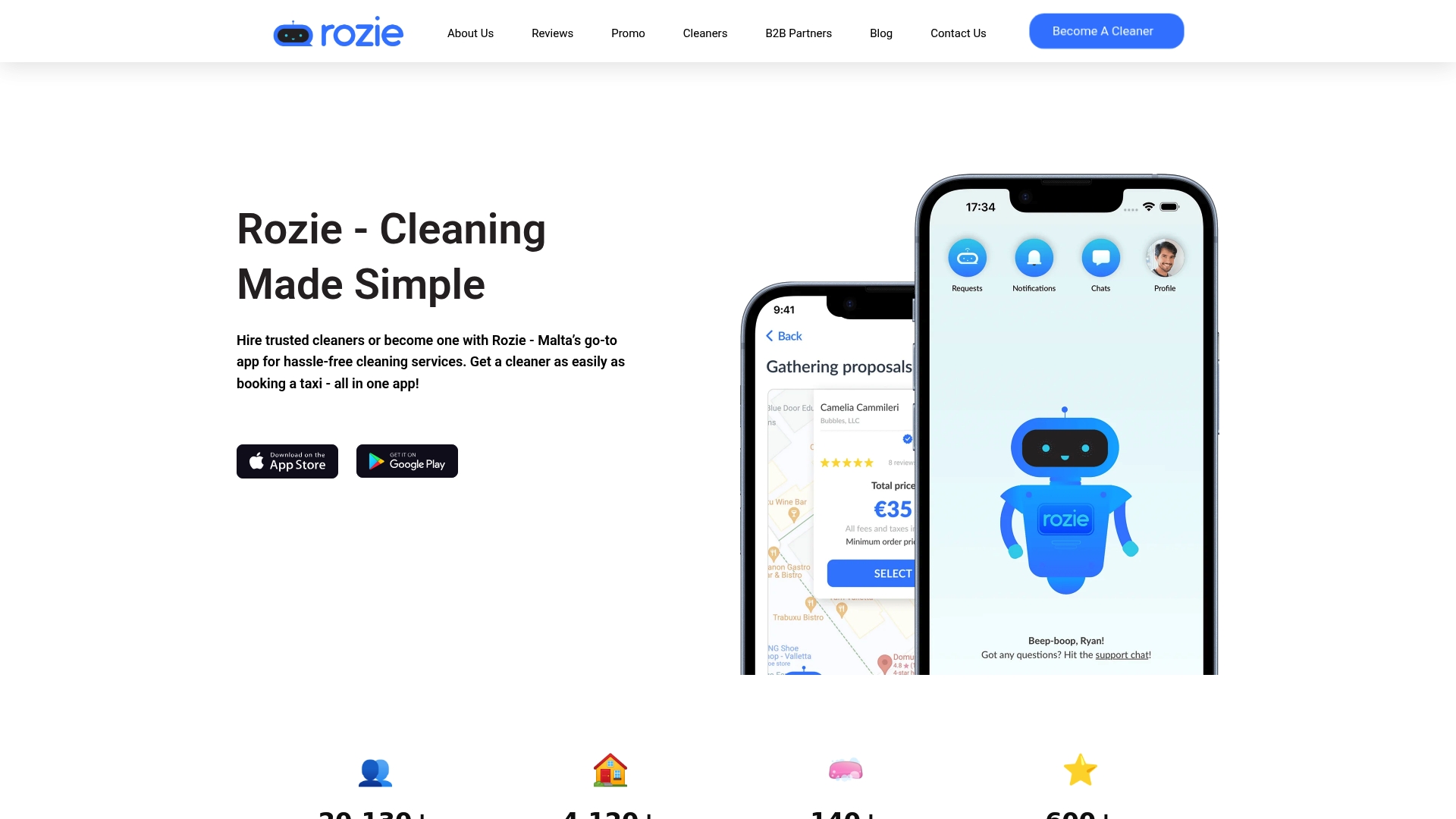
Once your childcare is sorted, the cleaning shouldn’t be the next stress. Rozie connects 29,080+ Malta households with verified cleaners — request a clean, compare offers within minutes, and pick the one you prefer. Every booking includes up to €1,000,000 in professional liability insurance and 7-day payment protection.
Download Rozie — Book in 60 Seconds →
Recommended
- Reliable Maid Service Malta: 2026 Verification Guide
- How to Find Trusted Cleaners in Malta (2026 Guide) | Rozie – Malta’s Best Cleaning Services
- How to Find a Trusted Cleaner Near You in Malta (2026 Guide) | Rozie – Malta’s Best Cleaning Services
- How to Choose a Cleaning Service in Malta (2026 Guide)