

In this guide
How does renting an apartment in Malta work?
What does it cost to secure an apartment in Malta?
How do you protect your deposit when renting in Malta?
Which Malta neighbourhoods suit families and professionals?
Should families choose a furnished or unfurnished apartment?
How should expat families prepare for moving in?
My honest take on renting in Malta
How does renting an apartment in Malta work?
Renting in Malta means signing a private residential lease governed by the Private Residential Leases Act (Cap. 604). You either rent through a real estate agent, who shows you a wider pool of properties and knows the buildings, or rent directly from a landlord and skip the agency fee. Long leases run a minimum of one year; short lets are capped at six months. Every long lease must be registered with the Housing Authority.
The Act was introduced in 2020 to bring order to a fast-rising rental market, and it deliberately leans in the tenant’s favour. For anyone arriving from abroad, the two things that matter most are which route you use to find a place, and making sure the contract is registered. Both decisions shape how protected you are if something goes wrong later.
Renting through an agent or direct from the landlord
An agent gives you local knowledge that is genuinely hard to replicate when you’re new: which buildings have noise or damp problems, which landlords actually answer their phone, and which streets flood in heavy rain. The trade-off is a fee, commonly half to one month’s rent, paid once at signing. Renting direct through landlord-listing platforms removes that fee entirely and is popular with people who already know the island. If you’re flying in with two weeks to find a home, a good agent’s local knowledge often pays for itself.
Long lets versus short lets
Under Cap. 604, a long private residential lease must run for at least one year, while a short let cannot exceed six months and is meant for specific cases such as non-residents staying briefly. If a contract doesn’t clearly state it’s a short let, the law treats it as a long lease. Short lets usually bundle utilities into the monthly price, which simplifies budgeting for newcomers; long lets almost never do. Registration of the lease is the landlord’s legal obligation, but a tenant can register it themselves if the landlord refuses — and an unregistered tenancy puts your protections, and your deposit, at risk. You can read the full statute on Malta’s official legislation portal.
What Cap. 604 requires in your contract.
A registrable long lease must include the names of both parties, the rent and how it is paid, the duration, and an inventory documenting the condition of the property, furniture, and fittings. The law also bans certain clauses, such as automatic-termination clauses, and registration does not validate any forbidden clause that slips in.
What does it cost to secure an apartment in Malta?
Beyond the monthly rent, securing a Malta apartment means budgeting for upfront cash. Expect a security deposit (usually one month’s rent), an agency fee if you use an agent (commonly half to one month’s rent), and your first month’s rent in advance. In practice you often need 2.5 to 3 months’ rent ready at signing. Utilities and any service charge sit on top and are usually excluded from long-let rent.
The headline rent is only part of the picture. For where to actually live and a fuller breakdown of rents by area, see our companion guide on how to find an apartment in Malta; the table below focuses on what it costs to get the keys.
Rent growth has cooled, slowing to roughly 3–6% a year in 2026 after the double-digit jumps of 2021–2024, helped by a wave of new supply. Quality furnished one-beds in walkable central spots stay competitive, though, so don’t expect much bargaining room on a well-priced listing. Where you do have leverage is on a property that has sat unrented for two weeks or more — asking for a small rent reduction, a free first month, or utilities included is reasonable, and many landlords prefer that to a longer empty stretch. For deeper pricing by service and area, our Malta cleaning cost guide and cost-of-living breakdown are useful companions.
Upfront cash to get the keys (on a €1,000/month one-bed)
Through an agent
~€2,500–€3,000
Direct from landlord
~€2,000
Deposit + first month is the baseline; the agency fee is the difference. Going direct saves you the fee but means doing your own homework on the building and landlord.
How do you protect your deposit when renting in Malta?
Malta has no third-party deposit-holding scheme like the UK’s — your landlord keeps the deposit directly. Your protection comes from the law instead: a registered lease plus the mandatory condition inventory that Cap. 604 requires. Document the apartment thoroughly on day one, keep dated records, and have it professionally cleaned at both ends of the tenancy so its condition is clear, documented, and hard to dispute.
This is where most tenants slip up. They focus on finding the apartment, sign, and move on — then twelve months later the landlord has a very different memory of the original condition. The tenants who get their full deposit back reliably aren’t the ones who scrub hardest on the last day; they’re the ones who documented everything at move-in and kept it organised. Make sure your contract actually contains the inventory; you can confirm the registration requirements on the government’s lease-registration page and read your rights via the Housing Authority.
A professional clean at both ends pulls real weight: a move-in deep clean sets a documented, spotless baseline, and an end-of-tenancy clean meets the standard landlords inspect against. Tenants across Malta book verified cleaners through Rozie for exactly this — you post the job once, compare offers from verified cleaners, and accept the one you want. Our move-in cleaning guide and end-of-tenancy checklist walk through what each one covers, and you’ll find more in the cleaning in Malta archive.
Pro tip
Take timestamped photos and a short video walkthrough of every room on your first day, and email any faults to the landlord or agent the same day. Store the files in cloud storage you can reach years later. A dated email is a paper trail that carries real weight if a deposit dispute reaches the Adjudicating Panel.
Key takeaway: In Malta it’s a registered lease plus a signed condition inventory — not a deposit scheme — that gets your money back. Document at move-in, clean at both ends, keep the records.
Which Malta neighbourhoods suit families and professionals?
Malta is small — about 316 square kilometres — but neighbourhoods feel worlds apart. Professionals and the nightlife crowd gravitate to Sliema and St Julian’s for walkability, restaurants, and co-working; families and those wanting a calmer pace often do better in quieter coastal or village localities with more space and parking. The right choice depends less on the apartment and more on daily life: commute, schools, noise, and outdoor space.
For families specifically, prioritise proximity to schools and childcare, a layout with real bedrooms rather than a converted box room, and a quiet, safe street. Coastal favourites like Sliema, St Julian’s, Gzira and Bugibba carry salt air that’s tough on windows and balconies, and Sliema in particular is genuinely hard for parking — a real factor with car seats and a buggy. For a full neighbourhood-by-neighbourhood breakdown (including suburban value spots like Birkirkara, Mosta and Msida, and Gozo), use our honest rental guide, and our Malta for kids guide covers family life in more depth.

Match the area to your life, not the listing photo.
Professionals and younger expats: Sliema and St Julian’s for amenities and short commutes. Families: quieter coastal or village areas for space, parking and calm. Budget-conscious renters: the north (St Paul’s Bay, Bugibba) and suburban towns offer the most value if you don’t mind a longer commute.
Should families choose a furnished or unfurnished apartment?
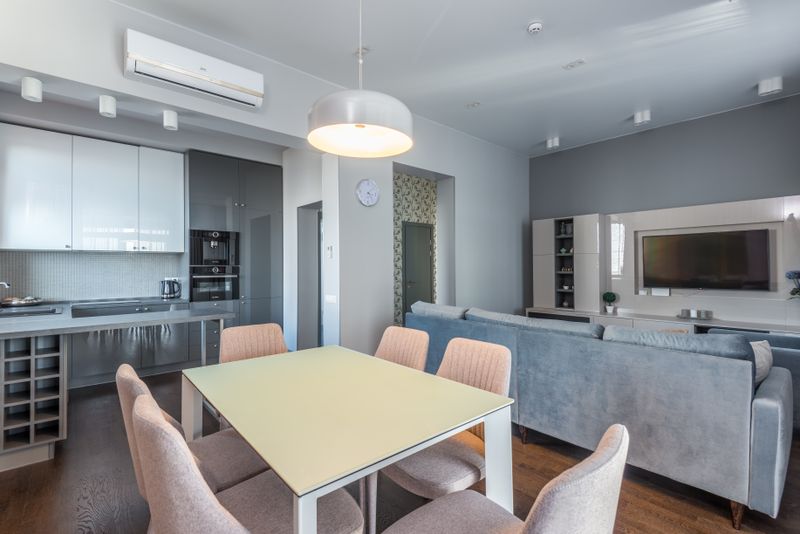
Malta’s rental market skews heavily furnished, driven by a large expat and international-student population who arrive without furniture. Most long lets come fully furnished with essential appliances and air conditioning — which is not optional in a Maltese summer. For a family arriving from abroad, furnished is usually the practical choice; the catch is that some “furnished” listings include tired furniture you’ll want replaced, so inspect before you sign.
When you compare family-suitable apartments, the details that matter day to day are easy to overlook on a viewing. Check these before committing:
- Air conditioning in every bedroom, not just the living room — Maltese summers make this essential for children’s sleep.
- A balcony or outdoor space, which adds real daily value in Malta’s climate.
- Dedicated parking or a permit zone, especially in Sliema and St Julian’s where street parking is scarce.
- Water heater type — older flats with electric boilers can drive up utility bills.
- Lift access in apartment blocks, which matters a lot with strollers, shopping, or older family members.
- Signs of damp or mould in bathrooms and wardrobes — Malta’s humidity and poor ventilation make this common, and it’s far easier to avoid than to fix.
Lease renewals are typically negotiated two to three months before expiry. During a long lease, rent can be increased only once a year and is capped according to an official property index — commonly cited as a maximum of around 5% — so understanding your lease type protects you from surprise hikes.
How should expat families prepare for moving in?
Reaching the lease-signing stage is a win, but the work that actually protects you happens in the details just before and after you move in. A short, disciplined routine on day one saves a lot of money and stress a year later. Here’s the sequence that works:
- Do a second viewing. Visit once in the morning for light, and again in the evening to gauge noise from neighbours and traffic.
- Test every appliance. Run the washing machine, switch on each AC unit, and run all the taps. Note any faults in writing before signing.
- Read the lease in full. Pay attention to clauses on subletting (which needs the owner’s written consent), pets, and who handles minor repairs — and check the condition inventory is attached.
- Document the apartment’s condition. Photos and video on day one are your best protection, given that the deposit sits with the landlord.
- Book a professional move-in clean. A spotless start sets a documented baseline before your own belongings arrive; our move-in cleaning guide covers what a thorough one includes.

Pro tip
Plan all your viewings for weekdays. Agents rarely work weekends in Malta, so a listing you love on a Friday can be signed by someone else before Monday. Line up several viewings in one weekday block to compare quickly while they’re still available.
My honest take on renting in Malta
I’ve watched a lot of people go through the Malta rental process, and the most consistent mistake I see is underestimating the deposit situation. People fall in love with the apartment, sign, and mentally move on — then at move-out the landlord remembers the place very differently. The tenants who get their deposits back aren’t the ones who clean hardest on the last day. They’re the ones who documented everything on move-in day, kept those records organised, and brought professional cleaners in at both ends. That combination is close to bulletproof.
I’m also sceptical of the blanket advice to “just go direct, skip the agent.” It works brilliantly if you already know Malta and have time to sift listings. But if you’re arriving from abroad with two weeks to find a home, a good agent who knows which buildings have noise issues, which landlords are responsive, and which streets flood in heavy rain is worth every cent of that shared fee. Honest local knowledge saves you from expensive mistakes.
The single best piece of advice I can give families: prioritise location and building quality over apartment finishes. You can replace a sofa. You can’t replace a 40-minute commute or a landlord who ignores maintenance calls.
— Alex
Settling in: book your move-in clean
Once you’ve signed, the last thing you want is to spend your first weekend scrubbing someone else’s kitchen — or, a year later, scrambling to get the apartment spotless before a deposit inspection. The traditional route means scrolling Facebook groups, calling around, and chasing vague quotes, hoping whoever turns up does a proper job.
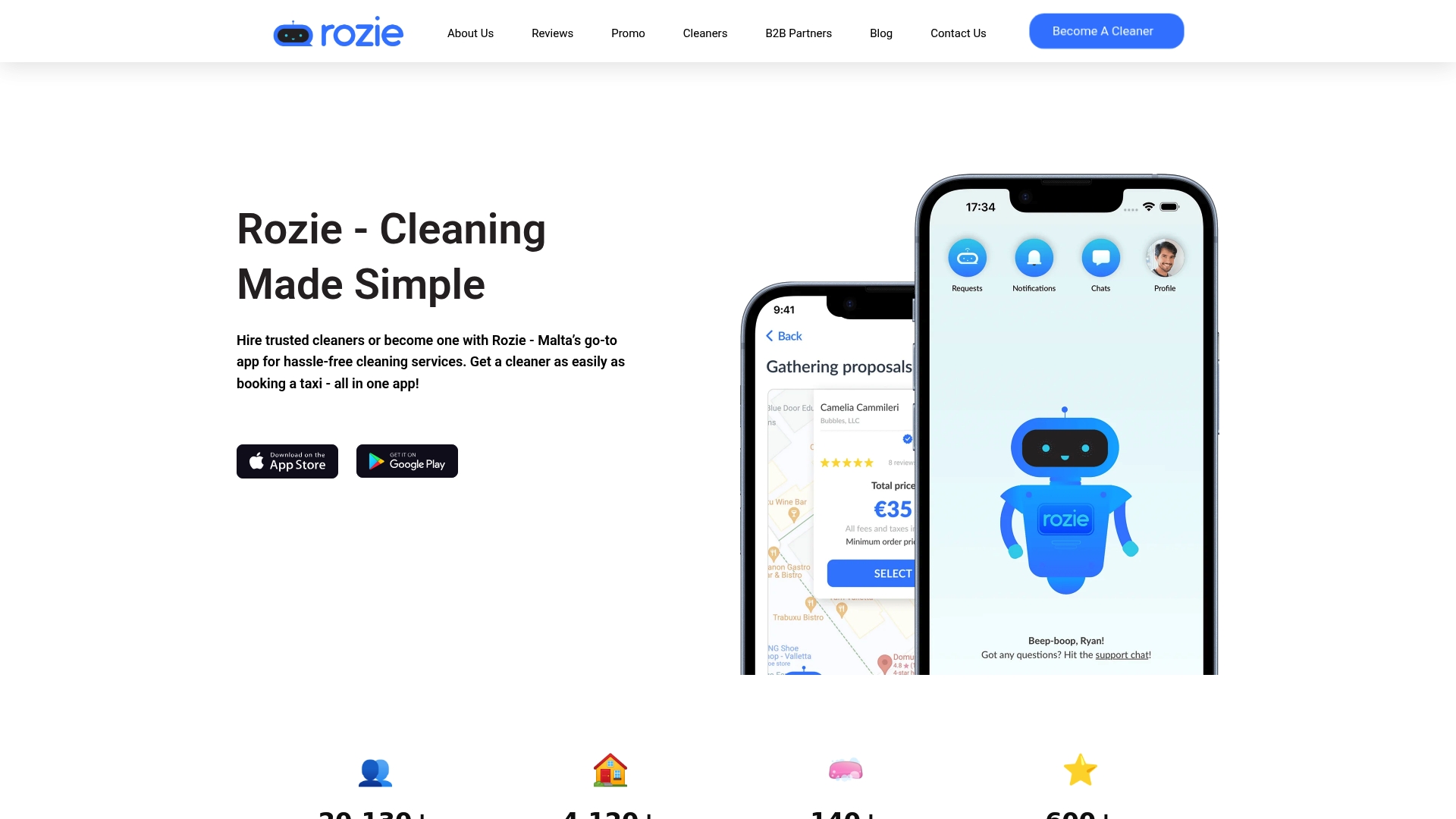
Rozie removes that friction. You post the job once — a move-in deep clean or an end-of-tenancy clean — pick your date and any extras, and verified cleaners send you offers with the exact price within minutes. You compare offers and accept the cleaner you want, with 7-day payment protection and cover up to €1,000,000 per occurrence in professional liability insurance, underwritten by Lloyd’s Insurance Company S.A., on every booking.
Here’s the whole booking process in under 60 seconds:
Compare Cleaning Offers in Minutes →
Frequently asked questions
How much does it cost to rent an apartment in Malta?
Rents vary widely by area. A one-bedroom in Sliema or St Julian’s typically runs €1,000–€1,500 a month, while the north (St Paul’s Bay, Bugibba) and suburban towns can offer similar units from around €700. On top of rent, budget 2.5–3 months’ rent in upfront cash to cover the deposit, any agency fee, and the first month.
Do I have to register my rental lease in Malta?
Yes. Under the Private Residential Leases Act (Cap. 604), all private residential leases must be registered with the Housing Authority. The obligation falls on the landlord, but a tenant can register it if the landlord won’t. Without registration, statutory notice periods and rent-increase limits don’t apply, and the risk of losing your deposit rises.
How do I protect my deposit when renting in Malta?
Malta has no independent deposit-holding scheme, so the landlord keeps your deposit. Your protection is a registered lease plus the mandatory condition inventory, backed by your own dated photos and video at move-in. A professional clean at move-in and end-of-tenancy keeps the condition clear and defensible — many tenants book a verified cleaner on Rozie for exactly this.
What is the minimum lease length in Malta?
A long private residential lease must run for at least one year under Cap. 604. Short lets are capped at six months and are intended for specific cases, such as non-residents staying briefly. If a contract doesn’t clearly identify itself as a short let, it is treated as a long lease.
Can my landlord increase the rent during my lease?
During a long lease, rent can be increased only once a year, and the increase is capped according to an official property index — commonly cited as a maximum of around 5%. Larger or more frequent increases during the contract are not permitted, which is one reason registering the lease matters.
Are apartments in Malta usually furnished?
Yes. Malta’s market skews heavily furnished, with most long lets including appliances and air conditioning. Short-term furnished rentals are also widely available and usually include utilities in the price. Inspect the furniture quality before signing, as “furnished” can sometimes mean tired or worn pieces.