


In this guide
What’s the real difference between Sliema and St Julian’s?
What is Sliema like to live in?
What is St Julian’s like to live in?
How much does it cost to rent in each?
Getting around: parking and transport
Which area suits families vs young professionals?
What’s the real difference between Sliema and St Julian’s?
Sliema and St Julian’s blend into each other along a single seafront promenade, so the difference is one of degree rather than distance. Sliema is quieter, more residential, and built around shopping and the waterfront. St Julian’s is busier and more nightlife-driven, with Malta’s main party district (Paceville) at one end and an upmarket marina (Portomaso) at the other.
Both towns sit on Malta’s northeast coast, face the open sea, and are heavily international — expats make up a large share of residents in each. Locals who have lived in both often say the line between them is invisible: the promenade runs unbroken from Sliema’s Tigné Point to Spinola Bay in St Julian’s, and the walk takes roughly 20 minutes. Where they part ways is atmosphere and what surrounds your front door.
What is Sliema like to live in?
Sliema is Malta’s most established coastal town — a walkable grid of shops, cafés, and apartment blocks wrapped around a seafront promenade. It has two distinct sides: a busy waterfront facing Valletta, and quieter residential back streets a block or two inland. For most residents it strikes a balance between convenience and calm.
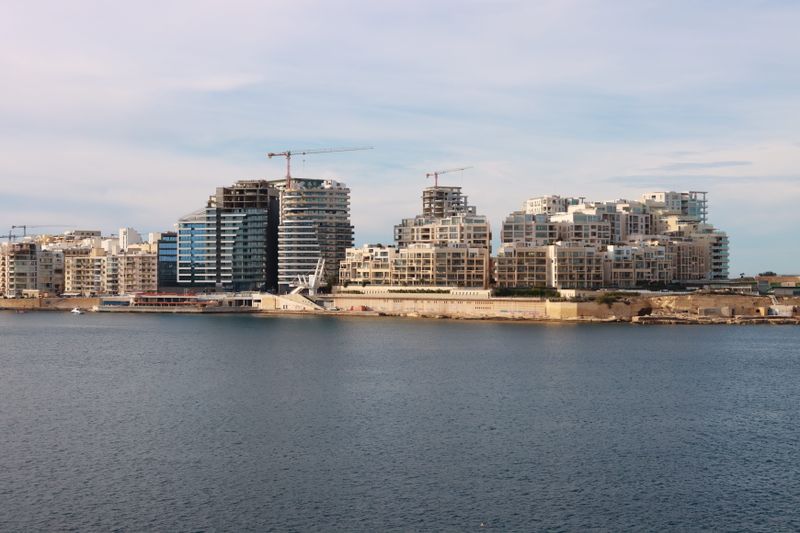
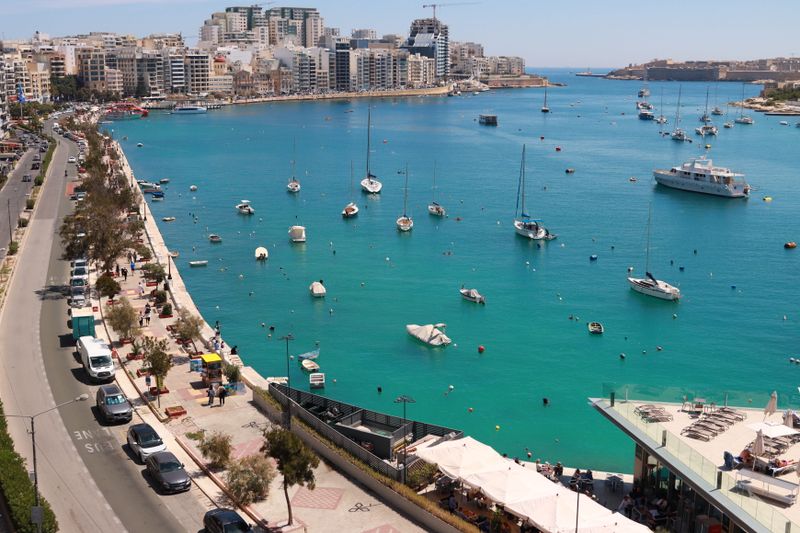
The waterfront runs along Tower Road and the Sliema Front, and the modern end of town centres on Tigné Point, home to The Point — Malta’s largest shopping mall — and a cluster of contemporary residential towers. The ferry to Valletta takes about 15 minutes and is the most enjoyable commute on the island. There is no real sandy beach: Sliema’s swimming is off roughly 3.5 km of rocky coastline with ladders, plus lidos like Exiles, with a small sandy patch at Balluta Bay on the St Julian’s border.
For families, Sliema tends to be the safer pick. Independence Gardens is a seafront green space with benches, shade, and a children’s playground (and the well-known cat village locals feed daily). The main downside is shared with the whole corridor: construction is relentless, and jackhammering from 7am on weekdays is common. Sliema suits people who want walkable amenities and the seafront without Paceville on their doorstep.
What is St Julian’s like to live in?
St Julian’s is the corridor’s high-energy half. It runs from the picturesque Spinola Bay and the upscale Portomaso marina to Paceville, Malta’s nightlife capital. Living here means being close to the island’s best restaurant scene and many of its iGaming and fintech offices — with the trade-off of more noise and a heavier short-let presence.
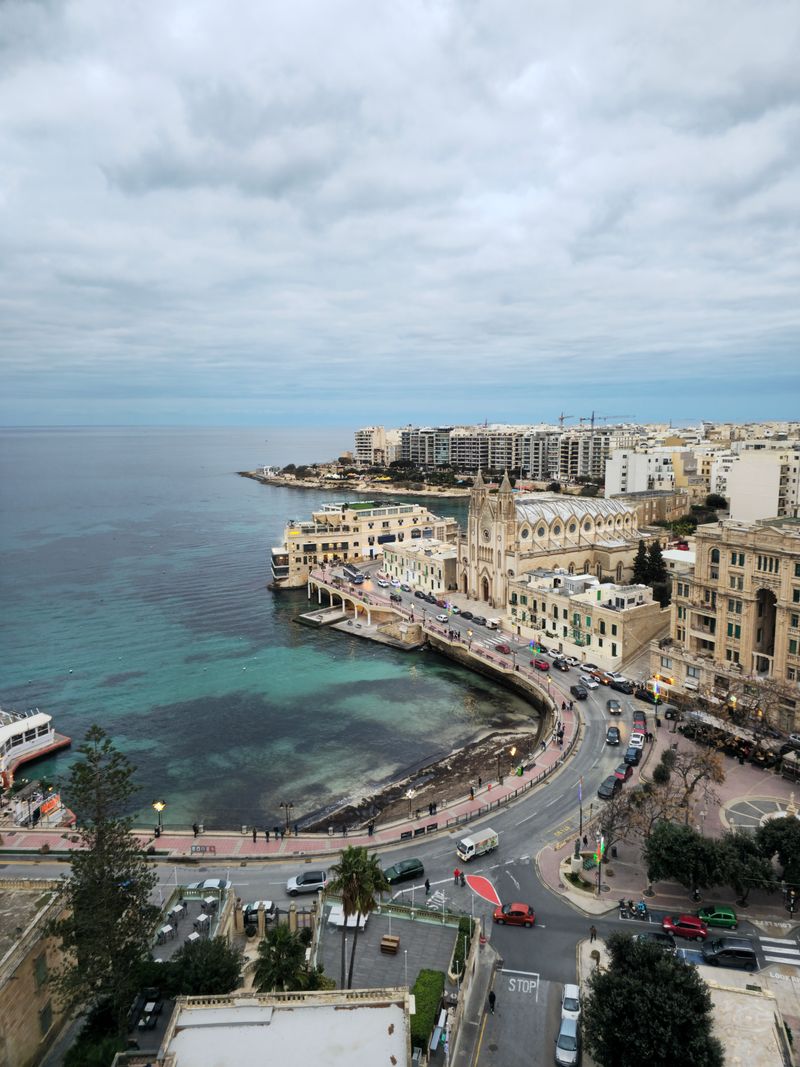
Spinola Bay is the postcard centre — the Love monument, fishing boats, and restaurants lining the water. Just behind it, Portomaso wraps a marina with bars and restaurants beneath the 23-floor Portomaso Business Tower, Malta’s tallest building, and the Hilton. Then there is Paceville: a compact district packing around 40 bars and clubs, a casino, a public beach, and a shopping complex into a handful of streets. St George’s Bay is a rare sandy (man-made, Blue Flag) beach, and Balluta Bay adds the art-nouveau Balluta Buildings and a small beach.
St Julian’s is essentially two places in one: party-focused Paceville and the more upmarket Portomaso and Spinola. The noise caveat matters — near Paceville, weekend nights are loud and short-let neighbours can be unpredictable. Look a few streets back, or toward Portomaso, if you value sleep. The area suits younger residents, nightlife lovers, and anyone working in the Spinola or Portomaso office cluster.
How much does it cost to rent in Sliema vs St Julian’s?
Sliema and St Julian’s are the two most expensive places to rent in Malta, and prices are broadly similar between them. A furnished one-bedroom in either typically runs €1,100–€1,600 per month, and a two-bedroom €1,400–€2,200. The bigger price swings come from micro-location: a Portomaso or seafront flat costs far more than one a few streets inland.
Both areas carry roughly a 15–20% premium over the island average, and nearly all apartments in the corridor come furnished, which is built into the price. Budget for parking on top: a garage space runs €80–€120 a month, and street parking is a daily battle in both towns. Within St Julian’s specifically, Portomaso and Spinola sit at the premium end while flats around Paceville can be cheaper — but noisier. For the full picture on deposits, contracts, and where to search, see our guides on how to find an apartment in Malta and what it really costs to live in Malta.
Pro tip
Before you sign anything, make sure the lease is registered. By law, residential leases in Malta must be registered with the Housing Authority within 10 days of commencement under the Private Residential Leases Act (Cap. 604). Registration protects both tenant and landlord — an unregistered contract leaves you with far weaker legal footing.
Getting around: parking and transport
Both areas are among the most walkable in Malta, so many residents go car-free. Buses are frequent to Valletta and the airport, a ferry links Sliema to the capital in about 15 minutes, and residents with a personalised Tallinja card travel free — but if you bring a car, expect a daily fight for parking in either town.
Day routes to Valletta are frequent, and Tallinja Direct airport services connect the corridor (TD2 runs to St Julian’s; TD3 links the airport via Gżira, Sliema and St Julian’s). At night, route N2 serves St Julian’s and Paceville while N3 covers Sliema, and the demand-responsive Tallinja On Demand minibus runs on Friday, Saturday and Sunday nights across Sliema, San Gwann, St Julian’s and Swieqi. For the full network, the official Malta Public Transport site has live routes and timetables, and our guide to Malta’s transport areas and zones breaks down what serves each neighbourhood. One practical note: rental e-scooters were banned from public streets in 2024, so don’t count on them as a backup.
Which area suits families vs young professionals?
As a rule of thumb, Sliema leans family-and-professional while St Julian’s leans young-and-social. Families tend to prefer Sliema’s quieter streets and proximity to well-regarded school catchments; nightlife-oriented residents and iGaming workers gravitate to St Julian’s and its office cluster.
Families lean Sliema.
Quieter residential back streets, the Independence Gardens playground, and strong state-school catchments — Sliema, St Julian’s and nearby Swieqi are among the better regarded. Our guide to the best schools in Malta covers catchments and international options.
Nightlife and fitness crowd lean St Julian’s.
Paceville and the Spinola restaurant scene sit on your doorstep, and gyms and CrossFit boxes cluster around the corridor too — see our honest guide to gyms and fitness in Malta.
iGaming and fintech workers lean St Julian’s.
Many offices sit in Portomaso and Spinola, so living nearby cuts the commute to minutes — a real advantage given Malta’s traffic.
What is a coastal apartment actually like to maintain?
Living on Malta’s northeast coast is beautiful, but seafront flats in both Sliema and St Julian’s take a beating from the elements. Salt air, periodic Saharan dust, hard water, and winter humidity mean windows, balconies, and bathrooms need more attention here than almost anywhere else in Europe.
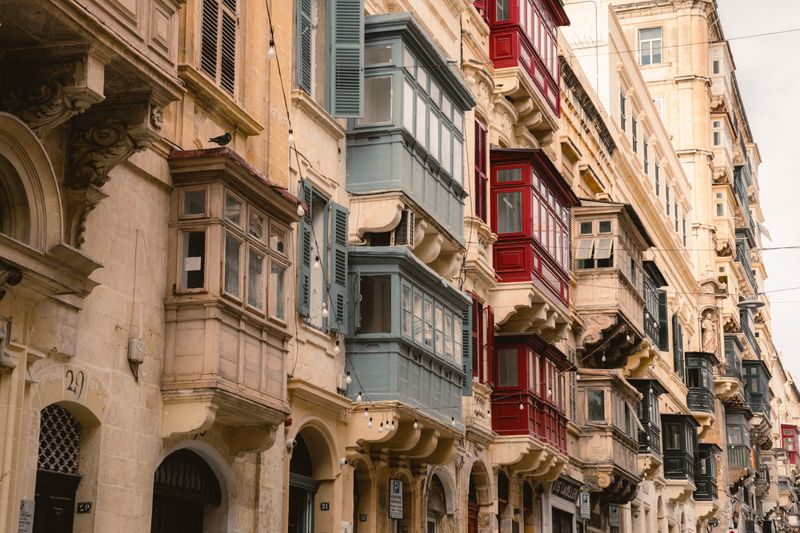
Salt spray coats windows, balcony railings, and metal fittings on seafront blocks, and the periodic Saharan dust events known locally as il-qilla film every outdoor surface several times a year. Malta’s tap water is hard — roughly 200–600 PPM calcium carbonate according to the Water Services Corporation — so limescale builds quickly on taps, glass, and kettles. Humidity peaks between October and February and drives mould in bathrooms and behind wardrobes pushed against exterior walls. If you live within a few hundred metres of the sea, budget for more frequent inside-window and balcony cleaning than you would inland.
Keeping a seafront flat presentable is a genuine recurring chore, and it is one many residents simply outsource. A marketplace like Rozie lets you post the job once and compare offers from verified cleaners — handy when you would rather spend Saturday on the promenade than scrubbing salt off the balcony glass.
Finding a reliable cleaner in Malta the traditional way usually means scrolling Facebook groups, making phone calls, chasing quotes, and hoping whoever turns up does a decent job.
Rozie was built to remove that friction. You pick a date, choose the extras you need — inside windows, balcony, oven, fridge — and verified cleaners send you offers with the exact price before you accept. Every booking is backed by 7-day payment protection and up to €1,000,000 in professional liability insurance underwritten by Lloyd’s Insurance Company S.A.
Here is the whole booking process in under 60 seconds:

Compare Cleaning Offers on Rozie ->
So which should you choose?
Choose Sliema if you want a calmer, more residential base with great shopping and the best ferry link to Valletta. Choose St Julian’s if you want nightlife, the marina scene, or a short commute to the iGaming corridor — and you don’t mind more noise.
In practice, Sliema fits families, remote workers who want quiet, and anyone who prioritises shopping and the seafront. St Julian’s fits younger residents, busy social calendars, and Spinola or Portomaso office workers — ideally a few streets back from Paceville, or toward Portomaso, if sleep matters. If you genuinely can’t decide, remember the two blend together: living on the border around Balluta Bay puts a foot in both worlds. The honest caveat is that both share Malta’s two big drawbacks — constant construction noise and scarce parking — so weight those heavily against the postcard views.
Key takeaway: Pick Sliema for calm, shopping, and family life; pick St Julian’s for nightlife, the marina, and the shortest iGaming commute. The Balluta Bay border between them is the natural compromise.
Frequently asked questions
Is Sliema or St Julian’s better for families?
Sliema is generally the better family choice: it has quieter residential streets, the playground at Independence Gardens, and strong state-school catchments, while St Julian’s is louder and more nightlife-focused.
Which is cheaper to rent, Sliema or St Julian’s?
Rents are broadly similar — a furnished one-bedroom in either runs about €1,100–€1,600 a month. The bigger difference is micro-location: Portomaso and seafront flats cost far more than apartments a few streets inland.
Is St Julian’s too noisy to live in?
It depends on where. Paceville is loud on weekend nights and has a heavy short-let presence, but Spinola, Portomaso, and streets further back are much calmer. Look away from Paceville if quiet matters.
Can you live in Sliema or St Julian’s without a car?
Yes. Both are highly walkable, buses to Valletta and the airport are frequent, and the Sliema ferry reaches the capital in about 15 minutes. Residents with a personalised Tallinja card travel free on buses.
How far is Sliema from St Julian’s?
About a 20-minute walk along the seafront promenade, which runs unbroken from Sliema’s Tigné Point to Spinola Bay in St Julian’s.
How do I find a cleaner for my Sliema or St Julian’s apartment?
On a marketplace app like Rozie you post your cleaning request once, verified cleaners send competitive offers with the exact price within minutes, and you compare before accepting — with payment protection and insurance on every booking. Coastal flats often add inside-window and balcony cleaning as extras. Browse more local guides on the Cleaning in Malta blog.