


In this guide
How much does a family of four need to live in Malta in 2026?
How much is rent for a family home in Malta?
What do schools and childcare cost in Malta?
How much are groceries and utilities for a family in Malta?
Do families need a car in Malta?
What about healthcare, benefits, and tax for families in Malta?
Sample monthly budget for a family of four in Malta (2026)
How much does a family of four need to live in Malta in 2026?
Most families of four in Malta land between €2,400 and €8,500 net per month in 2026. A family of four’s monthly expenses range €4,500–€7,000 in widely cited estimates — a fair midpoint that assumes some private education or a central-area rent. State-school families in suburban towns run well below it.
As an income target, a combined gross household income of roughly €65,000–€88,000 per year covers the comfortable middle of that range before any school fees. Add international school fees for two children and the realistic target moves into six figures — unless your employment package covers the fees, which in Malta it often can. Housing takes 30–40% of a typical family budget, food around 15%, and schooling anywhere from zero to more than a third, which is why this guide treats the school decision first, not last.
This article covers the money. For the day-to-day logistics of raising children on the island — school runs, the three-month summer gap, maternity leave — our working parent’s survival guide to Malta covers that side in detail, and if you are moving alone or as a couple, the full Malta cost of living guide has those budgets.
How much is rent for a family home in Malta?
A two-bedroom family apartment in Malta costs €1,000–€1,500 per month in suburban towns like Birkirkara, Mosta, and Naxxar, and €1,400–€2,200 in Sliema, St Julian’s, and Gzira in 2026. Where you rent sets roughly 40% of your total budget — and, as covered below, it also sets your child’s state-school catchment.
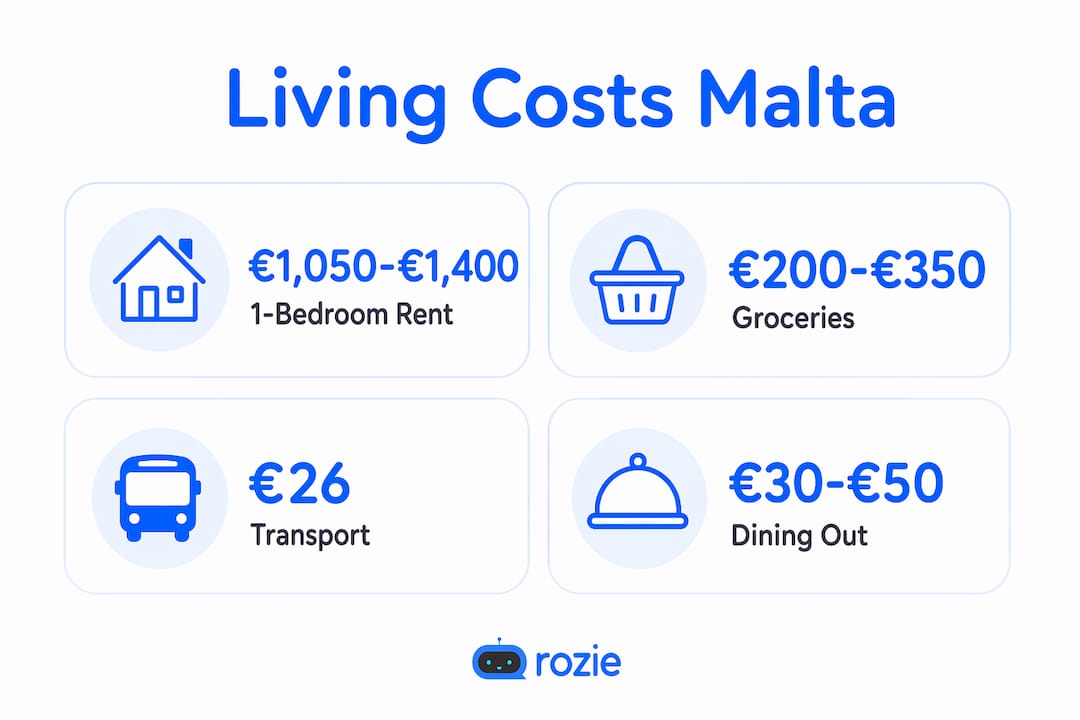
One-bedroom apartments in Sliema and St. Julian’s already run €1,050–€1,400 per month, and family-sized units climb from there. Features push prices up fast: a sea view, a private balcony, or a garage adds €100–€300 monthly on top of the base rent — and in parking-starved central towns, the garage is usually worth it. Swieqi and Madliena, the quiet zone ten minutes inland from St Julian’s and closest to the main international schools, sit between the central and suburban ranges.
Whichever area you choose, every private lease must be registered with the Housing Authority under the Private Residential Leases Act (Cap. 604). Confirm your landlord has actually done it — a registered contract is what protects your deposit at the end of the tenancy. For the search itself, from agency fees to scam warnings, see how to find an apartment in Malta.
Pro tip
State-school placement is assigned by catchment area, so your address effectively chooses your child’s school. Shortlist the school before you sign the lease — registrations for a September start typically open in February and March.
What do schools and childcare cost in Malta?
Schooling in Malta costs anywhere from €0 to about €18,000 per child per year. State schools are free for residents — including free textbooks and free school transport — church schools charge only an annual donation, and the main international schools run roughly €8,000–€18,000 per child depending on the school and grade.
Malta spends 7.2% of GDP on education, the highest share in the EU according to the National Statistics Office, and the free state track is genuinely usable: compulsory schooling runs from age 5 to 16, with instruction in both Maltese and English. Church schools allocate places by ballot, with applications opening around November for the following year. On the paid track, Verdala International School (IB) and QSI International School (American curriculum) anchor the international segment. Our guide to the best schools in Malta compares the four tracks, fees, and application windows in detail.
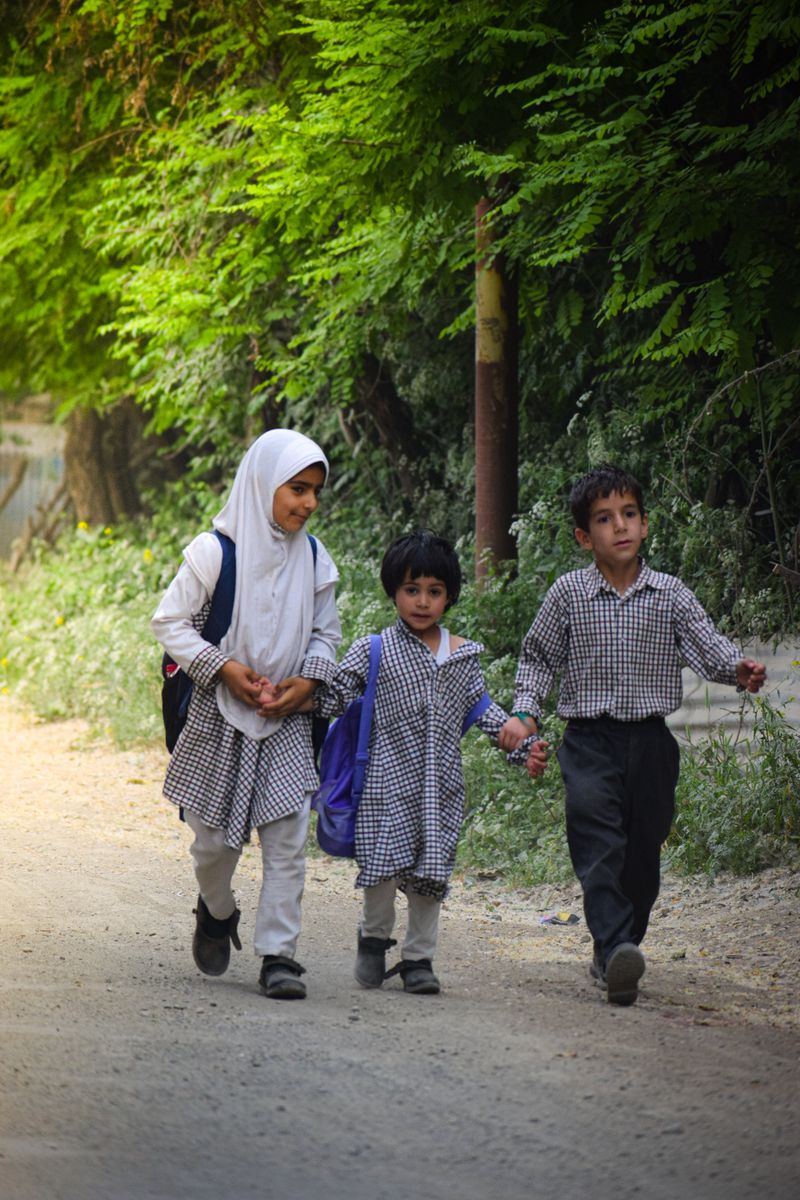
Childcare is the pleasant surprise. Malta’s Free Childcare Scheme covers children aged 3 months to 3 years at 186 registered centres across Malta and Gozo, provided both parents work or study. You still pay small registration fees (typically €50–€150) and daily lunch costs, and private nurseries outside the scheme charge €330–€500 per month — with an income-tax deduction of up to €2,000 per child per year available on private fees. The full picture, including FES centres and extended hours, is in our childcare in Malta guide.
Negotiate school fees before salary.
Many iGaming and fintech employers in Malta subsidise international school fees — a benefit worth €15,000–€20,000 a year that costs the company less than an equivalent pay rise. Raise it before you accept the offer, not after.
Key takeaway: The school track is the single biggest lever in a Malta family budget. Two children in state school cost €0 in fees; the same two children in international school cost €16,000–€32,000 a year.
How much are groceries and utilities for a family in Malta?
Groceries for a family of four in Malta run €600–€800 per month, and utilities average roughly €120–€250 depending on season and home size. Local produce, bread, and dairy are genuinely affordable; imported goods cost 20–40% more than on the EU mainland, because freight costs pass straight to the shelf price.
The practical fix is a split shop: moving staples like dairy, pasta, frozen vegetables, and cleaning products to the budget chains cuts a weekly basket by 20–30%, while mid-tier stores keep the edge on fresh meat and fish. The Malta supermarket guide maps all six chains, and the Marsaxlokk Sunday market and Ta’ Qali farmers market fill the freshness gap cheaply.

Utilities are where new families get blindsided. ARMS bills electricity bi-monthly on tiered rates, so July and August air conditioning arrives as one large bill in September — a one-bedroom’s summer electricity alone can hit €200–€350 a month, and family-sized homes scale up from there. Set aside a summer buffer; our guide to surviving summer in Malta breaks down the tiered pricing in full.
Pro tip
Check Form H before your first summer. If your landlord has not filed Form H (Declaration of Number of Persons) with ARMS, your household is billed at the higher default tariff instead of the residential rate — for a family of four, the difference over a year is substantial.
One more line most budgets miss: upkeep. Malta’s tap water carries 200–600 PPM of calcium carbonate (Water Services Corporation), so kettles, washing machines, and shower screens need regular descaling, and humidity between October and February pushes mould into bathrooms and wardrobes. Between the school runs and the limescale, many working parents hand the heavy cleaning to a professional — a fortnightly family clean typically runs €55–€85 per visit (see typical cleaning prices in Malta), and on Rozie, verified cleaners send offers showing the exact price before you accept.
Do families need a car in Malta?
Public buses in Malta are free for residents who hold a personalised Tallinja card — including a child card for ages 4–10, with under-4s riding free — yet most families still run one car, because school runs, after-school activities, and the weekly shop rarely fit bus timetables. Budget €250–€450 per month all-in for a family car.
If a relocation guide quotes a €26 monthly bus pass, it is out of date. Since October 2022, every resident with a personalised Tallinja card travels free on all day and night routes across Malta and Gozo; the only cost is a one-off card fee (€25 for adults, €5 for children). The catch is coverage and speed: the network is solid along the Valletta–Sliema–St Julian’s corridor and slow everywhere else, and a 5 km school run by car can still take 40 minutes in morning traffic. Ride-hailing fills gaps, but cross-locality trips at €15–€25 each add up quickly. Convenience decisions — renting far from school and work, then patching the gap with taxis — quietly add €300–€500 a month beyond whatever the cheaper rent saved. For how the network actually works, see the Malta public transport guide.
Family transport in Malta: two realistic monthly scenarios
Car-free (Tallinja + occasional Bolt)
€50–€150
One family car, all-in
€250–€450
Free buses cover the central corridor well. The car pays for the school run, the big shop, and everything the timetable does not reach.
What about healthcare, benefits, and tax for families in Malta?
Public healthcare in Malta is free at the point of use for residents covered by Maltese social security, and the public system is free for EU residents. Many expat families still add private cover — roughly €1,500–€3,000 per year for a couple, more with children on the policy — mainly for faster specialist access.
Private GP visits cost around €40–€60 and specialist consultations €25–€120, so even paying out of pocket is manageable for routine care. Families should also register for the means-tested Children’s Allowance through the Department of Social Security — the amount depends on household income, but it is worth claiming. On tax, two things matter more than most guides admit. First, Malta’s income tax has separate, more favourable “parent rates” with a wider tax-free band for working parents — confirm your employer applies the right computation. Second, for higher earners, Malta’s residence- and remittance-based tax rules can matter far more than any rent saving: a one-off session with a Maltese tax advisor in your first year is the least glamorous line in this budget and often the highest-return one.
Sample monthly budget for a family of four in Malta (2026)
Two realistic scenarios for 2026: a state-school family in a suburban two-bedroom spends roughly €2,400–€3,600 net per month, while an international-school family in central Malta spends €5,000–€8,500. The line-by-line breakdown below is built from current rental ranges and the verified figures across our Malta guides.
Treat the totals as planning brackets, not quotes — your mix of localities, schools, and habits will land somewhere between the columns. The two levers that move the number most are visible at a glance: the school row and the rent row. Everything else is fine-tuning.
Key takeaway: Decide the school track and the locality first, in that order. Once those two rows are fixed, the rest of a Malta family budget is predictable to within a few hundred euros a month.
How do busy Malta families keep the household running?
Between two jobs, the school run, and a home that Malta’s dust and hard water re-coat weekly, finding a reliable cleaner the traditional way — Facebook groups, phone calls, chasing quotes — is a part-time job nobody applied for.
Rozie was built to remove that friction for anyone settling into apartment life in Malta. You post the job once, pick a date and any extras, and verified cleaners send you offers with the exact price before you accept — typically within 5–15 minutes. Every booking carries 7-day payment protection and up to €1,000,000 in professional liability insurance underwritten by Lloyd’s Insurance Company S.A., with Rozie covering the deductibles so you pay no excess.
Here is the full booking process in under 60 seconds:
See how simple it is to book cleaners online in Malta, or browse more local home guides in the cleaning in Malta archive.
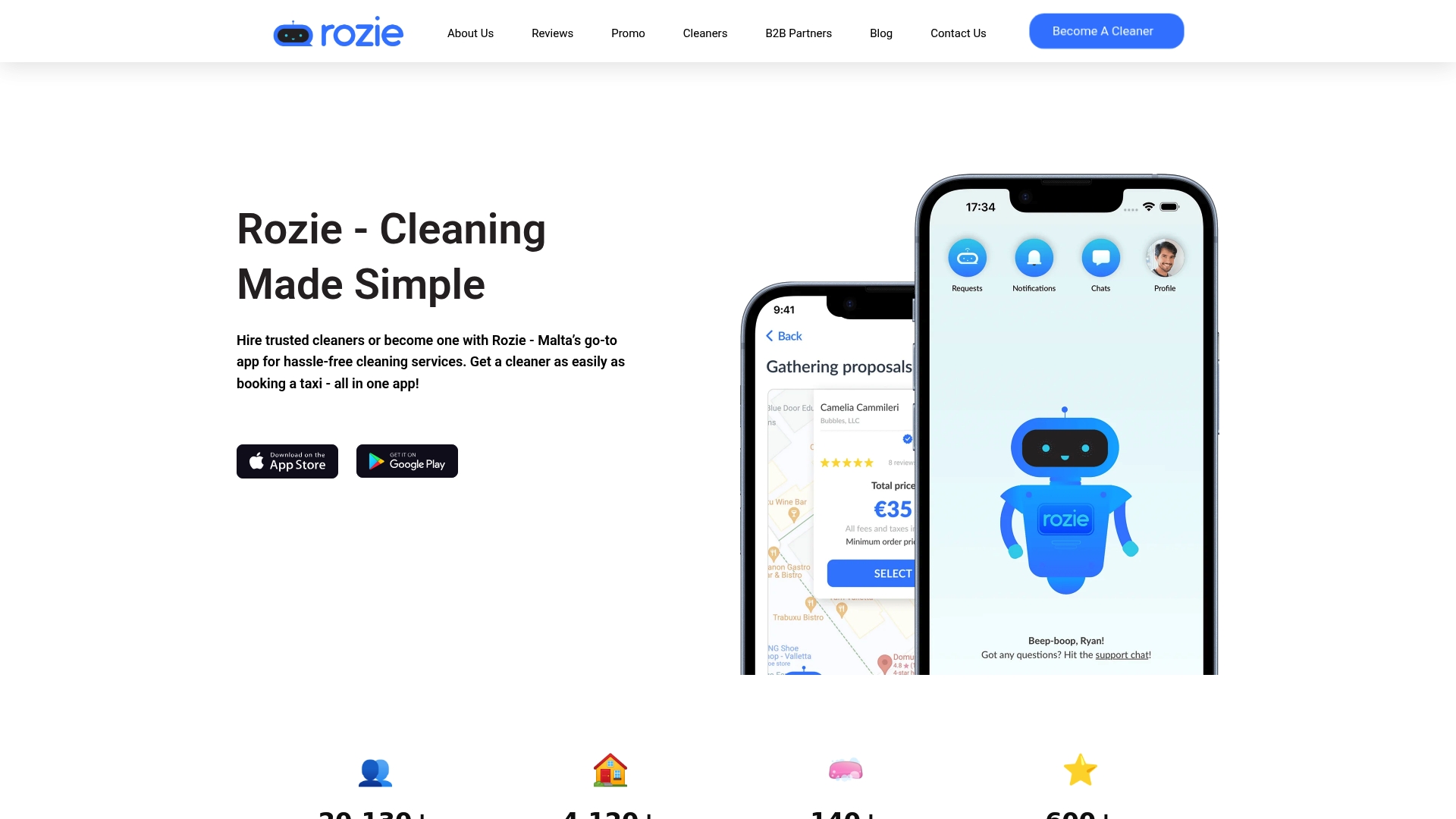
Compare Cleaning Offers on Rozie ->
Frequently asked questions
How much money does a family of four need per month in Malta?
A family of four needs roughly €2,400–€3,600 net per month with state schools and a suburban rent, and €5,000–€8,500 with international schooling and a central address. As a household income target, plan for about €65,000–€88,000 gross per year before any international school fees.
Is school free in Malta for expat children?
Yes. State schools are free for residents from kindergarten through secondary, including free textbooks and free school transport, with placement assigned by catchment area. Church schools charge only an annual donation but allocate places by ballot, and international schools cost roughly €8,000–€18,000 per child per year.
Is childcare free in Malta?
Childcare is free for children aged 3 months to 3 years at 186 registered centres under Malta’s Free Childcare Scheme, provided both parents work or study. Families still pay small registration and lunch costs, and private childcare outside the scheme qualifies for an income-tax deduction of up to €2,000 per child per year.
Do families need a car in Malta?
Usually yes. Buses are free for residents with a personalised Tallinja card, but school runs, after-school activities, and weekly shops rarely fit bus timetables, so most families run one car at an all-in cost of €250–€450 per month.
Is Malta expensive for families compared with the rest of Europe?
Malta is generally cheaper than the UK and most of Western Europe for rent and dining out, while imported goods cost 20–40% more and car insurance can be comparable or higher. Overall, family costs are moderate — the decisive variables are the school track you choose and how central you live.
How do Malta families keep home upkeep affordable?
Regular light cleaning beats occasional heavy cleaning in Malta’s dusty, hard-water climate. A fortnightly professional clean for a family apartment typically costs €55–€85 per visit, and on Rozie you post the job once and compare exact offers from verified cleaners before you accept, with 7-day payment protection on every booking.