

This checklist covers the twelve things that actually matter in your first seven days, from the SIM kiosk in the arrivals hall to why your apartment can feel freezing in January despite mild temperatures. Work through it roughly in order and your first month will feel far less chaotic.
In this guide
1. Get a local SIM card the moment you land
2. Book short-term accommodation before signing any lease
3. Start apartment viewings in your first three days
4. Register with Identità as soon as you have a lease
5. Order broadband on the day you sign your lease
6. Sort out your transport (and get free bus travel)
7. Pack a UK-style plug adapter
8. Learn the cultural rules before you leave the house
9. Take Malta’s sun seriously from day one
10. Prepare your home for winter and no central heating
11. Book popular attractions before your first week ends
1. Get a local SIM card the moment you land
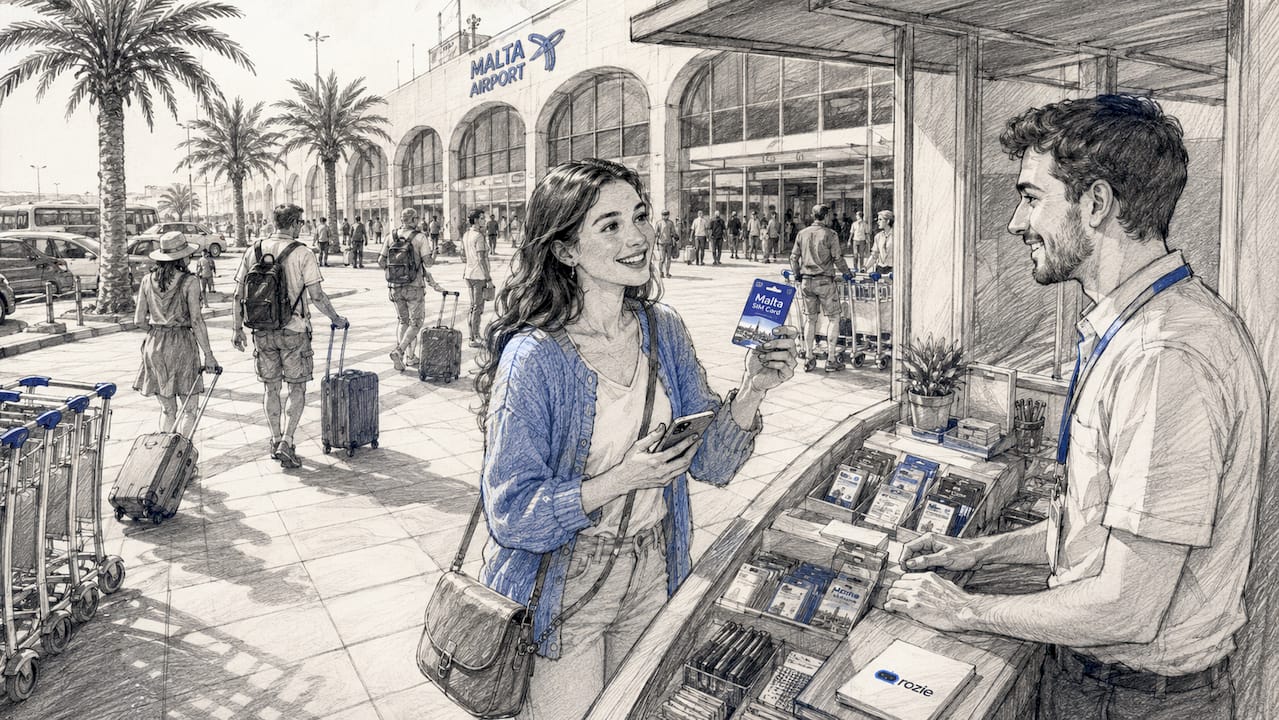
A local SIM card is your first priority, ideally before you leave the airport. Prepaid SIMs from GO, Melita, or Epic are sold at Malta International Airport and cost very little to activate. You need a working Maltese number immediately because landlords, Identità, and most service providers communicate almost entirely over WhatsApp. Without a local number you can miss appointment confirmations and lease replies before your first day is over.

Pro tip
Buy a prepaid SIM with a data bundle at the airport kiosk, not later in town. You will need mobile data to navigate the bus network on the way to your accommodation, and the arrivals-hall kiosks are open during most flight hours.
2. Book short-term accommodation before signing any lease
Never sign a long-term lease without seeing the property in person first. Booking two to four weeks in a serviced apartment or short-let gives you a stable base to attend viewings and confirm that photos match reality. Rental scams exist in Malta, and remote signings are a common trap for newcomers. Most leases also start on the first of the month, so arriving mid-month gives you room to view, negotiate, and sign without rushing.
For a full walkthrough of how leasing works locally, including deposit norms and what to check before you commit, the expat apartment guide covers lease terms under the Private Residential Leases Act (Cap. 604) and the red flags worth watching for.
The single most expensive first-week mistake.
Signing a lease remotely before you arrive. Maltese listings are inconsistent, and photos routinely flatter properties with damp walls, no heating, or broken fixtures. Two weeks in a short-let while you view in person is not a delay, it is insurance against a bad year-long contract.
3. Start apartment viewings in your first three days
Malta’s rental market moves fast, especially in popular areas like Sliema, St Julian’s, and Gzira. Start scheduling viewings on day two or three while you are still in short-term accommodation, because good listings can disappear within days. View every property in person, test the water pressure, confirm the heating setup, and ask explicitly who covers utility transfers and registration.
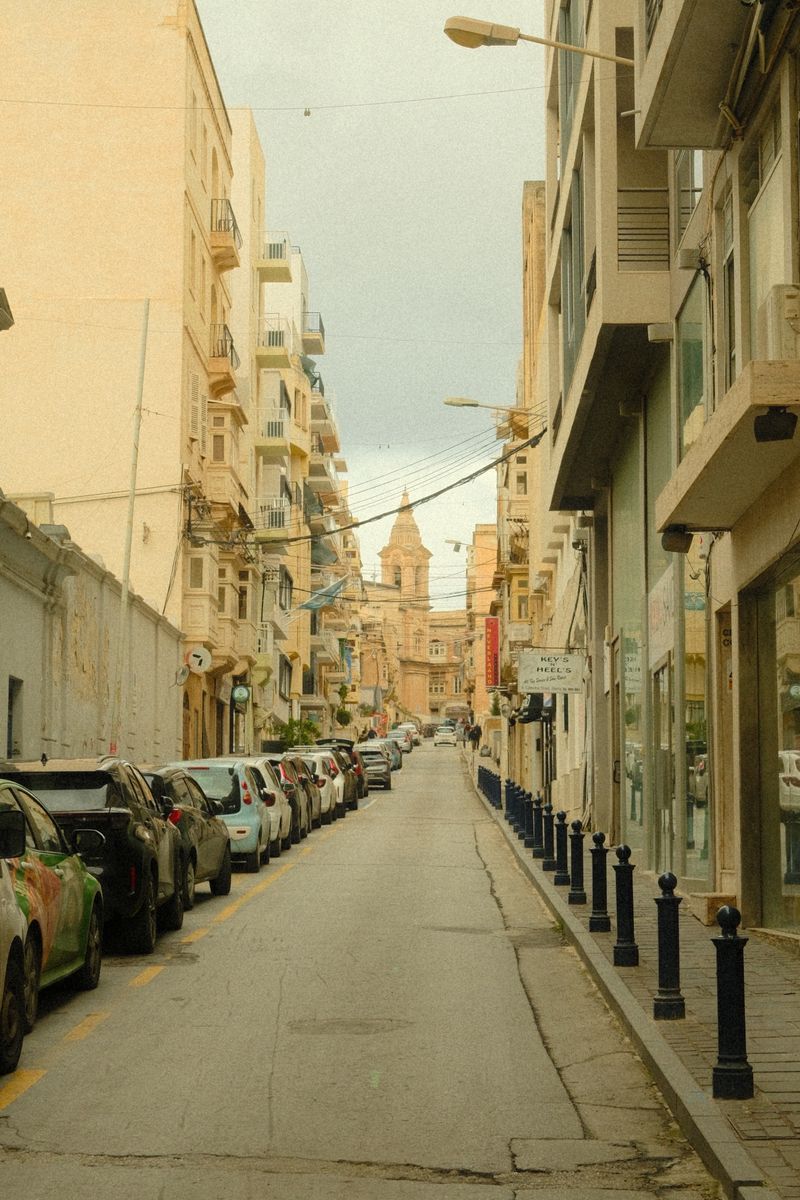
Typical leases run for one year with a one-month deposit, and monthly rent almost always falls due on the first of the month. Factor that into your arrival timing. If you want a practical, chronological view of the search itself, the honest rental guide to finding an apartment in Malta walks through the whole process from platforms to keys in hand.
4. Register with Identità as soon as you have a lease
Identità is Malta’s identity management agency, and registering your residence is one task you should not put off. The common myth is that you must wait until after 90 days to apply. In practice it is the opposite: you register as soon as you have a rental lease to use as proof of address, and the 90-day mark is a deadline, not a waiting period.
For EU and EEA nationals, no permit is needed to live or work in Malta, but anyone intending to stay longer than three months must register their residence and is issued an eResidence document. You apply online through the Identità Expatriates Portal once you are in Malta; registration is free for EU citizens, and Identità typically responds within 48 working hours with a biometrics appointment. The eResidence document is what you will need to open a bank account, set up home internet, and access the public health system.
Don’t miss the three-month deadline.
EU citizens who fail to register their residence within three months of arriving can face a fine of around €300. As soon as your lease is signed, start the application, the early date matters far more than waiting does. Always confirm the current requirements for your nationality on identita.gov.mt.
Non-EU (third-country) nationals follow a more complex, employer-driven route: the Single Permit combines work and residence authorisation and is processed through Identità’s Expatriates Unit and Jobsplus, with the employer submitting the application. As of March 2026, first-time Single Permit applicants must also complete a Pre-Departure Course Certificate before travelling to Malta.
5. Order broadband on the day you sign your lease
Fixed broadband installation from GO or Epic typically takes one to three weeks from the order date, so order on the same day you sign your lease or you will spend your first weeks on mobile data alone. Both providers offer fibre packages; GO tends to have the wider coverage across the island, while Epic is strong in urban areas. Visiting a store in person sometimes gets you scheduled faster than ordering online.
6. Sort out your transport (and get free bus travel)
Buses are the backbone of getting around Malta, and there is a detail most arrival guides miss: registered residents travel free. Since October 2022, holders of a personalised Tallinja card travel free on all day and night bus routes under a national scheme. The card has a one-time registration fee of around €25 plus postage, needs your ID and a photo, and takes roughly two weeks to arrive, so apply early.
For your very first days, before that card arrives, an Explore Card gives seven days of unlimited bus travel for €25 (adults), available at the airport arrivals hall and Malta Public Transport sales offices. Pay-as-you-go single fares are €2.00 in winter and €2.50 in summer, valid for two hours with free transfers; Airport Direct, Tallinja Direct, and night routes cost €3.00. You can confirm current fares and apply for the resident card on the official Malta Public Transport site, and the Malta public transport guide breaks down zones and routes if you are deciding where to live without a car.
For faster trips, ride-hailing apps such as Bolt and eCabs run roughly €10–€18 depending on distance and time of day, and they are usually cheaper than airport taxis for the same route. If you plan to drive, remember Malta drives on the left. EU driving licences are valid indefinitely; non-EU holders must exchange their licence for a Maltese one within 12 months of establishing residence. Roads are narrow and parking in Sliema, St Julian’s, and Valletta is genuinely difficult, which is why many newcomers delay buying a car for the first month.
7. Pack a UK-style plug adapter
Maltese sockets are UK-style Type G, the three-pin rectangular type. If you are arriving from continental Europe, the US, or Asia, your devices will not fit without an adapter, and most apartments do not come stocked with spares. Buy a universal adapter before you leave home; sourcing the right one locally can cost you a day or two of searching in your first week.
8. Learn the cultural rules before you leave the house
Malta has clear social expectations that newcomers sometimes discover the hard way. Visiting churches requires modest dress, with covered shoulders and knees for everyone. This applies to Valletta’s St John’s Co-Cathedral and virtually every parish church on the island, and arriving underdressed means being turned away at the door.
At the beach, topless sunbathing is prohibited and dogs are banned from sandy beaches, with fines for both. These rules are enforced, especially in summer, so respecting them keeps your first week free of avoidable friction.
9. Take Malta’s sun seriously from day one
Malta’s UV intensity is far stronger than in Northern Europe, and newcomers from cooler climates routinely underestimate it. Many people burn badly by their second day outdoors. Apply SPF 30 or higher every morning and avoid direct sun between 11am and 5pm in the summer months. A bad sunburn in your first week will sideline you during the days you most need to be out sorting logistics.
Pro tip
Pack SPF 50 in your carry-on, not your checked luggage. You may be outdoors within hours of landing, and Maltese pharmacies stock sunscreen at higher prices than most home countries.
10. Prepare your home for winter and no central heating
Many Maltese buildings have no central heating, and winters with persistent wind feel colder indoors than the thermometer suggests. If you arrive between November and March, bring warm layers and ask your landlord about the heating setup before you sign. Electric panel heaters and air-conditioning units set to heat mode are the standard solutions. Malta’s year-round humidity sits at roughly 60–95%, so poorly ventilated apartments develop damp and mould quickly; check window frames, bathroom ceilings, and the backs of wardrobes during viewings.
Tap water is safe to drink but is desalinated and very hard, measuring 200–600 PPM calcium carbonate (per the Water Services Corporation), which gives it an unusual taste and coats kettles and showerheads with limescale fast. Many residents use a filter jug or buy bottled water for drinking, and descale appliances regularly.
11. Book popular attractions before your first week ends
The Ħal Saflieni Hypogeum sells out months in advance, so book it the moment you arrive rather than when you feel settled. Heritage Malta caps the site at just 80 visitors per day in small groups, walk-ins are not possible, and tickets must be reserved through the official Heritage Malta site. The same advance-planning logic applies to the Blue Grotto boat trips and the Gozo crossing in peak season. Treating these as administrative tasks rather than leisure afterthoughts is the only reliable way to actually experience them during your first month.
12. Plan your grocery budget around local markets
Eating out in Malta is affordable but adds up fast. A smarter first-month approach is to shop local markets for fresh produce and cook at home most days. The Marsaxlokk Sunday fish market and the daily Valletta market offer fresh ingredients at prices well below supermarket rates, and a tub of strawberries from a village van can cost a fraction of the Sliema price.
For where newcomers actually shop, by neighbourhood and by day, the markets and shops guide for foreigners maps out the best spots and market days across the island.
Settling into your new place
Once the keys are yours, the last step is making the apartment actually liveable. Malta flats accumulate limestone dust and hard-water staining between tenants, and the previous occupant’s clean is rarely thorough, so a move-in deep clean before you unpack saves hours. If you would rather not start your Malta life on your hands and knees, booking a cleaner in Malta for the move-in is the simplest way to skip it.
Your first week at a glance
Most first-week tasks fall into a natural sequence. Use this timeline as a quick checklist so nothing time-sensitive slips through the cracks.
Making your new home in Malta easier from day one
Finding a reliable cleaner in Malta the traditional way usually means scrolling Facebook groups, texting numbers, chasing quotes, and hoping whoever shows up does a thorough job, exactly the kind of friction you do not want during an already busy move.
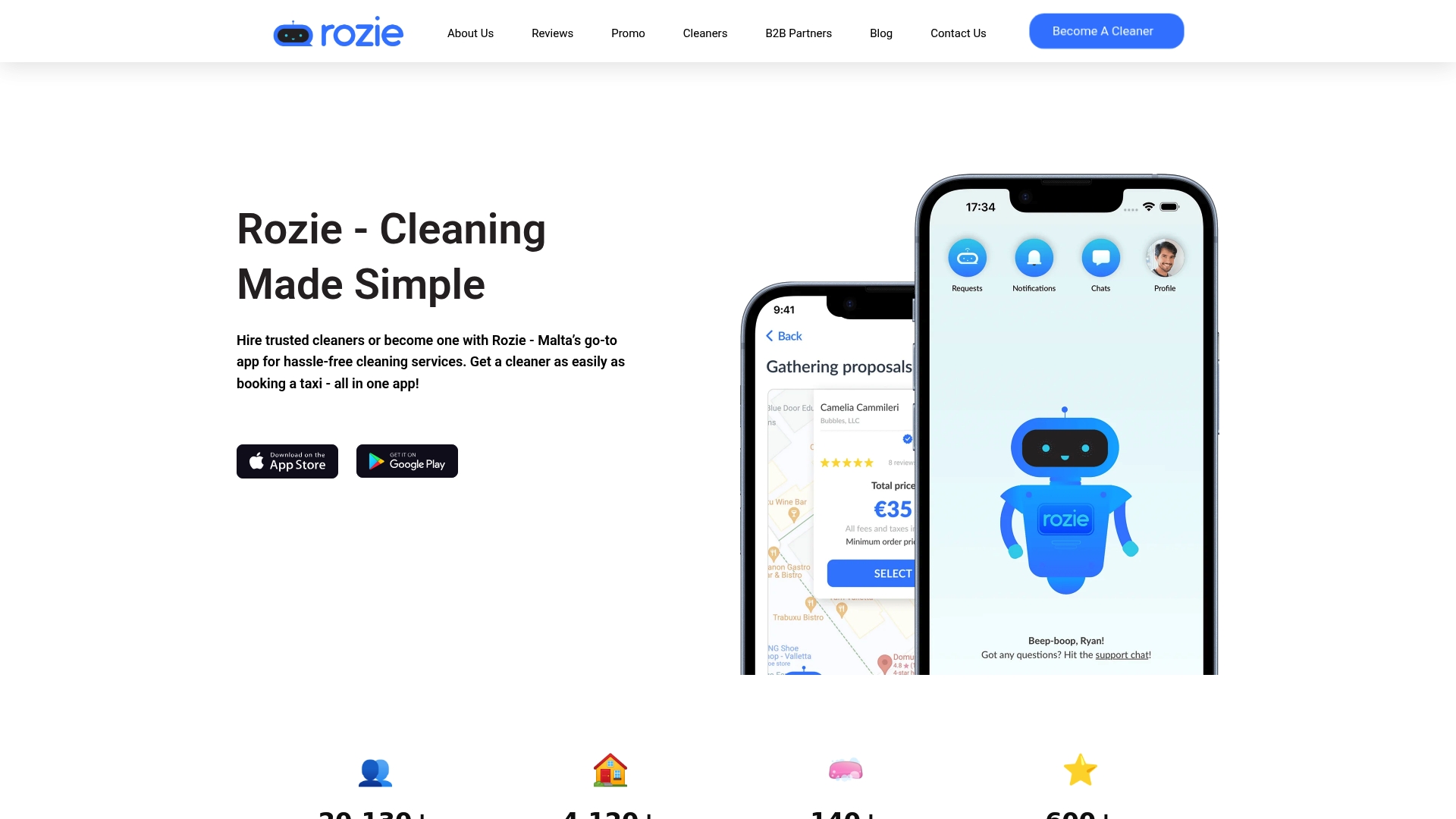
Rozie was built to remove that. You post the job once, pick a date and any extras, and verified cleaners send you offers with the exact price before you accept, so you compare options instead of making phone calls. Every booking is backed by 7-day payment protection and professional liability insurance up to €1,000,000 per occurrence, underwritten by Lloyd’s Insurance Company S.A., with Rozie covering deductibles so you pay no excess. Here is the full booking process in under 60 seconds:
Whether you want a one-off deep clean after moving in or regular help once life settles, you can book a verified cleaner online in a few taps, and the Malta cleaning cost guide shows what to expect before you commit.
Frequently asked questions
What is the first thing to do when arriving in Malta?
Buy a local SIM card from GO, Melita, or Epic at the airport. You need a working Maltese number immediately, because landlords and government agencies like Identità communicate almost entirely over WhatsApp, and you will want mobile data to navigate the bus network on day one.
When should I register my residence with Identità?
As soon as you have signed a rental lease to use as proof of address. EU nationals do not wait until 90 days have passed, that is a common myth; instead, three months is the deadline to register by, and missing it can mean a fine of around €300. Registration is free for EU citizens and starts on the Identità Expatriates Portal.
Does Malta drive on the left or right?
Malta drives on the left. EU driving licences are valid indefinitely, while non-EU licence holders must exchange their licence for a Maltese one within 12 months of establishing residence.
What is the cheapest way to get around Malta in the first week?
For your first days, a 7-day Explore Card gives unlimited bus travel for €25. The bigger saving comes later: once you are a registered resident with a personalised Tallinja card, day and night bus travel is free, so apply for that card early as it takes about two weeks to arrive.
Do I need a power adapter for Malta?
Yes. Malta uses UK-style Type G three-pin sockets. If you are arriving from continental Europe, the US, or Asia, pack a universal adapter before you leave, as the right one can be hard to find quickly once you land.
Should I clean the apartment before moving in?
It is worth it. Malta flats build up limestone dust and hard-water staining between tenants, and the previous clean is rarely thorough. A move-in deep clean before you unpack starts you fresh; many newcomers book a verified cleaner through a marketplace like Rozie so they can compare exact offers instead of chasing quotes during a busy week.