

In this guide
What are Malta’s main public transport areas and terminus zones?
How does the bus network cover residential, tourist and airport areas?
What digital tools help you navigate Malta’s transport?
How do electric bus investments improve coverage?
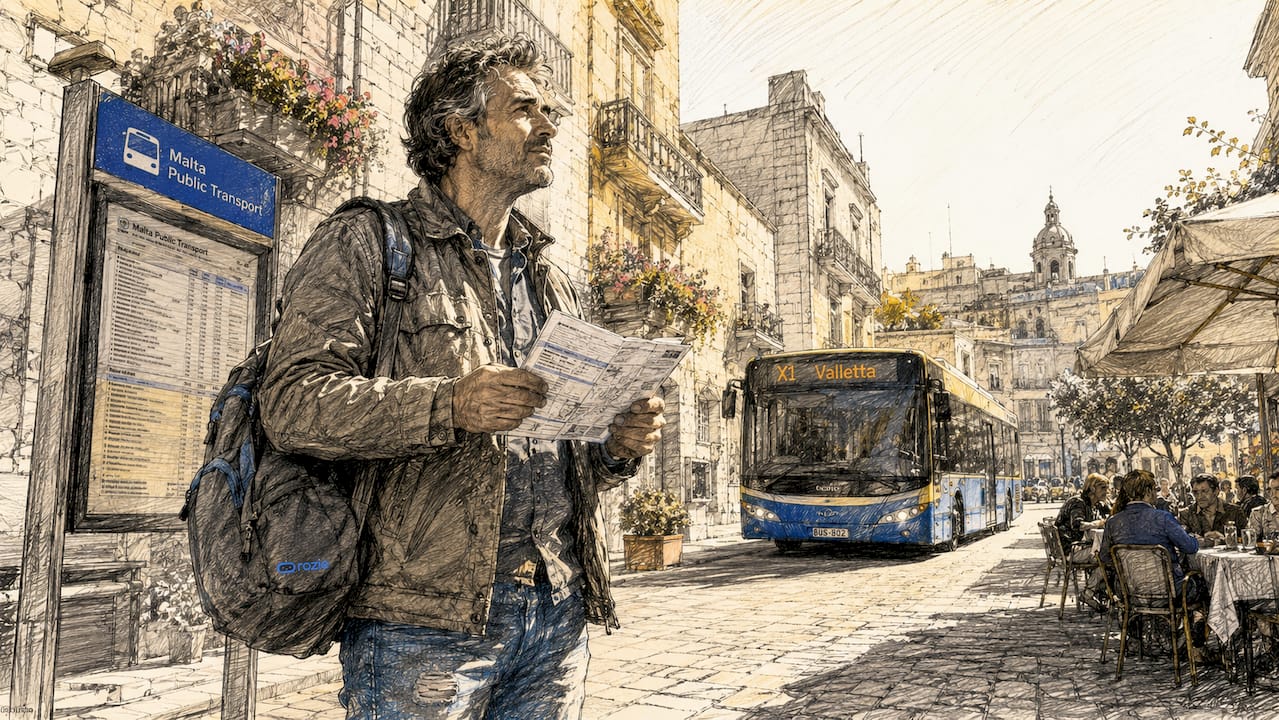
Malta’s public transport is defined by a single, comprehensive bus network run by Malta Public Transport (MPT) under the Tallinja brand. It connects urban and rural zones through a handful of major terminus hubs and a web of route corridors that reach almost every inhabited corner of Malta and Gozo. There is no metro, tram or commuter rail — the bus is the backbone, and learning how its coverage areas work is the first step to living here without a car.
What are Malta’s main public transport areas and terminus zones?
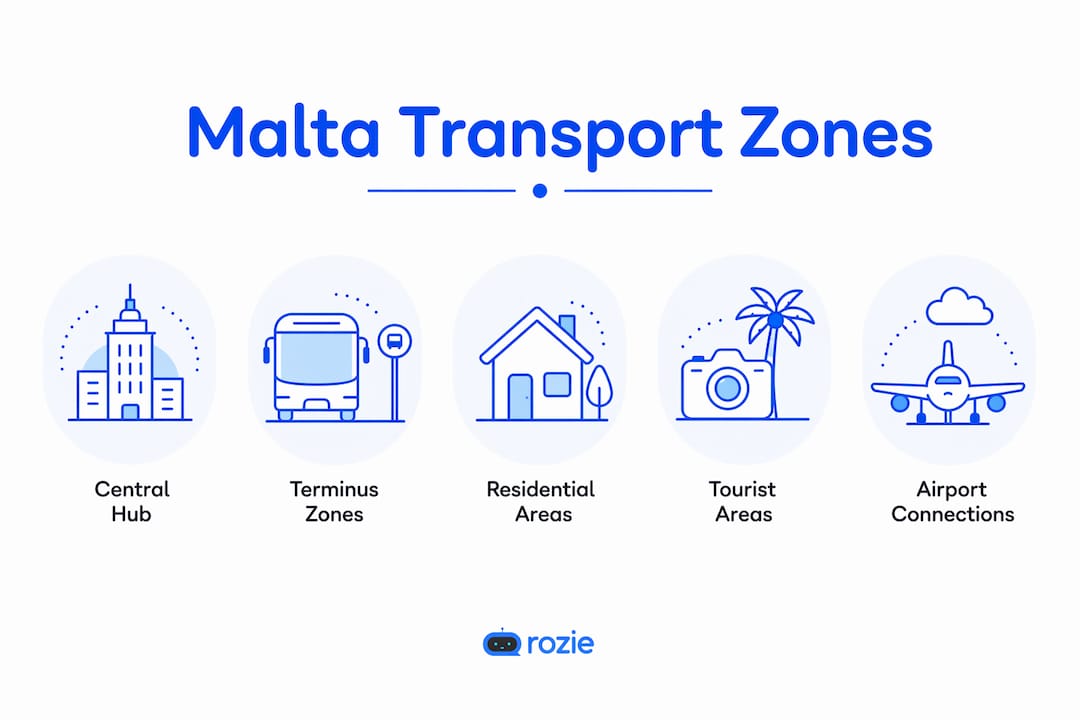
Malta’s network runs on a hub-and-spoke model with Valletta at the centre. Most routes start, end or pass through Valletta and a few major terminals, so these hubs are the backbone of the whole system. Within them, the network is split into lettered terminus zones — Zone B, Zone C and so on — that decide exactly where each route boards and alights.
It helps to think of Valletta not as a destination but as the transfer engine that connects you to almost anywhere on the island. If you need to travel from Marsaskala to Mellieħa, routing through Valletta is usually the most reliable path even when it looks roundabout on a map. The same logic applies in Gozo, where nearly everything runs to and from Victoria.
The terminus zones matter more than most new residents realise. Each zone serves a specific cluster of routes from its own boarding bays, so boarding at the wrong zone can mean missing your bus even when you are standing 200 metres away. And the zones are not always fixed. During the 2026 Malta Carnival, Zones B and C were temporarily relocated from 13 to 17 February: Zone B moved to St Publius Street in Floriana and Zone C to Sarria Street, because the Carnival floats were parked in Valletta’s St James Ditch to shelter them from forecast strong winds. Anyone who did not check the updated layout faced an unexpected 10–20 minute detour. Event-driven changes like this are a regular feature of Malta’s transport calendar, not an exception.
Pro tip
Before heading to the Valletta or Floriana terminus on any public holiday or festival day, check the Malta Public Transport website or the Tallinja app for zone-relocation notices. A two-minute check can save you a twenty-minute walk to the right bay.
How does the bus network cover residential, tourist and airport areas?
The Tallinja network covers a wide mix of zone types across Malta and Gozo through several route categories. Over 110 daytime routes connect towns, villages, tourist hotspots and key infrastructure, and on top of those sit night routes, airport services and a demand-responsive minibus. Knowing which category serves your area helps you plan accurately and avoid relying on a service that does not run when you need it.
Standard daytime routes form the foundation, connecting virtually every town and village from Valletta and Sliema to Marsaxlokk and Mellieħa. Frequency varies significantly: Valletta to Sliema and Valletta to St Julian’s run very frequently, while routes serving smaller villages may run only once or twice an hour. One detail that shapes everyday life here is cost — since October 2022, residents who hold a personalised Tallinja card travel free on all standard day and night routes, which makes the bus an unusually easy default for getting around.
Fares at a glance.
Residents with a personalised Tallinja card travel free on day and night routes. Visitors pay roughly €2.00–€2.50 for a standard single (valid two hours, transfers included) and €3.00 on night and Airport Direct (TD) routes. For short stays, the seven-day Explore Card (around €21) is usually the best value, though it does not cover Airport Direct express services.
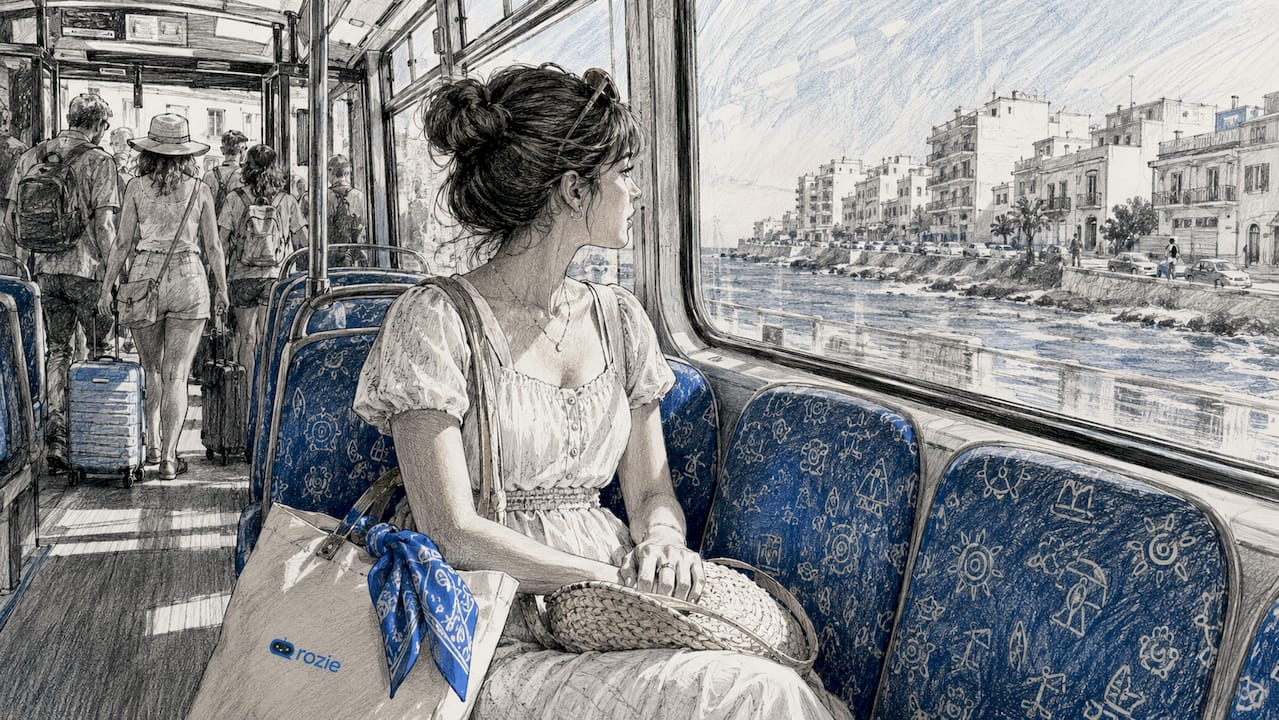
Airport coverage is richer than many guides suggest. The Airport Direct (TD) routes are express services with comfortable seats, luggage space and limited stops: TD2 runs between the airport and St Julian’s (continuing to Pembroke), TD3 links the airport to Gżira, Sliema and St Julian’s, TD4 serves Valletta and the Gozo Fast Ferry, and TD1 and TD5 head towards Rabat, Buġibba and the north. TD2 in particular runs daily, roughly every 30 minutes from around 05:30 until 00:30 — so the common belief that it is a summer-only service is mistaken. The separate X express routes (X1 to X4) reach the main destinations at the standard fare and have extra luggage racks, which makes them the cheapest way to and from the airport.
Night coverage expanded meaningfully from 5 April 2026, with four new night routes and two extensions, plus a more frequent N13 running roughly every ten minutes on weekday late evenings. This reflects growing demand for late-hour connectivity, especially around Paceville and St Julian’s, and night routes are also free for Tallinja card holders. If you work late shifts or enjoy Malta’s nightlife, the expanded night network — together with the demand-responsive Tallinja On Demand minibus that serves Sliema, San Gwann, St Julian’s and Swieqi on weekend nights — is a genuine improvement worth knowing about.
Pro tip
If you are weighing up where to live in Malta without a car, map out which route types serve a neighbourhood before you commit. Some residential zones are well served by standard day routes but have no night coverage at all.
Gozo routes operate as a semi-independent system connecting the island’s towns while feeding into the ferry terminal at Ċirkewwa. If you commute between Malta and Gozo, you need to align the bus and ferry timetables separately, because missing the ferry makes the connecting bus schedule irrelevant.
What digital tools help you navigate Malta’s transport?
The Tallinja app is the primary tool for navigating Malta’s buses. It works as a door-to-door journey planner: enter your start and destination, and it generates route options with estimated travel times. For anyone new to the island, it removes most of the guesswork, including which terminus zone a route departs from when zones have been temporarily moved.
The features that matter most for daily commuters include door-to-door route suggestions between any two addresses, live bus positions and estimated arrival times, a “Rate My Trip” option, and full timetable data for standard, night and Airport Direct services. Real-time digital signage at major terminals complements the app for people already at a hub, showing live departures and bay assignments — especially useful when terminus zones have shifted.

One underused feature is the app’s ability to show several route options for the same journey. Sometimes a slightly longer walk to a different stop connects you to a more frequent route and cuts your total travel time. The app surfaces these alternatives automatically, but many riders simply accept the first suggestion without comparing. If you are deciding which apps you actually need to live in Malta, the Tallinja app consistently ranks among the most practical: it is free, regularly updated and reliable even for complex multi-leg journeys.
Pro tip
Save your home address and workplace as favourites in the Tallinja app before your first commute. It cuts daily route planning to under thirty seconds and makes it easy to spot a faster alternative on bad-traffic days.
How do electric bus investments improve coverage across Malta?
Malta Public Transport is investing €14 million in 40 new fully electric buses as part of the government’s “Malta in Motion” strategy. The order more than doubles the existing electric fleet of 35 vehicles and is one of the most significant upgrades to the network in recent years.
The minibus component is the most significant for residents of smaller villages. Many village cores have narrow, winding streets that standard buses cannot navigate, and the thirteen new six-metre minibuses are designed for exactly these areas — so coverage in previously underserved residential zones is set to improve. Beyond reach, more vehicles in the fleet let operators run buses more often without straining maintenance, which means shorter waits on busy corridors at peak hours.
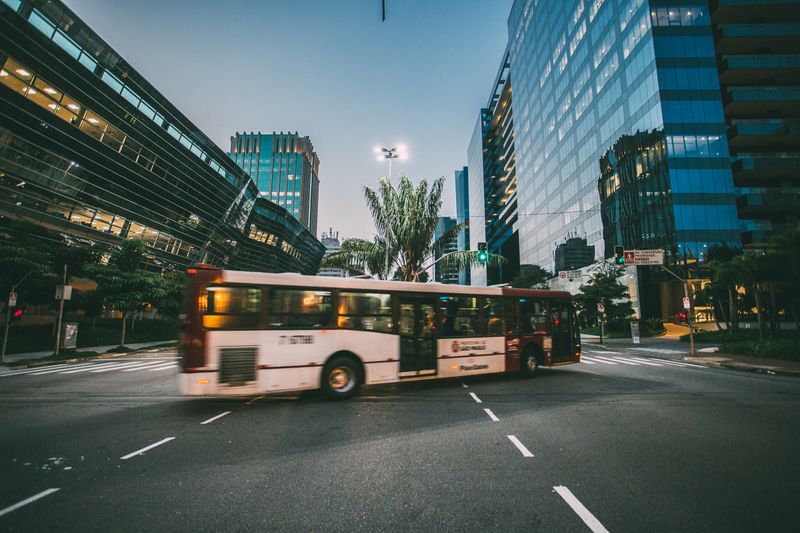
The environmental dimension matters too, particularly for anyone choosing Malta as a long-term base. The new fleet is expected to cut carbon emissions by a further 2,400 tonnes a year, and a number of the buses are earmarked for Gozo, which the government wants to become the first part of Malta with a fully electric public transport fleet. An autonomous electric shuttle that can carry up to fifteen passengers has also arrived for a six-month trial on selected routes. A more frequent, cleaner and quieter bus service makes car-free living in Malta more financially viable — and if you are already trimming costs by skipping the car, it is worth keeping the rest of your home admin just as low-effort, which is where a service like Rozie’s cleaning marketplace can take the weekend cleaning off your plate.
What catches new residents off guard about Malta’s buses?
Three things trip up almost everyone in their first few months: the terminus zone system, the assumption that every express route runs year-round, and forgetting to check event-day changes. All three are solved by a little preparation rather than by avoiding the bus.
The terminus zones are the piece that catches people out most. You can know your route number perfectly and still miss your bus because you are standing at Zone C when your route departs from Zone B. This is not a flaw — it is a logical way to manage a high-volume terminus in a compact city — but it means thinking about where you board, not just which bus you take.
The seasonal nature of some services is another lesson learned the hard way. While the main Airport Direct routes such as TD2 and TD3 run daily all year, a handful of express and direct services (routes like TD5, TD10 and TD14) only operate during the summer and within specific windows. If you have an early-morning flight in January, a summer-only route effectively does not exist for you, so it always pays to verify the current timetable before you rely on a single connection.
What rewards the effort is how capable the network is once you understand it. Spend ten minutes with the Tallinja app before a new commute, confirm the terminus zone layout, and check that your route runs on that day and time, and the buses can get you almost anywhere on the island without a car. The most walkable areas of Malta tend to be exactly the neighbourhoods where residents have figured this out — good pavements plus frequent routes make a car genuinely optional.
Key takeaways
Malta’s public transport areas work as a hub-and-spoke bus network where understanding terminus zones, route types and the digital tools is the foundation of reliable daily commuting.
Keep home life easy while you commute
When your days already involve bus zones, timetables and the occasional event-day detour, the last thing you want is to lose your weekend to scrubbing the apartment. Finding a reliable cleaner in Malta the traditional way usually means scrolling Facebook groups, making phone calls and chasing vague quotes — with no certainty about who actually turns up.
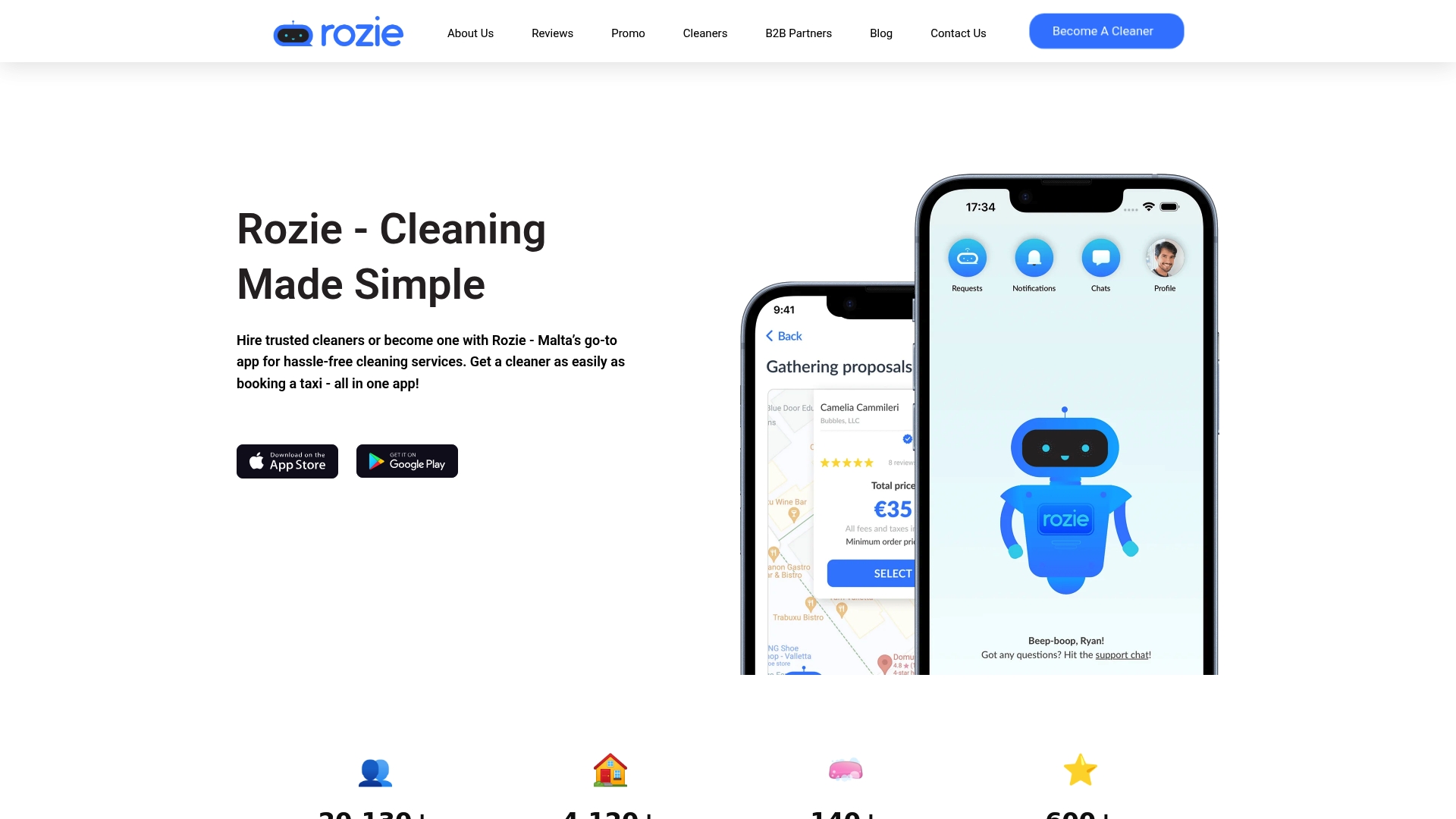
Rozie was built to remove that friction. You post your cleaning request once, choose the date and any extras, and verified cleaners send you offers with the exact price before you accept — so you compare offers instead of chasing quotes. Every booking comes with 7-day payment protection and up to €1,000,000 in professional liability insurance underwritten by Lloyd’s Insurance Company S.A., with Rozie covering any deductibles so you pay no excess. Here is the whole booking process in under 60 seconds:
Whether you need a one-off refresh or regular weekly help, our guide to cleaning costs in Malta shows what to expect before you book. Let Rozie handle the cleaning while the bus handles the commute.
Compare Cleaning Offers on Rozie →
FAQ
How many bus routes does Malta Public Transport operate?
Malta Public Transport operates over 110 daytime routes across Malta and Gozo, connecting major towns, villages, tourist areas and key infrastructure including Malta International Airport and the Gozo ferry terminal at Ċirkewwa. Additional night, Airport Direct and on-demand services run on top of the standard daytime network.
Is public transport free in Malta?
Public buses are free for Malta residents who hold a personalised Tallinja card, on all standard day and night routes, under a scheme in place since October 2022. The free travel does not apply to Airport Direct (TD), airport express or Tallinja On Demand services, and visitors without a resident card pay the standard fare.
What are terminus zones in Malta’s bus system?
Terminus zones are designated boarding and alighting areas within major hubs like Valletta and Floriana, labelled by letter such as Zone B and Zone C. Each zone serves a specific set of routes, and zones can be temporarily relocated during major events, as happened during the Malta Carnival in February 2026.
What is the Tallinja app and how does it help commuters?
The Tallinja app is a free journey planner for Malta’s bus network. It gives door-to-door route suggestions between any two addresses, shows live bus positions and estimated arrival times, and provides full timetables for standard, night and Airport Direct services, including updated boarding information when terminus zones change.
Are there direct bus routes from Malta International Airport?
Yes. Airport Direct (TD) routes such as TD2 and TD3 link the airport to St Julian’s, Sliema and other hubs with limited stops, while the X express routes (X1 to X4) reach the main destinations at the standard fare and have extra luggage space. TD2 runs daily, roughly every 30 minutes from early morning until after midnight.
What new bus services launched in Malta in 2026?
Malta Public Transport added four new night routes and extended two existing ones from 5 April 2026, and announced a €14 million investment in 40 new electric buses as part of the Malta in Motion strategy. Further network changes and extra summer trips rolled out across May and June 2026.
Can Rozie help with home cleaning while I commute by bus?
Yes. Rozie is a Malta cleaning marketplace where you post a cleaning request once, verified cleaners send you offers with exact prices within minutes, and you compare offers before you accept. Every booking includes 7-day payment protection and up to €1,000,000 in professional liability insurance, so going car-free does not have to mean spending weekends cleaning.