

In this guide
Why is drying clothes indoors a problem in Malta?
What do you need to dry clothes indoors?
How to set up a drying space that prevents mould
Which indoor drying method works best in Malta?
Why is drying clothes indoors a problem in Malta?
Drying laundry indoors raises humidity fast, and Malta starts from a high baseline. Relative humidity on the island ranges from 60% to over 95%, peaking between October and February, and porous globigerina limestone walls hold dampness for weeks. Add the roughly two litres of water a single wash load releases into the air, and an unventilated room quickly reaches the 60%-plus level where mould takes hold.
That two-litre figure is not a guess. A full-scale experimental study published in peer-reviewed research on indoor laundry drying measured around 2,000 grams of water evaporating from a single cotton load. In a small room with the windows shut, that is enough to push relative humidity toward saturation within a few hours.
Malta makes the problem worse for three local reasons. Outdoor drying is genuinely unreliable here: several times a year, southerly winds carry fine red Saharan dust across the Mediterranean and coat any washing left on the line, so many households simply dry inside instead. The building stock adds to it — globigerina limestone behaves like a sponge, and many converted apartments have blocked off the natural ventilation paths older Maltese homes were designed around. And in dense, shared-wall buildings, persistent damp in one flat often becomes the neighbour’s problem too. The Maltese even have a word for the mould that follows: il-moffa.
The health stakes are real. The World Health Organization’s guidelines on dampness and mould identify persistent indoor dampness as a primary driver of respiratory symptoms, allergies, and asthma. WHO recommends keeping indoor relative humidity in the 40–60% range, and most common household moulds need around 60% or higher to grow — which is exactly why the single number to watch is your humidity reading, not how the clothes feel.
Key takeaway: The whole game is keeping relative humidity under 60% while clothes dry. Above that, mould and dust mites move in; below it, indoor drying is safe and straightforward.
If you want to protect your whole home rather than just the laundry room, the room-by-room detail is in our mould prevention guide for Malta, and the apartment cleaning checklist covers the daily ventilation habits that keep humidity in check.
What do you need to dry clothes indoors?
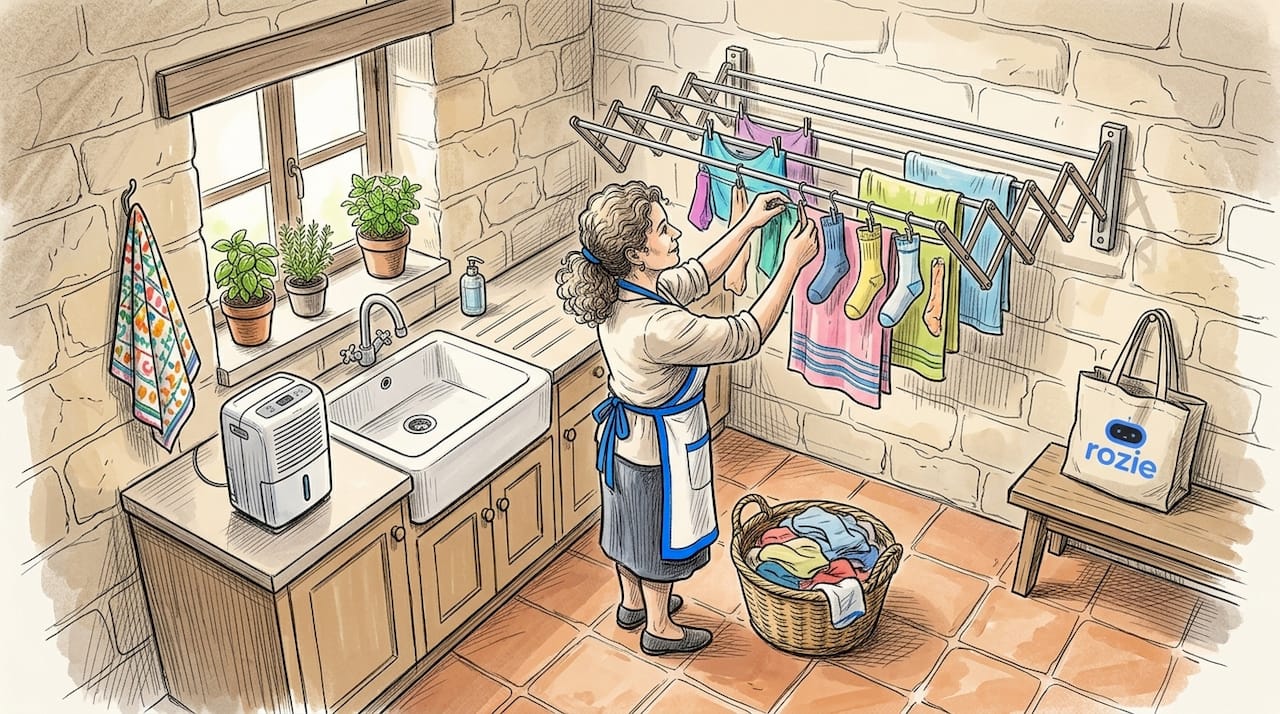
The four tools that matter most are a freestanding drying rack, a dehumidifier, a hygrometer, and access to an extractor fan. Before any of them, run your washing machine’s highest spin cycle. A fast spin (around 1,000–1,200 rpm or higher) extracts far more water in the drum, which cuts hours off drying time and pushes much less moisture into your home’s air.
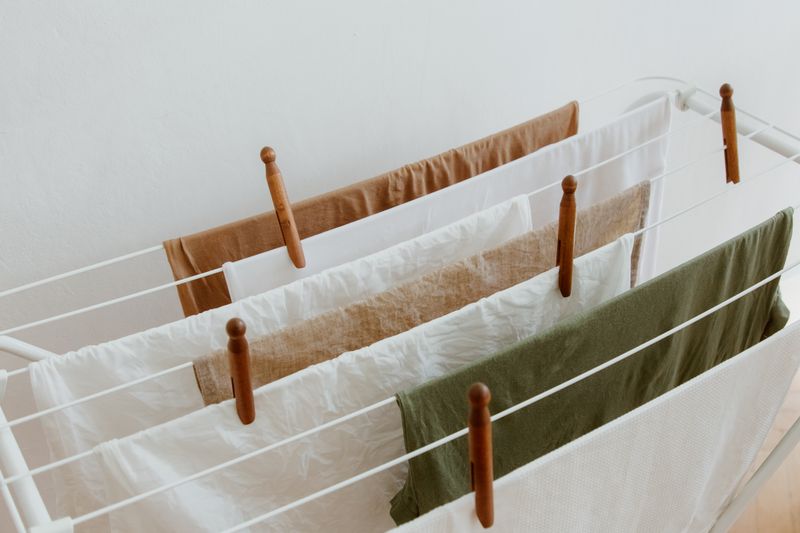
- Drying rack: A freestanding or wall-mounted rack lets clothes hang with space around them so air can circulate.
- Dehumidifier: Pulls moisture from the air as clothes dry. Set it to hold humidity below 60% to stop mould developing.
- Hygrometer: A small, inexpensive humidity monitor that reads the room in real time. Without one, you are guessing whether the air is safe.
- Extractor fan: A bathroom or kitchen fan running continuously while you dry removes humidity faster than any passive method.
Room temperature helps too. Keeping the drying room between roughly 18°C and 21°C speeds evaporation without overheating the space, and Malta’s mild winters make that easy to reach without extra heating. The principle behind the most effective indoor-drying advice is the same everywhere: keep warm air moving and give the moisture a way out.
Pro tip
Run the highest spin cycle your machine and fabrics allow before hanging anything. It removes more water than any rack upgrade and is the single biggest factor in faster drying.
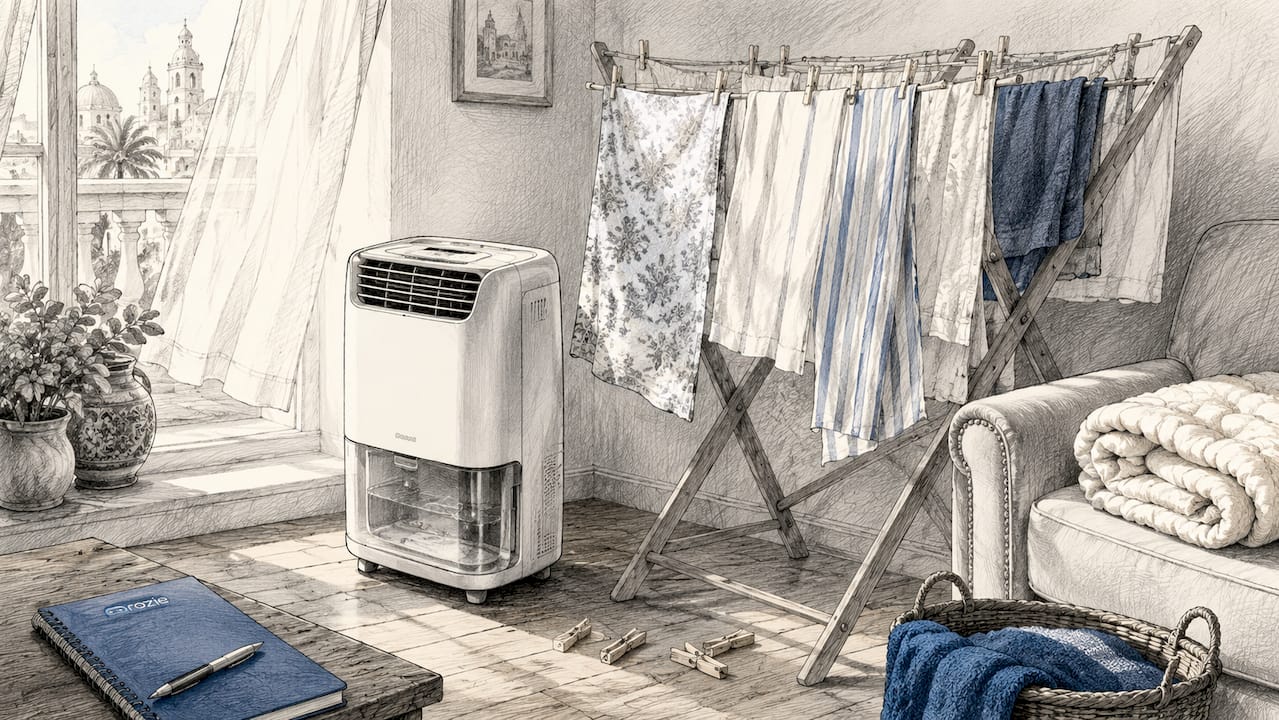
How to set up a drying space that prevents mould
Pick one room and commit to it. Spreading wet laundry across several rooms raises whole-home humidity far more than concentrating it in a single ventilated space. Keep that room’s door closed, position the rack near (but not on) a heat source, run a dehumidifier in the sealed room, and check a hygrometer to keep the reading under 60%. That is the entire system.
Here is how to set it up correctly:
- Choose the right room. Bathrooms and kitchens work best because they already have extractor fans. A spare bedroom with a window works too, as long as the door stays shut.
- Close the door. Keeping it closed contains the humidity instead of letting it spread into your living areas. This one habit protects the rest of the home.
- Ventilate in short bursts. Cracking a window or running the fan lets moist air escape. Cold outdoor air is drier in absolute terms than warm, moisture-laden indoor air, so even a five-minute cross-breeze in January removes more water vapour than a long airing on a damp spring day.
- Keep racks off radiators. Draping clothes directly on a radiator blocks airflow, concentrates moisture, and drops the heater’s efficiency. Place the rack near the heat source, not touching it.
- Run the dehumidifier with the door shut. A dehumidifier works best in a sealed space. Don’t run it with the window open — use the window and the dehumidifier in alternating bursts, not at the same time.
- Watch the hygrometer. If the reading climbs above 60%, ventilate for 15 minutes, then switch back to the dehumidifier.
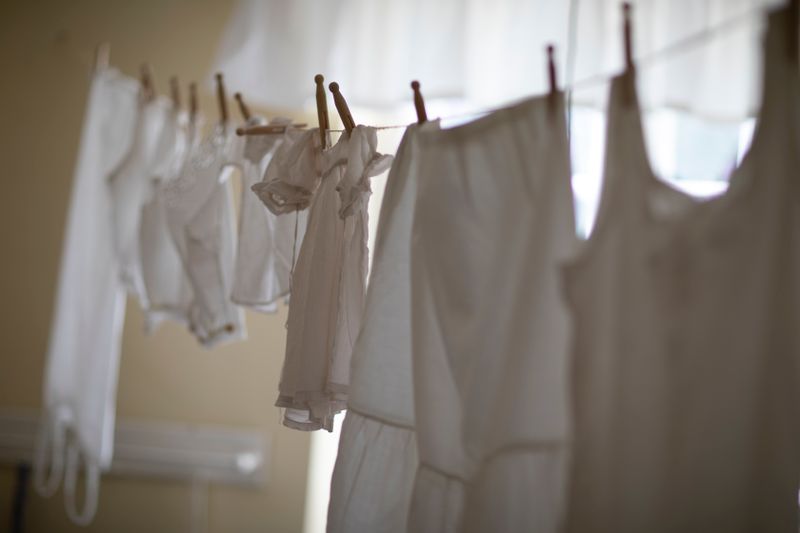
One room, one closed door.
Concentrating drying in a single ventilated room with the door shut is the most effective habit for stopping humidity from spreading through a Maltese apartment. Everything else is fine-tuning.
Pro tip
Spread clothes out fully on the rack. Overlapping fabric traps moisture between layers and can double drying time. If the rack is full, finish the first load before adding more rather than cramming everything on at once.
Which indoor drying method works best in Malta?
For most Maltese apartments, a drying rack plus a dehumidifier in a closed room is the most practical method: low running cost, no major appliance to buy beyond the dehumidifier, and strong mould control. A heat-pump tumble dryer suits households with frequent large loads. Radiator drying and racks left in unventilated rooms are the two methods to avoid entirely — both trap moisture and feed mould on walls and ceilings.
Drying times are approximate and depend on load size, spin speed, and room conditions.
The rack-plus-dehumidifier combination is the realistic default for most people because it needs no major appliance and keeps the air dry while clothes dry. A heat-pump tumble dryer is condensing rather than venting into the room, so it adds little humidity and costs relatively little to run annually — the trade-off is the higher purchase price, which makes most sense for households doing several loads a week. There is also a cost-saving angle worth noting: a mid-range dehumidifier is far cheaper than a tumble dryer and can pay for itself across a single humid winter once you factor in the mould remediation it helps you avoid.
Key takeaway: If you take one decision from this guide, make it a dehumidifier plus a rack in a closed room. It is the most cost-effective reliable way to dry clothes indoors in Malta without inviting mould.
What goes wrong, and how to fix it
Musty-smelling clothes and mould spots on walls point to the same cause: too much moisture with too little airflow. When laundry takes more than four to five hours to dry, odour-causing bacteria multiply in the fibres and leave a stale smell that washing alone may not remove. When room humidity stays above 60%, mould establishes on the coldest corners and ceilings. The fixes are faster spinning, more space on the rack, and active moisture removal.
- Musty smell on dry clothes: The clothes dried too slowly. Improve airflow, run the dehumidifier, and stop overcrowding the rack.
- Mould spots on walls or ceilings: Humidity is consistently too high. Use a hygrometer, keep readings under 60%, and confirm the drying-room door stays closed during sessions.
- Clothes still damp after six hours: Usually the spin was too low, the rack is overcrowded, or there is no active moisture removal in the room. Address all three.
- Thick items like towels or jeans staying wet: They need extra spin time and more space. Hang them at the top where warmer air rises, and shake them out first to open the fabric.
- Humidity spreading to other rooms: You are drying in more than one room or leaving doors open. Consolidate everything into one room with the door shut.
When to call a cleaner: If damp has already left mould patches, musty corners, or staining behind, that is past a laundry-habit fix. A verified cleaner can deal with moisture-related cleaning properly — here is how to find a reliable cleaner in Malta.
When indoor drying still leaves its mark, a cleaner can help
Done well, indoor drying keeps your home healthy. But even with the right habits, a humid Maltese winter can leave behind mould patches, musty wardrobes, and stubborn damp stains that need more than a wipe-down.
Finding a reliable cleaner here the traditional way usually means scrolling Facebook groups, messaging numbers, chasing quotes, and hoping whoever turns up does a thorough job. Rozie removes that friction. You post the job once, choose your date and any extras, and verified cleaners send you offers with the exact price before you accept — every booking backed by 7-day payment protection and professional liability insurance up to €1,000,000 per occurrence, underwritten by Lloyd’s Insurance Company S.A., with Rozie covering any deductible so you pay no excess.
Here is the full booking process in under 60 seconds:

You can compare offers before committing, and if you want a sense of what a clean costs first, see our cleaning cost guide for Malta or browse more cleaning guides for Malta homes.
Compare Cleaning Offers on Rozie →
Key takeaways
The most effective indoor-drying setup in Malta combines a dehumidifier, a freestanding rack, and a single designated room with controlled ventilation.
FAQ
How much moisture does drying laundry indoors release?
A single wash load releases up to around two litres of water into your home’s air as it dries. Without ventilation or a dehumidifier, that moisture raises humidity and feeds mould growth, which is why airflow matters so much in Malta’s climate.
What humidity level is safe for drying clothes indoors in Malta?
Keep indoor relative humidity below 60%. The WHO recommends a 40–60% range, and most common moulds need roughly 60% or higher to grow. Above that, mould and dust mites take hold and structural damp can develop in walls and ceilings.
Is a dehumidifier or a tumble dryer better for Malta homes?
For most Maltese apartments, a dehumidifier paired with a drying rack is the better value: lower cost, no major appliance, and strong mould control. A heat-pump tumble dryer is faster and worth it for households doing frequent or large loads each week.
Why do my clothes smell musty after drying indoors?
Musty odours mean the clothes dried too slowly, usually from overcrowding, poor airflow, or no active moisture removal. When drying takes more than four to five hours, bacteria multiply in the fibres and produce the smell. Spread clothes out and run a dehumidifier to fix it.
Can I dry clothes in any room in my Malta home?
Bathrooms and kitchens with extractor fans are best because they already remove moisture. Any room works if you keep the door closed, ventilate in short bursts, and run a dehumidifier. Avoid drying in a bedroom with the door shut, since it combines laundry moisture with overnight breathing in unventilated air.