

In this guide
What belongs in a Malta-safe core cleaning kit?
Which cleaners are safe for limestone, marble and terrazzo?
How do you handle Malta’s hard water without damaging stone?
What do you need for humidity and mould?
What goes in a Saharan dust kit for balconies and windows?
Where can you buy cleaning supplies in Malta?
How should you store cleaning products safely?
What should you have ready for your cleaner?
What belongs in a Malta-safe core cleaning kit?
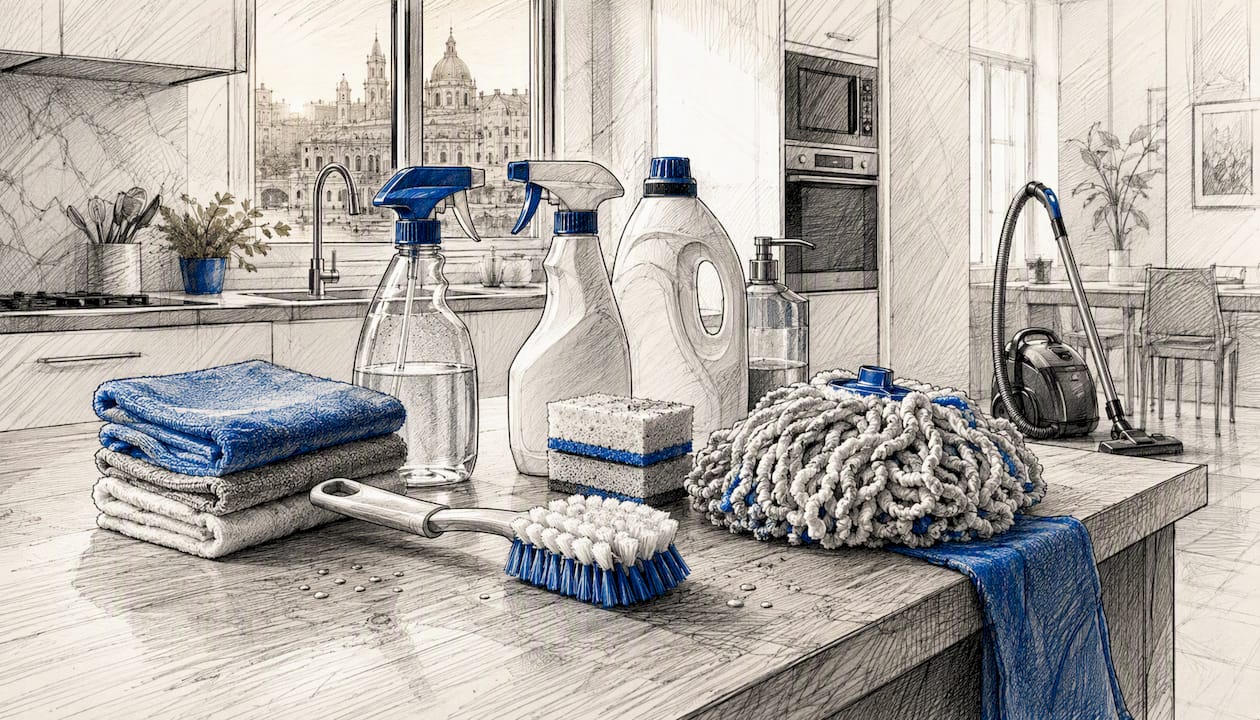
A Malta-safe core cleaning kit has about 15 items: a vacuum, a flat microfibre mop with a bucket, a broom and dustpan, six or more microfibre cloths, a pH-neutral floor cleaner, an all-purpose cleaner, a disinfectant, washing-up liquid, a descaler for ceramic and chrome only, a grout brush, a squeegee, rubber gloves, labelled spray bottles, an extendable duster and a caddy. Nothing acidic goes near stone.
That list overlaps with The Spruce’s cleaning supplies list, which is a good general reference. The Malta difference is what we leave out: the classic “white vinegar and lemon” bottle that appears on most international lists is a risk in a home with limestone floors, marble sills or terrazzo tiles, so it has no place in this kit.
The same idea runs through a professional-grade kit: fewer, better products. A concentrated all-purpose cleaner decanted into a labelled spray bottle replaces three or four single-use sprays and frees up the cupboard under the sink, which in many Maltese flats is the only storage you have.
Which cleaners are safe for limestone, marble and terrazzo?
Only pH-neutral cleaners are safe for Globigerina limestone, marble and terrazzo, the floors found in most Maltese townhouses and many older flats. These stones are calcium carbonate, so vinegar, lemon, citric acid and bathroom descalers dissolve the surface and leave dull, rough patches. Use a stone-safe neutral cleaner such as the HG or Lithofin ranges, diluted as the label says, with a well wrung microfibre mop.
Porous limestone also drinks water, so less is more. A barely damp mop lifts the dust; a flooded floor pushes dirty water into the stone and leaves tide marks along the skirting. Change the rinse water once it turns grey, and dry spill zones like kitchen and entrance areas with a cloth.
Before you buy anything for a floor, read the label for the words “pH-neutral” or “suitable for natural stone”. “Multi-surface” alone is not enough: some multi-surface sprays contain acids for limescale.
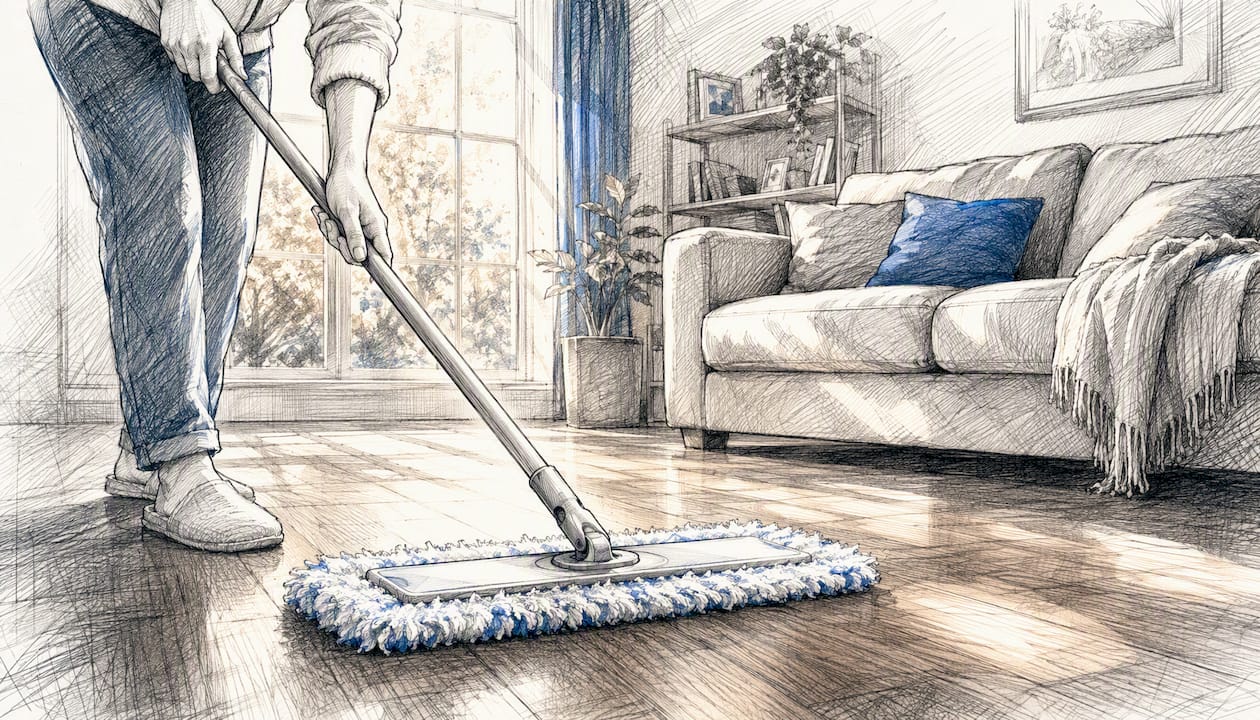
The stone rule in one line.
If the surface is limestone, marble or terrazzo, nothing acidic touches it: no vinegar, no lemon, no citric acid, no descaler. If you are unsure what your floor is, treat it as stone and use a pH-neutral cleaner.
How do you handle Malta’s hard water without damaging stone?
Malta’s tap water is hard, and the Water Services Corporation explains limescale as a mineral deposit from calcium and magnesium that is harmless to drink but builds up on taps and appliances. Use an acidic descaler such as Viakal only on ceramic, chrome and glass, keep it off stone sills and vanity tops, and rinse well afterwards.
The safe routine is simple: spray the descaler onto a cloth rather than straight onto the tap, so drips cannot land on a marble vanity or a limestone shower step. Leave it for the time on the label, wipe, then rinse with clean water and dry. A squeegee on shower glass after every shower stops most scale before it forms.
WSC also suggests keeping your water heater around 50°C to reduce scale inside the geyser, a small change that saves descaling time later.
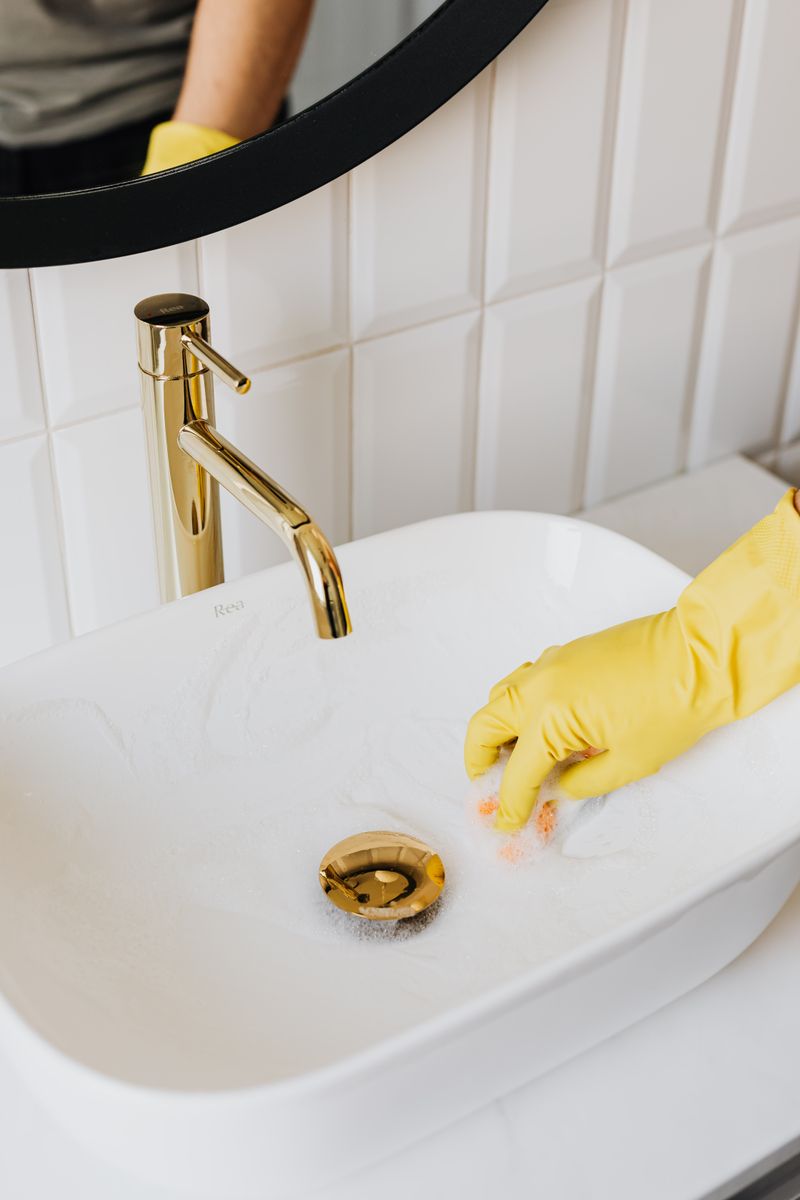
Pro tip
Start every bathroom clean by applying the toilet cleaner or disinfectant first, then wipe mirrors and taps while it works. Dwell time matters, a point A.I.S.E. professional guidance makes for professional cleaners and that works just as well at home.
What do you need for humidity and mould?
For humidity and mould in a Malta home you need a mould spray for silicone and grout, rubber gloves, a mask for spraying, a dehumidifier or moisture absorbers for wardrobes, and a habit of opening windows daily. Malta’s damp season runs roughly October to February, and the WHO links persistent indoor dampness with respiratory problems, so prevention matters more than any product.
The WHO guidelines on dampness and mould are clear that the fix is controlling moisture, not just killing spores. In practice that means running the extractor fan during and after showers, drying clothes near an open window or with a dehumidifier, and leaving a gap between furniture and outside walls.
Small spots on silicone or grout are a normal cleaning job. Black mould spreading across a wall, mould that returns within days, or a musty smell from behind units points to a damp problem in the building. That needs a damp-proofing or mould remediation specialist, not a stronger spray. Rozie does not do mould remediation; our guides to black mould in Maltese bathrooms and controlling humidity in Malta apartments explain the warning signs.
What goes in a Saharan dust kit for balconies and windows?
A Saharan dust kit for Malta balconies and windows needs a stiff outdoor broom, a hose or bucket, a window squeegee with a scrubber sleeve, a pH-neutral cleaner for stone balcony floors, and plenty of microfibre cloths. Dust events, like the April 2026 episode that pushed PM10 readings very high, leave a red film that smears into mud if you start with a wet cloth.
Order matters. Sweep or vacuum the dry dust first, then rinse, then wash. On glass, wet the pane with the scrubber, pull the squeegee from top to bottom, and wipe the rubber blade after each stroke. In coastal localities like Sliema, St Julian’s, Gzira and Bugibba, salt spray adds a sticky layer, so expect to clean sea-facing glass more often. MaltaToday’s report on the April 2026 dust event also notes the health angle for people with asthma, so wear a simple dust mask while sweeping if dust bothers you.
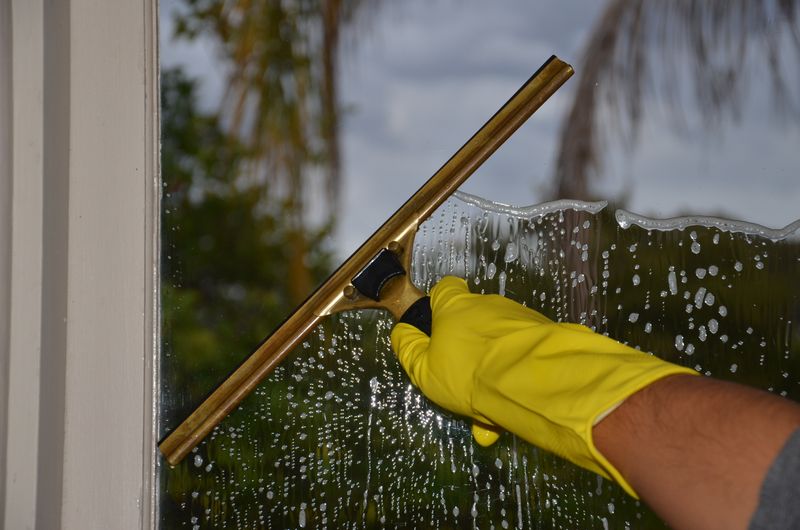
For a full step-by-step, see our Sahara dust cleaning guide for Malta homes.
What does each room need?
Each room in a Malta home needs a slightly different set of supplies on top of the core kit. The kitchen needs a degreaser and oven cleaner, the bathroom needs the descaler and mould spray, living areas need dusting tools and a fine-filter vacuum, and the balcony needs the Saharan dust kit. The table below is the room-by-room shopping list to copy to your phone.
Colour-code your cloths (one colour for the bathroom, one for the kitchen, one for everything else) and wash microfibre at 60°C without fabric softener, which clogs the fibres. If cutting plastic is part of your plan, our guide to eco-friendly cleaning alternatives covers refills and reusable tools; keep the stone rule above in mind with any homemade recipe.
Key takeaway: In Malta the shopping list is less about how many products you own and more about matching chemistry to surface: neutral for stone, acidic descaler for ceramic, chrome and glass, and dry-first for dust.
Where can you buy cleaning supplies in Malta?
You can buy most cleaning supplies in Malta at large supermarkets such as PAVI in Qormi and the Smart Supermarket branches, and at Homemate in Mriehel, which describes itself as a home improvement centre and carries cleaning supplies alongside tools and household goods. Look for brands like HG and Viakal on the shelf, and check stock before a special trip.
Specialist stone care, such as Lithofin products for limestone and marble, is not always on supermarket shelves. If you cannot find it, ask at a hardware shop or a tile and stone supplier, and bring a photo of your floor so they can match the product to the stone. For squeegees, extendable dusters and replacement mop heads, hardware and home stores usually have a better range than supermarkets.
Pro tip
Buy one stone-safe floor cleaner in a large bottle rather than three small “specialist” ones. A single pH-neutral concentrate covers limestone, marble, terrazzo and sealed tiles, which is most of the floor area in a typical Maltese flat.
How should you store cleaning products safely?
Store cleaning products in their original bottles, in a high or lockable cupboard away from children and pets, with acids such as descalers kept apart from alkalis such as bleach and oven cleaner. Never decant a product into a drinks bottle, and never mix products: bleach plus an acidic descaler releases chlorine gas. Read the hazard label each time you use a product.
OSHwiki’s chemical storage guidance is written for workplaces, but its three ideas scale down to a flat: separate incompatible products, keep the area ventilated, and label everything. The MSDS Europe storage rules guide makes the same point for households: habits like original packaging and separate shelves prevent more accidents than buying “safer” chemicals.
Every cleaning product sold in Malta carries EU hazard pictograms and statements under the CLP Regulation; the European Chemicals Agency’s CLP overview explains what those labels mean. In Malta’s humid winters, avoid storing products in a damp cupboard under the sink, where labels peel and lids corrode. Old products should go out according to the disposal statement on the label, not mixed together down the drain.
What should you have ready for your cleaner?
Before a Rozie cleaner arrives, confirm in the Rozie in-app chat whether the cleaner brings products or will use yours. Some cleaners bring a basic kit, while others prefer to work with your supplies. If you have limestone, marble or terrazzo floors, leave out your pH-neutral cleaner and say so in the chat, along with any surfaces that must not be touched with acid.
A short “ready for the cleaner” set saves time on the day: a working vacuum, a mop and bucket, a stone-safe floor cleaner, the bathroom descaler (labelled “ceramic and chrome only”), clean microfibre cloths and a step stool for high cupboards. For a deeper reset, our deep cleaning preparation checklist for Malta covers what to clear away and what to write in your booking notes.
If you want to understand who you are letting into your home, Rozie’s cleaner requirements page explains what a vetted professional brings to a job, and our guide on how to choose the right cleaner in Malta covers the questions worth asking.
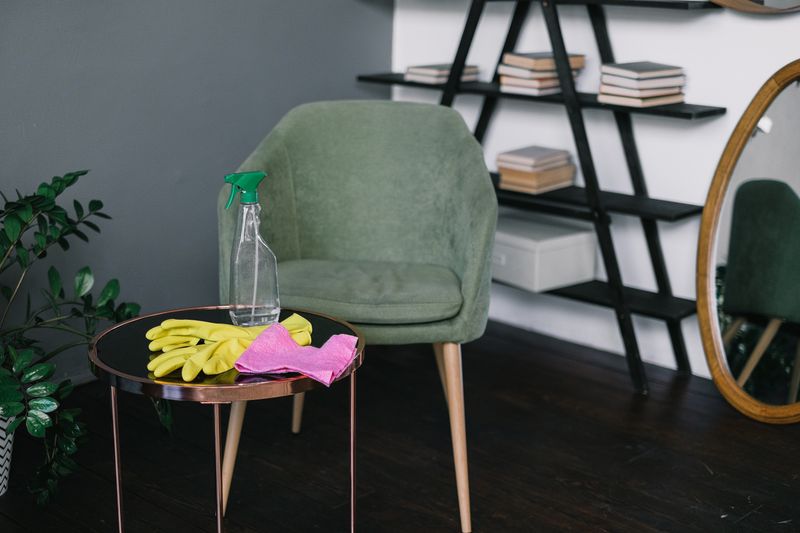
When is booking a cleaner the better call?
Booking a cleaner is the better call when the supplies are not the problem, but time is. If the cupboard is full and the floors still are not getting done, a verified cleaner in Malta turns your kit into a clean home. Rozie’s own cost guide puts a one-off regular clean of a one-bedroom flat at about €40 to €65, and a deep clean at about €55 to €95.
Those figures come from the Rozie cleaning cost guide for Malta, which also lists typical hourly rates of €10 to €20 for independent cleaners. Treat them as estimates: the size of the home, extras and timing change the price. For a first big reset, a deep clean in Malta covers the descaling and grout work; after that, a regular clean keeps on top of dust between visits, and you can easily rebook a cleaner you liked.
Not sure what a deep clean includes in practice? You can see what a deep clean actually covers before you decide.
Finding a reliable cleaner in Malta the traditional way often means scrolling Facebook groups, making phone calls, chasing quotes, and hoping the person who shows up actually does a good job.
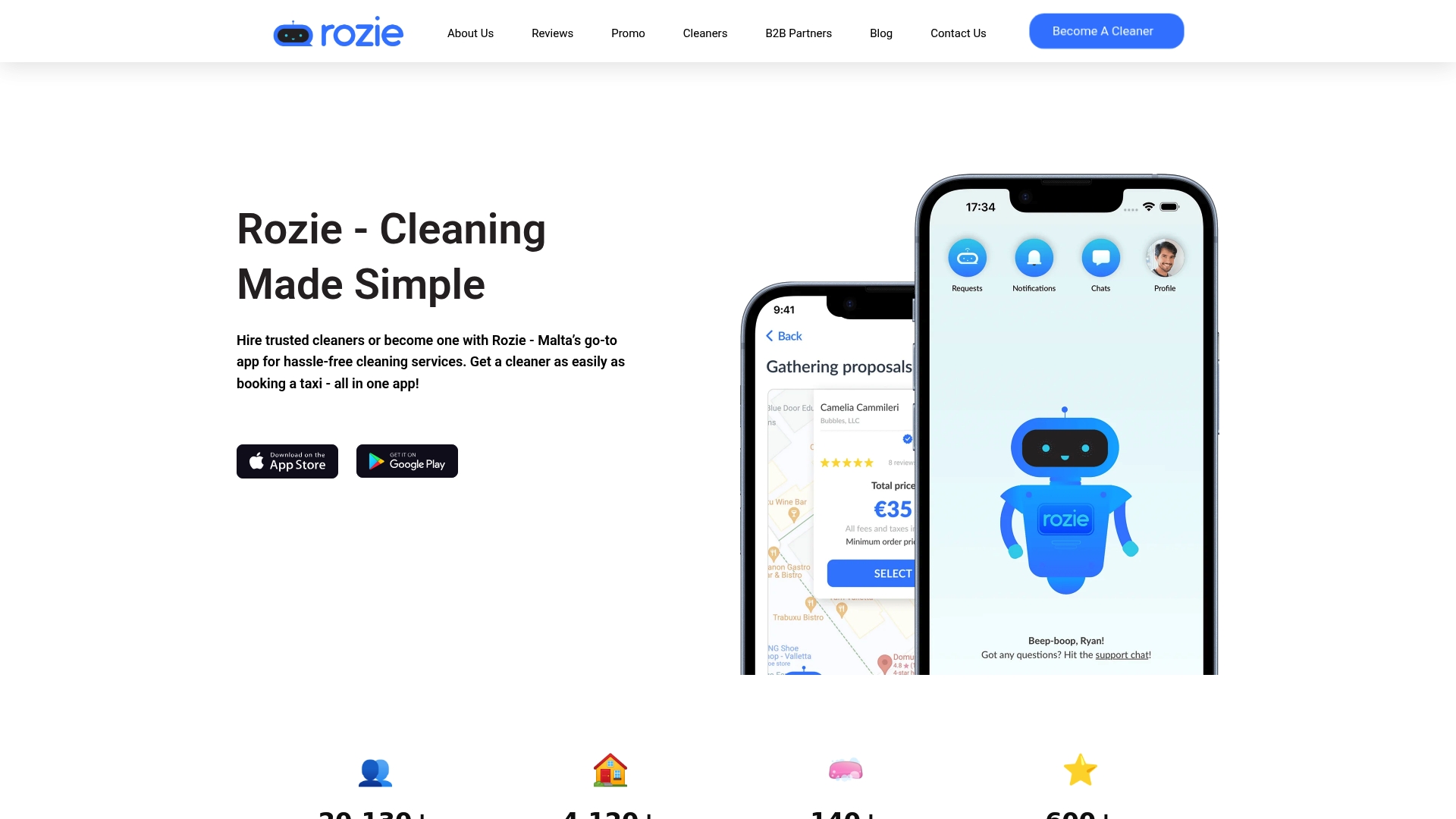
Rozie was built to remove that friction. You pick a date, select the extras you need, and verified cleaners send you offers with exact prices before you accept. Every booking is backed by 7-day payment protection and professional liability insurance up to €1,000,000 per occurrence, underwritten by Lloyd’s Insurance Company S.A.
Here is the full booking process in under 60 seconds:
Compare Cleaning Offers on Rozie →
More practical guides for Maltese homes are in our cleaning in Malta section.
Rather skip the shopping list? Post your request on Rozie, and cleaners send you offers within minutes. Compare offers before you accept and agree on products in the chat. Find a verified cleaner through Rozie and skip the supply run.
Download Rozie, Get Offers in Minutes →
Frequently asked questions
Can I use vinegar on Maltese limestone floors?
No. Globigerina limestone, marble and terrazzo are calcium carbonate stones, and vinegar, lemon or any acidic descaler dissolves the surface and leaves dull, etched patches. Use a pH-neutral cleaner labelled as suitable for natural stone, diluted as the label says, with a barely damp microfibre mop.
What is the best way to remove limescale in Malta?
Use an acidic descaler such as Viakal on ceramic tiles, chrome taps and glass only. Spray it onto a cloth rather than the fixture, leave it for the time on the label, then rinse and dry. Keep it away from stone sills, vanity tops and shower steps, and squeegee shower glass after each use to slow new scale.
When should I call a mould specialist instead of cleaning it myself?
Small spots on silicone or grout are a normal cleaning job. Call a damp-proofing or mould remediation specialist if mould covers a large wall area, returns within days of cleaning, or smells musty behind furniture. Rozie does not do mould remediation, so treat those signs as a building problem.
Do Rozie cleaners bring their own cleaning products?
It depends on the cleaner. Confirm in the Rozie in-app chat before the visit whether the cleaner brings products or will use yours. If you have stone floors or want a particular brand, leave your products out and mention them in the chat.
Where can I buy stone-safe cleaners in Malta?
Large supermarkets such as PAVI in Qormi and Smart Supermarket branches carry everyday brands like HG, and Homemate in Mriehel stocks cleaning supplies alongside household goods. For specialist stone care such as Lithofin, ask at a hardware shop or a tile and stone supplier.
How often should I replace sponges and mop heads?
Replace kitchen sponges about once a month, or sooner if they smell sour. Change mop heads and scrub brushes every few months, and replace microfibre cloths when they start to pill. Wash microfibre at 60°C without fabric softener so the fibres keep picking up dust.
Sources
- Storage rules for chemicals in households – MSDS Europe
- A.I.S.E. — Sustainable use of disinfectants by professionals
- Chemical storage – OSHwiki | European Agency for Safety and Health at Work
- Cleaning supplies list – The Spruce
- The Ultimate Cleaning Supplies Checklist: How to Clean Your House Fast – Don Aslett
- Limescale – Water Services Corporation Malta
- WHO guidelines for indoor air quality: dampness and mould
- Understanding CLP – European Chemicals Agency
Recommended
- 7 Simple Steps for a Complete Household Cleaning Checklist | Rozie – Malta’s Best Cleaning Services
- 7 Essential Steps for a Complete Deep Cleaning Checklist | Rozie – Malta’s Best Cleaning Services
- 8 Essential Steps for Your Spring Cleaning List | Rozie – Malta’s Best Cleaning Services
- 8 Essential Maid Service Tips for Busy Lifestyles | Rozie – Malta’s Best Cleaning Services