


In this guide
What are healthy humidity levels in a Malta apartment?
How do you measure and reduce humidity in a Maltese apartment?
How do you recognise and respond to mould from apartment damp?
What rights do renters have when damp won’t go away in Malta?
What is the most effective long-term approach?
What are healthy humidity levels in a Malta apartment?
The healthy indoor range is 40–60% relative humidity. Below 60%, mould spores stay dormant and surfaces stay dry; above it, condensation forms on cool walls and glass and mould risk climbs quickly. Malta’s outdoor air averages roughly 76% across the year, so the air coming through your windows already carries moisture before cooking, showering, or drying laundry adds any more.
The table below shows how outdoor humidity shifts across the year, based on long-run climate data published by Malta’s National Statistics Office. It gives you a realistic baseline for what your apartment is working against.
Those are outdoor figures. Indoors, the numbers usually sit higher because cooking, showers, and laundry add moisture that under-ventilated flats struggle to clear — which is why apartment readings of 85–95% are common during the October-to-February peak. July evenings dropping to around 53% are the one reliable window of the year when opening windows alone genuinely helps. December mornings at 83% mean your walls are absorbing moisture before you even wake up.

Older Maltese buildings compound the problem. Globigerina limestone and the stone-and-concrete walls common across the island are porous: they absorb and release moisture slowly, so a wall that soaked up damp during one wet spell can keep releasing humidity into your rooms for weeks. Poor ventilation design in many blocks also lets moisture from one bathroom migrate into bedrooms. In coastal localities like Sliema, St Julian’s, Gzira, and Bugibba, salt-laden air holds moisture on surfaces and makes the effect worse. Understanding this is the first step toward fixing it rather than just wiping at the symptoms.
How do you measure and reduce humidity in a Maltese apartment?
Start by measuring. A digital hygrometer — around €10–€15 at Homemate or Smart Supermarket — tells you which rooms actually exceed 60% so you can target them instead of guessing. From there, the order that works is straightforward: remove moisture sources, ventilate daily, run a dehumidifier set to 50–55%, then re-check after a few days. Combining dehumidification with ventilation is the most effective approach.
- Measure first. Place a hygrometer in the room you suspect is worst — usually a bathroom or a north-facing bedroom. If the reading sits above 60%, you have a problem worth acting on now. Buying equipment before you know your baseline is guesswork.
- Remove moisture sources. Stop drying clothes indoors if you possibly can. If you must dry inside, run a dehumidifier right next to the rack. Run kitchen and bathroom extractor fans during, and for about 15 minutes after, cooking or showering.
- Ventilate daily. Open windows for 10–15 minutes a day, and on opposite sides of the apartment where you can, to create cross-flow. During the humid October-to-February months, ventilate in the warmest part of the day (roughly 11am–2pm) when outdoor humidity is lowest, and skip it on rainy or foggy days, which only add moisture.
- Run a dehumidifier. This is the single most reliable tool for humidity control in Malta. Set the target to 50–55% relative humidity and place the unit in the room with the highest reading first, doors closed. During winter you will be surprised how quickly the tank fills.
- Reassess after 3–7 days. Check the hygrometer again. If readings have dropped below 60% and stayed there, your approach is working. If not, hunt down the moisture source more aggressively before spending on anything else.
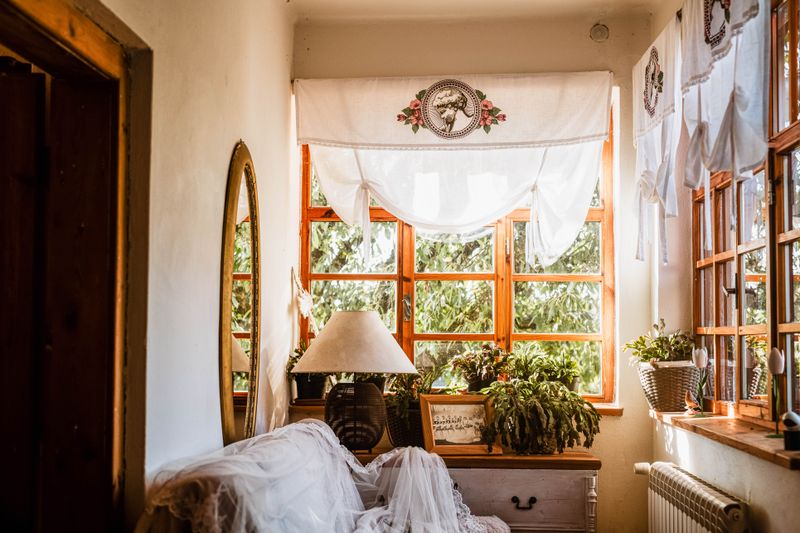
Desiccant traps are a short-term fix, not a solution.
Small moisture-absorber tubs and silica sachets help inside wardrobes and other enclosed spaces, but they cannot keep up with a whole room. They sit alongside mechanical dehumidification and ventilation, never replace them.
Pro tip
Many modern air conditioners have a “dry” mode that pulls moisture from the air without overcooling the room. If you already have a unit, run dry mode on humid winter mornings before reaching for a separate dehumidifier — it costs nothing extra to try.
How do you recognise and respond to mould from apartment damp?
Mould takes hold once humidity sits above 60% and condensation lingers on cool surfaces. The early signs are a musty smell, dark spots in corners or behind furniture, and condensation that will not clear. Reading the severity correctly is what matters: surface spots need cleaning, but spreading black patches or damp on the wall itself point to a moisture source you have to find and fix.
A few daily habits genuinely slow it down:
- Wipe condensation off windows and walls each morning, especially in winter.
- Keep furniture a few centimetres clear of exterior walls so air can move behind it.
- Leave wardrobe doors slightly open so air circulates around clothing and leather.
- Clean bathroom grout and silicone seals regularly — they are where mould appears first.
The table below helps you decide how to respond based on what you actually find.
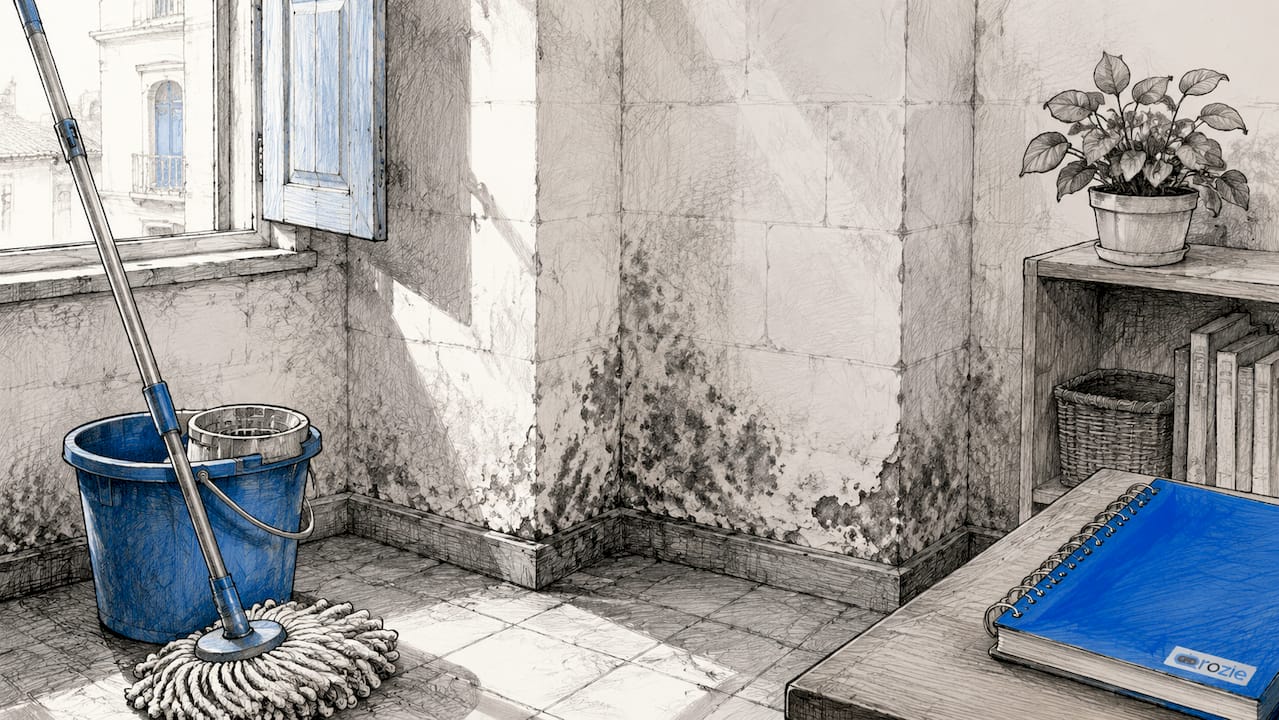
Wiping is not enough once black patches keep spreading or damp returns within days of cleaning. At that point it is a moisture-source problem, not a cleanliness one — bleach kills surface mould briefly but does nothing to stop water coming through a wall or ceiling. One important Malta caveat: on globigerina limestone, skip vinegar and other acidic cleaners, which etch the porous stone permanently. A dedicated mould spray such as HG Mould Spray (stocked at PAVI and Smart Supermarket) is a safer choice on tiles and grout. For a room-by-room prevention plan and a full safe-products table, the mould prevention guide for Malta goes deeper than this article does.
Pro tip
If mould keeps returning to the exact same spot after every clean, treat it as a structural signal rather than a cleaning failure. Persistent damp in one place usually means a plumbing leak or building dampness that needs investigating, not another bottle of spray.
The health side matters too. The World Health Organization’s guidance on dampness and mould links persistent indoor mould to respiratory irritation, allergic reactions, and worsened asthma, especially for children. Addressing it promptly protects your health, not just your walls.
What rights do renters have when damp won’t go away in Malta?
Under the Private Residential Leases Act (Cap. 604), a Maltese landlord must keep a rented property in a habitable, safe condition, and that duty explicitly covers dealing with damp and mould caused by structural or construction issues. Mould you cause yourself — drying washing indoors with no ventilation, never opening a window — is generally your responsibility. In any dispute, the deciding factor is documentation.
If damp persists, take these steps in order:
- Report it in writing. Send a dated email or letter to your landlord describing the problem, with photos. Verbal requests are easy to deny; a written one puts the landlord on notice and starts the clock on a reasonable repair timeframe.
- Photograph every affected area. Date-stamped photos showing mould spread, damp patches, or condensation damage are your strongest evidence.
- Keep the paper trail organised. Store messages and images in cloud storage you can reach months later. A consistent record carries real weight.
- Get medical advice if your health is affected. A doctor’s note linking respiratory symptoms to your living conditions strengthens a formal complaint.
- Escalate to the Housing Authority. The Act places residential tenancies under the Housing Authority, whose Adjudicating Panel handles landlord-tenant disputes — including orders for repairs — for claims up to €5,000.
Where a property is made genuinely uninhabitable by persistent structural damp, tenants may have grounds to seek a remedy through that process. Starting the record early is what protects you: a landlord who receives written notice in week one has far less room to argue later than one who only hears about it after months of damage. For a fuller picture of tenant rights, deposits, and lease registration, our guide to renting an apartment in Malta covers how Cap. 604 protects you in more detail.
Key takeaway: Structural damp is the landlord’s responsibility under Cap. 604; lifestyle-driven mould is the tenant’s. Whoever is at fault, the tenant who documents the problem in writing from day one is the one in the stronger position.
What is the most effective long-term approach?
The combination that actually works is mechanical dehumidification, everyday moisture habits, and prompt written communication with your landlord when the cause is structural. No single piece carries the load on its own: a dehumidifier will not fix a leaking wall, and ventilation cannot keep up with laundry dried indoors every night.
The most underrated move is buying a hygrometer before anything else. Spending on a dehumidifier without knowing your baseline reading is guesswork; spending €10–€15 on a meter first tells you which rooms need attention and whether your changes are actually working. The second is treating early, polite, written contact with your landlord as protection rather than confrontation — it costs nothing and consistently leads to faster action than waiting to see if the problem worsens.
It is also worth weighing the economics. The equipment that controls moisture is a one-off cost; reactive cleaning recurs every time mould comes back.
Moisture control vs reactive cleaning
Moisture-control kit (one-off)
~€130–€215
Reactive mould cleaning (per episode)
€80–€200+
A hygrometer (€10–€15) plus a mid-range dehumidifier (€120–€200) costs roughly the same as a single reactive deep clean — but it works year-round and stops the episodes repeating.
When does professional cleaning help with damp and mould?
Reducing moisture is the long-term fix, but the mould and residue already on grout, walls, and window reveals still need proper removal. A deep clean that targets mould-prone zones — using pH-safe products on limestone rather than acids — clears what is already there, giving your moisture control a clean baseline to maintain.
Finding a reliable cleaner in Malta the traditional way means scrolling Facebook groups, making phone calls, chasing quotes, and hoping whoever turns up does a thorough job. Most people dealing with a damp apartment do not have time for that — and it is exactly the friction Rozie was built to remove.
You post the job once, pick a date and any extras, and verified cleaners send you offers with the exact price within minutes. You compare offers and accept the cleaner you want, with 7-day payment protection and up to €1,000,000 per occurrence in professional liability insurance, underwritten by Lloyd’s Insurance Company S.A., on every booking.
Here is the whole booking process in under 60 seconds:
Compare Cleaning Offers on Rozie ->

For a full breakdown of what professional cleaning costs across the island, see our Malta cleaning cost guide, and you will find more practical local advice in the cleaning in Malta archive.
Frequently asked questions
What is the ideal indoor humidity level in a Malta apartment?
The ideal indoor relative humidity is 40-60%. Staying below 60% keeps mould spores dormant and the air comfortable year-round. A dehumidifier set to maintain 50-55% is a reliable target during Malta’s humid months.
Why is humidity so high in Malta apartments?
Malta’s outdoor air averages around 76% relative humidity annually. Indoor activities like cooking, showering, and drying laundry push levels higher still, especially in poorly ventilated flats and older buildings with porous limestone walls that hold moisture.
What is the fastest way to reduce humidity in a Malta apartment?
Running a dehumidifier is the fastest and most reliable method. Pair it with 10-15 minutes of daily ventilation and extractor fans in the kitchen and bathroom, and measure with a hygrometer so you can target the worst rooms first.
When should I call a professional about mould in my apartment?
Call a professional when black mould patches keep spreading despite cleaning, or when damp patches appear on walls or ceilings, which can indicate a structural leak. At that stage the problem is a moisture source, not surface dirt, and needs proper investigation.
Is damp and mould the landlord’s responsibility in Malta?
Under the Private Residential Leases Act (Cap. 604), landlords must keep a property habitable, which covers damp and mould caused by structural or construction issues such as leaks or inadequate damp-proofing. Mould caused by tenant behaviour, like never ventilating, is the tenant’s responsibility. Document any problem in writing from the start, and the Housing Authority handles disputes that cannot be resolved directly.