

In this guide
What causes black mould in Malta bathrooms?
How do you safely remove black mould from bathroom surfaces?
How do you stop black mould coming back in a Malta bathroom?
Is black mould in the bathroom actually dangerous?
What causes black mould in Malta bathrooms?
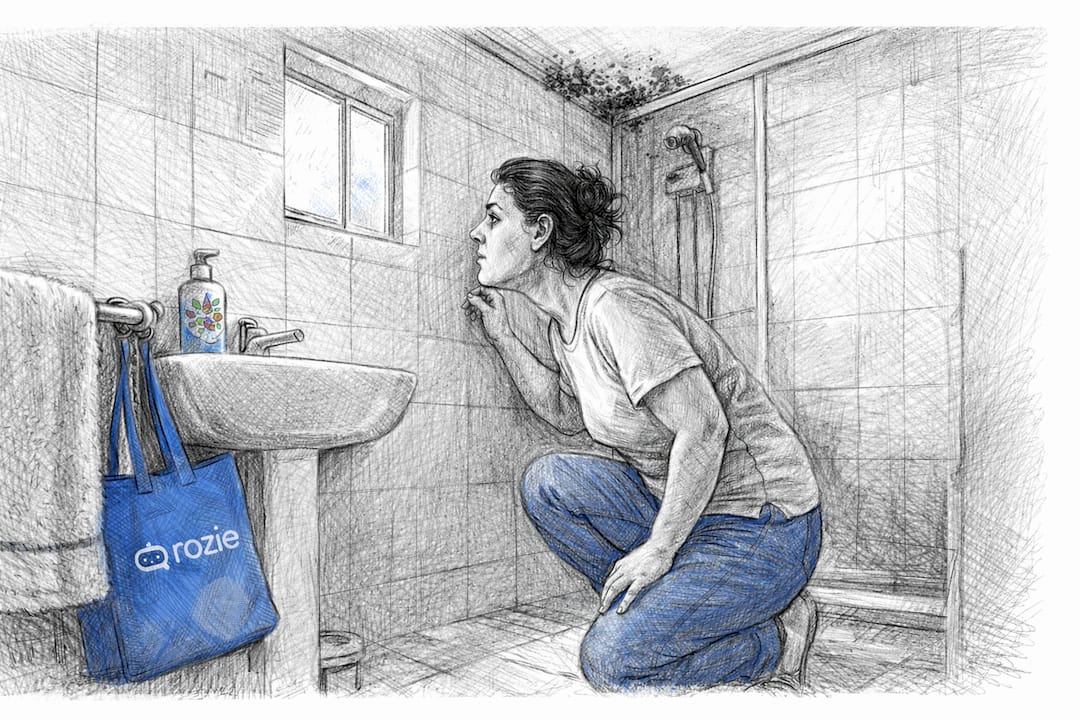
Malta’s climate is the main driver. Relative humidity sits between 60% and 95% year-round and peaks between October and February, so a bathroom that fills with steam after every shower rarely gets the chance to dry. The Maltese even have a word for the problem that follows: il-moffa. Add weak ventilation and the moisture has nowhere to go but onto cold tile, grout, and silicone.
Poor ventilation is the most common structural cause. Many older Maltese apartments have small or blocked extractor fans, and some bathrooms have no window at all. Without daily airflow, condensation settles on tiles and ceiling corners within minutes of a hot shower. Coastal flats in Sliema, St Julian’s, Gzira, and Bugibba have it slightly worse, because salt-laden air holds extra moisture on surfaces. Degraded silicone is another weak point: as it ages it becomes porous, and spores work into gaps that surface cleaning cannot reach. Hidden damp behind wall tiles or under a bath panel feeds colonies you cannot see until they are already large.
The causes to watch for in any Maltese bathroom:
- Blocked, undersized, or absent extractor fans, especially in internal bathrooms with no window
- Cracked or ageing silicone seals around the shower tray and bathtub
- Condensation settling on cold tile and ceiling corners after hot showers
- Leaking pipes or fixtures that keep a wall permanently damp
- Furniture, towel racks, or storage pushed flush against an exterior wall, trapping moisture
Pro tip
A digital humidity meter (hygrometer) costs €10–€15 at Homemate or Smart Supermarket. If your bathroom still reads above 60% an hour after a shower, your ventilation is the problem, not your cleaning routine.
How do you safely remove black mould from bathroom surfaces?
Match the product to the surface. A dedicated anti-mould spray (HG Mould Spray, or Cillit Bang Black Mould Remover at €4–€6 from PAVI) handles tile grout and silicone seals; 3% hydrogen peroxide suits delicate grout; diluted bleach works on glazed tiles and glass only. Never put vinegar or any acidic cleaner on Globigerina limestone or marble, which appear in many older Maltese bathrooms, because acid etches the stone permanently.
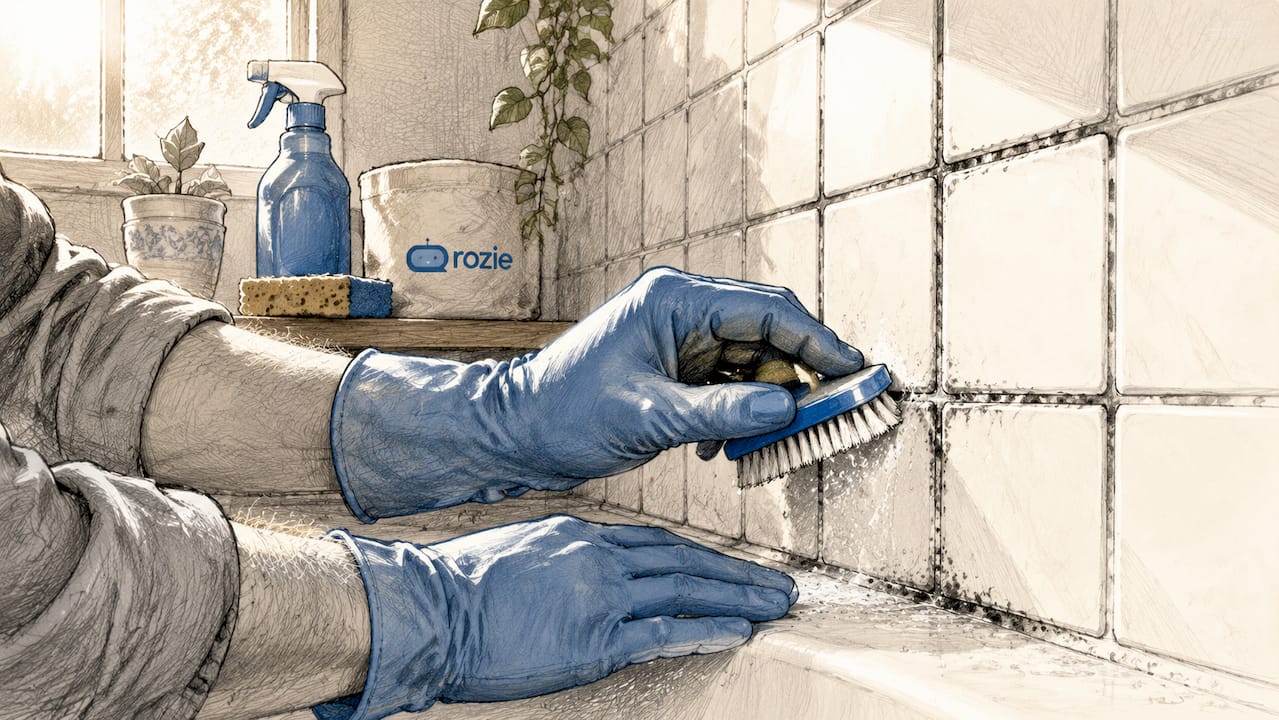
A quick wipe is rarely enough, because mould infiltrates grout and gets behind silicone. The U.S. Environmental Protection Agency’s guidance on mould and moisture is blunt about this: you cannot clean your way out of a moisture problem, so removal only lasts if you also fix the damp. Give each product time to work, and use the right one for the surface in front of you.
Step-by-step removal by surface
- Anti-mould spray on grout and silicone seals. Spray the affected lines, leave it for 10–15 minutes (or as the label says), scrub with a stiff brush or old toothbrush, and rinse thoroughly. This is the most reliable starting point for the surfaces where bathroom mould concentrates.
- Hydrogen peroxide or baking-soda paste for delicate grout. Where you would rather avoid stronger chemicals, apply 3% hydrogen peroxide or a baking-soda paste directly to the grout, leave it 10–15 minutes, scrub, and rinse clean.
- Diluted bleach on glazed tiles and glass only. Bleach diluted around 1:10 works on ceramic and glass, but it should never go on silicone, porous grout you want to keep, or natural stone. On porous materials it lightens the stain without killing the root, which gives a false sense of success. Wear gloves and ventilate the room.
- Mind Malta’s stone. Vinegar is fine on glazed tile and glass, but acidic cleaners permanently etch Globigerina limestone and marble. If your bathroom has stone floors, sills, or a stone vanity, switch to a pH-neutral product such as Lithofin or an HG stone cleaner.
- Worn silicone needs replacing, not cleaning. Once silicone is too porous to come clean, the lasting fix is to cut it out, clean the gap, and reseal with a mould-resistant silicone. This is specialist resealing work rather than general cleaning.
- Know when to call a specialist. If the patch is larger than roughly one square metre, returns within days of treatment, or spreads across walls and ceilings, it has likely moved behind the tiles or into the wall cavity. At that point a mould-remediation specialist who identifies the moisture source is the right call.
Do not identify, just remove.
The CDC notes that the colour of mould does not indicate how dangerous it is, and you do not need lab testing to act. If you can see it or smell it, remove it safely and fix the moisture.
Pro tip
Never mix bleach with vinegar or with ammonia-based cleaners — the combination releases toxic gas. Use one product at a time, rinse the surface fully, and let it dry before switching to another.
How do you stop black mould coming back in a Malta bathroom?
Removing mould without fixing the moisture buys you only a couple of weeks. Run an extractor fan, or open the window, for at least 20–30 minutes after every shower; squeegee the tiles and glass; keep bathroom humidity around 50%; and reseal silicone the moment it discolours. In single-aspect flats with poor airflow — common in Sliema and Gzira — a dehumidifier (€120–€200) is the most reliable long-term fix.
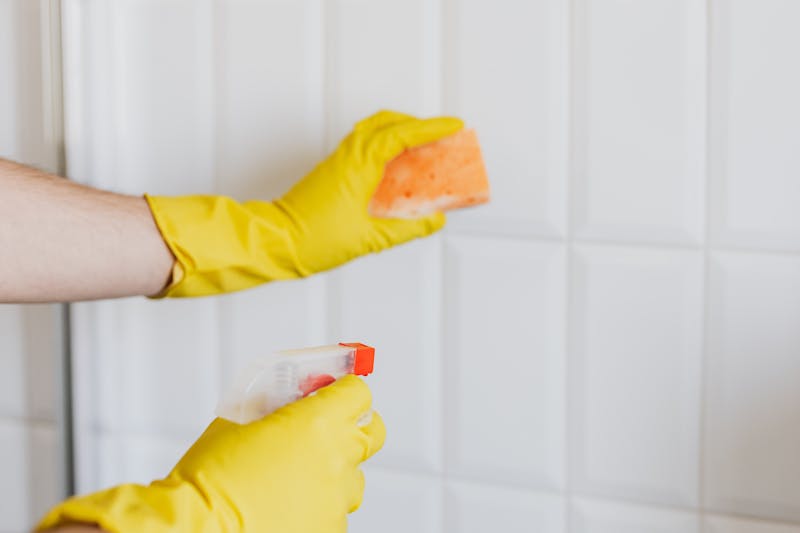
That 30-minute fan runtime is longer than most people expect, so a phone timer after each shower helps build the habit. A 30-second squeegee stops water sitting on surfaces long enough to feed spores. Leave the bathroom door open afterwards for airflow, inspect silicone every six months, keep towel racks and storage off exterior walls, and wash and fully dry bath mats. For a no-window bathroom, a dehumidifier set to maintain around 50% does the work the missing airflow cannot. The same daily habits cover the whole home — our Malta apartment cleaning checklist breaks them down room by room, and the Malta mould prevention guide adds the seasonal calendar and safe products for every surface.
Renting? Push on ventilation.
Under Malta’s Private Residential Leases Act (Cap. 604), structural causes of damp such as leaking pipes and inadequate ventilation are generally the landlord’s responsibility, while mould from tenant habits like drying clothes indoors without airflow is usually the tenant’s. Document any mould with photos and report it in writing from the start.
Is black mould in the bathroom actually dangerous?
A damp, mouldy bathroom can affect your health, but not in the dramatic way “toxic black mould” headlines suggest. The well-established effects are respiratory: a stuffy or runny nose, coughing or wheezing, throat and eye irritation, and worse symptoms for people with asthma or mould allergies. It is worth treating, but it is a manageable home-maintenance and health issue, not a crisis.
The World Health Organization’s guidelines on dampness and mould link persistent indoor damp to respiratory symptoms and to aggravated asthma. The CDC lists similar effects — stuffy nose, sore throat, cough or wheeze, burning eyes, skin irritation — and notes that people with asthma or allergies, and those with weakened immune systems, react most strongly. The claims you may have read about “toxic mould” causing memory loss or neurological damage are not supported by strong evidence; health authorities consider the term “toxic mould” inaccurate, and reports of such severe effects are rare and not proven to be caused by household mould.
The people most affected are:
- Children, whose airways are still developing
- Older residents with reduced respiratory capacity
- Anyone with asthma, hay fever, or existing allergies
- People with weakened immune systems
If you notice a musty smell but cannot see any growth, mould may be living behind tiles or inside a wall cavity — a sign to look harder at the moisture source rather than a reason to panic.
Mould and indoor air quality can be a sensitive subject, especially for anyone managing asthma or a health condition at home. If symptoms are persistent or worrying, it is worth speaking to a doctor for advice specific to your situation.
Where does professional cleaning fit?
Mould remediation — antifungal treatment of an active infestation and silicone resealing — is specialist work. Rozie is a marketplace for general and deep home cleaning, not a mould-removal service. Where Rozie helps is the upkeep around mould: a regular or deep clean keeps grout, glass, and surfaces free of the soap scum and grime that give mould something to grip, and catches early spots before they spread.
Keeping up with that cleaning the traditional way in Malta usually means scrolling Facebook groups, making phone calls, chasing quotes, and hoping the person who shows up does a good job. Rozie removes that friction. You post the job once, pick a date and any extras you need (a deep clean included), and verified cleaners send you offers with exact prices, usually within minutes. You compare the offers and accept the one you prefer, and every booking is backed by 7-day payment protection and up to €1,000,000 in professional liability insurance underwritten by Lloyd’s Insurance Company S.A. Here is the full booking process in under 60 seconds:
To be clear: if you already have an active mould infestation or porous silicone that needs replacing, that is a job for a mould-remediation or resealing specialist, not a general clean. Use Rozie for the regular and deep cleaning that keeps the bathroom in good shape between those jobs. For what professional cleaning costs across Malta, see our cleaning cost guide, and for what a deep clean covers, the deep cleaning price breakdown.
Compare Cleaning Offers on Rozie ->

FAQ
What is the fastest way to remove black mould from bathroom grout?
Apply a dedicated anti-mould spray (HG Mould Spray or Cillit Bang Black Mould Remover), or 3% hydrogen peroxide or a baking-soda paste, directly to the grout. Leave it for 10-15 minutes, scrub with a stiff brush or old toothbrush, and rinse. Avoid acidic cleaners on any natural stone surface.
Why does black mould keep coming back in my Malta bathroom?
Because the moisture has not been fixed. Mould can return within days if humidity and ventilation are not controlled after cleaning. Running an extractor fan for 20-30 minutes after showers, keeping humidity around 50%, and resealing porous silicone are the reliable ways to break the cycle.
Is black mould in the bathroom dangerous to health?
It can cause respiratory and allergy symptoms such as a stuffy nose, coughing, wheezing, and irritated eyes, and it affects people with asthma, allergies, or weakened immune systems most. Claims that household black mould causes memory loss or neurological damage are not supported by strong evidence, and the CDC considers the term “toxic mould” inaccurate. The colour of mould does not indicate how dangerous it is.
Does Rozie remove mould?
No. Rozie is a marketplace for general and deep home cleaning, not a mould-removal service. Treating an active infestation and replacing porous silicone are specialist jobs. A regular or deep clean does help by keeping bathroom surfaces free of the grime that mould grips and catching early spots before they spread.
Is bathroom mould the landlord’s or the tenant’s responsibility in Malta?
Under the Private Residential Leases Act (Cap. 604), structural causes of damp such as leaking pipes and inadequate ventilation are generally the landlord’s responsibility, while mould caused by tenant habits like drying clothes indoors without ventilation is usually the tenant’s. Document any mould with photos and written reports from the start of the tenancy.
When should I call a professional for bathroom mould in Malta?
Call a specialist when the patch is larger than roughly one square metre, when it returns within days of cleaning, when you smell a persistent musty odour without visible growth, or when it appears across multiple walls or ceilings. These signs suggest the mould has spread behind tiles or into the wall cavity and needs remediation that identifies the moisture source.
Recommended
- Mould Prevention Malta: Room-by-Room Guide (2026)
- Post Renovation Cleaning Malta 2026: Cut Mistakes by 40% | Rozie – Malta’s Best Cleaning Services
- After Builders Cleaning Malta: 3-Phase Process Cuts Time 30% | Rozie – Malta’s Best Cleaning Services
- Balcony Cleaning Service Malta: Costs, Tips & Booking (2026)