

Plenty of guides will sell you the sunshine and the sea. This one assumes you have already decided to come and now need to know what to actually do, and in what order, once your plane lands. The single most common relocation mistake in Malta is doing tasks out of sequence, then discovering that step four needed step two finished first. Work through the phases below and most of that friction disappears.
In this guide
What should your first 90 days in Malta look like?
How do you sort out your residency and right to stay?
What admin do you need: tax number, banking, and healthcare?
How do you find a home and get the basics working?
What do Malta’s homes need that you won’t expect?
How do you get around in your first weeks?
What should your first 90 days in Malta look like?
Your first 90 days in Malta fall into three phases: get legal, get a home, get a life. Days 1 to 30 are for short-term accommodation, registering your residence, and starting your tax and banking setup. Days 31 to 60 are for choosing a neighbourhood, signing and registering a lease, and switching on utilities. Days 61 to 90 are for healthcare, transport, and building a social circle.
The reason the order matters is that Malta’s systems are linked. You usually need a local address before you can finish registering your residence, and a residence document and address make banking, healthcare, and utility accounts far smoother. Trying to open a bank account in week one, before you have anywhere to live, is how people lose their first month to frustration. The table below is the sequence that avoids most of that.
How do you sort out your residency and right to stay?
Your route depends on your nationality. EU, EEA, and Swiss citizens have the right to live and work in Malta and simply register their residence. Everyone else needs a permit before settling, most commonly a Single Permit for employment or the Nomad Residence Permit for remote workers. Start this in your first weeks, because almost everything else is easier once your status and address are in place. The official overview of residence formalities is a useful starting point.
If you are an EU, EEA, or Swiss citizen
You do not need a permit, but if you intend to stay longer than three months you must register your residence with Identita and receive an eResidence document. You register on the basis of your situation: worker, self-employed, economically self-sufficient, student, or family member. Applications go through the Expatriates Portal, the agency replies within a couple of working days with a biometrics appointment, and the eResidence document is generally issued for five years.
If you are a non-EU citizen
Third-country nationals need a residence permit. If you have a Maltese job offer, your route is usually the Single Permit, a combined work-and-residence permit handled through Identita. If you work remotely for employers or clients outside Malta, the Nomad Residence Permit lets you live on the island legally.
The Nomad Residence Permit requires gross income of at least €3,500 a month (around €42,000 a year), plus accommodation in Malta, health insurance, and a clean police record. It is issued for one year and renewable for up to four years in total. On the tax side, authorised remote-work income is exempt from Maltese income tax for the first 12 months and then taxed at a flat 10 percent, well below the standard rates that rise to 35 percent. Because residency rules vary by profile and change over time, confirm the current detail with the agency and, for which permit lets you live where, see this guide to Malta residency and property by permit.
Do this first.
A Maltese address unlocks most other steps, so prioritise a short-term lease and your residence registration before banking, utilities, and healthcare. Carry several certified copies of your passport, proof of income, and proof of address to every appointment, because you will be asked for them repeatedly.
What admin do you need: tax number, banking, and healthcare?
Three pieces of admin underpin daily life: a tax number and social security number, a way to get paid and pay bills, and healthcare cover. None is difficult on its own, but banking in particular tests your patience, so start it early and run a backup in parallel. Get these moving in your first month and the rest of your setup falls into place.
For tax and social security, you register for a tax identification number and a social security number once you are working or resident; employers and the relevant government offices will guide the exact forms. For banking, the established local banks such as Bank of Valletta, HSBC Malta, and APS are thorough about documentation and can take weeks to open an account, so many new arrivals use a fintech account like Revolut or Wise as a bridge for rent, bills, and day-to-day spending while the local application is processed. For healthcare, Malta runs a public system centred on Mater Dei Hospital and government health centres alongside a strong private sector; EU citizens typically access public care through European entitlement, while non-EU residents are generally expected to hold private health insurance, which many employers include in relocation packages.
Pro tip
Open your bank application in your first week, even before you have furniture. Bring your passport, residence document or its acknowledgement, proof of a Maltese address, proof of income, and a reference letter from your home bank if you have one. A missing document is the most common reason applications stall for weeks.
How do you find a home and get the basics working?
Land in a short-term let first, then sign a long-term lease only after viewing places in person. Malta’s standard private residential lease runs for a minimum of one year, so committing from photos alone is a real risk. Once you have keys, registering the lease and switching on utilities, internet, and a SIM are quick wins that make the apartment genuinely liveable.
Spend your first few weeks in a furnished short-term rental while you walk the neighbourhoods you are considering. Where you live shapes daily life more than almost anything else on a small, dense island, so it is worth getting right; this guide to the best places to live in Malta for expats compares the main areas by lifestyle, cost, and noise. When you find somewhere, the law matters: under the Private Residential Leases Act (Cap. 604) the landlord must register the contract with the Housing Authority within ten days of signing, registration costs roughly €80, and a contract with no written inventory or no registration is void. The honest rental guide to finding an apartment in Malta covers deposits, contracts, and the scams to avoid.
With the lease signed, set up the basics. Open an account with ARMS for water and electricity, and confirm that a residential tariff form (Form H) has been filed in your name, because the wrong tariff can cost you hundreds of euro a year. Book internet early: providers such as GO, Melita, and Epic offer fibre at roughly €30 to €50 a month, and installation can take a week or more. Pick up a local SIM from GO, Epic, or Melita on arrival so you can receive the WhatsApp messages that landlords, agents, and even some services rely on. For a euro-by-euro view of what all of this costs each month, see this breakdown of what it really costs to live in Malta.
What do Malta’s homes need that you won’t expect?
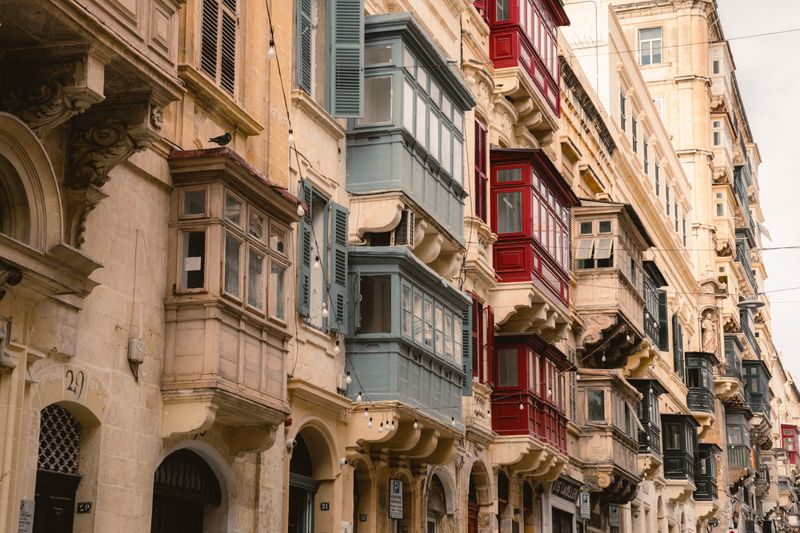
Maltese homes carry a maintenance load that surprises most newcomers. The island’s hard water, humidity, Saharan dust, and porous limestone all act on your apartment in ways a flat in London or Berlin never did. Knowing this in your first weeks saves both your appliances and your security deposit, and it shapes the cleaning routine you will want to set up.
Malta’s tap water runs around 200 to 600 PPM of calcium carbonate, among the hardest in Europe according to the Water Services Corporation, so limescale builds fast on kettles, taps, glass, and appliances; descalers such as HG and Lithofin from PAVI or Smart Supermarket become regular purchases. Indoor humidity sits high for much of the year and peaks in the cooler months, which means mould in bathrooms and wardrobes is a reality rather than a risk, and a dehumidifier earns its keep. Several times each summer a hot southerly wind, known locally as il-qilla, coats balconies, terraces, and windows in fine reddish Saharan dust. And if your floors or surfaces are Globigerina limestone, the soft, porous local stone, avoid vinegar and acidic cleaners entirely, because acid etches the stone; use a pH-neutral product instead.
Because of all that, most new arrivals book a one-off deep clean before they unpack rather than scrubbing someone else’s grime around their own boxes. On Rozie, you post the job once, choose any extras such as oven, fridge, or inside windows, and verified cleaners send offers with the exact price before you accept, usually within minutes. You can see what a clean typically costs in this Malta cleaning cost guide.
Pro tip
Schedule the move-in deep clean for the day before your furniture arrives. Empty apartments are far quicker and cheaper to clean thoroughly, and you start your Malta life in a place that actually feels yours rather than inherited.
How do you get around in your first weeks?
Most newcomers start on the bus and add a car only if their commute demands it. Malta’s public transport is a single bus network, and crucially it is free for residents who hold a personalised Tallinja card on standard day and night routes, a scheme in place since October 2022. Sort transport once your address is settled, and getting around the island becomes one of the least expensive parts of life here.
Download the Tallinja app to plan journeys and apply for the personalised card; the free travel is a genuine reason to lean on the bus before buying a car. If you do drive, EU and EEA licences are valid in Malta, while licences from many other countries can be used for a limited initial period, commonly up to twelve months, before you exchange them through Transport Malta, so check your situation early. Bolt is the main ride-hailing app for short hops, and the Gozo ferry from Cirkewwa to Mgarr takes about 25 minutes if your new life involves the sister island.
How do you build a social life and settle in?
Building a real social life in Malta takes deliberate effort, not time alone. The island is welcoming and heavily international, but friendships form fastest for people who show up to organised events repeatedly rather than relying on work colleagues. Treat your social setup as an actual task in your first 90 days, and the move stops feeling temporary.
The practical routes are genuinely good. English Cafe Malta runs regular conversation and networking evenings that mix locals and newcomers. Meetup lists hiking groups, language exchanges, board-game nights, and professional events across the island. Sports and fitness clubs around Sliema and St Julian’s draw a young international crowd, and volunteering connects you with Maltese residents in a way purely social events sometimes miss. Large Facebook communities such as “Expats in Malta” are useful for tips and event announcements, though they swing between glowing and grumbling, so read them with a balanced eye. The one rule that works: pick one or two activities and attend consistently, because familiarity builds trust far faster than sampling everything once.

Key takeaway: The arrivals who settle happily treat the first 90 days as a project with an order to it, get the paperwork and home sorted early, and then invest real time in routines and people.
Settling into a new country pulls your attention in a dozen directions at once. The one job worth taking off your plate immediately is the move-in clean, so your first days go to building a life rather than scrubbing a stranger’s kitchen.
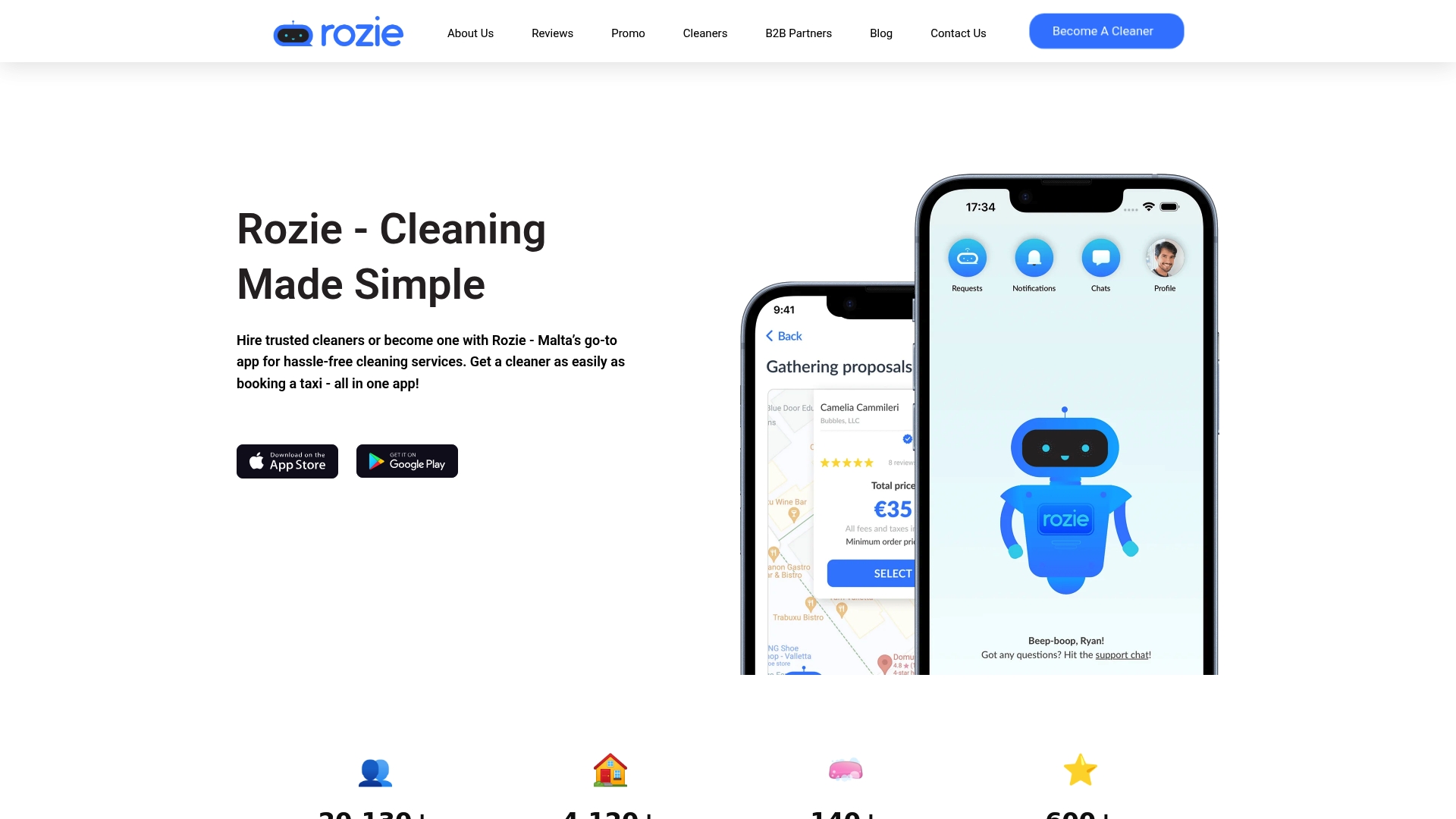
Finding a reliable cleaner in Malta the traditional way means scrolling Facebook groups, messaging numbers a friend passed on, and waiting on quotes that may never come, exactly when your first weeks are busiest. Rozie was built to remove that friction. You post the job once, pick a date and any extras, and verified cleaners send you offers with the exact price before you accept. Every booking is covered by 7-day payment protection and up to €1,000,000 in professional liability insurance underwritten by Lloyd’s Insurance Company S.A., with Rozie covering any deductible so you pay no excess.
Here is the whole booking process in under 60 seconds:
Download Rozie – Book in 60 Seconds ->
For more local home and cleaning guides as you settle in, browse the cleaning in Malta section.
What I’d tell anyone moving to Malta
After watching a lot of people arrive here, the pattern is clear: the ones who settle well are not the ones who researched the beaches hardest. They are the ones who treated the move as a sequence and respected the order of it.
Malta rewards getting the boring things right early. Sort your residence registration and your address first, because everything downstream, banking, healthcare, utilities, even a phone contract, leans on them. Run your bank application and a fintech account in parallel so a slow approval never leaves you stranded. Spend on a proper move-in clean before the boxes arrive, because starting fresh changes how the whole place feels. Then, once the admin is behind you, put real effort into routines and people instead of waiting for a social life to appear.
And visit before you commit if you possibly can. Walk the street you are considering on a weekday morning and again on a Saturday night. Sit in the Sliema traffic. The expats who do that arrive with calibrated expectations and tend to stay. Malta gives a great deal back, but it gives it to people who arrive prepared.
— Alex, Rozie editorial
Key takeaways
Move through your first 90 days in order, and the island stops feeling like an obstacle course.
Frequently asked questions
Do EU citizens need a visa or permit to move to Malta?
No. EU, EEA, and Swiss citizens have the right to live and work in Malta without a permit. If you stay longer than three months, you must register your residence with Identita and receive an eResidence document, which is generally issued for five years.
What is the income requirement for Malta’s Nomad Residence Permit?
The Nomad Residence Permit requires gross income of at least €3,500 a month, around €42,000 a year. It is open to non-EU remote workers, runs for one year and is renewable up to four years, and authorised income is exempt from Maltese tax for the first 12 months, then taxed at a flat 10 percent.
How long does it take to open a bank account in Malta?
It often takes several weeks. Maltese banks are thorough about documentation, so start your application early and bring full paperwork. Many new arrivals use a fintech account such as Revolut or Wise as a bridge for rent and daily spending while their local account is processed.
Is public transport really free in Malta?
Yes, for residents. Anyone with a personalised Tallinja card travels free on standard day and night bus routes, under a scheme running since October 2022. Apply through the Tallinja app. Airport express services and visitors without a resident card are not covered.
Can I use my foreign driving licence in Malta?
EU and EEA licences are valid in Malta. Licences from many other countries can be used for a limited initial period, commonly up to twelve months, after which you exchange them through Transport Malta. Check the rule for your specific country soon after you arrive.
How do I arrange a move-in clean before I unpack?
Most expats book a one-off deep clean for the day before or the day they move in. On Rozie, you post the job once, choose extras such as oven, fridge, or inside windows, and verified cleaners send offers with the exact price before you accept, usually within minutes. Every booking includes payment protection and €1,000,000 liability cover.